Open up your mind and your potential reaches infinity…

Archive for February, 2011

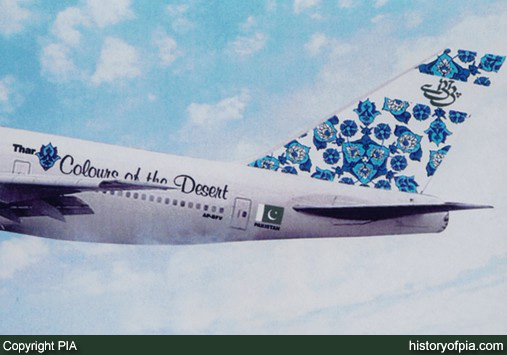
TRAVELLING PIA THE DESI STYLE


The moment one stands at the counter to check-in with the PIA ‘amla’ at any airport in the world, one gets the’ home coming’ vibes. The check-in may not be as orderly, the flight may be overbooked, delayed, or God knows what unforeseen might happen, but the badnaam-e-zamana PIA carries its own notorious charm–at least to me.
Seven starish chic airlines of the Middle East are too luxurious to exude a raw charm, and the modest, low budgeted Canadian four star carrier is boringly efficient.

So, go  East or West, PIA is the best.

Many of my compatriots living abroad don’t get the weirdness of my preference for PIA.

There’s an  emergency, and with  a short notice of barely a week to reach Karachi–I got a ticket booked on PIA.

Checking in and boarding the plane were uneventful. I took my boarding pass and fetched for my seat no. 25B. Happy that the counter person had obliged me with a seat in one of the front rows. I land on my seat, only  to find that it’s a middle seat with two over sized feudal looking gentlemen well seated on both sides. None of them were willing to give up either the window or the aisle seat to place me at the side. Not that I am a Miss World or Miss Petite etc but imagine a 15  hour journey in that tiny middle seat between the two of them where barely one cannot move one’s elbows beyond 30 degrees.

I threw my bag and jacket in the seat as they scanned unabashedly, the middle aged lady who was going to be their immediate neighbor. What if there was a petite young lass instead, what would be the frequency and wavelength of their X ray eyes, I wondered. ( By the way this scanning is the prerogative of our desi men–considered highly impolite in the rest of the world).

My desiness ( which actually never leaves me) springs into action. I requested the passing-by purser in shusta urdu, giving him reference of the famous ex Hockey Olympian Station Manager of some other city,  and of how he always got us  ‘good’ seats, convincing him to help me here.

He reassured, ‘Baji wait till everyone settles down.”

Finally after few negotiations in a packed flight, he tried,  failed and  gave up. But then again, on my begging, he took  up the challenge,and finally managed to get me a 3 seater shared with another lady.

And thus I got reassured, that despite a couple of years in Canada, my desi nepotism skills remained intact.

The two of us ladies made another deal, desi style. She was tired and the journey was  too long, so we decide we will take turns to stretch full length and  sleep. The other will either walk on the aisle or sit huddled in the corner of the seat. It was first her turn to lie down on the whole seat and sleep. In the meantime, I preferred to walk  on the aisle,  reading a book on Dreams.

After a  good nap of 4 hours, she happily got up and handed  over the seat with the  “ ab ye seat aapki hui’    expression.

Without delay, I wrapped myself up in the blanket and stretched  myself exactly the way we used to stretch ourselves  while sleeping on a train’s berth when kids. Barely half an hour had passed and the announcement called for a doctor on board. Before the desi me could even think of faking sleep and preferring to stay away, the doc in me sprung  up in a reflex action.

I  found myself  standing along with two other docs in front of a middle aged lady–very pale, cold and clammy not responding to our shouts. On pinching, she barely opened her eyes but  fell back unconscious, again. There was no pulse, but her fast breathing gave us a little relief and a hope of life .The BP too was unrecordable. The senior-most of us docs took the lead while the two of us  followed  his orders and managed her with the necessary steps. While she lay down on the aisle,  I knelt down to check her.

Whatever equipment needed was readily made available by the crew. With some first aid and medications, her pulse and BP seemed to return and she became more responsive, though was still extremely dizzy, sweating and anxious.

The Captain called one of us to to brief him of the situation,  and  asked  if there was the need to make an emergency landing  for her care. But the passenger being stable, now,  and unaccompanied–the consensus was reached that we, doctors,  will monitor her every  half hourly for the remaining  7 hours and act according  to her condition. Being the same gender as hers, I got the  responsibility to monitor her closely for the rest of the journey.

I offered  my 3 seater bed for her to lie down.
And so for sure was gone my turn to enjoy the luxurious PIA bed nap.

Jee haan, ab kaisa sona, kahan ki neend. I was officially on duty.

How much had I thought before embarking on the journey, of  a carefree  8 hour sleep on board, which I barely get any day at home. God must have definitely laughed at me  on my plans, then.

Well no regrets. It was for a noble cause.

As I settled down on a seated adjacent to my patient , many a souls came inquiring about her well being. I must have repeated the same description a dozen times in 30 min. There is no pun in it–this is the beauty and simplicity of our people–no matter how much our circumstances have made us ‘beyhiss’ (apathetic), we shed all our shells and cocoons when in such situations.

As the half hourly monitoring went on, so did the networking with the fellow passengers who trickled one by one to inquire about her well being.

A lady who runs a chain of 5 up-class Desi restaurants and banquet halls in Mississauga, offered her card and gave a life long offer of discounts in her outlets. Another with a boutique and who was traveling to Pakistan for getting the latest stock, offered her dresses at the minimum profit.

Yet another, a very simple lady, came up hesitantly with the presumption that being a doc I must be having some good contacts, and that she was  on a look out for some ‘really’ good girls for rishta for her ‘extremely ‘ good looking sharif son.

A gentleman came up to ask for measuring his BP and though I was not qualified to start a clinic in the air, the medico in me did not have the will to say no. And then two more asked for the same in exchange of their visiting cards and offered  their services in Canada.

Another elderly frail lady requested me to give her the insulin injection before her meals. To my fears for any ‘reaction’ she retorted, “So what ? I f it is written to die, I will die. Why will you be blamed?”

Respecting the strength in her conviction, I had no choice but to oblige, knowing very well that if any unforeseen happened, my degree would be at stake.

And the passing pursers–unfailingly gave each time  “Dr sahiba kuch lengee?”   offers.

The best hot and well brewed chai I ever had on any air travel was that day–from the stock of tea that the crew makes for itself during such long travels. Not once but maybe half a dozen times did I gulp that delicious tea down my ‘networking’ throat.

God knows how but an environment of concern built up in the flight.

It looked as if wave of empathy had spread faster than the wild fire of Tasmania. Everyone was so enthusiastic to help, not only the unwell lady, but any one who was in need.

I noticed many a neighbors offering  to carry the crying babies and strolled  them on the aisle while their moms got some some respite and some nap.

With regular monitoring and First-aid, as her pulse and BP rosee slowly and steadily, she became well enough to speak and respond to questions.

The whole plane wore smiles when she sat  up to take some sips of fluids. And thankfully the need to make an emergency landing vaned.  The crew members beamed in triumph and the message of her wellness was flashed to the Captain. And the Captain responded back with an  the announcement amidst cheers.

As I got ready to pack up for arrival at KHI  and bid farewell to the patient–she shoved her visiting card and asked for mine,  to invite to her sons wedding some months later in Canada and with a promise of a life long friendship..

Where else but PIA would one enjoy this desi networking? By that time I was  richer by at least a dozen and a half contacts and their visiting cards.

Every minute on board was packed with desi  thrill.

We all looked like a family–no one questioned anyone’s faith or sect or province, while helping or talking. I even saw some other fellow passengers exchanging their contact details. with the

How I wish, and I can only wish,  we embark on a similiar journey in Pakistan too where everyone helps everyone else without worrying about his faith or allegiance.

The plane landed at Karachi,  and we all departed with hugs, khuda hafizs and promises from some to stay in touch.

I walk down with speed across the placards at the exit of the tube. As I walked  past them to reach the immigration queue, a lady passenger came up to inform that there was a placard with my name too.

Yes, my PR gifted husband had used his desi ‘right ‘ connections at the airport to expedite my exit–in a true desi style. As if I had to catch a train in next few minutes.

The escort not only asked for my passport but also offered to carry my hand luggage, much to my embarrassment. More so because there, more than half the crowd’s glaring eyes were watching what was going on.

Finally in a typical desi style I was  whisked through the immigration at a supersonic speed , getting  the baggage form the belt, rushing  past the custom officers without any check even of the luggage tags.

I was really embarrassed and guilt ridden , but then there is a desi thrill in this VIP act too. And within minutes I was at the exit gates.

Before the exit, I turned back to find  a few hands waving Khuda Hafiz from far behind.

While I reciprocated to their waving with as much enthusiasm, I remembered  the take away message , a lecturer in  one of the social business  gave some years ago:

In order to be successful in this field one needs to be ‘people rich’ rather than money rich or mind rich.

His lesson seemed to make sense now.
“Agarchey zor hawaon ne daal rakha hey” by Ahmad Faraz


RESHAM KA ROOMAL–ILA ARUM


AYO RE MHARO DHOLNA–RAJASTHANI SONG


Neeki Lagat Mohe Apne Piya Ki – Farid Ayaz Qawwal


Laagi Laagi sab kahein, laagi buri bala
Laagi to tab jaaniyo, jab aar paar hoee jaae

Neeki lagat mohe apnay piya ki
(Moray piya ki) Aankh raseeli jaado bhari

Nazar nay nazar mulaqat kar li
Rahay donon khamosh aur baat kat li

Chaen parat naahi mukh daikay bina
Daikh najar bhar jaat bhari ray

Kaahay Turab darre kaahu say
Preet karee, ka mein chori karee ray?!

Sakhi Ka Say Kahoon Mohey Laaj Lagey Qawwali by Farid Ayaz


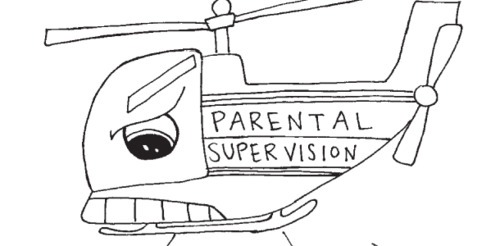
HELICOPTER PARENTING-WHAT IS IT?


Exit: the generation of baby boomer parents.
Enter: the Generation X parents.

Being an offspring of a baby boomer parents, I grew up listening to stories from my parents of how different they were from their own parents—concerned and caring and proactively involved in their children’s upbringing. I had always noticed that majority of the parents of my mom-dad’s generation invaded into their children’s privacy and took decisions for them, including which profession to chose, who to marry and so on. (unless one was rarely lucky to have at least a Dad like mine, who was different enough to be called an exception to this the rule).In fact, the term called ‘personal space’ did not exist at least in our generation and especially in our society.


I had always presumed that we the parents of generation X were far more open and appropriately caring generation of parents , only until I came across a research from study by a researcher Neil Montgomery, a psychologist at Keene State College in New Hampshire. And then from a book called Millennials Go to College by authors Neil Howe and William Strauss. The book includes new data from surveys conducted of 1,000 college parents and 500 college students.

Gen X parents,the book claims, the generation after boomers, tend to be more protective and involved with their kids than boomers; 63% parents say they began planning for their kids’ college education in elementary school or earlier. Strauss says parents do this because they want accountability in light of rising tuitions.
“College has become a major investment, and you have to keep close tabs on it like you would any major investment,” says the author. “We tend to be a bit more of a helicopter parent because of it.”
HELICOPTER PARENT? I wondered as I read. So what is this new word? And I research on the net.

The word, helicopter parent, is the advent of early 21st century. It is a self-explanatory term that exemplifies the stock-in-trade of this type of parent:Hovering. Their children cannot move in any direction without the parent correcting, interfering, manipulating, or browbeating both their own children and everyone else who interacts with their children on a regular basis.
Helicopter parents are the bane of every coach’s existence. They hover over and interfere in nearly every aspect of their children’s lives. Teachers hate them, other parents avoid them, babysitters pay them lip-service but otherwise ignore them. Even pediatricians and Sunday school teachers have a hard time tolerating them.
Research reveals that among the gen X ,60% to 70% of parents are involved in some kind of helicoptering behaviour.

Various settings or places acknowledge the existence of this set of parents with a different yet appropriate nomenclature-

In Scandinavia, this phenomenon is known as ”curling parenthood” and describes parents who attempt to sweep all obstacles out of the paths of their children.
Some call it is “overparenting”. Parents try to resolve their child’s problems, and try to stop them coming to harm by keeping them out of dangerous situations.
Another interesting term being ”Lawnmower parents” to describe mothers and fathers who attempt to smooth out and mow down all obstacles, to the extent that they may even attempt to interfere at their children’s workplaces, regarding salaries and promotions, after they have graduated from college and are supposedly living on their own.
As the children of “helicopter parents” graduate and move into the job market, bosses, managers, personnel and human resources departments are becoming acquainted with the phenomenon. Some have reported that parents have even begun intruding on salary negotiations.
An extension of the term, “Black Hawk parents”, has been coined for those who cross the line from a mere excess of zeal to unethical behavior, such as writing their children’s college admission essays.
The rise of the cell phone is often blamed for the explosion of helicopter parenting — it has been called “the world’s longest umbilical cord” . Experts say cellphones and other devices foster strong bonds in today’s smaller families-hence enabling the parents to ‘think’ that they keep tract of every movement of their child. Even the kids get so dependent that they call back to their mom’s cell be it in home or at work place, for slightest of a problem.
A sketch of a typical helicopter parent:The research suggests that most helicoptering is done by mothers who are hyper-involved with (usually) their sons’ lives( fathers are more likely to use strong-arm tactics to get results.).

Providing everything to the child at the bleakest of demands and not letting them learn by falling or making mistakes.
She buys all of his clothes, cleans his room and does his chores, such as making his bed, arranging his books and even laying the meal on the table and then calling him for it. If the child is really preoccupied in his studies she might even give him bites in his mouth..
She helps the child do all the homeworks perfect and then prepares all the tests in order for him to get the perfect grades. And goes to the extent that revises hsi entire syllabus with him a day before the exam so that he does not miss a mark in the exam.
Drops and drives the child to school or college and back in the car, so that he faces no hardships and delays on the way.
Decides for the child what subjects to choose and what university to go, upto the extent of getting the iniversity brochures and even filling up the forms on his behalf.
If the child sits in an exam—mom waits outside the exam hall all through praying he does well.
Pushing the kids into activities that the parents fancy without bothering to know if he likes it or not..
And at times even when it is time for the cuddly son to go for a work interview and she drives him to the interview and feeds all the way as to what terms and conditions he should demand from his prospective employer.
In a summary, to be constantly hovering 24×7 over their children from preschool to the workplace.
To put it in few words—dreams of the moms to make their kids into SUPERKIDS.
Having said so much about the moms—I still feel there do exist some helicopter dads too.
Why do parents become helicopter parents?
Helicopter parents claim that they indulge into their children’s lives because they want the best for them.
Some parents use overindulgence “as a guilt management tool,” say experts. “(Other) parents just can’t see why you would deprive a child.”
And then there are cases of parents who were not supported or well taken care of as children. As a result, when they become parents, they tend to overindulge in their children. They promise themselves that their children will have better lives than they did. “They don’t want to upset their kids by not giving them the things they want,”

Does helicopter parenting help?
People whose parents are “laissez-faire,” giving their children whatever they want, are the most unhappy.. They tend to have low self-esteem and feel unworthy.
Psychotherapists believe that parents love their children so much they can’t stand to see them in pain, but then that’s not love. A parent’s overindulgence can have other negative effects, as well.
The child of a Helicopter Parent learns that she is not responsible for her own actions. Mom is.
Consequently, the kid will grow up and not be mentally or physically tough enough to survive out in the world,
Students with helicopter parents tended to be less open to new ideas and actions, as well as more vulnerable, anxious and self-consciousness, among other factors, compared with their counterparts with more distant parents.
If parents step in too early in problem or social situations, the children do not have the opportunity to gain necessary social skills and survival skills that are normally acquired during adolescence.
Consequentially such children will not know how to be responsible and will have problems with authority.
The role of the parent is to prepare a child to make it in the world on their own. The research reveals that the children of “authoritative” parents – strong parents who allow children some bargaining power – are the most happy.
A good mom allows her children to make mistakes, to learn how to win and lose gracefully, and to develop constructive problem solving skills.
Parents have to be consistent and strong,” research claims, or else, “ children will never respect boundaries or discipline”.
the researcher recommends that the parents must constantly keep a check on their actions and think about what they are doing as they raise their children, and be aware that there is such a thing as ‘over-parenting’.
The researcher hopes his work leads to more research in the area, including large studies on different populations of children, such as high-school and middle-school students. Future studies will hopefully bring about a clearer picture of helicopter parenting.
A helicopter parent may have good intentions, but her interference could make her child’s life much more difficult in the long run.
All helicopter moms, kindly think….
(PS Baby boomer parents generation: parents born post WWII between 1940s and mid 60s.
Generation X parents: born from late 60 s to early 80 (upto 1982).)


IlmanaFasih
6 December 2010

OH FROM THE LAND OF EGYPT


Oh! from the land of the Pyramids
As you come  out en masse

To assert your true muscle
And with discipline and sanity
You bring pride to humanity
Tears of joy roll from our eyes
With a clear vision for tomorrow

Oh! from the land of Tutankhamun
As you all march in unison
Chanting slogans of freedom
Eraising  all the differences
Neither as Muslims, nor as Coptics
But as one and only Egyptian
Building bridges of unity
Goosebumps are raised
With a new morning for tomorrow

Oh! from the Land of Nefertiti
You send shivers in spines
Of the corridors of power
Force them to come out
With promises, undertakings
To dictate  or oppress no more
Our faces  glow with great pride
With the brightness from tomorrow.

Oh! from the land of Um Kulthum
As you sing into a loud chorus
Of the songs of liberation
And play the drums hard
Of utmost valor and courage
Our hearts throb for you
With the beats of tomorrow.

Oh! from the land of Nasser
As you stay under the open sky
For the sixth day in a row
And as leaders buy time
Dirty deals come into play
Black sheep get bought
By the shrewd hawks high up
And as our brains go numb
To the intense pain for tomorrow.

Oh! from the land of the Nile
As we see you bitterly divided
Its hard to watch you in chaos
Many hungry for the freedom
Others thirsty for your blood
The bright light turns off
Fully  blind go our eyes
Seeing the darkness for tomorrow

As a Heaven turns into a Hell
And our joys change into sorrow
I know not what to say
I know not what to expect
I know not what to envision
As I wait with impatience
Evry minute, every hour. each day
To witness events that unfold

Praying that’ SOME’ day
Sanity shall prevail
Order be restored
Freedom be the rule
Democracy be the outcome
And I pray again that,
That SOME day comes VERY SOON.
Yes, SOON, VERY VERY SOON.

EGYPTIANS TUSSI GREAT HO !


My love and adulation for this country called Egypt did not remain only on the hearsay of the wonderful memories that my father brought back with him. I too had the full opportunity to know its people during my interaction with them in the Gulf and then some visits to the land of the pyramids.

First thing I noticed about Egyptians was that, like us desis, as they landed in the middle east to earn petrodollars,  the whole emphasis was to save as many riyals as possible, to take back home. Like us in the early nineties there was a huge gap between the paypacks in the gulf and back home. We shared pay scales with the Egyptians, which were almost a third of those who came with western passports for doing the same work . So we had common grudges to whine about.

And the gap between the have and the have-nots in Egypt was almost as contrasting if not less than back home, both India and Pakistan. Citadel and the mosque of Mohamed Ali with a chandelier famous for its 10,000 lights overlooking the slums of the City of the Dead made us feel home in Cairo. The simple citizens, enamored by foreign looking faces and then eager to help for the tip was also strikingly similar. But what added to the charm was the name they gave to the tip-the bakhsheesh.

There are all kinds of people in every community, however there are some traits I find common to most Egyptians:

They are fiercely patriotic—calling themselves—“Masr, Umm al Donia” (Egypt the mother of the world) owing perhaps to their glorious past. Though of late,  in the past few years when the discontent was brewing, this term has  become more of a satirical, mocking jargon.

But   I noticed  that they never put a blanket blame on their country or ever talked ill about it, en masse.  Of course they do indulge in the intellectual debate on lack of democracy and criticise their govt.  They even do it with a terrific sense of humor which let them maintain their sanity in these 30 years of oppressive dictatorship. It was this sense of humor which let them face all adversities with grace and a smile.

Political awareness even amongst the farmers  in the remote Upper Egypt topped with a great sense of humor made me dote on them. On the issue of Hosni Mubarak being a US ally, they did not give it a religious shade of anti Islam—instead found humor in it too. They equated his regime to be a PCO (public telephone booth) which talks so long as there is coins (US Dollars and Aid for supporting them) coming into it and stops speaking as soon as the money is gone.
Once I even had a friend ask me if I knew who was the president before Hosni Mubarak—and he did not accept my answer of Anwer Sadaat.  According to him it was Jesus Christ—hinting at his long regime.

Egyptians are great readers too. The knowledge of their history is at their tips and gives them great pride, owing to their reading habit as a nation. They take immense pride in their glorious past and the culture, music, dramas, their dialect of Arabic and even at their being the ‘poor’ among the Arabs. A study by Alice Scale and Zikry called the Reading Habits of Adults in Egypt which said: they like to read, read newspapers, they read fiction, take course to improve reading ,and retained what they read for long time.

Now moving on I would like to describe three Egyptians who have made me overawed by them one time or more:

The first is my best and the closest friend since past 14 years and she happens to be an Egyptian—who lost her husband in her mid thirties with two junior school kids left to look after. I dreaded how would she survive, but the way she has bounced back as a lioness is worth the mention here, though she happens to be a nobody for all the readers except me.  An extremely courageous, smart  and intelligent woman that she is—living in the Gulf as a widow and facing the daily gossips and pressures to remarry—she chose not to, to raise her kids with peace. And then carried on with her bubbly personality and fulfilling the life as both mom and dad to her kids with absolutely no support from her inlaws(again striking similiarity to the treatment of widows by her in laws) .  And she has carried on her further education doing MRCGP Exam for which she had to come to appear in the Exam in Karachi. Despite a lot of discouraging from friends both Egyptian and Pakistanis to avoid going to Pakistan, especially being a single mom, she insisted to go  and with the argument to me that “If you can return back from Pakistan safely why would I not?“

On the day when the incident of Bolton Market fire and suicide attack on Shia procession took place she was in town. She had no acqaintence there, but on calling her she did not even show a grain of fear in her voice.

The second one is none other than the current First lady: Susan Mubarak. Yes she is the gorgeous looking  wife of Hosni Mubarak, the corrupt dictator. She may have been misusing her husband’s power or luxuries but it is just one action of hers which made me have great respect for her. In 1990 presiding the The Society of Integrated Care, Mrs. Susan Mubarak started a cultural project in the summer vacations called the READ FOR ALL FESTIVAL. The philosophy behind the project was based on a sound belief in the importance of the role of reading in raising up generations. It also focused on the right of the child for reading. And she regarded reading “as a human right as equal as the rights for education, health and food.”
‘Reading is very essential for confronting the challenges of the age in which possession of knowledge gives power over the possession of wealth’, she believed.
From merely 1856 libraries in 1990 it rose to over 9 500 in 19999. Within the activities of the Reading for All Festival (summer 1999, Susan, adopted the project of establishing 5000 school libraries. Among which 4000 libraries being all over Egyptian villages. The project aimed at providing services to the communities surrounding the libraries. It also targeted the positive utilization of leisure time in order to build up the personal and social identity of the Egyptian individual. Besides, it encouraged self-learning of the adults and youngsters in addition to providing better opportunities for broadening minds and better understanding of problems through direct contact with various information resources.

Last but not the least the contemporary Egyptian I find great is Mohammed al Baradei I do not talk of the newfound greatness in him because he is leading them in the revolution. Not even because he was the head of IAEA for three terms. Not even because he is a Nobel Laureatte. It is due to the stands he took while in that position holding the spirit of a UN Organisation as a as truly neutral and non partisan. And that is what makes him great.
Despite the worries of this chaos going out of hand or turning into the grips of Islamic radicals—I feel world would be such a different place if democracy is restored in Egypt, with Mohammed al Baradei in the lead in a democratic Egypt. He would contribute towards my dream of a world without borders and without wars.
Articles in the newspapers to blogs are all giving reactions to this man’s role in the uprising appropriate to their outlook.
Years ago in 2003, he as a head of IAEA he had warned US and the Bush administration of the non existence of Iraq nuclear program and weapons of mass destruction. But was lashed by the neocons and even the Washington post opposed his stance.
If they had heeded his objective observations, the Americans wouldn’t be in such a soup today.
To the allegations IAEA had said: “Based on thorough analysis, the IAEA has concluded, with the concurrence of outside experts, that these documents – which formed the basis for the reports of recent uranium transactions between Iraq and Niger – are in fact not authentic. We have the therefore concluded that these specific allegations are unfounded. “
This was on the allegation by the US about their allegations on Nuclear negotiations between Niger and Egypt.

Even with Iran he had been very neutral—asking Iran to clarify some important  issues but at the same time telling the world community that “the agency has no concrete evidence of ongoing nuclear weapons program or undeclared nuclear facilities in Iran.
Way back in 2007 Bolton had remarked Baradei as an apologist for Iran just because the gentleman had refused to endorse the US backed Israel led attack on Iran.
His neutrality was so neutral that on one hand he criticized  Iran for being non cooperative enough and on the other hand  also saying it in so many words that attack will be the worst thing that can happen and that robust diplomacy is the ultimate solution to the Iranian standoff.

A Jewish blogger wrote:
“He is a stooge of Iran, and I don’t use the term lightly. When he was the head of the International Atomic Energy Agency, for which he got a Nobel Peace Prize, he fronted for them, he distorted the reports.”

He’s been highly critical of Arab autocrats and the Western governments that prop them up.

 “Western policy towards this part of the world has been a total failure, in my view,” he told the Guardian, in March 2010. “It has not been based on dialogue, understanding, supporting civil society and empowering people, but rather it’s been based on supporting authoritarian systems as long as the oil keeps pumping.”

Once talking to Hard Talk he had remarked that he could have earned a great deal being some one’s voice in this coveted position of IAEA Head but  wished  to have better sleep at night than more money. That was the day I started to revere this man, who I had taken for granted as a CIA agent earlier on.

Although many Egyptians might not fully want a person regarded as an expatriate coming in to take over the opposition to Mubarak’s police state, others regard him, as a man who gave their country a very high and positive international profile in a world that was rapidly becoming Islamophobic and racist toward Arabs.
We can relate to that by our dismay at expats like Sonia Gandhi or Shaukat Aziz getting into power.

As the Egyptians gather in the Tahrir Square and prepare to start the million march, the whole world has its eyes on how this man will steer the direction of the revolution which is till now a ‘leaderless’ one. They will need someone to lead and who could be more suitable than a moderate, educated, conscientious Al Baradei.
He is a man who is not even at odds with the Muslim Brotherhood and is at the moment a member of ‘movement for change’ of which even Muslim Brotherhood is a member.

Impatiently we all await how the things will unfold.