Open up your mind and your potential reaches infinity…

Archive for 2011

Cycle of Life


We see
When we see, we crave.
When we crave, we seek,
When we seek, we strive,
When we strive, we succeed,
When we succeed, we slight,
When we slight, we forget,
When we forget, we lose,
When we lose, we regret,
When we regret, it’s late,
Too late to regret.
And then again
Another cycle begins…

Things~ A Poem by Ayaz Sheikh


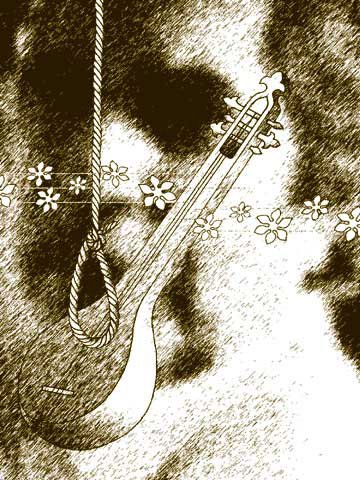
Picture: By Abro Khuda Bux

THINGS

Can you hear?

Things speak.

This is the tanboora
on which Bhittai played,
From its strings
bloomed flowers,
Showering their fragrance on all.

This is the spindle-wheel
which Kabir spun
And the entire land
was woven into its texture.

This is the rope
with which Nana Sahib was hung
and which still swings
Waiting for goodness knows
who else’s head.

You are trying to make sense of my poetry,
Listen,
In history’s museum
Things speak.

(Translation by Asif Farrukhi)

About the Poet: Sheikh Ayaz:
Shaikh Ayaz (Sindhi: شيخ اياز) was one of the major Sindhi poets of Pakistan. He was born in Shikarpur Sindh. By profession he was a lawyer but he also served as the vice chancellor of Sindh University. His poetry brought new trends into Sindhi literature.He wrote short stories, novel, essays, poetry, travelogues, diaries, an autobiography and the translation of Shah jo Risalo in Urdu. He also composed poetry in Urdu and two of his anthologies, “Booye Gul, Nala-i-dil” and “Neel Kanth Aur Neem Ke Pate” were highly acclaimed.[citation needed] He portrayed the miseries of suffering humanity, the sorrows of the deprived and the wretched conditions of the exploited masses who had been suffering at the hands of an unjust system for centuries.

P.S. My special thanks to Abro Khuda Bux for making me aware of this great poet of Sindhi language and hence in making this blog possible.

Source about the author: Wikepedia on Sheikh Ayaz

MF WE SHALL MISS YOU !


A lot has been said and written in tributes to MF Hussain, the 'Picasso of India' (as coined by the Forbes).

It would be a mere formality to repeat all that. I write this blog to Offer my admiration for this great icon and whatever little I know about him through some direct and a lot of in direct contact with him.

First thing that comes to my mind when thinking of MF is his silver hair and bare feet, with a rough, white khadder kurta hanging on a lanky, tall skeleton with a brush in his hand. Ninety percent of the times I saw him in this state, whether in the streets of Jama Masjid area or at the airport or in an art gallery.

In his days of struggle, he lived for years in a no star hotel meant for pilgrims called Haji Hotel in Jama Masjid area of Old Delhi .

He began life painting hoardings for cinema for which he recieved few annas per square feet.
As this wasn't enough to make his ends meet, he worked in a toy factory designing toys for a living.

Born in Pandharpur Maharashtra he lost his mother at the age of one and a half years.
The void in his life by the demise of his mother so early, left him searching for a mother figure in beautiful and strong women.
His Mother

As wrote a blogger Shiv Vishvanathan, "For him the mother was the source of reverence, which combined the erotic and the everyday, which gave meaning to his work. Husain saw that eternal feminine in polyphony of people – Indira Gandhi, Mother Teresa, Madhuri Dixit, Tabu and Anushka Sharma. They were stunning women who evoked eternal archetypes".


Mother Teresa

He loved painting women of substance, in all forms -from Goddess Durga, Saraswati to Politician Indira Gandhi to a nun Mother Teresa to actress Madhuri Dixit.


Goddess Saraswati

He did not finish school and his works were his certificates of achievement. Though later he graduated with the top national honours of Padm Shree and Padma Bhushan Awards

He fell for the poise and grace of Madhuri Dixit and watched her film 'Hum Apke hain Kaun” 67 times. After which he immortalised her in his oil canvas. But that wasnt enough for him, so he went on to make a film with her in the lead called Gaj Gamini.

‘Gaja Gamini is a timeless film that explores the woman. The central figure of the film is represented by a mysterious figure called "Gaja Gamini" (Madhuri Dixit), who inspires, arouses, and confuses the common man.’ mentions Wikepedia on Gaj Gamini.

Madhuri plays the roles of 4 awe-inspiring women, two of them well known in history as –Mona Lisa( Leonardo da Vinci) and Shakuntala( Kalidas). Naseeruddin Shah is Leonardo de Vinci.

MF is in'famous' for paintings of women in 'objectionable' forms by some and they made him controversial.

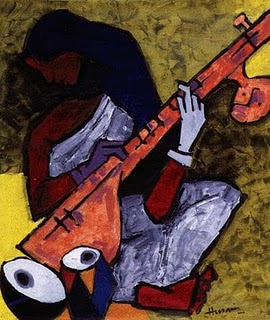
But few people are aware of his Sufi Series of paintings which he painted in the 1970s.

Sufi 1

Sufi 2

Sufi 3

Sufi 4


Sufi 5

Unfortunatley the controversial paintings Naked India, Rape of India and of some Goddesses which though he had painted in the 70s led to his exile to Qatar in the fag end of his life, IN 2010. He took it in a stride and continued his expression through brush unabated.

Such icons are born once in thousand years. Although, Leonardo da Vinci or Picasso did not live in our times but we are lucky that MF Hussain did.

We shall miss you MF.

Sarfaraz Shah, you are the real face of Pakistan


Sarfaraz Shah you are the real face of Pakistan.

You are the face of the youth who constitute two thirds of Pakistan. They say youth needs no spark to ignite, they just need a direction.

Yes Sarfaraz you are the very face of the youth who has all the necessary spark within but no sense of direction ahead.

You are that face of Pakistan who has the great potential lying dormant within it, but the energy that no one cares to harness.

You are that very face of Pakistan who’s steam of helplessness and lack of opportunities to make a decent life scalds it to take the path of transgression.

You are that face of Pakistan who has learnt from his seniors that the shortest path to success is through ‘might is right’.

No one is born a villain, one is made so due to the circumstances.

How could you learn otherwise when the seniors you idolised around you were all offenders in their own right? Snatching petty cash, cell phone or jewellery at gun point in some corner of a street isn’t the only offence.

Usurping the rights of those weaker than oneself, not performing one’s duty sincerely in one’s work, not being honest in paying taxes, not giving the due to the maid in one’s household are all offences . So when you grew up seeing all these misconducts being committed , day in and day out, left and right, all around you, how would you not emulate them. Yes you are this very face of this Paksitan too, the delinquent Pakistan.

Yes Sarfaraz you are the face of that son of Pakistan whose mother sends him off every dawn, at her door with a fear in her heart, whether her beloved son would return home alive, at dusk.

Yes Sarfaraz you are the face of Pakistan, the young and the old, who’s fate is to bear the intimidation of the those who wield more power and who is born to bear the bullying from the powerful at every step, from crib to grave.

You are the face of Pakistan which is seen as a mere clay pigeon by the hungry guns and despot boots simply because they have learnt that the word ‘boots’ is synonymous with ‘stamping’, and the word ‘civilian’ is synonymous with ‘feeble’. And that the boots are worn to stamp the feeble, while the trigger is pulled to shoot at these feeble clay pigeons.

You are that face of Pakistan who dies several deaths each day, while it’s cries and wails of help fall on the deaf ears of the apathetic crowd, which just loves to watch from the sidelines.

You are also that face of Pakistan, like many other faceless and nameless Pakistanis who meet their end ruthlessly on the streets each day, and who’s sacrifices are forgotten long before their spilled blood dries up.

But Sarfaraz you are also that face of that Pakistan, which has the lava bubbling into it’s chests and is waiting for a tiny crater to spill out that ferocious lava. The lava that shall turn to ashes every injustice and malfeasance that has thrived for the past 64 years.

The true face of Pakistan that no one has ever fathomed in the remotest of their dreams.

Yes Sarfraz, I wish you become that very face of Pakistan.

Denial isn’t just a river in Egypt !


Courtesy: Faking News

Poor ostrich is often associated with the belief that it sticks its head in the sand during times of trouble. Of course this is a myth and no ostrich is foolish enough to do that. Thanks to the mankind, and his state of denial that he has attributed this term to the poor ostrich. I am sure ostriches and other animals must be calling this as ‘human effect.

(Ostrich effect is a term used in behavioural finance for the avoidance of apparently risky financial situations by pretending they do not exist.).

We human beings are the masters of denial. Whether it is health, finance, social, political situation—personal, or public we live in denial. We bury our heads in sand of denial of and on.
Who would know the bitter effects of denial than I myself. I still suffer from its guilt now almost a decade on.

On visiting my parents in Delhi in July 1997, I clearly remember how my mom begged to me that she felt that my Papa wasn’t well and he needed a thorough medical checkup. I took heed to her concern and talked to my father, that he needs to see a doctor. He scoffed off the idea that the sweating he gets while walking has nothing to do with his heart but due to humidity in the monsoon season. We went on long walks together, where his pace at 64 years of age was still faster than mine.

I continued to watch him with a side gaze, off and on, to see if I could get a trace of some unwell signs in him. He was radiant as ever, with barely few hair grey in the sideburns and and intact zest for life.

How can my Papa be having a ‘serious’ problem ? I questioned myself several times..

He convinced me that my mom was obsessed. We went for a basic blood test which was all well. Mom wasn’t convinced. But my confident Papa, shooed her idea of an echocardiography for the heart.

Twenty days after I left, I got the news that my Papa passed away, hale and hearty, while working on a computer, typing a chapter for his new book. He had a massive heart attack.

I have not forgiven myself ever since, for having lived in denial, to escape harsh reality. Had I faced the truth head-on, life would have been different.

In a wider context, all human beings live in denial—with just the difference in the degree. We deny everything and then wrap it in the garb of ‘conspiracy theory’.

A quote goes: ‘The abuse dies in a day, but the denial slays the life of the people, and entombs the hope of the race’.

On one extreme end are those who deny Holocaust, the landing of man on Moon, the 9/11 incident, even the  Abbotabad operation in which Osama Bin Laden was nabbed and killed. The other milder extreme are those who express “ We have stopped watching news because it is very depressing.”

How can anyone close their eyes to what’s happening around? My mind often tickles.

In the local context, one sees that denial has become a way of life  in Pakistan. There are many who refuse to accept the problems of Pakistan and pass the buck on others—most favoured excuse being America or India.

Twenty years ago when I was new to Pakistan, first ‘conspiracy theory’ hurled at me was that Pakistan’s big or small problems are because it wasn’t given the ‘right’ piece of land during partition. I remember having had frantic arguments, with myself as a new bride alone on one side, and many old and young, mostly men on the other.

And after that for whatever happened in Pakistan, some  of my  ‘friends’ and kin, in Pakistan made sure that I knew that all that was happening was due to India.

The latest being the PNS Mehran incident—in which a ‘friend’ of mine took pains to mail to me in India that it all happened because of the involvement of RAW agents and that the proof she had was that those men who came there were uncircumcised. I did not shock me, for I had heard the same explanation when the armed men had attacked the Sri Lankan team in Lahore. And worse of all, many among my other kin and friends did not disagree with her.

I do not find these stories amusing any more. Mass denial has become a “National Sickness”. And conspiracy theory is it’s outward symptom. I fear that the way things are moving this sickness may lead to our demise as ‘thinking’ and ‘reasoning’ individuals.

So aptly has the following quote by Meredith Grey summed up ‘denial’ :
Sometimes reality has a way of sneaking up and biting us in the ass. And when the dam bursts, all you can do is swim. The world of pretend is a cage, not a cocoon. We can only lie to ourselves for so long. We are tired, we are scared, denying it doesn`t change the truth. Sooner or later we have to put aside our denial and face the world. Head on, guns blazing. De Nile. It`s not just a river in Egypt, it`s a freakin` ocean. So how do you keep from drowning in it?

God shall wake up, Someday !


With my brain immersed in pool of ignorance,
With my heart beating in rhythm of indifference,
With my senses numbed with vaccine of bigotry
With my eyes enveloped in curtains of darkness,
With my ears stuffed with plugs of apathy,
With my mouth gagged with grips of denial,
With my hands tied in chains of cowardice,

I see no light at the end of the tunnel
I think no dream shall come true
I feel no dawn shall break
I hear no music of hope

So, I sleep again
into a deep slumber
To dream a dream that
God shall wake up
SOMEDAY !

PS: Mentally shaken, morally crushed, neurally stunned I know not where am I heading…And with an illusion that  it’s not me, but God who will bring a change.

Khoon baha, itna baha, ke behta chala gaya…


Khoon baha, itna baha, ke behta chala gaya…

Kyunke..

Mulk jhuka, itna jhuka, ke jhukta chala gaya…
Andhera hua, itna hua, ke hota chala gaya…

Zulm badha, itna badha, ke badhta chala gaya…
Insaaf mita, itna mita, ke mitta chala gaya…

Insaan soya, itna soya, ke sota chala gaya…
Aas miti, itni miti, ke mitti chali gayee…
~June 9, 2010

..

Dhyan hataye nahin hatta,
Aansoo thamey nahin thamte,
Dil sambhale nahin sambhalta
Karoon to aakhir kya ?

PS: Penned in a shaken state of mind after watching the video of the young boy, Sarfraz Shah, who was shot at close range, then left to bleed to death right there..

But will this stop at Sarfaraz Shah ?

Delhi Diary: Everything is For Sale


People look the same, but they think different, act different. Values have transformed. Yes, the place is booming with progress, but booming to the extent it makes an old fashioned me feel nauseated. Returning to my home town after only a few years, I find the world there has fast forwarded many many years.

Commercialism is at its helm sweeping everything and everyone with its flow. Huge malls have burgeoned with top international brands to cater to the new middle class with excellent pay packs and plenty of dispensable cash. The rush in high end brands is as if the stuff is for ‘free’ give away.

My favorite hideouts for ethnic stuff sulk with few visitors— mostly being tourists or old fashioned junkees like me. To my utter shock my favorite state craft emporium which was known for it’s exclusive handmade stuff, is now stacked with second rate , far more expensive machine made ugly embroidery—and they call it ‘handicraft’. And the stuff which I wouldn’t cherish even for free, is exorbitantly price tagged. The lone hand embroidered trinket I dug out from the old stack, turned out to be way cheaper than the new commercial stuff.

“Why? “ I ask.

“It old fashioned”, the lady remarks.

I walk out disheartened for it ceases to remain a den I will ever again aspire to explore.

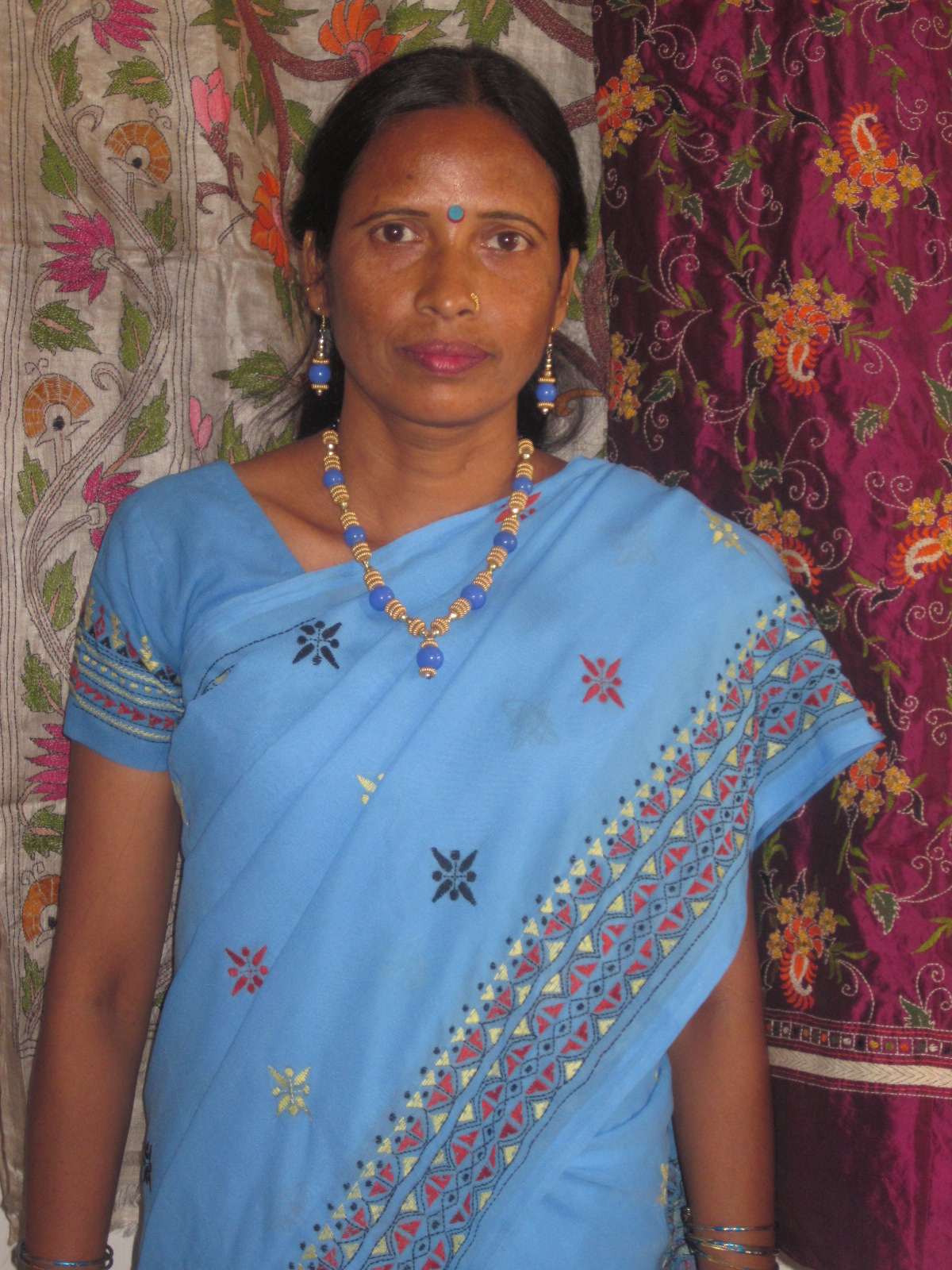
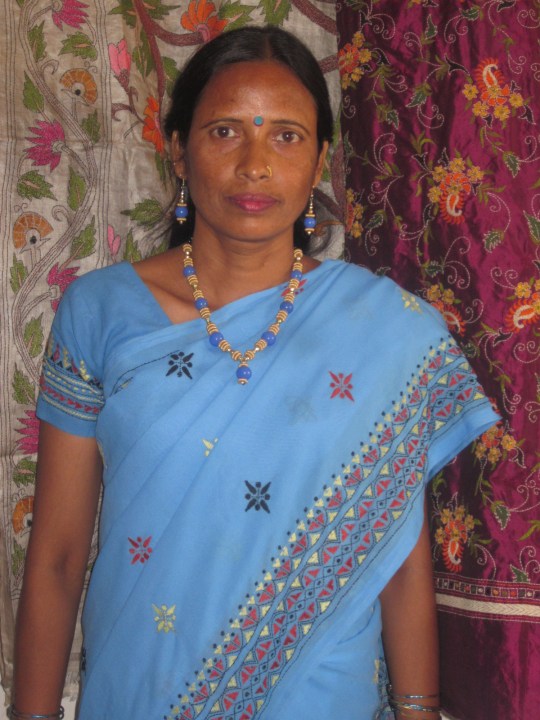
Delhi Haat, the hub of art and craft, is deserted with over half the shops either closed or unoccupied. Few love-stricken couples, roam around on a look out for solitude in the empty shops. The shop with state of the art hand embroidery from a remote state sells it dirt cheap—

I again ask. “ Why?”

She is dumbfounded. How could anyone call it cheap, as people still haggle with her to bargain on that price.

The official passing by over hears, and explains— “Yes if she won’t sell that cheap, no one will buy. And she will have to pay the freight and carry it back to her home town 2000 km away.”

My heart aches. I buy without a bargain. I hug the woman. Call her my sister to overcome the guilt of buying such laborious art so cheap.

My brother buys an IPL Calcutta Night Rider’s T-shirt for my son at an exorbitant price tag. My heart sinks. The high-end store selling original T-shirts has teenaged boys falling one over the other for their favourite team’s Tshirts. Then I see, not one or two, but many boys buying several Tshirts from different teams.

I again ask a mom , “Why?’

“He collects them all”, is her matter of fact reply.

Maybe I am somewhat old fashioned to make sense of that.

I walk into another shop in the fancy Mall, for a friend’s demand of a bridal dress. They serve you lassi, thandai, fizzy drink, mineral water—whatever soft drink you name. The cost of what I was told to buy is 4 times the price my friend had asked for. I tell him my range—and the ‘seth’ in the shop gives a jerky smile, turns to attend to the next customer, never to look back at me again.

I call him and he says, without looking at me, “With your range you will not get it anywhere, you may try elsewhere if you like”.

I walk out dejected—knowing that my friend would never believe my story. She wouldn’t buy my explanation that India isn’t simple and inexpensive, anymore.

Not just the usual stuff, many more interesting things are for sale too. Male or female sexuality is on display too, in TV Ads, selling trivial stuff like deodorants. A deodorant Ad shows a woman fanaticizing about sex after getting a whiff of the man’s deodorant. In another, a woman finds a man’s deodorant so attractive that she starts unbuttoning her blouse, and yet in a third one, a woman is drawn to her sweet-smelling brother-in-law.

When the government objects to their being inappropriate on TV, watched by families at home — the fashionables cry for freedom of expression. That the woman or men should be free to express their sexuality in public. Yeah sell the deo ‘using’ a woman’s sexuality. This is called commercial freedom. Perhaps I am too old fashioned to get that.

Then one hears the news and the rescuing of under aged girls, as old as 12 or 13, from brothels in some cities. They are lured into business with a ploy to better jobs and are sold in brothels. There are two business models to make them comply in the trade- first, physical torture, and secondly, drugs. The two methods are applied enough to kill their self esteem, and they obey their seniors like robots. These little girls physiologies’ are on sale too.

Another commodity on sale is the woman’s womb. Many agencies have sprung up taking pride in making India a hub of reproductive tourism. Now if you have a vacant womb, you can rent your womb and bear another couples child. It was a scientific feat, especially for those who could not bear their own child for some medical reason. But now the reasons have extended to economic and social convenience. Many couples who have enough money, but not enough time can rent a womb and let it carry their baby. And once born they are legally the parents and the surrogate mother has no right either emotional or legal over the baby she nourished with her blood and tissues.

Busy rich ‘desi’ couples in the west are the clients mostly. Who shall tell these money struck parents that to go through the whole sequel of ‘Pregnancy test Positive’, to each stage of pregnancy, week by week , month by month, cuddling an unborn baby, feeling its kicks is a journey It’s the real honeymoon in a couples life, that no money can replace.

Bring home a baby ready made, not able to breast feed, no knowing what pangs of birth are or what morning sickness is- is hard for me to comprehend.

Yes really hard to comprehend.

For sure because I am old fashioned.

Very old fashioned.

My friend at Delhi Haat
Koi Sunta Hai: A Film on Kabir by Shabnam Virmani


A incredibly beautiful film on how Kabir Poetry is woven into the Folk Music in India.

Kabira Khada Bazaar Mein : A Film on Kabir by Shabnam Virmani