Open up your mind and your potential reaches infinity…

Farewell to Fasih & Papa


Its Friday again. 8 weeks since the fateful Friday of 26 June 2020.
Yesterday 21 August was Papa’s departure date 22 years ago in 1998.
We have been carrying an ache in our hearts that Papa left this world young at 65. He had retired 6 months ago, but being a workaholic loaded himself with work post retirement. At the time he passed away, he had 2 partially written books on his computer and several research proposals.
Now the ache of losing him young has been amplified and intensified with Fasih passing even younger, at 59. He wasn’t even retired. He was at the peak of his career rather, which he envisioned to go on another 25 years. He wanted to be an old cynic doctor who kept seeing patients even when, as he would joke, “wore a galice to hold his pants and walked with a stick.”
He wasn’t being unrealistic. His grandfather had lived active, healthy life till mid 90s and father was amost 88 and working till the last day.

During Papa’s time, Fasih chose to spend all his entire 45 days of vacation in Delhi with my Ammi and brothers. There was Ramazan and Eid in that duration which we spent with our family. Most of late-nights were spent playing carrom board at home, watching soccer, talking about Papa and Fasih often consoled us by saying how fortunate we were to be the children of an intelligent self made man and, heirs of his brilliant DNA. Fasih deeply respected Papa.
Although very different in personalities, they had a wonderful bond.
Papa being finicky on Urdu pronunciation would often ask Fasih to say, “Say Qeema. Not Keema.” Fasih would smilingly repeat.
With this in the background Papa often introduced Fasih as a very obedient son-in-law.
“Bahut farmaberdar damaad hai.”
.
Fasih was a polished gentleman, Papa was a blunt Delhiwala, and I have taken on him for sure. He was the one who told Fasih in a matter of fact manner, “Ilmana se kabhi jhoot na bolna. Jo bhi ho acha bura ek doosre se share kerna. Buss pher koi problem nahin hogi tumko.”
To me as a father he had advised, “You are an educated woman. Be an equal partner. And now that you have decided to marry a Pakistani, own the decision. Do not dream of dragging him to India and uproot him.”
This was a pragmatic advice Papa had given based on some related incidents in the extended family.
And believe me these gems of advice laid the foundation of trust that Fasih and I built for each other. Fasih felt very supported by Papa.
Another great reason for our trusting relationship was we took decisions as a family unit, whether it was to move kids to Canada or build Taj in Karachi, despite what people around would comment. Fasih’s pet peeve was, “Suno sabki, karo apni.”
Fasih, having seen how much a workaholic Papa had taken retirement to heart would say it aloud, “One should never retire. I dont plan to retire in my life.”
Fasih’s own father, a physician, never retired and kept seeing patients till his last day at his age almost 88 or so.
Fasih did his last pulmonology clinic on Friday 19th June. He had at leat 2 dozen patients that day, some of whom had come from far flung areas including Balochistan.
A friend who had visited him that day later told me, “That was the first time i saw him in stress and he mentioned his brothers covid suffering and tough recovery. “
On Saturday morning he had gone into isolation with bodyache, and was in hospital by Sunday evening.
He resisted my insistance to go to hospital, “On Monday I have to pick up the ambulance that is ready in the showroom.”
I refused to listen. “No. That can wait.”
I am glad Fatima who too was on the same group call agreed, “Yes Papa. Listen to Ammi.”
He relented.

I still don’t understand what went wrong. He got admitted when oxygen saturation was 88. Not breathless.Xray was not too bad at admission. He walked into the ER. Got all meds on time, all care on time. He was recieving the WHO protocol in the best healthcare set up. He kept messaging us in the family group till Wednesday morning, “All good here. How about you?”
But his ventricular wall muscles started to ditch him. They began irregular contractions( PVCs) and ultimately led to cardiac arrest.
What a stab in the back by the wretched virus that chose to attack the very heart that beat for others with empathy, for past 59 years. A heart that was strong and could let him climb stairs upto 12 floors in one go without being breathless. A heart that felt no fear, ever. A heart that was always in gratitude for everything, yes everything. These spiraling thoughts suck me up into a horrible tunnel of abysmal darkness.
It makes me paranoid that this virus has some personal grudge against me. Yes personally against me. It is out to get people I love and care for. Honestly so many times I try to tell this virus, “FYI, The only person I really cared for is gone. Get out of my sight now.”
But this wrteched virus knows I have loved ones, who I need to keep reminding, “Stay off this beast. For heavens sake, stay off this beast.”
Yes, no matter even if I sound out of my mind, please stay off this killer virus. This wretched virus destroyed my beautiful family.
https://www.facebook.com/quraishi.ilmana/posts/3563697423642800
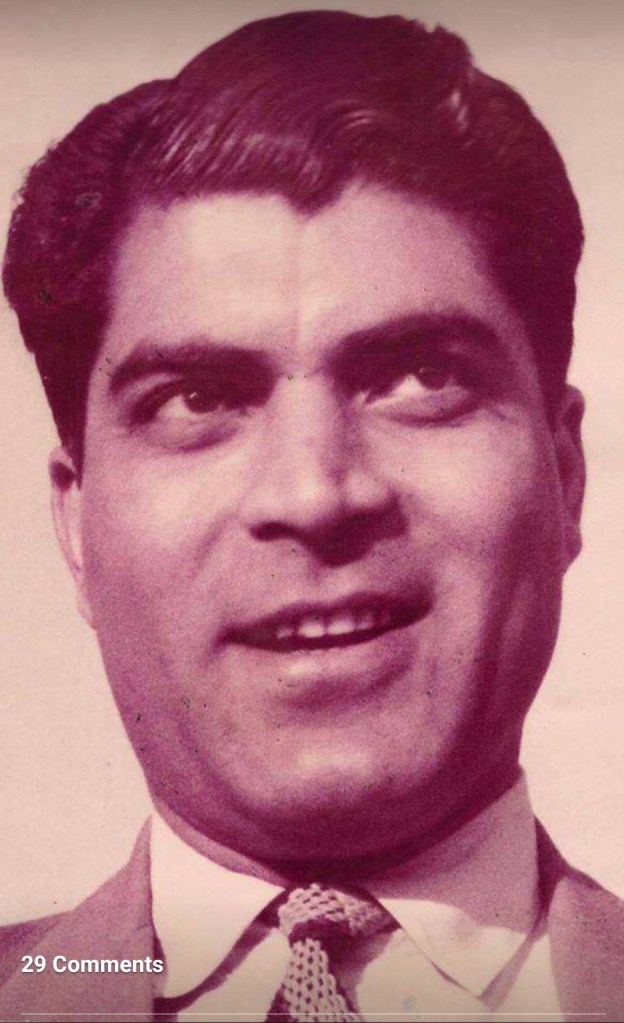
My Papa

Last night Fasih asked me in the dream: Aaj kya pakaya hai?
I told him: Nargisi Koftas.
Fasih: Astaghfirullah. Koftey se tou mujhey koft hoti hai.
This is a real conversation that we must have had at least half a dozen times in our 30 years of married life. Yesterday was merely a replay of an old memory in sleep.

Fasih was a fussy foodie. He loved most delicacies but detested some others a big deal. Koftas, which happen to be my favourite, Fasih thoroughly detested them. He did not like qeemas either.
He detested chicken too. Found it flavorless. That was our common dislike.

Fish and seafood were his favourites. Easy availability of lobsters in Costco, his request on his quarterly visits to Canada would be everything sea food, including Shrimp biryani, lemon fish, lobster baked, crab meat salad.
In Pakistan, he would go to Jamshoro just to eat Palla(a Sindhi fish cooked at the banks of river Indus).

We had an inside joke at home. With both boys being meat eaters, whenever I made veges and dal, or rajma or paneer, all favourites of us girls, Fatima and me, Ismail.would ask Fasih, “Why did you have to marry an Indian?”
And Fasih would get all patriotic as if meat eating is synonymous with being a Pakistani. 😀 He would reply, “Ismail lets go get food from xyz. Today imagine your ammi is Afghani/Turkish/Iranian. Let them eat paneer or rajma. And we won’t share any with them.”
Lines were clearly drawn. Though Fatima also at times crossed over to join the boys.
It was never easy to feed veges to Fasih, because he always had the option to ‘order’ out without much noise.

The last 11 weeks were rather different, for some weird reason. He ate all the veges I made and even enjoyed them. Some FB friends may remember I had posted, “Boys are enjoying veges in lockdown.”
Not only did he enjoy but even told his cousin, “Ilmana is feasting us with some good vegetarian dishes in lockdown.”
I was so glad, finally I have ringed my man into enjoying vegetables. 

There are some dishes I think I made only because Fasih loved them, and I may never bother to make them again, as I dont believe in putting too much labor into cooking for myself. And kids particularly don’t fancy them, for example Paaye.
Cooking is fun, only if its done for loved ones. Not for oneself. I can happily fill myself with dahi and toast.

Another interesting thing about Fasih being food fussy in early days was his idea of a dinner. Pizza or Pasta were not dinner. And since I had learned very typical Italian way of making Pizza dough or pasta sauces including Pesto from scratch from my Italian cousins, I put in a lot of labor in making either of them, accompanying them most of the time with soups and salads.
In early days in Makkah, a full pizza or pasta dinner, that all of us including kids enjoyed and filled themselves to the brim in the evening.
A couple of hours later he would ask, “Aj khane mein kya hai?”
I would be scandallized, “Babloo, didn’t we just have the dinner at 8?”
He would softly and innocently ask, “So that pizza was dinner?”
I would loudly reply, “Yes. But are you hungry? There is still lots left in the fridge.”
Fasih: “No, I am not hungry. But just asked what was for dinner.”
However, 30 years is a long long time. Over a few years, he got used to what was “our kind of dinner” in Fasih family.

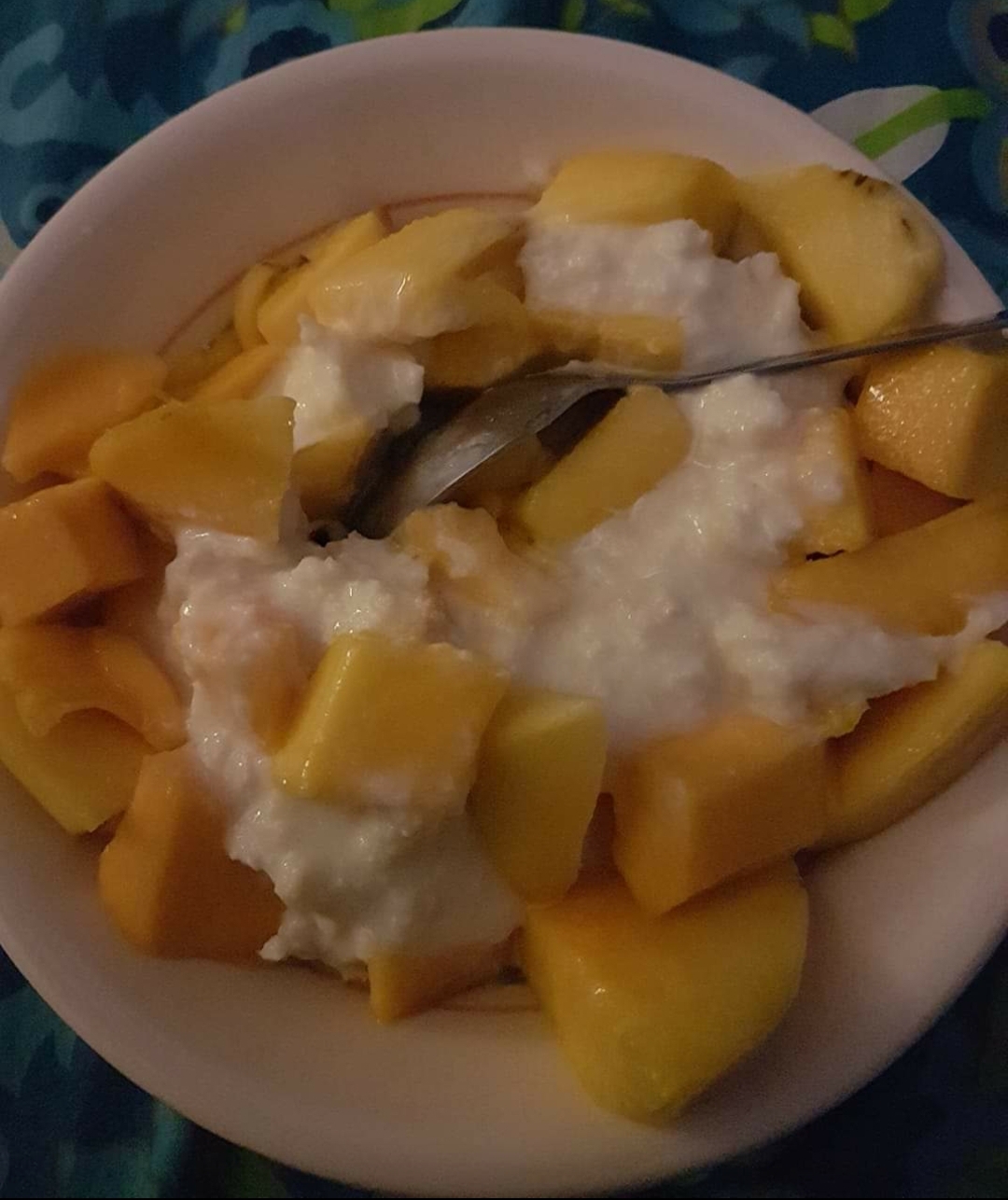
Fasih was a mango lover. I know most people love mangoes, but i have yet to see anyone so fanatic about mangoes. Pakistani Anwer Rataul and Indian Alfonso(available in Makkah) were his favourites but living in Makkah, he enjoyed mangoes 12 months a year imported from all over the world. In winter we got mangoes from South Africa and South America. These mangoes had no flavor or aroma. But Fasih would still binge on them and even relish them like a religious duty. He would search for mangoes from different countries.
“Begum aaj Peru ka aam laya huun.”
“Yeh Ghana ke mango hai.”
I would joke, “if someone wrapped an eggplant with mango skin you will still enjoy it.” And he wouldn’t merrily disagree.
“Yes mango mango hota hai. Saari duniya ke mangoes taste kerne haiN mujhe.”
However he was equally picky about aromas and flavors of Indian Pakistani mangoes 🥭🥭🥭🥭. He detested canned kesar mango pulp, “It tastes preservative.”
Those who’ve visited dinners hosted by us know a Mango Rose dessert, a secret mango mousse recipe that is a favourite in Fasih household. Fasih wouldn’t let me make it with canned mango pulp and insisted to use fresh flavors.
Below is the picture of a mango-rose, a dessert, that was developed in Fasih household as a symbol of Fasih family’s love for mangos and high standards of presentation of food.
In Karachi he enjoyed sweet and sour Sindhri mango cubes with rabri. There couldnt be a more royal treat.

His next favourite fruit was pineapple. Not the canned ones, but the fresh whole pineapples- he would bring a whole pineapple from COSTCO, leave it few days to ripen and then meticulously peel and slice it himself. It followed a tyical dialogue, which he repeated a gazillion times, perhaps after every chore, ” Yeh tou ho gaya. Begum, ab aur koi khidmat?” 😀 He wanted to travel to Malaysia again as that is where he found the sweetest pineapples. In our last visit to Key West, did he also find delicious Cuban pineapples. 🍍
Fasih’s love for fruits merits a separate blog.

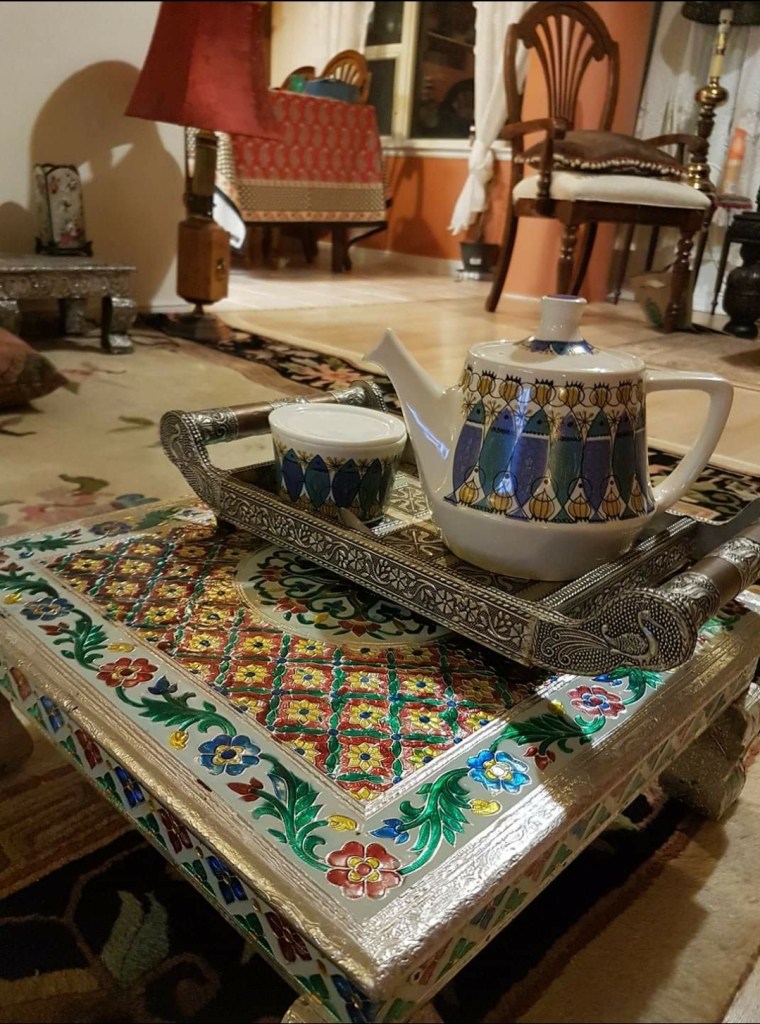
And ofcourse good steeped tea and strong coffee were our common addictions. Having the last cup of chai before sleep was a religious ritual. When we did nothing, we drank tea or coffee together as a passtime. 😍 I haven’t had the last cup of tea ever since Fasih left. 😦
Link: https://www.facebook.com/quraishi.ilmana/posts/3557725787573297

Tea at night

I tried a great deal but I fail to understand the concept of sudden and premature demise.
On one hand it is said, the only thing definite, universal and a great equalizer is death. And on the other hand, there is no certainty or durability or guarantee of when will it arrive.
A healthy young person suddenly hits a truck or a random person happens to be in a wrong place at a wrong time suddenly gets fatal shot in a cross fire without being the actual target. Or even in COVID you hear of people on 80s, 90s or more or with comorbidites or cancer survive while a fit doctor despite all precautions catches the most virulent strain & succumbs to it.
First time I heard of a doctor dying of an iatrogenic infection was of my son in law’s uncle who had died more than a decade ago after operating an accident patient carrying CONGO Virus in Karachi. Only he was randomly selected to get cross infected, while no one in his team caught the infection. I was scandalized when I heard this story from the family.
And now, it actually happened to my own guy. One can console, or argue these covid times are uncertain times snd he is not a lone victim like Abdullah’s chacha, who was barely 34, had a 2 year old daughter, and his own FCPS in Surgery result came out after his demise. The family says their lives were turned upside down….quite like I feel. Or perhaps must have been a lot worse, as he was much younger, and there was no pandemic either.
Coming back to the point, why is death so unpredictable? When so many other things follow rules of nature, why not death?
Have you heard of someone being born normal and surviving at 16 weeks or even 20 weeks? For survival it has to be beyond a certain age. If not survival after birth, why should death be so unpredictable?
Has anyone seen sun rising prematurely and suddenly at 2am? Or not setting until 12 midnight suddenly? Are they not following rules of nature? Then why not death?
Its okay if someone wants to choose to die. But why should it happen to those who wanted to live, who want to do good in life?
If everything follows laws of nature, why not death?
I know in faith it is seen as “The Will of God” and hence a full stop to all arguments.
I still cannot make sense of it or able to understand. Why? Yes why is death the only thing that does not follow the rules of nature?
Call me whatever, but I dont still get it. I am sorry. I am not just complaining about my loss, but lamenting on behalf of all the loved ones left behind after a sudden death. 
https://www.facebook.com/quraishi.ilmana/posts/3550381511641058

jis tarah ḳhvāb mire ho gaye reza reza
us tarah se na kabhī TuuT ke bikhre koī
~ Parveen Shakir
On 25th Anniversary on 29 Jan 2015
Hisaab e umr ka buss itna sa goshwara hai,
Tumhein nikaal ker dekha tou sab khasara hai.
Ger baazi ishq ki baazi ho, jo chaaho laga dou der kaisa
Jeet gaye tou kya kehna, haare bhi tou baazi maat nahin

` Faiz Ahmed Faiz

Please read this post with a strong heart. I still suggest do read as this is not fiction but a wretched truth of COVID-19 and its toll on doctors.

On May 29th, Fasih called me and told, “Dr. Mahmood passed away.” ( Dr. Mahmood was Fasih’s long time freind and colleague and had spent last 10 years in Makkah with him as a very close friend).
Me: What? What happened?
Fasih: His wife Huma called me yesterday that Mahmood was having breathlessness, and I suggested him to immediately go to ER, and phoned Dr. Qazi Moinuddin Ahmed to admit him in Zahir Hopsital.
Me: Hmmm…
Fasih: Today morning I woke up to check for him, and called Moin, and he informed me, Mahmood passed away within hours of admission due to COVID-19. The hospital is now planning for his burial. And his family has not been reached out.
Me: *speechless*
Fasih: I called Huma and first thing she said was, “Fasih bhai Mahmood is not picking up the phone.”
Me: Khudaya…
Fasih continued: I told her, “Dr. Huma, I am so sorry, Mahmood’s health deterioted after you he was kept in isolation. Unfortunately, Mahmood is no more.”
Huma winced on the phone.
Fasih: Please rush to the hospital, and have a last look at him please.
Huma went to hospital and then also accopmanied them to the graveyard to witness his burial.
After that, she too had to go into isolation with all her grief for 2 weeks. Both her kids were overseas, and too far to only reach through phone.

In one of the comments on Fasih’s wall, Dr Moin write, “Dr. Huma was a symbol of grace and strength, as she watched her husband the last time, with calm, and patience while we all were crying hard.

After Mahmood bhai, Fasih was visibly shattered. He had to break the news of his death to his wife, children and even to his relatives in Karachi, and that took a huge toll on him. All he talked was about Mahmood on all phone calls, until his own brother fell to COVID-19 in Karachi. Ofcourse with this recent tragedy, he left no efforts to get his brother into the best care and treatment.

I still did not have the courage to speak to Huma for weeks and I mustered the courage to call her around June 10, and she was still only “Thankful to Fasih for his help.”
I was bewildered at her grace, and condoled my heart out. She was still alone, in isolation and said all that helped her was prayers.

Just in next 10 days, on June 21, it was Huma calling me to support me after Fasih was admitted to hospital.
She made every effort to cheer me up and even when I told her, Huma, I dont understand how can you be so positive, when you are grieving yourself, she said, “Ilmana, Fasih bhai is healthy. And he is strong and resilient. Mahmood was diabetic. More than that, Mahmood wanted to die and be buried in Makkah. I am grateful to Allah he fulfilled his dream.”

I knew Huma was going out of the way to support me, and trying to find ‘positivity’ in her own husband’s death, just to cheer me up.

In subsequent calls all through Friday, she kept cheering me up with funny things like,
“Take your best clothes, now you will spend time with Fasih in his recovery, and he will be so motivated to get well soon, seeing you graceful.”…. numerous other cheezy suggestions.
She made every effort to express how exciting it would be for Fasih to be ‘enjoying the rest’ while I will look after Taj, under his supervision in his convalescence.
She had even given me a ‘gaurantee’, “Just wait and watch how bravely Fasih bhai will come out of this. Fasih is a person of different mould.”
I would put the phone down, motivated, but also at the same time, be in awe of the grace and strength of this selfless woman who was feigning to forget her pain, only to cheer me up. I knew and had seen very closely, and how close and beautiful couple Huma and Mahmood bhai were. It takes great courage to overcome one’s grief to cheer someone else up. My massive respect to her, and am indebted for life to her.

On the tragic Friday of 26 June, when the skies came falling on us, Huma called me crying, “Ilmana I have nothing to say. I am sorry, but I was sure Fasih bhai will brave through. I can still not believe it. I cannot even accept it.”

After that until today, I did not recieve any phone or message from Huma. I also was not in a state of mind to even notice it. So it just struck me suddenly yesterday and I sent her a message. Today I recieved a message from her, from the real Huma who was crying and mourning the loss of her husband, even after 2 months.
“Ilmana, I had no strength to call you. Its getting worse with time, and absence of Mahmood is getting more and more unbearable. I dont know how will life go on. This is too lonely a life without him. I know you are also in the same situation. I know what you must be going through. I dont know why and how, but our lives have been destroyed within days.”

Dr. Huma is now back to work after 2 weeks of break after Dr. Mahmood’s death as, “It is so hard to stay alone. I am back to clinic and also seeing patients, including COVID, just to pass rest of my life.”

I still did not have the courage to call her back. But I am mustering courage, and I will. She was the pillar of support and hope to me when I was the most fearful. For some reason, or for obvious reasons, I have lost all fear from my life. Alhamdulillah.

May all the current frontline doctors stay safe and strong.

#COVID19 #HealthcareWorkers #doctors
Link: https://www.facebook.com/quraishi.ilmana/posts/3545666175445925


Today I want to talk about the dynamics of being an Indian-Pakistani couple.
The story is long, 30 years long to be specific and deserves a book, as many friends keep telling. But here I will share some of the very initial stories, from the first year or so.

Fasih was, as everyone knows, a very mild natured emotionally super intelligent person. I was the extreme opposite, reactionary, easy to be provoked and stand up to argue on what’s right.
In the early days of our marriage, even small little innocent questions triggered me.
I will share a few examples here:
As Fasih and I were sitting on the stage in our reception in Karachi in Feb 1990, an old lady, from extended family, obviously height of ignorance, sat to get a photo with us. She was sitting on my side, and while the cameras were flashing she asked me softly, “India mein Video camera hota hai.”
I replied, as Fasih later pointed, very loudly, “Haan, bilkul hota hai.”
After the photo session, I actually began howling in my bridal attire and Fasih softly patted me and told me to relax. Someone noticed it and asked, “Kya huwa, kya huwa, kyun ro rahi ho.”
Fasih smiled and replied, “Ilmana ko Dilli aur Ammi Papa yaad aa rahe hain.”
From then on, my meltdowns and Fasih’s calming down became a routine.
Once we were invited to another extended family a dinner. There the head of the family, who was my father in laws age remarked, only to hurt, or maybe not. He said in a very intellectual tone, “Dr Sb aapki bahu Dilli ki hain?”.
My father in law,, Dr. S M Sabihuddin, was a beautiful.educated soul. He replied, “Jee. Ilmana ke abba Delhi mein professor hain. Bahut achey educated khandaan se hain.”
The gentleman replied in a typical Bihari tone, “Hum ek baar Pachna se Delhi parhne aaye the, mager humko nahin pasand aaya. Humko Dilli ke log bahut ghamandi lagey.” Then he praised how lucky he is to be a Pakistani now.
Now imagine me in Feb 1990, and my reaction as a new bride. I could not hold back.
I replied to the old man, “Delhi mein bihari bhare huwe hain. Aur ek bar parhne aate hain tou waapas jaane ka naam nahin letey.”
This crisp reply was probably enough that he never commented on me ever in life again.
Fasih sat quietly. Probably embarrassed.
However, my father in law came to my defence and told him, “Tou aapko Pakistan mein kya mil gaya? Main tou isko choristan kehta houn. Jisey dekho haath phailaker rishwat mangta rehta hai. Choristan hai yeh.”
I just waited to get back to my room, and when back threw a huge tantrum at Fasih on why did he not come to defend me.
He was calm and told me one lesson which he repeated a million times in years to come, “If you hear people talking ignorance, pity their brains. No point getting angry and wasting your energy. They are symbols of ignorance.”
In my anger I told him, “Why did I even marry a Bihari?”
And he replied with a tongue in cheek tone, “I am not Bihari. I have never been to Patna or Munger. I was born in Lahore.”
Me: “But your Papa is Bihari.”
Fasih: “Papa was also born in Jaipur. He never went to Bihar either. Dada Abba was Bihari. Let him be.”
He argued these are meaningless fantasies that old men cling on to for sentimental reasons only.

In another dinner, the hostess asked me, “Ye dish kya hai bataao?”
I could not recognize the dish and then she asked me, “Kabhi Nihari khaayi hai?”
I was scandallized and screamed, “You are asking me Nihari? I am from the city of Nihari’s origin and btw what you cooked is not Nihari.”
Ofcourse, the aunt didnt like my bluntness.Fasih just smiled without a comment.

Fasih’s family being a Syed, and me not being one also popped up gazillion times in the extended family.
And again Fasih’s father defended me vehemently each time it came up. To one of his younger brothers who popped up this question, he said, “Tum Syed ho ker pichhley 30 saal sey ek dafter mein clerk ho. Ilmana ke baap, dada, per daada, Delhi ke aalim family sey hain.”
A point came when his extended family stopped using this taunt in Papa’s presence. Fasih’s own family and siblings were sensitive enough to never bring up these conversations , and he told me this was all that is more important.

Most of the times, Fasih just told me to ignore the ignorant, the insignificant, and feel sorry for them. And I kept whining that “You should fight for me too.”
But Fasih’s way to make a statement was very different. More action, less verbal.
Then when our son Ismail was born in Makkah, the natural family tradition was to name him Syed Ismail Fasih. But Fasih put his foot down and said, no, he will be “Ismail Fasih”.
“Syed naam likhne se kuch nai hota. Apne amaal hone chahiye. Sirf naam aur lineage ka takabbur kerna arrogance hai.”
I am so proud of Fasih how he would not even let his patients from deep interior Sindh touch his feet because he was a Syed and would actually get angry at them. He would tell them instead, “Mere liye dua kerna, ke Allah mere haath mein Shifa dey.”
Similarly as we visited India, a few in my extended family members bullied Fasih on being a Pakistani. But the dignified calmness with which he handled them was something of an eyeopener for me and my folks. This is one of the biggest reasons, my father, mother and brothers respected Fasih the most.
Like we were sitting in an family dinner in a relative’s house and Fasih picked up the water bottle to read the name “Bisleri” and my uncle remarked, “This is Indian. In India we have everything Indian.”
Fasih just smiled.
Then a bit later, the same uncle recieved a call and he picked up his Blackberry. And Fasih very softly asked, “Yeh Blackberry bhi Indian hai?”
The uncle did not react or even look into Fasih’s eye.

Here, I would like to make a special mention of a sensitive and caring person ( my father’s cousin’s wife), Tanzeem Chachi who was my rock solid support, ‘mayeka’ and go-to person in the early days in Karachi, and it meant a big thing to spend a day at her place. Unfortunately she departed too soon too and is no more.

Over the years, as our extebded families from both Pakistan and India visited us when we lived in Makkah, they all came to realize how futile it was to stir India-Pakistan petty politics in our home.
Down the years, I mellowed with millions of calm lessons from Fasih and I stopped reacting to triggers. And life became beautiful.
A point of time came when I dediced to rise above borders and petty matters, and look at India and Pakistan from a humanitarian lens. And that was another turning point, when it was about humanity both sides, more than patriotism- mine or theirs. Humanity was common to both sides.
Another very important lesson I learned from Fasih was how important it was to be kind & polite instead of being right and arrogant all the time.

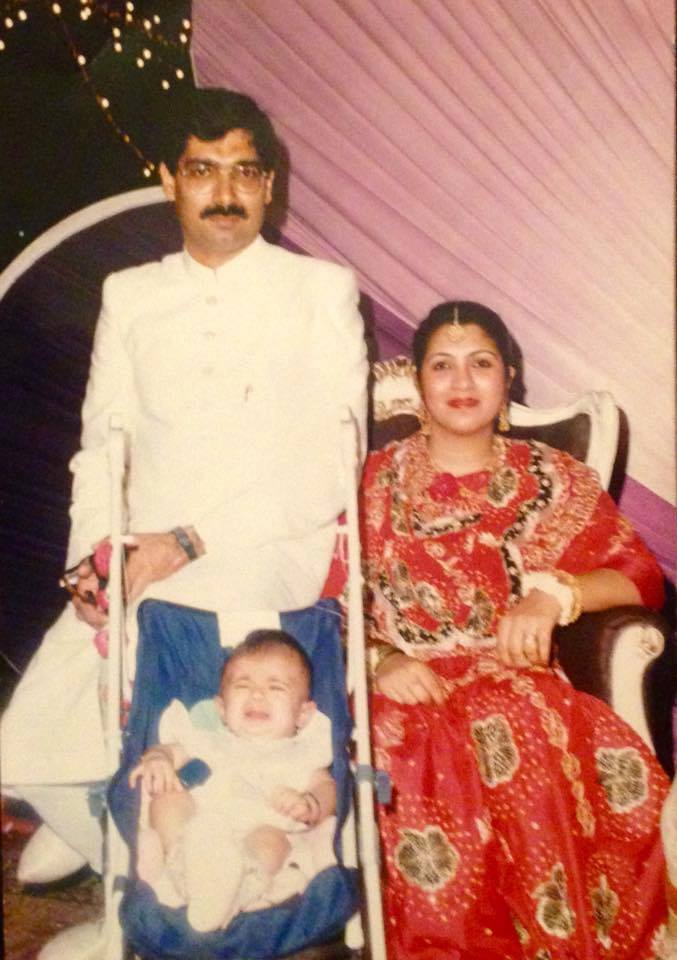
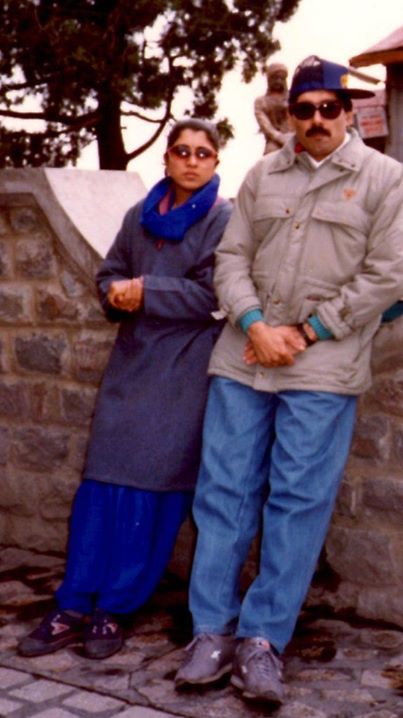
Below are some of the pics: From our Valima, Honeymoon to Simla and at Fasih’s younger brother’s wedding.

Azaadi Mubarak to both Indians and Pakistanis. May we all learn to be #azaad from hatred, bigotry and prejudice. ❤

In the last few years I had started to snore in my sleep. And, as Fasih noticed, I would wake up again and again several times at night. Many husbands sleeping next to their snoring wife might find it annoying for obvious reason. But I saw Fasih get more worried than annoyed.
The Pulmonigist in him saw it as Sleep Apnea and kept telling me ask our GP to refer me to Sleep studies here in Ontario. As usual I kept procrastinating it for one excuse or another. And he kept reminding me. Sometime scolding, sometime telling me, “Believe me it will change your life.”
Finally one day I got referred and 6 months later got a sleep test done. A week after the test the Canadian Pulmonologist called me for an urgent appointment. He told me I have moderate to severe sleep apnea and I wake up tens of times at night. This must be keeping my day lazy and sleepy as I was not sleeping well. He immediately prescribed the CPAP last September. I travelled to Karachi and Phillipines in October 2019 to Jan 2020 and enjoyed the luxury of deep sleep after years of Sleep Apnea, with CPAP.
Now I knew exactly what Fasih would say, “It will change your life.”
Fasih had started Sleep Clinic in Taj too, and he would always share “my wife’s experience” after October, with patients who wouldnt understand the important adverse effects of Sleep Apnea.
So its been a CPAP Sleep with lots of good dreams in deep sleep ever since.
But this isnt the story I wanted to share with you. The story I am going to share below needed this background.
In past 3 to 4 weeks, after i stopped sleeping with Clonazepam, the sleep part with CPAP, has been the best part of my entire 24hours. Once in sleep, life switches back to the pre- fateful Friday, 26th June 2020. Life is back to normal with normal day to day conversations with Fasih and kids. There is nothing like “he appears in the dream to convey some special message”, but life goes on as usual with sometimes us laughing, sometimes arguing, sometime just doing our own chores. Most of the times, its repeat of our old life incidents and usual conversations that happens in a family. Some conversations are clear and some forgotten after waking up.
For example, yesterday’s was the conversation that happened a million times in real life in past 30 years:

“Me: Babloo, what should I make for dinner?
Fasih: Begum aisa karo make biryani, then make paaye. Add some qorma and haleem and bihari kebabs too. *with straight face*
Me: Kya? Cant you be serious? Sorry I cant make all this.
Fasih: So why did you ask? Make what you want?
Me: Theek hai, I am making dal, chawal and bhindi ki bhujiya. Happy?
Fasih: Okay then add some Shami kebabs to it.
I knew it. So had Shami kebabs frozen in the freezer all the time.

Life in REM sleep goes on as usual with Fasih and kids around.
Most difficult part is to wake up in the morning. For many mornings, I have to shake my head to confirm which is dream and which is real life now.
I had fears in my life always, of sickness, losing job, etc. A few time I died myself in my dreams. 😀  And even recommended Fasih a few tips on what to do after I am gone. But never ever did i have a bad dream of losing Fasih in my dreams even.
Life is not fair. We had many plans in life, before one of us passed away. 


In my entire life, I had never heard my Ammi ever express that she wanted to be fit or live long. Like every woman raised to get married and live with her husband, she spent all her life looking after her husband, children and home. It was in the midst of all this she did her second MA, MPhil and PhD just because Papa loved it. She was mentally a home-maker always.
After Papa’s death, when she was 59, she became even more submissive and lost all her confidence, that Papa had worked to see in her as a professional woman. It’s been 22 years since Papa’s passing in August 1998.
Like a doting Nani, and that too a very talented, designer one, she got herself busy in designing and instructing our tailor to sew fancy ghararas, angarkhas, peshwas, lehngas, reversible sadris, etc for Fatima, until she became frail and unable to travel independently. Once in my emotional moments, when Fatima was in her preteens, I told her, “I pray you to be present in Fatima’s shaadi.”
And she smiled and told me, “Arrey beta, ismein tou kam se kam 15-20 saal hain. Itna kaun jiyega?”
Lo and behold, MashaAllah Ammi made it, and she attended Fatima’s wedding, and all the events.

When we lost Fasih, I was very worried for Ammi as at 80, it was not fair to face such tragey at her age. And also because she loved him very dearly. He was a very caring and a gentle son-in-law. And ofcourse because of the mindset of her daughte becoming a widow in front of her must have been is no less devastating. She did not express any such grief to me. All she does is just looks through the phone camera into my eyes all the time we face-time.
My brothers have been exceptionally supportive all the way across the barriers of thousands of kms, and COVID-19, to all of us, including my kids and my sister-in-law. And as expected, Ammi keeps telling them, “Beta, Ilmana ka bahut khayaal rakhna tamaam zindagi. Donon Bobby aur Ilmana hamesha se bahut mehnat kerte hai, lekin ab Ilmana akeli ho gayee hai.”
The other day I was asking my brother, how is Ammi doing, and I really worry she must be getting weak and yet not epxressing any of it to me.
Guess what my brother replied, “Nahin Ilmana, Ammi has gotten strong. She told me, “Ab mujhe kamzor nahin rehna hai, ab mujhe Ilmana ke liye mazboot hona parega.”
I cried under my pillow after putting the phone down. How much are so many of our loved ones hurt, by this devastating tragedy. 
May my Ammi live a 1000 years.

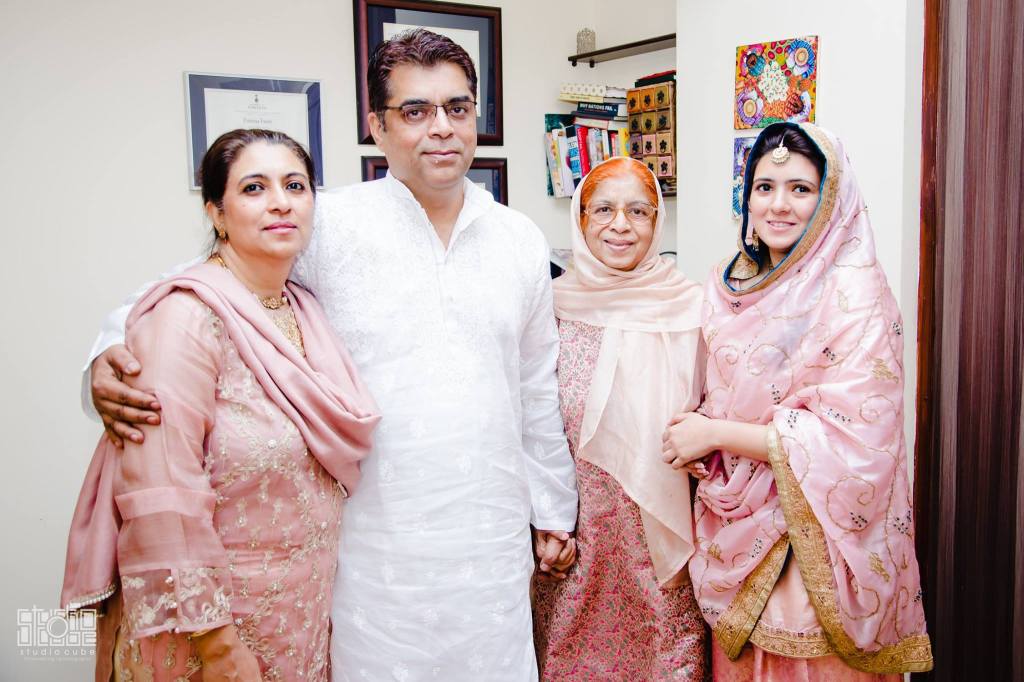
Below are Fatima’s Nikkah pics in Karachi. And see, all of us girls coordinated it so well. 
The other is with Ammi when Fatima was born in Makkah.

My Ammi in her strong days.

Life is cruel. Very cruel.
It gets more poignant when you lose brave souls in the line of duty, giving priority to saving other lives before their own.
I am currently embroiled in my own grief. But every single other life lost, only makes me feel and grieve and think of the state of their loved ones left behind more closely.
Call me obsessed, but I relate all these incidents to my own current state.
When Beiruit, a beautiful city was devastated in a split of a second, it felt like me. Every window of hope and happiness shattered into million pieces of glass.
As I saw the Calicut crash pictures with the airplane broken into two, it again felt like this airplane was me. Broken beyond repair.
Details shared by a cousin on family group who is an Air India air hostess lead to details of how the Captain of the airplane tried his best to minimize damage, saving lives of others he was responsible for, sacrificing himself. It made me think of Syed Fasihuddin. My brave man, who did his best to save other lives, putting himself at risk. What coincidence Captain Sathe was 59 too.
My brother shared this video below of his, saying, “I have not heard something more moving than this.”
I replied, “Yes. It’s so heartbreaking. One moment you are a human full of life, next moment you are not.”
My heartfelt condolence to Captain Sathe’s wife. Her grief is fresher than mine. I can imagine her state exactly. I was in the same place 42 days ago.
I have listened to this video twice. I know I will return back many more times. It brings back the memories of our early days in 1986-89 when Fasih sent cards to me, and I ignored without replying because I was scared of commitment across the border. I wasn’t sure of myself. But he was. Bold and fearless. And then he eventually took the bold step, came all the way to Delhi from Karachi and called my father from the airport, “I want to talk to your daughter.”
My father had only one advice for me when he went to pick Fasih to the airport, “He has come a long way. If you dont want, just tell him No respectfully. Dont be disrespectful. We will be with you. Remember, he has put his self respect at stake to come to talk to you.”
Eventually I said yes on 5th October 1989.
This song again made me fall in love with Fasih once again. ❤ haha though Fasih never sang. But that’s okay. 😍
Watch the song sung by Cpt Dipak Sathe, the hero of Kozhikode air crash, and cry your heart out.
(PS: This video could be of someone else not Cpt Sathe as I see in different claims. But that doesnt take away the pain of losing a life anyways. Do watch the song).


I have been lamenting a lot on my loss, my children’s loss and my husband’s siblings loss in the going of Syed Fasihuddin.
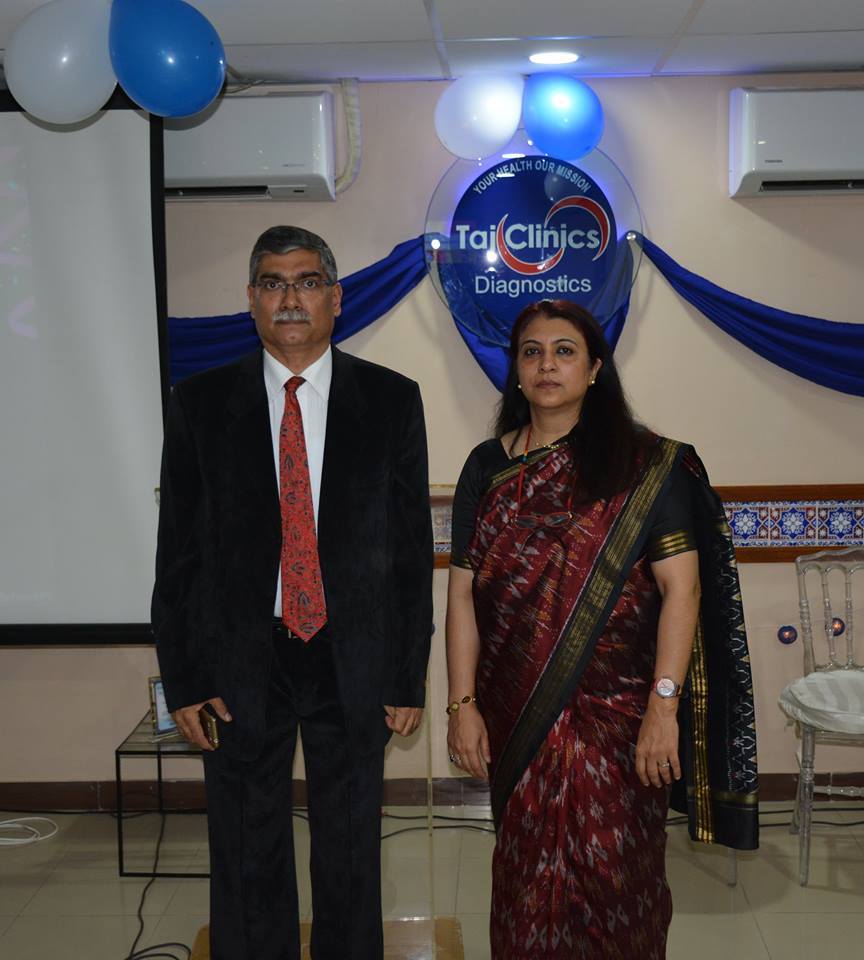
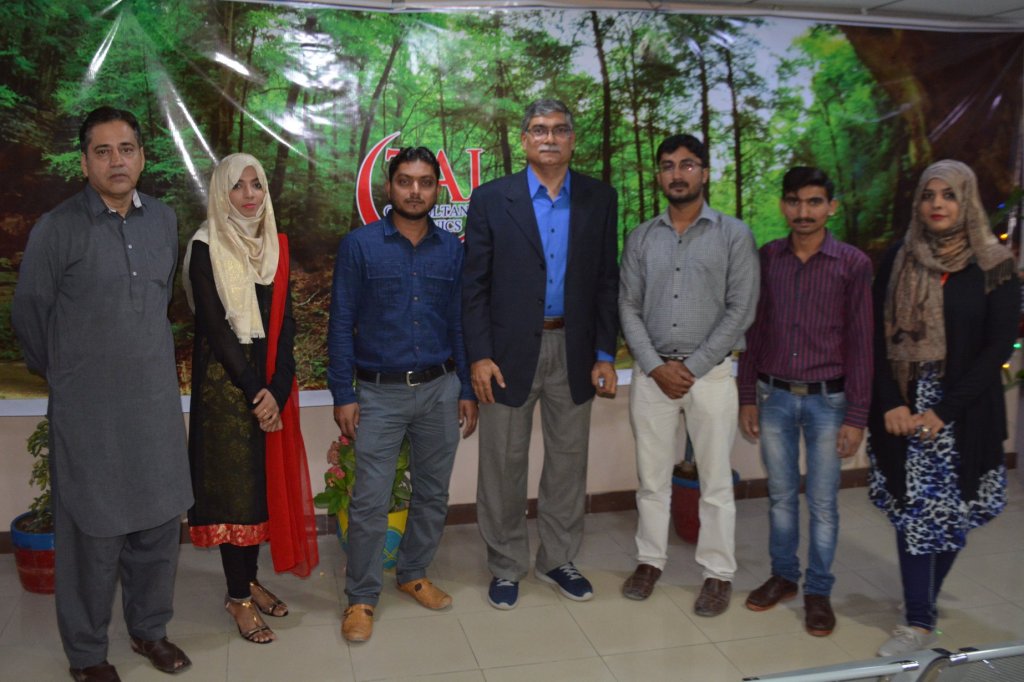
Today I want to acknowledge the loss of the valiant staff of Taj Consultants Clinics.
The 22 strong team, most of whom have been with Taj for years, had a very close relationship with their Sir, Dr. Fasih.
He was tough when it came on work ethics and professionalism and a kindhearted caring paternal figure when it came to their personal issues. Whether it was a female staff living with an abusive relationship, a male staff lost his father, or any other personal issues, big or small Dr. Fasih was their go to person.
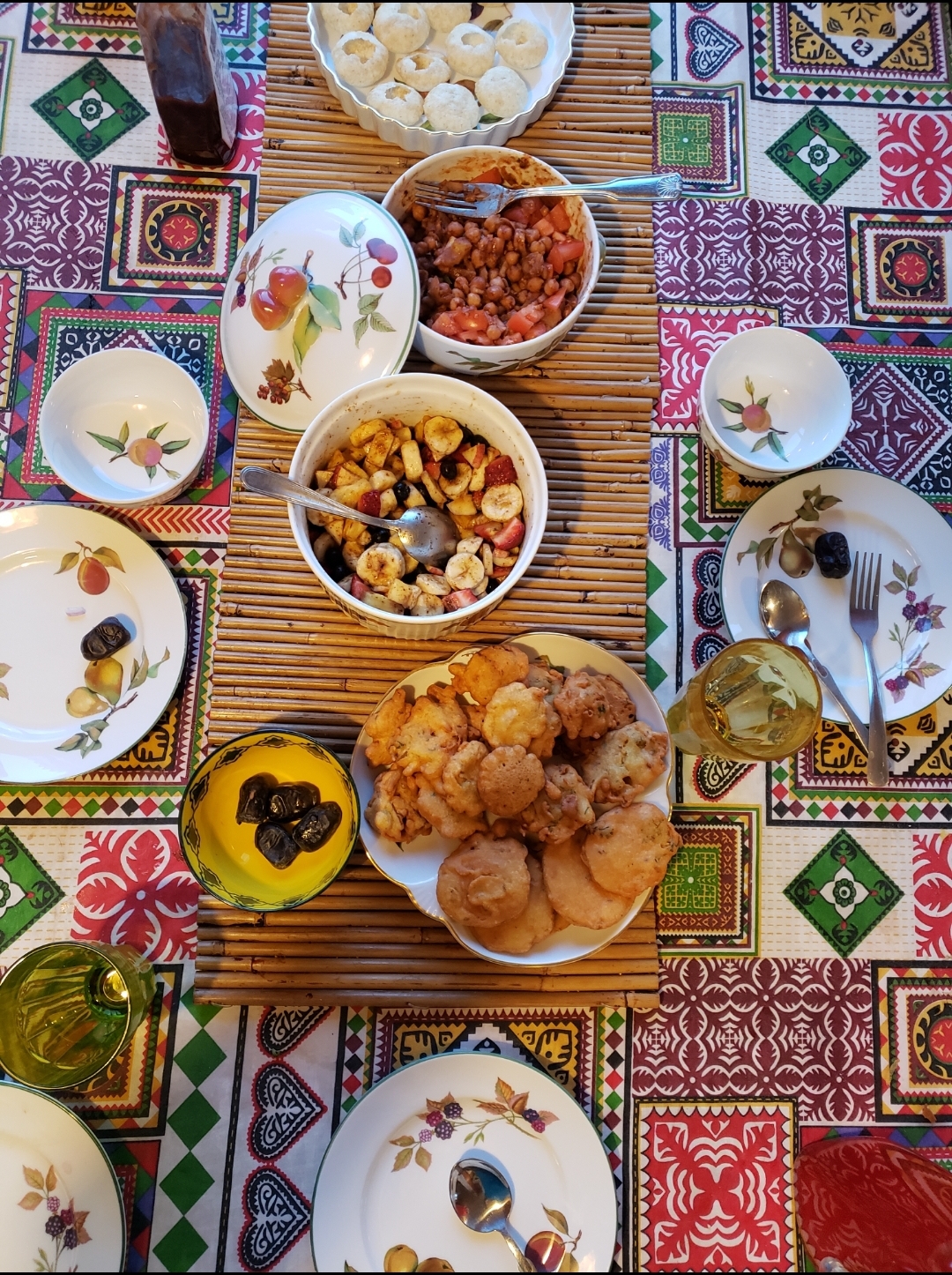
They celebrated their birthdays together, they had iftars every working day of every Ramazan with him.
I personally witnessed him scolding staff for a blunder and then in next 15 minutes ordering samosas for the entire team to ease out the environment.
The staff came to me, “Mam, I dont want samosa, he first scolded then now offering samosa.”
I asked her, “Was he wrong in his complaint to you?”
Staff: “No Mam it was my mistake.”
Me: “Okay, then dont be upset. But I will tell him to not get too angry and explain to you calmly.”
Fasih cared dearly for Taj and for his staff.
He awarded them on their excellent performance too. Taj has an Employee of the Month and an Employee of the Year awards. They celebrated together annual dinners and had been planning since forever for a staff picnic too, which unfortunately could not happen.
The staff spent 6 to 10 hours daily in his proximity at Taj.
They are no less hurt at his loss. And we must acknowledge their mourning too.
Despite their grief, it is them who are holding the front at Taj, in his absence since 26 June. They are his valiant soldiers who need no motivation to show up in times of crisis. But we need to acknowledge them. They are extremely hurt at Dr. Fasih’s absence who was the life of Taj Consultants Clinics.

I have no words to console them, just as I fail to console myself, but I can assure them, the legacy of care and compassion of Dr. Fasih to his staff, along with high standards of professionalism will carry on.
I cant wait to be back with them soon, mourn with them and carry on the legacy with them.
Oh this wretched pandemic, how much has it tested us. But one thing it cannot take away and has in fact strengthened is our belief in the power of compassion and care for each other as human beings.


Another Friday, the 6th one without Fasih.

I woke up today to see on twitter Dr. Faheem Younus tweet that the phase 3 trial of Actemra has proven to be of ‘no benefit’. And the treatment has been abandoned.
Before this, there was a study that found Remdesivir Is not the right antiviral for COVID 19.
My heart sank. These were the two drugs Fasih had been given as WHO protocol for his management in ICU. We knew they were in phase 3 trials then. But we pinned big hopes on them, and felt fortunate to have procured them easily.
I began to wonder, what would be Fasih’s reaction if he was still there, following as he did, all the latest developments of COVID.
He wouldn’t be bitter or angry, but would say, “This is an emerging science. And we have to accept it.”
I know he discussed his own investigations, ECGs and Xrays with the ICU Consultant, bravely and valiantly.
He would wave and make thumbs up to the visitors who saw him from the window. To us he messaged every few hours, “All good here, I hope you are doing well too.”
Yesterday my sister in law told on phone, her son & his nephew Kabeer keeps watching Fasih’s photos on FB and keeps muttering to himself, ” Bobby Chachu hadd ker dee aap ney. Aisa kya tha, theek thaak tou the aap.”
There is no one who doesnt say, “Fasih is a loss to us all, not just to his family.”

I am not as generous and big-hearted like Fasih. I do get angry. And especially after knowing that none of these hopefuls in phase 3 trials worked for him, and will not work for anyone else either. Why did his ‘always lucky’ fate ditched him this time?

And then the mysterious drop in COVID cases in Pakistan is a welcome sign. We all have many more loved ones who are at risk, and this reduction will save many lives. But then, did this spike after Eid came only to take Fasih away? It hurts a big deal.

May no one has to go through what we as his wife, sister daughter, son and other loved ones are going through.
I know our pain is not the only pain, many have gone through, and many will go through. And though people console, “We all have to go one day”, it hardly brings any consolation.

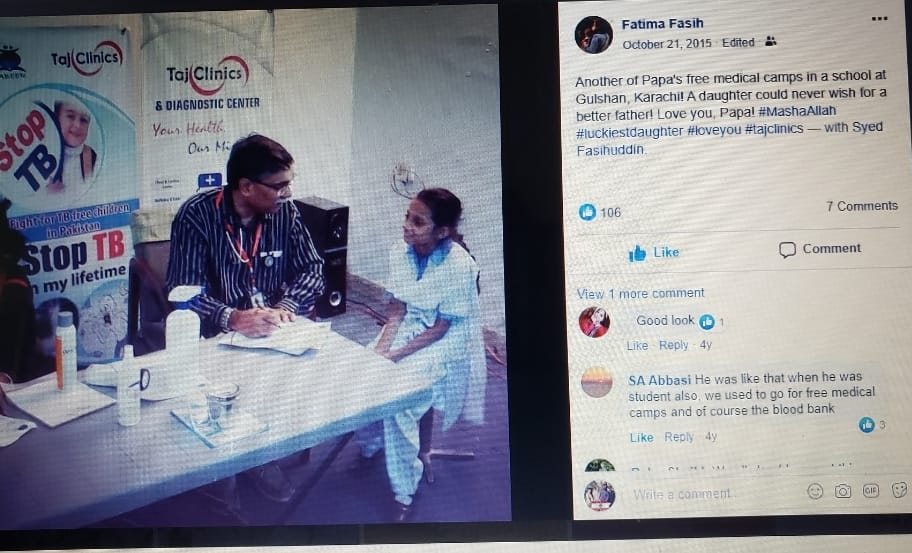
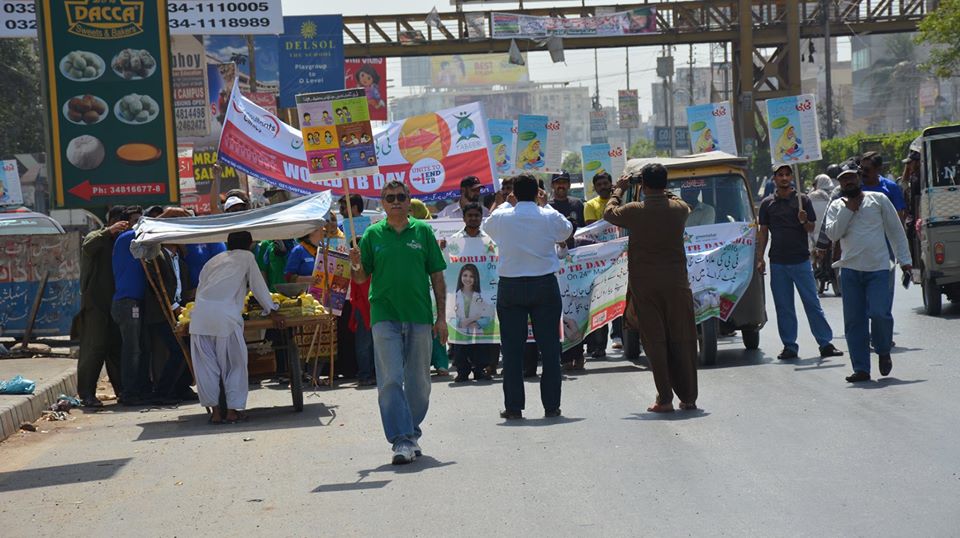
Wasn’t he supposed to nurture and grow Taj Consultants Clinics that he created from his sweat and blood? He had miles and years to go to do more against TB, against Smoking, and against all the mess around, for which he kept fighting. And he loved all this.
He wanted to grow old seeing patients, treating them, talking to them, giving them advice about thir lifestyles, about giving back. He wanted all his retired friends to stop brooding and come out and join volunteer free clinics for the poor. He said almost every other day, “There is so much scope to do god work in Pakistan.”
His sudden dissociation from all this still doesnt make sense to me. Maybe he is around and watching us do all that he did. But he wanted to do it all by himself. Asking for help was not his personality. Nothing makes sense at times. Most of the times, in fact.

All I hope, that I am wrong, and he is now in a happier place than he was here. I hope he gets to see needy patients up there too. He will love it and he did not like doing nothing.

Maqdoor ho to Khaak se poochhoo’N ki ae la’eem
Tu ne woh ganj’ha-e-giraaN-maayah kya kiye

مقدور ہو تو خاک سے پوچھوں کہ اے لئیم
تو نے وہ گنج‌ہاۓ گراں مایہ کیا کیے

मक़दूर हो तो ख़ाक से पूछूं कि ऎ लईम
तू ने वह गनजहा-ए गिरां-मायह क्या किये

If I ever get an opportunity, I would ask earth, “Oh hoarder,
what did you do with all the precious treasures that were entrusted to you?”