Open up your mind and your potential reaches infinity…

Archive for the ‘Uncategorized’ Category

Mysticism of Sound –Sufi Inayat Khan


A short biographical video about Sufi Inayat Khan, the Indian musician and mystic who brought Sufism to the West in the early 20th century.

Sufi Inayat’s quotes from his book “Mysticism of Sound”.

“A person does not hear sound only through the ears; he hears sound through every pore of his body. It permeates the entire being, and according to its particular influence either slows or quickens the rhythm of the blood circulation; it either wakens or soothes the nervous system. It arouses a person to greater passions or it calms him by bringing him peace. According to the sound and its influence a certain effect is produced. Sound becomes visible in the form of radiance. This shows that the same energy which goes into the form of sound before being visible is absorbed by the physical body. In that way the physical body recuperates and becomes charged with new magnetism.”

“Life is a symphony, and the action of every person in this life is the playing of his particular part in the music.”

“Love produces harmony and harmony creates beauty. Therefore the chief motto in life is ‘Love, harmony and beauty’. Love in all things and beings the beloved God, in harmony with all in the right understanding, and beautify your life by observing the beauty within and without. By love, harmony and beauty you must turn the whole of life into a single vision of divine glory.”

Ayeda Naqvi’s rendition of Hazrat Inayat Khan’s Urdu poem, “Ajab shaan hai”
(English translation below)

Ajab shaan hai, mast e saut e azl kee
(What a unique glory has the one who is attuned to the sound of eternity)
Na parwah rahay, oos ko thal kee na jal kee
(He is not concerned about the (happenings of the) land or the lake (the earth or water)
Usi sur kay, dhiyaani hain roz e azl say
(It is the same sound that we have all been intoxicated by since the beginning of time)
Kay maaray hooay, hain pia kay charan kay
(It is the same sound that brings us to the feet of the Beloved)
Khudaee karain kar kay dikhlaayain dum main
(Let us reflect Him through our breath and our actions …)
Agar dair main hon kay hon ya haram main
(… Whether we are in the temple or in the mosque)
Inayat sada kay fidayee hain saaray
(Oh Inayat, we are all intoxicated by that which is eternal)
Parhain hain azl say pia kay duwaaray
(And since the beginning of time we have been lying at the doorstep of the Beloved)
Jo Us ka hai waisa hee hona hai laazim
(If you come from Him, you are bound to be like Him)
Mijaz aur haqeeqat hain baahim mulaazim
(The inner and the outer world are, after all, one)
Ajab shaan hai, mast e saut e azl kee
(Oh what a unique glory has the one who is attuned to the sound of eternity)
Inayat karo bus bhee tum aur yeh baat
(Oh Inayat, stop talking about such lofty ideals)
Haqeeqat kay charchay, tumhaaree yeh awqaat
(Look at reality and look at your own lowly nature)
Illahi karam ho, kay zara ho khursheed
(Still, if He wishes, He can turn a speck of dust into sunlight)
Karam ho to ho jayay, sar sabz umeed
(And with His blessings, hope becomes evergreen)
Ajab shaan hai, mast e saut e azl kee
(Oh what a unique glory has the one who is intoxicated by the sound of eternity)

Seeing the Unseen through the Third Eye–Human Psychology


Time and again I have thought of how difficult it must be for the conscientious minds to deal with decisions that have a long term impact on the lives of the people. I wonder how can educated responsible people take irresponsible decisions and call them ‘principled’ or based on some well defined ‘laws’ .

There may be professions like school teachers, doctors, judges and religious priests who deal with human life directly and whose decisions are likely to have long term impact to individual or a group . Call their judgements –report cards, diagnosis, verdicts or fatwas respectively—whatever you call them—can make or break the individual or group upon whom it is given.

My personal experience as a mom, have seen first hand, how much impact a sensitive school teacher has on his/her pupils–be the teacher be good in his/her subject or not. A teacher who reassures students in their difficulties or supports them when not doing well, does a long favor on their growth and development, than an accomplished teacher who scolds or reprimands a pupil for not living upto the expectations.

Similarly doctors deal with patients– with all kinds of physical and mental problems—need to be sensitive to thier judgments or the diagnosis of the patients. The evidence in the medical science has proven that those doctors who deal with patients in a humane manner, seeing beyond what is visible and keeping the patient’s psychology in view while giving a diagnosis, not only succeed in developing a better patient–doctor relationship, make patient more compliant and have better chances of successfully treating a patient.

What is common in both such teachers and doctors is their sound training or knowledge of Human Psychology. Thankfully psychology has been incorporated in the curriculum of both the teachers and the doctors. I wonder if judges too undergo a training on the basic know how of human psychology . But certainly religious preists are not—leaving aside some who are naturally inclined towards it.

For religious priests its could be understood very well, that they are an unregulated profession and especially our Mullahs are trained purely to understand only the literal meaning of the laws in the religion. For instance talking of issues like rape, abortions, divorce—the laws are so men oriented—with no consideration to the psychological impact these cold-blooded laws have on womenfolk. Similiarly in the case of blasphemy law— no consideration is given to the fact that it is a ready recipe for anyone to abuse the law for personal vendetta by inciting mindless emotions into people. View it from the eyes of a psychologist—it is an easy terrorizing tool. I think if the maulvis, or priests of any faith, would understand psychology and that the power of love and compassion was far more overpowering than ‘fear psychosis’ in creating better followers of God—they would all end up being Dalai Lamas of their own religions.

Similarly after reading through the text of the judgment of Mukhtara Mai verdict, it becomes really compulsive to think how mandatory the knowledge of Psychology is for the judges too. In fact in some parts it even seems that these learned judges even lack common sense .

“It is unbelievable that the boy for ‘shame’ would not tell the true story, lose the chance of liberty and the sympathies when Maulvi Razzak along with the police had reached the spot for rescuing him, …”

How naive of the judges not to know this simple psychology of the majority of children fallen victim to such incidents, do not disclose it to anyone, be it their parents or close of kin.

And to base as evidence the fact that the lady had no injury marks on her body as a doubt on whether the crime —again compels me to ask the judges to read the psychology of the woman who has been overpowered by four men in dark and being raped—is left with no physical and mental stamina to struggle.

And then failing to consider that many rape victims and their families are not in a state of mind to report the case right minutes after the incident. It takes them a lot of rethinking, and time to gather courage to come forward with the complaint.

Moreover research has proven the presence of effects of stereotypical beliefs and hindsight biases on perceptions of court cases.
The fact that the judge wrote that the victim complained because she could not marry the rapist is one glaring example of the preconceived notion of a judge with Feudal mindset.

If only along with the big fat books on Law, they read in their curriculum, a thin manual on Human Psychology their thinking process would differ.

Judges too are human beings and their mindsets must definitely be a bearing on their judgments too. A dash of training in Human Psychology would come a long way in their profession.

With recent advances in human psychology and many other scientific tools to know the truth from lies, judges still base their knowledge on their archaic principles of ‘witnesses’ and raw ‘evidence’.

Shouldn’t they be looking through the third eye into the unseen evidence of the cases they judge??

The Home Planet: NASA’s View of Earth


The Home Planet: NASA’s View of Earth.

Rest in Peace, my friend Veil.


This slideshow requires JavaScript.

Oh! you beautiful veil
An ornamented ceremony
A rich dress for my beauty
A protector of my dignity

I need you not to please my Lord
I do not wish to behind you hide
I do not wish, an object, to be
I need not your crutches to stand

I hate to be called mysterious
I loathe the words “heyy sexy”
For this is what think, the men
When they look at you my friend

I wish to be who I am as born
Be it ugly, not worth a second look.
You leave me to myself, O’ veil
I don’t like you even an atom.

So go away my deceptive friend
Wither away from ignorant faces
It’s time for you to sleep in grave
And rest in peace, my friend, Veil.

(Thank you French parliament for being my voice, for giving me the courage to write these words.)

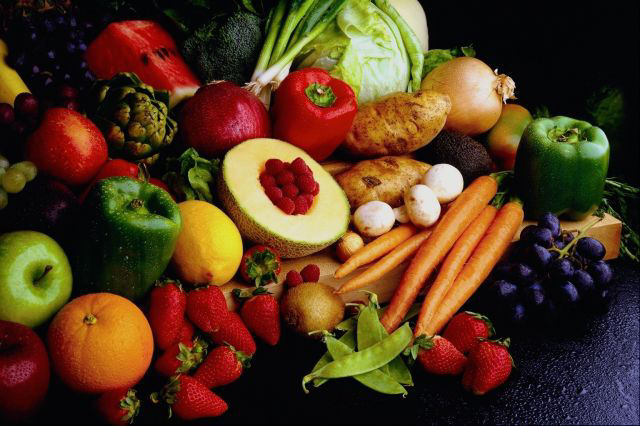
My Favourite Foods–Speak for Themselves !( Health Blog)


APPLE:
One of me(an apple) a day ,
keeps the doctor away.

Apples contain flavonoids, antioxidants that improve immune function and prevent heart disease and some cancers.

AVOCADOS
Aww kudos to me!

Nutritionally the avocado leads all other fruits in beta carotene. While other fruits gain sugar as they ripen, the avocado’s sugar content decreases as it matures. It contains more protein, potassium, magnesium, folic acid, thiamin, riboflavin, niacin, biotin, pantothenic acid, vitamin E, and vitamin K per ounce than any other fruit. Lowers cholesterol levels.

BEETS
Am a Beet who no one can beat!

Beets, also known as beetroot, are high in potassium, folacin, and fiber, yet low in calories. Their edible leaves offer protein, calcium, fiber, beta carotene, vitamins A and C, and some B vitamins. They’re known in the arena of natural healing for their ability to purify the blood and the liver.

BROCCOLI
Call me brr rockly !

Broccoli is the superhero of the vegetable kingdom with its rich vitamin A content–notice broccoli’s dark green color as an indicator of its hearty carotene content. Though a bit on the bitter side, broccoli leaves are completely edible and also contain generous amounts of vitamin A. Rich in Calcium.

CABBAGE
Wanna capp your age at sweet sixteen—love me!

In its raw state, cabbage contains iron, calcium, and potassium. High marks are given for its vitamin C content. Cabbage is also high in vitamins B1, B2, B3, and D. Lengthy cooking tends to lower the nutritional value considerably.
Red cabbage is higher in fiber ,vitamin C, calcium, iron, and potassium than its green cousin.

CASHEWS
Best way to put your cash to use. Spend on me !

Many people avoid cashews because of their high fat content, though they are lower in total fat than almonds, peanuts, pecans, and walnuts. Cashew provide essential fatty acids, B vitamins, fiber, protein, carbohydrate potassium, iron, and zinc. Like other nuts, cashews are high in saturated fat; however, eaten in small quantities cashews are a highly nutritious food.

CORN
Huhh those who ssscorn at me, they must be jealous
!

Nutritionally, corn (cooked or raw) is low in fat and calories and provides almost three grams of dietary fiber as well as protein per ear. White corn is deficient in vitamin A, while yellow corn is plentiful. Both offer moderate amounts of folacin and vitamin C, with magnesium and potassium in abundant quantity. Corn, however, is notoriously deficient in lysine and tryptophan, two essential amino acids.

CRANBERRIES
Cranes were more clever and ate me, hence I got the name—Cranberry, now Cranberry.

Today, many women who use natural remedies rely on the juice of the unsweetened cranberry or a powdered cranberry extract formed into a caplet for treatment of urinary tract infections

MANGO
Heyy I am the king of the ring (of the gang of the fruits)…

Revered not only for their exotic sweetness and juicy quality, mangoes are known for their many health blessings. They contain an enzyme similar to papain in papayas, a soothing digestive aid.
In India mangoes are used as blood builders. Because of their high iron content they are suggested for treatment of anemia and are beneficial to women during pregnancy and menstruation. People who suffer from muscle cramps, stress, and heart problems can benefit from the high potassium and magnesium content that also helps those with acidosis.

SWEET POTATO
Yum yum, no wonder Americans confuse me with yams.

The sweet potato deserves to be on the highest perch because it is a nutritional powerhouse with 4 ounces of cooked pulp supplying 2 grams of protein, 3.4 grams of fiber, 24.6 mg of vitamin C, 28 mg of calcium, 22.6 mcg of folic acid, 20 mg of magnesium, 348 mg of potassium, and a whopping 21822 I.U. of vitamin A. That’s mighty impressive for only a half cup serving. The skins, which are completely edible, add even more fiber.

TOMATOES
Oh! They all love me. The French called me “love apples.” And the Germans , “apples of paradise.”

Healthwise, tomatoes are on the “highest perch” because they contain the antioxidant lycopene, noted for its ability to reduce the risk of prostate cancer in men who consume 10 servings a week. Tomatoes also contain vitamin C and carotenoids, beta carotene being one of the most familiar, which are antioxidants. These offer protection from free radicals that cause premature aging, cancer, heart disease, and cataracts. Loaded with antioxidants and high in potassium, tomatoes are one of the healthiest “vegetables” around.

COURTESY: http://www.vegforlife.org/didyou.htm for info source.

Khoobsurat


Gehri hain woh aankhein
Dukhi ke dil mein jo jhankein

Meethi hai woh muskaan
Hamdardi ki bane jo pehchaan

Sureeli hain woh baatein
Ghareeb ki fikr ko jo battein

Haseen hain woh haath
Musibat mein jo dein door tak saath

Khush shakl hai woh chehra
Adl-o-insaaf ka dost ho jo gehra.

Bemisaal hain woh ehsaas
Zaalim ke dushman hon jo khaas.

Khoobsurat hai woh insaan
Insaaniyat ho jis ka eemaan.

Oopri rang roop bemaani hai
Husn e sulook ka na koi saani hai.

INDIA: MOVEMENT FOR REAL DEMOCRACY AND TRANSPARENCY PART 1


FOLLOWING INDIA…….PART 1

INTRODUCTION TO LOK PAL BILL AND ITS CONTROVERSY

India regularly ranks among the most corrupt nations in the world. India holds 87th place in Transparency International’s list of the most corrupt nations. Everyday, the headlines scream about senior government officials or legislators being caught with their fingers in yet another corrupt pie. But hardly anyone ever gets punished.

Man Mohan Singh government, under massive pressure due to corruption charges,and to gain some of its lost ground, half heartedly agreed to think over the introduction of LOKPAL BILL in the parliament.

Scams of Common Wealth games and Adarsh Housing Society proved as a limit to the forbearance of Indian public to corruption. And the civil society as well as the general janta came out in hordes to give unprecedented support to Anna Hazare’s fight for a movement against corruption.

What is Lokpal Bill:

The LokPal Bill provides that any one except a public servant can file a complaint of corruption against the Ministers, members of Parliament and the high government officials. And that the inquiry and redressal against the complaint has to be completed within six months.
The basic idea of the Lok Pal is borrowed from the office of ombudsman, which has played an effective role in checking corruption and wrong-doing in Scandinavian and other nations. Sweden, Finland, Denmark, the Netherlands, Austria, Portugal, Spain, New Zealand, Burkina Faso and the United Kingdom are some of the countries which have the office of an Ombudsman.

The Lokpal means a forum where the citizen can send a complaint against a public official, which would then be inquired into and the citizen would be provided some redressal. The office of the Lokpal is the Indian version of the office of an Ombudsman, who is appointed to inquire into these complaints made by citizens against public officials.

History:
It is a 42 year long journey for the LokPal Bill. Eight times in the history of this republic, governments tried to get the Lokpal Bill enacted. But no government – from Indira Gandhi to that of Atal Bihari Vajpayee to Manmohan Singh – could succeed in installing an all powerful ombudsman to probe graft cases against the high and the mighty in the country

What is the controversy :

Civil rights activists, including Anna Hazare( a 71 year old Gandhian), Swami Agnivesh, Kiran Bedi and Arvind Kejriwal, termed the draft legislation as weak and demanded that fifty per cent of the members in the committee drafting the bill should be from the public. They proposed a draft Lok Pal Bill by the name of Jan Lokpal.

The Jan Lokpal Bill or the Citizen’s Ombudsman Bill, a draft anti-corruption bill, would create a Jan Lokpal, or an independent body (like the Election Commission) which would have the power to prosecute politicans and bureaucrats without government permission.

Jan Lokpal ( by Anna Hazare& co) will have powers to initiate suo moto action or receive complaints of corruption from the general public. While Lokpal ( originally drafted by the govt) would have no power to initiate suo moto action or receive complaints of corruption from the general public. It could only probe complaints forwarded by Lok Sabha Speaker or Rajya Sabha Chairman.
They insist that the high offices of the Prime Minister and the judiciary should also come under the compass of the Lok Pal Bill.

Diverging Opinions:

There are diverging views on issues such as the inclusion of the office of the Prime Minister, ministers and Members of Parliament, inclusion of judges, and powers of the Lokpal. Some experts contend that all public officials should be accountable while others feel that the autonomy and privilege of Parliament require the Prime Minister, ministers, and Members of Parliament to be accountable only to Parliament.

Now the whole controversy has taken the shape of a National Movement of unprecedented proportions, as Anna Hazare announced ‘a fast unto death’ at Jantar Mantar, New Delhi, on April 5, 2011.
The prime minister, bowing under the pressure from the support to this mass movement, formed a sub-committee of the Group of Ministers to discuss the issue with these activists. However, initially, these two groups were unable to reach an agreement on the provisions of the Lok Pal Bill.
This led to Anna Hazare go for a hunger strike in early April, but just in few days the government accepted his demands.

There are three major points in the murmur of criticism against this civil uprising:

First, the cause is just but the method is undemocratic and, some have suggested, fascist. These civil society leaders are not elected and thus have no locus standi to demand change.
Second, if we allow such pressure groups, instead of established institutions and channels, to dictate terms to government, there would be anarchy.
And third, a mere law will not be able to curb corruption.

Now it is for the readers to form their opinion and decide if this is justified or not.

UPDATE ADDED ON JULY 5, 2011:

On July 4, Prime Minister Manmohan Singh made the announcement at an All Party Meeting, ” “We are also committed to bringing the bill before Parliament in the coming monsoon session. ……”

Not all is over. There shall be debate in the parliament to bring consensus on the tricky parts of the bill which include: bringing the Prime Minister’s Office and higher judiciary under the ambit of Lokpal. And also to include bringing the conduct of Members of Parliament (MPs) inside the House, CBI’s anti-corruption wing and lower bureaucracy across the country under the Lokpal.

After all a journey of 42 years, 8 failed attempts at getting it passed in the Parliament, display of ‘People’s Power by tens of thousands and civil society members coming out on streets and 60 million tweets has led to this day where LokPal Bill can see light at the end of the tunnel.

And hence a great leap towards ‘real’ and ‘transparent’ democracy.

(WHY have I posted this to you?  We in Pakistan love to follow Indian Soaps, Bollywood buzz, IPL, Indian sarees, fashion trends etc etc . Now it is time to follow their political movements too and learn some good lessons too).

Chonani Dar Nazar Nazaar-e-Gaaran~ Amir Khusro~ sung by Shobha Mudgul & Mahsa Vahdat


Shobha Mudgal sings verses of Khusraw beautifully in Farsi and Urdu and is accompanied by Mahsa Vahdat who partly sings in the style of the throat singers from Iran. Of the many magical pieces of music created at the Khusrau Festival.

Chonani dar Nazar Nazar e garan
Ke Raunaq Ishq mi Mahpaar gaaran

Ishq hai Jiss Maqam mein, Koi Dusra Nahi
Main Bhi Tere siva nahi, Tu Bhi Mere siva nahi

Tu dar Khab-e Khush-o-Man bi tu har shab
Shomaram ta Sahar Sayyar gaaran

Mast nahi, Talab nahi
Raah nahi, Rehnuma nahi
Ishq hai, Khud hi Mudwaa
Ishq mein Mudwaa nahi

Alam e mein wo ghum se door, Mehab hai dil tere Huzoor
Ranj nahi, Khushi nahi, Dard nahi, Dawa nahi
Ravi gar Aisa Badakhana e vu
Ke koi Qissa e Awaar Garan

Chonani dar Nazar nazar e garan
Ke Raunaq Ishq mi Mahpaar garan

Shab e dil o Nazar Zaheen, Shab e Zabaan e Ishq hai
Lafz nahi, Bayaan nahi, sood nahi, Sada nahi

Dil-e Diwaana-e Khusrau ni Koneest
Che Goyam bar Pari Rukhsargaan ra

Chonani dar Nazar nazar e garan
Ke Raunaq Ishq mi Mahpaar garan

Dil-e Diwaana-e Khusrau..

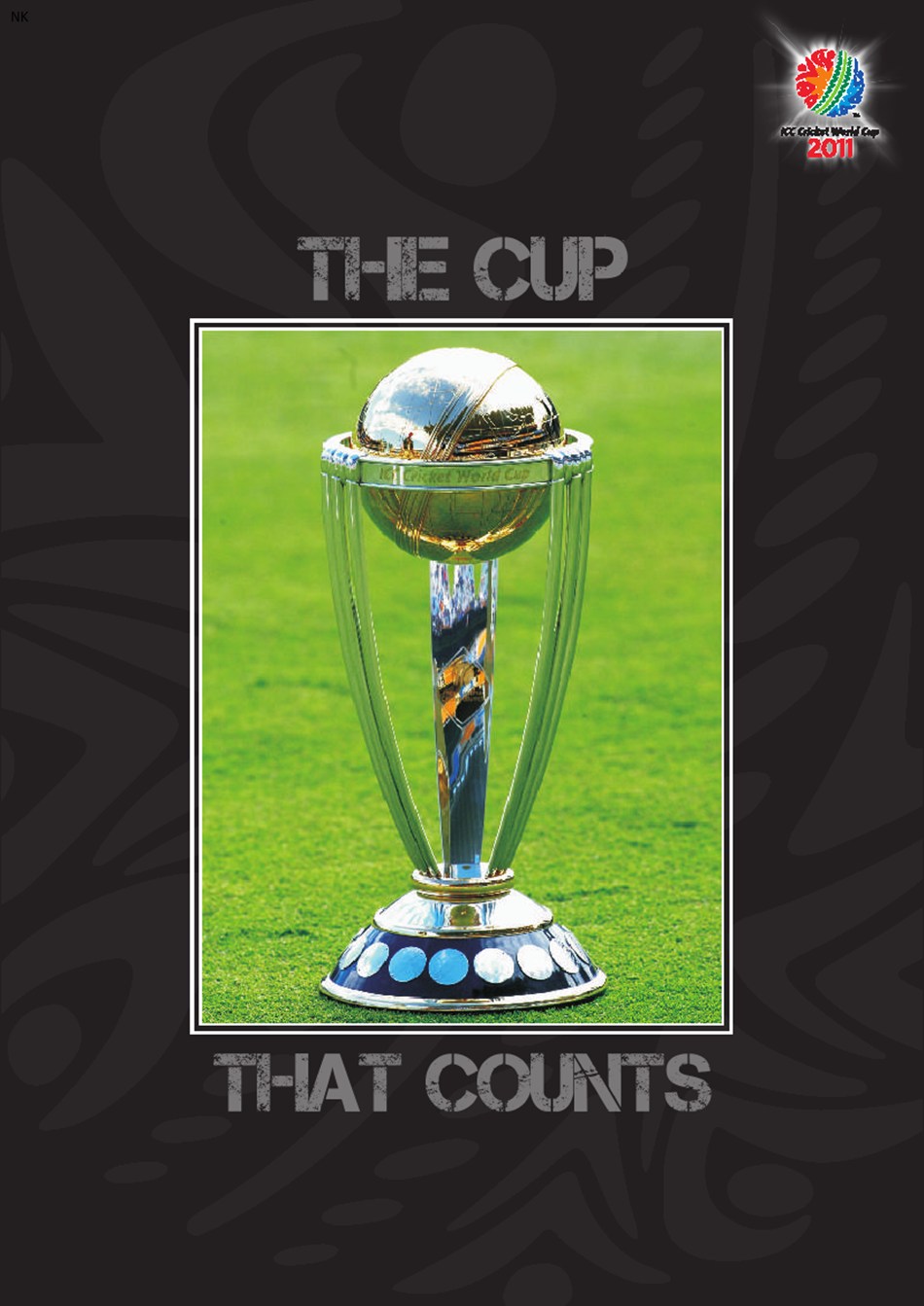
Let there be Cricket and only Cricket till April 2, 2011.


The season for cricket is on. The fever is catching on with more heat each day.
The eye catching colourful logo and the ‘De ghuma ke” theme song exudes pure desiness and makes one feel connected .
CWC 2011 is being played in our region. How I wish Pakistan had been a part of the hosting of the games. How I wish sports had risen above the politics of the region.

The excitement began with the announcement of a brilliant, bold and beautiful Afridi as the captain of Pakistan Team. Cheers of excitement went through all round the globe—the cricket keen guys and the Afridi keen gals ( ages no bar) got caught up into the grips of Afridi bonanza.
With just the group stage matches being played so far, there is cricket and just cricket spilled everywhere from living rooms to offices to public places to face book and twitter.

Gaddhafi and Raymond Davis have taken a sigh of relief and are resting in peace for some time.

The matches exude excitement till the last ball being bowled and the killing uncertainty of who will bag the match is beyond description in words . This is indeed what we call sports.
The impressive efforts by teams like Canada and Ireland makes the scenario all the more exciting.

The waning and waxing of adrenaline in the veins accompanied by the rants and raves exchanged with face book friends during the match is a new style of cricket watching, currently in fashion.

Long gone are the bitter memories of the trio caught in the spot fixing scandal. Lets hope no issues of any betting and spot fixing come up in the subsequent matches. It is a difficult proposition though, considering that the crucial matches will be played in the cities known to be the Mecca of betting .

Before even the first Ball was bowled Shayne Warne had tweeted ’…..a tie’ and then the aftermatch tweet, “…………, tie was tongue in cheek, but right.”
Some tongues did wag but there wasn’t much of ruckus over match fixing allegations. Thank God it was just a pun.

There has been quite a bit of pun in the matches gone by. Thanks to the repeated stumbling, tumbling and finally fumbling of our very dear Kamran Akmal to take a catch or make a timely stump may have costed Pakistan very dearly, but it did give the depressed Pakistani awam an excuse to laugh and exchange silly jokes at his cost.

Face book and tweets flooded with messages :

“Why do parents like Kamran Akmal ? Because he is sure to ‘drop’ their daughter back home.”

“Kamran Akmal’s favourite pickup line – can I drop you anywhere? “

“What do Kamran Akmal and Michael Jackson have in common? They both wear gloves for no apparent reason.”

The jokes go on…

Not just the winning matches or funny Kamran, we Pakistanis have been pretty pleased with India’s performance too.

The final tie with England was like a sigh of relief.  And the bursting of the India shining bubble by its defeat to New Zealand sent a tsunami of elation from Kalam to Karachi.

This world cup also is providing us a last opportunity to see some cricket legends play for the last time. Muralidharan and Sachin have announced to bid farewell to first class cricket after this. These Gods of Cricket–the best bowler and the best batsman , shall be missed for a long time. I wonder if there is any one in sight likely to replace them in the foreseeable future.

And yes, the repeated faltering by the Umpires in giving the right decisions and with contradicting decisions coming from the Third Umpire are also the ‘specific’ to this season.

The speculation of which eight teams will make into the quarterfinals isn’t all that difficult now. What remains now is the million dollar question as to who will lift the world cup. Fortunately, there does not seem to be a unilaterally favourite team this time. Some strong teams have had a neck to neck game till the last with the ‘taken for granted’ weak teams. There have been some upsets too .

There is a burning desire of the Pakistani cricket lovers to have the finals played between India and Pakistan in Mumbai under the very nose of Bal Thackrey and then come out winning the Cup.

Thankfully so far most of the matches have been taken in true spirits of the game. All the CWC 2011 has provided so far is excitement and wonderful game of cricket.
I can just hope that the true spirit of the game continues in the decisive matched too and with loads of prayers that the wonderful game of cricket does not get hijacked at the hands of either the shameless gambling or the ruthless extremism.

Let the game remain a game.
And let the best team lifts the World Cup.
How I wish that the best team is none but —

—————————————-

( Fill in the blank with the team you wish to win. For me it isn’t ONE but TWO teams that I cheer and ‘two’ cant lift the cup!)

Bole tou Mitho Laage –Rajasthani Folk Song


Rajasthani is my mother’s mother tongue. Although I love music from all cultures, Rajasthani music occupies a special chamber in my heart.
As Papa who was a hardcore urban Delhiite, was totally in awe with the richness of Rajasthani culture. He often repeated, “The Rajasthani desert terrain and harsh weather conditions is made bearable by its inhabitants with use of vivid colors, arresting music and affable people.

Most Rajasthani songs so easily convey passion through minimal pageantry. Here is a beautiful folk song from Rajasthan with simple lyrics that exude so much affection:

Bole to meetho laage,
[Bolti hai tou meethi lagti hai]
[When she speaks, she sounds sweet]
Hasey to pyaaro laage,
[Jab muskurati hai tou pyari lagti hai]
[When she smiles, she looks adorable]
Bethodo sove mhaare aanganey,
[Mere Aangan me baithey hue tum suhaati(achhi lagti) hai]
[She looks pleasant, sitting in my courtyard]
Saanwri surat jero jaanida mhaaro,
[Saawli surat jaisa mera yaar hai]
[Wheatish complexioned-such is my beloved]
Bethodo sove mhaara aanganey,
[Mere Aangan me baithey hue woh suhaati(achhe lagte) hai]
[She looks pleasant, sitting in my courtyard]
Allah aabaad raakhey, Maula abaad raakhey,
[Allah/Maula tum humesha khush(aabaad) rakhey]
[May Allah/God/Almighty keep her prosperous(happy) always]
Bethodo sove mhaara aanganey,
[Mere Aangan me baithey hue wo suhaati(achhi lagti) hai]
[She looks pleasant, sitting in my courtyard]

However my favourite version of this song is this one by Barmer Boys:

Preet se preet lagi, piya door dishaa mutt jana,
Baso hamari nagri mein, hum mange tum khao
Duniya bari baawli, pather poojan jaaye,
Ghar ki chakiya koi ni puje, jiska peesa khaaye !