Open up your mind and your potential reaches infinity…

Archive for the ‘Art’ Category

Poems by Attiya Dawood


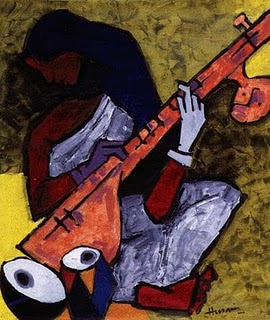
Picture by Abro Khuda Bux

Here’s a translation of some poems by a Sindhi feminist poet Attiya Dawood

A strange woman in the mirror

The strange woman in the mirror, what is she thinking?
I ask her: what is it? She avoids me.
I paint my lips red, she begins to sob.
When I look her in the eyes, she asks me questions
which are even more strange.
Home, husband, children….. I have all that makes up happiness
But I don’t know what she wants.

If Only I knew Nothing

The experienced mind understands everything.
If I keep all my thoughts with me
And put them under lock and key,
Clever eyes come to know everything.
I should put the glasses of ignorance on them.
My sensitive heart
I should refuse ever to consider
All the observations and experiences of the past
Inscribed on my mind
I should wipe it away.
My intelligence becomes a curse for me…
If only I knew nothing.
Holding your hand
I would have continued walking in a dream.
Whatever stories you told me
I would have listened on like a child.
Taking my mind as your kite
You could have given me any direction, any wind
And I would have obeyed.
My intelligence becomes a curse for me…
If only I knew nothing.

A bone-weary truth

Truth is the basis of my creation.
No matter how many times in the name of truth
My being was chopped and cut,
Each time like the amoebae,
Every piece of the portioned-off being
Has become a being by itself.
Whenever I was put on the scaffold in the name of truth
Each time I have taken a new birth,
But this dying and being born every minute
Has made me bone-weary.
I want you, my friend
To take away my being from the cross.
Come in front of me,
Whisper sweet nothings in my ears,
Turn the shackles of hypocrisy
into bangles for my hands,
Love me with such a crushing deceit
That my soul not be able to bear it
And free itself
From my tired being.

About the author:
Attiya Dawood is a voice from the goths and villages of rural Sindh. It is a voice of pain and harrowing anguish. As a rural Sindhi woman she finds deprivation everywhere: she faces oppression piled on oppression. As a woman, oppression of women by men, as a Third World woman, oppression and exploitation by the advanced capitalist countries. As a rural woman she is marginalised in favour of the voice of the first person singular – I, but they are not autobiographical the events written about are not necessarilly drawn from her own life. The poems may be considered a form of dramatic monologue in which she assumes the voice and persona of a suffering woman and articulates the anguish arising out of some concrete situation.
English translations are by Asif Aslam

Source: Courtesy Abro Khuda Bux
http://attiyadawood.com/

A lifetime encounter with Sain Zahoor ~Part 2


Contd..from Part 1

I repeat, these two days were like a trip to the world of Bulleh Shah, his life and philosophy in the company of Sain Zahoor.

Having been over awed by his deep mystical eyes, I had to gather some courage to ask him all the valid and invalid questions I had in my mind.

For most of the questions I pounced at him, he bounced the answers back with verses from Bulleh Shah’s poetry .

I began with an inquiry about the details of how his life began as a devotee, and he remarked that it was destined. He had a great passion for singing sufi songs from a young age, despite the opposition from his peasant parents.

It was his ‘famous dream’ of a hand calling him, that took him at the age of 10 from one Sufi shrine to the other all over Pakistan for next 7 years. At last some indications made him realise that the hand was from a Dargah ( shrine) at Uch Sharif. From there he was ordered to go to the Shrine of Bulleh Shah at Kasur, and reside there.
Learning about Bulleh Shah’s life, he said , he was astonished to know how similar he was to Bulleh Shah in terms of his love for music and it’s opposition from his family.

He recalled how he was first noticed by the professor cum TV producer Dildar Bhatti, on the shrine of Lal Hussain and was called to sing on PTV. The first words that were aired were:

Na Kar Bandeya Meri, Meri,
Na Teri Na Meri,
Char Dinan Da Mela, Duniya
Pher Mitti Di Dheri

( Do not indulge in self,
Life is neither yours nor mine.
It’s a 4 day trip and then shall all be a mound of earth.)
.

He mentioned of the honour he was given as the best folk singer by BBC for the year 2006, an Award in France and a Presidential Award in Pakistan, but what he really takes pride is in how he converted two Japanese boys to follow the path of Sufism and Islam.

He talked of the selflessness one needs to have in devoting one’s life to Sufi singing.

On a question of the purpose of sufi music—he mentioned that music was Sufi’s innovative method to attract common man towards the path of peaceful religion. It served the purpose to diffuse the inter-communal tensions and the hegemony of the orthodox religion that existed in the 16 th or 17th century. He said the music was like a magnet for those who wanted to escape from hatred and were attracted to peace and love. .

He said that even in todays world where there is hatred widespread everywhere, he wishes to contribute for world peace, his bit, through Sufi music, like a drop in the ocean.

Quoting Bulleh Shah he remarked, the eseensce of his life was to spread the message of love:

Masjid Dha Day, Mandir Dha Day
Dha Day Jo Kujh Disda
Par Kissay Da Dil Na Dhawee(n)
Rub Dilaa(n) Wich Wasda

Tear down the Mosque, tear down the temple
Tear down every thing in sight
But don’t (tear down) break anyone’s heart
Because God lives there

While talking, came up the fact that he was unlettered, and when I asked if he did he think that education would bring more awareness and openness in the minds of those who spread hatred he remarked:

Parrh Parrh Aalim Faazil Hoya
Kaddi Apney Aap noo Parrheya hi nahin
Jaa Jaa Warda Mandir Maseetaan
Kaddi Mun Apney Vich tun Wardeya ee Nahin

Reading books over and over you want to be a learned man
but you never study your innerself.
You run to enter mosques and temples
but you never enter into your innerself
.

He took out a paper from his pocket remarking, “This is my ‘parhai’ ( literacy)”, and he tried to read some meaning out of those pictures. It was beyond me, perhaps because I was illiterate in that language.

On asking about his travels he said that his music has take him to over to 35 countries explaining it simply as “ 5 passports have been filled up with with stamps and visas for different countries.”
I asked him of the place that he liked to visit the most?
He remarked with a diplomatic smile:
“Chal Way Bullehya Chal O’thay Chaliyay
Jithay Saaray Annay
Na Koi Saadee Zaat PichHanay
Tay Na Koi Saanu Mannay “

O’ Bulleh Shah let’s go there
Where everyone is blind
Where no one recognizes our caste (or race, or family name)
And where no one believes in us

I asked: “Is really any such place on Earth? “
He retorted: “Why do you need a place on land, if your heart is that place, where you do not differentiate ? Is it not enough ?”

As the time passed and my audacity to ask him personal questions increased, an informal Sain Zahoor with a great sense of humour emerged out too.

While talking to him, I could not meet his gaze. I was staring at his ektara, which he calls tumba.
He remarked: “I think you like my tumba more.”
It was embarrassing, but I retorted without a second thought “Yes, I like it a lot”.
And so he offered to teach me how to hold and play it. It was his idea to click a picture with the tumba in my hand.

We talked about his family and his sons, two of whom were part of the orchestra and the third one sings independently.

I was keen to know about his wife, and asked him if he took his wife with him on the tours.
He just smiled and nodded a ‘No’.
“Doesn’t she get angry on your frequent trips and you don’t take her”, I complained.
He smiled and said : “ I have learnt from Bulleh Shah, how to appease her.”
“How? ” was my obviously inquisitive question.
He narrated with a naughty sparkle in his eyes: “ I sing to her:
‘Bas kar ji hun bas kar ji,
Ik baat asan naal has kar ji.’

and my old lady smiles.

I found the verses very intriguing, so he offered to narrate the whole poem, which indeed was beautiful. And I share the first stanza here…
Bas kar ji hun bas kar ji,
Ik baat asan naal has kar ji.
Tuseen dil mere vich vasde ho,
aiven saathon duur kyon nasde ho.
Naale ghat jaadu dil khasde ho,
hun kit val jaaso nas kar ji.
Bas kar ji hun bas kar ji,

Enough! Now enough!
Smile! Speak to me!
You inhabit my heart.
What is the use of running away?
Using magic, you pulled my heart toward you.
Whom do you run toward now?
Enough! Now enough!

I couldn’t help ask: “Did Bulleh Shah also appease his wife by this poetry?.”
“No he was never married, but he loved his Master Inayat Qadri like a woman loves her beloved.”

And he narrated the interesting story of how Bulleh Shah has once faultered in front of his master by being ‘snobbish’ referring himself as ‘Syed Bulleh”. The master felt offended and disowned Bulleh Shah as a disciple. And his master had set extremely high standards for his disciple, he would not agree to any easy means of appeasement.

Since Bulleh Shah knew appeasing his beloved was no easy task, he dressed himself like a woman, adorned the nath (nose ring), wore ghungroo( ankle bells) and hid behind a veil.
“Why did he have to become a woman?” I asked.
He said “He wanted to show his master that he had given up all his masculine ego and acted like a helpless woman.”

Bulleh Shah sang and danced in front of his master, till the master’s heart melted . He recognised, this extreme devotion could be from none other than BullehShah, so he asked : “Are you Bulleh?”
From behind the veil came the reply: “No master, I am Bhullah( the defaulter).”

He narrated the words which Bulleh Shah used during the appeasement:
Tere ishaq nachaya kar ke thia thia
Tere ishaq ne dira mere ander kita
Bhar ke zehar piala, main taan aape pita
jhabde bohrin we tabiba, nahin taan main mar gai a

Compelled by love, I dance, I dance.
This love has set up camp inside me.
I Physician, come back! my life is ebbing away.
It is I who filled the cup with this poison and drank it.

Come back right away, else I will surely die.
Compelled by love, I dance, I dance.

As the time for the group came to pack up and leave for the Hotel, I joked: “Sain, are you taking back my tumba?”
He smiled and said: “Come to Pakistan, I will give you an identical one, but the condition is that you will have to learn to play it.”

He did not give me the ektara, but the time he gave to answer my unending questions and the interest with which he offered to answer my queries about him, his poetry and Bulleh Shah, I shall chesrish for rest of my life.

Ektara will remain as mine in the memories and the pictures, for sure 🙂

ABC of Qawwali


A small irritant from a dear friend, a westernised desi, who kept calling Qawwali as ‘Qawwali song’ got me to make a polite request to her call it only Qawwali. She probably thought I was an expert in the field and with innocent curiosity started to fire questions at me about Qawwali.

I really felt cornered and actually regretted for having made the silly request to her. And I realised that beyond the ABC of Qawwali I had no idea of what qawwali really was made of.

Her basic questions made me wonder that I was equally ignorant of the indepth details. Probably except for calling it Qawwali instead of qawwali ‘song’ there wasnt much difference between me and her. So I began to dig deeper.
It was indeed a wonderful journey to flip through the e-searches learning about Qawwali details.

All I knew earlier was this bit:

The word Qawwali was derived from the arabic word Qaul which means the utterance ( of Prophet).

Qawwali, a Sufi devotional music is unique to north India. It arrived in the subcontinent in the 14th Century. Amir Khusau, known as the ‘Father of Qawwali’ developed this form by incorporating Farsi and Arabic in the Indian music centered on the classical structure of taal and raag.

The word Sama is used in Central Asia and Turkey to refer to forms very similar to Qawwali, and in the subcontinent, the formal name used for a session of Qawwali is Mehfil-e-Sama.
I had known that the singers are called: Qawwal and those group of singers who sing a qawwali chorus in unison are called Humnawan.
I had heard, long ago in Delhi that Qawwals are also called Qawwal bacche.

I began to hunt for what was the reason why they were called so. What I learned was this:

“There is a renowned tale frequently told by qawwals- that of the ‘Qawwal Bachche’. Hazrat Amir Khusro wished to do something extraordinary for his ‘sheikh’ (spiritual mentor) Nizamuddin. So he discovered twelve gifted young men and educated them to render the ragas he had created. The sheikh was thrilled with their performance and these twelve lads went on to be recognized as the ‘Qawwal Bachche’.This ancestry of qawwali singers, the sons of the initial qawwal or Qawwal Bacche, was begun by a man who, as fable goes, was hearing impaired and mute. Inexplicably healed by a Sufi saint, he converted to become one of the earliest disciples of Amir Khusro. Qawwali has been handed down from father to son over generations, with weight on the children memorizing the poetry and precise elocution of the words because several of the songs are in Persian.”
(Source: http://www.planetradiocity.com/musicopedia/music_decade.php?conid=2362).

During Googling I came across a list of qawwwali vocabulary, on ‘bohotkhoob’ blog, which I thought was a must share:

Alap = Introductory phrases of a raga sung without rhythm to create a background for the raga used in the composition.
Anga = Aspects of singing which bring out the main style followed by the singer.
Baja = Instrument, chiefly harmonium. Strangely though Harmonium was introduced into qawwali only in mid 19th Century. Earlier instruments used were: double-headed drum (dholak) and a bowed lute (sarangi, dilruba) and an earthenware pot(ghara).
Band = A verse of more than two lines — inserted from a longer poem.
Band sama = A closed or an exclusive performance in which a special song-repertoire is rendered without any instrumental accompaniment.
Badhana = To extend, or elaborate the melodic theme.
Bari ka gana = To sing by turns in an assembly of Qawwal-singers.
Bol = Utterance, the repeatable part of the song-text sung by the chorus.
Bol samjhana = To convey the meaning of the text through musical variations, etc.
Chachar = Metric pattern of 14 beats frequently employed in the genre.
Chal = Gait, the specific melodic contour of the song.
Chalat phirat = Melodic improvisation mostly in a faster tempo and intricate in design.
Cheez = A complete, original song without additions etc.
Chaoki = A performing group of qawwal named after the leader or his ancestor.
Dhun = A tune which is satisfyingly complete and yet may not be in a codified raga.
Doha = A couplet making a complete, rhyming poetic statement in common metre employed by the singers at the beginning or as insertions.
Dohrana = To repeat.
Girah = A knot, i.e. inserted verse in a qawwali.
Hamd = Poem in Urdu/Farsi in praise of God.
Hawa = Archaic Sufi song in Farsi said to be composed by Amir Khusro.
Khas tarz = Special tune.
Makhsus tarz = Special tune.
Manqabat = Poem in praise of a great religious personage, especially Sufi saints.
Munajat= means secret conversation, whispering, prayer, longing or yearning. Sung in Farsi and was invented by Rumi.
Masnavi = Extended Farsi poem with rhyming couplets
Matra = Durational unit in music making.
Misra = Verse line.
Misra kholna = ‘to open the verse line’.
Misra ula = First verse line, especially the opening line of a couplet.
Mukhra = The opening refrain line of the song.
Murki = Melodic ‘turn’ — a specific musical embellishment.
Mushtar ka gana = Mixed i.e. communal singing.
Naghma = Melody, tune, played as a prelude to the qawwali, usually based on a tune derived from the Zikr Allahu.
Panchayati gana = communal singing.
Padhna = Recite, read or chant without instrumental accompaniment.
Phailav = Melodic spreading, expansion.
Qata = Four line aphoristic poetic form in Urdu/Farsi used in introductory section of the qawwali.
Qaul = The basic ritual, obligatory song either as opening or closing hymn with the text based on sayings of the Prophet.
Rang = The second principal ritual, obligatory song after Qaul celebrating the saints (Nizamuddin) spiritual guidance (colouring) of his disciple Amir Khusro.
Rubai = Aphoristic four-line poetic form in Farsi/Urdu in qawwali. It refers to the recitative preceding the qawwali often based on a Rubai.
Sany bolan = Saying it as second, singing a verse line to the tune section of the second concluding line of a couplet.
Sargam = Sol-fa passage.
Sher = Couplet, literally the strophic unit of the ghazal poem.
Takrar = Multiple repetition.
Tali = clapping.Clapping by the performers in the second row complements the instruments.
Tarana = A genre of songs with meaningless auspicious words, often derived from Sufi invocations.
Tazmin = A poem incorporating famous verses around Sufi classics in Farsi.
Thap = An accented drum beat.
Tiyya = A triad of a rhythmic/melodic cadence.
wajd = Ecstacy, invoked by any particular shair or couplet of poetical composition, which is common scene in such mahfils,that particular couplet is repeated continuously by the Qawwal until the thirst of the ecstatic ‘subject’ is fully satisfied and he returns to his normal condition
Zatnin = Poetic metre of the song-text.
Zarb = Accent, rhythmic stress.

It has now somewhat made me understand the rendition beyond just the words sung. The ups and downs, the repeats, the style of singing, punctuated by narration, the claps etc in the middle of the rendition, now seem to make a lot more fascination.

I am sure many of the Qawwali lovers would be far above my baseline of knowledge, but anyhow Happy listening!

(Source: Music contexts: A Concise dictionary of Hindustani Music. By Ashok Damodar Ranade
http://meheralisherali.com/history.html).

Delhi Diary: Gossip on Wheels –2


Continued from the previous post….

Delhi roads, or for that matter roads on any metropolitan city in the world is so very stressfull. If only these vehicles did not share their light hearted smalltalks or gossiped or flirted on the way, they would be having high rates of ‘heart attacks’ like us humans.
Only if we too knew how to wade our ways through chaotic and bumpy roads of life with humour, life would seem much less of a burden.

Again open your ears, shush your mouths and hear them gossip and flirt and romance…..
Madame Maruti: Haaaye teri baat ne dil khush kar diya.

Truck ji: Chal Rani tera Rabb Raakhaa
Mme Maruti: Rani, haan who tou main hun. Thankyou for the dua, yaar.

Auto bhai: “Papa Jaldi Ghar aa Jaana.”
Maruti behn: Bhai, ghar mein bachey wait kar rahe hain, zara safely
chalao.

Another auto bhai: “Mera Bharat Pareshan[My India is Troubled].”
Maruti : Tere jaise careless auto se pareshaan nahi hoga tou kya hoga…India.

Maruti, the advisor: Yar tou kaali ko bhool ja, kamai kar buss…

Romeo Truck: “Kaho na pyaar hai”
Laila Maruti: Kyun, ek baar bol diya na, bar baar kyun boloon, huhh.

Maruti( sharma ke): Awaein, mere kol koi hor kum ni haega..

Truck Dada: “Road King”
Maruti: Tabhi tou itna chaura ho ke chalta hai, sarak pe.

Lalchi Maruti: Hain, to kya ye sara maal vi mera. Haaye meri kismat.

Truck in denial: “Gori fir se hui jawan”
Maruti: Kya bola? Zara apne aap ko sheshey mein tou dekh.

Creepy Truck: Tou hi meri dulhan, tou hi mera dahej
Maruti: Yar mat tang ker, us bichari nai Maruti ko.

Truck ji: Bus peecha karoge, ya kabhi dil mein bhi baithogey
Maruti: Arre, peecha kaun kar raha hai, awein hero mat ban.

Truch ji: Dekho, dekho,dekho,magar pyaar se
Maruti: Yahan marne ki fursat nahin hai, tum pya se dekhne ki baat karte ho.

Maruti: Haan, haan woh to nazar aa raha hai.

JattTruck: Jatt Di Mercedez
Maruti, the sophisticated: To tum bhi koi Jutt se kam nahin ho bhai.

Truck the philospher: Hun Tu Kaun te Main Kaun
Maruti the sufi: O truckeya, tu ki jana main kaun…

Maruti: Hahaha kya baat hai…:D

Haseen Lorry: “Kashmir Ki Kali”
Maruti( jealous): Chal chal zyada ghuroor mat ker apne ooper.

Badtameez Tanker: Zarra Hatt ke Laadli
Maruti( ghussey se): Oye tameez se baat ker…

Filmi Truck: “दुल्हन वही जो पिया मन भाये,
गाड़ी वही जो नोट कमाए”
Dulhan wohi jo piya man bhaye
Gaari wohi jo note kamaye.

Maruti, the feminist: Yaar, aajkal to dulhan bhi note kamaye…

Pendu Truck: Himmat hai to pass ker, warna burdass kar.
Shehri Maruti: Lagta hai gaon se naye naye aaye ho, Dilli shehr mein. 🙂

When we part, we get emotional 😥 :
Maruti: Chal TATA. Kabhi Salam bho ker liya ker…

Jazbati Truck: Milega Mukaddar , Pher milangey
Maruti, (equally emo): Haan kismet hui tou zaroor milenge isi road pe, ek na ek din.

Devdaas Truck: Chalo ek Baar Phir se Ajnabi ban JaayeN
Paro Maruti: *sob sob, sniff sniff* Haan chalo, Khuda Hafiz.

And this is how they meet each day, with gossipping, joking, flirting on the roads and making their way through packed roads. Their spirit and zest to survive is touching.

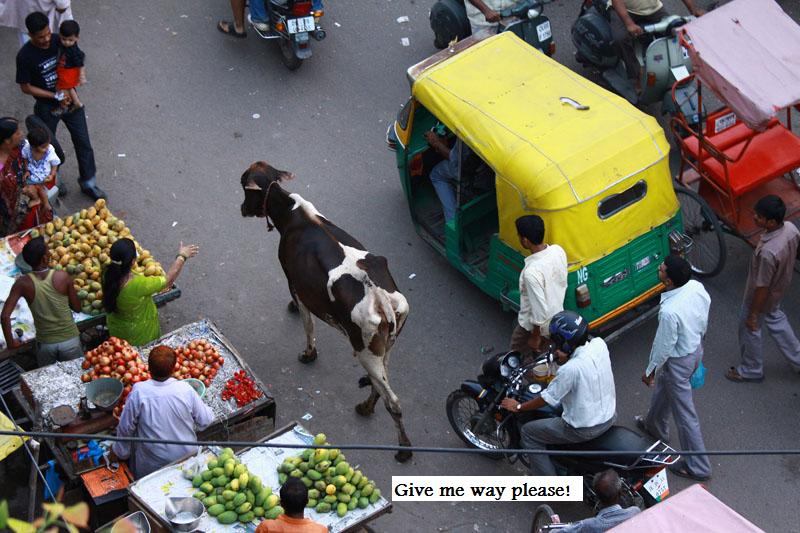
Maruti remarked: Yess we give space on the roads to these beings too, . Do you Humans do the same with animals?

Maruti taunted: Dont you think there are Supermen amongst you only. We have them too.

Maruti( with proud): We have Superwomen too.

Maruti: See we are considerate for our poor too. And we give them way.

Maruti: We believe in UNITY IN DIVERSITY.

Maruti, the thinker: And we believe in PEACEFUL COEXISTENCE .

Indeed, one thing remarkable about the traffic community is their ‘unity in diversity’. How they coexist with some noisy peace and give way to each other with no vengeance, is worth commending.

We humans need to learn some real ‘good’ lessons from these vehicles.

Delhi Diary: Gossip on Wheels–Part 1


Commuting through the streets of Delhi with almost an hour and a half’s drive each side was no less than a Herculean task. The journey back home, in the evening, would result in a bursting headache.

The megacity with hundreds of newly built flyovers and underpasses, still gets choked in its veins at the peak office hours. The traffic is dense, diverse and chaotic. Perhaps when going through licence training they are made to practice to honk horns as much as possible, sworn not to use the dipper and taken pledge not to follow lanes. In fact the dividing lines whether broken white or solid yellow are to be kept exactly in the middle of one’s vehicle—be it a cycle, a cycle rickshaw, auto rickshaw , a car, truck or a tanker.

I felt the dire necessity to have the cake ( wading the traffic all the way each day) and relish it too( enjoy their antics without getting headache).

So I began to hallucinate…

….and began to see and hear all the secret conversations and the relationships the my car had with the traffic around it. I was enlightened now as to why they dive and dodge across the lines ( just like a five year old kid) when another vehicle tries to overtake or chase them. And no wonder why they honk horns so much—in disgust ( just like us humans) when they see injustice .

Oh ! they are all so much like us humans- chaotic and noisy. And like us they gossip, flirt and swear too at each other, on the way.

Only the wise could see that, and I happen to be one of those few. 
I began keeping my eyes and ears open to what was going on between my car and the other fellow vehicles…..

And from then on travelling was fun—after all I am as human as them. and I too love to eavesdrop on what Madame Maruti ( my car) would babble and flirt with fellow trucks and autos along the way.

So from here on just shhhand listen to what Madame Maruti gossips…

Mme Maruti: “Yeah , I know we’ve got to honk the horn for ‘Road Symphony’, but what’s this OK doing in the middle.”

Truck Ji :“Use horn ok please dipper”
Mme Maruti: Hold on, What did you say? Pagla gae ho ?

Mme Maruti: “Kyon? Kya landan se aae ho? Yahan koi dipper wipper nahi janta”.
( Have you come from London, no one knows dipper here).

Mme Maruti: “Yeah only if you had listened to your Mum and been to school, you would know how to say Hallo.”

Mr Truck: “Wait for side.”
Mme Maruti: I’m waiting. But kab takk? ( How long)

We have some of wicked amongst us, just like humans, who can’t wish well for others….
Idealist Maruti: Since when did you become racist, man. Ain’t humans enough?

Burger Truck: “Bad nazar wale tera thobda black.”
Desi Maruti: Lagta hai dost, angrezi filmein zyada dekhne lage ho ?

Dukhi Truck: “चलती है गाड़ी, उड़ती है धूल, जलतें हैं दुश्मन, बिखरतें हैं फूल.”
Chalti hai gari urti hai dhool, jalte hain dushman bikharte hain phool
Maruti, the reformer: Yaar, kabhi kisi ka bhala bhi soch liya karou.( Think of good also sometimes).

Foul mouthed Truck:“बुरी नज़र वाले, तेरे बच्चे जियें, बड़े होकर, देसी शराब पियें”
( Buri nazar wale tere bachey jiyein, Bade ho kar desi sharab piyein).
Maruti, the preacher: O’ bhai, uski to nazar buri hai, per tumhari to soch insaanon ki tarah gandi hai. Uske bachon ney tumhara kya bigada hai?

Mean Truck: बुरी नज़र वाले तू जिए, और तेरा बेटा बड़ा होकर तेरा खून पिए! ( Buri nazar wale tere bachey jiyen, bade ho kar tera khoon piyen).
Maruti, the Gandhian: Arre bhai, kya tum bhi insaan ban gaye jo khoon peene ki baat kar rahe ho ?

Some of us are really kind and thoughtful too:
Maruti: Wah, yeh ki na tum ne sau aane wali baat. 🙂

Saint Truck: Na koi buri nazar
Na kisi ka muh kala,
Sab ka bhala chahta hai
barah tiresath (12-63)wala!

Maruti:Kaash, hamre baqi bhai log bhi aisa hi sochein? Aur insaan bhi 😦

Maruti: Sach keh rahe ho, magar ye insaan ki samajh mein aye to baat hai.

</
Maruti: Wah bilkul theek kaha tum ne.

Our social responsibility, we understand so well. I wish all mankind could think like us too:
Maruti, the samajhdar: Agar insaan ki ye samajh mein aa jae to is duniya ki mushkil hi khatm ho jae.

Maruti, the patriot: Is mehengai ke daur mein, bilkul theek.

Mr Truck: “Ek ya do buss.”
Mme Maruti: “Kya shaadi ya bacheyy?”

Mr Truck:बीवी रहे टिपटॉप
दो के बाद फुल स्टॉप
(Biwi rahe teep taap
Do ke baad fullstap)

Mme Maruti: “Khayal umdah hai, feminist lagtey ho !”

Truck, the Anna Hazare: Sau mein nabbey beimaan, phir bhi mera desh mahaan.
Maruti, the Sonia: Han haan, buss tum hi to ek imaandar ho poore desh mein.

Mr Truck, the poet: शेर दो हों मगर सलीके के,
घर को ऐसी ग़ज़ल बनाना है
(Sher do hon magar saleeqe ke
Ghar ko aisi ghazal bana hai).

Mme Maruti: “Uff, ye ‘sher’ aur ‘ghazal’ se tou Ghalib ki
yaad taza ho gai.”

Truck, the poet: “Malik ki gadi, driver ka pasina, chalti hai road par, banke hassina”
Maruti: Haaye, kya Shayar ban gaya…

Truck Sahab, the wannabe poet: “Fool se kante ache hai jo daman tham lete hain, dost se dushman ache hain jo jal kar bhi naam lete hain”
Maruti, the judgemental: Haaye teri Urdu se tou Hazrat Ghalib pareshan ho jayeinge.

Maruti: “What should I say, you said it all?”

PS: Some less serious gossip in the next blog.

A Trek


Ever since
Borne off the rib,
Road’s been uphill.
Laden with boulders,
Of hardships, hurdles,
And umpteen struggles

Track slippery and steep,
From cradle to grave.
Crawling narrow lanes,
Of Adam’s psyche.
Jostling upon her,
The backpack of duties.

Taking twists and turns,
Thro’ dark dogmatic alleys,
Braving blizzards of biases’
Dodging dissecting stares
With resolve steady as rock
And mind tough as steel.

A heart warm as fleece,
Entwined in agony and love,
Walks the tight rope,
Miles after miles.
How far more ?
Endless?

Passing the baton of destiny
From Mom to daughter to…
Will it go on?
Forever?

Behind fog of prejudice,
The summit remains unsighted.
Can she make it?
Before sunset?
Ever?

Mom


When it was time to leave the baby asked,  “Tell me God, why are you sending me to Eartt?  How am I going to live there, so small and helpless?”

God : “I have assigned you an angel on Earth that is eagerly waiting for you to hold you and care for you.”

Baby, anxious: “It’s so Heavenly here, there are no worries. I just smile, sing and play.”

God, “Yes it isn’t Heaven down there, but the angel’s lap will be a small heaven I’ve ensured for you. The angel will always wear a smile looking at you, will sing you lullabys and will even play with you.”

Baby:  “How will I be able to live in that mad world?

God: “Your angel will blow into you the most beautiful feeling called love that will give you strength, and with much patience and care, will teach you how to live.”

Baby: “Will that angel protect me from the shrewd world?”

God said, “Your angel will never leave you in risk, will defend you even if it means risking it’s own life, even if you tell the angel, you need it no more.”

Baby: “But God, I will miss you?”

God : “Just look into the angel’s  eyes and you will find me there. Just beneath its feet, you will feel the same pleasure as that in Heaven.”

Baby: “No God, if I miss you a lot, promise you will call me back.”

God:  “Don’t ever say that. The angel  will bring you closer to me, in its care, you will thank me for having sent you there.”

God ( again): “Dear baby, delay no more, the angel is in great pain, waiting to have you”.

Baby (rushes, then turns back): “God, but please tell me, how will I know who’s my Angel?”

God: “You simply call her Mom.”

There’s nothing like the first hug,  a Mama hug.

There no word called ‘insomnia’ in the world within a Mom’s arms.


There’s nothing more warmer than a Mom’s touch, and nothing more touching than Mom’s love.

The first sense that a baby learns to identify his Mom is her smell.

The first language in which  a baby talks to his Mom is through smile.

Even the toughest of Mom’s have gentlest of hearts.

Whether from her breast or  her throat, she will do whatever it takes to feed her kids.

Kids are born with wings, Mom teaches them to fly.


A Mom teaches her babies how to swim against the rough tides.


Some more about Moms:

Mama was my greatest teacher, a teacher of compassion, love and fearlessness. If love is sweet as a flower, then my mother is that sweet flower of love.
~Stevie Wonder

The mother’s heart is the child’s schoolroom.
~Henry Ward Beecher

A good mother is worth hundreds of schoolmasters.
~George Herbert

The post is dedicated to  Moms, one and all,  of  the world who begin as the first teachers, and then never cease to be one, all their life.

MF WE SHALL MISS YOU !


A lot has been said and written in tributes to MF Hussain, the 'Picasso of India' (as coined by the Forbes).

It would be a mere formality to repeat all that. I write this blog to Offer my admiration for this great icon and whatever little I know about him through some direct and a lot of in direct contact with him.

First thing that comes to my mind when thinking of MF is his silver hair and bare feet, with a rough, white khadder kurta hanging on a lanky, tall skeleton with a brush in his hand. Ninety percent of the times I saw him in this state, whether in the streets of Jama Masjid area or at the airport or in an art gallery.

In his days of struggle, he lived for years in a no star hotel meant for pilgrims called Haji Hotel in Jama Masjid area of Old Delhi .

He began life painting hoardings for cinema for which he recieved few annas per square feet.
As this wasn't enough to make his ends meet, he worked in a toy factory designing toys for a living.

Born in Pandharpur Maharashtra he lost his mother at the age of one and a half years.
The void in his life by the demise of his mother so early, left him searching for a mother figure in beautiful and strong women.
His Mother

As wrote a blogger Shiv Vishvanathan, "For him the mother was the source of reverence, which combined the erotic and the everyday, which gave meaning to his work. Husain saw that eternal feminine in polyphony of people – Indira Gandhi, Mother Teresa, Madhuri Dixit, Tabu and Anushka Sharma. They were stunning women who evoked eternal archetypes".


Mother Teresa

He loved painting women of substance, in all forms -from Goddess Durga, Saraswati to Politician Indira Gandhi to a nun Mother Teresa to actress Madhuri Dixit.


Goddess Saraswati

He did not finish school and his works were his certificates of achievement. Though later he graduated with the top national honours of Padm Shree and Padma Bhushan Awards

He fell for the poise and grace of Madhuri Dixit and watched her film 'Hum Apke hain Kaun” 67 times. After which he immortalised her in his oil canvas. But that wasnt enough for him, so he went on to make a film with her in the lead called Gaj Gamini.

‘Gaja Gamini is a timeless film that explores the woman. The central figure of the film is represented by a mysterious figure called "Gaja Gamini" (Madhuri Dixit), who inspires, arouses, and confuses the common man.’ mentions Wikepedia on Gaj Gamini.

Madhuri plays the roles of 4 awe-inspiring women, two of them well known in history as –Mona Lisa( Leonardo da Vinci) and Shakuntala( Kalidas). Naseeruddin Shah is Leonardo de Vinci.

MF is in'famous' for paintings of women in 'objectionable' forms by some and they made him controversial.

But few people are aware of his Sufi Series of paintings which he painted in the 1970s.

Sufi 1

Sufi 2

Sufi 3

Sufi 4


Sufi 5

Unfortunatley the controversial paintings Naked India, Rape of India and of some Goddesses which though he had painted in the 70s led to his exile to Qatar in the fag end of his life, IN 2010. He took it in a stride and continued his expression through brush unabated.

Such icons are born once in thousand years. Although, Leonardo da Vinci or Picasso did not live in our times but we are lucky that MF Hussain did.

We shall miss you MF.

Who Am I ?


Who Am I?

I am a bit of everyone who crossed my path,
I am a trace of each who traversed my mind,
I am a mark of all those who touched my heart,
I am a streak from tracks where my life has jogged,
I am a speck of stain from those who bruised my effigy,
I am even a bitsy dent from those who jolted my mettle,
Altogether, I am a flavor of all the sweet n bitter I’ve savored.
Nevertheless, I’m a grain that stays put in life’s harshest storms.


A video I found while searching for a pic for the above words ‘Who Am I ?’

Irresistibly captivating. Simple yet so meaningful.

Lost Deep into the Night Sky


One fine and free evening
Lying in a hammock swinging
Away from the madding crowds
Floating with the snowy clouds
Softly sailing at the cloud’s pace
Dreaming to be in a peaceful place.

I couldn’t help but in wonder sigh
While gazing high into the sky
Digging deep with my bare eyes
Into the depth of boundless skies

Trying to dissect every detail
Of infinite mysteries that prevail
Into the universe’s vast galore
That lies beyond the veil azure.

Crowded with the twinkling stars
Screaming aloud–Universe is ours.
Saturn, Jupiter, Venus or Mars
Glowing with pride as superstars
Making me feel indeed so small
For having abused the Earth- after all.

The stars strolled across the sky
As hours and hours just flew by
And then as if the curtain was drawn
With streaks of lights, signalling the dawn.

The sky’s face changed its shade
As the King Sun began to invade
Again into its Kingdom old
Marking its territory with rays of gold.

With it was gone the universe’s beauty too
Which had mesmerized me all night through.
And then I was back into this insane life
That just has in store struggle and strife