Open up your mind and your potential reaches infinity…


Published in Aman Ki Asha , in TheNews on December 14, 2011. http://amankiasha.com/detail_news.asp?id=584

Ilmana Fasih recounts some examples of the ‘Ganga Jamuni Tehzeeb’ and centuries’ old, peaceful coexistence beyond religious divides

An otherwise sane looking person I met at a party recently started to spew venom laced with conspiracy theories about “Hindu Muslim animosity”. To top it all, he tried to use my own life to justify his views, insisting that my going

to live in Pakistan after marrying a Pakistani was proof of the natural divide. He refused to accept my views that a peaceful coexistence between people of different faiths is possible or that my going to Pakistan from India was not based on religious reasons.

His hate-filled thoughts kept me sleepless for hours that night. But talking over the phone to my mother in Delhi later, I was cheered up by her mention of Ganga Jamuni Tehzeeb. Our conversation triggered off thoughts about this beautiful, fluid culture that refuses to be boxed up and compartmentalised.

The name Ganga Jamuni Tehzeeb is as beautiful as its spirit. It refers to the centuries’ old, peaceful coexistence between Hindus and Muslims of the subcontinent. Not only did the two faiths borrow cultural practices from each other, but they also exchanged each other’s vocabularies. So much so that now one is hardly able to find any difference between spoken Urdu and spoken Hindi.

The Nawabs of Awadh in north India in the 1700s are considered the pioneers of Ganga Jamuni Tehzeeb. At least, the term was coined in their times. But on ground it existed well before that era.

The starkest example of this syncretic culture is the Purana Hanuman Mandir in Lucknow, which is crowned by an Islamic symbol, a crescent. According to legend, the temple was built by Nawab Saadat Ali Khan to honour the wish of his mother, who had dreamt of building a temple. The tradition of honouring the Nawab’s gesture still continues when the Muslims in the area put up stalls of water during the Bada Mangal festival at the temple, and Hindus manage sabeels (stalls) of sherbet and water during Muharram in reverence for Imam Hussain.

Not far from Lucknow, the rulers of the Hindu holy city of Kashi (also known as Benaras or Varanasi) observed the Azadari (the mourning) during Muharram, wearing black on Ashura. Ustad Bismillah Khan, the renowned Shehnai maestro, began his career as a shehnai player in Vishwanath temple, Kashi. In fact, many of the musicians, Hindu and Muslim, who play in the temples, fast during Ramazan and also observe Vrat during the Hindu Navratras.

Even today, Muslim artisans in Kashi/Varanasi who make Taziyas for Muharram also make effigies of Ravan for Dussehra, a friend tells me. Hindus too participate in Muharram processions and make Taziyas in many cities, notably Lucknow.

Similarly a Sindhi friend talks of the centuries-old peace and harmony between the Hindus and Muslims of Sindh. Adherents of both faiths revere and pray together at the shrine of Jhuley Lal, she says. The shrine walls are inscribed

with Arabic verses as well as Hindu names of Gods. An age-old common greeting of Sindhi Hindus and Muslims is “Jhulelal Bera-Hee-Paar”.

Karachi’s 150-year old cremation ground for Hindus has a Muslim caretaker, although there are many Hindus in the city. This caretaker is responsible for cleaning the statues and lighting the lamps in the temple, and takes care of the urns that contain the ashes of the dead after cremation, until their loved ones immerse the ashes in water.

Cultural practices in Sindh are a fusion of the two cultures. If the Hindus, fervently use Allah as the reference to God, the Muslims touch the feet of their elderly as traditions borrowed from each other’s cultures.

The contribution of Sufi poetry towards this peaceful coexistence, from Kabirdas and Amir Khusro, to Bulleh Shah on the other side, is well known.

Beyond faith, at the cultural level, the Ganga Jamuni Tehzeeb has seen some beautiful creations like the Ghazal style of singing and the classical dance form Kathak.

Kathak’s journey from ancient times to its present form merits a walk-through. The word “katha” comes from “katha” or story telling. It has its roots in ancient times, when storytellers narrated epics or mythological stories like Shakuntala, and the Mahabharata through dance forms in temples. However with the arrival of Mughals, the dance, enticed to come to the courts, developed into a more Persianised form. The Kathak dancers adopted the whirling

from the dervishes to the ‘chakkars’. The rhythm of the footsteps found harmony with the beat of the tabla recently discovered by Amir Khusro. The female Kathakaars (storytellers) abandoned the sari of ancient times for the angarkha and churidar pyjama. The language of narration also transformed from Sanskrit to Brij Bhasha and then Urdu.

There may be more examples of such coexistence and development in other regions of the subcontinent too.

Those who propagate conspiracy theories and narrate stories of hate and disharmony need to know that even with the physical separation between India and Pakistan, the spirit of Ganga Jamuni Tehzeeb lives on. The lack of communication between the two countries, particularly after the 1965 and 1971 wars, has not managed to dampen the natural instincts of sharing these cultures.

Farid Ayaz and Abu Muhammed, the renowned Qawwals from Pakistan continue to sing Bhajans which their gharana has been singing for the last 300 years. On the other side are Wadali brothers who sing Bulleh Shah Kaafis and Naats with the same devotion. Despite all odds, Sheema Kermani and her students in Pakistan have continued to keep the dance forms, not only of Kathak, but also Bharatnatyam and Odissi, alive and known in Pakistan.

The recent collaboration between Zeb and Haniya from Pakistan and Shantanu and Siwanand Kirkire of India yielded the soft melody “Kaho kya khayal hai” in a beautiful blend of Dari and Hindi. I could not help relate it to the Zehaal-e-Miskeen composition by Amir Khusro which was a beautiful fusion of Persian and Brij Bhasha.

And now another peacenik in the form of Shahvar Ali Khan makes a music video titled ‘No Saazish No Jang’ (No Conspiracy, No War). It is heartening to see the visuals, and hear the voices of Quaid-e-Azam Mohammed Ali Jinnah and Bapu Mahatama Gandhi together in the backdrop.

It is not possible to list all collaborations between the two countries and across religious divides, particularly in fields of films, music, health (the most significant being the Heart to Heart initiative by Rotary and Aman ki Asha). But all these initiatives testify to the desire for peace, not hate.

As for me, convinced that each of these efforts towards peaceful coexistence is based on foundations going back centuries, I slide into my bed, comforted by the faith that peace, not hate, will ultimately prevail.
It’s just a matter of time.

Dr Ilmana Fasih is an Indian gynaecologist and health activist married to a Pakistani. Her blog is Blind to Bounds https://thinkloud65.wordpress.com/



Part of it published later in Express Tribune: http://blogs.tribune.com.pk/story/9658/call-me-an-indian-pakistani/

My way of prayer for Peace  between India and Pakistan, today-December 18, 2011.

I thank everyone who bothered to comment on my blog ‘An Indian moves to Pakistan’  in Express Tribune Blog ( December 9, 2011), and gave their input, be it positive or negative.

I would take this opportunity to broadcast loud and clear my childhood dream of a world without borders and wars.

Let me make it very clear, I do not have any ill-wish to undermine the sovereign political borders between India and Pakistan or between any other countries. My dream is to erase the psychological borders that are etched in our minds in the shape of prejudices and hatred for the other.

I would tell those friends who pity me, please pat me,instead. For I am an Indian Pakistani.

So what if I do not hold an Indian passport, I have 24 years of fascinating memories, an excellent upbringing that taught me to speak without fear, sealed in my heart as an Indian.

Pakistani, I am not by passport but by the love and respect that I have got from numerous Pakistanis, who took no time to accept me as one of them.

I own both the lands and a good 1.4 billion are my fellow compatriots.

What more could translate my feelings than this poem I wrote some time ago?,

To both the lands I belong
Yeah my heart throbs alike for the two lands
Yeah my love is equally blind for the two cultures.
Yeah my voice sings songs of love in two languages
Yeah my eyes see identical dream for the two peoples.
Yeah my lips whisper the same prayers for the two communities
Yeah my heart aches on hearing hatred screamed by bigots from two faiths
Yeah my tears roll witnessing the bloodshed by the misguided in two nations
But, I feel no difference between the two names the world calls INDIA and PAKISTAN
For the hammock of my life hangs between my two beloved lands I call my HOMELANDS.

I feel equally passionate about the happenings of Lok Pal bill as much as I was about the NRO case in Supreme Court.

When it was cricket World cup I got to support two teams, and whenever there is an India-Pakistan match, unlike the other billion and a half who dread for the result, I rejoice since if any team wins, my team is the winner.

I find divine tranquility in  reading Kaafis of  Bulleh Shah, as much as I drown in the depths of Kabir Dohas.

And I know how Kareem’s nalli nihari from Delhi tasted before it began its journey to end up a Sabri’s maghaz Nihari in Karachi.

I wear a Kanjeevaram sari and dangle a Sindhi embroidered bag together, and still boast both of them are my country’s handicrafts.

To those who ridiculed or criticised me, please shed the word ‘hate’ from your dictionaries.  Look beyond prejudices.

Believe me, I bear witnesss that there are millions and millions on both sides who want to live in peace with themselves and with their neighbours.

For you I have this poetry as a reminder:

Oh the souls of the subcontinent,
Let for amity be our energies spent.
Arent we neighbours? Shall be forever,
Let being friends be our real endeavour.

How can the love our hearts not seal,
How can the vibes our minds not feel?
How can my eyes and your deny,
Shared treasures that make us sigh.

Himalayas on our heads so stand,
Lofty mountains guarding our lands.
The twist and turns in the Indus river,
Who’s ancient stories, makes us shiver

Enchanting Thar and its golden sands,
Weave beauty in each of its strands.
And then the grand Arabian Sea,
That enthrals both you and me.

How could we now live apart,
We’ve been one from the start.
Oh! Those lines on our lands sketched,
Let they not on our hearts be etched.

We have seen firsthand how hatred leads to conflicts, conflicts to instability and then to an excuse to more defence expenditure. We have already wasted measurable revenue which could very well have been used for the alleviation of poverty, hunger, illiteracy, women issues which exist in astronomical proportions on both sides of the border.

Why should a handful of bigots sabotage the road to peace we need to take reach the goal of prosperity? We do not have any other way out, but peace.

Our histories, our geographies are common, 
Our genetics, our problems are common, 
And with them all , our destinies are woven.

A spirit of mutual cooperation would lead to prosperity for the 1. 4 billion on both sides and in turn would mean a strong and peaceful South Asia.

Please think.

Caption: If my hand can heal, why cant INDO-PAK relations.

PS: A special thanks to Kamran Rehmat, a great supportive Face Book friend, who first suggested the Indian-Pakistani term, and I couldn’t resist the temptation to  grab it and own it. 🙂


Published in @ExpressTribune Blog on December 9, 2011

This blog post is a response to an article published in The Express Tribune by Dr Pervez Hoodbhoy titled:“Deepening the Pakistan-India divide.” Hence I address this to him.

Sir,

I know exactly how you feel. I have been feeling the same every year for the last 20 years when I go to seek a visa for India. I have to fill the same form which is ‘special’ for Pakistani Nationals (and it is the same for Indians in the Pakistan embassy).

I am not a professor like you who gets an invite and a letter to give a lecture at some university. Nor am I an artist who gets to show a business contract for facilitating the visa. In both these cases, to be able to get an Indian visa is much easier than it is for me.

I am an ordinary Pakistani who wants to visit my relatives in India. And every year the daunting question arises:

What if I do not get the visa?

Days before I fill up the forms, my soul shudders with this fear.

But then, why do I want to go to India so desperately each year? No, I do not want to visit some old relatives whom I got separated from during the partition, nor do I want to see my ‘virtual’ friend or my distant cousins who I reconnected with on Facebook or Twitter.

No, Sir. I seek a visa to visit my parents and brothers. You read it correct – my parents.

It was 20 years ago by the stroke of fate I guess, I chose to marry a Mr Right. And in that youthful enthusiasm perhaps, I chose to deliberately to ignore that he wasn’t an Indian like me, but a Pakistani. And after having got married I also deliberately chose to take the Pakistani passport knowing that it would be the most practical solution for my family. I have no regrets for either of the decisions I took.

However, each year that I wish to visit my parents I have to stand in the same queue as any ordinary Pakistani would, furnishing the same documents and details, facing the same scrutiny without being given an iota of consideration that I am Indian-born, and bred in New Delhi for 24 years – an Indian who graduated from a premier medical school in New Delhi.

Sir, I would also like to let you know that my parents aren’t any Indians who’s credentials are hazy or in doubt. Both my parents have retired as professors from Delhi University and are well-known vocal secular individuals. But this does not matter to those who have the authority to grant a visa. To them, I am just a passport number holding a Pakistani nationality.

If my husband travels frequently to India with me, he is taken aside by the non-uniformed personnel in Pakistan, who ask why there are so many India visa stamps on his passport. If I do not travel for three years in a row, the Indian authorities say they need a fresh inquiry about me and that it will take any amount of time, between three months to any unspecified duration for my visa to be approved.

Honestly, I have not had much disappointment in obtaining a visa (though at times I have waited several months), barring the time when the Kargil dispute was fresh. This does not happen because of any procedural ease, but because a resourceful relative managedto push for it in the right place. And during the Kargil time, not even the contacts were willing to help.

The visa officers are generally very kind, I must admit. They often sympathise with me, and express their helplessness regarding the matter. Their hands are “tied” they say. And of course, it is a serious “security matter”, I am told.

Over the years, I have seen that the visa procedures take sinusoidal patterns. At times all seems well and the whole process is smooth-sailing. But then some political trigger offsets the whole process, resetting it from the start.

There are many such women like me, but a lot less fortunate, for whom the idea to get a visa to go and see their parents is no less than a dream. For many women, due to financial constraints, the idea to go up to Islamabad from Karachi, to even ‘try’ for a visa is a great ordeal. Many of them have barely seen their parents more than two or three times in the last two to three decades of their marriage.

And no one seems to hear their silent wails.

http://blogs.tribune.com.pk/story/8618/an-indian-who-moved-to-pakistan/

Tansen, the legend.


Tansen, the father of Hindustani Music, was a music genius since early childhood. He became a court musician and one of the nine gems of Emperor Akbar. He not only composed music, but wrote the lyrics too. Impressed by his exceptional musical talent he was given the title of Miyan Tansen by the Emperor Akbar.

Tansen is known to have polished and popularised the oldest form of Indian music called Dhrupad( which could be traced back to Vedic times). It was his times that Dhrupad reached it’s peak.

Most of the music composed by him are referred with a “ Miyan ki”prefix, eg Miyan ki Todi, Miyan ki Malhar, Miyan ki Mand and Miyan ki Sarang. He is also credited to have created certain other court ragas( traditional melody) like Darbari Kanada, Darbari Todi, and Rageshwari.

Tansen performed in the courts of Akber. He also performed for the emperor alone. At night he sang ragas that would soothe and help the emperor sleep. In the morning he would sing morning ragas to awaken the emperor fresh and cheerful.

There are various legends attached to Tansen.

It is believed that his music was so captivating that even animals and birds would stop to listen to him. There is an interesting story of a white elephant being caught for the Emperor to ride. But the animal was uncontrollable and untameable. So Tansen sang to the elephant and calmed it down, so that the Emperor could ride.

It is said that his created ragas  would cause different effects e.g. such as cool the environment and attract clouds  that it would induce rain ( Rag Megh Malhar) or heat up the environment to cause fire ( Rag Deepak).

Once Emperor Akber insisted that he sing Rag Deepak in the court to prove that his music had the said effect. Tansen begged a fortnight before he would sing the raga. In this duration he made his daughter Saraswati, learn the Rag Megh Malhar.

And then the day arrived when he began to sing Rag Deepak in the Emperor’s court.

Unlit lamps were placed in the court.

As Tansen began to sing, the air around started to get warm, then warmer. The audience started to perspire. The flowers dried; including the famous rose bud that Akber is famed to have held in his hand in court. The water fountain in the courtyard began to steam up and the flames of fire could be seen flashing in the air, while the lamps lit up.

As this happened, his disciple and daughter, was directed by him to start singing Rag Megh Malhar ( the music that induced rain).

In a few minutes the cold breeze started to blow. The clouds came and overcast the sky. The music waves caused the clouds to thunder and while the rag Deepak induced lightening. And soon the heavy showers began to pour over the place, and put off the flames.

How it is said that this down pour could not put down the internal fire that was lit within Tansen while he sang Rag Deepak. And he fell ill, with very high fever, and in a few months died of the ailment.

Grieved by his death, his son Bila Khan began to sing Bilas ki Todi, based on his raga Miyan ki Todi. He sang so well that the dead Tansen’s hand rose to signal praise for the son.

One wonders not only at the likelihood of these legends being true, but also at how did these legends , which have now become part of Tansen history, come into being.

Below is the song based on Rag Deepak, picturised in an Indian movie made on Tansen.

Look beyond Veena…


I have no business to morally judge her on her picture in the magazine.

The picture had too many comparisons and contrasts to ignore.

What is surprising is the satire that many have missed while gazing at the curves.

The exposed Veena represents the allegedly exposed network  links in Pakistan. And the tattoo on the arm is the metaphoric translation of Mike Mullen’s comment , ” act’s as a veritable arm of Pakistan’s ISI.”, referring to we all know what.

Since the magazine comes from across the border, the symbolic representation becomes all the more pertinent.

Those who do not buy the validity of the picture and accuse it of photoshop agenda compares to those who do not buy Mullen’s allegations and blame it on American/ Indian agenda.

And those virtuous who feel embarrassed by a nude Pakistani Veena, compares to the conscientious lot who are embarrassed on the truth behind the mentioned links in Pakistan.

Veena’s vehement denial of the photo shoot compares with the constant refusal by the big bosses of any such links or networks.

And once one identifies the satire, the debate about it being a real shoot or a photo shop artwork becomes meaningless.

The fact that the picture spread like a wild fire too compares with the extensive acceptance of the conviction on the truth of the links by others the world over.

Who’s right, Veena or the tattoo on the arm, is for each one to decide.
Who am I to judge them ? :p

And yes, as remarked by a friend, there’s one stark contrast too. “Too bad ISI’s actual arm isn’t half as pretty or benign”.

The beauty of the satire here isn’t just skin deep.

Are we lollipops?


It is a matter of pride that I was born a girl, despite knowing very well how tough life continues to be for women from birth till their death, and from east end of the globe to the west.

From parental upbringing  to interaction outside, from  house chores to professional job, from  status at home to  dignity at work, women are given second class treatment in most places. We form more than 50 % of the whole world’s seven billion, but still struggle to make ourselves being perceived as more than an object.

Whether in the name of faith, culture, or physical vulnerability, women are shown their worth  merely as an Adam’s rib.

A few days ago , I came across a picture which got me nauseated.

It had an  added  caption ” Would you like to be a covered lollipop or an exposed one?”

And to add more to my horror, many women and girls seemed to be nodding in agreement with their comments.

Do we really have to compare ourselves to lollipops ?

Does a lollipop have a mind of it’s own ?

Does a lollipop become a scientist like Marie Curie or a Prime Minister like Benazir Bhutto or an astronaut like Kalpana Chawla ?

Do lollipops even become strong caring mothers, supporting wives or sincere friends ?

But we women folk do. So we better stop this idiocy about covered or uncovered lollipops, please.

Everyone has a right to choose what should one wear, or not to wear, and so does a woman, whether she chooses to wear a hijab or not. Many women willingly  choose to wear it as a part of their religious duty. But there are many who go for  it because they consider themselves safer wearing one. Sadly, that is a myth.

If it was just exposure, or physical attraction, which made girls vulnerable, why would girls as young a ten years, two years or even six months  be abused, molested or raped ?

It may make one feel less exposed physically, but the real safety comes from a strong mind. A strong mind comes from awareness.  And awareness comes from quality education.

It is naïve to expect that things will change, only when men will change. They need to change too, but if women get empowered, men will change themselves.

If women really wish to make women abuse a history, they need to empower themselves with right education and independent thinking.  And then they need to pass on that information to other women folk .

Challenging oppression does not mean to be a rebel. It does not mean to hate men folk, nor does it mean to detest womanhood. It simply means to have your own mind and stand on your own two feet, with hijab or without.

P.S. In this  16Days of campaign of Violence  against Women, try to teach at least one weak woman to become strong  through Education, for herself and for her family. 


While looking for more of Bulleh Shah’s poetry in an attempt to make a comparative list of Verses between Bulleh Shah and Kabir, I came across a new fascinating piece of his poetry.

In this Kaafi he presents the truth of life on Earth, beyond the temporal day to day life.  In the last verse he challenges the riddle of life,  to be solved.

In Seraiki (a dialect of Punjabi):

“Maati kudam karendee yaar,
Vaah vaah maati de gulzaar;
Maati ghora maati jora, maati daa aswaar,
Maati maati nu (n) dorave, maati daa chankaar.

Maati maati nu(n) maaran lag-gee, maati de hathiyaar.
Jis maati par bahutee maati, so maati hankaar;
Maati baagh bagheechaa maati, maati dee gulzaar.
Maati maati nu (n) vekhan aayee, maati dee a bahar;

Hus khed phir maati hove, paindee pau pasaar.
Bullah ja(n) eh bujhaarat buj-jhe,
Taa(n) lah bhau siro(n) maar.”

English Translation:

The soil is in ferment, O friend
Behold the diversity.
The soil is the horse, so is the rider
The soil chases the soil, and we hear the clanging of soil
The soil kills the soil, with weapons of the soil.
That soil with more on it, is arrogance
The soil is the garden so is its beauty
The soil admires the soil in all its wondrous forms
After the circle of life is done it returns to the soil
Answer the riddle O Bulleh, and take this burden off my head.”

Translation by : JR Puri

Laughter, the best medicine.


Mirth is God’s medicine. Everybody ought to bathe in it. ~Henry Ward Beecher.

Born and brought up as an Indian, I know one thing for sure, that in India we don’t bathe in it very often. It’s another matter that we mock at others accent, skin colors, hair or even names. We lack the capability to laugh at our own selves or even silly, with no rhyme or reason.
And many a serious beings drowned in deep intellect, find it below their dignity to laugh a hearty laugh. Sorry to generalise, but more so amongst my own clan, the middle aged women.

Today morning  twitter friend tagged me and a couple of other twitter friends to the new song KOLAVERI. The tune was catchy, the words hilarious, not hard to believe it had a 2 million hits with numbers  visible at the site. It lifted the mood at worktable.  And I heartily retweeted it.

Just then in my TL,  I saw a comment from someone to someone else :
‘”I’m aghast to see otherwise sensible people falling into this kolaveri promotion trap. How sad!” and “huge marketing gimmick and every media outlet fell for it, us included “.

Well I don’t know if it was marketing gimmick, I found it genuinely hilarious and a new taste in the mouth. And as for the intellectual quality of the song, even the singer himself began with “a soap song, a flop song”.

If only we had learned to laugh silly and be a little lighthearted at times, Dr Madan Kataria wouldn’t have needed to invent the Laughing Yoga for the Indians. So much of success it is now that there are 5000 laughing clubs and people of all ages participate. It is not just the momentary elation one gets in one’s mood, but the researches show that a hearty laughter reduces stress and its related chronic illnesses like hypertension, depression, heart disease, and arthritis.

Laughing yoga which includes a childlike playfulness, clapping, breathing exercises and a hearty laugh for no reason. It culminates with a two minutes silence to relax. What is funny is that you really need not be in a funny mood to reap it’s benefits. The brain cannot tell the difference between between a fake and a real laughter and in both cases it ends up producing endorphins and neurotransmitters that strengthen the immune system and hence our body’s resistance to deseases.

Needless to say laughter takes us momentarily away from the negative emotions, and makes bearable the stressful that envelopes us all around.
Laughter  needs no space, infrastructure, or expensive club membership.
It is infectious too. It spreads and connects people, be it the virtual friends.
More so, laughter even benefits those who sit and watch other people laugh.

As goes the Irish proverb, a good laugh and long sleep are the best cures in the doctor’s book.

And before we click on to a childlike laughter at the lyrics of Kolaveri, lets share what Farhan Masood had tweeted at the same time ( with no connection to this discussion)

Zindagi ki uljhanen, Shrarton ko kam ker deti hain,
Aur hum smajhte hain k, Hum barrey ho gaye !

And well into my forties, I refuse to grow up, when it comes to laughing.


Here are three stories from my experience, which I personally saw growing with time.

They all had two things in common.One, that they were all  classical examples of domestic abuse, and secondly, that I was helpless in being of any help to them.

Ahmed was a 55 years old Pakistani man living in the neighbourhood. We did not know his wife for months, till when he once asked my husband if I could see her, because she was pregnant and had some complaints. Zubeida, his wife came to visit me as a patient.

With a toddler in her lap, she seemed way younger than her husband. After several visits it was revealed that she was his second wife and almost 25 years younger to him and he had married her 3 years ago. Ahmed had lived in US in his youth and married a local there. They had 3 kids and were together for 12 years after which they got divorced. He moved to the Middle East and ran a restaurant there. Now decided to marry Zubeida, from his clan, who had been a widow with three young children. So parents married her off to Ahmed, a well off businessman, while her three children, 6, 4 and 1, ( when she married) were being taken care by her parents. By the second marriage Zubeida had a 2 year old boy and was now pregnant again.

On being asked, that I never saw her in the neighbourhood, she revealed that when her husband went to work, he put a lock outside the house. And that she was instructed to not talk to anyone in the neighbourhood and tell details of their life. She wasn’t allowed to have a domestic help either.

She confided that she missed her little kids who were in Pakistan. She barely talked to them once a month because her husband didn’t like when she cried while talking to them on phone. She hadn’t seen them since she came  there, three years ago. Her husband insisted that now she should be content with the kids that she is having from him.

On being informed that this was ‘abusive’, she justified that her husband had suffered a lot at the hands of that American woman, who claimed half of his property at divorce, and took away the custody of the kids. And hence, his trust on women has been eroded.
“He always provided me with good clothes, and if I did not cook, he brought food from his restaurant.”

She said her parents were happy that despite having been widowed with three kids, she was lucky to have found a nice husband. So they do not like when she complains that she misses her older kids. She also did not want to be Thankless to God for the same.
After she delivered, I never heard from her until she was pregnant again for the third time.

Misbah (a local ), was a doctor herself.  She had married a Mutawwah (a mullah) , as his second wife, making all the justifications and necessary quotations from the religion for her act. And also narrating the virtues of marrying a religious person. Despite all the warnings from all of us at work, she went ahead.

For six months, it was sheer honeymoon for her, and she was the most obedient a wife could be. If he asked her to quit her work in the middle to see him, she would throw a sick leave and go. If he demanded her to cook something in the middle of the night, she would comply happily, for she thought she had to win his heart, over the first wife.

It was heartbreaking to see a bold friend of ours lose all her personality all of a sudden. News that she was pregnant transcended her to the seventh sky.

Six months into her pregnancy, she was devastated to discover her husband married a third time. On protesting, her husband stopped visiting her. She again resorted back to the same vicious cycle of pleasing him to draw his attention in competition with the other two wives. And the demands to please him kept multiplying exponentially. The extent his demands were such that if she talked on telephone for longer than his liking, he would leave and go to one other wife.

The complaint that, “she wasn’t paying attention to me”.

And so dutiful was he, that he never shared a penny from his own pocket with our friend, and possibly with the other two wives too, who were all working women.

We cried ‘he’s abusive’, but she wasn’t ready to accept it.

Her simple argument, “He never hits me, and that it is my duty to please my husband”.
We were left helpless.

Saira was a Indian nurse, who had come to work in the gulf. From the first month of the marriage, she handed over every penny of her salary to her husband. They were to save money to buy a land back home. Even a small demand of a dress, would need her to beg him for hours before he complied. And when they did buy the piece of land it was in his name.

For Saira, it was “Okay, because he is the man of the house. “

However, 12 years after their marriage, her husband fell in love with her own best friend, and they got married secretly. When Saira came to know, she was pregnant with her second child. From then on, she refused to hand him the salary, and this is where her physical abuse began.

Putting a brave front, she refused to comply. So his next demand was that she quit the job. She almost left the job, until we all colleagues intervened and convinced her not to.

She did ultimately, but the cycle of physical violence kept on unabated. Our cries to the people of authority were of no avail, for it was justified to have more than one wife and she was unreasonable, in being angry about it. Hence, his resorting to physical violence was justified.

Saira was unwilling to take any step to walk out on him because despite all the miseries, she still “loved him”.

Saira’s family, too, was of the opinion, “Men are all like this, women have to bear it always. “

These are just a handful of stories, from the barrage of incidences of domestic violence I have come across during my work experience.

For most women, if they were not being hit, they were not being abused. Emotional, financial or any other form of violence except physical was no abuse.

Unfortunately, in most of the cases it was the ignorance or denial on the part of sufferer, or the cover given to it through religious or cultural practices, or lack of the necessary infrastructure to lodge a complaint, that one felt helpless and miserable seeing these women continue to suffer.

And to tell you the truth, with them, I suffered too.

PS: The names of the women have been changed.

Next Blog to follow soon: Myths and Facts about Domestic Violence

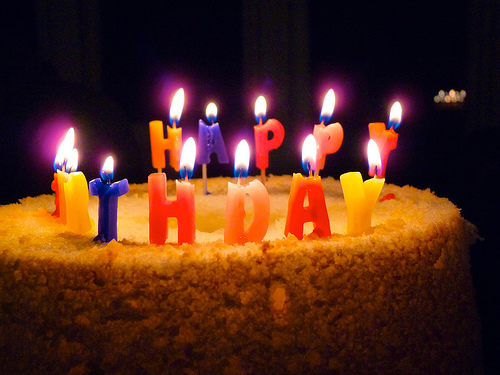
A Birthday Party


She walked in
With a glow,
On her cheeks madeup.
And a sparkle,
In her kohl lined eyes.
She glowed and sparkled,
Far more than ever.

We could read,
Behind that glow,
Were pale cheeks.
Beside the sparkle,
Were wet, sunken eyes.
Beneath the smile,
Was a broken heart.
Beyond the party attire,
Was a shattered morale.

We cheered louder,
We grinned wider,
We sang ‘A Happy Birthday to you’
As a three dozen candles, she blew.
We hugged her tighter,
To make her world seem brighter.

Alas, overwhelmed with cheers,
she could not hold back her tears,
And cried and cried , mumbling ‘Thank you’.
We felt her agony and cried too.
She talked and talked,
Through her past she walked.
All her grief she shared,
For she said, that we cared.

As the party was over, she left with smiles
With dreary cheeks and Kohl smudged eyes,
But a calmer heart and a stronger will
Though for her, the party, wasn’t over still.

P.S. This was a birthday party arranged for a friend who has recently gone through a traumatic divorce. I know some of the readers might think or even say about the poem , ” it went off me”.  But ask some one, who feels shattered, what a small  gesture of  ‘you matter’ can mean to them.