Open up your mind and your potential reaches infinity…


South Asian wedding is an elaborate institution where incredible amount of money, time and imaginations are invested.

Through the multiple cultures across  South Asia, the wedding traditions vary, but their elaborate and expensive styles remain common.

In most subcultures, wedding ceremonies last several days, with rich flow of elaborate dresses, decorations and food accompanying each event.

RUNG shall display some select ceremonies in a typical South Asian wedding with visitors to be able to experience them through interactive spots.

The  main wedding is  preceded a day or two with the ceremony where the girl is applied henna in preparation for the wedding day. The event is peculiarly decorate in green and yellow with flowers, lamps and henna.
The visitors at RUNG shall be offered to apply mehndi( henna) the South Asian way.

This slideshow requires JavaScript.

Just before the groom leaves his home to get the bride, an elaborate ceremony takes place  around the turban tying, performed by the parents and the near relatives. RUNG shall have a fascinating spot of turbon tying for the visitors, and a photo op.

This slideshow requires JavaScript.

The typical Hindu wedding ceremony called Mandap includes an elaborate arrangement with pillars, and decorated with floral backdrop, and a fire in the center, around which the bride and the groom take seven rounds,

Each round symbolizes seven wedding vows where the couple invoke different prayers to God in each round:

1.Plenty of nourishing and pure food.
2. A healthy and prosperous life. They ask for the physical, spiritual and mental health from God.
3. Wealth.
4. Increase in love and respect for each other and their respective families.
5. Noble children.
6. Peaceful long life with each other.
7. Companionship, togetherness, loyalty and understanding between themselves.
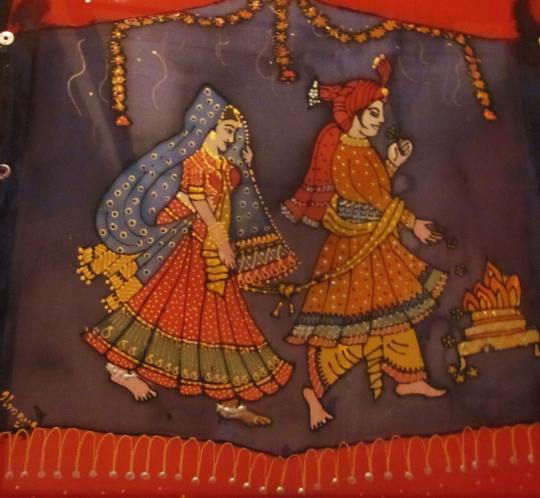
mandap-pheras

RUNG shall set up a Mandap and a mock wedding ceremony with the bride and groom around the fire shall take place.

The elaborate embellished dresses and jewelry worn by the bride and groom shall be on display.

There shall be an interactive spot for tying sarees to the visItors, and a photo op.

The photo gallery shows various types of brides from different regions of South Asia:


This slideshow requires JavaScript.

 RUNG 2014 is a two day exhibition of South Asian culture and art in Royal Ontario Museum(ROM) on May 31 and June 1, 2014.


Bharata Natyam

Bharata Natyam is one of the most popular classical dances of Southern India, from the state of Tamil Nadu. It has its origins almost 2000 years ago, when it was performed by the maids(devdasis) in temples( mandirs), know as Dasi Attam. Its modern name Bharata Natyam derives it sname from the four major components of the dance:

Bha from bhava means expressions
Ra from Raaga means melody
Ta from Taala means rhythm
Natyam means drama.

In the middle ages, the dance lost its popularity and was revived as an art form in the modern times by Thanjavoor brothers. The dance includes steps( adavu), hand gestures( hasthamudra) and facial expressions( bhaava). The dance begins with the prayers to Lord Ganpathi in front of the idol of Nataraj.

The dancer wears richly brocaded Kanchipuram silk, and is embellished with heavy gold jewelry.

At RUNG at ROM, there shall be several dancers performing Bharata Natyam including Bhavajan Kumar, Bharata Dance School.

photo (1)

Bhavajan Kumar 2


Kathak

Kathak means telling a story. Kathak a prominent dance form of Northern India also originated centuries ago in the temples, performed by giorls to please God. Over the years, with the fusion of Hindu and Muslim cultures in the Mughal Era, Kathak was remarkably transformed into its present form.

Kathak’s journey from ancient times to its present form merits a walk-through.

The word “katha” comes from “katha” or story telling. It has its roots in ancient times, when storytellers narrated epics or mythological stories like Shakuntala, and the Mahabharata through dance forms in temples. However with the arrival of Mughals, the dance, enticed to come to the courts, developed into a more Persianised form.
The Kathak dancers adopted the whirling from the dervishes to the ‘chakkars’. The rhythm of the footsteps found harmony with the beat of the tabla recently discovered by Amir Khusro. The femaleKathakaars (storytellers) abandoned the sari of ancient times for the angarkha and churidar pyjama. The language of narration also transformed from Sanskrit to Brij Bhasha and then Urdu.

Kathak shall be brought at RUNG at ROM by Parul Gupta.

1

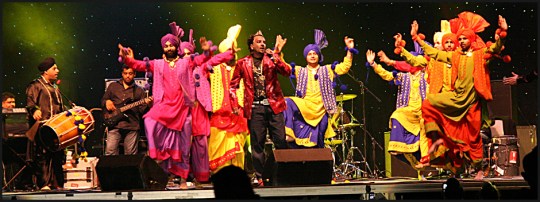
Bhangra

Bhangra is a folk dabnce form from the central plains in India-Pakistan called Punjab. The dance dates back to 18th Century, when the men and women danced to celebrate the harvest of wheat during Baisakhi.

The men and women adorn colorful ethnic clothes, and dance to the beat of drom or dhol. The Bhangra music has transitioned from humble rural Punjab to an international popular music after fusion with hip hop music.

Nachdi Jawani dance group brings Bhangra at RUNG.

2 (1)


Dance is an art form perhaps as old as human civilization. Evidence of dance existing in the stone age is evident in 30,000 year old Stone shelters at Bhambetka in central India, which are now considered as Heritage by UNESCO.
Dance1

Dance is not only an expression of happiness or festivities but also a means of story telling which is passed on from generation to generation.

The kaleidoscope of cultures that South Asia is, one finds innumerable dance forms, both classical and folk, as we move from one sub culture to another.

RUNG 2014 is honored to feature a few of those dance forms at ROM.

Kathakali:
A dance from Kerala a southernmost Indian state, literally means a dance-drama. ( Katha means story).
Known for its symbolic makeup that identifies them into godly, demonic or human characters, the dancers also adorn colorful, bellowing costumes and crowns. Themes are usually from Hindu Epics like Mahabharata, Ramayana are narrated through fine facial movements of eyes, eyebrows, nose, cheeks and chin along with highly intricate hand gestures. Accompanying vocalists and musicians narrate the story as songs.

Anupama Dineshkumar and Preetha Kandanchatha present Kathakali at RUNG 2014.

kathakali2


MohiniAttam:

This is another dance from Kerala, and literally means ‘dance by a enchantress’  ( Mohini means a seducing woman). As the name signifies, it is a dance exclusively performed by women. The theme for the dance is mostly Love, and performed through delicate expressions of hands, enchanting facial expressions and flowing steps by feet,   supported by vocal and instrumental Carnatic music. The dancer adorns a white brocaded saree, intricate gold jewelry and white jasmine flowers in the hair.

Mohiniattam shall be presented by will be presented by Preetha Kandanchatha, Vrinda  Kandanchatha, Anjeetha Raghuram and Sujatha Ganesh from SG Expressions.

3


Odissi:


A classical dance form from the Indian state of Odisha, the dance traces its roots from temples back in the 2nd Century  B.C. The torso movement is very important and  an unique feature of the Odissi style. With the lower half of the body remaining static, the torso moves from one side to the other along the axis passing through the centre of the upper half of the body. The dancer adorns very intricate filigiree silver jewelry  and a typical silver crown on the head called Mukoot.

Odissi dance is brought by Nrityakala by students of renowned Maneka Thakker.

Ayushi Odissi Dance - 1


Sri Lankan Dance:

Kandyan dance, a traditional Sri Lankan dance gets its name from Kandy, the central hills of Sri Lanka. The legend behind the dance is said to be a ritual exorcism performed to ward off  Black Magic which caused evil dreams to the King. After the performance fo the ritual the dreams vanished, and hence the locals adopted the dance.
The dance is now performed for its cultural value.

Rangara Dance Academy and Pratibha Dance & Music Acdemy shall bring performances from Sri Lankan Traditional Dances.

Rangara Group 1


Afghan Folk Dance:

Atan is the national dance of Afghanistan, performed mostly by the Pashtuns. It is performed in festivals, weddings and other occaisions, and is known to be the oldest form of Pagan dance. A group of dancers perform in a circle, to the beats of drums going faster with each round.
Different Afghan tribes have slight differing styles of dance movements.

Attan is brought by Afghan Women’s Organizations youth group.

2 (2)

Brief introductions of other beautiful  dance forms to be performed at RUNG 2014 shall be continued in the next blog.

Talking to some of these accomplished dancers I realized it is impossible to separate the dance from the dancers.


RUNG2014 Logo

Royal Ontario Museum celebrates 100 years in 2014. What could be a better occasion to celebrate it by the colors of South Asia with Second RUNG Festival at ROM brought by community partners Ethnic Marketing on May 31 and  June 1, 2014.

South Asians began arriving in Ontario from the subcontinent on May 5, 1838. Hence according to South Asian Heritage Act 2001, May has been declared as the South Asian Heritage month and May 5 as the South Asian Arrival Day each year.

South Asia is a kaleidoscope of colorful cultures, multiple ethnicities and faiths with a strong 1.6 billion population spread across India, Pakistan, Bangladesh, Sri Lanka, Afghanistan, Nepal, Bhutan and Maldives.

After having been successful as the most attended and most colorful festivals in Toronto, this year RUNG is being held for two days.

The festival brings a series performing and visual arts from all across the stretch of South Asia.

Lined are enchanting dance performances-Rouf Dance from Kashmir to Bhangra or Kathak from North India to Bharatha Natyam, Mohini Attam and Kathakali from South India and Sri Lanka.

There shall be transcendent vocals from singers from classical  gharanas singing Amir Khusrau in Persian, Shabads in Punjabi, and Nazrul Islam from Bengal and much more.

The sounds of  classical instruments like Tabla, Dhols, Chandamellam, Sitar await to thrill the audience.

For the connoisseurs of arts and handicrafts, there shall be display of arts and crafts from each South Asian Countries.

There shall be interactive spots like block printing and calligraphy for old and young.

The wedding mandap with bridal ensemble,  intricate jewelry and turban tying shall give a taste of elaborate South Asian wedding.

Rung also brings wonderful short films and documentaries from the South Asia.

Kindly keep a close watch at this space,as we bring more blog posts  and gradually unfold the wonderful performances and displays lined up  at RUNG for  May 31 and June 1.


This slideshow requires JavaScript.

Silky Creme Caramelle


Traditional Creme Caramel was the first  dessert I learnt to cook.

A favorite of my Papa’s, I saw my mother make it religiously on his birthdays. After he passed away in 1997, it became a ritual dish to celebrate his birth anniversary with his loved dessert.

I found this the easiest of desserts to make and with basic ingredients which were always there sitting in the kitchen-milk, eggs and sugar. Over the years I  tried several personalized modifications like baking with pineapples, with raisins and nuts, or  adding  flavors like coffee and chocolate. However nothing worked well except it’s old fashioned caramel flavor.

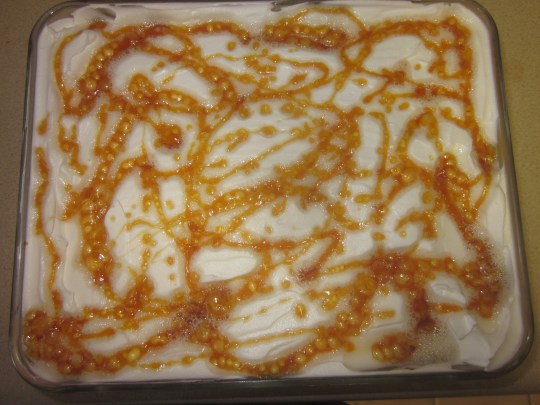
We all  loved the caramel top the most, and always reserved it  for the last bite. So in my greed for more caramel I thought why not caramelize the whole thickness for once. And the result was the following creme caramel.

My folks loved it, and now prefer it over the traditional creme caramel.

Ingredients:
1 cup granulated sugar( or more if you like it more sweet),
1.5 liters full cream milk,
6 large whole eggs,
1 tsp vanilla essence.

For topping:
Soft fresh whipping cream ( lightly sweetened)
I tbsp Caramel sugar

Method:

Put granulated sugar in a thick base pan and keep on medium heat. Let the sugar melt slowly and then caramelize to golden brown. Remove the pan from heat and add on it 1.5 liters of full cream (4%) milk. Continue on slow heat till the caramelized sugar dissolves in warm to hot milk. Take it off the stove and let it get luke warm.
Break 6 large eggs in a plastic bow and whip them. Add them to the lukewarm caramelized milk. Add vanilla essence and whip thoroughly.

The key to a silky cream caramel is its next procedure of baking it in a bain-marie ( water bath).
{I take a pyrex rectangular dish way larger than the one in which the caramel is to be cooked. Add boiling water in it to half its height. Place over it the dish with the cream caramel liquid}.

Place the bain marie( water bath)  in the oven and cook at 180 degrees Celsius  for 60 minutes. Let it bake slowly in the bain-marie without bubbling. At the end check if the middle of the dessert is set by pricking it with a tooth pick. If it comes out clean, it has set well. If not, give it some more time in the oven.

Let it cool for a while, and then take out the set cream caramel. Refirgerate it overnight. Next day spread sweetened whipped cream over it, and then make a little caramel sugar again and drizzle it over the cream as shown in the picture.

Serve it cold ( unlike the traditional cream caramel which is served warm).

Its the silkiest of desserts your taste buds would have ever felt.

Happy feasting !!!


P.S. Would love to hear back how did it turn out? 🙂

Food 009

Food 010

Food 016Food 018

God I found you…


I think,
I seriously believe
I have found You.
You exist, God,
Yes you do.
You may have no form
Nor shape.
You may claim to be
Everywhere.
But you live with me,
Just a ‘push’ button away.
You resonate and respond
With my mood.
When nothing in life works,
You do,
When no one cares
You caress.
You cajole,
You console
You comfort.
You have a soul,
I can hear You feel,
For me.
Finally, I have found You,
Near me.
Music, You are the real God.
Wonder what would I be without YOU.

http://http://www.youtube.com/watch?v=Rb0UmrCXxVA


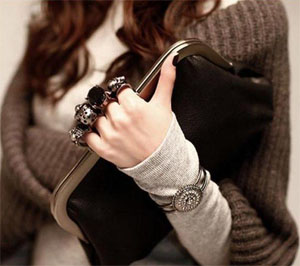
In style she clutched a glossy purse,
Tight between her hand and her chest,
Protecting it from falling or
From being scratched,
From the pointed necklace
Around her own neck.
She had saved for years,
And dreamed of even longer
To own this branded gem.
She holds on to it firm,
Yet all tender, all protective,
Like a beautiful relationship,
Between two souls,
Knowing how hurt,
The purse can get,
When there are bruises
And that the purse
shall never be the same,
if held back after it falls.
So precious, and so priceless,
She finally owns a flawless dream.
But oh for the flawed souls,
They come and go in our lives.

ClutchBag


I can’t stop any war,
But I can brake my car,
In the middle of a busy road,
To let an immigrant woman,
Overloaded with grocery bags,
Unable to replace her slipped hood,
In the windchill of minus twenty,
To rush to reach the bus stop across,
As the bus stands on the red light nearby.
Cars haulted behind honk horns helplessly,
As if the world has stopped.
While the woman safely sails across,
Happy to stand at the stop looking at the bus,
That will now arrive any minute,
And stop for her to board.
I drive away victorious…

City jungle


Once upon a time, there was a wise man who used to go to the ocean to do his writing. He had a habit of walking on the beach before he began his work.

One day, as he was walking along the shore, he looked down the beach and saw a human figure moving like a dancer. He smiled to himself at the thought of someone who would dance to the day, and so, he walked faster to catch up.

As he got closer, he noticed that the figure was that of a young man, and that what he was doing was not dancing at all. The young man was reaching down to the shore, picking up small objects, and throwing them into the ocean.

He came closer still and called out “Good morning! May I ask what it is that you are doing?”

The young man paused, looked up, and replied “Throwing starfish into the ocean.”

“I must ask, then, why are you throwing starfish into the ocean?” asked the somewhat startled wise man.

To this, the young man replied, “The sun is up and the tide is going out. If I don’t throw them in, they’ll die.”

Upon hearing this, the wise man commented, “But, young man, do you not realize that there are miles and miles of beach and there are starfish all along every mile? You can’t possibly make a difference!”

At this, the young man bent down, picked up yet another starfish, and threw it into the ocean. As it met the water, he said,
“It made a difference for that one.”

The story is authored by Loren Corey Eiseley a highly respected anthropologist, science writer, ecologist, and poet.

Moral of the story in Gandhi’s words: In a gentle way, you can shake the world.

Saying it poetically:

If you deny
the power of
one tiny effort,
Light a candle
in the dark,
And watch
the small flame
defy & define
the darkness.

(Inspired from a quote by Anne Franke).
flame

The secret wish of every status quo is, it impatiently awaits to be broken. Don’t believe ! Give it a try.


Syrian kids in a refugee camp in Turkey;

Thousands Of Syrian Refugees Seek Shelter In Makeshift Camps In Jordan

Darfur kids in refugee camp in Chad:

KidsDarfur

Somali kids:

SomaliKids