Open up your mind and your potential reaches infinity…

Archive for the ‘Social Issues’ Category

Denial isn’t just a river in Egypt !


Courtesy: Faking News

Poor ostrich is often associated with the belief that it sticks its head in the sand during times of trouble. Of course this is a myth and no ostrich is foolish enough to do that. Thanks to the mankind, and his state of denial that he has attributed this term to the poor ostrich. I am sure ostriches and other animals must be calling this as ‘human effect.

(Ostrich effect is a term used in behavioural finance for the avoidance of apparently risky financial situations by pretending they do not exist.).

We human beings are the masters of denial. Whether it is health, finance, social, political situation—personal, or public we live in denial. We bury our heads in sand of denial of and on.
Who would know the bitter effects of denial than I myself. I still suffer from its guilt now almost a decade on.

On visiting my parents in Delhi in July 1997, I clearly remember how my mom begged to me that she felt that my Papa wasn’t well and he needed a thorough medical checkup. I took heed to her concern and talked to my father, that he needs to see a doctor. He scoffed off the idea that the sweating he gets while walking has nothing to do with his heart but due to humidity in the monsoon season. We went on long walks together, where his pace at 64 years of age was still faster than mine.

I continued to watch him with a side gaze, off and on, to see if I could get a trace of some unwell signs in him. He was radiant as ever, with barely few hair grey in the sideburns and and intact zest for life.

How can my Papa be having a ‘serious’ problem ? I questioned myself several times..

He convinced me that my mom was obsessed. We went for a basic blood test which was all well. Mom wasn’t convinced. But my confident Papa, shooed her idea of an echocardiography for the heart.

Twenty days after I left, I got the news that my Papa passed away, hale and hearty, while working on a computer, typing a chapter for his new book. He had a massive heart attack.

I have not forgiven myself ever since, for having lived in denial, to escape harsh reality. Had I faced the truth head-on, life would have been different.

In a wider context, all human beings live in denial—with just the difference in the degree. We deny everything and then wrap it in the garb of ‘conspiracy theory’.

A quote goes: ‘The abuse dies in a day, but the denial slays the life of the people, and entombs the hope of the race’.

On one extreme end are those who deny Holocaust, the landing of man on Moon, the 9/11 incident, even the  Abbotabad operation in which Osama Bin Laden was nabbed and killed. The other milder extreme are those who express “ We have stopped watching news because it is very depressing.”

How can anyone close their eyes to what’s happening around? My mind often tickles.

In the local context, one sees that denial has become a way of life  in Pakistan. There are many who refuse to accept the problems of Pakistan and pass the buck on others—most favoured excuse being America or India.

Twenty years ago when I was new to Pakistan, first ‘conspiracy theory’ hurled at me was that Pakistan’s big or small problems are because it wasn’t given the ‘right’ piece of land during partition. I remember having had frantic arguments, with myself as a new bride alone on one side, and many old and young, mostly men on the other.

And after that for whatever happened in Pakistan, some  of my  ‘friends’ and kin, in Pakistan made sure that I knew that all that was happening was due to India.

The latest being the PNS Mehran incident—in which a ‘friend’ of mine took pains to mail to me in India that it all happened because of the involvement of RAW agents and that the proof she had was that those men who came there were uncircumcised. I did not shock me, for I had heard the same explanation when the armed men had attacked the Sri Lankan team in Lahore. And worse of all, many among my other kin and friends did not disagree with her.

I do not find these stories amusing any more. Mass denial has become a “National Sickness”. And conspiracy theory is it’s outward symptom. I fear that the way things are moving this sickness may lead to our demise as ‘thinking’ and ‘reasoning’ individuals.

So aptly has the following quote by Meredith Grey summed up ‘denial’ :
Sometimes reality has a way of sneaking up and biting us in the ass. And when the dam bursts, all you can do is swim. The world of pretend is a cage, not a cocoon. We can only lie to ourselves for so long. We are tired, we are scared, denying it doesn`t change the truth. Sooner or later we have to put aside our denial and face the world. Head on, guns blazing. De Nile. It`s not just a river in Egypt, it`s a freakin` ocean. So how do you keep from drowning in it?

God shall wake up, Someday !


With my brain immersed in pool of ignorance,
With my heart beating in rhythm of indifference,
With my senses numbed with vaccine of bigotry
With my eyes enveloped in curtains of darkness,
With my ears stuffed with plugs of apathy,
With my mouth gagged with grips of denial,
With my hands tied in chains of cowardice,

I see no light at the end of the tunnel
I think no dream shall come true
I feel no dawn shall break
I hear no music of hope

So, I sleep again
into a deep slumber
To dream a dream that
God shall wake up
SOMEDAY !

PS: Mentally shaken, morally crushed, neurally stunned I know not where am I heading…And with an illusion that  it’s not me, but God who will bring a change.

Khoon baha, itna baha, ke behta chala gaya…


Khoon baha, itna baha, ke behta chala gaya…

Kyunke..

Mulk jhuka, itna jhuka, ke jhukta chala gaya…
Andhera hua, itna hua, ke hota chala gaya…

Zulm badha, itna badha, ke badhta chala gaya…
Insaaf mita, itna mita, ke mitta chala gaya…

Insaan soya, itna soya, ke sota chala gaya…
Aas miti, itni miti, ke mitti chali gayee…
~June 9, 2010

..

Dhyan hataye nahin hatta,
Aansoo thamey nahin thamte,
Dil sambhale nahin sambhalta
Karoon to aakhir kya ?

PS: Penned in a shaken state of mind after watching the video of the young boy, Sarfraz Shah, who was shot at close range, then left to bleed to death right there..

But will this stop at Sarfaraz Shah ?

Delhi Diary: Everything is For Sale


People look the same, but they think different, act different. Values have transformed. Yes, the place is booming with progress, but booming to the extent it makes an old fashioned me feel nauseated. Returning to my home town after only a few years, I find the world there has fast forwarded many many years.

Commercialism is at its helm sweeping everything and everyone with its flow. Huge malls have burgeoned with top international brands to cater to the new middle class with excellent pay packs and plenty of dispensable cash. The rush in high end brands is as if the stuff is for ‘free’ give away.

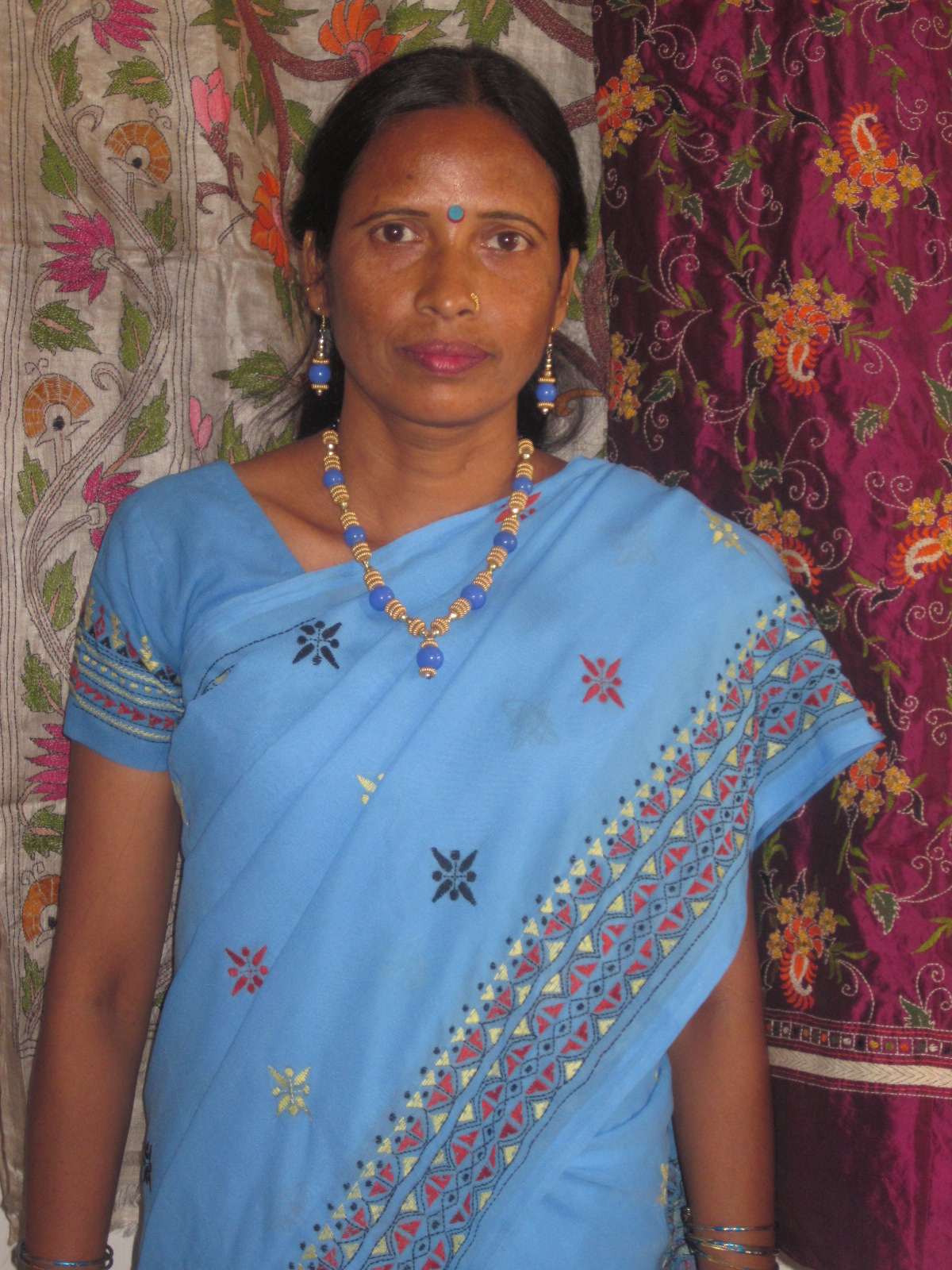
My favorite hideouts for ethnic stuff sulk with few visitors— mostly being tourists or old fashioned junkees like me. To my utter shock my favorite state craft emporium which was known for it’s exclusive handmade stuff, is now stacked with second rate , far more expensive machine made ugly embroidery—and they call it ‘handicraft’. And the stuff which I wouldn’t cherish even for free, is exorbitantly price tagged. The lone hand embroidered trinket I dug out from the old stack, turned out to be way cheaper than the new commercial stuff.

“Why? “ I ask.

“It old fashioned”, the lady remarks.

I walk out disheartened for it ceases to remain a den I will ever again aspire to explore.

Delhi Haat, the hub of art and craft, is deserted with over half the shops either closed or unoccupied. Few love-stricken couples, roam around on a look out for solitude in the empty shops. The shop with state of the art hand embroidery from a remote state sells it dirt cheap—

I again ask. “ Why?”

She is dumbfounded. How could anyone call it cheap, as people still haggle with her to bargain on that price.

The official passing by over hears, and explains— “Yes if she won’t sell that cheap, no one will buy. And she will have to pay the freight and carry it back to her home town 2000 km away.”

My heart aches. I buy without a bargain. I hug the woman. Call her my sister to overcome the guilt of buying such laborious art so cheap.

My brother buys an IPL Calcutta Night Rider’s T-shirt for my son at an exorbitant price tag. My heart sinks. The high-end store selling original T-shirts has teenaged boys falling one over the other for their favourite team’s Tshirts. Then I see, not one or two, but many boys buying several Tshirts from different teams.

I again ask a mom , “Why?’

“He collects them all”, is her matter of fact reply.

Maybe I am somewhat old fashioned to make sense of that.

I walk into another shop in the fancy Mall, for a friend’s demand of a bridal dress. They serve you lassi, thandai, fizzy drink, mineral water—whatever soft drink you name. The cost of what I was told to buy is 4 times the price my friend had asked for. I tell him my range—and the ‘seth’ in the shop gives a jerky smile, turns to attend to the next customer, never to look back at me again.

I call him and he says, without looking at me, “With your range you will not get it anywhere, you may try elsewhere if you like”.

I walk out dejected—knowing that my friend would never believe my story. She wouldn’t buy my explanation that India isn’t simple and inexpensive, anymore.

Not just the usual stuff, many more interesting things are for sale too. Male or female sexuality is on display too, in TV Ads, selling trivial stuff like deodorants. A deodorant Ad shows a woman fanaticizing about sex after getting a whiff of the man’s deodorant. In another, a woman finds a man’s deodorant so attractive that she starts unbuttoning her blouse, and yet in a third one, a woman is drawn to her sweet-smelling brother-in-law.

When the government objects to their being inappropriate on TV, watched by families at home — the fashionables cry for freedom of expression. That the woman or men should be free to express their sexuality in public. Yeah sell the deo ‘using’ a woman’s sexuality. This is called commercial freedom. Perhaps I am too old fashioned to get that.

Then one hears the news and the rescuing of under aged girls, as old as 12 or 13, from brothels in some cities. They are lured into business with a ploy to better jobs and are sold in brothels. There are two business models to make them comply in the trade- first, physical torture, and secondly, drugs. The two methods are applied enough to kill their self esteem, and they obey their seniors like robots. These little girls physiologies’ are on sale too.

Another commodity on sale is the woman’s womb. Many agencies have sprung up taking pride in making India a hub of reproductive tourism. Now if you have a vacant womb, you can rent your womb and bear another couples child. It was a scientific feat, especially for those who could not bear their own child for some medical reason. But now the reasons have extended to economic and social convenience. Many couples who have enough money, but not enough time can rent a womb and let it carry their baby. And once born they are legally the parents and the surrogate mother has no right either emotional or legal over the baby she nourished with her blood and tissues.

Busy rich ‘desi’ couples in the west are the clients mostly. Who shall tell these money struck parents that to go through the whole sequel of ‘Pregnancy test Positive’, to each stage of pregnancy, week by week , month by month, cuddling an unborn baby, feeling its kicks is a journey It’s the real honeymoon in a couples life, that no money can replace.

Bring home a baby ready made, not able to breast feed, no knowing what pangs of birth are or what morning sickness is- is hard for me to comprehend.

Yes really hard to comprehend.

For sure because I am old fashioned.

Very old fashioned.

My friend at Delhi Haat

Fire of Love


Long time ago
Man discovered fire
The fire of vanity
With heat of conceit
Invented the wheel of avarice
Cultivated seeds of tyranny
Raising crops of injustice
Built house of apathy
Erected on pillars of prejudice
Mosques of bigotry
Raised by bricks of hatred.

The DAY man shall
Turn the wheel of generosity
Cultivate seedlings of compassion
Reap the crops of honesty
Make a home of empathy
Raised on pillars of justice
Temples of tolerance
On foundation of peace
That day,
He shall discover fire again,
The FIRE OF LOVE.

Treetops vs Grass roots


While reading through the wonderful, insightful Pullitzer Prize winner book Half The Sky, which highlights countless issues related to women all over the globe, one is enlightened of the dynamics of factors which can bring a real change in the lives of women in the world.

Whether it is reduction in maternal mortality, girl trafficking, change in social customs like female genital mutilation or women abuse the change can come only from within. And the secret to that change is ‘girl child education’.

Girl education is the key to women empowerment. Women empowerment in turn is the key to eradicate poverty.

Educating girls is the most effective way to fight poverty. Until women are numerate and literate it is difficult to bring meaningful change and contribute in the country’s economy”, say the authors.

Despite multiple factors playing their roles, studies have shown that, the solution to reduction in population growth, trafficking of women, gender based violence or female genital mutilation is SINGLE and it is girl education.

The local customs, culture, and family dynamics and the various factors which hinder the change need to be well understood . Bringing about a difference entails persistence and perseverance to bring slow and steady change and creating receptive audience at the grassroots level. Innovative ways may be needed to cause that change in thinking before one expects a change in practice.

The roadblocks may not necessarily be just the ‘big’ factors –but even trivial issues which we do not even give a second thought.

And motivation of girls is never an issue. They are always willing. It is the circumstances and the people around them who need to be convinced.

The authors recount, based on research, four cost effective ways to increase school attendance in either genders—
• ‘deworming’ the children( as worm infestation affects physical and intellectual growth),
managing menstruation related issues( providing san napkins and toilets—as many girls don’t attend school during mens due to inconvenience),
• providing Iodised salt( as many communities suffer from Iodine deficiency which leads to brain damage) and
• ‘bribing’ ( providing financial incentives to the girl students for attending school.

The donors often assume that providing the infrastructure, like building schools, or giving books is the ‘way to increase’ educaton. But one may have to go extra mile(s) to ensure that the real purpose behind the building of schools is realised.

The World Bank ,too, points that excessive spending on education bureaucracy and school infrastructure, rather than on teaching staff and supplies, undermines the quality and quantity of schooling.

How to boost up the woman empowerment through education ?

For many of us first thing that occurs is ‘funding’–specifically foreign funding.

It remains a myth that in places with poor resources and conditions the foreign assistance or Aid through big agencies like UN, USAID, US govt.etc.(Treetop solution) is the key to any kind of development.

Rightly did the authors point out that Foreign Aid follows ‘Murphy’s Law’ ( the law states that anything that can go wrong shall go wrong).

The foreign aid may be well intentioned but it does not always work the way it is intended. Some prove to do the exact opposite of what is intended.

Many skeptics like, Peter Bauer and Milton Friedman argued point blank in the 1960s that aid is ineffective.
William Easterly with experience in WB says, aid is often wasted and sometimes does more harm than good.
Rajan and Raghuram published a study in The Review of Eco and Stats that : there is no positive or negative correlation between aid inflows and economic development of a country.

The literature on foreign aid and development strongly suggests that the usefulness of development assistance varies with the quality of a country’s governance and the economic policies it pursues. In countries whose policy environment is highly unfavorable to growth, aid is less likely to be productive and contribute to long-term development.

According to one group of scholars, “in terms of growth prospects and performance, no amount of foreign assistance can substitute for a developing country’s internal policies and incentives for increasing output and improving the efficiency of resource allocation.”

A wonderful example that the book gives of a failed purpose of the Aid is as follows:

A UN Project in Nigeria meant to empower women.
Fact: the women in Nigeria cultivate cassava ( a root like potato) and use it for the household. If in excess they sell it off and save the money and spend it on home and their children.
The Project: It introduced a variety of Cassava which would give three tons per hectare yield instead of the usual 800 kilos per hectare. They had a terrific harvest. But they had problems;
They could not harvest that bulk of the yeild and could not even have the capacity to process them.
The agency introduced processing equipment. But the fruit was bitter and did not taste as well. But with processing of the fruit the problem was dealt.
As a result the project looked a ‘great success’. The women started to earn good money.
But then the men came in and kicked women out of Cassava farming. Why?
Because as per the tradition the women raised staple crops and the men grew cash crops. And when men had extra earnings, they used it for beer. As a result, women had even less income that when they started.

Moral of the story:
The above case proves the futility of a well intentioned Aid, if it is not linked to the local cultural practices. And another point it highlights is that any sort of empowerment of woman can boomrang unless it is accompanied by women education.

Sometimes good intentioned ‘treetop’ efforts can be counterproductive if the ‘grass root’ realities and resources are not taken into consideration.

Oh God! I Know you I Met with you Once Upon a Dream


One day in my dream, I went into a garden whose beauty and magnificence my eyes hath never ever seen or imagined. To give a poor description—there were streams of sparkling crystal water, lined with camps of pearls over the soil of musk. The grass blades were laced with emeralds and inflorescence of rubies hanging from the trees. I wondered where was I ?

A voice came from behind—“Don’t be wonderstruck, you are in Heaven”.

I turned back and a flash of image beyond description smiled back: Hi I am God. Welcome to the future abode of mankind.”

Though in absolute awe, I gathered courage to ask: “God can you spare some time to talk ?”
( wondering if I could ask Him some questions which puzzle my mind.)
“My time is eternity and enough to do anything. Do not worry and ask all those questions that boggle your mind.” Pat came the reply.

I knew as He could read my mind—for sure he was God.

With courage I began: “I know when Gabriel first saw the Heavens, he had wondered ‘the road to the heaven is littered with hardships, and By your Dignity, I am afraid if anyone would be able to enter it.?”(Tirmizi).

God replied: “There is only one path to Heaven. On Earth, you call it Love.
‘Love and compassion are necessities, not luxuries. Without them humanity cannot survive.’ “(Dalai Lama)

“By your Dignity, God there is hardly any compassion in this world now. All we see is misery and hatred. Will there be anyway mankind can enter this magnificient Heaven?” I asked.

God: “ Yeah I wonder that too. ‘My first wish is to see this plague of mankind, WAR, banished from the earth.” (George Washington )
“Not just heavens, Mankind is not likely to salvage civilization (on Earth) unless he can evolve a system of good and evil which is independent of heaven and hell.’ “(George Orwell ). He explained.

“Sir, did you make mankind with the way he is behaving, in mind?”

God answered in a disappointed voice: “No, not at all. I really wonder at mankind on how:
*He lives as if he will never die and dies as if he has never lived.
*He spends his health to gain money and then all his money to regain the lost health.
*He whines for the past, worries for the future and as a result spoils his present.
*And worst of all in this race to live, the mankind has lost compassion for each other.”

“What is compassion, God?”, I asked.

“Compassion is the capacity for feeling what it is like to live inside somebody else’s skin. It is the knowledge that there can never really be any peace and joy for me until there is peace and joy finally for you too. If you cannot be compassionate through actions, be compassionate through words.”

“Words?”, I wondered.

He replied: “A careless word may kindle strife.
A cruel word may wreck a life.
A timely word may level stress.
But a loving word may heal and bless.”

He gave a long gloomy pause after saying that, and as I placed my hands over His to comfort Him, He held them tight, speaking nothing.

To cheer Him up and to break the melancholic silence I asked: Okay but what is the thing in your creation that hasn’t really disappointed you?

Without a pause he replied: “The Mother, yes she hasn’t disappointed me. I could not be everywhere, so I created mother.” ( Jewsih Proverb)

“Why does she make you so proud?”

 “‘Mother is another word for selflessness and sacrifice. ‘Mother is the name for God on the lips and hearts of little children.’ (William Makepeace Thackeray)
‘A mother gives a child, first, roots to grow strong and attaches herself to the existence of her child, and then lets him learn to grow wings to fly away with success.’ “

‘And what else would you advice Mothers to teach their kids?’,I asked.

He answered;
“The kids should be taught not to value what you have in your life, but who you have.
If you want others to be happy, practice compassion. If you want to be happy, practice compassion. (Dalai Lama)
Compassion, in which all ethics must take root, can only attain its full breadth and depth if it embraces all living creatures and does not limit itself to mankind. “(Albert Schweitzer )

“Out of all the blessings that you have bestowed upon Mankind, what do you think should he value the most?”

“Friends.” he said.
“If out of all mankind one finds a single friend, he has found something more precious than any treasure, since there is nothing in the world so valuable that it can be compared to a real friend.”(Andreas Capellanus)
He elaborated further: “The best kind of friend is the kind you can sit on a porch swing with, never say a word, and then walk away feeling like it was the best conversation you’ve ever had.”

“And what virtue should we value the least?”

“Wealth, ”  came without a pause.
“Can wealth give happiness? Look around and see, what gay distress! what splendid misery! Whatever fortunes lavishly can pour, the mind annihilates and calls for more. “(Andrew Young).
“Money is the worst currency that ever grew among mankind. This sacks cities, this drives men from their homes, this teaches and corrupts the worthiest minds to turn base deeds.” (Sophocles)

“Do you have any regrets for having created the Mankind?” I dared to ask, fearfully and  slowly.

He did not feel offended, instead replied with a sad tone : “Well I regret having given mankind the mind to think, because he has abused his mind more than putting it to use. He has abused the intelligence to make weapons, warfare to destroy mankind, and has used his knowledge to misuse the resources of the mother Earth—leaving it a miserable place for the future generations.” 

“So you must be hating Mankind now for how he has betrayed himself and the earth—both being your creations?”

“No dear, how can I hate something I created with my own free wil l? Yes I do despise a word called God.” 

“Lord, but isn’t that your own name you despise so much?” I could not hide my shock.

“Unfortunately yes. And all for the hatred that the mankind spreads in My Name, the suicide bombings, the killings, the discrimination that people are subjected to because they use my different names. I never asked anyone to use My Name to seek war for their personal agendas. I feel hurt and broken by all this bloodshed. I feel betrayed in My Name.”

My head hung in shame for how much have we hurt our own creator and continue to do so. And then think that we are doing a great service for HIM. I did not have the courage to ask him anything more. I did not even have the face to look towards him to Thank HIM and say a Bye.

Alas! I had no strength to ask him anymore.

Being God, He knew what else I wanted to ask and had reserved  for the last. As I turned away, he answered my unasked question:

My advice to mankind would be:
“To dream anything that you want to dream. That’s the beauty of the human mind. To do anything that you want to do. That is the strength of the human will. To trust yourself to test your limits. That is the courage to succeed.”(Bernard Edmonds)

And Finally to convey to the fellow beings on Earth from my behalf :
“Mankind must remember that peace is not God’s gift to his creatures, peace is your gift to each other.” (Elie Wiesel )

While walking away, I thought, ” I have saddened Him so much.  Will I ever be able to face Him again ?”

I heard again, a voice coming from the back:

“Anytime, I’m always near you . All you have to do is ask for me. And I shall answer.”

And I woke up, wishing that the whole Humanity woke up too.

Workers Song~ Dropkick Murphys


Yeh, this one’s for the workers who toil night and day
By hand and by brain to earn your pay
Who for centuries long past for no more than your bread
Have bled for your countries and counted your dead

In the factories and mills, in the shipyards and mines
We’ve often been told to keep up with the times
For our skills are not needed, they’ve streamlined the job
And with sliderule and stopwatch our pride they have robbed

CHORUS:
We’re the first ones to starve the first ones to die
The first ones in line for that pie-in-the-sky
And always the last when the cream is shared out
For the worker is working when the fat cat’s about

And when the sky darkens and the prospect is war
Who’s given a gun and then pushed to the fore
And expected to die for the land of our birth
Though we’ve never owned one lousy handful of earth?

CHORUS

All of these things the worker has done
From tilling the fields to carrying the gun
We’ve been yoked to the plough since time first began
And always expected to carry the can

Sometimes a Hug is All that We Need


It was several years or perhaps over a decade ago when I had cut out this cartoon from the daily newspaper and stuck on my fridge with a magnet.

Having lived in an Arab land where hugging is a usual form of greeting, I had learned how good it felt after having hugged a dear one.

Like all Moms, I too frequently made it a point to  bear hugg  my growing kids. Whenever the little ones  felt any trouble or insecurity they would run to be hugged tightly. If at times I was busy and did it lightly, they would demand-

” Ammi do it nicely.”

Then came an Indian movie with the much popular caption

” Jadoo ki jhappi”

-~the magic hug,  which claimed to do wonders.  Inspired by it, we actually put this Jaddo ki jhappi to practice, at our home.

Whether it was the daughter getting nervous for her exam or the son feeling hurt after a fall or a sib finding hard to cope with a financial loss or Mom missing my deceased Dad or a friend nervous for her husband’s illhealth or even the  kids’ nanny, sobbing  after she recieved some bad news from the kin back home–a tight bear hug would comfort not just them, but me too.

A wholesome hug cannot really change the circumstances, but it gives strength to bear the loss with a feeling that they are not alone in their suffering. Medically speaking, the act releases endorphins, the feel good hormones, into the body.

Later, I saw on  net a report on the raised rates of suicide among South Korean students owing to stress of competition in educational institutions. And then came the news that a simple campaign of giving free hugs to the passersby while standing at a street crossing decreased the suicide rate significantly in South Korea youngsters.

Further digging into the details led me to the wonderful international campaign called Free Hugs Campaign,  as a random act of kindness. My thrill for having practiced it myself without being aware of its existence,  had no bounds.

Giving a tight bear hug says aloud that we care.

Culturally many of us may not be in a position to accept being hugged at a street crossing, but we can certainly do this to our kids, our parents, our sibs and those friends who are informal enough to be hugged.

We need not be told to hug one’s kids. We do that amply and with full enthusiasm. Perhaps hugging our ageing parents needs to be reminded. However, it  is one of the most fulfilling expereinces one can experience.

I remember, for years,  having hugged my mom only occasionally and just ritually if at all. But with Dad being a very expressive person and I being his favourite child,  he never either received or parted without a wholesome hug.  After he was no more, what I missed the most was his hugs.

Then one day,  I decided  to repeat the same, with my Mom too. The first time I gave a real tight bear hug to my Mom, I could see her eyes twinkled with tears and she actually blushed. But the vigor she gained after the hug was strikingly noticable.

Each time she is around I make sure to hug her for a reason or for no reason. It embarrasses her at times and tells me to “grow up”. But I know she loves it. And the tight embrace, not just helps her feel good, but also lets me feel how thin and frail she is getting with the passing time. We may not realise that visually, or our parents may not be complaining of getting older and weaker, but the tactile sensation certainly does all the talking.

The survival of preterm babies are known to be having a better survival if the mother or the father or even a grandmother hugs the baby, on their chest as much as possible during the first month of life–called as Kangaroo care.

Similiarly I saw  in Delhi, Sanjivini, a well-known center that offers help to troubled minds, have a day clinic for schizophrenics where “caring” (involving touch and holding) is routinely used as a therapy. “But it is done in a parent-child matrix,” clarified the in-charge of Sanjivini, adding that only women volunteers handle female patients and men handle male patients.” In Sanjivni they have statistically seen that, the practice has reduced the relapse in  schizophrenics.

Scientific studies have shown that hugs have been seen to reduce heart rates, improve overall moods, lower blood pressure, increase nerve activity, and a host of other beneficial effects.

We need 4 hugs a day for survival. We need 8 hugs a day for maintenance. We need 12 hugs a day for growth, claims Virginia Satir, a family therapist

“Hugging is a way of connecting with others, of showing your genuine affection and appreciation, of valuing others, and of giving. All of these are positive, healthy, life-enhancing purposes”,  remarks Kevin Eikenberry,  author of Vantagepoints on Learning and Life.

I suggest give it a try to your loved ones. Sometimes, a hug is all what they  need.


IlmanaFasih

FREE HUGS is a real life story of Juan Mann, a man whose mission was to reach out and hug strangers to brighten up their lives. In this age of social disconnectivity and lack of human contact, the effects of the Free Hugs Campaign became phenomenal and spread world wide.

Get Up Stand Up Dont Give Up the Fight


Labor Day (aka International Worker’s Day) is celebrated on May 1 in countries around the world, and it is often a day for protests and rallies by Labour Unions.

This originates with the United States labor movement in the late 19th Century. Working conditions were severe and it was quite common to work 10 to 16 hour days in unsafe conditions. Death and injury were commonplace at many work places.
Demands for an eight-hour working day was becaming increasingly widespread among American laborers.

Thousands of men, women and children were dying needlessly every year in the workplace, with life expectancy as low as their early twenties in some industries, and little hope but death of rising out of their destitution. Socialism, calling for the rights of the workers, offered an attractive option.

ORIGINS:

A demonstration, largely staged by a small group of workers, caused a crowd of some 1,500 people to gather at Haymarket Square. When policemen attempted to disperse the meeting, a bomb exploded and the police opened fire on the crowd. Seven policemen and four other persons were killed, and more than 100 persons were wounded.
Eight protestors were tried, but no evidence was produced that they had made or thrown the bomb. They were, however, convicted of inciting violence, although no evidence was presented that they knew the bomber, who was never discovered.
Known as the HAYMARKET TRAGEDY, it became the marker of the origin of protests on Labour Day.

The following video narrates the events of Haymarket Tragedy.

A Poem

World Workers, whatever may bind ye,
This day let your work be undone:
Cast the clouds of the winter behind ye,
And come forth and be glad in the sun.

Now again while the green earth rejoices
In the bud and the blossom of May
Lift your hearts up again, and your voices,
And keep merry the World’s Labour Day.

Let the winds lift your banners from far lands
With a message of strife and of hope:
Raise the Maypole aloft with its garlands
That gathers your cause in its scope.

It is writ on each ribbon that flies
That flutters from fair Freedom’s heart:
If still far be the crown and the prize
In its winning may each take a part.

Your cause is the hope of the world,
In your strife is the life of the race,
The workers’ flag Freedom unfurled
Is the veil of the bright future’s face.

Be ye many or few drawn together,
Let your message be clear on this day;
Be ye birds of the spring, of one feather
In this–that ye sing on May-Day.

Of the new life that still lieth hidden,
Though its shadow is cast before;
The new birth of hope that unbidden
Surely comes, as the sea to the shore.

Stand fast, then, Oh Workers, your ground,
Together pull, strong and united:
Link your hands like a chain the world round,
If you will that your hopes be requited.

When the World’s Workers, sisters and brothers,
Shall build, in the new coming years,
A lair house of life–not for others,
For the earth and its fulness is theirs.
~ Walter Crane
Written April 13, 1894 for The Workers Maypole

Source: http://www.infoplease.com/ce6/history/A0823059.html
http://www.iww.org/en/projects/mayday/origins.shtml