Open up your mind and your potential reaches infinity…

Archive for the ‘Peace’ Category

“Interdependence” Day and beyond


First published in Aman Ki Asha on Aug 1, 2012 : http://amankiasha.com/detail_news.asp?id=854

As the dates approach, the excitement is increasing. The event is “Celebrate India, Pakistan Independence Days for Peace, Aug 14-15, 2012” — on Facebook at http://on.fb.me/LcHOeU.

As more people join the event page, those who joined earlier are getting to know each other better. They share common interests in music, culture, poetry. Some discuss pains and pleasures common to India and Pakistan. Many who met as strangers on the event page have added each other as Facebook friends and continue their exchanges elsewhere.

The idea is based on the “Pray for Peace between India and Pakistan Day” initiated by Swati Sharan in Toronto, asking Indians and Pakistanis to “Save the Date! Pray for 30 seconds in your own style for peace between India and Pakistan”, on December 18, 2011 (randomly picked). This led to some 200,000 souls around the world praying for this cause, not only via social media but at community centres and ashrams.

Inspired by the idea, a discussion began on twitter about celebrating Aug 14-15 together as “Interdependence Days”, instead of just wishing each other for Independence. “What is this celebration for if we can’t party together?” asked Shivam Vij, an IndoPak peace voice from Delhi, almost a year ago.

The Pakistan Youth Alliance, inspired by the prayers and their own Peace Parade in Lahore on August 14 last year which ended with wishing their friends in India at midnight on August 15, decided to take it further. The idea caught on and within a few days, many groups joined with more ideas and support.

Some have been going to Wagah border on Aug 14-15 for years, lighting candles to wish their neighbours for Independence Day. The Confederation of Voluntary Organisations (COVA) based in Hyderabad, Deccan has been organising events in different parts of India. This year they will celebrate Aug 14-15 with interfaith prayers and a video conference between youth across the border.

The Internet and Facebook allows those who are not physically able to join an event to participate virtually. And so, with leadership and support from Aman ki Asha, other groups and individuals have joined in this year.

Swati Sharan of Pray for Peace between India and Pakistan continues her quest through meditation and prayer. “I hope that wherever people are, they will take this power (of prayer) that they have in their hands and use it,” she says.

The Pakistan Youth Alliance (PYA), with its team leader Shumail Zaidi in Karachi plans an iftar with orphans and physically challenged children, along with a fun packed evening of imaginary India and Pakistan teams playing tug of war, Antakshari, and other games, followed by a prayer.

“We at PYA want the youth bulge on both sides of the borders to understand the importance of sustainable peace based on common ground. Enough of wars and hatred; let’s move forward to make one-fifth of humanity an epitome of progress, prosperity and equality,” says Ali Abbas Zaidi who heads PYA. Believing that his generation, youth on both sides of the border, can be ‘game-changers’ towards a better South Asia, “together we can, and together we must,” he insists.

Another youth initiative, Romancing The Border, is working to build a movement to increase positive engagement between India and Pakistan. It includes innovative tools such as e-cards with positive messages. “We don’t know if RTB will make a difference, but it brought 80 of us together from around the globe. We cared. We will continue to do so. We all came for a peaceful South Asia,” says one message.

For Independence day this year, RTB is planning a “Google Hangout” between Indians and Pakistanis aiming to set a world record for the longest running virtual meet-up between conflict boundaries.
The Journal for Pakistan Medical Students plans a teleconferenced get-together for volunteer editors on both sides, to take forward for the idea of peace and cooperation in healthcare through medical research.

“There is no other option but peace between India and Pakistan, if we are to fight mutual enemies like malaria, cholera, dengue, hepatitis, maternal mortality…,” says Dr Anis Rehman, a JPMS co-founder.

The South Asian community in Canada, including eminent professors from the University of Toronto at Mississauga (UTM) and Mc Master University are celebrating Aug 14-15 with the launch of Pledge for Peace – a website to provide an ongoing, long-term platform for Indians and Pakistanis, aiming for “lasting peace and friendship between the two peoples”. The website will invite pledges from around the world to make a chain of peace and launch an online game for youth, Cricket for Peace, to be inaugurated jointly at UTM by the Hindu Students Council and PYA.

Other joint collaborations beyond Aug 14-15 are planned. Mumbai Marathon is organising the “Every Step Counts” run between Amristar and Lahore on November 9, 2012, to commemorate the birthday of Allama Mohammad Iqbal, Pakistan’s national poet. Runners will start from Golden Temple, Amritsar and end at Iqbal’s tomb at Badshahi Mosque, Lahore, to commemorate the man “who gave us the beautiful song Sare Jahan Sey Acha,” says team leader Swaminathan Subramanyam. “Why do we do this? Because as we look for peace between our two countries, EVERY STEP COUNTS.”

Pakistan’s Pedal for Peace group are organising their Lahore to Amritsar bicycle tour to coincide with Every Step Counts’ November 9 event. “We cycle from one city to another in order to spread the message of peace, tolerance and to urge people to solve social issues hampering our growth” says Abdul Basit Khwaja of Pedal for Peace.

pedal4peace

Those who are unable to physically join an event are invited to dedicate some time to peace on Aug 14-15 this year, wherever they may be: light a candle, meditate, pray, fly a kite, cook a meal, make a piece of artwork or write a poem dedicated to peace between the two countries.

Let’s make peace more visible than conflict, this Independence Day. Happy India Pakistan Peace celebrations!

Dr Ilmana Fasih is an Indian gynaecologist and health activist married to a Pakistani. She blogs at Blind to Bounds https://thinkloud65.wordpress.com
A Forbidden Dream?


This is a story from my life and dreams,  in three short episodes.

Episode ONE: 

Location: Amritsar

Time: 8AM on a lazy Sunday.

Suddenly my husband declares, “I won’t eat boiled egg today for breakfast. Enough of calorie count.”

 “I can’t make Nihari in a few minutes. You should have told me yesterday, you want to eat something else.”


“Idea, lets go to Lahore for a Paaye-Nihari naashta at Gawaal Mandi. It’ll take us less than an hour by  car. Keep my passport also in your purse.”

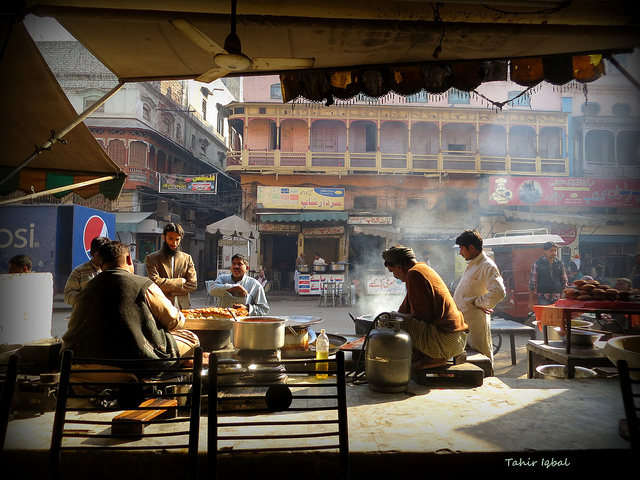
Within 10 minutes we were on the PEACE ROAD  to Lahore, and just an hour later sitting in Gawal Mandi under the open skies in a mild cold breeze, as my husband was ordering two plates of Paaye Naan with doodh-patti chai.


gawal mandi

Episode TWO:

Location : Karachi
Time: 1:00 PM Lunch time in the office with friends.

“What are you wearing on the Annual Celebration for our Office.”

“Oh, I don’t have any decent dress to wear, I wish I could wear an Indian saree for a change.” (Yes every woman, almost never has a decent dress to wear.)

“Heyy, you know I saw on TV there is a bumper sale in Rana Sarees in Jodhpur, on bandhnis, leheriyas etc. Even I want to buy one.”

“Idea! Why don’t we plan, take train on Friday,  to Jodhpur and come back on Sunday.”

“Yes, brilliant idea. Rana Sarees is closed on Mondays only.”

Thursday evening, we pack our small trolley bags, and off we are, on Friday morning in the PEACE TRAIN from Karachi to Jodhpur on Khokrapaar-Munabao Railway track.

As the train winds through the golden sands of Thar Desert, we see Thari men and women in their colorful clothes busy with their daily work.  A group of women stop by, turn at us and wave back at our train.

I  look at the woman in a white and red saree,  and scream excitedly, “I will buy a saree of this design.”

In 5 hours we are in Jodhpur. With a shopping spree all Saturday, on Sunday morning, we set off with loaded bags, on the train back home.

Thar women

Episode THREE:

Location: Mississauga, ON , Canada.
Time: Early morning on a cold Saturday on a long weekend.


“Winters are depressing, Are we going to spend all three days sitting in the home in front of a fire place?”, my husband.

“No, we can go to America, to have an ice cream in -20 degrees C.”  I remark sarcastically.

“Hey, why ice cream, lets go to Buffalo,  for cheese cake?”

The idea hits home.  And in 5 minutes, we were on QEW Highway heading down South and East to Buffalo. In an hour we were at the border, and 8 minutes later, which included clearance from the US Homeland Security of our Pakistani Passports, we were on the PEACE BRIDGE, built over Niagara River, between Fort Erie ( Canada) and Buffalo ( USA).

In two hours after a lunch and an order of cheese cake, we ere driving back home to Canada.

???????????????????????????????

Do the stories sound wierd?

Or perhaps for some, “So what’s there to blog about them? Isn’t that normal. ”

Indeed, for many across the world, such adventures are normal. They travel cross countries   which even speak different languages( as in Europe), without much fuss,  just for a cup of coffee or even go to work across border.

As you may have guessed, only Episode THREE was a real one, while the Episodes ONE & TWO are  still   far fetched dreams.

The fact that Peace Bridge is a reality, it hurts even more to know that Peace Road or Peace Train have to still remain a dream, a far fetched one.

They do occasionally become  a reality, but  for the VVIPs  (only).  For instance, when  one fine weekend the Head of the State on one side  decides to go to the other side for a visit to a shrine, or for a cricket match. But it still remains a dream, and a forbidden one,  for the ordinary.

Even when the ordinary have relations, loved ones or friends on the other side,  all they are entitled to is to dream like the way I dreamt in episodes ONE and TWO.

I know of a true story of a friend, who planned a year in advance to be with her parents, on their Golden Jubilee Wedding Anniversary.  But the visa did not arrive on time.  And when it did arrive, 15 months later, her father was in the hospital, struggling for life.  She fortunately made it,  to see him, and then he passed away two days later in her arms. She felt fortunate to have met her father, and held him in his last minutes of his life.

This wasn’t  her dream, but a true story.

I cant even call myself that lucky. I reached two days after my father was buried. Now I dread for my ageing mother. May she live long, and every time I part with her, I wonder in what circumstances would the next meet be.  Would it be possible at all or not?

With months of excitement about the much publicized NEW VISA REGIME, I had anxiously awaited ( and tweeted) for the arrival  May 25, 2012,  when the document was expected to be signed.  But it was postponed  in the last minute, by a Minister from Pakistan for ‘some’ reason  I didn’t care to explore. For me it was a delay in realization of part of my dreams, for whatever reason-valid or lame.

{However, the divided families did not have much to rejoice from the new agreement, but I still thought this a great step in the right direction.}

Finally in December, when the Ministers met in New Delhi,  the agreement was sealed and signed.
Alas, with  no jinx, we apprehensively took a sigh of relief.

But then, as feared, the tensions at LOC and the beheading incident put the implementation on hold. Again, the ‘not so big’ dream which had come so close to realization had again receded afar.

The dream to cross the Indo Pak Border  is not for Nihari or for  a Saree.  We can get it on the  same side of the border too. They are simply the symbolic magnets of common love and heritage, that the ordinary people on both sides have not been able to ignore, despite years of deliberately created rifts and barriers between them.

Some have outrightly called my Nihari-Saree dream as cynical one, but when few millions ordinary citizens between the US-Canada or within the EU can see this as a reality, why cant the 1.4 billion( a seventh of humanity) across India and Pakistan?

When 3 wars, and countless hostilities have not resolved the differences  why can’t peace and  cooperation be given a real chance?

Like every sovereign nation, India and Pakistan too have the right to ensure, that no miscreants are let to cross the border, but why should the whole population of wellmeaning people be held hostage to the whims and fancies of  few vested interests?

Let the people  interact through easy Visa for the ordinary.  

Let prejudices whither and sanity & reasoning  prevail.

Please, let the people meet.

Please #MilneDo

Sometimes calamities unite us more


First published here: http://amankiasha.com/detail_news.asp?id=1018

The conscience-shaking brutal rape and subsequent
death of the anonymous student from Delhi is not India’s issue alone and the grief is not for one case alone
By Ilmana Fasih

As thousands of people on both sides of the India Pakistan border mourned the death of the Delhi gang rape victim, someone commented on Aman ki Asha Facebook group: “Well, the Delhi rape proceeds from a common mindset. The negatives unite us just as well as the positives.”
“Sometimes, calamities unite us more,” came a response.

The conscience-shaking brutal rape and subsequent death of the anonymous student from Delhi (who is referred to by different names by various sections of the media) has made us rethink how common our pains are.

Beyond this tragic incident, looking through the e-newspapers from the subcontinent, there is hardly a day without some incident of rape being reported.Be it the gruesome gang-rape of a medical student at a bus stop in a megacity, or a six-year-old girl raped by local goons in a village, or a girl raped while partying with friends in the posh area of another city, or a teenager gang-raped and then asked to patch up by accepting money or marrying one of the rapists in a town. Can you guess which side of the border each case belongs to? The scenarios differ, cities differ, but the crime remains the same. The mindset stays identical. Age is no bar. Infancy upwards, one finds women and children of all age groups being subjected to rape and sexual abuse.

Unfortunately this is one situation where the human race seems to have achieved a “no barriers of age, color, creed or class”, the world over.

Hard to digest, but rapes are on a steep rise in the subcontinent.

In 2011, 568 rape cases were reported in Delhi, and 459 in 2009 (National Crime Reports Bureau) .The figures given by Delhi Police reveal that a woman is raped every 18 hours or molested every 14 hours in the capital.

Similarly in Pakistan, Human Rights Commission of Pakistan, estimates that “every two hours a woman is raped in Pakistan and every eight hours a woman is subjected to gang-rape”.

The Additional Police Surgeon, quoted in a 2008 newspaper report, estimated that at least 100 rapes are committed in Karachi alone every 24 hours, although most are un-reported.

If these are the statistics of two megacities, one can fathom what would be the situation in the other smaller towns and villages. It is well known that the majority of the rapes in India, Pakistan and other South Asian countries are never reported, and just a handful of the perpetrators are ever punished.
The tragedy is amplified when inane solutions are offered like: “Women should not go out late at night” or “Women going out late night should be accompanied by a male.” In the ‘Delhi gang rape’ case, the solution of an accompanying man clearly failed.

Women are advised not to wear western clothes, or more ridiculous “not to eat chow mein” or “not to carry mobile phones with cameras”. Some even advise women to not report the attack “if there are not enough witnesses”.

But none of this well-meaning advice takes into account why rapes occur. It is not because the woman was dressed so, or walked alone on the street late at night, or was attending a party with her friends or ate a certain kind of food. No. Rape occurs because some men want to rape. And why do ‘some’ men want to rape and not others? Rape is the culmination of a series of systematic experiences that a man is exposed to, from infancy to manhood- in which he is told, with or without so many words, that he is stronger, and a woman is not just weaker, but a commodity at his disposal. Rape is a way to display power and superiority.

So long as this mindset persists, legislation and punishment will never be enough of a deterrent. This tends to get overlooked in all the outrage at the gruesome details of the Delhi gang rape, that has led to demands for the severest of punishments, even public hanging for the perpetrators.
Without undermining that tragedy it is important to remind ourselves of the countless cases of rape and sexual harassment that are routine on both sides of the divide. Those who survive suffer psychological trauma, often far from the media limelight, mostly in silence.

Rape survivors are often pressured by the police or local goons to hush up the matter either, to accept money, or worse still, marry the rapist. Many commit suicide, or live with permanent scars. The rapists often roam scot free, posing a threat to the survivor who does not even dare to raise her head for justice.

Insisting on the death penalty in an isolated case that has shaken people cannot be a solution. Studies have shown that the certainty of punishment, rather than its severity, is a greater deterrent to crime.

We also need to look towards at preventing this crime rather than just push for a punishment after a case gets highlighted.

Foremost, each of us, irrespective of gender, which empathises with the Delhi student who was gang-raped, or any other faceless rape victim, needs to strive to ensure every woman in our sphere of influence feels secure and gets due respect. One of the signs of evolution in human beings is the neo cortex which enables us to restrain behaviour and train our minds. We need to use it to ensure that we don’t force anything upon any woman – or indeed anyone in a more vulnerable position.

Secondly, we need to empower girls with the right information and stop making rape a taboo issue for their ‘innocent’ minds. It is more important to teach a girl to be assertive than to try and ‘protect’ her. “Look up as you walk and stand up straight; pretending as though you have two big panthers on either side of you as you walk may sound silly, but it can help boost confidence,” suggests a self help site on rape prevention. “Attackers are more likely to go for those who they think cannot defend themselves.”

Given that over 90% of the perpetrators are known to the victims, girls (and boys) must be taught that if they feel uncomfortable with anyone’s touch – even if it is an uncle, a cousin or a friend – they must trust their gut and not let it continue. Thirdly, if we cannot change the mindset of some grown men, we can at least guide our sons, right from babyhood, to respect women and not consider them a commodity that is ‘available’. Last but certainly not the least, for those who cannot change their mindsets, a real need for certainty and not the severity of punishment to the rapist, as a mode of deterrence, is mandatory.

Shocked after the demise of the Delhi paramedical student, I tweeted: “Her sacrifice must no go in vain. Let us rise to make violence against women a history.” Knowing the scale of the menace, this may be wishful thinking, but we need to keep striving to make it a reality.

The writer is an Indian gynaecologist married to a Pakistani, a proud Indian Pakistani dreaming of a peaceful, healthy and prosperous South Asia.
ilmana_fasih@hotmail.com.

She tweets @zeemana

Wednesday, January 02, 2013

A tribute to Delhi gang raped girl, inititially known as Amanat, Nirbhaya or Damini:

Goodbye Damini – A tribute to Nirbhaya

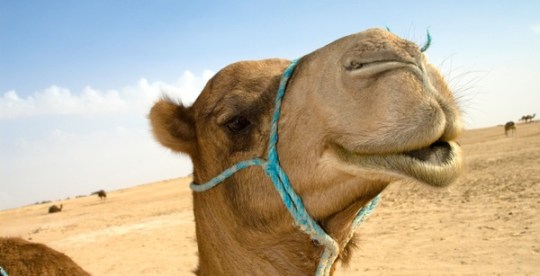
Being the ‘eighteenth camel’ for peace.


One advice by a Good Samaritan couple has come a long way for me, as an Indian Pakistani. Just a few days after being married, the couple of a similar kind advised, “Don’t quarrel over India or Pakistan; you will not be able to make any country a Heaven, but will make your own home a Hell.”

The exercise was easier said than done, but with few hard lessons, I ultimately decided that instead of acting an all patriotic for one side and holding a dagger against the other, I need to uphold objectivity, and a shield against  the emotional daggers hurled from both sides. And this is how I could actually see  how similar are both the people and their problems, and that both deserve to be seen with fairness. Hence to empathize with them of both became remained the only option. This is how I found my ‘eighteenth camel’, which to many of my friends is still an impossible option i.e. to love both India and Pakistan as much.

Just to narrate the context of ‘eighteenth camel’, the phrase is based on an Arab parable.

“There was an old Bedouin who had three sons, and all the treasure he had were17 camels. While dying he left a will to give one half of the camels to the oldest son, one third to the second and one-ninth to the third son. After his death, the sons began to quarrel, and since there was no way they could divide 17 camels into half, one third, or one ninth, none of them could have their share from the pie.
They approached a wise woman, and asked her to solve the problem. She was nonplussed too, and thought really hard. She sincerely wanted to solve the problem, even if it meant her sacrificing something from her side. So she decided to give one of her camels to them, so that it becomes `18, and now each one could easily get their share as the number was divisible by all –one half, one third and one ninth.
The sons were very excited and they began the mathematics. The one with half the share took nine camels, the one with a third took six, and the one with a ninth took his two.
To their surprise, they realized that after adding their shares, it was again 17 (9+6+2) and they were left with one camel. Since they were so content with their fair shares and at the generosity of the wise woman, that all of them with consensus decided to return the camel to her and that too with gratitude.”

So obvious from the story, even by finding my eighteenth camel, I did not lose anything.

From the India-Pakistan perspective, if we as common masses consider ourselves as the wise woman, and make an effort to find the eighteenth camel, we too would lose nothing, at all. Our love for our own country cannot in anyway be compromised. Giving a flicker of thought, that instead of harboring a venomous hate for the other side, we need think of them being as human as us– with same rogue elements, and vested interests trying to sabotage the peace process.

It would be unfair to generalize both sides as hate mongers, and I know firsthand that both aspire for peace as much.

But come a conflict, deliberate or accidental, between India and Pakistan, media takes the lead, with magniloquence of the ‘breaking news’. And the TV channels start to balderdash every few minutes, repeatedly beating sensationalism into the eardrums of the masses. And responding to its cries, the sleeping patriotic Bheemas in us suddenly wake up hungry, desperate to chew up the other side. Even before the facts come up, the mainstream media and the individuals on social media throw themselves into convulsions, frothing hatefully.

Haven’t we seen this circus both sides, all too often? Are we not yet fed up of this drama occurring day in and day out, sucking up our positive energies?

Can we as helpless masses be a solution? As above, I repeat, yes, we can be the ‘eighteenth camel’, being the unified voice of peace.

“Secret to peace is us, the humanity.” says an anthropologist Willaim Ury

We on the subcontinent are a billion and a half humanity, out of which two thirds are the youngsters who are or yet to embark on a journey of adulthood, and there lay decades of life ahead for them. Imagine if each day or each week, they simply indulge in barrage of hate waves either in sympathy for a Siachen, or Godra or Mumbai or even Zeeshan Abbasi? How will they be able to grow as productive individuals with such frequent doses of hatred?

Says poet EE Cummings “Hatred bounces.”

Aren’t we seeing it bouncing higher and higher with each incident?

Both sides have their own fair share of problems to wrestle with, and most of them are identical. Name it and we both have them– religious extremism, corruption, poverty, ill-health,  ignorance, women abuse, and the list goes on…

Should we not be aligning with each other, and be the unified voice of peace? And with numbers on our side, we can show to the vested interests that we want to live with dignity, with prosperity and with peace, and that our voice matters.

Being eighteenth camels for peace, do we lose anything?  No.

We all win, and no one loses.

happy_camel

Whatever IS will be WAS.


The above heading is a Buddhist saying by Monk Ñanamoli. The  in depth meaning of its essence could not be more powerfully conveyed than by an ancient  Buddhist ritual called dul-tson-kyil-khor ( Mandala of colored powders).

Sometime ago in search for an idea for silk painting I accidentally bumped into a beautiful  handmade creation, which in first hand looked like an intricate colorful geometrical design, called Sand Mandala.

As the name implies, it is a creation made from colored sand. Mandala means a palace. There is much more to it than the eyes can see.

From the Tibetan Buddhist tradition, this is not just a creation of a beautiful sand castle, but a spiritual journey, for which requires a great practice and meditation before embarking on it. Even during the creation , which usually requires 4 monks (bhikkus) who keep chanting hymns and focus all their minds and actions into its creation.

The sand mandala for them is a three dimensional Palace of Imagination in which they enter, and each dot, line, shape and color that they create in it stands for a specific aspect of Buddhist Philosophy. There are many types of Mandalas, and each stand for a unique symbol.

The creation has to be accurate, and the work  between the 4 creators, working on each quadrant,  has to be well coordinated.

Billions of grains of colored sand powder are carefully and accurately placed in its specific location, using two copper conical pipes called chapku, which are gently tapped over the other, to release controlled amount of sand.

The colors for the painting are usually made with naturally colored sand, crushed gypsum (white), yellow ochre, red sandstone, charcoal, and a mixture of charcoal and gypsum (blue). Mixing red and black can make brown, red and white make pink. Other coloring agents include corn meal, flower pollen, or powdered roots and bark. In the ancient times they used colored dust from the lapiz lazulli, emerald, ruby, and corals and other precious stones to get colored dust powder.

It takes from few days to few weeks to create a mandala.

However, the most mind boggling part arrives when the whole intricately built sand mandala is undone ( yes, you read it correct) from outside-in in a rotas wheel movement, never to exist again, by the very monks who created it. This metaphorically implies the impermanence of things.

The dust collected is immersed in a flowing water ( river nearby) symbolizing the transference of the energy of goodwill ( imparted to it during its creation)  and compassion, to the rest of the world. {The whole idea gave me shivers and goose bumps}

Hence, when even  at first look it appears to be an end of a creation, but in the real sense, nothing is ever destroyed forever, just that it is returned to the nature, to rejoin elements.

And this does happen to all animate and inanimate objects on earth, be they complicated  humans,  simple plants, soft clouds or  even lofty mountains.

When Buddha passed away, one of his disciples remarked:

Aniccaa vata sa”nkhaaraa — uppaada vaya dhammino
Uppajjitvaa nirujjhanti — tesa.m vuupasamo sukho.

Impermanent are all component things,
They arise and cease, that is their nature:
They come into being and pass away,
Release from them is bliss supreme.

It compels me to be reminded of Kabir’s doha:

Mati kahe kumar se tu kya rondey mohe,
Ik din aisa ayega main rondoonga tohe.
(The clay says to the Potter: What will you maul me, a day shall come, when I shall maul you).

Or yet in another doha he reminds:

Kaya nahin teri nahin teri,
Mat ker meri meri.
(This existence isn’t yours, don’t call it “It’s mine, it’s mine.”)

And of Bulleh Shah’s kaafi:

Na Kar Bandeya  
Meri Meri
Na Teri Na Meri
Char Dinan Da Mela
Duniya Fair Mitti Di Dheri.
(O people, why  be obsessed with me, mine. Its neither yours nor mine. Its for a while, then we all shall be but a pile of dust).

Indeed, “from dust we were born, and to dust we shall return.”.

Malala


Andhon ko unka chehra dikha diya hai Malala ney,
Jehad dar-asl kya hai, sikha diya hai Malala ney.

Jahalat sey hai jang, jata diya hai Malala ney,
Taleem  hai farz-e-momin, bata diya hai Malala ney

Soye huwe seenon ko jaga diya hai Malala ney,
 Khoye huwe iman se, mila diya hai Malala ney.

Payam-e-Amn duniya ko, suna diya hai Malala ney,
Her shakhs  ko Malala, bana diya hai Malala ney.


The blind(ignorant) have been shown their real face by Malala,
What is true struggle, has been taught to us by Malala.

The real fight is against ignorance, has been asserted by Malala.
Education is an obligatory duty of the believers, is reminded, by Malala.

Apathetic hearts have been shaken awake  by Malala.
The lost message of faith  has been rediscovered by Malala.

The message of Peace to the world  has been conveyed by Malala,
Each one of us feels Malala, has been made possible by Malala.

Humbled these verses have been included in the anthology: Malala: The poems on Malala Yusufzai, released on the first anniversary of her tragic targeting on October 9, 2013.

https://www.goodreads.com/book/show/18405178-malala

Please do not play politics with the health of innocent kids !


Published in @ETribune : http://blogs.tribune.com.pk/story/12865/dont-play-god-with-the-lives-of-innocent-children/

As the rest of the world is sprinting forward, we in Pakistan seem to be walking backwards. One used to get this sense sometimes, but now with passage of time, it comes more often. With the fact that most of the difficult places like India having grappled with a serious health issue like Polio, and are at the turn of calling themselves polio free, we in Pakistan are not just not close to that, but even retreating fast to make sure we get further away from this dream.

The news of North Waziristan deciding to impose Polio drops ban in their area as a protest against the drones, or the boycotting of Polio campaign in Drazinda village while protesting against the load shedding, brings in not just shivers to the health conscious on this globe, but also gives yet another reason for Pakistan to be a focus in the international circles for a ridiculous reason.

They have a right to register their protests against drone’s attacks, or of Dr Afridi’s betrayal or even against load shedding. But how is this justified by turning ones guns against the innocent kids who are in no way directly or indirectly responsible for any of these unfair actions.

How is banning of Polio drops to the kids going to make a difference to the drones? Is it not akin to hitting your own foot with an axe, crippling yourself even more, making your own children, who are the youth of tomorrow, be burdened with more illhealth and handicap? How will this help them stop drone attacks, or generate more electricity or prevent more Dr Afridis being recruited?

How are risking one’s own children to a crippled life, a way of avenging the atrocities of the aggressors?

As said by a twitter friend: “Taliban want to kick US outta Afghanistan/Pakistan but they never know kicking with polio affected legs is quite impossible ‪#PolioBan‬”

No atrocity is large enough to avenge the innocent kids, be they are from any ethnic community or faith or nationality. And to our horror, the Taleban are putting to risk their very own kids.

A tweep justifying the Polio ban remarks: “But people from your profession (referring to Dr Afridi) for betraying the Polio campaign”.

Does one or a few insincere health professionals justify you to make your own children risk being crippled with Polio. Who are you hurting by this? The health professionals or your own kids?

They argue the drones kill more children than from Polio? Yes this is true, and killing of children by drones is criminal like risking the health of innocent children by Polio ban is criminal too. They harm and kill your children, but you in return risk crippling your own children. Is there any commonsense in this logic?
Those who continue and justify drones by all means, will they stop by your threat of Polio ban? Who will it hurt the drones or your own kids?

Or is it because this is the easiest way out, to kick out the unarmed sincere medical personnel, and lash out at unaware innocent children, both of whom will not be able to defend back, this extremely  unfair decision, with equal force.

As a medical professional, I can only scream loud and cry that they have no right to aggressively jeopardise the health of the innocent, at the cost of another aggression.

Which sect of Islam, or which moral value of humanity or which aspect of the hospitality of the large hearted tribals justify for avenging a wrong action with usurping the rights of the meek and the powerless , innocent kids?

Avenging an injustice, by risking the health and crippling your own children for life?
What kind of courage and valour is this?

I am aghast to see that there are educated on Twitter who are justifying‪ the polio vaccination ban, what to talk of those who give it a silent support. ‪

Polio vaccination ‬ campaign should not be used as a shield against drones. It wont help, but be counterproductive. Will it harm the aggressors or the innocent Pakistani kids?

Polio isn’t petty politics for which politicians, civil society, liberals or conservatives, or general public should not speak up. For the health of Pakistani kids, and for the sake of humanity, please speak up.

I beg you all, please speak up against the Polio Vaccination ban.

This appeal was in response to this news :

http://articles.cnn.com/2012-07-17/asia/world_asia_pakistan-taliban-polio-vaccine_1_polio-vaccines-polio-campaign-drone-strikes


Nirala Sawera


Dedicated to the events :  

Pledge for Peace Launch in UTM, Mississauga, ON.  https://www.facebook.com/events/398846800175596/

Aug 14-15, 2012 Pakistanis, Indians, celebrate Independence Day for Peace
https://www.facebook.com/events/185174041611282/

https://www.facebook.com/groups/amankiasha1/#!/events/243690589069619/

Nafrat ki gathri ko mein ney
Phenk diya hai gireh laga ker
Hasrat se ab khol rahi hoon
Yaadon bharey iss thailey ko
Pyaar ki taaza hawa lagaane
Aman ki roshan dhoop dikhane.

Tum bhi aao, kholo apni
Saari gaanthein, saare bull
Tum bhi apne jholey mein se
Bujhe huwe woh deep nikalo
Un yaadon ke, un baaton ke
Un qisson ke, jo itne zyada
Dohratey the jab Nana Dada
Chehre unke damka jaate the
Ankhein unki chamka detey the.

Usee dhamak ki roshni mein tar
Usee chamak ki lau ko lekar
Mein bhi apna deep jalaaoon
Tum bhi apna diya jalaao
Roshan phir se rahon ko ker dein

Taaron se  khwabon ko bher dein.

Apna apna diya jalaa ker
Saare apne dard bhulaker

Mil ker jab sub saath chalenge
Haath me lekar haath chalenge
Dhal jayegi ghurbat ki sham
Ho paayegi khush haali aam.

Lekin saw nahin, hazaar nahin,
Saath her ek ko chalna hogaa.
Sirf mera ya tumhara nahin,
Diya her ek ka jalna hogaa.
Karoron diye jo saath jalenge,
Dil mein nai umang bharenge.
Pher door jab andhera hogaa,

To kya nirala yeh SAWERA hoga.

Ilmana Fasih
June 6, 2012

Pangs of an Indian Pakistani


On departure at Indira Gandhi Airport, New Delhi her father, a man with steel nerves, exclaimed with a mask face, in a matter of fact manner,
“Now that you are going across, own the place, own the people, and own the problems the way you have owned the man from there.”

Without a trace of extra humidity in his eyes, he turned back towards the exit, without waiting for her to cross the immigration line for the last time as an Indian. The daughter, with a heavy heart, stopped to watch till the silhouette of her father, her mentor, blurred into the fog of the pre dawn.

Half a day later, the same day, in the same time zone (with a mere difference in half an hour), the same season, she stepped onto a ‘different’  land she was advised to “own”.

The faces, the attires, the language, the snail-pace of the custom officials was quite similar, with only minor difference in salutation of “Namasteji “ there on departure, while “Assalam Aleikum” here at arrival at Jinnah Terminal, Karachi.

But for her the smell at the airport was distinctly different, so was the taste of water she drank from the cooler, and as she moved out, the afternoon breeze that slapped her for the first time was quite hot and humid, unlike the cool breeze she had felt early morning in Delhi. The feeling within was weird, impossible to explain. It was neither regret nor its antonym.

The details of experience that each of the five senses from smell to touch went through, are still afresh as of today.

Today, it is a bit over 22 years from that day of February 19, 1990. A couple of years from now, she would have lived almost as many years as a Pakistani, as she lived as an Indian. A lot has happened in these 22 years. A lot means a lot.

From a dogged patriotic Indian, who cried hysterically on even a hint of anti Indian sentiments from the countless paroxismally patriotic Pakistanis, she gradually graduated into someone who now feels as hurt or happy for Pakistan as for India.

It did not happen overnight.

“You will find a plethora of stupid reasons to with fight each other, and to vent outside anger at home, but for heaven’s sake, never make India-Pakistan as one of those silly reasons. This will neither make India nor Pakistan any Heaven, but will certainly make your home a Hell.”

This singular advice from a cousin uncle in Karachi, in the same situation, did not mean much to her, when it was said. However the golden words found numerous occasions to rebroadcast themselves in her head, pleading reason to maintain sanity.

More than anything else, what must have really transformed her was perhaps the dignity and poise with which her Pakistani spouse literally faced and braved the reciprocal mocking and even bullying from patriotic Indians, relatives or otherwise. If she got perturbed and came to his rescue, he would set her aside with a whisper: “Oral diarrhoea, beyond their control.”

For those who wished to discuss India Pakistan with a level of objectivity, and understanding, they both reversed their roles. They were, and in fact still are, the unsaid ambassadors of the other side in their countries of birth, attempting to bust the myths, and distortions piled up over decades.

However, they still find a sizable ‘visionaries’ on both sides, which never seem to budge from unseen prejudices. Their dogged convictions tend to take comical discourse…

“I know it. I am telling you….”
“How can you be so sure? You haven’t been there. I have lived there.”
“No, but I am sure. I know.”

One wonders if she has still learnt to laugh it off, like her husband. But certainly the pangs of the pain are a lot less.

Not only did they not fight at home on this, they even gave their children the space to choose their preferences through experience. Unlike a typical mother, who would glorify her mother’s side, while demonise her in laws place; it was a conscious effort on her part not to confuse the identity of her kids. It was perhaps as a concerned mother, that she wanted her children to love their homeland as much as she loved hers as a kid.

Seeing is believing, and her two grownups now take pride to announce “We love India, but we own Pakistan” not just in words, but in their actions too.(The wrath the two of them have faced since childhood, because of their parents identities,  till date, would be another saga, best narrated by themselves).

However, not being a super human, what she has really not learnt to laugh off is the message of ‘not’ belonging to Pakistan or to India, which she receives, off and on, bluntly or subtly.

Cricket matches, which boil passions on each side, almost always place her on a pedestal where her allegiance is questioned, at every expression verbal or facial, both home and abroad.

Having strong opinions on political and social issues and a compulsion to vocalize critical views has its own price to pay, if you happen to be a ‘fortunate’ Indian Pakistani. Objectivity is not your prerogative, and to presume “You’re being biased”,  is everyone else’s.  They are always right, and you are always wrong.

“We thought you became a Pakistani”, “Didn’t you give up your nationality?”, “Does it not happens in your India?” “Worry about your Pakistan.” are just few of the judgements that are hurled at her, time and again.

Is it that being a Pakistani by birth, better than being a Pakistani by choice?

Is it that the passport being taken away makes her twenty four years of being born, grown up and groomed as Indian meaningless? Does the soul to be an Indian, also needs a passport?

Or is it that possession of passport of one side bars one to belong to the other side by virtue of birth.

Or is it  being both an Indian Pakistani at the same time, an anathema, worthy of being distrusted?

She would be lying, if she said she accepted these meaningless comments with a big heart. It pains, it really pains. Sometimes it pains a lot more.

Time and again, such off hand comments serve as a reality check for her that ‘no matter how much she may boast that she belongs to both the lands, she is owned by none’.

Going back to her seemingly emotionless father, she was later told by her Mom, on the way back home, he had remarked in a heavy voice:

“The loud mouth that she is, she will certainly be a loss to us, but she will not be a gain, and more of a pain for the other side.”

P.S. This cry is not directed at any single person or incident, but at a pattern of reactions that shoot, off and on, owing to an identical mindset which many many on both sides share. However, it is  the  understanding & acceptance from  friends both ‘real or ‘virtual’ who make our ordeal worthwhile.

Baisakhi in Kashmir~ a tryst with nature.


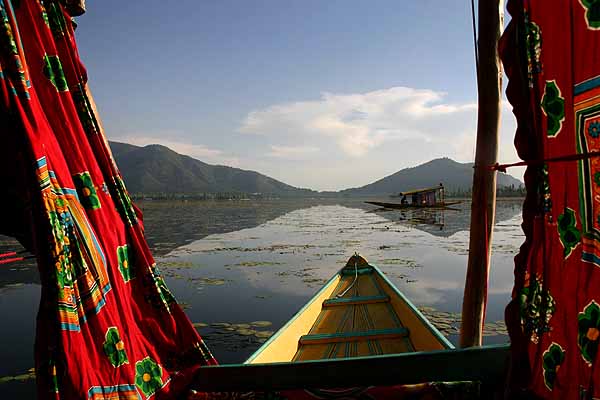
“Woken up with the slightest of hint, we jumped out of our warm beds excitedly and got ready without much fuss. Ammi packed food in a four tiered brass tiffin carrier, placed plates, spoons, a stove, Samovar and other needful in a cane basket, and by 8:00 AM we were heading for the Hazratbal end of the Dal Lake. The mission was to take a shikara( a boat) and have a daylong picnic in Nishat Bagh.”
This is how I remember we began the Baisakhi day,  April 13th, each year without fail.

This ritual was as religiously followed as the morning Namaz on every Eid Ul Fitr.

The shikara took us in half an hour to the other side, right in front of the gates of Nishat Bagh, built by Moghuls at the bank of Dal Lake.


The picnic began the moment we stepped into a shikara, vying to sit at the side, so that we would be able to splash our hands in the water, or  to watch the flora and fauna beneath the surface- the weeds, fishes, tadpoles, or to catch lilies, lotuses as the shikara waded through thick of green round leaves floating on the surface.


It was as if Nishat Bagh, the host location on Baisakhi, welcomed and embraced every family residing in Srinagar, into its lap generously, allocating each a piece of Heaven  to sit.

Life was extremely simple yet beautiful.


It feels weird now, but our parents never fussed over capturing these precious moments in camera, very often. I remember the bulky camera ceremoniously coming out of Papa’s closet mostly on our Birthdays. Video camera was a far cry, and I wonder if it really existed then.

Imagine all the Dads did not have the cell phones , to keep them connected to the world they had left behind on a daylong picnic, or to discuss the latest models of smart phones or palm tops. They still had a treasure of knowledge to discuss on books, poetry or politics. I remember Papa sparing no occasion to sing his all time favourite Kajri “Kaise khelan jayyo savan”.

And Moms? What to talk of channels, or soaps, there wasn’t a TV station in Kashmir until 1975. But yes, I remember Ammi often talk of Meena Kumari, and the film Pakeezah she and Papa had gone to see as a late night show, leaving us kids asleep with a house nanny. They talked about their knitting projects and shared recipes of how to make jams, or chutneys of the apples, plums or strawberries that grew in each of our backyards.

Providing a completely home-made lunch was one of their prime purposes in life, even on a picnic day. They would light the stoves; they brought along, to serve a hot lunch. Since we stayed there till the dusk, even pakoras were fried right at the spot, and served along with the evening tea, poured out steaming hot from the Samovar.

I wonder if I had known till then, what disposable plates or cutlery was? The melamine plates would come out of the cane basket. There were no soda pops to go with the food on picnics. Once the lunch was done, the women folk would walk up to the spring or the fountain at the top end of the spot, to rinse the utensils before packing up. There was barely any stuff to litter, except perhaps the biodegradable bones, skins and seeds from eatables consumed.

For us kids, there were no rides, no vendors selling balloons, no ice cream vans standing by to make us have a valid reason to cry and spoil the fun for our merrying ( Pardon my English!) parents.

Running up and down the length of the Bagh, balancing at the edges of flower beds, high jumping over the bushes, rolling in the grass slopes for a race, were our austere yet brilliant ideas of a day out. We referred to them not ‘flowers’ but by their names as pansies, nargis, dog flowers, dahlias, nasturtiums, asters, roses etc. I remember Papa taking pride that we were more knowledgeable about the nomenclature than him.

Picking dandelions and blowing them on friend’s faces or pressing open the jaws of dog flowers and whoww whowwing at each other was our idea of fun. The meanest we got was when we hit each other with the hard seeds of acorn.
Chasing  butterflies to catch them by bare hands, only release them later was perhaps the height of our useful play.

In summary, picnics on any occaision, and a tryst with nature on each picnic was a way of life in Kashmir. Baisakhi was just one.

One couldn’t have asked for a better childhood.

As remarks a friend, who too lived in Kashmir: “I have a hole in my heart as big as the size of Kashmir.”

As I tweeted about memories of Baisakhi picnic, a friend who still resides in Jammu replied: ” Memories, memories, a lot has changed now but Kashmir is still there – shattered & tattered.”

A deep sigh !  was all I could offer to him in reply.