Open up your mind and your potential reaches infinity…

Archive for 2011

A TRIBUTE TO ALI SARDAR JAFRI


Ali Sardar Jafri was a (November 29, 1913 – August 1, 2000) was an Urduwriter, poet, critic and film lyricist from India.
“Ali Sardar Jafri was born in an aristocratic family in Balrampur, Uttar Pradesh, where he spent his formative years.
His early influences were Josh Malihabadi, lyricist Jigar Muradabadi and Firaq Gorakhpuri. In 1933, he joined Aligarh Muslim University (AMU) and soon got exposed to Communist ideology, subsequently he was expelled from the University in 1936, for ‘political reasons’. Eventually he graduated from Zakir Husain College (Delhi College), Delhi University in 1938, though his post graduation studies at Lucknow University ended prematurely following his arrest during 1940-41 for writing anti-War poems, and taking part in Congress led political activities as Secretary of the university’s Students’.
Ali Sardar Jafri married Sultana in January 1948.
Ali Sardar Jafri published his first collection of short stories titled, Manzil (Destination) in 1938, which started his literary career, and his first collection of poems, Parvaz (Flight) came out in 1944. In 1936, he presided over the first conference of Progressive Writers’ Movement in Lucknow, a stature he maintain for the rest of his life. In 1939, he became co-editor of Naya Adab, a literary journal devoted to the Progressive Writers’ Movement, and the journal continued till 1949.
Ali Sardar Jafri was involved in several social, political and literary movements. On 20 January 1949, he was arrested at Bhiwandi, for holding of a (now banned) Progressive Urdu writers’ conference, despite warnings from Morarji Desai, the Chief Minister of Bombay State; three months later, he was rearrested.
His important works as a lyricist include Dharti Ke Lal (1946) and Pardesi (1957) .
He is only the third Urdu poet to receive the Jnanpith Award (1997) (after Firaq Gorakhpuri (1969) and Qurratulain Hyder (1989) ). He has also been conferred Padma Shri in 1967, Gold medal from the Pakistan Government for Iqbal studies (1978); Uttar Pradesh Urdu Academy Award for poetry, Makhdoom Award, Faiz Ahmad Faiz Award,Iqbal Samman of the Madhya Pradesh government and the Sant Dyaneshwar Award of the Maharashtra government.
The Aligarh Muslim University had conferred a D.Litt. on him in 1986, fifty years after he was expelled from the University. His writings have been translated into many Indian and foreign languages.” (Courtesy:Wickipedia)

Some of the excerpts from his poems:

Ai watan khake watan woh bhi tujhe de denge
Bach raha hai jo lahoo abke fasaddat ke baad
(O my country, my beloved land we shall be most willing to sacrifice
Whatever blood is left in us after the bloodbath of riots)
– Awadh ki khak-i-Haseen

Ghareeb Sita ke ghar pe kab tak rahegi Ravan ki hukmrani
Draupadi ka libas uske badan se kab tak chhina karega
Shakuntala kab tak andhi taqdeer ke bhanwar mein phansi rahegi
Yeh Lakhnau ki shiguftagi maqbaron mein kab tak dabi rahegi
(How long will Ravan rule over the home of poor Sita
How long will Draupadi be deprived of her garment
How long will Shakuntala be enmeshed in the abyss of fate
How long will the freshness of Lucknow remain buried under the imposing tombs?)
– Awadh ki Khak-i-Haseen

Tu mujhay itnay pyaar say mat daikh
Teri palkoN kay naram saayay maiN
Dhoop bhi chaNdni si lagti hai
Aur mujhay kitni door jaanaa hai
Rait hai garm,PaoN kay chaalay
YooN dehktay haiN,jaisay aNgaaray
Pyaar ki yeh nazar rehay na rehay
Kaun dasht-e-wafa maiN jalta hai
Teray dil ko khabar rahay na rahay
Tu mujhay itnay pyaar say mat daikh

However, my FAVOURITE remains:
phir aik din aisa aayega
aaNkho key diye bujh jaayeNgey
haathoN key kaNwal kumhlaayeNge
aur barg-e-zabaaN sey nataq-wa-sadaa
ki har titlee uRh jaayegi
ik kaaley samandar ki tah meiN
kaliyoN ki tarah sey khilti hui
phooloN ki tarah sey haNsti hui
saari shakleiN kho jaayeNgi
kHooN ki gardish, dil ki dhaRhkan
sab raaginyaaN so jaayeNgi
aur neeli fazaa ki makHmal par
haNsti hui heerey ki yeH kani
yeH meri jannat, meri zameiN
iss ki subhaiN,iss ki shaameiN
bey jaaney huey, bey samjhey huey
ik musht gHubaar-e-insaaN par
shabnam ki tarah ro jaayeNgi
har cheez bhula di jaayegi
yaadoN key haseeN but kHaaney sey
har cheez uTha di jaayegi
phir koi nahiN yeH puchhega
SARDAR kahaaN hai mahfil meiN
lekin meiN yahaaN phir aaooNga
bachchoN key dahan sey bolooNga
chiRhyoN ki zabaaN sey gaaoNga
jab beej haNseiNgey dharti meiN
aur konpleiN apni ungli sey
miTTi ki tahoN ko chheRheiNgi
meiN patti patti, kali kali
apni aaNkheiN phir kholooNga
sar sabz hatheli par ley kar
shabnam key qatrey tolooNga
meiN raNg-e-hena, aahaNg-e-gHazal
andaaz-e-sukHan ban jaaooNga
rukHsaar-e-aroos-e-nau ki tarah
har aaNchal sey chhan jaaoNga
jaaRhoN ki hawaaeiN daaman meiN
jab fasal-e-kHazaaN ko laayeNgi
rahroo key jawaaN qadmoN key taley
sookhey huey pattoN sey merey
hansney ki sadaayeiN aayeNgi
dharti ki sunhari sab nadiyaaN
aakash ki neeli sab jheeleiN
hasti sey meri bhar jaayeNgi
aur saraa zamaanaH dekhegaa
har qissaH mera afsaanaH hai
har aashiq hai sardaar yahaaN
har maashooqaH sultanaaH hai
maiN aik gurezaaN lamha hooN
ayyam key afsooN kHaaney meiN
maiN aik taRhapta qatraH hooN
masroof-e-safar jo rahta hai
maazi ki suraahi key dil sey
mustaqbil key paimaney meiN
maiN sotaa hooN aur jaagta hooN
aur jaag key phir so jaata hooN
sadyioN ka puranaa khel hooN maiN
maiN mar key amar ho jaata hooN.
Remarkable optimism…
It made my Sunday worth while.

http://www.youtube.com/watch?v=M6DHc7AJuu4&feature=related

(PS.Thank you Shahid Akhter Bhai for remindinding me through your fb wall of this great Indian poet.It used to be a treat to hear him live during the Alami Urdu Mushaira in Delhi.)

Ilmana Fasih
5 December 2010

Zia Mohi ud Din – Zindagi se darte ho


http://www.youtube.com/watch?v=Jogt7Weu6pI&feature=player_embedded#!

THE YOUNGEST REVOLUTIONARY MARTYR — KHUDIRAM BOSE


It was this young lad who threw the first bomb at the British who were ruling India. Even while at school, he was attracted towards the sacred words ‘VandeMataram’ (I bow to Mother India!) and plunged into the war of independence. The boy of sixteen defied the police. And at the age of 18 years 7 months & 11 days had already become a martyr.
The hero was Khudiram Bose, born on Dec 3, 1889 in a tiny village in Bengal. He was the only surviving son of his parents who also passed away when he was barely six yrs of age. Brought up by his elder sister and her husband who aspired of this intelligent boy to become a big officer.
Khudiram, like all brilliant kids found the school curriculum too boring and uninteresting to enjoy. He never paid attention to the teachers lectures and would be lost in his own dream world.
At the age of seven when kids think of foot balls and cars he was haunted by thoughts, ‘India is our country. It is a great country. Elders say that this has been the home of knowledge for thousands of years. Why, then, are the red-faced British here? Under them, our people cannot even live as they wish. When I grow up, I must somehow drive them out.’
Day in and day out, he would brood on these thoughts. Even on opening his books, he would see the images of red faced, green eyed gora men. The mere thought of these goras ruling over India made him have a strange uncomfortable feeling creep within him.
To the outsiders he appeared as a lost, anxious boy .
While visitng a temple once, and on seeing some sick people lying if front of their God begging for cure, Khudiram thought for a moment and said, “One day I too will have to give up all ‘thought of hunger and thirst and lie on the ground like these people.”
“What disease has struck you?” A man asked the boy.
Khudiram laughed, and said, “Can there be a disease worse than slavery? I will have to drive it out.”
He was inspired by the words of Bankim Chand Chatterjee’s patriotic poetry Vande Mataram (I salute the Mother), which had become the inspiration of many in British India.
The British out of panick reminiscing the 1857 revolt and in adesperate attempt to thwart the movement—orchestrated a rift between Hindus and Muslims in the shape of Partition of Bengal in 1905 as the brainchild of Lord Curzon—west Bengal being a Hindu Majority and east that of Muslims.
Patriots from different parts of the country opposed the partition of Bengal with one voice. In many places meetings, processions and non-violent strikes (satyagraha) were held, with the words Vande Mataram( I salute my motherland) on everyone’s lips.
He revered the freedom fighters of his time and finally dropped out of school in 1905 to join their activities. With reluctance and and after going through several tests he was accepted to join their ranks. Khudiram formally learnt the use of weapons like the pistol, the dagger and the lathi, and gained an expertise pretty soon.
He became obsessed with teaching the song Vande Mataram and its meaning to his friends and youth. ‘How could one fight for the mother if one did ‘not know” her? And could there be a better means of educating people than by teaching the gospel of Vande Mataram’?, he thought.
He undertook the task to distribute the hand bills of Vande Mataram during events in his home district of Medinipur. As the fire of Vande Mataram spread,the tempers of the British rose too. They started to physicalIy reprimand anyone who was caught shouting the slogan ‘ Vande Mataram’.
People starting wishing each other with salutations of Vande Mataram
The greater the tyranny of the British got, the greater grew the pride of Indians. People started boycotting foreign clothes. They left foreign schools and colleges. ‘Swadeshi’ (made in our country) became the mantra of salutation to patriots.
Even children as old as 14 or 15 years weren’t spared the 15 lashes for saying Vande Matatram by the Magistrate Kingfor . His stance being, “You have broken the law by attacking a British Policeman engaged in maintaining peace.” The magistrate was rewarded with quick promotions as a reward for his actions.
As the resentment grew, the revolutionaries began to plan the assassination of Magistrate Kingford.
Khudiram volunteered to do so.
“Can you do this grim work?” The leader bluntly asked him.
“With your blessings, what is impossible?” Khudiram answered him with a question.
“This is not so easy as going to jail. Do you know what will happen, if you are caught?” The leader asked him in a tone of warning.
Khudiram said calmly but firmly, “I know. At the worst, they can hang me. Master, I take it as a boon. Bharat Mata is my father, mother and all. To give up my life for her is, I consider, an act of merit. My sole desire is only this. Till our country wins freedom, I will be born here again and again, and sacrifice my life.”
On April 30 ,1908 Khudiram walked towards the Europeon Club at Muzaffarpur .The bomb leapt from his youthful hands and landed in the carriage that emerged out of Kingsford bungalow. A deafening explosion and then heart wrenching cries were heard one after the other.
Kingsford was lucky but two women in the carriage succumbed to the explosion.
Khudiram was caught a few days later by some local shopkeeper who reported him in order to grab the reward that went with his arrest.
The trial sentenced him to ‘death’ and he showed no remorse even when the judgement was being read.
The judge was surprised that a boy of eighteen years accepted death so calmly.
“Do you know what this judgment means?” he asked.
Khudiram replied with a smile ”I know its meaning better than you.”
The judge asked, “Have you anything to say?”
“Yes. I have to explain a few things about making bombs.”
The fearing that he might spell out the bomb-making technique in the court disallowed the boy to make further statement .
Rappeal in the high court too led to the same ruling as the judge had judged his fearless eyes and the determined face as ‘arrogance’ towards the British.
“Do you wish to say anything ?” the judge asked.
Khudiram said, ”Like all heroic men, I wish to die for the freedom of my country. The thought of the gallows does not make me unhappy in the least. My only regret is that Kingsford could not be punished for his crimes.”
Ironically, it is said, he had gained two pounds of weight during the wait for his death.
As had been decided, Khudiram was brought to the gallows at 6 am on August 19,1908. Even the arrival of the moment could not shake his love for his homeland.
Serenely, the lean and thin boy, walked up to the post with his shoulders wide and head held high. His lips wore a smile and eyes bore a twinkle. For the very last time he cried aloud, ‘Vande Mataram’ and then put his hand into the noose.
Finally in a few minutes, at the age on 18 years, 7 months and 11 days Khudiram was declared martyred and was laid to a penultimate rest in the very lap of the mother who he used to salute day in and day out.
Despite having remained alive, Kingsford had no peace of mind. He suffered from major depression and resigned from his post and settled at Mussorie.
The huge political crisis and the storm that was unleashed by the Partition of Bengal carried on unabated for 3 years. Ultimately in 1911 the British were forced to reverse their ‘divide and rule’ tactics and the two parts of Bengal were reunited.
Khudiram’s sacrifice did not entirely go waste…
Vande Mataram in Sanskrit:
Vande Mataram वन्दे मातरम्
Sujalam sufalam Malayaja sheetalam सुजलां सुफलां मलयजशीतला
Shasya shamalaam maataram म्सस्य श्यामलां मातरम् |
Shubra jyotsana pulakita yaminim शुभ्र ज्योत्स्ना पुलकित यामिनी
Fulla kusumita drumadala shobhinim म्फुल्ल कुसुमित द्रुमदलशोभिनीम्
Suhasinim sumadhura bhashinim सुहासिनीं सुमधुर भाषिणी
Sukhadam varadam mataram. म्सुखदां वरदां मातरम्
Vande Mataram वन्दे मातरम्

Translation(English by Aurobindo)
Mother, I salute thee!
Rich with thy hurrying streams
,bright with orchard gleams,
Cool with thy winds of delight,
Green fields waving
Mother of might,
Mother free.
Glory of moonlight dreams,
Over thy branches and lordly streams,
Clad in thy blossoming trees,
Mother, giver of ease
Laughing low and sweet!
Mother I kiss thy feet,
Speaker sweet and low!
Mother, to thee I bow.
Urdu version(by Arif Mohammed Khan)( compliments to Mr. S F A Jaffery for providing it)
Tasleemat, maan tasleemattu
bhari hai meethe pani se
phal phoolon ki shadabi se
dakkin ki thandi hawaon se
faslon ki suhani fizaaon se
tasleemat, maan tasleemat
teri raaten roshan chand se
teri raunaq sabze faam se
teri pyar bhari muskan hai
teri meethi bahut zuban hai
teri banhon mein meri rahat ha
itere qadmon mein meri jannat hai
tasleemat, maan tasleemat –
A R Rehman’s version:

http://www.youtube.com/watch?v=TImOBenn3XY

Ilmana Fasih
3 December 2010

SAROD by Amjad Ali Khan


Amjad Ali Khan (born 9 October 1945) is an  Indian classical musician who plays the SAROD.  Khan was born into a musical family of Gwalior Gharana  and has performed internationally since the 1960s. He was awarded India’s second highest civilian honor, the PADMA VIBHUSHAN  in 2001.

Had Anhad: Journeys With Ram & Kabir (Bounded-Boundless) :


Director: Shabnam Virmani | Producer: Srishti
Genre: Documentary | Produced In: 2008 | Country:India
Synopsis: Kabir was a 15th century mystic poet of north India who defied the boundaries between Hindus and Muslims. He had a Muslim name and upbringing, but his poetry repeatedly invokes the widely revered Hindu name for God – Ram. Who is Kabir’s Ram? This film journeys through song and poem into the politics of religion, and finds a myriad of answers on both sides of the hostile border between India and Pakistan.

OH GETTING THE MEN IN MY LIFE TO RELISH VEGGIES!


I have yet to find a yet more daunting task than to get the two men in my life and my home  to enjoy the vegetables that sit on my dining table.

Right from the creases on their foreheads when the news spreads outside the kitchen that veggies are on the menu card that day, to the whole process of cooking and then laying it on the table is what I call a ‘domestic Jihad’.

Suddenly a much cooperative and mild husband turns into an embodiment of a mean ‘zaalim shohar’ and a son into a ‘chauvinist ruffian at their mere sight , what to talk of the tasting act.

The 20 year old DRAMA gets enacted each time with the ditto dialogues—

ACT One

““I don’t mind aloos and bhindis. But this stuff—no, no doctor ne mana kiya hai sabzi khaane se.”” That says a man who is himself playing doctor, doctor since past 25 years.
And then my typical jala bhuna dialogue—“ Haan haan, when the coronary arteries will get 60% blocked, doctors will reverse the veggies restriction”.

ACT One ends.

For years I took this as a welcome opportunity to flaunt my hubby of his Pakistaniat and the love for Niharis, Haleem or infact anything that had the ‘animal protein’ in it. I even got mean at times like a typical nagging wife to accuse that only if his mom had insisted on him to eat veggies, I wouldn’t be suffering today. And he left no chance to retort at us ‘miskeen Indians’ for having been raised on sabzis like ‘bakris’.

Who knew that God was watching us too.  And HE decided to send me a son who is a replica of his dad when preference of veggies are concerned. More scornful and even more frowning is his face at the sight of them than was of his father in his prime years.

And adding fuel to the fire—anytime he scorns at the veggies my husband gives me a nasty smile which speaks volumes of his “A Musa for the firaun in me”  disdain. But am too smart to even take notice of his smile and cleverly act dumb to his expressions.

And then continues the ACT Two of the age old drama—

“If you wont eat veggies your wife will accuse your mom of not having taught her son to eat healthy”, remarks my husband

Now both my son and I act dumb.

In fact my son gives his Dad a look which speaks of –“Look who’s talking.”

Thankfully as the husband enters the fold of middle age—he seems to have softened down over his anti veggie stance and now eats some more veg- things quietly, and I too act as if I haven’t noticed , just thanking my God and my perseverance for it.

However, the son is at his peak of the anti veggie stance. But the difference is that he does not openly accept his hatred for the veggies like the dad used to and claims he eats salads—‘which are fresher and healthier than cooked veggies’. And that, ‘they preserve their vitamins more and in the cooked ones the vits are destroyed’.

Fair enough—he isn’t absolutely inaccurate but then time and again I keep introspecting why is it that men naturally don’t prefer veggies than women. My husband claims that it is the muscle mass in men which compels then to take “high quality protein” which only animal protein can supply. How far is this scientifically correct—only research can prove.

Every quarrel at the table with my son on veggies makes me keep brooding for hours as to how can mums get their sons to relish the sabzis.

What is the secret formula?

Or who are those men who enjoy veggies over non veg.

At least in my surroundings and upto third-cousins—I have yet to find one.

Even my supposedly ‘miskeen Indian” kins are all carnivores leave aside being omnivores.

Hard brainstorming has made me reach a wild guess that it is the taste that needs to be correct.

And the taste in any food lies in how it is prepared. Our problem amongst muslim households (whether Pakistani or Indians ) is we cook vegetables like gosht—with lots of spices and making it mushy.

Why is it that the same anti-veggie son of mine takes away all the veggies while eating, but when he gets to eat Chinese food—he chews down every bit, be what—lettuce, carrots, pepper, brocolli etc.

The secret perhaps is that —it is just cooked—and maintains the crunchy feel of the veggies. And then the original flavour of each veggie is not killed by the loads of spicy curry powder that goes with it in our usual meal.

Cabbage, carrots, peppers, onions in their visible form over a pizza or a pasta go almost unnoticed by my men. But if comes a desi sabzi—they don’t even bear to look at it.
Innovative cooking and a few tricks, can do wonders in getting the men in your family swallow veggies.

When cooking any of the above mentioned stuff I try to add as many veggies as possible so that they will end up being consumed. I even try to piece the veggies in Pasta so tiny that taking out becomes a harder exercise than to swallow it down the throat.

As for the logic that kids should be trained from the early age to eat veggies, has failed miserably in my household. Except for French fries there were no veggies that my son would look at even instinctively. I wonder if this is due to some fault in my weaning of my baby or is it the general norm in most house holds—I have yet to explore.

Yes, one thing worked wonders for my son and that was the example of the cartoon Popeye, the sailor man, who made my son happily eat spinach till he was naive—the day he became cunning—he started questioning the taste of the same erstwhile delicious spinach. And despite millions of viewings of the Popeye cartoons during the feeding time of my son—here I am back to ‘square one’ with absolutely no liking for the ‘green mess’ which my son calls the spinach.

A son who I proudly call an ‘exceptional’ one because of his strong views against drugs, smoking and even fizzy drinks at the age of 17.

But alas, can’t convince him to love veggies.

Any new ideas? Please, I am in dire need of ‘em…

ILMANA FASIH

21 July 2009

Paani Mein Meen Payasi – Jagjit Singh ( Kabir )


Kabir Mystic Song -1

Paani mein meen payasi, (meen= fish)
Mohe sun sun aawe haasi.
Jal thal sagar hoor raha hai, (hoor= searching)
Bhatkat phire udasi rey.
Atam gyan bina nar bhatke, (atam gyan=enlightenment, nar= man)
Koi mathura koi kaashi rey (Mathura, Kaashi= holy cities)
Kehet Kabir, suno bhai sadho,
Sahaj mile, na vinashi rey. (sahaj=easily; vinash=destruction so na vinashi means –indestructible or immortal)

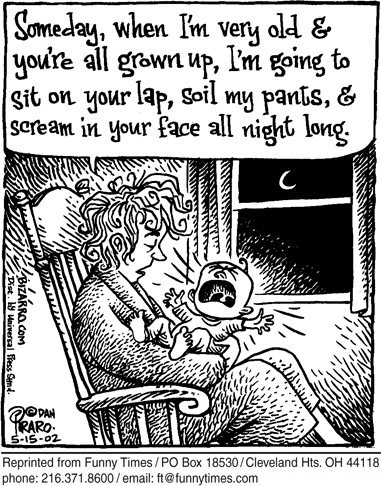
ARE THERE ANY RULES OF PARENTING?


Time and again we as parents talk of what are the secrets of raising our chidren to the best of our abilities and discover a” fool proof” way that they turn out to be super kids.
I have yet to see a set of parents who donot aspire their kids to do well. We all try our own mechanisms , within our means of understanding, in becoming the ideal parents.

When we bring a television, a camera or even a small cell phone we get with it the users manual to see what appropriate ways to use it and what is to be done to ”trouble shoot”.

However, when we bring in the beautiful machines called babies we donot bother to look up for its’ user’s manual simply because the baby doesnt come in with one. We, like other major issues in our life including religion, depend upon the hearsay of the seniors or others in dealing with these “bundles of joy”.

We use our ‘trial and error methods’ and then when things go wrong we blame–there are no rules for parenting. It all depends upon Allah and His will if our kids turn out to be good, not so good or even baad.
Although I did attempt to read a book on Positive Parenting while expecting my first child, I too am in NO way, any better than those parents who learn as they raise their kids. Learning as such is a life ling process but then there has to be a baseline to take off from. To my much dismay now, I probably took off as an illiterate when I embarked on the parenting path, 19 years ago. I feel ashemed of many silly and many serious follies I committed along the way. I wish I had even a fraction of enlightenment that I have now. Sorry, but it’s too late to cry over spilt milk. Not because I failed—certainly I did not— but because despite my follies my kids were smart enough to stay fairly on track.
Nor does it imply that I was an “all evil mom” but yes I did have my share of mistakes. It was only when my kids grew a bit older did I get to watch the serials like SUPER NANNY or read child psychology articles on the web . How I wish I had known that when my little committed made a blunder—instead of screaming or scolding I should have talked to her at her eye level without raising my voice. Also that when my son misbehaved—instead of giving him a scornful look and a nasty threat of police , I had put him on a naughty chair for the time appropriate for his age. And most of all instead of using TV with Cartoon Network as a baby sitter, I wish I had used some more useful methods to engage them.

I feel terrible at times of the rare, probably a couple of occaisions only, when I really slapped my kids hard for some really really serious reasons. I wish I had the control over me then, to deal with them with more restraint. I have even apologised to them for these acts time and again. But these kids are no saints—they are monsters in the garb of sons and daughters—they do forgive and forget at the moment but then use it as ” a tool ” whenever deemed necessary. I wish I had never given them a chance to use this” life line”.

I attended a lecture, sometime ago, by a philanthropist from Brampton, by the name of Baldev Mutta who deliverd an extremely enlightening lecture and that too based on scientific evidence and research about what makes kids great sailors and survivors in this bad mad sad world.

The rules he presented were mainly of common sense and indeed many a times made me wonder during the lecture—gosh! why didnt that click to me when I was raising my kids?


Baldev Mutta ji begins with saying:

Spend quality time with your kids.
A child’s self-esteem is greatly influenced by the quality of time we spend with them-not the amount of time that we spend. With our busy lives, we  often think about the next thing  we have to do, instead of putting a focused attention on what our child is saying to us. We often pretend to listen or ignore our child’s attempts to communicate with us. If we don’t give our child quality time , they will often start to misbehave. Negative attention in a child’s mind is better than being ignored.

It is also important to recognize that feelings are neither right nor wrong. They just are.

So when your child says to you, “Mommy, you never spend time with me” (even though you just played with her) she is expressing what she feels. It is best at these times just to validate her feelings by saying, “Yeah, I bet it does feel like a long time since we spent time together.”

So beautiful is the technical term given to quality time – Genuine encounter moments (GEM).

Give Children Appropriate Ways to Feel Powerful

If you don’t, they will find inappropriate ways to feel their power.
Ways to help them feel powerful and valuable are to ask their advice, give them choices, let them help you balance your check book, cook part of a meal, or help you shop. A two-year-old can wash plastic dishes, wash vegetables, or put silverware away. Often we do the job for them because we can do it with less hassle, but the result is they feel unimportant.

Unfortunately many of us desi parents love to keep our children emotionally and physically dependent on us. Not because we want it that way but because we fear losing them if they get independent.

Mr Mutta, to my utter shock, reinforced several times that the kids should be independent enough to make their own breakfast at the age of 12 and above. Many of us would shoo this as ridiculous stuff but believe me once I learnt this I took my hands off my kids morning stints and now they ‘re all independent.

I ’rest in peace’ while they get up, get ready in the early morning hours and fetch their own breakfast. At the oputset my heart thumped hard as I lay in bed overhearing the background noises of their activity in the kitchen, but now my soul gets rejuvenated each time I see them walking away from the kitchen with a self prepared breakfast. And that no more am I an indispensable entity.

Only if I attended Baldev’s lecture 5 years ago !!!

Create love for books in the child right from day 1:

Says Mr Mutta that research has proven that if the child is given a book right from the first days in the crib and then made to sleep each day after reading to them from a colorful attractive book—the child grows up with the love of reading books. And as the child loves to read he broadens his horizon, raises his intellect , aspires to acquire more and stays away from boredom related social ills like drugs, hooliganism, crime etc..
Every occaision should be used to give them books as presents. They last longer and impact far more than the plastic toys.

Teach the child to be empathetic towards the parents:
As parents especially as moms, we all have a Mother Teresa within ourselves. We donot want our kids to get even an iota of suffering in this world and in doing so we do more harm to them than we anticipate. We donot share our worries, our pains with them thinking they are kids.
Says Baldevji—if we are sick, we should act sick in front of the kids and teach them to care for us—by sitting beside us, accompanying along to the doctor and even share our social and economic problems with them so that they get to learn and realise that their parents are as human as others. We shouldnt attempt to fake ourselves as Godly or saintly figures in front of them who can provide them with panaceas to every problems or everything they ask for. If they learn to care for us from the early childhood then only will they care or feel for us in the later age.
Teach the child to share and do charity:

We often pamper our kids by telling them they’re special kids and all that is ours belongs to them. True it may be but we donot realise that this way we are grooming them as self centred egotists.
Baldev ji suggests that if you intend to do any charity or give any gift to anyone outside the immediate family—let your child do the giving act. This way they learn the art of sharing and giving.
Looks pretty common sense. I remember many a times I had to give some presents to other kid’s on their birthdays quietly, because my son would want them or would be disturbed by it being given away. I think I should have let him feel that way to make him learn that all is not ours.

Rest of the tips I obtained from my web search, are fairly commonsensical and probably we all are aware of most of them. But despite knowing it ” all”, time and again we omit them when we need to use them.

Withdraw from Conflict
If your child is testing you through a temper tantrum, or being angry or speaking disrespectfully to you, it is best if you leave the room or tell the child you will be in the next room if he wants to “Try again.” Do not leave in anger or defeat. I know very well how “easier said than done” this tip is!

Separate the Deed from the Doer
Never tell a child that he is bad. That tears at his self-esteem. Help your child recognize that it isn’t that you don’t like him, but it is his behavior that you are unwilling to tolerate. In order for a child to have healthy self-esteem, he must know that he is loved unconditionally no matter what he does. Do not motivate your child by withdrawing your love from him. When in doubt, ask yourself, did my discipline build my child’s self-esteem?

Use Logical Consequences
Often the consequences are too far in the future to practically use a natural consequence. When that is the case, logical consequences are effective. A consequence for the child must be logically related to the behavior in order for it to work. For example, if your child forgets to return his video and you ground him for a week, that punishment will only create resentment within your child. However, if you return the video for him and either deduct the amount from his allowance or allow him to work off the money owed, then your child can see the logic to your discipline.

God has indeed been very forgiving and kind to me and my husband as parents —despite all the major & minor follies—kids arent as bad as they could have been. They may not be “superkids” but I am still proud of them.
When we aspire to have “superkids”—we must question ourselves—

WERE WE SUPERKIDS WHEN WE WERE YOUNG?
Keep thinking….

Ilmana Fasih
23 November 2010.

TO BE AND NOT TO BE


Be kind but not timid,
Be strong but not rigid.
Be thoughtful but not lazy,
Be different but not crazy.
Be proud but not arrogant,
Be firm but not impertinent.
Be witty but not mocking,
Be concerned but not stalking.
Be daring but not reckless,
Be coool but not headless.
Be hott but not injurious,
Be intense but not ferocious.
Be smart but not cheapy,
Be chic but not creapy.
Be stylish but not outrageous,
Be inspiring but not contagious.
Be awesome but not conceited,
Be accepting but not defeated.
Be as twinkling as a shining star,
But most of all, be the person you are…

Ilmana Fasih
18 November 2010

Kabir ji – a mystic philosopher