Shams Ul Anwar’s statement of ‘waiting to receive the body parts of my daughter’ moved me. It really moved everyone.
Rarely do I take more than a few seconds to figure out what status to write, but this time I wrote and rewrote at least 5 times before posting on Twitter and Facebook : “He isn’t just one. There are many more #ShamsUlAnwars in Baluchistan, Parachanar, Hazara and where not… in #Pakistan.”
I read it with a flicker of scepticism on facts in the story: “he saved a man from planting a bomb.” It occurred to me “Why did this not make news?”
Next I read “his two sons were kidnapped and one son was sent back in pieces with a recorded CD of the act.”
“How come it didn’t make it to the news?” I again questioned.
Then came the last rhetoric that it is Jan 11 and a few hours left to the deadline of Jan 12 for his daughter’s turning into pieces.
I thought again, “Why did he have to wait for the last hours?”
But I just blamed the devil in me for questioning it. And felt nauseated. Really nauseated
It was one of those rare occasions when one saw EVERY Pakistani status on facebook pouring out compassion.
Without naming them, from journalists, intellectuals, values upholding serious youngsters, all of whom I hold in high esteem, to even the Paris Hilton-ish socialites and fun loving teenagers who generally post only songs and light hearted statuses were all visibly shaken. Those who generally seem oblivious to the calamities occurring anywhere on the globe, or not giving a second thought to the suffering flood victims right in their backyard, were all posting bank accounts.
So overzealous were the intentions to donate that Beena Sarwar and others had to issue an appeal to avoid payment into the direct account and lest it would escalate the demand from the perpetrators and make kidnap for ransom an attractive option for criminals. It was only through her elaborate status that an emotionally moved me, could rationalise that these could be the possibilities too.
The vague imageless impression of the girl lingered in my head through the sleep. First thing I did jumping out of bed was to start the laptop to check what happened.
The girl was recovered. There weren’t as many rejoicing statuses, but people moved on to their usual statuses. It simply signified they felt truly happy with the developments. When you are really happy deep inside, you generally don’t show it off as an outburst, and stay calmly contented.
And then in the middle of the day, as if another emotional bomb was dropped.
Twitter started to talk of the possibility of the story being fraudulent. At that moment I felt for a split of a second, “Was it really silly of me to believe it? “
But then I realised it was better to have believed and empathised rather than have blown it off as a fluke. What if it had turned out to be correct, or even half correct? The guilt then would have been worse, and quite unforgiving. As such I hate to reach a point of apathy when no pain of others looks real.
Later then , while searching on the net I came across this blog post on LUBP. Instead of digging into what fraudulent culture and mindsets, from top to bottom, gave Shams Ul Anwar the audacity to make up such a story, the author punned at the compassion of the empathising ‘urban elites’ as ‘promoting their shallow philanthropic credentials’.
And then the author did have to take it out on Imran Khan too, for which he had the compulsive urge to mention a blog by name of one of the key members of the opposite camp for settling a score.
Agreed, that there is no denial of the ‘ignored authentic stories of the Baloch, Pashtun and Shia target killings by army and its Jihadi-sectarian proxies’.
But how does this wrong negate the empathy of thousands for the story? How does the empathy for a horrifying story become ‘superficial’ ?
I fail to understand. Perhaps they are right.
Neither the Baloch nor the Shias of Parachanar and Hazara killings deserve empathy, nor did the story of Madina Anwar’s until proven fraudulent.
The only rant that really deserves merit is the ‘victimisation’ rant and ‘coup, coup’ wolf cry that the followers of the party whose agenda LUBP pursues.
This is the only unfairness in the world that deserves all the outpouring and sympathy. After all they are the ‘Feudal and the ruling ‘elite’.
What the hell is empathy got to do with an ordinary Madina Anwar or the ‘people’ who are killed whether in Hazara, in Parachanar, or Balochistan or even who die a million deaths each day in the flood affected areas of Sind or elsewhere in Pakistan, due to lack of basic necessities of life?
Yes, next time when they rant ‘coup , coup’ (whether true or false), despite their non compliance to the parliamentary resolutions or court orders, please all of you cry in pain.
After reading the health blog “Living a healthy lifestyle’ a friend, who did not want to ask it in public, emailed, to inquire more about the mention of the phrase ‘frustration tolerance’. She mentioned of her son’s tendency to get frustrated very easily, then starts to get aggressive and blames others for everything.
This reminded me of a time, a week ago, when I was sitting with my son in the Hospital waiting hall, waiting for his turn to get the blood tests.
Apart from many who waited, there were two set of patient families there who merit a mention.
First one was a couple with a newborn baby, barely a month old and another a boy about 4 years of age The elder one was perhaps going through difficult days that kids usually experience on the arrival of a new baby. He was constantly tearful, and literally searching for reasons to throw tantrums.
Visibly very annoyed by his behaviour they forced him to sit on the stroller with the belt tied up.
Instead of helping, this made him worse and he struggled with all his might to undo the strap. He threw away all his toys and a juice bottle on the floor with a hard bang, one by one.
But parents, though visibly perturbed chose not to look at him.
I could not resist, and asked the mother, if I could talk to the baby.
The mother tearfully expressed her exhaustion and lack of sleep since the new baby’s arrival and that his tantrums have added more to her stress.
“He doesn’t seem to be accepting the baby.” She complained.
“But do you give him the much needed attention?” I asked.
She said she does, but not as much, as the new baby is too small to take care and that he is pretty big to warrant full attention.
“I cant carry him all the time. Whenever I feed the little one, he wants to climb up on me. Earlier he never wanted to be held at all.”
The second was an elderly couple, with the husband on a wheel chair, while the wife almost as frail, and old but pretty smart and active. She was walking along his automobile wheelchair almost like shadow, carrying his overcoat and muffler along with another bag hung on her wrinkled arms.
She chose a corner of the waiting hall, parked his wheel chair and she sat on a chair next to him.
In barely a couple of minutes, the husband muttered something, and she was up on her feet and hunted out a watter bottle from the bag hung over the wheelchair. She held his chin with one hand and the bottle with the other, as he drank. Her attention was elsewhere when the husband asked her to stop, but it took her a second more to stop.
The husband gave her a look with a visible frown on his forehead, but she returned a wide graceful smile while wiping the dripped water from his chin and shirt.
A few minutes later, and she needed to get up again, to pat him on the back, while he coughed. A few more minutes, it was for a napkin which was right in the bag hung next to his armrest, but he wanted her to get it for him.
It was at least a dozen times in half an hour, that I saw her stand up and help him out. Out of those dozen times, at least half the time, the husband was annoyed for one reason of the other.
No doubt old age and ill health makes one irritable, but the wife was no less old.
All through the waiting time and even later on the way, I wondered at the two families, and their behaviours.
Perhaps both of them were at extreme ends of how we tend to extend helping hands to our loved ones.
If in order for them to learn, we take off all support and leave to learn all by themselves, they tend to feel defeated and angry like the child in the first case.
Or out of our limitless love and sympathy, we tend to pitch in our helping hand a bit too soon, so that they don’t get hurt. And as a result, expectations rise as the mind gets accustomed to getting help too soon, and any small amount of struggle generates frustration. This was the case in the second couple, in which the dedication and love of the wife had spoilt her ailing husband so much that any amount of her support was not enough, if she did not give an undivided attention to him.
How I wish someone could tell her that this spoon feeding to her ailing husband would make him feel less well than when she left some small actions (that were within his capability) for him to do himself.
The point is- it is very essential to strike a delicate balance and know the thin line between stepping in too soon, and standing afar watching a loved one collapse into a frustrated heap.
It is common sense that too much of frustration is harmful for one’s self esteem. But too little of frustration creates a learned helplessness, and the individual is left incapable to face any struggle with strength.
Hence, some amount of frustration is important, and becomes a learning experience that benefits a lifetime.
If we really care for our loved ones, be our children or spouses or others, we need to give them enough space to struggle, and then pitch in help only at the point where their self esteem is not hurt and the struggle has been enough make them resilient.
I emailed this whole write up to my friend to help her understand what was frustration tolerance with some links…for I certainly did not want to spoon feed her.
Published in ExpressTribue : http://blogs.tribune.com.pk/story/9658/call-me-an-indian-pakistani/
I recently wrote a blog post titled ‘An Indian who moved to Pakistan‘. The response I got – positive and negative – is much appreciated. It inspired me to write this piece about my dream of a world without borders and wars.
Before I begin, however, I want to make clear that I do not have any desire to undermine the sovereign and political borders between India and Pakistan or between any other countries. My dream is to erase the psychological borders that are etched in our minds in the shape of prejudices and hatred towards the other.
So I’ll get to the point: to all those people who expressed sympathy over my visa issues, please don’t feel sorry for me. I feel extremely privileged to have ties to two beautiful countries, Pakistan and India.
So what if I do not have an Indian passport?
I have 24 years of precious memories sealed in my heart as an Indian, memories that can never be erased. I am not Pakistani because of my passport alone, but because of the love and respect that I have received from numerous Pakistanis, who took no time to accept me as one of their own. I belong to both lands and a good 1.4 billion people are my fellow compatriots. How lucky am I?
I am as passionate about the happenings of the Lokpal bill as I do about the NRO debate. Last year, at the cricket World Cup, I got to support not one, but two teams. Whenever there is an India-Pakistan match, unlike the other billion and a half who dread a bad result, I rejoice. I feel like a winner when either of them wins.
I find absolute tranquillity in the Sufi poetry of Bulleh Shah, and at the same time, I am able to drown in the depths of Kabir Dohas. Moreover, I knew what Kareem’s nalli nihari in Delhi tasted like before it began its journey abroad and ended up as Sabri’s maghaz nihari in Karachi. In addition to this, I can put together an outfit comprising of a Kanjeevaram silk sari and a Sindhi mirror-embroidered bag. When I go out, I can flaunt both as my national handicrafts.
To those who ridiculed or criticised me, please shed the word ‘hate’ from your dictionaries and look beyond prejudice. Believe me, I am a witness to the reality that there are millions on both sides who want to live in peace with their neighbours.
We have seen first-hand how hatred leads to conflict, how conflict leads to instability, and how instability leads to massive defence expenditures. We have already wasted immeasurable revenue, which could very well have been used for the alleviation of poverty, hunger, and illiteracy – problems that exist in astronomical proportions on both sides of the border.
We share ancestors, history, geography, and the same problems. Why should we allow the problems of a few in power to affect us on a global scale? A prosperous India is in Pakistan’s best interest, and a prosperous Pakistan is in India’s best interests.
Why should a handful of bigots sabotage the road to peace we need to take to reach the goal of prosperity? We need to support and love each other – we do not have another way out.
Think about it.
The views expressed by the writer and the reader comments do not necessarily reflect the views and policies of The Express Tribune.
One evening, the perpetual sad news on the television of sectarian killings, petty politics, poverty and floods overwhelmed me and made me feel a little nauseated.
To get fresh air, I walked outside in the lawn, only to see a threesome of geese sitting beside a bird feeder. One was limping with injury, while the other two were flapping their wings to encircle the injured.
Dejected with being human, I pondered, how the free birds, travelled 4500 miles every year from Europe to Central Asia, flying over mountain ranges to arrive in the marshes of the subcontinent for the winter.
Their honks reminded me of a research which found that these geese migrate thousands of miles as one flock, in a ‘V’ formation. If any bird falls sick or is injured, two geese fall out of formation and follow it down to help and protect it till it is able to fly or is dead. When the geese if healthy enough to fly, they launch out on their own formation until they catch up with their group.
“I wish I was one of you.” I muttered.
“Why?” asked one. “Aren’t you the most intelligent species created by God?”
Surprised I answered “Yes, but I love the way you creatures fly miles and miles, as free birds, with no passports, visas or expensive tickets. And no one is there to stop you at the borders.”
With a twinkle in its eye, the geese answered “Yes indeed. But do you know how do we succeed in braving such distances?”
I replied “Yes, you fly in flocks united as one group, in a V-formation.”
As I spelt the word united, my heart sank at the disunity that we display when we quarrel because of religious, sectarian and ethnic differences, instead of staying united in a flock as Pakistanis.
“Yes, unity and discipline are the foundation with which we brave through our arduous journey from Siberia to South Asia” declared another.
I wondered how the traveling in ‘V’ formation offered discipline.
The witty goose answered my concern by explaining, “Staying organised in a V gives us strength. The bird ahead flaps his wings to reduce the air resistance and gives a lift to the next behind it. Subsequently it gets passed on to the whole flock. And this way we are able to add a 75% greater flying range.”
“But you let the one at the front do the most labour by flapping its wing through the air resistance. How inhuman?” I retorted.
“You call this inhuman? Being cruel is so ‘human’ I would say”, the goose snapped back.
I knew the goose was right.
“Not only do we stay united and disciplined, we keep our faith in whoever our leader is. Our leader leads with hard work and the ones behind follow him with complete faith. Those at the extreme back keep honking all through the journey. Have you ever experienced how energising it is when someone gives you support from behind? It synergises one’s capacity far beyond one’s capability.”
This confused me. What was this faith the goose spoke about?
“Faith isn’t just the excuse for which you humans kill one another. It is a mutual faith between our leader and rest of the flock. It is this trio of unity, discipline and faith that enables us to brave harsh weather, sometimes even lack of food on our long journey” remarked the goose.
“Do you know this Unity, Discipline and Faith that you follow along the 4500 km journey, was actually a slogan given by our Founding Father?” I bragged.
All the bird heads turned at me in shock, and after a long silent pause one of them remarked:
“Oh, so you humans have heard of unity, faith and discipline?”
And with that exclamation, all three of them flew up in the sky, in a small V formation, perhaps for their final destination, further east.
As they went out of sight, so did the poignant lesson they had taught me. Why would I learn from pea brained geese?
After all I am the most intelligent species on Earth. Isn’t that what the geese had said in the first place?
The Confederation of Indian Industry (CII) some time back recommended promoting economic cooperation between India and Pakistan by focusing on information technology (IT), entertainment and healthcare.
Yes, “Healthcare”, I shout.
After all the other two are thriving and will take care of themselves. I remember in the mid-nineties, when my father-in-law, a doctor himself, was diagnosed with a serious medical problem. Frantic tests at various local institutions recommended that he undergo a procedure that wasn’t very commonly performed in Pakistan. He was all set to go to the west which required large expenses.
It was then that my awareness about a particular institution in India, where I had grown up and attended medical college, came in handy. I persuaded him to get examined there. We went to New Delhi, and he returned to Pakistan treated at one tenth of the cost it would have required in the west. I became an instant ‘doted’ upon daughter-in-law in his eyes. All his initial reservations about his son marrying an Indian disappeared overnight.
The true potential of medical cooperation between the two countries was dramatically highlighted when Noor Fatima, a two-and-a-half year old baby girl, went to Bangalore by the Lahore-Delhi bus in 2003. In fact, the bus service was resumed in part to allow her to make the journey. She was literally given a red carpet at the hospital as well as by the media.
Just a few days ago there was news of a 10 month old baby being taken from as far away as Qila Abdullah near Chaman in Balochistan to Bangalore, India for a heart surgery, a free treatment thanks to the joint efforts of Rotary India Humanity Foundation (RIHF) and Rotary Pakistan with Aman ki Asha, the peace initiative of the Jang Group of Pakistan and the Times of India Group. It is heartening to know that thanks to this rightly named ‘Heart to Heart’ initiative, now over 60 Indian and Pakistani children from poor families have been able to undergo life-saving heart surgeries in India.
As this people-to-people interaction in health, as in other fields, goes on, it is clear that no animosity or cold temperatures at the top level can freeze the warm relations between the ordinary Pakistanis and Indians. Our common heritage, common interests and above all a concern for each other will never dampen this warmth.
However, there is a dire need to extend this at a wider and higher level. The recent statements from the Indian and Pakistani business communities could well be the trigger. The top levels of the corridors of power need to formulate policy along these lines to bring a real impact at community level.
With reports about a case of Polio being found recently at Wagah, Pakistan, it becomes essential for strong policy decisions to be made at the top level, trickling down to the masses, to combat the spread of such crippling diseases.
India and Pakistan are among the four countries of the world where Polio is endemic. Our proximity will not enable either to achieve the ambitious plan of making Polio extinct, without mutual cooperation.
Looking at both countries from the UN lens, India and Pakistan are both termed ‘out of track’ when it comes to achieving the 2015 target for the Millennium Development Goal (MDG) 4 – the reduction of infant mortality. With a 1.4 billion population in the region, this means millions of children and babies are at risk. Failing to achieve an optimal Infant Mortality Rate will mean that a gigantic number of children being deprived of the opportunity to survive. Does that not warrant a joint concerted effort for both countries to come ‘on track’?
Similarly, in the MDG 5, the reduction of the Maternal Mortality Rate, again, both the countries are unlikely to meet the target in 2015. India has done better, but in both countries, far too many women die during childbirth. We certainly have great room for cooperation in this field too, as overpopulation, women’s illiteracy, and violence against women are among the common problems that both countries face. Isn’t it common sense to share information and experiences and work together to eradicate these problems?
MDG 6 deals with the Infectious diseases, like Tuberculosis, Malaria and HIV. India has done a good job in stabilising HIV, bringing down the prevalence rate from 0.36% in 2006 to 0.31% in 2009 (UNAIDS Global report on HIV/AIDS, 2010). In Pakistan the HIV/AIDS prevalence is low among the general population (<0.05%), but according to UN reports, it is increasing rapidly in high risk groups. The UN categorises Pakistan as a high risk country for the spread of HIV/AIDS. (http://bit.ly/UNmdg-mm).
Doesn’t it make sense for Pakistanis dealing with HIV/AIDS control to learn from India’s experience? Isn’t prevention better than cure?
Malaria is still a problem that both countries have not been able to tackle. According to a recent World Health Organisation (WHO) report, a third of the world’s countries will manage to eliminate Malaria, but adds that “the future in the South Asia region isn’t bright.”
India battles with a heavy burden of Malaria. Pakistan too has almost half a million cases of Malaria each year. A common problem with a common purpose of defeating it could help the region also realise the dream of being Malaria free. After all, countries closer to home like the Maldives have managed to do that, and Sri Lanka is considered close to eliminating the menace.
The mid-2000s saw Dengue epidemics in the Indian cities of Delhi and others in northern India. Today, Lahore and others in Pakistan are battling with it. It was a proud moment for the region when expertise from Sri Lanka and medicines from India helped Pakistan to combat the illness.
We have no choice but to combat such problems through joint efforts. The border security guards can check humans for visa, but mosquitoes are above such restrictions.
But besides the recent Dengue cooperation, there has hardly been any cooperation in the field of health at the top policy-making level. The only other cooperation worth a mention is the Polio drops being given to under-fives at Wagah border, and the fumigation of the Samjhota Express against the H1N1 flu virus.
Such small examples of cooperation are nothing compared to the gigantic cooperation that takes place in the field of entertainment. It is much more critical to come together on the immensely more serious issue of health. The stalwarts in this field must emulate the entertainment sector towards substantial cooperation.
We have a common geography, ecology, genetics, cultural practices and health problems. I am sure we can find common solutions too, that will save both countries much valuable time and money. United in health we shall stand, divided we shall fall with illnesses.
Dr Ilmana Fasih is an Indian gynaecologist and health activist married to a Pakistani. Blog: Blind to Bounds https://thinkloud65.wordpress.com/
Other children who have also been given a second chance through AKA-Rotary’s Heart to Heart initiative
This is the first of the series of Health Blog posts I begin from January 1, 2012 to raise awareness amongst South Asians on different Health issues of importance to them.
PART ONE
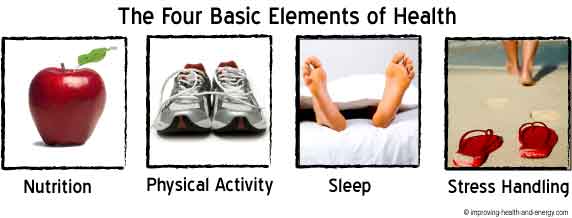
What comes to your mind by hearing of Healthy lifestyle ?
Exactly, it is these four essentials along with some other things which together make up the components of a Healthy Lifestyle.
There is nothing in it which any ordinary person cannot achieve. Healthy Lifestyle is no rocket science , and it needs no huge investments.
Just tiny conscious steps which will build up with time into habits and reap as a reward a Healthy YOU .
Why need a Healthy Lifestyle? I ask why not?
A healthy lifestyle :
• Shall reduce chances of illness and injuries, and hence improve quality of life.
• Will reduce visits to doctors, save time and misery.
• Will reduce cost of health care, less medical bills.
• Enable us to pursue our passions and work better and uninterrupted.
• Keep us employed, and with less of sick leaves or leave without pays.
• A sound mind in a sound body will enable better relationships at home, at work and in society at large.
• A healthy individual will be a healthy citizen of a healthy nation.
What constitutes a Healthy Lifestyle?
They are all simple steps, and as you go through them check which all you already follow, which ones you need to follow more. It just requires a constant conscious effort.
STEP ONE: Make Healthy eating habits:
I know our foods are delicious, but some are pretty unhealthy too. However, there is still a way we can manage to strike a balance between satisfying our taste buds and eating healthy.
A healthy balanced diet which has all the nutrients and vitamins we need is essential to make us stay healthy and avoid diseases.
The next very blog shall be in detail on healthy eating while we enjoy our desi food at the same time.
STEP TWO: Have an Optimal Weight:
Do you know what is your weight and height?
Do you know what is BMI (Body Mass Index), its significance is and how to calculate it?
Please check your BMI by plotting the weight and height on the chart below.
See where does your BMI lie.
If it is in the green zone, congratulations, your BMI is normal, but you need to maintain it in the same color.
If it is in the red or yellow zone, you need to check it and think of bringing it down to green.
Benefits of weight control: Maintaining an optimal weight saves us from a number of serious diseases like Heart disease, Stroke, Diabetes, Blood Pressure, Joint problems like arthritis, and Cancers like breast cancer, colon cancer, and sudden death.
(A blog shall be dedicated to weight management too.)
Do you know how much is the minimal exercise you need to do to stay healthy?
For adults it is a minimum of 30 min per day for 5 days or 150 minutes per week of moderate exercise (which is enough to increase your heart rate upto safe limits) is needed to keep an optimal heart health. It could be a brisk walk or jogging.
What exactly is moderate exercise?
A study suggests that a moderate-intensity walk should have 100 steps per minute, or 3,000 steps in 30 minutes.
And some studies have suggested that moderate-intensity exercise –like walking — may be just as beneficial as more vigorous exercise.
It does not need to be continuous…you can split it into three session of 10 min each through the day.
It could be swimming, walking, skipping rope, or playing sports like tennis.
– Benefit of Exercise:A daily routine of exercise will help control weight, increase the body metabolism, gives sound sleep, reduces stress and makes you feel good.
Caution:And if you have any health problems or have never exercise, I suggest you to first get a check up from your doctor before you begin.
For children the minimum exercise should be 90 min each day of active play, every day.
Do you also know that it is unhealthy for the children to be watching TV more that 2-3 hours a day?
It leads to obesity, hyperactivity and low attention span in the children-hence not only poor school grades but also many problems in later life.
Instead of watching TV or sitting on Computers all day, encourage them to play physical games . If space is a concern, after the minimal play, even indoor board games like ludo, chess, scrabble are great which encourage interaction, active thinking, learning frustration tolerance and competition.
Encourage them to read books. Studies prove if you expose children to books from early age, they do not get aggression later.
And for children below 2 years, no TV viewing at all, is the recommendation.
• Excess of caffeine, tea, fizzy drinks and alcohol.
• Avoid smoking as well as second-hand smoke. (A couple of blogs on smoking shall follow too).
• Avoiding drugs of abuse… it all begins with poor parent child relationship and smoking. If the parents-kids have a positive relationship and the parents counsel their child against the harmful effects of drugs and smoking since early, the kids can most likely not tread that path.
Our South Asia is a region where infections of all sorts are so common.
Personal Hygiene: Some common practices can help us minimise these infections like:
1. Wash hands frequently and properly–It is the single most act that prevents major infections
2. Do not share razors, combs, nail cutters, tooth brushes, towels and needles.
3. Practice safe sex habits.
4. Get the required vaccines on time.
It is very important to know that in our countries Hepatitis C and HIV infections have high prevalence. Many of the people are not even aware that they are infected.
It is very important to not share your razors, combs, scissors, nail cutters and needles, to avoid infection.
Also know that handshakes, hugging, kissing, sharing utensils or eating together will not cause spread of Hepatitis C or HIV infections.
It also very important that if you happen to get injections or blood transfusion in a Hospital, make sure the seal of the disposable needles, syringes or the equipment are opened in front of you.
And you also have the right to inquire from the health personnel about adequate sterilization of instruments and blood products.
(A separate blog shall be dedicated to Hepatitis C and HIV infections and their prevention).
Do not forget the cleanliness of your surroundings.
The following steps are more to do with mental health and we all know ‘a sound body needs a sound mind’.
STEP SEVEN: Healthy personal relationships:
• Along with taking care of ourselves, ne need to give the due attention to the people around us. Sharing and caring with the loved ones makes one feel good.
• Take time off to just sit with your loved ones. Have a family time, with no laptops, smart phones, television coming in the way.
• Talk to the kids at an eye level as friends, not as their commanders.
• Eating together as a family at least one meal a day. Talking on dinner table is a proven way to strengthen closed family ties.
• Hug your ageing parents for no rhyme or reason, no matter how old you or they are.
• Add humour to your life. “Good humour is one of the preservative of peace and tranquility.”Jefferson.
• Take time to say ‘How’re you’ to people who work for you like your driver, maid, your gardener. Then see a smile on their face and a twinkle in their eyes.
STEP EIGHT: Healthy connection with the surroundings;
It is so important to look beyond one’s personal and family life and see what s going on in the outside world-both living and non living.
Make sure to watch the news on TV or read Newspapers to know what is going on in your country or in the world at large. The news may be depressing, but it makes us conscious of the various problems in the world.
Understand your sociopolitical responsibility: Form healthy opinions on the events occurring in your society.
When its election time, make sure you vote (with your conscience).Remember that each vote counts.
Give charity. Charity is not just through money, we can give our time and a few words of empathy to those who are in need. Research proves that charity or public service helps the individual develop self-esteem and mental well-being.
STEP NINE: Stress management
Yes stress is a reality. But we need to manage the stress of our lives. Half that work is done if we eat well, exercise, sleep well, and have less illness.
However there are many scientific tools available on the net to manage stress. A blog shall be dedicated to stress management.
I know this blog was long and loaded with lots of information. I would suggest go slow, read the three different parts over different times, and if needed come back again. It’s going to stay here
You may begin the New Year with great resolutions, with great enthusiasm, but will forget in the middle. That’s all so normal. I do the same. So long as you keep getting back on track and not give up, it’s all very human. Keep trying! I am trying too
He who has health has hope; and he who has hope has everything. (Arabian Proverb)
With a hope that 2012 shall be a healthy year for all of you…
AUDIO IN URDU/HINDI FOR PART-3:
A VERY HAPPY & HEALTHY NEW YEAR!!!
P.S. 1: This and the other forthcoming Health Blogs do not substitute a Doctor and they are only aimed at increasing Health awareness and to develop interest in the readers to read further about health issues. For any serious health problems, do not delay a doctor’s advice.
P.S. 2 This is the first of the series of Health Blogsposts that shall be posted every fortnight with a new Health topic relevant to the South Asians. Please share and do play the Audio to those family members who do not ‘indulge’ in the social media.
P.S.3: Many thanks to DrBabarKhan and FarhanMasood for their generous ReTweets. 🙂
What a beautiful song with lyrics by Nida Fazili, music by Jagjit Singh, and singers from India ( Jagjeet Singh, Sonu Nigam etc.), Pakistan ( Ghulam Ali, Mehdi Hasan, Iqbal Bano) and Bangladesh( Runa Laila), and rest of the World singing together for the New Year.
Naya saal ho aisaa ab ke Rang bhare jeewan mein sab ke Sooraj ghar ghar dhoop bikhere Chand sajaye sab ke andhere
Kheton mein faslein lehraayein Nadiya sab ki pyaas bujhayein Jurey rahein sabke rishtey Juda na ho bhai se bhai Naya saal ho sabko Mubarak Naye saal ki sabko badhaii..
Urein kabooter khuli hawa mein Naache chham chham more ghata mein Seemaon mein bante na dhartee Faujon mein kam kam ho bhartee Sona jhoomer ban ker damke Chandi payal ban ker barse Naye saal ki sabko badhai
Chhape kitaabein, khulein dukanein Chire kahin na aur laraiii Naye saal ho sabko Mubarak Naye saal ki sabko badhai
Celebrate, make it a special one Let’s speak -one promise, Let’s celebrate, for our future For our children’s sake , let’s celebrate.
WISHING YOU ALL A VERY HAPPY NEW 2012 FOR THE PEACE IN SOUTHASIA, IN THE WHOLE WORLD
I plan to start from the New Year 2012 a series of Blogs on Health issues named
Let’s make 2012 a Healthy Year.
The blog series shall be target the South Asians, primarily living in their homelands, but could be useful to others living elsewhere.
The need of the blog was felt primarily due relative less awareness amongst South Asians on Health issues.
Primarily, this is because culturally we we worry about health only when sick or unwell.
Secondly, due to relative deficiency of health activism in our countries.
Thirdly, though there is a mine of information on health issues on internet, but not much of it is specific to South Asian context, hence many times lacks relevance.
I have been working on the contents of the blogs for the past 4 months. Most of the information would be from the well researched, evidence based sources, and shall be peer reviewed by the specialists from the field.
It would be an informal format, not a lecture. I have tried my best to make it like a walk through for the readers where they will along with the information also be guided on what to do ?
The blog post shall be up loaded every 1st and 15th of each month and will consist of different health issues on which I feel there South Asians need to be aware of.
The blog in English shall be accompanied by a podcast in a Hindi-Urdu language, in case those who wish to share it with their kin who feel more comfortable in their language. A lot of medical jargons will be used in English instead of Hindi & Urdu so that both can easily understand.
The blog shall not serve as a consultation, but just a means to give direction towards increasing interest in the readers to inquire more on health issues.
The first few topics in the serial order are
1. Living a healthy lifestyle ( Jan 1, 2012)
2. Healthy eating the Desi way ( Jan 15, 2012)
3. Love Your heart to live ( Feb 1, 2012)
4. Diabetes- the bitter truth ( Feb 15 2012)
5. Smoker but you won’t quit ( March 1, 2012)
6. Smoker and you wish to quit. ( March 15, 2012)
There shall be others on Infection Control, Weight Management, Osteoporosis, Arthritis, Chronic Bronchitis, Depression, Stress Management Strategies etc.
Readers are welcome to suggest any topic, and if deemed of importance to large numbers, we would be glad to include it.
The readers are also welcome to post their questions, point out any criticism or disagreement to any content in the blog. I would try my best to answer them in Consultation with the specialists from the relevant field.
And I would request that if you feel worth, please share the blogs with others and contribute towards spreading of Health Awareness.
Thank You and see you with the first one on January 1, 2012.
CLICK FOR AUDIO IN URDU/HINDI:
Special thanks to Fatima Fasih for technical support.
Who could’ve described Ghalib better than he himself.
Hai aur bhi duniya mein sukhanwar bahut ache Kehte hain ke ghalib ka hai andaaz-e-bayaan aur. (There are many good poets in the world, but they say Ghalib’s style (( of poetry) is different)
And in humour narrates his notoriety :
Ho goya koi aisa bhi jo Ghalib ko na jaane, Shayar to who achha hai, mager badnaam bahut hai. (Is there anyone who isn’t aware of Ghalib? He is a good poet, but pretty infamous).
Yet my favorite description of Ghalib in his own words remains this:
Likhta huun Asad sozish-e-dil se sukhan-e-garam, Taan rakh na sake koi mere harf pe angusht. {I write Asad, the pain of my heart in ‘hot’ poetry, So that no one can point a finger at my words}.
Indeed Ghalib needs no introduction. However, I dedicate this post to his association with the city of Delhi.
He was born in Agra in a family with Turk ancestors who had migrated from Samrkhand in Bukhara. After being married at 13 years of age he came to live in Delhi.
He lived, composed poetry and prose, then passed away in Delhi.
Delhi came to be associated with the name of Mirza Ghalib.
It would not be wrong to consider Ghalib as the most coveted residents that Delhi city takes pride in. And the most well known address of Delhi, known worldwide happens to be:
Ghalib’s Haveli Gali Qasim Jan, Ballimaran, Chandni Chowk, Delhi.
Ghalib lived in this haveli and the address was immortalised in a tribute by none other than Gulzar, to the great poet . The verses aptly describe the narrow, dark alleys of Old Delhi. Anyone familiar with it, would find an accurate picturisation the character and life of the place, in these verses, .
Ballimaraan ke mahalle ki wo pecheeda daleelon ki si wo galiyan Saamne taal ke nukkad pe batero ke qaseede Gurhgurhati hui paan ki peekon mein wo daad wo wah-wah Chand darwaaze par latke huye boshida se kuch taat ke parde ek bakri ke mamiyaane ki awaaz Aur dhoondhlayi hui shaam ke be-noor andhere Aise deewaron se moonh jor kar chalte hai yahan Churi-waalan ke katri ki bari bee jaise Apni bujhti hui aankhon se darwaaze tatole Isee be-noor andheri see gali qaasim se Ek tarteeb charaghon ki shuru hoti hai Ek quran-e-sukhan ka safa khulta hai Asadullah Khan ‘Ghalib’ ka patha milta hai. (The lanes of Ballimaran so much like the confusing arguments With patridge stories at the lane’s corner. The sounds of applause amidst the gurgling sounds of chewed beetal leaves. With worn out rug curtains hung outside a few doors The bleating sound of a goat And the lifeless darkness in the hazy evening. That creep along the walls. Like the old lady from the alleys of Chooriwalan Who hunts for the doors by the partial vision in her eyes. In one such dull, dark street Qasim Where a row of lit lamps starts, And a new page of poetry begins There, the whereabouts of Asadullah Khan Ghalib are found). (Pardon my inability to do justice through translation)).
He rented the haveli through his friend. And spent the last decade of life there.
With a prose as powerful as his poetry, he describes the dilapidated state of his house in a letter to his friend :
Balakhana ager che gira nahin, lekin chat chhalni ho chuki hai. Kahin lagan kahin ughaal dan, kahin chilamchi rakh diya hai.Abr do ghante batrasta hai to chat hamri chaar ghante barasti hai. (Although the house did not fall, the roof has become a sieve. We put various utensils benath the points– of leak. Though the skies rain for two hours, our roof rains for four.)
And in true Ghalib wit he says:
Huaa huun ishq kii ghaarat garii se sharmindaa Sivaay hasrat-e-taamiir ghar men khaak nahiin
(I am guilty of the destruction that my love has brought, There isnt anything at home except for the ‘castles in the air’).
Though living a life of extremely limited means, and financial hardships, he continued to live in Delhi:
Hai ab is mamure mein qaht-e gham-e ulfat asad Ham ne yih mana kih dilli mein rahe khavenge kya (There is now in this town a famine of the grief of love, Asad We’ve agreed that we would remain in Delhi– what will we eat?)
He lived and loved the city Delhi, but with a complain about it’s changing character, in another letter:
Bhai kya poochte ho. Kya likhoon. Dilli ki hasti munassar kai hangamon per thi. Qila, Chandni chawk, her roz majma Jama Masjid ka, her hafte sair jamna ke pul ki, her saal mela phool waalon ka. Ye paanchon baatein ab nahin, phir kaho Dehli kahan. Haan koi shehr is naam ka Hindustan mein kabhi tha. (What do you ask? What should I write ? Five things kept Delhi alive – the fort, Chandni Chowk, the daily crowds at the Jama Masjid, the weekly walk to the Yamuna Bridge, and the yearly fair of the flower-sellers. None of these survives, so how could Delhi survive? Yes there used to be a city of this name in the land of Hindustan.)
Ghalib passed away in the same house on Feb 15, 1869. His house ultimately got turned into a place for coal storage.
It remained in a dilapidated condition until in 1999, when Government of Delhi acquired, renovated it, after protests.
It was restored into a Ghalib Memorial Museum which opened on his birth anniversary on Dec 27, 2001.
Despite of having lived the life of hardships of all kinds-emotional, personal, physical, financial, he had confidence that his poetry would keep his memories alive :
Hui muddat ke Ghalib mar gaya par yaad aataa hai Woh har ek baat pe kehna ke yooN hota to kia hota. ( It has been a long time since Ghalib passed away, but he is still remembered.by his saying of what if this or that had happened).
And as predicted by Mirza, for all the lovers of fine Urdu poetry, he still lives in each of his verses.
This reminds me of one his lesser known couplets which happen to be a favourite of mine, and which exudes his optimism in life,
Hoon garmi e nishaat e tasavvur se naghma sanj. Main andaleeb e gulshan e na afrida hoon. I sing with joy when I imagine tomorrow. I am the lark of a garden that is yet to be.
(My tribute to the great poet on his 214th birth anniversary).
Come December and you see that along with the Christmas festivities, the spirit of philanthropy also gets an exponential rise.
Santa Claus , the iconic person associated with Christmas and especially with ‘gifts’ for the children are seen standing at various locales collecting charity—be it money, toys, chocolates, food items.
Writing a letter to Santa is a Christmas tradition going back to some centuries. The kids not just send in their wish list for toys or presents, but also promises of being a ‘good boy’ or a ‘good girl’. The more generous ones ask Santa to give gifts to the poorer and less fortunate kids.
What is even more exciting is that in many countries, the Post Offices make sure that the letters they receive are replied back too.
Canada Post replies to letters in almost 30 languages each year including in Braille. Canadian postal workers volunteer to write back the replies to hundreds of thousands of letters received each year. Canada has a special address and postal code for Santa :
North Pole, Canada. H0H 0H0.
The other day I was moved to hear from a Paediatrician friend of the story of a 7 year old child admitted in a Hospital with leukemia. He mentioned that the ailing boy admitted in the hospital, wished to see a white Christmas while there isn’t snow yet. The Hospital authorities did not want to disappoint the kid by their ‘regret’. Instead they pushed in all their efforts and finances to bring in snow to the hospital and even managed the boy to make a snow man by himself.
What made me wonder was that to how much length did the Hospital go to make a tiny face glow with smile and how much effort does the Canada Post makes so that millions of kids float in seventh skies when they receive replies to their cards from Santa.
Enslaved by my mindset, I can’t help think of our kids back home ( in India or Pakistan) .
Do our governments make any effort to make our kids smile?
Leave aside the government, do we even as desi parents really take extra care to keep our kids uphold their self esteem?
There is no two thoughts that as parents we really work hard for the kids—that they get the best education, achieve the highest grades or wear the best clothes in parties. We even go extra extra miles to buy plots and leave bank balances to make their lives easy.
But in doing so are we really making them happy? Or ourselves?
Do we let them be themselves or do we make our own dreams come true through them?
Do we really talk to them as friends, or just command them what to do and what not to do?
Before we ask the government or others in authority to take care of our kids, we need to take ‘good’ care of them too.
And good care certainly does not mean to dictate to them what we deem correct, but to guide them and let them realise their potential to the best.
I know all this has nothing to do with Christmas.
I just thought of revisiting the idea that if our kids will have a higher self esteem, the higher will be the hope to have a better future for us, in the years to come.





 Blind to Bounds
You must be logged in to post a comment.