Open up your mind and your potential reaches infinity…

Archive for the ‘Politics’ Category

Pakistani Politicians and Appropriate Muhawrey


Nothing defines a culture as distinctly as its language, and the element of language that best encapsulates a society’s values and beliefs is its proverbs and Idioms.
Proverbs are short and pithy sayings that express some traditionally held truth. They are usually metaphorical and often, for the sake of memorability, alliterative.

I love idioms whether in English, Hindi or Urdu.
My fascination for the Hindi and Urdu muhavrey and the comical character that our politicians portray ( in the subcontinent), pushed me from within to come up with some Idioms or proverbs which I feel best suit their personalities.(Pakistani politicians  in this blog)

Some may appear to fit the best with the politician( like the choli-daman ka saath) while others may just be just barely applicable for the sake of it.
My apologies in advance if it hurts anyone’s sensitivities.

Sadar Zardari: Andha baante rewri, murr murr apnono ko dey

PM Gilani: Darya mein reh kar magar se bair ( theek nahin)

Shah Mahmood Qureshi: Ghar ka bhedi Lanka dhaaye

Naheed Khan: Pran jaaye per wachan na jaaye

Amin Fahim: Dil cheez kya hai aap meri jaan lijiye

Nawaz Sharif: Bander ke haath mein Naariyal

Shahbaz Sharif: Unchi dukaan pheeke pakwaan

Musharraf: Rassi jal gai per bal nahin gaya.

Altaf Bhai: Sau sunar ki, ek lohaar ki

Mustafa Kamal: Haath bhar ka chokra, gaz bhar ki jeebh

Peer Saheb Pagara: Apna haath Jagannath

Maulana Fazlur Rehman: Jahan dekhi tawa paraat, wahin guzari saari raat.

Imran Khan: Naach na jaane, aangan tedha

Asfandyar Wali: Dum daba kar bhaagna

Sheikh Rasheed: Dhobi ka kutta, na ghar ka na ghat ka.

Qazi Hussain Ahmed: Lakeer ka faqeer

Zulfiqar Mirza: Thotha chana, baaje ghana

Rehman Malik: Andhon mein kaana raja

Faizia Wahab– Phatta baans

Ejaz Butt: Khane ko Bismillah, kaam ko astaghfirullah

Qaim Ali Shah: Paanch poot, pandrah potey, ab bhi baba ghaas khoday.


Can’t think for:

Sherry Rehman

Choudhary Shujaat

Firdous Ashiq Awan

Any suggestions are most welcome.


While researching the muwrey came across some interesting and new ones. Thought I will share:

Zabardast  ki joroo sab ki dadi, ghareeb ki joroo sab ki bhabhi–rich are powerful while poor are always oppressed.

Aag laga paani ko dauri–first create a problem, then look for its remedy.

Bibi nek bakht, chataank daal do waqt–a patient woman

Ek miyan mauj ka, ek saari fauj ka– might is right.

Jithon di khoti, uthay aan khaloti

O tou ki jaane polliyey majjay, anarkali diyan shanan.


Please notice that majority of the Muhawrahs   target  the women.


Celebrating the World Day of Social Justice


On 26 November 2007, the United Nations General Assembly decided to observe 20 February annually – starting in 2009 – as the World Day of Social Justice.The pressing need to observe this day was felt by the signing members to promote efforts to tackle issues such as poverty, exclusion and unemployment.
The 192 member signatories unanimously adopted the resolution and also invited the also invited Member States to devote the Day to promoting activities at the national level in support of the objectives and goals of the 1995 World Summit for Social Development.
(http://www.un.org/documents/ga/conf166/aconf166-9.htm).

Governments meeting at that Summit pledged to make poverty eradication, the goal of full employment and the fostering of social integration overriding objectives of development.

In designating the World Day, the Assembly “recognizes the need to consolidate further the efforts of the international community in poverty eradication and in promoting full employment and decent work, gender equality and access to social well-being and justice for all.”

So today is the third year we celebrate the World Day of Social Justice.

How many more years will it take to bring the ‘social justice‘ only time will tell.

Let us not wait for the governments, social activists, media  to arrange elaborate functions for the day.

Let us, instead,  all celebrate this day in our own  little ways, as the bare minimum–being kind to the housemaid, not let anyone in our neighbourhood sleep hungry, giving the due wage to the workers under our employment, treating our girl child as well as the son, looking beyond caste, color and creed.

If not even this, then  at least keep in our thoughts, those less fortunate than us and create a tiny bit of concern and empathy in our hearts,  towards them.

HAPPY CELEBRATIONS!

WE NEED AN AWAKENING NOT A REVOLUTION


We want change, we want revolution.

We want Pakistan to fly, we want our country to shine and want it to be the best .

Yes, why not. We all want our country to be the best. Nothing wrong. No, not at all.

These are the aspirations of a common man of Pakistan—no Feudal Lord, no bureaucrat, no politician. Yes we ‘the common man’ have aspirations as high as Minar-e-Pakistan but our actions do not even reach upto the roof level of  it’s basement.

We want the corruption to go with a wink—but we do not want to give up our right to use our nepotism skills to get what we can. We do not want our right connections to to go waste, in getting our kids the right job or admission. But still we want Pakistan to be free of corruption, but  not through us.

We want the cities and the towns in Pakistan to be the utopias of law and order. We want to leave our house without fear of being kidnapped. But we do not want to stop breaking the traffic signal whenever there is no policeman at the crossing, or even stop throwing the garbage outside the house shamelessly. But still we want Pakistan to be law abiding, not us.

We want Pakistani  people to be prosperous. We do not want to see encroachments of the shacks in the empty lot near our bungalows, we do not want the maasi who comes to our house  to flick any jewelery kept at the side table. But we do not want to pay the correct amount of taxes, share our massive wealth with the poor around us. We do not want to reduce one extra dish from our daily elaborate meals, what to talk of missing a meal in their honor. We bargain every penny from these maids and show the display of vulgar wealth in our house as they work. Yes we still want her and the whole Pakistan to be honest, not us.

We want to see beautiful schools, hospitals, roads all over Pakistan, we want no beggars on our streets. But we do not want to pay a dignified wage to our employees if we are the bosses, we do not want the tax net to increase, we do not want to even pay the right zakat—we issue a “Shia” certificate to avoid that—but we still want Pakistan to prosper, but without our input.

We want Pakistan to be safe from suicide bombings, from terrorists. But we do not want to give up our hatred for the other sect or the other faith. We do not want to refrain from calling ourselves the’ rightly guided’ and others the ‘misguided’. We want Pakistan to be free from extremism, but not ourselves.

We detest Drone attacks, we hate Raymond Davis, we hate the way our politicians misuse their power. But we just blurt curses on them sitting in our living rooms –the Americans, the Indians, the politicians . We hate to come out on streets and display  the people’s might. If we do come out at all, at the coercion of some forces, we go berserk and end up burning cars, buses, gas stations . But we want our country to be peaceful , not ourselves.

We hate when Veena Malik goes and sells our izzat in the Indian channel. Our ghairat wakes up. We cry for the difference in ‘our’ culture and ‘their’ culture. But when it is time for the Indian soap on Starplus after 8 pm—we waste no time to switch it on, watch it day after day, not missing even a scene , what to talk of the an episode. If the light goes off, we want the cable operator to provide the CD for the missed episode. Yes we want Pakistan to represent our Pakistani culture, but we don’t.

What is this Pakistan, if it is not us.?

“It isn’t enough to talk about peace, one must believe it.
And it isn’t enough to to believe in it, one must work for it.”
– Eleanor Roosevelt

Yes indeed, not just for peace, even for a revolution and asking for a change, the ‘talk’ isn’t just enough, we need to first believe in it and must work for it.

And this talk, belief and action isn’t just the duty of the media, the starlets, the social activists or the leaders—but has to come from the common man.

And the change in the beliefs and actions must first come within oneself before we expect the common man next door to change his.

Revolution never comes by passing the buck to the other, it comes by working on it, oneself.

Probably, we are lucky! Really lucky.
For we really do not need any revolution of the kind that is spreading in the Middle East—we just need “an AWAKENING”.

Awakening from the delusion that some outside forces are behind our ills.

Awakening to the simple fact if we hate others, they will hate us even more.

Awakening from the dream that someone else will bring the change.

Awakening from the illusion that God will save us through some miracle.
God has in fact made himself amply clear in so many words in Quran:
الله انملايغيرمابقواحتىيغيرو  مابانفسهم
“Verily never will God change the condition of a people until they change it themselves (13:11).”

It is high time we wake up from the long sleep of bigotry, ignorance and apathy.

Let’s wake up now…

FAKING AS A VALENTINE


I take a daisy in my hand and start plucking its petals one by one–

Valentine’s Day is good, Valentine’s Day is bad, is good, is bad…..
Why?

Despite being a person who holds strong opinions even on trivial issues, I am not able to decide yet if Valentine’s Day is good to celebrate or not.

The young  girl in me, still alive, reminisces the time when my friend, now  husband, used to send  cards and dried roses from across the border, when we barely even heard of this day. So when I could get those roses two decades back, without a Valentine Day around, why cant these young girls now?  At least on the Valentine Day if not everyday.

It isn’t a harmful day anyways, if one listens a bit less to one’s grey matter while listening to one’s ‘dil ki awaaz’.  It doesn’t tell you to hate or kill anyone.

After-all,  in this world loaded with hopelessness, despondency and  uncertainty, the youth have so many insecurities these days. Hence, if they get one day even to blow their tops off with celebrations in the name of love, let them.

Tomorrow again it will be business as usual for them too.

Only if it hadn’t gone as commercial as it currently is–but then what else has not gone commercial–be it Eids, Ramadans, Milads and  even Muharrams when people get made a wardrobe  full of black dresses to wear during the 40 days of mourning.

How I wish that people did not confuse ‘lovefrom lustwhich is so selfish and pervert–exactly the opposite of what love is meant to be–selfless and pure .

But on the other hand, when one sees  those numerous ads, of not just the innocent flowers, teddy bears or chocolates but of the products trying to boost one’s libido ahead of Valentine’s Day or even of those  contraceptives–it feels sickening.  As if those in need of this stuff wait for this single day  out of  all 365days  in an year.

Hence I feel guilty of corroborating with the misdirected purpose of the day, and not vehemently opposing it  with the loud mouth that I have.

There has also been research that if on one hand Valentine’s Day brings a tsunami of love amongst many, it erupts a volcano of dormant emotions in those who have either lost their loved ones, or were ditched by them or even those who never found their true love.

Valentine Day blues are real, not imaginary.

Yesterday I visited a seniors residence (an  old home) in Mississauga to get the first hand feel of both these emotions.

The place was being bedecked in red frills, and balloons everywhere.  It was a pleasurable sight  to witness how enthusiastic some elderly( in their 80s)  and the very elderly  ( in their  90s or beyond) were about the Valentine Day. The zest with which they cleaned their rooms, and the gleam of youth in their eyes as they  took out  their best clothes to be ironed,  even the most  emotionally challenged could not miss.

But at the same time I was extremely pained to see the tearful emptiness in the eyes of a wheel chair bound woman who said her husband has passed away very recently and she has no Valentine now.

She is not alone. There must be millions all round the globe today feeling miserable, unlucky, left out, unwanted, unloved or whatever their depressed emotions would make them feel.

Joining  in gloom, many young girls will fake and send themselves cards, chocolates or red roses to showoff to their friends what a ‘secret’ Valentine they are to ‘someone’ ‘somewhere’.

I do not feel sad for them, I feel helpless.

What if we could rise above our selfish love and make this feeling of ‘loved’ and ‘wanted’ so universal and selfless.

“When young girls can be innovative enough to fake Valentines Day for themselves, cant we just fake it for others too? ”  Came the flash in my head as I was attending a meeting of an  organization in this above mentioned ‘old home’s conference hall.

From that point in the meeting, I knew not  what did they discuss –as there was another meeting progressing  in my head.

As we finished, I approached the reception desk of the residence and asked the lady there if she had an idea, how many here would not be having any visitors or will not celebrate the Valentine Day.

After some reservation,  and some explanation from me, she came up with a figure of about twenty or so elderly who have no visiting appointments booked for the day. I discussed a plan with her, which after a phone call from her Manager, she readily agreed to.

I rushed home in excitement and asked my husband for a deal–that instead of buying a bunch of beautiful red roses and shoving them into a flower vase in our living room and let it sit there till the last flower dries, we shall buy two dozen rose buds and as many chocolates and visit the ‘residential’ place in the evening to fake as Valentines for those who have no visitors.

And to make sure that none of those elders get overwhelmed and get a wrong message, we shall go together–my husband and me–to give them the roses and chocolates.

At least they will smile and feel wanted, be it for a few minutes.  And hopefully the ‘feel good’ feeling will last as long as it will take the rose buds to dry in their vases.

I do not know how much of Valentine Day celebration is haram in my faith but I know that as part of our faith we are allowed to lie on three occasions–and one of them being when you want to please your loved one.

So today all these elderly men and women will have my husband and me as their Valentine. And we will  ‘fake’  love to just please them.

In this world of recession and promotions,  they will get a great deal–

BUY ONE VALENTINE,  GET ANOTHER FREE ! 🙂

WITH HOSNI WILL SUZANNE LEAVE TOO?


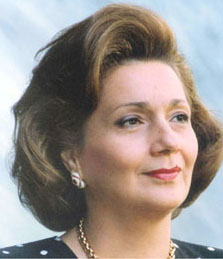
Mrs. Suzanne Mubarak, affectionately known as “Mama Suzanne” throughout Egypt.
Mubarak is a champion for the rights of children and women. She works to eradicate illiteracy in her country, supports health initiatives for mothers and children, and is a strong advocate of equal education opportunity for all boys and girls in Egypt.
She received a Bachelor’s degree in Political Science and a Master’s degree in Sociology of Education. For the Master’s degree, her topic of study was “Social Action Research in Urban Egypt: A Case of Primary School Upgrading in Bulaq.”
Mrs. Mubarak understands the power of communication and education in changing the world and serves as a patron of the children’s television series, Alam Simsim, Egypt’s version of the American series, Sesame Street. She affects positive change in her country, boosting literacy rates in Egypt and preparing young children for school, particularly young women. Mubarak supports this program because “Alam Simsim is intelligent children’s programming that can instill certain ideas and values that are indispensable in today’s world.”
Suzanne Mubarak is the founder and president of EBBY, which is the Egyptian chapter of International Board on Books for Young People (IBBY). Mrs. Mubarak has arranged a campaign called Reading for All, which seeks to increase literacy by encouraging reading aloud to children. In addition, she has established portable libraries and published low cost books for children and adults.
Suzanne Mubarak is the technical advisor for the National Council for Motherhood and Childhood in Egypt. Some of the goals of the council include: the reinforcement of women’s roles in society, the study and resolution of problems confronting women, the improvement of women’s performance in society, the monitoring of education of children, and the establishment of a healthy environment for children.
The list of international awards that Mrs. Mubarak has received is long and includes:
*The International Tolerance Prize from the European Academy for Arts and Sciences,
*the Health for All Gold Medal from the World Health Organization in recognition for improving the quality of life for women and children,
* the Honorary Fulbright Award for commitment to education, and
*the International Book Committee,
* International Book Award for her work in promoting reading in Egypt.
*Making a Difference Award from iEARN, USA. iEARN is a non-profit global network that uses the Internet and technology to bring young people together for collaborative educational projects.

Excerpts from Community Heroes by Christian Walsh
http://myhero.com/go/hero.asp?hero=suzannemubarak

KYOONKE HUM ZINDA QAUM HAIN


Bombs and bombs
One after the other
We still have mehndis with
Drumbeats and dandiyas.

Floods and floods
Wherever you saw
We still had iftaars
Table full and elaborate.

Destruction and demolition
Of homes and schools
We still rennovate homes
With Italian marbles and tiles.

Misery and poverty
From your door till mine
We still change wardrobes
With every changing season.

Hunger and malnutrion
As far your eyes can see
We still have overbooked tables
In buffets and gourmet restaurants.

Depression and despondency
In every household one knows
We still blowoff our tops on
Valentines Day celebrations.

Ask Why?
Kyonke, hum zinda qaum hain.
Jee haan, hum zinda qaum hain.

WE THE GREAT PPLZ.


Yeah!
After Raymond Davis
Come one  come all
Toms, Dicks, Harries
Sheelas, Veenas, Munnis
Come  come  come
Come and perform
Pakistan is a  stage
We are a great Qaum
Of spectators only
We will watch surely
Your antics closely
Will  boo oo  a   lot
And cheer somewhat
Then again we will go
Back to a deep sleep
Yupp,   deep indeed.
Coming on to streets?
Ugh!  Not  f or   us !
It suits   so  much
Those frickin Egyptians
And the silly Tunisians
Ehh, those  chotey log.

HAPPY SLEEPING !

OH FROM THE LAND OF EGYPT


Oh! from the land of the Pyramids
As you come  out en masse

To assert your true muscle
And with discipline and sanity
You bring pride to humanity
Tears of joy roll from our eyes
With a clear vision for tomorrow

Oh! from the land of Tutankhamun
As you all march in unison
Chanting slogans of freedom
Eraising  all the differences
Neither as Muslims, nor as Coptics
But as one and only Egyptian
Building bridges of unity
Goosebumps are raised
With a new morning for tomorrow

Oh! from the Land of Nefertiti
You send shivers in spines
Of the corridors of power
Force them to come out
With promises, undertakings
To dictate  or oppress no more
Our faces  glow with great pride
With the brightness from tomorrow.

Oh! from the land of Um Kulthum
As you sing into a loud chorus
Of the songs of liberation
And play the drums hard
Of utmost valor and courage
Our hearts throb for you
With the beats of tomorrow.

Oh! from the land of Nasser
As you stay under the open sky
For the sixth day in a row
And as leaders buy time
Dirty deals come into play
Black sheep get bought
By the shrewd hawks high up
And as our brains go numb
To the intense pain for tomorrow.

Oh! from the land of the Nile
As we see you bitterly divided
Its hard to watch you in chaos
Many hungry for the freedom
Others thirsty for your blood
The bright light turns off
Fully  blind go our eyes
Seeing the darkness for tomorrow

As a Heaven turns into a Hell
And our joys change into sorrow
I know not what to say
I know not what to expect
I know not what to envision
As I wait with impatience
Evry minute, every hour. each day
To witness events that unfold

Praying that’ SOME’ day
Sanity shall prevail
Order be restored
Freedom be the rule
Democracy be the outcome
And I pray again that,
That SOME day comes VERY SOON.
Yes, SOON, VERY VERY SOON.

EGYPTIANS TUSSI GREAT HO !


My love and adulation for this country called Egypt did not remain only on the hearsay of the wonderful memories that my father brought back with him. I too had the full opportunity to know its people during my interaction with them in the Gulf and then some visits to the land of the pyramids.

First thing I noticed about Egyptians was that, like us desis, as they landed in the middle east to earn petrodollars,  the whole emphasis was to save as many riyals as possible, to take back home. Like us in the early nineties there was a huge gap between the paypacks in the gulf and back home. We shared pay scales with the Egyptians, which were almost a third of those who came with western passports for doing the same work . So we had common grudges to whine about.

And the gap between the have and the have-nots in Egypt was almost as contrasting if not less than back home, both India and Pakistan. Citadel and the mosque of Mohamed Ali with a chandelier famous for its 10,000 lights overlooking the slums of the City of the Dead made us feel home in Cairo. The simple citizens, enamored by foreign looking faces and then eager to help for the tip was also strikingly similar. But what added to the charm was the name they gave to the tip-the bakhsheesh.

There are all kinds of people in every community, however there are some traits I find common to most Egyptians:

They are fiercely patriotic—calling themselves—“Masr, Umm al Donia” (Egypt the mother of the world) owing perhaps to their glorious past. Though of late,  in the past few years when the discontent was brewing, this term has  become more of a satirical, mocking jargon.

But   I noticed  that they never put a blanket blame on their country or ever talked ill about it, en masse.  Of course they do indulge in the intellectual debate on lack of democracy and criticise their govt.  They even do it with a terrific sense of humor which let them maintain their sanity in these 30 years of oppressive dictatorship. It was this sense of humor which let them face all adversities with grace and a smile.

Political awareness even amongst the farmers  in the remote Upper Egypt topped with a great sense of humor made me dote on them. On the issue of Hosni Mubarak being a US ally, they did not give it a religious shade of anti Islam—instead found humor in it too. They equated his regime to be a PCO (public telephone booth) which talks so long as there is coins (US Dollars and Aid for supporting them) coming into it and stops speaking as soon as the money is gone.
Once I even had a friend ask me if I knew who was the president before Hosni Mubarak—and he did not accept my answer of Anwer Sadaat.  According to him it was Jesus Christ—hinting at his long regime.

Egyptians are great readers too. The knowledge of their history is at their tips and gives them great pride, owing to their reading habit as a nation. They take immense pride in their glorious past and the culture, music, dramas, their dialect of Arabic and even at their being the ‘poor’ among the Arabs. A study by Alice Scale and Zikry called the Reading Habits of Adults in Egypt which said: they like to read, read newspapers, they read fiction, take course to improve reading ,and retained what they read for long time.

Now moving on I would like to describe three Egyptians who have made me overawed by them one time or more:

The first is my best and the closest friend since past 14 years and she happens to be an Egyptian—who lost her husband in her mid thirties with two junior school kids left to look after. I dreaded how would she survive, but the way she has bounced back as a lioness is worth the mention here, though she happens to be a nobody for all the readers except me.  An extremely courageous, smart  and intelligent woman that she is—living in the Gulf as a widow and facing the daily gossips and pressures to remarry—she chose not to, to raise her kids with peace. And then carried on with her bubbly personality and fulfilling the life as both mom and dad to her kids with absolutely no support from her inlaws(again striking similiarity to the treatment of widows by her in laws) .  And she has carried on her further education doing MRCGP Exam for which she had to come to appear in the Exam in Karachi. Despite a lot of discouraging from friends both Egyptian and Pakistanis to avoid going to Pakistan, especially being a single mom, she insisted to go  and with the argument to me that “If you can return back from Pakistan safely why would I not?“

On the day when the incident of Bolton Market fire and suicide attack on Shia procession took place she was in town. She had no acqaintence there, but on calling her she did not even show a grain of fear in her voice.

The second one is none other than the current First lady: Susan Mubarak. Yes she is the gorgeous looking  wife of Hosni Mubarak, the corrupt dictator. She may have been misusing her husband’s power or luxuries but it is just one action of hers which made me have great respect for her. In 1990 presiding the The Society of Integrated Care, Mrs. Susan Mubarak started a cultural project in the summer vacations called the READ FOR ALL FESTIVAL. The philosophy behind the project was based on a sound belief in the importance of the role of reading in raising up generations. It also focused on the right of the child for reading. And she regarded reading “as a human right as equal as the rights for education, health and food.”
‘Reading is very essential for confronting the challenges of the age in which possession of knowledge gives power over the possession of wealth’, she believed.
From merely 1856 libraries in 1990 it rose to over 9 500 in 19999. Within the activities of the Reading for All Festival (summer 1999, Susan, adopted the project of establishing 5000 school libraries. Among which 4000 libraries being all over Egyptian villages. The project aimed at providing services to the communities surrounding the libraries. It also targeted the positive utilization of leisure time in order to build up the personal and social identity of the Egyptian individual. Besides, it encouraged self-learning of the adults and youngsters in addition to providing better opportunities for broadening minds and better understanding of problems through direct contact with various information resources.

Last but not the least the contemporary Egyptian I find great is Mohammed al Baradei I do not talk of the newfound greatness in him because he is leading them in the revolution. Not even because he was the head of IAEA for three terms. Not even because he is a Nobel Laureatte. It is due to the stands he took while in that position holding the spirit of a UN Organisation as a as truly neutral and non partisan. And that is what makes him great.
Despite the worries of this chaos going out of hand or turning into the grips of Islamic radicals—I feel world would be such a different place if democracy is restored in Egypt, with Mohammed al Baradei in the lead in a democratic Egypt. He would contribute towards my dream of a world without borders and without wars.
Articles in the newspapers to blogs are all giving reactions to this man’s role in the uprising appropriate to their outlook.
Years ago in 2003, he as a head of IAEA he had warned US and the Bush administration of the non existence of Iraq nuclear program and weapons of mass destruction. But was lashed by the neocons and even the Washington post opposed his stance.
If they had heeded his objective observations, the Americans wouldn’t be in such a soup today.
To the allegations IAEA had said: “Based on thorough analysis, the IAEA has concluded, with the concurrence of outside experts, that these documents – which formed the basis for the reports of recent uranium transactions between Iraq and Niger – are in fact not authentic. We have the therefore concluded that these specific allegations are unfounded. “
This was on the allegation by the US about their allegations on Nuclear negotiations between Niger and Egypt.

Even with Iran he had been very neutral—asking Iran to clarify some important  issues but at the same time telling the world community that “the agency has no concrete evidence of ongoing nuclear weapons program or undeclared nuclear facilities in Iran.
Way back in 2007 Bolton had remarked Baradei as an apologist for Iran just because the gentleman had refused to endorse the US backed Israel led attack on Iran.
His neutrality was so neutral that on one hand he criticized  Iran for being non cooperative enough and on the other hand  also saying it in so many words that attack will be the worst thing that can happen and that robust diplomacy is the ultimate solution to the Iranian standoff.

A Jewish blogger wrote:
“He is a stooge of Iran, and I don’t use the term lightly. When he was the head of the International Atomic Energy Agency, for which he got a Nobel Peace Prize, he fronted for them, he distorted the reports.”

He’s been highly critical of Arab autocrats and the Western governments that prop them up.

 “Western policy towards this part of the world has been a total failure, in my view,” he told the Guardian, in March 2010. “It has not been based on dialogue, understanding, supporting civil society and empowering people, but rather it’s been based on supporting authoritarian systems as long as the oil keeps pumping.”

Once talking to Hard Talk he had remarked that he could have earned a great deal being some one’s voice in this coveted position of IAEA Head but  wished  to have better sleep at night than more money. That was the day I started to revere this man, who I had taken for granted as a CIA agent earlier on.

Although many Egyptians might not fully want a person regarded as an expatriate coming in to take over the opposition to Mubarak’s police state, others regard him, as a man who gave their country a very high and positive international profile in a world that was rapidly becoming Islamophobic and racist toward Arabs.
We can relate to that by our dismay at expats like Sonia Gandhi or Shaukat Aziz getting into power.

As the Egyptians gather in the Tahrir Square and prepare to start the million march, the whole world has its eyes on how this man will steer the direction of the revolution which is till now a ‘leaderless’ one. They will need someone to lead and who could be more suitable than a moderate, educated, conscientious Al Baradei.
He is a man who is not even at odds with the Muslim Brotherhood and is at the moment a member of ‘movement for change’ of which even Muslim Brotherhood is a member.

Impatiently we all await how the things will unfold.

THE EGYPT OF MY LIFE


Yet another progressive Arab country bounces back to restore back it’s lost glory.

Indeed, none other than Egypt and the way it is adjacent to Tunisia, it looks like a domino effect has started not just in the metaphorical but the literal sense.
But to say that Egypt bounces back because of a common border with the Tunisia would a shameful underestimation of Egypt’s potential.

Along with Tunisia, it is one of the few Arab countires with a strong, ancient history and a history of cultural and liberal values far detached from the religious tag . Yes,  Egypt probabaly would stand even ahead of Tunisia  in that respect.
The situatuion gives me jitters and also butterflies in the stomach.  Not because I have this appetite for international politics but because I have a special attachment to Egypt.

After India, Egypt has been living in my life, even more than Pakistan. Strangely though I have never lived in Egypt except for two visits for a fortnight each.

I woke up to this world with a name given to me by my Dad after being inspired by Egyptian names. His special love for Egypt was still fresh and alive in him when I was born. Just a couple of years ago had he returned from Egypt, after earning a PhD in Egyptian Liberal Nationalism and with Jamal Abdul Nasser his hero.

I grew up hearing his stories about Jamal Abdul Nasser, Egypt ‘s rich culture, their progressive intelligentsia,  their sense of humour,  the plays and most of all their music which was represented by none other than Umm Kulthum.

My dad who went to Egypt in the early sixties for a Phd, had gone there as a son of a maulvi (though he had been a rebellious communist too, in his early student life), but returned back some years later as a very progressive man with a wide horizon. He was in love with this place till the last moment of his life.

However when he returned to Egypt once again, in late eighties two things disappointed him terribly. He did get connected with all his old friends some of whom had gone ‘BIG’ in Egypt by then, one of them being the ex Secretay General of UN Boutros Boutros Ghali and Amr Moussa,  the foreign Minister then. They all gathered together bringing back the youthful memories.  Despite the 60’s era, he used  to tell us that, he had a couple of girls too in his group of friends who hung around  in the university together.

One of the two things that had disappointed him was the rise of Radicalism and that there were so many women now sporting Hijab and Niqab in the Cairo University. Though in the early sixties they could hardly see any.

And the second , which was no less disappointing to him, was that one of his extremely petite and pretty girl friends from the old group at that time, who was now the Head of the Political Science Department in the University, had gone at least four times as fat. They all joked about her and she too joined the hearty laugh without getting offended.

He was a very hurt man.

Egyptians have a terrific sense of humour, and if they don’t have any joke on politics, they laugh on themselves. But they make it a point to crack one joke a day –calling it a NUKTA. If anything it was their sense of humour my Dad carried back along with him on his return.

Anyhow coming to the point I wish to tell here that women have alwasy been very liberated and strong in Egypt since long. Not just in the few centuries but in the ancient Egypt 3000 years ago, too.       The woman, in the pharoanic times some 2000-3000 years ago, was far more liberated than many women in the current world in 2011.

While most women, in the ancient Egypt, played traditional roles of wife and homemaker, they had many liberties and freedoms that were denied to women of other cultures in the ancient world. Married women were the complete governors of their household, husband seldom interfered in the domestic matters. Though they did all the domestic chores themselves.
Legally too they were equal to men in terms of rights and could take a loan of her own, ask for divorce, buy property in her name and even free slaves at her will. She was given third of her husband’s property on his demise. And could even remarry without any stigma. Divorce was not seen as stigma either.

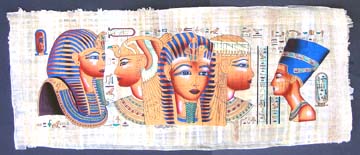
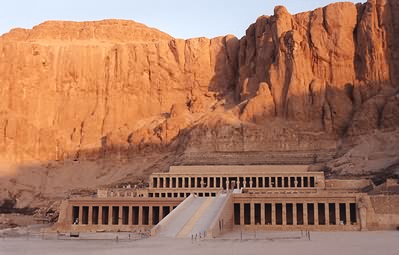
There are records of women holding positions of  Ministers to Pharoahs.  Out of many, one most important name is Queen Hatshepsut :18th dynasty1473-1458 BC . She ruled in the early part of the ‘golden age of Egypt’ which includes other Pharoahs like Tutankhamoun, Nefertiti , Akhenton.

Needless to mention Queen Cleopatra and her stories of power not only on her Kingdom but also her control on her sweetheart–Mark Antonius was also an Egyptian Queen. Narrating about their story would need several blogs.

Women in ancient Egypt, rightly or wrongly, took great pains to ensure their physical attractiveness and even women among the poorer classes relied heavily on cosmetics and lotions to retain their youth and beauty.

After all this glory of women did spill over in the contemporary world too. Although the impact of religion did lead to segregation in schools. veiling etc.  And with rise of Radicalism in the eighties it has gone worse.

I am not an expert on religion but have been told by my Egyptian friends that The MALKI SCHOOL which the Egyptian Muslims follow is pretty liberal. And they are far more progressive towards giving rights to women.The 1956 Constitution of Egypt was one of the most liberal on women’s right among the Arab and the Muslim World.

To be continued in next blog…..

Pardon me–got to leave.

Ilmana Fasih.