Open up your mind and your potential reaches infinity…

Archive for the ‘Health’ Category

Smoke and don’t want to say QUITS ?


Do you smoke and are in no mood to quit?  Fine, this blog is for you.

The intention here is to give you some information without any strings attached. There won’t be any lecture, any pressure or any judgmental statements

The blog also means to support the person in you, and to give you some tips on how to relieve stress from your life which arises as a result of others reactions to your smoking. The blog shall not trick you to make you quit, I promise.

You are the only one in your life to decide whether you wish to smoke or to quit.

Although as a health activist, I would wish no one smoked, but we have to recognise that each person has a right to make his own choice. Anyone forcing it upon you will make it give a sense of deprivation and is bound to fail.

The blog will mainly discuss
1. How to deal with people who nag you to quit
2. Understand your own smoking habit
3. Get some new facts about smoking
4. Why would you not want to quit?

Before we begin with these points know that the fact that you smoke and don’t even want to quit smoking does not make you a devil.

POINT 1: How to deal with people who nag you to quit

“How many cigarettes do you smoke each day? Can’t you just stop this nuisance.”

“Listen, I know it is harmful. Don’t preach me, okay. I’ll quit when I want.”

I am sure these are the usual dialogues that you may be exchanging day in and day out.

The people around you must have told politely or at times harshly or even without words through their body language that they don’t approve of your smoking.

If they are your loved ones—relatives, friends or well wishers, they say because they care.
Remember that their intentions aren’t evil. But the problem is that they do not know how to convey it, or perhaps don’t know that their reminders or nagging won’t be of any benefit.

They know not that it puts you at a defensive and  can’t make you quit, for sure.

So what’s the way out?

Understand that they are well meaning. Appreciate their concern in words. Then, explain to them politely that their constant reminders would make you more annoyed and that their nagging will make your chances to quit harder.

And tell them that if they eased off, perhaps you will be less defensive, and it might make you think to quit one day.

As for those unknown who judge you in public places:


I know you may be feeling bad when people who don’t matter judge with words or make faces on smokers. You may be aware that those who do not smoke do not hold a great image of smoking.

It’s the smoke they disapprove, not you.

Also, most public places have gone smoke free. The truth is that not only are they to stay, but shall spread wider.

This is not to stigmatise smokers. Just as you have the right to smoke in your own private domain, others who do not smoke have the right to worry about their health and of the community at large.

So it isn’t to shun smokers, but to ensure a safe environment for non smokers.

POINT 2: Understand your own smoking habit:

Think of the reason why do you smoke? Probable answers would be:

  • “It helps me relax from the stress.”

Yes, many smokers believe so. But the truth is that smoking makes your heart beat fast, your breathing gets quicker and raises your blood pressure.

It is not the smoking that calms you.

You relax because
1. the cigarette stops the craving caused by nicotine addiction
2. The mere habit to reach and light a cigarette when tense make one feel better. ( a learned response)
3. Having a cigarette diverts the mind from worries.

It may calm you down for a while but the level of stress builds up over time and reduces the energy levels.

  • “It is my choice; I am hurting myself, not anyone.”

Well , your argument is valid only and only if you smoke in a bubble, where no one else exists and where it is not spilled over to the air shared by others.

POINT 3: Get some new facts about smoking:

We won’t  share the information here which all doctors say: “Smoking has 4000 harmful chemicals, and they cause lung cancer blah blah blah…. .”
I know we all know this by now.

The only thing that I would like you to know is when you smoke out, you dump these chemicals in the air which is shared by others too:
Acetone (paint stripper)/ Arsenic (poison element)/ Hydrogen Cyanide (poison of gas chambers)/ Naphthalene (in moth balls)/ Pesticides (insect killers)/ Carbon monoxide (car exhaust) etc. See more in the picture below.


And all these chemicals get inhaled by kids, women and men around you who do not smoke.

I am sure you know how dangerous second hand smoke is?

It causes some serious health issues in children like allergies, chest infections, poor attention span, hyperactivity and even increased chances of sudden death in the first year of life called SIDS.

In men and women who take in second hand smoke are 5 times more likely to die of lung cancer for no fault of theirs.

This is just not to make you feel guilty, get stressed and smoke more.  Please, don’t misunderstand.

This is just to let you know that you may not choose to quit smoking, you may at least make a choice not to smoke in your home or car where others especially children are present.

The smokers get certain other health problems too, which Respirologists don’t talk about.

Women smokers develop hormonal problems, find it 3 times more difficult to conceive and have an early menopause.

During pregnancy, whether it is a Mom smoker or a Dad smoker, the baby born is likely to be low birth weight, cranky and has very high chances to develop a serious lung disease. His chances of SIDS are 5 times high.

Men smokers have both poor quality and quantity of sperms . Smokers develop sexual dysfunction after 10-15 years of smoking,( e.g those who start to smoke in teenage, may face such problems in their thirties and forties). The chances of such problems increase with the number of cigarettes smoked per day.

Link: http://www.acsh.org/healthissues/newsID.646/healthissue_detail.asp

POINT 4: Why is it that you don’t want to quit?

  • “I don’t feel like quitting.”

Well valid enough, your life, your choice. But please, just one tiny bit of suggestion:

‘Keep your mind open, it might just click to you one day that you want to quit.  After all if you’re not an angel that people expect you to become, you’re not a devil either.’

  • “I am too addicted?”

Correct. Smoking is very addictive and very hard to quit even to those who intend to quit. It is the nicotine not the cigarette that makes you hold on to it.

And for nicotine addiction there are several options in Nicotine Replacement Therapy: patch, gum, inhalers, and lozenges.

Just keep these options in mind, in case you ever decide to change your mind at a later date.

  • “I’ve been smoking for years.”


Fine it’s your choice. You want to do it probably because you know the benefits smoking gives to you-to relax and feel good.

How about having a look, just a look at what benefits would it gives you if you stopped smoking:
Day1: Your lungs work better, and you don’t feel out of breath
Day2: Your sense of taste and smell starts to return. You may cough up more mucus, but only to clear the lungs
A week after: Blood flow to your hand and feet will increase, and you won’t feel as cold
Within 6 months: Less of coughing, less of sinus congestion, less of shortness of breath will occur.
After an year: Your risk of dying from a heart attack will be reduced to half.
There are many many more benefits …

Well, I know after this you must be wondering: “The blog didn’t work. It did not trick you to change your mind.”

Well friends, this wasn’t at all meant to change your mind, though the blog would be very happy if you did.

But then know it’s not easy and the decision is entirely yours.

Remember one thing…all those who care for you, wished you would change your mind ONE DAY, and SOON.

Just keep your mind OPEN. You might just one fine day decide to say QUITS. Imagine !  🙂

But take your time.

Just relax, and feel there’s one place in this world which does not judge you even as a smoker.

And if you ever wish to quit….refer to the next blog >>>

“Smoker and want to kick off the habit?.”
https://thinkloud65.wordpress.com/2012/03/15/smoker-and-want-to-kick-off-the-habit-come-on/


*Warning: Smoking is injurious to health. *

Content courtesy: Canadian Cancer Society & Credit Valley Hospital Anti Smoking Unit.

Do not call them mad, please!


Published in The News Blog on February 22, 2012 :http://blogs.thenews.com.pk/blogs/2012/02/22/do-not-call-them-mad-please/

When I feel feverish, lethargic, sneeze and have a runny nose, all know I suffer from common cold, and that I am infected with a virus. If I tell them that I went to see my GP and am taking meds, they all know medications will take care of me. No one will judge me. All will empathise, give an extra advice to take rest. Some will even hug me for support, without realising that I might be transferring the virus to them. Even if they get one next day, it will be just a passing mention, “Oh I too got your flu”.

If I feel low, lethargic, don’t feel happy, lose my appetite and cry for no reason, they all ‘know’ I am an ungrateful person, who has got everything from a good family to a good home to a good carrier and is still being thankless. Not many will hug me to say, Yes we know you are depressed and there has to be no reason for it. It is because of imbalance of chemicals in your brain.”

And if I tell them I am trying to help myself by going to a psychiatrist, and am on medications or psychotherapy, they would give a stunned look and say nothing. Not many will hug me or tell me “You did the right thing”.

I also know behind my back tongues will wag and eyes will roll. Some may even diagnose “I have gone mad.”

Yes they would give me advice to read scriptures to be thankful. Or to go to some Aalim or Pir and get my “nazar jhaaroed”.

According to the fifth edition of the Diagnostic and Statistical Manual of Mental Disorders ,  almost 78 per cent of people are suffering from some kind of psychological disorder.

Indeed, 78% of us are affected with one form of psychiatric disorder or the other. It could be a mild anxiety with minor worries, on one end, to a full blown schizophrenia, on the other, where one is cut off from the reality of this world, which in medical terminology is called “loss of insight.”

However, none of them is madness. In fact there is no such thing as madness.
Going through the 954 page document, above mentioned, I did not find any mention of an ailment called ‘madness’. I even looked up into the index at the end, the  M section  began with Major Depressive Disorder, then after Mathematics disorder, the next mention was Medication induced disorder.

Thanks to the advances of medical sciences, we now know there is always a chemical basis of psychiatric diseases. This is the reason they are quite capable of being corrected by medications. Some may be completely corrected, while some partially.

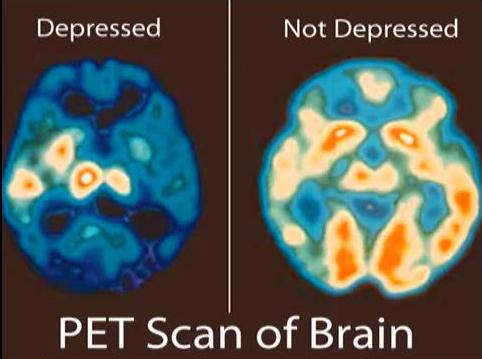
Thanks also to the sophisticated PET brain scanning techniques, we can now see with our own two eyes that Depressive Disorder or Anxiety Disorders or any other psychiatric disorders are real ailments and not mere myths.

Perhaps, our scientific knowledge of psychiatric ailments needs to cross a lot more frontiers, to be able to understand and treat all these disorders more efficiently.

Exactly  as in a common cold there are triggers like exposure to cold, or exhaustion which cause them to come again, there are environmental triggers in the psychiatric disorders too—usual ones like stress, troubled relationships, or as trivial as some taunts or sometimes as subtle as winter season.

Do we ridicule those who have fever, or cancer, or diabetes or heart attack? But we do ridicule, poke fun or bad mouth about those suffering from Depressive disorders, Anxiety Disorders, Eating Disorders, ADHD , Personality Disorders or Learning Disorders etc.

We empathise with those who do have their sight, hearing or physical ability missing and often remark that nature compensates them with some other strength or skill.

Same is true of the various Psychiatric Disorders. The people affected by them are endowed with some other skills. World’s best writers are known to be Bipolar, and many of the inventors were known to have either Obsessive Compulsive Disorder or Learning Disorder.

We all love ourselves. No one wants to fall sick, whether with common cold or with depression or of any ailment, no matter how trivial.

With the statistics of 78% affected with some psychiatric disorder, we may be definitely seeing four- fifths of our near and dear ones affected by some psychiatric disorder, ranging  from a very mild to a very serious one. Some of them may be in need of a professional help too.

So next time you see anyone you would wish to label ‘mad’,  just understand them and don’t be a trigger for them to get worse.

Know that they didn’t want to be unwell either.
And please, I beg you, do not call them mad.  

Chemical basis of some mental disorders. 

P.S. This blogpost was written in response to the @ExpressTribune ‘s article:

Celebs with mental disorders: Lock up the crazy

Know the bitter truth of Diabetes


PART-I

The tsunami wave of diabetes mellitus and its health and economic consequences is threatening much of the world. The need to prevent and control this debilitating chronic disease is urgent, before desperation sets in.” Journal of Royal Society of medicine.


How does this  matter to us South Asians?
Indian Subcontinent (which includes India, Pakistan, Nepal, Bangladesh and Sri Lanka) is the epicentre of this Diabetic pandemic. By 2025, over 2/3rds of the diabetics would be living in our subcontinent.
Link:  http://171.66.127.115/content/100/3/115.full

How are we more vulnerable as compared to other ethnicities?
We South Asians get Diabetes:
• 10 years earlier
• At lower levels of obesity
• Suffer longer with more complications
• Have 3-8 times higher risk of dying from Diabetes than Europeans..

Why are we more vulnerable than other ethnicities?
Again the same answer as for the Heart Disease—Our genetic makeup coupled with our unhealthy lifestyle i.e. faulty diet, obesity, sedentary habits and lack of health awareness.

Can we really do anything?
Yes, research proves that we can avert or at least postpone Diabetes and improve our quality of life through various lifestyle modifications.


What should we know?
First, know that Diabetes is no more the disease of the affluent; even the poor have it.

Second, it is no more a disease of the middle aged. Diabetes Type 2 which was earlier called the Maturity onset diabetes has now been seen to occur amongst the South Asians in early 20s and many get in their 30s.

Thirdly, in order to live a life without Diabetes we need to start early and change our life style. However, it is better late than never.

PART-II

What should we do?

If you are not a Diabetic

Step 1 : Know whether you are at high risk of Diabetes Mellitus or not.

Check your risk from the risk-factors chart:

Or better see YOUR RISK OF DIABETES  from  the  Diabetic Risk Calculator at the link below.
Link:  http://www.diabetes.org/diabetes-basics/prevention/diabetes-risk-test/

(ADV*** : Dont skip this ^^ step!!)

Important: In case you are a high risk group, please consult your doctor and ask him to screen for Diabetes. He will do some blood test on you while fasting and after meals to check your blood sugar levels.

Step 2: Get more physically active :

Benefits of exercise:
• You will lose weight
• It will lower your blood sugar
• Boost your sensitivity to insulin –which will keep your blood sugar in the normal range.

More, refer to Blog 1 : https://thinkloud65.wordpress.com/2011/12/31/living-a-healthy-lifestyle/)

Step 3: Lose the extra weight.

Obesity is one of the main culprits in causing Insulin resistance and hence Diabetes- Abdominal fat is the real culprit.


Tip: If you are obese or over weight, loss of every kilo will reduce the risk by 16%. And if you lose 10% of your body weight, you will cut the risk of developing diabetes by 60%.

Step 4: Make long term dietary changes.

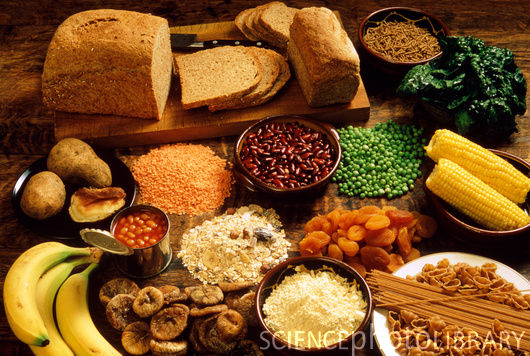
Add fibre to your diet. This simply means eat more of fruits, vegetables, beans, whole grains, nuts and seeds as they are rich source of fibre. 

Benefits: Fibre reduces the risk of Diabetes, of Heart disease and risk of colon cancers. They also promote weight loss.

Check Glycemic Index of the foods you eat. Choose foods with low Glycemic Index as this maintains more constant blood sugar levels.

Tip: Print out a chart of foods by Glycaemic Index and put it over the fridge, so that it is easy to refer to them while selecting food.

For more on Glycaemic Index : http://www.diabetes.ca/for-professionals/resources/nutrition/glycemic-index/

Step 5 ; Try to manage your stress:  Stress increases hormones in the body which predispose to Diabetes.

IMPORTANT NEWS: The research has shown that if one follows the above measure, at least 50 % postponement of DM is possible.

PART-III

For those who are already Diabetic

Remember:

Diabetes is a lifelong responsibility.

You may not feel unwell in the initial years but persistently raise blood sugar levels can gradually harm each and every organ of the body, more seriously the organs essential for life-heart and kidneys.

To the Diabetic, I would just give a few outline tips here, as  it is important for you to be under a regular care of a QUALIFIED DIABETOLOGIST   to manage your health:

Step 1: Make a promise to yourself that you will take care of your diabetes by being FULLY INFORMED  of the disease. (Just google ‘Diabetes Mellitus’ and there you are).

Step 2: Try to keep the blood sugar in normal range through diet,  exercise, weight control, medications and regular smedical consultations.  A normal sugar levels maintained are as good as being non diabetic.

Step 3: DIET: Diabetics should be very watchful of their calorie intake, and must take meals LOW  in SUGAR, FAT and SALT content. You must consult a DIETICIAN to make meal plan, ideally.

See  links for dietary guidance: http://www.diabetes.ca/files/JTB17x_11_CPGO3_1103.pdf

Try  this SOUTH ASIAN DIABETIC MEAL PLAN BOOK :http://www.diabetes.ca/documents/about-diabetes/Recipe_Booklet_high_res.pdf

Other SA recipes: http://www.pamf.org/southasian/healthy/recipes/

Step 4: Get blood sugars checked at regular intervals…at home and by the doctor.
Through your doctor: Make sure you have HbA1c tested every 3-6 months. The test that shows the average amount of sugar in your blood over 3 months. It tells how well you are controlling your diabetes.

An HbA1c of 6% or less is normal. See the other levels:

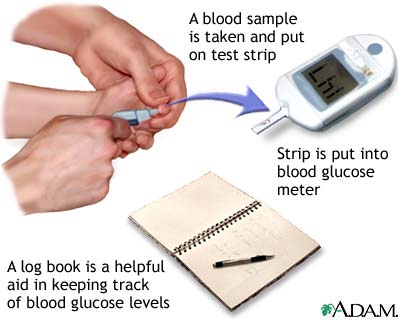
Home Glucose Monitoring : Home sugar testing is also important. You must have a glucometer for this.  Ask your doctor how frequently and when should you check your  blood sugar yourself at home.

Step 5: Keep your Blood Pressure and Cholesterol under control.


Step 6: Regular health checkups to assess complications of diabetes—Have your KIDNEYS, HEART, NERVES and EYE check ups EVERY YEAR .

Ask your doctor by name —> to check for COMPLICATIONS of Diabetes.

Warning*: Long periods of uncontrolled Diabetes can cause painless Heart Attack,  Kidneys to fail,  Nerves to get numb and Eyes with loss of Vision. (This is intended not to scare you, but inform you of the seriousness of the problem).

Step 7: Take care of your FEET: Diabetes causes nerve damage which can cause injuries to feet without being noticed due to loss of pain sensation.


IMPORTANT: 

  • Check your feet everyday for cuts, blisters, redness or swelling. Consult the doctor is any such thing is seen.
  • Keep the feet clean, dry and moisturized everyday to prevent any infections.

Step8: Brush your teeth and floss them everyday. Have dental checkups every year and mention to the doctor that you are a diabetic.

Step 9: Ask your doctor if you need to take a Aspirin tablet everyday to prevent heart attack and stroke.

See the benefit of aspirin in Diabetes in this link: http://www.diabeticlive.com/diabetes-101/diabetes-news/new-study-on-aspirin-and-diabetes/#.TzwKiE4gf1k

Step 10: DO NOT SMOKE as it accelerates all the diabetic complications. If you drink, do it in moderation.

Step 11: Manage  STRESS: Stress increases Blood Sugar levels , increases food indiscretions and one tends to neglect the health. Hence manage your stress smartly.

Last but not the least, maintain a sense of humor. You may not ‘delete’ Diabetes from your life but you can ‘minimize’  it by knowing and following the right steps.

🙂 

Love your Heart to Live


Please read this very carefully.

A large study from McMaster University Canada, and some researches in India and Pakistan have come to a know that:
• We the South Asians have 5-6 times higher risk of Coronary Heart Disease than Europeans, Africans or other ethnic populations
• The Heart disease in South Asians occurs at a premature age ( below 40 years of age) and are at a younger age group at the time of Hospitalisation.
• We the South Asians by the virtue of our genes are predisposed to Heart disease which then gets compounded by our un healthy lifestyle.
• The South Asians also have a higher incidence of Diabetes, High Blood Pressure and High Cholesterol levels as compared to other communities.

What exactly happens in a coronary heart disease?

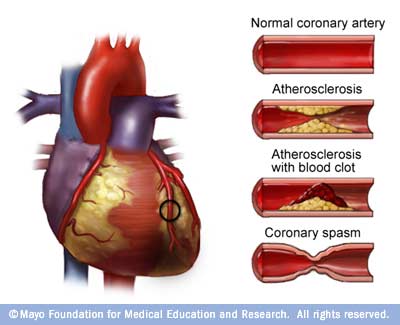
The heart muscle which works every second of our life, is supplied oxygen by coronary arteries. As the ageing occurs or due to excess fat or smoking or other reasons the fat starts to deposit causing the arteries to narrow down. As a result the blood supply to the heart decreases.
In situations like stress or heavy work, when heart muscles need more oxygen, the inadequate supply cause chest pain. This pain is called angina. If a person rests, this can be reversed.
If this lack of oxygen is prolonged it leads to permanent damage to the heart muscle which we call Heart attack ( medical name  is   Myocardial Infarction).

We often hear others talking of percent block in the heart arteries. It simply describes to what extent the heart coronaries are blocked, as shown in the picture.

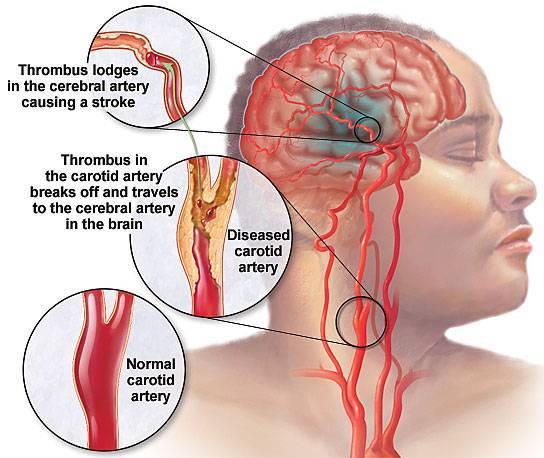
The same mechanism occurs in the brain, when the brain arteries get narrowed down by the same reasons. This damage to the brain leads to stroke.

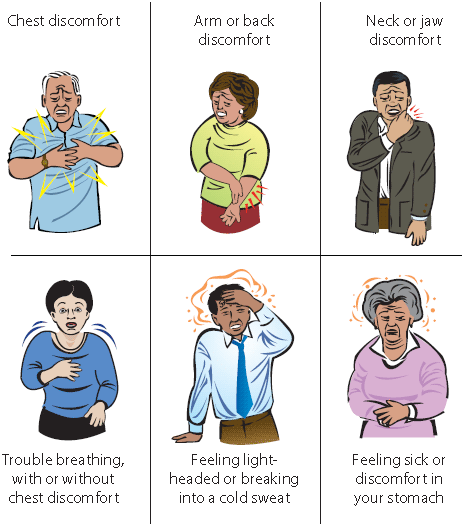
How do we know if it is a heart attack?

The symptoms of heart attack can vary. The typical symptoms are given as in the picture below:

And…

However there could be unusual signs too.

Anxiety, denial or even the thought that ‘it could be a heart attack’ can be a symptom.

Hence anytime you feel unwell, and your inner voice calls for a fear, don’t delay and consult a doctor immediately.

Why do we need to worry about the heart disease?

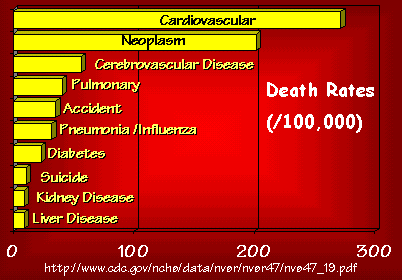
Heart disease medically known as Ischaemic Heart Disease is the top killer for the people in South Asia.

Audio in Urdu/Hindi Part 1: 

What should we do to prevent Heart disease?

We cannot change our ethnicity, age, gender, Family history.
But then the good news is that there are certain factors which we can modify, so that we can minimise the chances of developing this problem, early in our life. The studies have proven that if we follow a healthy life style, we may be able to delay these problems by as much as 10 to 15 years.

The preventive steps to be taken are in fact a repeat of the steps in Health Living blog.

Step 1:  Be physically active—We need minimum of 30 min of exercise each day or 150 min of moderate exercise at least 5 days a week to keep the heart fit.

You should know what should be your target heart rate while doing different types of activities. You gain the most benefits and lessen the risks when you exercise in your target heart rate zone.
(For more details about your target heart rate related to the type of exercise can be seen in this link: http://getfitwithval.com/target-heart-rate-chart/)

Step 2: Maintain a healthy weight and waist circumference.


We discussed Weight and importance of BMI in previous blog >> Living a healthy lifestyle. 

Two recent studies have found that to asses one’s risk of Heart Disease the best measure is the ‘ waist circumference’.
(One of the reasons for using waist circumference is that it directly measures increased fat mass around your organs, fat known as visceral fat.)

Please note below the normal limits waist circumference in our South Asian men and women.  And also not that we need to have them less than the other ethnicities to keep healthy.
Waist circumference               Men                                                     Women

South Asian heritage             90cms                                                  80cms
Caucasians, Africans              104cms                                               90cms

See the video to learn how to measure the waist circumference accurately:
(For details of weight BMI refer to the previous blog on healthy living)

Step 3: Eat a healthy low fat diet: Our second blog was all about healthy eating. Please refer to the blog >> Eating your way to good health.

Step 4: Know and control your Blood Pressure

Do you know what your BP, last measured is?

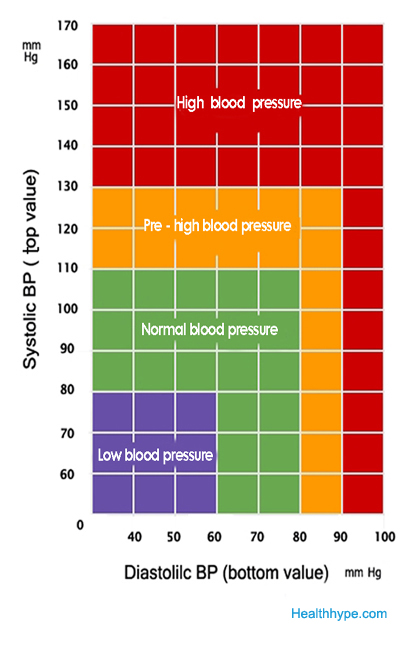
Do you know what the normal range of Blood Pressure is?

It is important to check BP regularly and ask the doctor how much was the reading, and preferably note it down on a card. So that when it is repeated, you can compare from the previous reading.

An ideal BP must be below 140/90 mmHg.

Above this will cause more effort for the heart muscles to pump the blood through the arteries.

The picture below shows the BP measuring instrument and some basics on Bloos pressure measurement.

Caution: Thanks to another doctor friend, Kavita Desai’s reminder, it is very important to understand that if you measure it at home, the correct method to record accurate Blood Pressure should be learnt.You can learn it from your doctor, hands on or check on the net. (Please refer to the link in the comment box for it).

In case the blood pressure is  different, you must know what are the range of abnormal readings and the terms used for them.

In case your Blood Pressure is high you must consult  a specialist to get it in control either by Lifestyle change, or by medication. Do not be apprehensive of BP medication if you are advised.

Myth: It is a myth that BP medications are harmful.
Fact: In fact blood pressure if not controlled is more harmful and can cause damage to kidneys, eyes and even lead to brain haemorrhage.

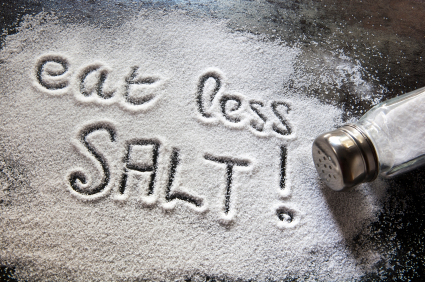
T o keep the BP in control, limit the intake of salt too.( The daily allowance of salt is 2300mg=1tsp salt).

Step 5: Know and control your Cholesterol

Do you know what your total cholesterol level is?

Do you know it is important to know the LDL ( bad cholesterol) and HDL( good cholesterol) levels too?

There are two kinds of fat:
Saturated fats are not heart healthy, since they are most known for raising your LDL cholesterol (“bad” cholesterol).
Unsaturated fats are heart-healthy fats – they have the ability to lower LDL cholesterol and raise HDL cholesterol (“good” cholesterol).

Cholesterol levels are generally related to our diet intake.  But South Asians have cholesterol problems which run in families called as familial Hyperlipidemias.

Hence get your cholesterol check regularly from an early age and keep it under control through life style change or through medication under Doctor’s supervision.

Exercise help reduce bad cholesterol and raises good cholesterol.

Do you know that the oils you use can contain different proportions of saturated and unsaturated fats?

The more the unsaturated fat,  the healthier is the oil.

Please decide for yourself which oils are the best for heart health:

Step 6: If you are a Diabetic manage and keep in control your Blood Sugar levels.

Diabetes causes hardening of the arteries (atherosclerosis). And hence can damage the arteries of the heart too. The nerves also get damaged, so when a diabetic gets heart attack, may be without any pain symptoms known as silent heart attack.

It is very important that if you are diabetic, to keep the blood sugar under control and know that poor control can lead to heart, kidney and other problems

( A detail on DM will follow next ).

Step 7: Cut down on unhealthy habits:

  • Reduce your Alcohol intake
  • Stop smoking as smoking causes heart vessels to get brittle and hence early heart attacks
  • Stress also raises blood pressure and heart disease.

A rigorous effort to maintain these steps can help reduce the chances of heart disease and delay by 10-15 years.

Don’t delay:  Please be sure of the symptoms of heart disease, and even if you are lean and thin, or have no previous symptoms.  If chest pain or any other symptoms occur, or even if you just fear it could be heart attack,  do not delay medical advice.

It may not be serious, but if it is timely check up, it can save life.

So please stay fit, active , eat healthy and be stress free to minimize your risk of a heart attack.

If you love quality life, love and take care of your HEART ❤

Eating our way to good health


Talk of desi food and mouth waters, nose hallucinates of exotic smell of desi food-of Qorma, Bihari Kebabs, Parathas or ears ring with sizzling melody of jalebis, samosas, bhaturas being fried.
And eyes vision the ultilmate combo of : jalebi samosa and chai :


Indeed, our cuisine is the crowning glory of our culture. Curry dishes have acquired the status of national dish in Great Britain. Mughlai is a globally coveted cuisine..
I have hardly met any non-desi , who on mention of South Asian food, does not express a liking for Biryani.

The awesomeness of South Asian Cuisine :

More than just the exotic flavours and tastes, the spices that go into the food have been proven as time tested home remedies ( Grand Ma’s home remedies). The haldi(turmeric), aniseed(saunf), dal chini( cinnamon), ajwain( asafoetida), lalmirch( chilli powder) etc the commonly used spices, also serve as anti oxidants, antuflu, anti inflammatory or antiseptics.

Turmeric, a kind of curcumin, is known to prevent Alzheimer’s disease and hence it’s low prevalence in the subcontinent. A study found that those who ate curry once a month or more scored better on cognitive tests than those who ate curry rarely or never.

The king of fruits Mango, contains phenols which has a high antioxidant, anticancer capabilities along with being a rich source of Vit A, E, Selenium and Iron. (The diabetics should avoid it due to high sugar content.)

However, South Asian Cuisine has it’s down side too.

  • The main culprits being that most of the delicacies are calorie dense, and are cooked high amount of saturated or trans fats.
  • Our method of cooking like deep frying, the additions of baghars, tarkas are faulty. We tend to overcook our meals , which along with reheating depletes it of its nutrients.
  • The savory snacks, like the namkeens, namakparas, samosas etc. are generally fried and laden with high salt content. While the sweets are rich, prepared from fat and thick sugar syrup. Eg Gulab Jamun, jalebis, Carrot Halwa etc.
  • Our meals are large in serving portions .
  • Our desi restaurants and take away meals are known for their liberal use of ghee and oil, not only in curries but also on naans (breads).
  • Many of our households have a high intake of meats, avoiding vegetables. This leads to deficiency in certain nutrients like Folic Acid and excess of Homogentisic Acid which is a cause of Heart Attacks. The lack of fibre in the meats increases the risk of colon cancer too.
  • A study claims most meat eaters in Pakistan take red meat (mutton and beef) 68% times and the rest white meat ( chicken and fish) .( Ref 2) Red meat is known to raise the risk of Cardiovascular diseases and cancer and the risk of dying in next 10 years is raised. ( 2. Ref below)
  • The research found that a single meal of Indian curry in Britain has more fat than the recommendation for the entire day.

Example: Imagine a typical feast: Raita, Poppadam for a starter, a Lamb Qorma and two Butter Naans for main course, and a Gajar Halwa for dessert – is a meal with over 1800 calories! When the average calorie for a day are about 2500 for a man and 2000 for women.

A BAD NEWS is that along with the faulty diet, we South Asians have been endowed with vulnerable genetic makeup which makes up 5-6 times more vulnerable to heart disease, and other chronic diseases like DM and HT as compared to other races.
(Please read the above ^^ sentence once again, and understand it).
As a result of the genetic and lifestyle, there is a epidemic of Diabetes, and Heart diseases in SouthAsians. Hence there is a dire need to make changes in our diet habits to prevent early heart and chronic diseases.

(The topics of CV Diseases and DM, HT shall be dealt in detail in the separate blogs).

AUDIO ( in Hindi/Urdu): 

We cant change our ethnicity or our genes, but the GOOD NEWS is that with slight modifications in the cooking methods and choice of ingredients, we can change the quality of our food without much change in the taste. .And hence can substantially reduce the risk of above diseases.
Let’s give it a try, for the sake of our healths.

What should we do ?

Step ONE: We need to know what is our calorie requirement: Our age and activity level determines our caloric requirement which can be calculated from the chart.
Place the cursor on the weight and your activity level to check ur calorific requirement.
If you are over weight then place the curser on your target weight ( the weight you wish to have or need to reduce to). Consider the calories that is required for the weight you desire.

http://www.chartsgraphsdiagrams.com/HealthCharts/calorie-requirement.html

Knowledge of the caloric requirement can give an idea whether we are falling short, meeting or exceeding the requirements.

Step TWO: We must know what the various food groups are and how much of their proportions need to be taken for a healthy diet:

To make it easier, the pyramid has been altered into a shopping pyramid, which hints at the amount of foods we need to buy from the different groups of food.

However in order to make it more simple and visually more easy to understand what our proportions should be now a Portion Plate has been devised


Step THREE: You must spread your meals into 4-6 times per day. A good breakfast is a must. The lunch and Dinner should not be very heavy. In between the meals, take snacks like fresh fruits, vegetables, nuts etc.
This spreading out of meals over the day leads to maintained blood sugar levels and prevents in weight gain.

Step FOUR: While eating or later try to assess the calories you have taken in your plate. For this refer to the chart below the article. ( Unfortunately,very few of our recipes come with their calories and nutrient details).
Better still would be to make a list of all the foods as you eat and check the list at the end of the day. You will be surprised to see how much you ate, when you thought otherwise.

Step FIVE: Once in a week after a healthy eating all week, treat yourself to comfort desi food too… Nihari, Rasgullas, Kulfi aah !!!

For more details on Food Guide check this link :
http://www.hc-sc.gc.ca/fn-an/food-guide-aliment/index-eng.php

Audio in Hindi/Urdu

PART TWO

Tips on what healthy changes can you make in our foods:
1. Replace red meat with more frequent white meat like chicken and fish. While taking red meat, prefer lean meat and trim the visible fat.

2. For those who do not afford meat, Dal chawal is an excellent source of Protien and the two eaten together supplement each others missing Amino acids.

3. Egg is also an excellent and cheap source of good quality protein. The notion that it is high in cholesterol is proven wrong by research.

4. If a recipe needs some oil/butter/ghee, use canola or olive oil in small quantity. Make a habit of brushing or spraying the oil in the pan instead of pouring. First heat the utensil, then add (preferably spray) oil. A heated pan spreads the oil better.

(PS see about Canola Oil on internet and decide about it’s efficacy through evidence. If unsure prefer CORN OIL  ).

5. Substitute baking, barbecue or grill for frying, if possible.

6. Avoid too many reheating of the food as it destroys the nutritive value of foods.

7. Add more of green vegetables, as salads along with the meat.

8. Wash the vegetables with water containing potassium permanganate to remove infections, fertilisers and pesticides. Then rinse them with clean water.

9. Do not overcook the vegetables, leave them crunchy. Overcooked mushy vegetables lose taste and nutrients.

10. Onion should be cut and kept for at least 15 minutes before serving as oxidation helps quercetin, an important phytochemical and antioxidant to get activated.

11. Use skim or low fat varieties of all dairy products (milk, yogurt, cheese, butter, cream, ice cream)

12. Salads, sandwiches, fresh fruits are best fast foods, instead of the conventional ones.

13. When you go to a restaurant, give instructions to add only very small quantities of oils for cooking.

14. Make a habit to check the labels on the foods bought from the Supermarkets. Don’t be carried away by the words ‘No Cholesterol’ on labels. Majority of vegetable products are cholesterol free. It is the fat content of the item which matters.

15. Avoid eating while watching TV. You eat a lot and you don’t know while watching TV.

16. Never use pots and pans made of lead or aluminum. Lead can lead to severe digestive disorders. Aluminum vessels can cause high levels of aluminum in the brain tissue that may lead to Alzheimer’s disease.

Tips for Vegetarians:

Vegetarians should know that they need to be very careful about their food being balanced in different groups of food. Vegetarian diet is found to be low in proteins, calcium, vitamin B12, iron and zinc.

Vegetarian diet may lack proteins. Hence it is important to include beans, dals, nuts and dairy products for proteins. Dairy products like milk, yogurt are a high calcium source.

Vitamin B12 is an essential vitamin whose deficiency can cause permanent nerve damage. It is found d only in animals source. So vegetarian are not able to get this in their food. Hence in order to get enough Vit B12, they need to either eat Vit B12 fortified food, or supplements of Vit B12.

Food for thought:

Last but not the least, we South Asians follow an age old tradition of preparing multiple varieties dishes especially in festivals, weddings or during the month of Ramadan.
However if we limit the number of dishes, we not just cut the cost, the labour but also reduce unnecessary intake of calories. The cost saved could instead be given to the less fortunate amongst us who cannot afford a complete two meals a day.
It is important to realise the hunger and malnourishment all around us. Our culture, our faiths and above all humanity demands that we are empathetic towards them.
We must ensure that we do not cook excess that goes into the garbage. There is nothing wrong being a food lover, but only if we imagine that those deprived desire and dream of decent meals too. And we can certainly share a meal or two with them too.
Just think…
And yes, happy healthy eating.

Audio in Hindi/Urdu

Reference:
1. Researchers TP Ng, PC Chiam, T Lee, HC Chua, L Lim, EH Kua published an article in the American Journal of Epidemiology in 2006 entitled “Curry consumption and cognitive function in the elderly.
2. http://www.gilanifoundation.com/homepage/30years/30YearsOfPollingOnEatingHabitsOfPakistanis.pdf
3. conducted by “Which” magazine (Feb 2010) of Britain
4. In the study, a research team led by Rashmi Sinha, Ph.D., from the National Cancer Institute in Rockville, Maryland, looked at more than 500,000 people who were aged 50 to 71 when they enrolled in the National Institutes of Health-AARP Diet and Health study).

Links for desi recipes:
http://www.tarladalal.com/

http://www.khanapakana.com/428/recipes-by-chef/zubaida-tariq

P.S.: When writing any information, it is my utmost ‘responsibility ‘ to give only information which is scientifically researched and evidence-based through research. I do not give any personal opinions or grom my ‘gut’ feelings. Thanks. 🙂

P.S. Thanks in advance to Dr Babar Khan, Farhan Masoosd and Zawaf for the RTs.

Estimated approx. calories in desi foods:

Starter:
Cucumber Raita , (1tbsp) 20
Tomato Sambal, (1tbsp) 20
Mango Chutney, (1tbsp) 60
Poppadom, (each) 65
Lime Pickle, (1tbsp) 70
Onion Bhaji, (each) 190
Potato Samosa, each) 260
Meat Samosa, e(ach 320

Main Dish: Calories
Vegetable Curry( 1plate) 280
Saag Aloo masala( 1plate)  334
Daal fry( 1plate)  350
Butter Chicken Masala ( 1plate) 450
Beef nihari( 1plate)  650
Lamb Rogan Josh ( 1plate) 589
Lamb Qeema ( 1plate) 562
Lamb Qorma Curry ( 1plate) 570
Naan Bread ( 1pc) 317
Chapatti ( 1pc) 80
Nan Butter ( 1pc) 325
Paratha (1pc)250
Puri (1pc)225
Rice plain boiled (1cup)80
White Bread (1slice)80

Desserts: 
Barfi (single)230
Carrot Halwa (1 cup)570
Gulab Jamun ( 1 pc)250
Jalebi (1 average)459
Ras Mallai (1pc)250

As India is about to be Polio free, where does Pakistan stand ?


Today is auspicious, for India. Yes it is despite being  Friday the 13th.

Today India completed one full year of being Polio free.

It was on January 13, 2011 that the last child with Polio was diagnosed. After that all weekly tests from sewer samples, where polio is generally found, have been coming clear. No cases or samples have been reported positive since then.

WHO states “If the data comes clear over the next few weeks, then India, for the first time will show unshaded in the WHO polio maps.”

It is certainly a moment to rejoice for India, while  keeping it’s fingers crossed  for some more weeks and a lot  extra vigilant for the next few years.

And knowing that it is a country with huge population of 1.2 billion with population as culturally diverse as any diversity, this is indeed a matter of great pride. It is a moment that one does not get to witness in history very often. Last when India along with the whole world witnessed something similar  was in 1975 when Earth was declared Small Pox free.

“It’s not a miracle — it’s good science and an awful lot of elbow grease.” says Dr Bruce Aylward, the assistant director general of Polio, WHO.

Certainly being a huge bunch of a multi cultural, multilingual diaspora that India is, along with poverty, ignorance and myths against Polio vaccines it certain must have been a mammoth task to even dream and then realise that dream of a Polio-free India.

Poliomyelitis is a viral disease which attacks the nerve cells in the spinal cord which leads to the paralysis usually of a lower limb or leg. It cripples the children at a very young age. It is mostly spread by direct person to person contact, through the feco-oral route i.e. through phlegm, through the infected mucus or phlegm from nose, mouth or through infected feces. Once affected, however there is no treatment of the disease. Polio immunization through vaccine either as oral drops or injections is the only way to prevent it.

Why do I write all this?  Is it to show off my Indian connection?

No certainly not, but to let us Pakistanis know that  after today, or maybe in a few weeks more,  after India officially says quits, only three countries shall remain ‘Polio endemic’ -Afghanistan, Nigeria and our own Pakistan.

Yes it really hurts that what India has achieved for it’s 1.2 billion, Pakistan could not achieve for it’s 180 million. It hurts that Sudan could do it, Myanmar could do it, but Pakistan could not.

It hurts even more to know that 194 cases were reported in Pakistan in 2011. Two of them were just confirmed today one from KhyberPakhtunkhwa and another from Sindh, sadly.

Most of the areas affected are the conflict zones where there is rampant poverty, ignorance and ill health.

National Emergency Action Plan, 2011 for Polio Eradication was launched by the Federal Ministry of Health. (http://www.polioeradication.org/Portals/0/Document/InfectedCountries/Pakistan/PakistanStrategy/NationalEmergencyActionPlan.pdf)

The executive summary of the document said and I quote:“Poliovirus is continuing to cripple children in Pakistan because of the failure to reach all children with sufficient doses of vaccine. The reasons for this include inadequate Government oversight and ownership, access problems due to security particularly in the Federally Administered Tribal Areas (FATA), operational and planning challenges, and the failure to identify and i nclude all high risk underserved population groups.”

Next it states: “the President of Pakistan has directed the immediate development of an emergency action plan for polio eradication in Pakistan.”

And  that the Armed Forces have also been pretty active in some of the unreachable areas, by helping the government in making the vaccination of children with polio drops possible.

I hope all these efforts, both by the government and the armed forces, are able to trickle down till the last beneficiary and that a genuine change on ground is visible.

One can only wait to see if the claims that 2012 will show a decrease in the Polio cases in Pakistan.

The same report also mentions that along with India even Nigeria too has the potential to eradicate Polio in near future.

Further reading from the report shudders my soul: “This would leave Pakistan as the single largest threat to global polio eradication, and isolate the country in a world that wants to protect its citizens from the last remaining reservoir of wild poliovirus.”

After reading this, with a depressed mind within a dizzy head, I appeal to all the powerful and mighty in Pakistan to please rise above wrangling and infighting and please pay attention to the poor masses of Pakistan, who have been long ignored in this battle of egos.

Let all forces work with harmony so that not just Polio be eradicated, but power shortages and poverty be controlled, and let the people prevail.

Dr Ilmana Fasih
13 Jan 2012

The thin line of frustration tolerance


After reading the health blog “Living a healthy lifestyle’ a friend, who did not want to ask it in public, emailed, to inquire more about the mention of the phrase ‘frustration tolerance’. She mentioned of her son’s tendency to get frustrated very easily, then starts to get aggressive and blames others for everything.

This reminded me of a time, a week ago, when I was sitting with my son in the Hospital waiting hall, waiting for his turn to get the blood tests.

Apart from many who waited, there were two set of patient families there who merit a mention.

First one was a couple with a newborn baby, barely a month old and another a boy about 4 years of age The elder one was perhaps going through difficult days that kids usually experience on the arrival of a new baby. He was constantly tearful, and literally searching for reasons to throw tantrums.

Visibly very annoyed by his behaviour they forced him to sit on the stroller with the belt tied up.

Instead of helping, this made him worse and he struggled with all his might to undo the strap. He threw away all his toys and a juice bottle on the floor with a hard bang, one by one.

But parents, though visibly perturbed chose not to look at him.

I could not resist, and asked the mother, if I could talk to the baby.
The mother  tearfully  expressed her exhaustion and lack of sleep since the new baby’s arrival and that his tantrums have added more to her stress.

“He doesn’t seem to be accepting the baby.” She complained.

“But do you give him the much needed attention?” I asked.

She said she does, but not as much, as the new baby is too small to take care and that he is pretty big to warrant full attention.

“I cant carry him all the time. Whenever I feed the little one, he wants to climb up on me. Earlier he never wanted to be held at all.”

The second was an elderly couple, with the husband on a wheel chair, while the wife almost as frail, and old but pretty smart and active. She was walking along his automobile wheelchair almost like shadow, carrying his overcoat and muffler along with another bag hung on her wrinkled arms.

She chose a corner of the waiting hall, parked his wheel chair and she sat on a chair next to him.

In barely a couple of minutes, the husband muttered something, and she was up on her feet and hunted out a watter bottle from the bag hung over the wheelchair. She held his chin with one hand and the bottle with the other, as he drank. Her attention was elsewhere when the husband asked her to stop, but it took her a second more to stop.

The husband gave her a look with a visible frown on his forehead, but she returned a wide graceful smile while wiping the dripped water from his chin and shirt.

A few minutes later, and she needed to get up again, to pat him on the back, while he coughed.  A few more minutes, it was for a napkin which was right in the bag hung next to his armrest, but he wanted her to get it for him.

It was at least a dozen times in half an hour, that I saw her stand up and help him out. Out of those dozen times, at least half the time, the husband was annoyed for one reason of the other.

No doubt old age and ill health makes one irritable, but the wife was no less old.

All through the waiting time and even later on the way, I wondered at the two families, and their behaviours.

Perhaps both of them were at extreme ends of how we tend to extend helping hands to our loved ones.

If in order for them to learn, we take off all support and leave to learn all by themselves, they tend to feel defeated and angry like the child in the first case.

Or out of our limitless love and sympathy, we tend to pitch in our helping hand a bit too soon, so that they don’t get hurt. And as a result, expectations rise as the mind gets accustomed to getting help too soon, and any small amount of struggle generates frustration. This was the case in the second couple, in which the dedication and love of the wife had spoilt her ailing husband so much that any amount of her support was not enough, if she did not give an undivided attention to him.

How I wish someone could tell her that this spoon feeding to her ailing husband would make him feel less well than when she left some small actions (that were within his capability) for him to do himself.

The point is- it is very essential to strike a delicate balance and know the thin line between stepping in too soon, and standing afar watching a loved one collapse into a frustrated heap.

It is common sense that too much of frustration is harmful for one’s self esteem. But too little of frustration creates a learned helplessness, and the individual is left incapable to face any struggle with strength.

Hence, some amount of frustration is important, and becomes a learning experience that benefits a lifetime.

If we really care for our loved ones, be our children or spouses or others, we need to give them enough space to struggle, and then pitch in help only at the point where their self esteem is not hurt and the struggle has been enough make them resilient.

I emailed this whole write up to my friend to help her understand what was frustration tolerance with some links…for I certainly did not want to spoon feed her.

Let’s make Health our Commonwealth


First published in AmanKiAsha in TheNews:  http://amankiasha.com/detail_news.asp?id=594

The Confederation of Indian Industry (CII) some time back recommended promoting economic cooperation between India and Pakistan by focusing on information technology (IT), entertainment and healthcare.

Yes, “Healthcare”, I shout.

After all the other two are thriving and will take care of themselves. I remember in the mid-nineties, when my father-in-law, a doctor himself, was diagnosed with a serious medical problem. Frantic tests at various local institutions recommended that he undergo a procedure that wasn’t very commonly performed in Pakistan. He was all set to go to the west which required large expenses.

It was then that my awareness about a particular institution in India, where I had grown up and attended medical college, came in handy. I persuaded him to get examined there. We went to New Delhi, and he returned to Pakistan treated at one tenth of the cost it would have required in the west. I became an instant ‘doted’ upon daughter-in-law in his eyes. All his initial reservations about his son marrying an Indian disappeared overnight.

The true potential of medical cooperation between the two countries was dramatically highlighted when Noor Fatima, a two-and-a-half year old baby girl, went to Bangalore by the Lahore-Delhi bus in 2003. In fact, the bus service was resumed in part to allow her to make the journey. She was literally given a red carpet at the hospital as well as by the media.

Just a few days ago there was news of a 10 month old baby being taken from as far away as Qila Abdullah near Chaman in Balochistan to Bangalore, India for a heart surgery, a free treatment thanks to the joint efforts of Rotary India Humanity Foundation (RIHF) and Rotary Pakistan with Aman ki Asha, the peace initiative of the Jang Group of Pakistan and the Times of India Group. It is heartening to know that thanks to this rightly named ‘Heart to Heart’ initiative, now over 60 Indian and Pakistani children from poor families have been able to undergo life-saving heart surgeries in India.

As this people-to-people interaction in health, as in other fields, goes on, it is clear that no animosity or cold temperatures at the top level can freeze the warm relations between the ordinary Pakistanis and Indians. Our common heritage, common interests and above all a concern for each other will never dampen this warmth.

However, there is a dire need to extend this at a wider and higher level. The recent statements from the Indian and Pakistani business communities could well be the trigger. The top levels of the corridors of power need to formulate policy along these lines to bring a real impact at community level.
With reports about a case of Polio being found recently at Wagah, Pakistan, it becomes essential for strong policy decisions to be made at the top level, trickling down to the masses, to combat the spread of such crippling diseases.

India and Pakistan are among the four countries of the world where Polio is endemic. Our proximity will not enable either to achieve the ambitious plan of making Polio extinct, without mutual cooperation.

Looking at both countries from the UN lens, India and Pakistan are both termed ‘out of track’ when it comes to achieving the 2015 target for the Millennium Development Goal (MDG) 4 – the reduction of infant mortality. With a 1.4 billion population in the region, this means millions of children and babies are at risk. Failing to achieve an optimal Infant Mortality Rate will mean that a gigantic number of children being deprived of the opportunity to survive. Does that not warrant a joint concerted effort for both countries to come ‘on track’?

Similarly, in the MDG 5, the reduction of the Maternal Mortality Rate, again, both the countries are unlikely to meet the target in 2015. India has done better, but in both countries, far too many women die during childbirth. We certainly have great room for cooperation in this field too, as overpopulation, women’s illiteracy, and violence against women are among the common problems that both countries face. Isn’t it common sense to share information and experiences and work together to eradicate these problems?

MDG 6 deals with the Infectious diseases, like Tuberculosis, Malaria and HIV. India has done a good job in stabilising HIV, bringing down the prevalence rate from 0.36% in 2006 to 0.31% in 2009 (UNAIDS Global report on HIV/AIDS, 2010). In Pakistan the HIV/AIDS prevalence is low among the general population (<0.05%), but according to UN reports, it is increasing rapidly in high risk groups. The UN categorises Pakistan as a high risk country for the spread of HIV/AIDS. (http://bit.ly/UNmdg-mm).

Doesn’t it make sense for Pakistanis dealing with HIV/AIDS control to learn from India’s experience? Isn’t prevention better than cure?

Malaria is still a problem that both countries have not been able to tackle. According to a recent World Health Organisation (WHO) report, a third of the world’s countries will manage to eliminate Malaria, but adds that “the future in the South Asia region isn’t bright.”

India battles with a heavy burden of Malaria. Pakistan too has almost half a million cases of Malaria each year. A common problem with a common purpose of defeating it could help the region also realise the dream of being Malaria free. After all, countries closer to home like the Maldives have managed to do that, and Sri Lanka is considered close to eliminating the menace.

The mid-2000s saw Dengue epidemics in the Indian cities of Delhi and others in northern India. Today, Lahore and others in Pakistan are battling with it. It was a proud moment for the region when expertise from Sri Lanka and medicines from India helped Pakistan to combat the illness.

We have no choice but to combat such problems through joint efforts. The border security guards can check humans for visa, but mosquitoes are above such restrictions.

But besides the recent Dengue cooperation, there has hardly been any cooperation in the field of health at the top policy-making level. The only other cooperation worth a mention is the Polio drops being given to under-fives at Wagah border, and the fumigation of the Samjhota Express against the H1N1 flu virus.

Such small examples of cooperation are nothing compared to the gigantic cooperation that takes place in the field of entertainment. It is much more critical to come together on the immensely more serious issue of health. The stalwarts in this field must emulate the entertainment sector towards substantial cooperation.

We have a common geography, ecology, genetics, cultural practices and health problems. I am sure we can find common solutions too, that will save both countries much valuable time and money. United in health we shall stand, divided we shall fall with illnesses.

Dr Ilmana Fasih is an Indian gynaecologist and health activist married to a Pakistani. Blog: Blind to Bounds https://thinkloud65.wordpress.com/

Other children who have also been given a second chance through AKA-Rotary’s Heart to Heart initiative

Wednesday, December 21, 2011

Living a healthy lifestyle


This is the first of the series of Health Blog posts I begin from January 1, 2012 to raise awareness amongst South Asians on different  Health issues of importance to them.

PART ONE

What comes to your mind by hearing of Healthy lifestyle ?


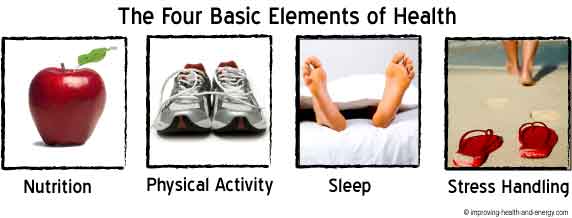
Exactly, it is these four essentials along with some other things which together make up the components of a Healthy Lifestyle.

There is nothing in it which any ordinary person cannot achieve. Healthy Lifestyle is no rocket science , and it needs no huge investments.

Just tiny conscious steps which will build up with time into habits and reap as a reward a Healthy YOU .

Why need a Healthy Lifestyle?
I ask why not?

A healthy lifestyle :
• Shall reduce chances of illness and injuries, and hence improve quality of life.
• Will reduce visits to doctors, save time and misery.
• Will reduce cost of health care, less medical bills.
• Enable us to pursue our passions and work better and uninterrupted.
• Keep us employed, and with less of sick leaves or leave without pays.
• A sound mind in a sound body will enable better relationships at home, at work and in society at large.
• A healthy individual will be a healthy citizen of a healthy nation.

What constitutes a Healthy Lifestyle?

They are all simple steps, and as you go through them check which all you already follow, which ones you need to follow more. It just requires a constant conscious effort.

STEP ONE: Make Healthy eating habits:

I know our foods are delicious, but some are pretty unhealthy too. However, there is still a way we can manage to strike a balance between satisfying our taste buds and eating healthy.

A healthy balanced diet which has all the nutrients and vitamins we need is essential to make us stay healthy and avoid diseases.

The next very blog shall be in detail on healthy eating while we enjoy our desi food at the same time.

STEP TWO: Have an Optimal Weight:

Do you know what is your weight and height?

Do you know what is BMI (Body Mass Index), its significance is and how to calculate it?

Please check your BMI by plotting the weight and height on the chart below.

See where does your BMI lie.

If it is in the green zone, congratulations, your BMI is normal, but you need to maintain it in the same color.

If it is in the red or yellow zone, you need to check it and think of bringing it down to green.

Benefits of weight control: Maintaining an optimal weight saves us from a number of serious diseases like Heart disease, Stroke, Diabetes, Blood Pressure, Joint problems like arthritis, and Cancers like breast cancer, colon cancer, and sudden death.

(A blog shall be dedicated to weight management too.)

In the meantime you can check the link for more information:
http://www.mayoclinic.com/health/mayo-clinic-diet/MY01646

AUDIO IN URDU/HINDI FOR PART-1:

PART TWO

STEP THREE: Be physically active and exercise:

Do you know how much is the minimal exercise you need to do to stay healthy?

For adults it is a minimum of 30 min per day for 5 days or 150 minutes per week of moderate exercise (which is enough to increase your heart rate upto safe limits) is needed to keep an optimal heart health. It could be a brisk walk or jogging.

What exactly is moderate exercise?

A study suggests that a moderate-intensity walk should have 100 steps per minute, or 3,000 steps in 30 minutes.

And some studies have suggested that moderate-intensity exercise –like walking — may be just as beneficial as more vigorous exercise.

It does not need to be continuous…you can split it into three session of 10 min each through the day.

It could be swimming, walking, skipping rope, or playing sports like tennis.

– Benefit of Exercise: A daily routine of exercise will help control weight, increase the body metabolism, gives sound sleep, reduces stress and makes you feel good.

Caution: And if you have any health problems or have never exercise, I suggest you to first get a check up from your doctor before you begin.

For children the minimum exercise should be 90 min each day of active play, every day.

Do you also know that it is unhealthy for the children to be watching TV more that 2-3 hours a day?

It leads to obesity, hyperactivity and low attention span in the children-hence not only poor school grades but also many problems in later life.

Instead of watching TV or sitting on Computers all day, encourage them to play physical games . If space is a concern, after the minimal play, even indoor board games like ludo, chess, scrabble are great which encourage interaction, active thinking, learning frustration tolerance and competition.

Encourage them to read books. Studies prove if you expose children to books from early age, they do not get aggression later.

And for children below 2 years, no TV viewing at all, is the recommendation.

DO NOT KEEP A TV IN KID’S ROOM.


For more on exercise check :http://familydoctor.org/familydoctor/en/prevention-wellness/exercise-fitness/exercise-basics/the-exercise-habit.html

STEP FOUR: Avoiding unhealthy habits:

• Excess of caffeine, tea, fizzy drinks and alcohol.
• Avoid smoking as well as second-hand smoke. (A couple of blogs on smoking shall follow too).
Avoiding drugs of abuse… it all begins with poor parent child relationship and smoking. If the parents-kids  have a positive relationship and the parents  counsel their child against the harmful effects of drugs and smoking since early, the kids can most likely not tread that path.

I strongly recommend you check this link for preventing drugs abuse in children: http://www.ncpc.org/topics/drug-abuse/alcohol-tobacco-and-other-drugs

STEP FIVE: Have adequate sleep

–a healthy mind needs at least 8-9 hours of sleep to rejuvenate.

Sleep debt occurs if the hours slept are less than the hours one needs.

Studies show that such short-term sleep deprivation leads to a foggy or confused brain, worsened vision, impaired driving, and troubled memory.

Long-term effects include obesity, insulin resistance (Diabetes), and heart disease.

A Fact: Do you know that the Chernobyl Disaster and Challenger Explosion have been attributed to lack of sleep.

For further on this check: http://www.quantadynamics.com/research/performancesnooze.htm

STEP SIX: Prevent Infections by good hygiene:

Our South Asia  is a region where infections of all sorts are so common.

Personal Hygiene: Some common practices can help us minimise these infections like:

1. Wash hands frequently and properly–It is the single most act that prevents major infections
2. Do not share razors, combs, nail cutters, tooth brushes, towels and needles.
3. Practice safe sex habits.
4. Get the required vaccines on time.

There are more steps which need detail discussion in a separate blog. Till then check the 10 tips to prevent infections: http://infectiousdiseases.about.com/od/prevention/a/prevention_tips.htm

It is very important to know that in our countries Hepatitis C and HIV infections have high prevalence. Many of the people are not even aware that they are infected.

It is very important to not share your razors, combs, scissors, nail cutters and needles, to avoid infection.

Also know that handshakes, hugging, kissing, sharing utensils or eating together will not cause spread of Hepatitis C or HIV infections.

It also very important that if you happen to get injections or blood transfusion in a Hospital, make sure the seal of the disposable needles, syringes or the equipment are opened in front of you.

And you also have the right to inquire from the health personnel about adequate sterilization of instruments and blood products.

(A separate blog shall be dedicated to Hepatitis C and HIV infections and their prevention).

Do not forget the cleanliness of your surroundings.

DON’T LITTER AND DON’T LET ANY ONE ELSE LITTER.


Further links on avoiding littering : http://extra.mdc.mo.gov/nomoretrash/facts/

AUDIO IN URDU/HINDI FOR PART-2

PART THREE

The following steps are more to do with mental health and we all know
‘a sound body needs a sound mind’.

STEP SEVEN: Healthy personal relationships:

• Along with taking care of ourselves, ne need to give the due attention to the people around us. Sharing and caring with the loved ones makes one feel good.
• Take time off to just sit with your loved ones. Have a family time, with no laptops, smart phones, television coming in the way.
• Talk to the kids at an eye level as friends, not as their commanders.
• Eating together as a family at least one meal a day. Talking on dinner table is a proven way to strengthen closed family ties.
• Hug your ageing parents for no rhyme or reason, no matter how old you or they are.
• Add humour to your life. “Good humour is one of the preservative of peace and tranquility.”Jefferson.
• Take time to say ‘How’re you’ to people who work for you like your driver, maid, your gardener. Then  see a smile on their face and  a twinkle in their eyes.

STEP EIGHT: Healthy connection with the surroundings;

  • It is so important to look beyond one’s personal and family life and see what s going on in the outside world-both living and non living.
  • Make sure to watch the news on TV or read Newspapers to know what is going on in your country or in the world at large. The news may be depressing, but it makes us conscious of the various problems in the world.
  • Understand your sociopolitical responsibility: Form healthy opinions on the events occurring in your society.
  • When its election time, make sure you vote (with your conscience).Remember that each vote counts.
  • Give charity. Charity is not just through money, we can give our time and a few words of empathy to those who are in need. Research proves that charity or public service helps the individual develop self-esteem and mental well-being.

STEP NINE: Stress management

Yes stress is a reality. But we need to manage the stress of our lives. Half that work is done if we eat well, exercise, sleep well, and have less illness.
However there are many scientific tools available on the net to manage stress. A blog shall be dedicated to stress management.

In the meantime for more on stress management check: http://www.mayoclinic.com/health/stress-management/MY00435

I know this blog was long and loaded with lots of information. I would suggest go slow, read the three different parts over different times, and if needed come back again. It’s going to stay here 

You may begin the New Year with great resolutions, with great enthusiasm, but will forget in the middle. That’s all so normal. I do the same. So long as you keep getting back on track and not give up, it’s all very human. Keep trying! I am trying too 

He who has health has hope; and he who has hope has everything. (Arabian Proverb)

With a hope that 2012 shall be a healthy year for all of you…

AUDIO IN URDU/HINDI FOR PART-3:

A VERY HAPPY & HEALTHY NEW YEAR!!!

P.S. 1: This and the other forthcoming Health Blogs do not substitute a Doctor and they are only aimed at increasing Health awareness and to develop interest in the readers to read further about health issues. For any serious health problems, do not delay a doctor’s advice.

P.S. 2 This is the first of the series of Health Blogsposts  that shall be posted every fortnight with a new Health topic relevant to the South Asians. Please share and do play  the Audio to those family members who do not ‘indulge’ in the social media.

P.S.3: Many thanks to DrBabarKhan and FarhanMasood for their generous ReTweets. 🙂

Let’s make 2012 a healthy year–A health blog series starting from Jan 01, 2012


I plan to start from the New Year 2012 a series of Blogs on Health issues named

Let’s make 2012 a Healthy Year.

The blog series shall be target the South Asians, primarily living in their homelands, but could be useful to others living elsewhere.

The need of the blog was felt primarily due relative less awareness amongst South Asians on Health issues.
Primarily, this is because culturally we we worry about health only when sick or unwell.
Secondly, due to relative deficiency of health activism in our countries.
Thirdly, though there is a mine of information on health issues on internet, but not much of it is specific to South Asian context, hence many times lacks relevance.

I have been working on the contents of the blogs for the past 4 months. Most of the information would be from the well researched, evidence based sources, and shall be peer reviewed by the specialists from the field.

It would be an informal format, not a lecture. I have tried my best to make it like a walk through for the readers where they will along with the information also be guided on what to do ?

The blog post shall be up loaded every 1st and 15th of each month and will consist of different health issues on which I feel there South Asians need to be aware of.

The blog in English shall be accompanied by a podcast in a Hindi-Urdu language, in case those who wish to share it with their kin who feel more comfortable in their language. A lot of medical jargons will be used in English instead of Hindi & Urdu so that both can easily understand.

The blog shall not serve as a consultation, but just a means to give direction towards increasing interest in the readers to inquire more on health issues.

The first few topics in the serial order are

1. Living a healthy lifestyle ( Jan 1, 2012)
2. Healthy eating the Desi way ( Jan 15, 2012)
3. Love Your heart to live ( Feb 1, 2012)
4. Diabetes- the bitter truth ( Feb 15 2012)
5. Smoker but you won’t quit ( March 1, 2012)
6. Smoker and you wish to quit. ( March 15, 2012)

There shall be others on Infection Control, Weight Management, Osteoporosis, Arthritis, Chronic Bronchitis, Depression, Stress Management Strategies etc.

Readers are welcome to suggest any topic, and if deemed of importance to large numbers, we would be glad to include it.

The readers are also welcome to post their questions, point out any criticism or disagreement to any content in the blog. I would try my best to answer them in Consultation with the specialists from the relevant field.
And I would request that if you feel worth, please share the blogs with others and contribute towards spreading of Health Awareness.

Thank You and see you with the first one on January 1, 2012.


CLICK FOR AUDIO IN URDU/HINDI:


Special thanks to Fatima Fasih for technical support.