Archive for January, 2011
FOR CENSORSHIP AGAINST AN ETHICAL AND PSYCHOLOGICAL VULGARITY
Just a couple of weeks ago I came across a fairness cream ad being posted, and then shared several times on FB. Most of those who shared, attached their valid comments to ridicule the clip.Thank God the fb community in which I socialise are ‘enlightened in this matter’.
But I wonder if we really felt the serious need to go beyond this condemnation and create awareness based on scientific facts about the psychological and physical ill effects of these fairness creams.We probably are not aware of the magnitude of the menace both in terms of their popularity and then the huge health costs that may result due to it’s prolonged use for over three, four or five decades.
Such ads are in no way a rarity. This particular clip was of a couple of minutes. If you happen to click to the telebrands channel or even some of the renowned entertainment channels, you may see them running half an hour ads on fairness creams. I have been observing these ads since the time these private tv channels have cropped up almost a decade ago.
The whole psychological process through which they create grounds for their product is worth a research. A good 10-15 minutes are dedicated to first narrate the ills and curse associated with the dark skin—from unable to make friends in the childhood, to getting a good job , to ultimately unable to grab an enviable rishta.
And then is offered the panacea of a glamourously packed, distatefully named cream pack. How do these cream applications transform in the ads—a dark skinned ‘bhains’ complexioned (buffalo complexion attained by the make up using a shoe polish ) low self esteemed girl in to a glowing ‘gori’ gaye (cow complexion) is a tragically comical sight to witness and worth the torture of a half hour long ad. (This was a comment I heard from an uncle years ago).
Alas how does this skin dark and cadaveric textured on an ‘always rejected’ girl transforms, in weeks into a radiant moonlight complexioned much ‘sought after’ princess! And lo, there comes the ‘prince charming’ who had been hunting for such a ‘fair beauty’ for ages. And soon the wedding bells ring.
Are these manufacturers and the advertising agencies all that smart? Who they think are they bluffing? I cant help but feel disgusted of what intellectual capacity do they estimate of us viewers to possess when making such ads or creams. They think we all are idiots inhabiting this earth.
But the sad state of affairs is that they serve as a’ perfect recipe’ to turn any low self esteemed girl, unsure of herself into a nervous wreck. One sees a lot of mediocres around us who actually get swayed by the actors and actresses endorsing those products and their claims.They feel compelled to actually spend a bulk of their their energies and money on these products with an eye to start looking like the ‘beauty’ who’s endorsed for that cream in the ad..Then there is those class of pseudoenlightened who secretly try the products in a hope that there must be some grain of truth in their claims. After all how much can those creams or ads tell lies?
Unfortunately, for generations, a bias has worked in our subcontinent towards a fair complexion. We may have emblazoned the mantra ‘without distinctions of caste, creed or colour’ and we may have pioneered the world’s opposition to apartheid, but the fact remains that we are a notoriously colour-biased people.
“It is a pity that the Article 15 in the Indian Constitution, which lists discriminations on the grounds of religion, race, caste, sex and place of birth, has left out colour. ” mentioned a placard I saw in India.
“The advertisements are everywhere – over bus stops, on giant billboards, interspersed throughout mainstream magazines, in stores, on TV…almost everyday I run across some Bollywood celebrity advertising some shit that is supposed to make you pasty.
It’s shameful. Sickening. And the actors (using that term loosely –if you’ve ever seen a Shahrukh Khan movie you understand) that endorse these products ought to feel ashamed and beg for the forgiveness of their fellow Indian citizens for insulting them.’ Writes Wil Robinson in his blog .
In South East Asia, not only women but men are also keen on becoming fair. Asian men no longer believe that fairness is only for women. Desi men, as well as their counterparts in other Asian countries, including Korea and Japan are turning to fairness cream.
Several times I did even write, out of rage, in the newspaper’s letter to the editor or directly to the TV channels or even to the companies. But to no avail. Not just about the vulgar ads, but the cries on fairness creams and their harmful effects too, seem to have fallen on deaf years . No letter ever got published nor any response of acknowledgement from the channels or the manufacturing company.
Probably I rub irrelevant and petty issues a bit too much.
I talked to a friend journalist and a TV person, and he explained this is the way they earn good ’revenue’ to keep their channels on air.
Attempts to debate the menace during private parties does lead most of the times to a fruitful discussion. But a few times I have to eat back my own words with reactions I had never anticipated.
About three occaisions I have recieved the following nasty answers not from aged aunties but young girls aspiring for a ‘prince charmng’ by remarking:
“Auntie, you probably dont feel the need so you dont realise the desperation behind those who arent that fortunate.If some one tries to get fairer by spending money then what’s the harm.”
Or even mention the reference to various matrimonial ads, “we find people asking for a fair skinned wife for their able son.”
“If you were lucky with a wheatish complexioned to have gotten a gora guy doesn’t mean all women will. Why didn’t you choose a dark person yourself.”
Well what do you say to those arguments—I never chose the one I chose for his complexion. But who has the patience to argue with their illogical logic. Sometimes one has to really hold on tight to ones self-control to avoid an unpleasant debate.
And then my straight dagger like talk leaves a lot of these women wounded. You talk of unfairness of the ads or color discrimination and they make you feel guilty of having a fair-complexioned husband.
But yes I know how can one be ridiculed for one’s complexion, being repeatedly labelled ‘kaali’ by some disgruntled aunts of my husband’s, out of love for their ‘gora’ nephew. And about their own complexions…let’s not go there. 🙂
The most serious and basic ethical issue of fairness creams advertising is making false or misleading statements.
In a test at the Prince of Wales Hospital in Honk Kong on 36 fairness cream brands made all over the world, it was found that eight of them made in China and Taiwan had more mercury contents than prescribed by the U.S. Food and Drug Administration.
The study results show that fairness creams sellers overstate the product benefits, which actually are not delivered. Results showed congruity between the literate and illiterate, poor and middle class girls responses in terms of product performance and social issues raised by fairness creams TV Ads.
Most creams contain harmful ingredients that can result in side effects ranging from irritation, allergies to sun sensitivity. It may be advisable to test out a fairness cream by using it first on a small portion of your skin to find out your sensitivity to the ingredients.Even creams branded as ayurvedic also contain chemical and harmful alloy of metals.
Mental and emotional health can be corroded by the steady destruction of self-esteem and demeaning to women and further promote the already rampant complexion prejudices.
These unashamed advertisements of products are an assault on the fragile minds of women in what is called the ‘marriageable age’. The unceasing flaunting of cosmetics with the supposed quality of lightening the complexion would have been aesthetically vulgar if it was not also a matter of serious psycho-sociological or health concern.
Thanks to a great number of people around the world who have a fixation with the fair skin that this industry flourishes.
For generations, a bias has worked in our subcontinent towards a fair complexion. We may have emblazoned the mantra ‘without distinctions of caste, creed or colour’ and we may have pioneered the world’s opposition to apartheid, but the fact remains that we are a notoriously colour-biased people. It is a pity that the Article 15 in the Indian Constitution, which lists discriminations on the grounds of religion, race, caste, sex and place of birth, has left out colour. “
Although Government, Consumers and Industry self regulations could be used to regulate these unethical advertising practices in both India and Pakistan. But due to absence of rules and regulations against deceptive advertising, raising the issues by consumers in front of government or regulatory bodies, absence of the consumer groups, widespread illiteracy and lack of awareness in the consumers about their rights thwarts any efforts towards it’s realisation..
The only possibility is the industry’s self regulation, which could work well to protect the consumers and society from the negative aspects of these advertisements.
In the contemporary world most of the organizations talk about the corporate social responsibility, but in case of fairness creams television advertisements, there is a clear divergence between the social welfare and companies economic goals.
It is time that the media, the business corporates and even the concerned health activists take up this cause not only to stop the ads but also create awareness about the unfairness of the ’fairness creams, and then plead for the censorship of this ethical and psychological vulgarity.
Ilmana Fasih
2 January 2011
………………………………………………………………………………………………………
FACT SHEET ON FAIRNESS CREAMS:
Statistics:
INDIA: According to the infobharati.com the information website for India top 10 fairness cream companies include the giants of the cosmetic and toiletry industry—Fair and Lovely, Garnier, Olay, Ponds , Nivea among the top 5.
The Rs 650-crore fairness creams market is led by Hindustan Lever’s Fair & Lovely which has a dominant 75-80 per cent share. Other significant players are CavinKare’s Fairever, Godrej Fair Glow, and Emami Naturally Fair, all of which spend significantly on television advertising.
Fair & Lovely’s television ad spend for the October-December 2002 period was Rs 3.3 crore, Emami’s was Rs 2.5 crore, Fairever’s Rs 2.2 crore and Godrej FairGlow, Rs 20 lakh in the same period, according to media tracking agency Current Opinion & Future Trends.
According to trade analysts in India, men’s fairness products is valued at Rs 30 million, and constitutes 35 percent of the market.
PAKISTAN: ”Many renowned cosmetic stores say 80 percent of the customers demanded fairness creams. The demand was particularly high in girls.
A cosmetic shop owner Shahbaz Ahmed in Defense Housing Authority said that all his customers bought fairness creams to improve their complexion, irrespective of whether they had dark or fair complexion. “Not only women but men are also obsessed with becoming fair,” he said.
The popular , inexpensive creams in Pakistan are generally not from the big brands but from the small time companies and the risk of these creams having even more dangerous and unregulated ingredients.
…………………………..
The Ill Effects Of Skin Lightening or Fairness Creams
These beauty products aim to change melanin, a pigmenting agent that is determined from the time of our birth. No unnatural material can change melanin levels or whatever.
According to researchs done on these skin lightening products shocking revelations have come to light.
main ingredient of these fairness lotions is bleach, Hydroquinone, a chemical used in the fairness creams is actually a bleaching element which badly harms the skin.
At the most these creams contain sunscreens that help them prevent from further darkening of the skin.
Ingredients like koiic acid and retinoic acid make the skin more intolerant towards the sun’s harmful effects. Koiic acid is a derivative of Vitamin C and retinoic that of Vitamin A. Users can also have severe skin rashes if they keep on using it.
The high mercury levels are much more than the levels prescribed by the US FDA which may cause hazards even to the nervous system.
Some of the skin lightening products( especially the less expensive ones) contain strong steroids like cortico steroids and clobetasol propionate, which is strictly a prescription drug. The prescription-strength steroids help to give the costumers ‘better’ and ‘faster’ results but such products with steroids have the chances to suppress the body’s natural steroids. Using the creams with steroids may end up with some other side effects like permanent stretch marks, pimples, darkening of the skin, skin-allergy and disfiguration, etc.
…………………………
Unlearn the myths :
Fairness creams can make you fair — All fairness cream or skin whitening creams are effective ony if the pigment is in the epidermis. If the pigment is deeper, the product canot help or make changes. Thus, fairness cream can help remove a tan or discoloration due to some pigment in the top layer of the skin. It cannot make a dark person fair.
Manufacturers list al their ingredients on the product label— This is not true. Manufacturers are not required by law to mention all the ingredients on the product label.
Fair skin is better than dark skin — Medically, dark skin is believed to be less vulnerable to skin diseases than light skin. More melanin in dark skins provides protection from the sun and, in turn, disease. Light skin contains less melanin and thus less protection.
Ayurvedic or herbal fairness creams have no chemicals — This is a myth. Only home remedies for fairness can be free of chemicals. All commercial products have chemical bases that give them the texture and consistency and preservatives that prevent them from going bad.
Herbal ingredients have no side effects — A person can be allergic to plant based herbal ingredients also. It is advisable that they apply the cream to a small area on their hands before using them.
Read more:
Addicted to fairness creams? Not fair – The Times of India http://timesofindia.indiatimes.com/life-style/beauty/Addicted-to-fairness-creams-Not-fair/articleshow/5973021.cms#ixzz19ltTTZk.
http://www.internationalpoliticalwill.com/2010/01/indias-popular-fairness-cream-a-sign-of-deep-racism/
http://www.indiantelevision.com/tamadex/y2k4/aug/tam74.htm
http://www.dailytimes.com.pk/default.asp?page=2008730story_30-7-2008_pg7_40
MODERN DAY SLAVERY aka HUMAN/WOMEN TRAFFICKING
Human trafficking is the illegal trade in human beings for the purposes of commercialsexual exploitation or forced labor: a modern-day form of slavery.
Trafficking is a lucrative industry. It is now the fastest growing criminal industry in the world. Globally, it is tied with the illegal arms trade, as the second largest criminal activity, following the drug trade. Human trafficking usually affects women and children. The total annual revenue for trafficking in persons is estimated to be between USD $5 billion and $9 billion. The Council of Europe states, “People trafficking has reached epidemic proportions over the past decade, with a global annual market of about $42.5 billion.”
The United Nations estimates nearly 2.5 million people from 127 different countries are being trafficked around the world.
“There is more trafficking of women within the country than there is out the country.”
WHY MY LOVE FOR KABIR?
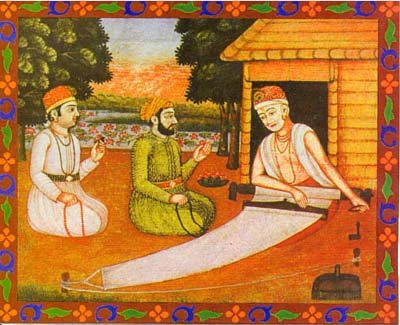
In spite of diverse approaches of various theological teachings, Kabir noticed that there is one power, all prevading and omnipresent. We may choose to call that power by any name, or in general reference as God, but does that even matter?
How beautifully he presents his vision of that Supreme Power, far beyond the definition by both the monotheists and polytheists:
Ek kahoon to hai nahin, do kahuun to gaari,
Hai jaisa taisa rahe, kahe Kabeer bichari.
{If I say one, He is not( is beyond any definition of shape, size or number. If say two( or more), it a violation too. Let Him be the way He is ( formless, shapeless) & lets not confine Him to any form. Says Kabir after much contemplation}.
Kabir’s vision of that power is incredibly simple and easy to understand. He conveys it through even a simpler language in his couplets (Dohas) and mystic songs. Though simple, it is as revered by the high intellectuals as it is appealing to the unlettered.
Kabira kuan ek hai, paani bharein anek,
Bhandey mein hi bhed hai, pani sab mein ek.
{Kabir, the source of water, the well is one, though many pull water from it.
The faults are in the pitchers, the water within them is exactly the same.}
Kabir dares to de-monopolize God from the clutches of the clergy. His preaching to the common man was unconventional and casual. He would sit at his loom weaving, while the people would surround him and discuss the matters of faith and daily life. He weaved the harmony between diametrically opposed faiths, through easy examples, as as his loom weaved the vertical threads to create a beautiful fabric.
Sadhu dekho jag baurana
Sanchi kaho to maran dhawe
Jhoote jag patiyana
Bahute dekhi nemi dharmi
Praat kare asnana
Atam chari pashan puje
Thotha unka gyana.
Bahute dekhe peer auliya
Parhe kitab kurana.
Kare mureed batlawe kabar
Unhun khuda na jaana.
Kahe Kabir sun bhai sadhu,
Dono mein kou na dewana.
O gentleman, see the world has got mad,
I say truth but they run to beat me and believe the fake.
I have seen a lot of religious people who follow the strict routine,
bath early, worship idols, but their knowledge is hollow,
I have seen a lot of preachers who read Quran
And speak to worship graves, but do not understand God.
O gentleman none of them is a passionate lover of God.
Appreciate the simplicity how Kabir sums up the mindless, and illogical world’s thinking is:
Rangi ko narangi kahe, bane doodh ko khoya,
Chalti ko gaari kahe, yeh dekh Kabira roya.
{Call an orange, non-colorful (na-rangi), a delicious milkcake lost(khoya).
Call moving object, as stuck(gaari), laments Kabir.}
Instead of bigotry, he advises people to introspect before point fingers at others:
Bura jo dekhan main chala, bura na miliya koye,
Jab mun jhanka aapna, mujhse bura na koye.
{I went searching for the crooked, I found none,
When looked within, I was the most crooked one}.
There is hardly any issue of the day to day life that Kabir did not touch in his Dohas. He used simple vernacular language, with poetic metaphors from common examples to engage the people around him. As a result, his poetry became so incorporated into the local folklore that it was transferred by word of mouth, generation after generation. He remains one of the most quoted Indian poet in the world.
Kabir was a also family man , married with children and lived a simple life of a weaver. He did not abandon worldly life to become a renunciate ( a sadhu). He chose to live a balanced life as an ordinary man relating to a breadwinner, a family man, a tradesman along with being a mystic and a contemplative.
Kabir was a people’s poet.
“While there is evidence that both Hindus and Muslims were ready to assault Kabir physically during his lifetime, they have since his death been ready to assault each other over the privilege of claiming him as their own. …Some modern commentators have tried to present Kabir as a synthesizer of Hinduism and Islam; but the picture is a false one. While drawing on various traditions as he saw fit, Kabir emphatically declared his independence from both the major religions of his countrymen, vigorously attacked the follies of both, and tried to kindle the fire of similar autonomy and courage in those who claimed to be his disciples.”
~writes Linda Hess in the Introduction to The Bijak of Kabir (1983;2002)
A 700 and some years ago Kabir thought of intercommunal harmony with common origins, common purpose and common destiny of all human beings irrespective of their faith, color or class.
Complete version of the poem( above):
Sadho dekho jag baurana
Saachi kahi tou maran dhawe, jhootey jag patiyana
Hindu kehet hai Ram hamara, Musalman Rehmana
Apas mein dou lare martu hain, maram koi na jana.
Bahut mile mohi nemi dharmi parth kare asnana
Aatam choree pashane puji tinka toota gyana.
Aasan mari dimbh dhari baithe, man mein bahut gumana
Pipar pathar pujan laage, tirath barath bhulana
Mala phire, topi pahire, chhaap tilak anumana
Sakhi sabde gawat bhule, aatam khabar na jana.
Ghar ghar mantra jo den phirat hai, maya ke abhimana
Gurua sahit shishya sab bhure anthkaal pachtana.
Bahut dekhe pir auliya , parhi kitan Qurana
Kare murid, kabar batlabe unhu khuda na jana.
Hindu ki daya, meher Turkan ki, donon ghar se bhagi
Wah kare jibhah, waa jhatka maare, aag dau ghar laagi.
ye vidhihasth chalat hai humko, aap kahawe sayaana,
Kahee Kabir suno bhai Sadho, in mein kaun deewana.
Are we even prepared to think like Kabir, even today,seven centuries later?
I can only take a deep sigh !
Ilmana Fasih
25 December, 2010

WHAT IF…
What if…
I lived
In a village remote
That no maps showed
And no roads led to
Where a house meant
Four walls, thatched roof
Where the shelves
Adorned a few utensils
Not books, papers or pencils.
What if…
I was raised
By hapless parents
In fields they worked
As bonded labourers
In sweltering summers
Or foggy winters
I merrily went with
Mom to fetch water
From the far off well.
Dad and brothers
Collected the firewood
From the nearby jungle.
What if…
I grew up
As a street child
Footpath as my home
With a helpless face,
Eyes knew no light
And discrepit attire
For a penny I asked
At street corners
Spreading out hand
Shoving a ‘help me’ card
Unto the passers by.
What if…
I was born
To a dad who
Cribbed to hear
‘It is a girl’
Cared for me less
Loved my brothers more
Stopped me from school
And didn’t let me go out to play
Where I continually heard
“… because you are a girl.”
What if…
I was married
To an chauvinist ‘man’
Who’s ego topped the list
His opinions dominated
And left me suffocated
Where all that was ’right ‘
Was what his eyes would see
And his self focussed sight
Would not let me be ME.
Why was I born, brought up
And still live the way I do?
Why do I have, in my life
Such awesome people too?
Why did the ‘mother luck’
Bestow these blessings, all through?
I certainly, know not why.
As tears from my eyes roll by.
But all that I can say is:
“I cannot be GRATEFUL ENOUGH’

……………
IlmanaFasih
3 January 2009
Hello world!

“Souls don’t have races or sexes or religions. They are beyond artificial divisions.” ~ Brian Weiss


 Blind to Bounds
You must be logged in to post a comment.