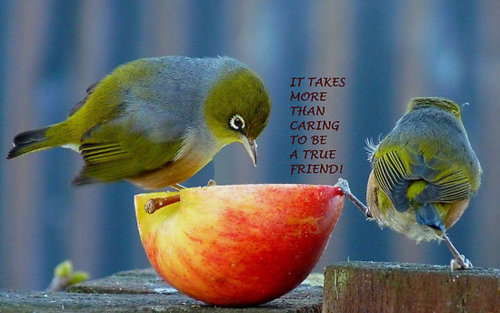
Open up your mind and your potential reaches infinity…


Shabnam Virmani is a filmmaker and artist in residence at the Srishti School of Art, Design and Technology in Bangalore, India.

7 years ago she started travelling with folk singers in Malwa, Rajasthan and Pakistan in a quest for the spiritual and socio-political resonances of the 15th century mystic poet Kabir in our contemporary worlds. Among the tangible outcomes of these journeys were a series of 4 musical documentary films, several music CDs and books of the poetry in translation (www.kabirproject.org).

Inspired by the inclusive spirit of folk music, she has begun to play the tambura and sing folk songs of Kabir herself. Currently she is working on co-creating a web-museum of Kabir poetry & music with folk singer communities in India and developing ideas for taking mystic poetry and folk music to school classrooms.

She continues to journey to new areas such as Kutch, Gujarat and draw inspiration not only from Kabir, but also other mystic poets of the sub-continent and the oral folk traditions that carry them to us. Her earlier work consisted of several video and radio programs created in close partnership with grassroots women’s groups in India.


Dignified distances where proximity doesn’t need to be,
Is the true source of pleasure that means so much to me.

Caring blankness where expressions don’t need to be,
Is the true face of contentment that means so much to me.

Gratifying cries where laughs don’t need to be,
Is the true sight of comfort that means so much to me.

Comforting taunts where praises don’t need to be
Is the true sound of repletion that means so much to me.

Satisfying indifferences where attention doesn’t need to be,
Is the true sense of complacency that means so much to me.

Acceptance of realities where fantasies don’t need to be,
Is the true sign of maturity that means so much to me.

Understanding silences where words don’t need to be,
Is the true gift of FRIENDSHIP that means so much to me.

Ilmana Fasih
18 December 2010.


My home phone rings.
“Hello, this is Akshita here”
“Akhsita?Oh yes I remember.”

It took me a few seconds to place her- a young 26 year old Indian doctor, from Chandigarh who I had met on Oct 25, 2010 during a day long exam for Canadian Licence for medical practice.

I had noticed her sitting huddled up in a corner during the hour long break in the exam and I sat next to her with the usual smile to initiate a dialogue

“Are you from India?” she asked
“Yes from Delhi.”

We deicide to go upto the coffee shop to buy cofee and stand in the queue exchanging the usual data about each other.

“But I need some coins too so that I can call my husband once the exam is done.”
“So you don’t have a cell phone,” I stop short of asking her. Yes it isnt mandatory for all of us to have a cell phone.

We talk of the exam and the time flies away.

She mentions to me how ‘homesick’ she feels and it has been months since she talked to another Indian and another doctor.

“So you dont study in a study group”.
“No” she replied again.

Yes I too dont like group study so just give this answer a pass.
As we pack up to turn back for the next session and she asks me, as if unsure if this was an appropriate thing to ask:

Can I have your phone number? If I need to, can I ever call you?”

I dictate out the number again too involved in my next exam without giving my name or even asking her number in return, even out of politeness.

We disperse and she is out of my mind.

Today she calls up to ask about the outcome of the exam result and poor soul declares that she could not pass. I reassure her, and to stay put until she succeeds. Next exam is 6 months on and enough to make a strong preparation.

She explains that she can only talk till her mother in law is in the shower.

She breaks down with the news that she cant even appear again until she reimburses the fees for this exam to her in laws .

“You couldn’t succeed, the fee of $1500 dollars was a total waste”—she is repeatedly taunted by her husband.

We talked for about 20 minutes or so, and she seemed  keen to do most of the talking. I let her.

She confided is being nagged to compensate for the fees. How? She has no clues nor have they hinted how. Go out to work? She says but they dont let her even step out alone from the house. Or maybe if she does go out to do an odd job of $10.25 an hour, they may change their mind.

Or graver still , maybe they expect her to demand this from her family back home to refund. But they are so kind that they do not say it in so many words.

They are letting her use her ‘independence’ to decide how she would reimburse.

“I feel miserable.I dont know what to do’”?

The word homesickness strikes my mind. Now I get a clue to what ‘homesickness’ she was going through in her new home in Canada.

She is being reminded several times a day and in several ways that they got her married to their son, for doctors here earn good money and she has proved to be an expensive daughter-in-law on the contrary.

She is now here since 3 years and lives with her inlaws. She has been attempting to clear the licensing exam since past two years in order to come into the medical practice in Canada.The expenses for the fees are pretty fat and generally it takes a few attempts for the average foreign trained proffessional to pass the exams.

Since she’s been feeding on the family’s expenses for these past 3 years, who had even financed her $ 2000+  airticket when she arrived in the country after marriage and the expenses of her books, exams fees she has been convinced. With all this already spent on her,  she has been convicned she cannot be provided with a cell phone.

“Here the person is paid on an hourly basis and half of the money is taken away in taxes’, she is told time and again.

Hence, to make long story short—she does not need to have a cell phone.

She is ‘allowed’ by her generous inlaws to make a 5-10 min call to her parents every 15 days and they are so kind they stand by her for everyminute of the call she makes to her ‘contented’  parents. Why shouldn’t they be, their girl is settled in Canada.

Any deviation in her expressions to her parents over the phone from ”alls well’ tone is greeted with eyes popping from the mother in law’s sockets,  or for days when her husband “neither looks, talks or touches” her. (in her own words).

She has no relatives or acquaintnaces in the town she lives, and before she got my telephone number, she did not have even a single phone number to call in times, good or bad.
Mother in law is a retired lady and hence she is fortunate to be escorted by her all those hours when her husband is away. When he arrives only does she do her other social obligations.

She feels she and her husabnd are   literally “remote controlled” by the  mother in law.  But she is ‘kind’ enough tolet  her study time from 8 am to 12 noon, soon after her husband leaves for work, but past noon onwards she does the house chores of cooking and cleaning, unsupervised, while the mother in law makes a one hour telephone call to her daughter in another city.

Three years and she has not been even dropped a hint at learning to drive, with a simple assumption from her that she can only do it once she has her Canadian passport.

 I offer her if I could help her in any way, she feels extremely undecided and then wants to wait that if she passes next time the attitudes will get better. At times she contradicts herself and justifies that the husband is “really bearing too much of her expenses”.

I ask her if she could give me her Indian phone number so that at least I can drop a hint to her parents—but she confides that the father is a heart patient and the mom has advised to refrain from any bad news.

I reassure her that there are various places and resources available for help but then it will need a huge courage on her part to come out. I also tell her to take her own decision—nor can I force her to take the action of my choice and then should go in with strong conviction. She repeats, “I think once I pass things will be different.”

As we were just in the midst of this discussion she hangs up the phone. Maybe it got disconnected. I wait. 

But the ring doesn’t ring again.It hasnt rung till now—almost 3 hrs since her call.

I feel extremely disturbed. Can I return the call? What if  other family members are home? What if she hasn’t told them about me and it might rebound on her. Hope she calls back. Hope she stays safe and in control of her situation
 

How can I take the baton for her? She has to run her own relay.
We can just guide her, reassure her and empower her to take her own sound decisions.

But the courage has to be her own.

I’ve never been so puzzled in life. I find it hard to get back to business as usual.

A perfect recipe for me to stay up all night, staring the roof .

Very often we hear of the cries of stories wherein the western desi girls are subjected to forced marriages by their families to cousins or other family members.

In Pakistan I know, there has been a special cell in the British HC for rescuing such girls from the clutches of forced marriages. Majority of these girls are at least school graduates and well aware of their rights and still they find it hard to rebel against what goes on.

A similiar but reverse trend of bringing girls from back home  is thriving too. Many desi households  in the west live a terrifically balanced life —by adopting those western values which suit them and conveniently being amnesic to those norms which donot suit them.

Prevailing social and economic hardships, over population, and fascination for the ‘foreign country’ or ‘west’ lures equally the parents and the girls back home to aspire for a foreign rishta. It offers a quick escape from the hardships in the heat and dust back home. The guy’s family too finds it a lot convenient to look for a simpleton bride from their homeland with the impression that the girls back there are still make ‘bholi bhali bahus’ as they had known when they migrated a couple or more  decades ago. Majority of them live in the time freeze of the times they had last lived back home.

The parents quite often, convince the boy,  after he has done enough of ‘playing around’ in high school or college days, that now it is worthwhile or rather safe to go for a desi girl with a desi frame of mind—fulfilling everyones convenient dreams—most of all of parents themselves,  of  a desi seedhi saadi bahu. It also  enables obliging the relatives ‘behind’  by choosing their daughter, hence opening their gateway to the west.

The guy is convinced that the girl who comes will be adjusting and law abiding at home, wouldn’t be a threat to the marriage, and will never know her rights or claims if at all the marriage fails.
This is one mindset which atunes  all diaspora of the South Asians,  to the same wavelength, across all subgroups, all faiths, all languages and all economic classes.

Doctor girls are in huge demand by the foreign settled rishta parents from our subcontinent.

Principally it is a noble profession, it makes  great news to announce that the bahu is a doctor, if she gets into the system she will mint money and will be the blue eyed of her husband and his family as their mortgages will be finished soon.

Back home with 4:1 ratio of girls in medical colleges, and the valid aspiration of every medical graduate to find a suitor of equal professional aptitude is tough, hence getting a proposal from a foreign settled graduate is like  “her man in shining armour riding  a white horse, who will come, and lo will vanish  all the miseries in her life.”
.
Of course the  cousin marriages, in Muslims,  need no cross check. In other communities, the girl’s family is so enamoured by the foreign rishta that they believe on word of mouth or get impressed by a tour of the photoalbums, and consent to the foreign damaad  without much investigation. Even if they wish to inquire, ‘the distance, the visa, the expense’ constraints  are enough to dampen the ‘evil’ thought.

Investigations for what?  She is a doctor and she will earn well over there.
A lot of them do not even explore how tough the licensinfg exams are, and that barely a fraction of them are able to make into the field of medical practice.

Majority of doctors end up being grateful housewives or doing odd jobs or even diversifying into diametrically opposite fields like interior decoration, beautician, research assistant or a teacher.

This is not the srtory of one Akshita. The situation on ground is overwhelming in volume.
.

The idea here is not to create a paranoia but to inform about the various vulnerabilities one faces—be it in professional terms or socail viewpoint.

Despite the tremendous pressures for a right match or aspirations to move over to the greener pastures, it is mandatory for the parents to cross check the degrees that the boys claim to possess and the the possibilities of one’s daughter to be able to pursue her career.

She should be aware of her rights as well as the duties which takes to make marriage a compatible, pleasant and a worthwhile experience. It certainly does not imply that all are alike but a lot of girls I have personally known do find it tough to adjust to the controlling ways of their insecure inlaws.

Getting one’s daughter maried off to a stranger residing thousands of miles away needs a truck load of courage. It should be embarked upon with wisdom and with all the possible issues in mind.

It has been, now, 4 hours since Akshita called me. She did not ring back. Hope she is fine and safe. Hope her controlling mother in law hasn’t heard her talk on phone.

I hope she gets enough courage to stand up on her two legs and her husband grows a spine in his back —to at least lend a moral support to his wife, who has come a 4000 miles just to spend the rest of her life with him,  and who is going to be a mother of his kids in future.

If the mother in happy, their children too would grow happy.

Most likely, I am afraid her situation will prevail as such with cyclical pattern of frequent taunts and then a few happy moments— typical of  abuse—and she will go on for years being unsure whether it is appropriate for her raise an alarm and she will be listened to.

Every doctor girl coming here to Canada or west in general, has to go through the challenges—of adjusting to the new way of life, pressures of completing the battery exams in order to get back into practice, feeling homesick but unable to visit parents and with loads of expectations that one day she will turn into “a goose that will lay gold eggs.”

In this era of information explosion it is an abominable sin to embark on a life long decision unaware of it’s pros and cons. It is mandatory on all parents and girls to please take wise decisions.
Please look before you let your daughters leap.

Decide carefully and wisely…

Ilmana Fasih
16 December 2010
(PS: This is a true story of today itself. However, Akshita is not her real name).

YOU


A poem for my dear husband Fasih on his Birthday:

If out of moments, I could choose one
and keep it throbbing in my heart too
Of all the times that I have seen,
I’d pick the moment, I met you.

If out of associations, I could choose one
and keep it recollecting, as truely true,
Of all the friendships that I’ve ever had
I’d pick the amity, that I had with you.

If out of emotions, I could choose one
and keep it aflame, as always new
Of all the vibes that I have felt
I’d pick my ultimate love for you.

If out of embarrassments, I could pick one
and keep it cherishing as one of the few
Of all the blushes that we have shared
I’d pick the one, when I said ‘yes’ to you.

If out of events, I could choose one
and keep it reminding, as heavenly too
Of all the years that we have spent
I’d pick the day, I tied ’the knot’ with you.

If out of rages, I could choose one
and keep getting haunted by its horrors too
Of all the angers that I have spewed
I’d pick the one, that first fight with you.

If out of places, I could choose one
and that kept us warm and cosy too
Of all the abodes that we have lived
I’d pick the little nest, that I built with you.

If out of farewells, I could choose one
and keep regretting how we bid adeau
Of all the bye byes that we have exchanged
I’d pick the one, when I moved ‘here’ without you.
If out of dreams, I could choose one
and wish to keep it alive, forever too
Of all the million wishes that I have made
I’d pick the one, of reuniting again with you.

MISS YOU!

Have as GREAT A HAPPY BIRTHDAY as you can have without us.

This slideshow requires JavaScript.


Here comes another case of blasphemy . The heat of the previous ridiculous case of Asia Bibi’s blasphemy allegations had not cooled, that this new, a far more ridiculous and a lot more shameful case crops up. My head hangs in shame. Are we going insane or paranoid or simply treading towards a deliberate path of self annihilation? I seriously feel embarrassed to step out of my house today and to face yet another barrage of questions from the concerned friends about what’s wrong with us muslims. Now many of them wouldn’t even spell out the question, just stare at me with those questioning eyes, as if all my previous explanations of the ‘misguided few’ amongst us was indeed a fassade. I wonder how will I look into the eyes of my friends the next time their gaze meets mine.Will my eyes be again able to narrate the same words of ‘ignorant minority’ with the same strength and conviction as I have been doing since the time I can remember. How long will they take one ridiculous story after the other, as just an isolated incident? True, there are indeed only the “misguided few”, but arent these misguided few getting a bit very many, as the time goes by. With the educated medical rep—a graduate at least- we cant even say he was a “misguided mullah” or “an illiterate ignorant soul”. Aren’t we literally ‘lettered illiterates’? I think we really need to undergo a “Mini Mental Exam” (MME), as a community as a whole, to reach to the diagnosis of this pathology. Are we insane or on the verge of insanity —a Paranoid Schizophrenics , or are we malingerers who fake pathology to gain personal benefits—termed Munchaussen Syndrome? With either of these diagnoses— we shall be labelled mentally unwell (saying it politely). And do we at all know the simple Third Law of Newton:” To every action there is an equal and opposite reaction” ? As of today, any news from Pakistan reaches the rest of the world at the speed of light. Just yesterday, while reading an article on blasphemy in a major international newpaper online, the comments at the end were really heart shattering. As we sow so shall we reap. Will we be in a position to blame the reaction of the outside world or face their wrath if we carry on with this insanity any further? For those who don’t buy my concerns, I copy paste some of those comments, with a heavy heart: Johnny Walker Whiskey is the biggest import into Pakistan, any day of the week each of the Pakistani International airports – of Islamabad, Karachi and Lahore- has several cargo planes laden with alcohol beverages discharging its cargo. The country is controlled by gangsters politically and they in turn pass on the duty of instilling religon into the people to the Mullah Whiskies who control the great unwashed masses with their manipulated pagan interpretation of Islam declaring anyone who questions their authority as a blasphemous Kafar ! By the way this is a ridiculous situation and waste of everyone’s time. I doubt if anyone in Pakistan is actually taking this seriously. Sadly, there are words. Words like why do we continue to accept the unacceptable when it comes to the activities of muslims and muslim countries? We accept it by continually pussyfooting around muslim sensibilities (maybe this is an oxymoron). Why should Ms May be considering a banning order against an American who wishes to visit the UK just because he theatened to burn a silly book – because she is pussyfooting around muslim sensibilities. It is time we get the blasphemy law against christian beliefs too. It’s not just Pakistan. Pew Poll: Majority of Muslims supports death for anyone leaving Islam. In a new poll by Pew, a majority of Muslims in many of the world’s Islamic countries says they are very much in favor of killing any person who converts from Islam to any other religion. The new poll also exposed mainstream Muslim attitudes regarding other aspects of their life. For instance, the poll found that a majority in the Muslim world are in favor of cutting off hands for theft, stoning people to death for adultery, and insisting that Islam play a major role in politics. This recent Pew poll was conducted over the course of a month and asked Muslims in several countries about what was going on in their heads. Many of the respondents were also questioned face to face. http://www.examiner.com/american-politics-in-vancouver/pew-poll-majority-of-muslims-support-death-for-anyone-leaving-islam PAKISTAN, AS THE US PRESIDENT OBAMA, SAID IS A CANCER ON THE BODY OF THE INTERNATIONAL COMMUNITY. THE US, UK. EU, JAPAN AND INTERNATIONAL ORGANISATIONS SHOULD NOT FEED IT WITH MONEY AND WEAPONS, UNLESS PAKISTAN DESTROYS ALLTERRORIST CELLS, BASES ETC IN ALL AREAS CONTROLLED BY PAKISTAN AND GET RID OF ITS LAWS THAT DISCRIMINAATE AGAINST CHRISTIANS, SIKHS, HINDUS AND ISLAMIC MINORITIES SUCH AS AHMEDIS, SHIA ETC. AS PAKISTAN IS THE EPIC CENTRE OF BOTH GLOBAL ISLAMIC TERRORISM AND NUCLEAR PROLIFERATION, THE US MUST TAKE EFFECTIVE ACTIONS AGAINST PAKISTAN AND THREATEN IT TO BE DECLARED A STATE SPONSORING TERRORISM, UNLESS PAKISTAN COOPERATES. This is written hatred . Many of us do and will again face verbal hate on streets, in the subway, in the malls or even at our own doorstep. And then many many more will simply feel the hateful vibes quietly. How long can we go on pleading our case to the outside world? Instead of Dr Valiyani, it is the medical rep who needs to be charged with blaphemy for” misusing and defaming” the sacred name Muhammed for settling his personal vandetta. The guns should be totted at him for blasphemy—for turning the sacred name Muhammed into a butt of joke. It is time we need to turn our guns towards ourselves and no matter what, stand up and take back our ‘Islam’ held hostage into the hands of the handful “misguided and ignorant” Mullahs. To correct myself—indeed it isn’t they who are the misguided or the ignorant—they know what they pursue for their personal agendas. It is us, the silent majority who are “the misguided and ignorant”. It is time for a commando action against the hostage takers. It is time to stand up in one voice. Enough is enough. Please think. And act… Ilmana Fasih 13 December 2010 References: http://www.independent.co.uk/news/world/asia/pakistani-doctor-held-under-blasphemy-law-2158702.html http://tribune.com.pk/story/89180/doctor-arrested-on-blasphemy-charges/


Ali Sardar Jafri was a (November 29, 1913 – August 1, 2000) was an Urduwriter, poet, critic and film lyricist from India.
“Ali Sardar Jafri was born in an aristocratic family in Balrampur, Uttar Pradesh, where he spent his formative years.
His early influences were Josh Malihabadi, lyricist Jigar Muradabadi and Firaq Gorakhpuri. In 1933, he joined Aligarh Muslim University (AMU) and soon got exposed to Communist ideology, subsequently he was expelled from the University in 1936, for ‘political reasons’. Eventually he graduated from Zakir Husain College (Delhi College), Delhi University in 1938, though his post graduation studies at Lucknow University ended prematurely following his arrest during 1940-41 for writing anti-War poems, and taking part in Congress led political activities as Secretary of the university’s Students’.
Ali Sardar Jafri married Sultana in January 1948.
Ali Sardar Jafri published his first collection of short stories titled, Manzil (Destination) in 1938, which started his literary career, and his first collection of poems, Parvaz (Flight) came out in 1944. In 1936, he presided over the first conference of Progressive Writers’ Movement in Lucknow, a stature he maintain for the rest of his life. In 1939, he became co-editor of Naya Adab, a literary journal devoted to the Progressive Writers’ Movement, and the journal continued till 1949.
Ali Sardar Jafri was involved in several social, political and literary movements. On 20 January 1949, he was arrested at Bhiwandi, for holding of a (now banned) Progressive Urdu writers’ conference, despite warnings from Morarji Desai, the Chief Minister of Bombay State; three months later, he was rearrested.
His important works as a lyricist include Dharti Ke Lal (1946) and Pardesi (1957) .
He is only the third Urdu poet to receive the Jnanpith Award (1997) (after Firaq Gorakhpuri (1969) and Qurratulain Hyder (1989) ). He has also been conferred Padma Shri in 1967, Gold medal from the Pakistan Government for Iqbal studies (1978); Uttar Pradesh Urdu Academy Award for poetry, Makhdoom Award, Faiz Ahmad Faiz Award,Iqbal Samman of the Madhya Pradesh government and the Sant Dyaneshwar Award of the Maharashtra government.
The Aligarh Muslim University had conferred a D.Litt. on him in 1986, fifty years after he was expelled from the University. His writings have been translated into many Indian and foreign languages.” (Courtesy:Wickipedia)

Some of the excerpts from his poems:

Ai watan khake watan woh bhi tujhe de denge
Bach raha hai jo lahoo abke fasaddat ke baad
(O my country, my beloved land we shall be most willing to sacrifice
Whatever blood is left in us after the bloodbath of riots)
– Awadh ki khak-i-Haseen

Ghareeb Sita ke ghar pe kab tak rahegi Ravan ki hukmrani
Draupadi ka libas uske badan se kab tak chhina karega
Shakuntala kab tak andhi taqdeer ke bhanwar mein phansi rahegi
Yeh Lakhnau ki shiguftagi maqbaron mein kab tak dabi rahegi
(How long will Ravan rule over the home of poor Sita
How long will Draupadi be deprived of her garment
How long will Shakuntala be enmeshed in the abyss of fate
How long will the freshness of Lucknow remain buried under the imposing tombs?)
– Awadh ki Khak-i-Haseen

Tu mujhay itnay pyaar say mat daikh
Teri palkoN kay naram saayay maiN
Dhoop bhi chaNdni si lagti hai
Aur mujhay kitni door jaanaa hai
Rait hai garm,PaoN kay chaalay
YooN dehktay haiN,jaisay aNgaaray
Pyaar ki yeh nazar rehay na rehay
Kaun dasht-e-wafa maiN jalta hai
Teray dil ko khabar rahay na rahay
Tu mujhay itnay pyaar say mat daikh

However, my FAVOURITE remains:
phir aik din aisa aayega
aaNkho key diye bujh jaayeNgey
haathoN key kaNwal kumhlaayeNge
aur barg-e-zabaaN sey nataq-wa-sadaa
ki har titlee uRh jaayegi
ik kaaley samandar ki tah meiN
kaliyoN ki tarah sey khilti hui
phooloN ki tarah sey haNsti hui
saari shakleiN kho jaayeNgi
kHooN ki gardish, dil ki dhaRhkan
sab raaginyaaN so jaayeNgi
aur neeli fazaa ki makHmal par
haNsti hui heerey ki yeH kani
yeH meri jannat, meri zameiN
iss ki subhaiN,iss ki shaameiN
bey jaaney huey, bey samjhey huey
ik musht gHubaar-e-insaaN par
shabnam ki tarah ro jaayeNgi
har cheez bhula di jaayegi
yaadoN key haseeN but kHaaney sey
har cheez uTha di jaayegi
phir koi nahiN yeH puchhega
SARDAR kahaaN hai mahfil meiN
lekin meiN yahaaN phir aaooNga
bachchoN key dahan sey bolooNga
chiRhyoN ki zabaaN sey gaaoNga
jab beej haNseiNgey dharti meiN
aur konpleiN apni ungli sey
miTTi ki tahoN ko chheRheiNgi
meiN patti patti, kali kali
apni aaNkheiN phir kholooNga
sar sabz hatheli par ley kar
shabnam key qatrey tolooNga
meiN raNg-e-hena, aahaNg-e-gHazal
andaaz-e-sukHan ban jaaooNga
rukHsaar-e-aroos-e-nau ki tarah
har aaNchal sey chhan jaaoNga
jaaRhoN ki hawaaeiN daaman meiN
jab fasal-e-kHazaaN ko laayeNgi
rahroo key jawaaN qadmoN key taley
sookhey huey pattoN sey merey
hansney ki sadaayeiN aayeNgi
dharti ki sunhari sab nadiyaaN
aakash ki neeli sab jheeleiN
hasti sey meri bhar jaayeNgi
aur saraa zamaanaH dekhegaa
har qissaH mera afsaanaH hai
har aashiq hai sardaar yahaaN
har maashooqaH sultanaaH hai
maiN aik gurezaaN lamha hooN
ayyam key afsooN kHaaney meiN
maiN aik taRhapta qatraH hooN
masroof-e-safar jo rahta hai
maazi ki suraahi key dil sey
mustaqbil key paimaney meiN
maiN sotaa hooN aur jaagta hooN
aur jaag key phir so jaata hooN
sadyioN ka puranaa khel hooN maiN
maiN mar key amar ho jaata hooN.
Remarkable optimism…
It made my Sunday worth while.

http://www.youtube.com/watch?v=M6DHc7AJuu4&feature=related

(PS.Thank you Shahid Akhter Bhai for remindinding me through your fb wall of this great Indian poet.It used to be a treat to hear him live during the Alami Urdu Mushaira in Delhi.)

Ilmana Fasih
5 December 2010


http://www.youtube.com/watch?v=Jogt7Weu6pI&feature=player_embedded#!


It was this young lad who threw the first bomb at the British who were ruling India. Even while at school, he was attracted towards the sacred words ‘VandeMataram’ (I bow to Mother India!) and plunged into the war of independence. The boy of sixteen defied the police. And at the age of 18 years 7 months & 11 days had already become a martyr.
The hero was Khudiram Bose, born on Dec 3, 1889 in a tiny village in Bengal. He was the only surviving son of his parents who also passed away when he was barely six yrs of age. Brought up by his elder sister and her husband who aspired of this intelligent boy to become a big officer.
Khudiram, like all brilliant kids found the school curriculum too boring and uninteresting to enjoy. He never paid attention to the teachers lectures and would be lost in his own dream world.
At the age of seven when kids think of foot balls and cars he was haunted by thoughts, ‘India is our country. It is a great country. Elders say that this has been the home of knowledge for thousands of years. Why, then, are the red-faced British here? Under them, our people cannot even live as they wish. When I grow up, I must somehow drive them out.’
Day in and day out, he would brood on these thoughts. Even on opening his books, he would see the images of red faced, green eyed gora men. The mere thought of these goras ruling over India made him have a strange uncomfortable feeling creep within him.
To the outsiders he appeared as a lost, anxious boy .
While visitng a temple once, and on seeing some sick people lying if front of their God begging for cure, Khudiram thought for a moment and said, “One day I too will have to give up all ‘thought of hunger and thirst and lie on the ground like these people.”
“What disease has struck you?” A man asked the boy.
Khudiram laughed, and said, “Can there be a disease worse than slavery? I will have to drive it out.”
He was inspired by the words of Bankim Chand Chatterjee’s patriotic poetry Vande Mataram (I salute the Mother), which had become the inspiration of many in British India.
The British out of panick reminiscing the 1857 revolt and in adesperate attempt to thwart the movement—orchestrated a rift between Hindus and Muslims in the shape of Partition of Bengal in 1905 as the brainchild of Lord Curzon—west Bengal being a Hindu Majority and east that of Muslims.
Patriots from different parts of the country opposed the partition of Bengal with one voice. In many places meetings, processions and non-violent strikes (satyagraha) were held, with the words Vande Mataram( I salute my motherland) on everyone’s lips.
He revered the freedom fighters of his time and finally dropped out of school in 1905 to join their activities. With reluctance and and after going through several tests he was accepted to join their ranks. Khudiram formally learnt the use of weapons like the pistol, the dagger and the lathi, and gained an expertise pretty soon.
He became obsessed with teaching the song Vande Mataram and its meaning to his friends and youth. ‘How could one fight for the mother if one did ‘not know” her? And could there be a better means of educating people than by teaching the gospel of Vande Mataram’?, he thought.
He undertook the task to distribute the hand bills of Vande Mataram during events in his home district of Medinipur. As the fire of Vande Mataram spread,the tempers of the British rose too. They started to physicalIy reprimand anyone who was caught shouting the slogan ‘ Vande Mataram’.
People starting wishing each other with salutations of Vande Mataram
The greater the tyranny of the British got, the greater grew the pride of Indians. People started boycotting foreign clothes. They left foreign schools and colleges. ‘Swadeshi’ (made in our country) became the mantra of salutation to patriots.
Even children as old as 14 or 15 years weren’t spared the 15 lashes for saying Vande Matatram by the Magistrate Kingfor . His stance being, “You have broken the law by attacking a British Policeman engaged in maintaining peace.” The magistrate was rewarded with quick promotions as a reward for his actions.
As the resentment grew, the revolutionaries began to plan the assassination of Magistrate Kingford.
Khudiram volunteered to do so.
“Can you do this grim work?” The leader bluntly asked him.
“With your blessings, what is impossible?” Khudiram answered him with a question.
“This is not so easy as going to jail. Do you know what will happen, if you are caught?” The leader asked him in a tone of warning.
Khudiram said calmly but firmly, “I know. At the worst, they can hang me. Master, I take it as a boon. Bharat Mata is my father, mother and all. To give up my life for her is, I consider, an act of merit. My sole desire is only this. Till our country wins freedom, I will be born here again and again, and sacrifice my life.”
On April 30 ,1908 Khudiram walked towards the Europeon Club at Muzaffarpur .The bomb leapt from his youthful hands and landed in the carriage that emerged out of Kingsford bungalow. A deafening explosion and then heart wrenching cries were heard one after the other.
Kingsford was lucky but two women in the carriage succumbed to the explosion.
Khudiram was caught a few days later by some local shopkeeper who reported him in order to grab the reward that went with his arrest.
The trial sentenced him to ‘death’ and he showed no remorse even when the judgement was being read.
The judge was surprised that a boy of eighteen years accepted death so calmly.
“Do you know what this judgment means?” he asked.
Khudiram replied with a smile ”I know its meaning better than you.”
The judge asked, “Have you anything to say?”
“Yes. I have to explain a few things about making bombs.”
The fearing that he might spell out the bomb-making technique in the court disallowed the boy to make further statement .
Rappeal in the high court too led to the same ruling as the judge had judged his fearless eyes and the determined face as ‘arrogance’ towards the British.
“Do you wish to say anything ?” the judge asked.
Khudiram said, ”Like all heroic men, I wish to die for the freedom of my country. The thought of the gallows does not make me unhappy in the least. My only regret is that Kingsford could not be punished for his crimes.”
Ironically, it is said, he had gained two pounds of weight during the wait for his death.
As had been decided, Khudiram was brought to the gallows at 6 am on August 19,1908. Even the arrival of the moment could not shake his love for his homeland.
Serenely, the lean and thin boy, walked up to the post with his shoulders wide and head held high. His lips wore a smile and eyes bore a twinkle. For the very last time he cried aloud, ‘Vande Mataram’ and then put his hand into the noose.
Finally in a few minutes, at the age on 18 years, 7 months and 11 days Khudiram was declared martyred and was laid to a penultimate rest in the very lap of the mother who he used to salute day in and day out.
Despite having remained alive, Kingsford had no peace of mind. He suffered from major depression and resigned from his post and settled at Mussorie.
The huge political crisis and the storm that was unleashed by the Partition of Bengal carried on unabated for 3 years. Ultimately in 1911 the British were forced to reverse their ‘divide and rule’ tactics and the two parts of Bengal were reunited.
Khudiram’s sacrifice did not entirely go waste…
Vande Mataram in Sanskrit:
Vande Mataram वन्दे मातरम्
Sujalam sufalam Malayaja sheetalam सुजलां सुफलां मलयजशीतला
Shasya shamalaam maataram म्सस्य श्यामलां मातरम् |
Shubra jyotsana pulakita yaminim शुभ्र ज्योत्स्ना पुलकित यामिनी
Fulla kusumita drumadala shobhinim म्फुल्ल कुसुमित द्रुमदलशोभिनीम्
Suhasinim sumadhura bhashinim सुहासिनीं सुमधुर भाषिणी
Sukhadam varadam mataram. म्सुखदां वरदां मातरम्
Vande Mataram वन्दे मातरम्

Translation(English by Aurobindo)
Mother, I salute thee!
Rich with thy hurrying streams
,bright with orchard gleams,
Cool with thy winds of delight,
Green fields waving
Mother of might,
Mother free.
Glory of moonlight dreams,
Over thy branches and lordly streams,
Clad in thy blossoming trees,
Mother, giver of ease
Laughing low and sweet!
Mother I kiss thy feet,
Speaker sweet and low!
Mother, to thee I bow.
Urdu version(by Arif Mohammed Khan)( compliments to Mr. S F A Jaffery for providing it)
Tasleemat, maan tasleemattu
bhari hai meethe pani se
phal phoolon ki shadabi se
dakkin ki thandi hawaon se
faslon ki suhani fizaaon se
tasleemat, maan tasleemat
teri raaten roshan chand se
teri raunaq sabze faam se
teri pyar bhari muskan hai
teri meethi bahut zuban hai
teri banhon mein meri rahat ha
itere qadmon mein meri jannat hai
tasleemat, maan tasleemat –
A R Rehman’s version:

http://www.youtube.com/watch?v=TImOBenn3XY

Ilmana Fasih
3 December 2010


Amjad Ali Khan (born 9 October 1945) is an  Indian classical musician who plays the SAROD.  Khan was born into a musical family of Gwalior Gharana  and has performed internationally since the 1960s. He was awarded India’s second highest civilian honor, the PADMA VIBHUSHAN  in 2001.


Director: Shabnam Virmani | Producer: Srishti
Genre: Documentary | Produced In: 2008 | Country:India
Synopsis: Kabir was a 15th century mystic poet of north India who defied the boundaries between Hindus and Muslims. He had a Muslim name and upbringing, but his poetry repeatedly invokes the widely revered Hindu name for God – Ram. Who is Kabir’s Ram? This film journeys through song and poem into the politics of religion, and finds a myriad of answers on both sides of the hostile border between India and Pakistan.