Open up your mind and your potential reaches infinity…


A PLEDGE:
Let us make this Ramadan,
special,
by making our Iftars,
simple,
So that we may,
share
with the hungry and the poor
some food
and loads of love.


FOOD FOR THOUGHT:

“Eating alone is a disappointment.
But not eating matter more,
is hollow and green,
has thorns like a chain of fish hooks,
trailing from the heart,
clawing at your insides.
Hunger feels like pincers,
like the bite of crabs;
it burns, burns,
and has no fur.
Let us sit down soon to eat
with all those who haven’t eaten;
let us spread great tablecloths,
put salt in lakes of the world,
set up planetary bakeries,
tables with strawberries in snow,
and a plate like the moon itself
from which we can all eat.
For now I ask no more than the justice of eating.”

~ Pablo Neruda, Chilean Poet

“A hundred years from now
it will not matter
what your bank account was,
the sort of house you lived in,
or the kind of clothes you wore,
but the world may be much different
because you were important
in the life of a hungr
y child.”
~ Author Unknown

“To a man with an empty stomach food is God” — Gandhi


I am really perplexed at the naivety of some of us interpreting Edhi’s statement.

They just choose to pick up the punch line of “killing the politicians” and preferred to ignore the other valid statements he made in which he said, “Political parties are in the opposition or in power, both of which are sides of the same coin. They have been involved in killing thousands of citizens.”
“All tax thieves and zakat thieves live freely in the country. All killers are free, 95 percent of Pakistanis are living in miserable conditions,”

He even made clear, that he has no ambition to come into politics or power, but he would continue to serve the people of Pakistan.

Whatever little I know of Edhi, he is a simple man who knows no mincing of words. He is neither a diplomat with polished demeanour nor is he a politician with twists and turns. Neither does he have any hidden agenda in life. His life is an open book. And above all he has nothing to fear.

It is needless to narrate, but I shall to remind ourselves how noble yet down to earth the man Edhi is.

In a country infested with apathy, he is a man who keeps oceans of empathy for the common man. I stress on the word “common man’. He is the one who has gives shelter to the homeless. He and his wife are the ones who receive illegitimate abandoned new born kids with open hands.

He is a man who does not vie for any foreign funds, or high positions in the pretext of philanthropy. He does not call for press conferences or photo shoots when he launches any project for the poor and the needy. If you ever happen to visit his place on Rashid Minhas road, Karachi, you would find him sitting outside with the drivers, in his simple attire. Anyone unaware of the man would not be able to pick him out from the group sitting there.

The point that I want to make with all this is that if such harsh words come from a man with these above credentials, then there must be some plausible explanation behind it. Anyone with an iota of common sense knows that what he said is undoable.

These words simply reverberate the pulse of the common man, with whom Edhi deals with 24X7. It is his ambulances who reach the site of a blast and keep the unknown bodies for days and months in his morgue. It is he who shelters the orphans from the families whose father dies in the blast or target killings. It is he who shelters the women, young or old, who are left helpless when their husbands, sons, or brothers get killed. He actually witnesses every day what it means when a nameless and faceless poorest of the poor is killed. Most of us just hear it as a statistic on the TV sets. He is a man who is more in touch with the ground realities and common man than even the smallest of politicians.

His words should not be taken in the literal sense. Nor should they be flouted or ignored as insane. These harsh words are the wails of all the dead who fell prey to the violence and of those alive who lead a life worse than death . This is the voice of the pain, frustration and helplessness of the 95% of the people he mentions, who see no hope and respite from the corruption, lawlessness and the injustice.

His words are a red flag for the current situation prevailing in the whole of Pakistan. They speak volumes of the impatience that the masses now have against the corrupt politicians. It signals the lava that is boiling in the volcanoes within each Pakistani.

In fact, this is his simple way to caution the politicians to mend their ways, or else it will be too late. He chooses such cacophony because he knows very well that any words less acrid than this would fall on deaf ears.

I am afraid, Mr Edhi, even these harsh words would fall on deaf ears too.

Reference: http://www.pakistantoday.com.pk/2011/07/kill-all-politicians-edhi-demands-of-kayani/


I love red,
For red is me.

Red is the embarrassment
I bring to your face, mother,
By the news of my arrival
Putting  at stake your survival.

Red is the blood that is spilled,
When my dreams are killed,
As I am returned to my tomb
While still asleep in the womb.

Red is the roaring rage
That gets out of cage,
By my sins that bring, father,
A shame to your ‘honour’.

Red is the anger that
Descends in your eyes, brother
When I whisper for my rights
Or spread my wings for a flight

Red is the bundled bride I am,
When passed off as a parcel
From one man, my father
To another, my life partner.

Red is the dot of vermillion
Stamped on my forehead,
That is  for the world to see,
That my man, you own me.

Red is the blush on my cheeks,
A million words of my candor it shrieks
My man when your lust you quench
While in the fantasy of love I drench

Red is the fire set ablaze,
When a truck load of dowry
Fails to fill, my master
The castle of your greed.

Red are the bruises that scream
Of my battered self-esteem,
From the circle of abuse, my protector
You inflict on my being.

This is exactly why I love red,
For every shade of red is me.

Foot note: Dedicate these scribbled verses to millions who face gender discrimination from the day their birth is mourned, to millions more lost through Female feticide, honor killings, victims of violence against women, rape, and any or every form of abuse endured merely for being born a woman. 


The day for me, yesterday, began with the news of Mumbai blasts. Being an Indian origin who migrated after having married a Pakistani 20 years ago, first thing that occurred to me on hearing the blasts was that again the Indo-Pak peace talks shall be stalled and the same cascade of blame game, public statements from both sides, mudslinging, demanding ‘do more’ shall start. All it will serve to do is to reset the peace talks from the scratch. Spurts of cortisol laden with anxiety were rushing through my veins. As the mound of dead in the blasts were piling up, so was my fear in me, that a statement would come blaming Pakistan directly or implying of some group trained there. I knew it would be a sleepless night for me, following every minute of the TV coverage.

Later in the evening, Mumbai incident instantly vanished. There was an instant focus on the venomous words wagged by a rabid tongue. What was tragic was the cascade of events that took place, not just on land but on the walls of various Face Book friends.

It was not just the streets and the vehicles which were torched in anger, but many of the FB friends came out in the open, on their walls, in agreement with these insane words and splattered their share of fuel to the fire, against a whole community.

Within a couple of hours, one could see virtual borders drawn between the various ethnic groups, on a borderless virtual world of Face Book.

The frenzy of mindless hate did not spare me either. As I heard the statement, there was a severe convulsion of the ethnic Urdu speaking aka Muhajir in me. As if all of a sudden a sleeping immigrant woke up overpowering the ‘me’ in me, who till a moment ago took pride in rising above all kinds of differences. I never felt so much rage in me as at that moment. The hate in me wanted to avenge him.
I could sense the positivity drained out of me and replaced by an intense negative feeling of hate and loathing for this man. I would be lying if I would say that my mind did not wander trying to attempt hate for the community to which this mad man belonged. But thankfully, I still had intact memories of wonderful friends and great personalities from the same community and they kept my hateful sentiments in check. However hateful thoughts of this man kept jolting my head. I wanted him and all the ‘virtual’ friends on FB, who agreed with him, to be taught a ‘real’ lesson.
As if commenting on their walls wasn’t enough, I wanted to burn down their walls. In a couple of hours there was so much of energy drained out of me that instead of having spent this night in insomnia ( which is generally the rule when anything like the Mumbai blasts occurs) that I lay listless, and did not realise when was I lost into sleep. It was a restless sleep with visions of fire and blood splattered all over , on streets, on the FB walls. For a change these images did not make me sick. It did not make me feel good either, but it certainly wasn’t a sick feeling.

As I woke up in the morning, I reflected on my thoughts. I did not feel myself. This certainly was not me,.The monster of hate had engulfed me, last night.
After ages, I wept like a child. I cried how 25 years of my upbringing by staunchly secular parents and the rest 20 years of my own strong conviction in humanity as one were undone in a fraction of a second by the blurting of thoughtless statements by an insane man. I could see clearly now that it was a racist slur by a singular man not a community. I was grateful to my conscience, that the ‘me’ in me , who is blind to any color or creed, is taking control of me again.

I now realise exactly of what we read in history, of how passions go out of control, when incited with hateful words.

I also know now, first hand, how the feeling of intense loathing weakens a person physically and mentally in contrast to the strength of soul one gets in loving the whole humanity.

I also know now, first hand, how much of a sense of right vs wrong is blurred when one is overwhelmed with hatred.

I know now that my dream of a world without borders and a world without wars, on which I grew up, shall only be realised if we dream of a world without hatred.

I know exactly what do Pakistanis need, they need to shun hatred of all sorts.

Ilmana Fasih
July 14, 2011


When I was just a little girl
I asked my mother, what will I be
Will I be pretty, will I be rich
Here’s what she said to me.

Que Sera, Sera,
Whatever will be, will be
The future’s not ours, to see
Que Sera, Sera
What will be, will be.

When I was young, I fell in love
I asked my sweetheart what lies ahead
Will we have rainbows, day after day
Here’s what my sweetheart said.

Que Sera, Sera,
Whatever will be, will be
The future’s not ours, to see
Que Sera, Sera
What will be, will be.

Now I have children of my own
They ask their mother, what will I be
Will I be handsome, will I be rich
I tell them tenderly.

Que Sera, Sera,
Whatever will be, will be
The future’s not ours, to see
Que Sera, Sera
What will be, will be.


On the seashore of endless worlds children meet.
The infinite sky is motionless overhead and the restless water is boisterous.
On the seashore of endless worlds the children meet with shouts and dances.
They build their houses with sand, and they play with empty shells.
With withered leaves they weave their boats and smilingly float them on the vast deep.
Children have their play on the seashore of worlds.
They know not how to swim, they know not how to cast nets.
Pearl-fishers dive for pearls, merchants sail in their ships, while children gather pebbles and scatter them again.
They seek not for hidden treasures, they know not how to cast nets.
The sea surges up with laughter, and pale gleams the smile of the sea-beach.
Death-dealing waves sing meaningless ballads to the children, even like a mother while rocking her baby’s cradle.
The sea plays with children, and pale gleams the smile of the sea-beach.
On the seashore of endless worlds children meet.
Tempest roams in the pathless sky, ships are wrecked in the trackless water, death is abroad and children play.
On the seashore of endless worlds is the great meeting of children.


I know not what the name of this boy is or how old is he. But this picture, speaks a million words about his dreams and aspirations.

The comment along with this pic on Facebook, apparently written by his father, said:
Load shedding Schedule in Lahore: 01:00 am to 02:00 am 09:00 am to 10:00 am 02:00 pm to 4:00 pm 08:00 pm to 10:00 pm.

My son wrote this without any assignment. No one asked him to write but he expressed his feelings. He didn’t know that the power is a federal issue…oh! May be he’s right after 18th amendment. This phenomenon of electricity is leaving a deep and darkened effect on a child’s psychology. They can’t have sound sleep. Especially when they used to come back from school at 2:00 pm there is no electricity so they can’t have their lunch properly and same is at night when it goes from 8:00pm to 10:00pm. It also cut down somewhere in midnight in very hot conditions. From poverty to terrorism & economy to education it’s a root cause of many ills & evils but the stone heart leadership is silent on every public issue.

Perhaps good news and Pakistan aren’t friends any more.

The hope-hopelessness curve keeps convulsing with its aberrant spikes and dips in every heart .

After reading the note,jotted by these tender hands, the flame of hope rekindles. Kids are simply amazing. They teach us a million lessons of endurance and hope amidst adversity.

It is their aspirations and faith in their future which is perhaps the only flicker of hope left for us.

Syed Sher Ali’s (the boy in the picture, aged 8 years and a 4th grader–I come to know later) scribbling screams aloud the optimism, that millions of other kids like him whisper each moment.

I just wish that he remains as firm and steadfast in his resolve for all times to come. Let the whip of time not corrupt him, like it has corrupted us. Let the lashes of life not make him a pessimist, like it has made many of us.

Havent we, the grown ups, let them down by what world, what environment and what history we have offered to them?

What have we given them?
Nothing but misery and suffering.

And what do they give us?
Nothing but hope, hope for a better tomorrow.

The picture reminds me of the first half of Kahlil Gibran’s poem on Children:

Your children are not your children.
They are the sons and daughters of Life’s longing for itself.
They come through you but not from you,
And though they are with you yet they belong not to you.
You may give them your love but not your thoughts,
For they have their own thoughts.
You may house their bodies but not their souls,
For their souls dwell in the house of tomorrow,
which you cannot visit, not even in your dreams.
You may strive to be like them,
but seek not to make them like you.
For life goes not backward nor tarries with yesterday


Ganga-Jamni tehzeeb ( गंगा जमुनी तहज़ीब, گنگا جمنی تهزیب,    Ganges-Yamuna Culture) is a  euphemism for the mutually participatory co-existence of  Hindu and Muslim  culture of through the fusion of Hindi and Urdu. (Wikepedia) .


First example  is a Bhajan sung by Farid Ayaz  & group  (I wonder if it’s MeeraBai’s) sung in a Qawwali form is an excellent example of that Ganga Jamni Tehzeeb.

It was the first time a Muslim Pakistani singer sang a Hindi Bhajan inside a temple in Montreal, during  Kabir Festival in 2008.

Farid Ayaz and  entourage never fail to amaze listeners. Farid Ayaz is  a magician  more than a musician and this passionate rendition is no less than a magic spell…


Not behind in this tradition of cross culture reverence, Shanker Shambhu brothers sang  in praise of Allah, Prophet Muhammed and Imam Ali.

They were known to be singing with their souls pouring out in their voices and was hard to miss their reverence to the kalaam, said those who saw them sing live.

One of their master piece is the Mun Kunto Maula, sung by many others but this one has it’s own charm, and best of all, I have been listening to this since I can remember….


These  are but two true examples of music beyond beliefs and borders.


A small irritant from a dear friend, a westernised desi, who kept calling Qawwali as ‘Qawwali song’ got me to make a polite request to her call it only Qawwali. She probably thought I was an expert in the field and with innocent curiosity started to fire questions at me about Qawwali.

I really felt cornered and actually regretted for having made the silly request to her. And I realised that beyond the ABC of Qawwali I had no idea of what qawwali really was made of.

Her basic questions made me wonder that I was equally ignorant of the indepth details. Probably except for calling it Qawwali instead of qawwali ‘song’ there wasnt much difference between me and her. So I began to dig deeper.
It was indeed a wonderful journey to flip through the e-searches learning about Qawwali details.

All I knew earlier was this bit:

The word Qawwali was derived from the arabic word Qaul which means the utterance ( of Prophet).

Qawwali, a Sufi devotional music is unique to north India. It arrived in the subcontinent in the 14th Century. Amir Khusau, known as the ‘Father of Qawwali’ developed this form by incorporating Farsi and Arabic in the Indian music centered on the classical structure of taal and raag.

The word Sama is used in Central Asia and Turkey to refer to forms very similar to Qawwali, and in the subcontinent, the formal name used for a session of Qawwali is Mehfil-e-Sama.
I had known that the singers are called: Qawwal and those group of singers who sing a qawwali chorus in unison are called Humnawan.
I had heard, long ago in Delhi that Qawwals are also called Qawwal bacche.

I began to hunt for what was the reason why they were called so. What I learned was this:

“There is a renowned tale frequently told by qawwals- that of the ‘Qawwal Bachche’. Hazrat Amir Khusro wished to do something extraordinary for his ‘sheikh’ (spiritual mentor) Nizamuddin. So he discovered twelve gifted young men and educated them to render the ragas he had created. The sheikh was thrilled with their performance and these twelve lads went on to be recognized as the ‘Qawwal Bachche’.This ancestry of qawwali singers, the sons of the initial qawwal or Qawwal Bacche, was begun by a man who, as fable goes, was hearing impaired and mute. Inexplicably healed by a Sufi saint, he converted to become one of the earliest disciples of Amir Khusro. Qawwali has been handed down from father to son over generations, with weight on the children memorizing the poetry and precise elocution of the words because several of the songs are in Persian.”
(Source: http://www.planetradiocity.com/musicopedia/music_decade.php?conid=2362).

During Googling I came across a list of qawwwali vocabulary, on ‘bohotkhoob’ blog, which I thought was a must share:

Alap = Introductory phrases of a raga sung without rhythm to create a background for the raga used in the composition.
Anga = Aspects of singing which bring out the main style followed by the singer.
Baja = Instrument, chiefly harmonium. Strangely though Harmonium was introduced into qawwali only in mid 19th Century. Earlier instruments used were: double-headed drum (dholak) and a bowed lute (sarangi, dilruba) and an earthenware pot(ghara).
Band = A verse of more than two lines — inserted from a longer poem.
Band sama = A closed or an exclusive performance in which a special song-repertoire is rendered without any instrumental accompaniment.
Badhana = To extend, or elaborate the melodic theme.
Bari ka gana = To sing by turns in an assembly of Qawwal-singers.
Bol = Utterance, the repeatable part of the song-text sung by the chorus.
Bol samjhana = To convey the meaning of the text through musical variations, etc.
Chachar = Metric pattern of 14 beats frequently employed in the genre.
Chal = Gait, the specific melodic contour of the song.
Chalat phirat = Melodic improvisation mostly in a faster tempo and intricate in design.
Cheez = A complete, original song without additions etc.
Chaoki = A performing group of qawwal named after the leader or his ancestor.
Dhun = A tune which is satisfyingly complete and yet may not be in a codified raga.
Doha = A couplet making a complete, rhyming poetic statement in common metre employed by the singers at the beginning or as insertions.
Dohrana = To repeat.
Girah = A knot, i.e. inserted verse in a qawwali.
Hamd = Poem in Urdu/Farsi in praise of God.
Hawa = Archaic Sufi song in Farsi said to be composed by Amir Khusro.
Khas tarz = Special tune.
Makhsus tarz = Special tune.
Manqabat = Poem in praise of a great religious personage, especially Sufi saints.
Munajat= means secret conversation, whispering, prayer, longing or yearning. Sung in Farsi and was invented by Rumi.
Masnavi = Extended Farsi poem with rhyming couplets
Matra = Durational unit in music making.
Misra = Verse line.
Misra kholna = ‘to open the verse line’.
Misra ula = First verse line, especially the opening line of a couplet.
Mukhra = The opening refrain line of the song.
Murki = Melodic ‘turn’ — a specific musical embellishment.
Mushtar ka gana = Mixed i.e. communal singing.
Naghma = Melody, tune, played as a prelude to the qawwali, usually based on a tune derived from the Zikr Allahu.
Panchayati gana = communal singing.
Padhna = Recite, read or chant without instrumental accompaniment.
Phailav = Melodic spreading, expansion.
Qata = Four line aphoristic poetic form in Urdu/Farsi used in introductory section of the qawwali.
Qaul = The basic ritual, obligatory song either as opening or closing hymn with the text based on sayings of the Prophet.
Rang = The second principal ritual, obligatory song after Qaul celebrating the saints (Nizamuddin) spiritual guidance (colouring) of his disciple Amir Khusro.
Rubai = Aphoristic four-line poetic form in Farsi/Urdu in qawwali. It refers to the recitative preceding the qawwali often based on a Rubai.
Sany bolan = Saying it as second, singing a verse line to the tune section of the second concluding line of a couplet.
Sargam = Sol-fa passage.
Sher = Couplet, literally the strophic unit of the ghazal poem.
Takrar = Multiple repetition.
Tali = clapping.Clapping by the performers in the second row complements the instruments.
Tarana = A genre of songs with meaningless auspicious words, often derived from Sufi invocations.
Tazmin = A poem incorporating famous verses around Sufi classics in Farsi.
Thap = An accented drum beat.
Tiyya = A triad of a rhythmic/melodic cadence.
wajd = Ecstacy, invoked by any particular shair or couplet of poetical composition, which is common scene in such mahfils,that particular couplet is repeated continuously by the Qawwal until the thirst of the ecstatic ‘subject’ is fully satisfied and he returns to his normal condition
Zatnin = Poetic metre of the song-text.
Zarb = Accent, rhythmic stress.

It has now somewhat made me understand the rendition beyond just the words sung. The ups and downs, the repeats, the style of singing, punctuated by narration, the claps etc in the middle of the rendition, now seem to make a lot more fascination.

I am sure many of the Qawwali lovers would be far above my baseline of knowledge, but anyhow Happy listening!

(Source: Music contexts: A Concise dictionary of Hindustani Music. By Ashok Damodar Ranade
http://meheralisherali.com/history.html).


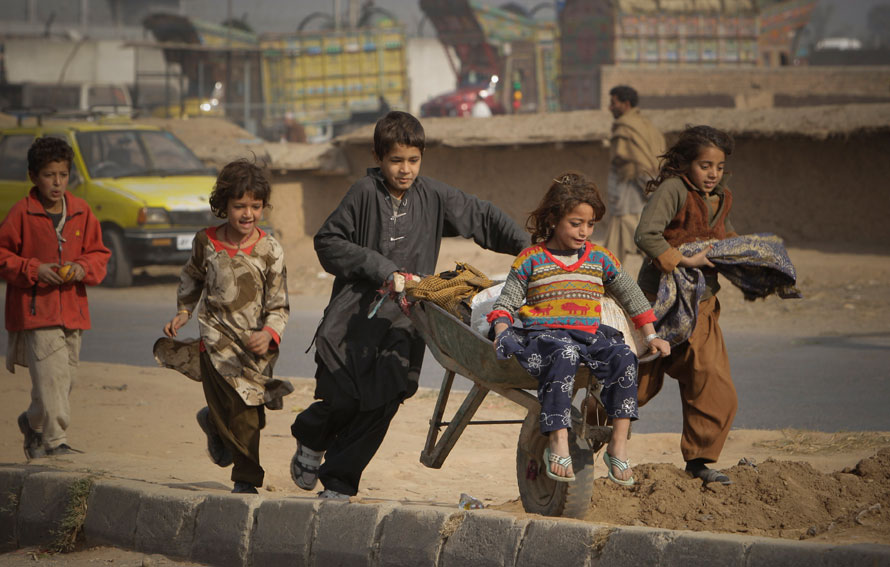
This post is dedicated to these beautiful little angels who could be our role models and teach us lessons in many many ways.

Childhood is the world of miracle or of magic: it is as if creation rose luminously out of the night, all new and fresh and astonishing. Childhood is over the moment things are no longer astonishing. When the world gives you a feeling of “déjà vu,” when you are used to existence, you become an adult.
~Eugene Ionesco.

Singer: Declan John Galbraith (born 19 December 1991). More than his own country, Englnd, he is famous in China, where his songs were chosen as part of the Chinese education curriculum for learning English. Galbraith’s songs are used to help Chinese children learn English as his songs are easy to remember and suitable for children.
He was not even 14 when he sang this song.
Tell me why?
(Lyrics)

In my dream children sing a song of love for every boy and girl
The sky is blue and fields are green and laughter is the language of the world
Then I wake and all I see is a world full of people in need

Tell me why (why) does it have to be like this?
Tell me why (why) is there something I have missed?
Tell me why (why) cos I don’t understand.
When so many need somebody we don’t give a helping hand.
Tell me why?

Everyday I ask myself what will I have to do to be a man?
Do I have to stand and fight to prove to everybody who I am?
Is that what my life is for to waste in a world full of war?

Tell me why (why) does it have to be like this?
Tell me why (why) is there something I have missed?
Tell me why (why) cos I don’t understand.
When so many need somebody we don’t give a helping hand.
Tell me why?

(children) tell me why? (declan) tell me why?
(together) just tell me why, why, why?

Tell me why (why) does it have to be like this?
Tell me why (why) is there something I have missed?
Tell me why (why) cos I don’t understand.
When so many need somebody we don’t give a helping hand.

Tell me why (why,why,does the tiger run)
Tell me why (why why do we shoot the gun)
Tell me why (why,why do we never learn)
Can someone tell us why we let the forest burn?

(why,why do we say we care)
Tell me why (why,why do we stand and stare)
Tell me why (why,why do the dolphins cry)
Can some one tell us why we let the ocean die ?

(why,why if we’re all the same)
tell me why (why,why do we pass the blame)
tell me why (why,why does it never end)
can some one tell us why we cannot just be friends?

Personal Note: Few things in life have made me cry like a kid, and this song was one of them.