Open up your mind and your potential reaches infinity…

Negative Stereotypes


Think Norway. What occurs to your mind?
A beautiful country up in the north, where it snows, its all peaceful, no crime. No?

Think Africa. What crops up in the same  head?
Poverty, AIDS, famine, a picture of a starved kid pops up in imagination, and for some well informed perhaps they think of it’s corrupt leaders. Yes?

BTW, don’t  you know Africa is not a country but a second largest continent?
It comprises of  57 countries, each with a distinct culture, language and of course like any other country, each of them have their distinct problems.

So will it  be  justified to summarize all these sovereign states with just  four or five issues, that too very negative.

Why did this stereotyping occur?
The answer is simple. Disinformation.

How?
Of course through the various advertisements from the social sector, that with all their good intentions wish to collect funds for development in the continent. And the media, that through its good intentions tries to highlight to the world the grave  issues they face. However, despite their good intentions, they end up creating a negative stereotype.

Ever thought what must Africans be thinking or feeling of this stereotyping of  them?
It is not that such issues do not exist,  they do, but then this is not all, about Africa.

To highlight this negative stereotyping, without  lashing out in anger, a group  has come out with an extremely creative and cheeky parody called “Africa for Norway” with the message:

“ Imagine if every person in Africa saw the “Africa for Norway” video and this was the only information they ever got about Norway. What would they think about Norway?”

Also imagine if they also used  picture of a Norwegian child shivering in cold, without permission from those concerned?

Here is the parody “Africa for Norway” :

What message do they want to convey through this initiative?
1.Fundraising should not be based on exploiting stereotypes.
2. We want better information about what is going on in the world, in schools, in TV and media.
3.Media: Show respect.
4.Aid must be based on real needs, not “good” intentions.

For more details on the brilliant project click>>  Radi-Aid .

Coming closer to home, who would know more about stereotype than Pakistanis and Muslims with a “My name is Khan and I am not a terrorist.”  being their holy passport to the outside world.

On a personal note:

Growing up as a minority Muslim in a metropolitan New Delhi, India, I came across some curious stereotypes:

  • How many wives  does your father have?
  • Why doesn’t your mother wear a burqa or why doesn’t your father have a beard?
  • Is you father a professor of Urdu in Delhi University?
  • Do you eat Biryani everyday?

Equally ridiculous questions were asked when I came two decades ago, as a newly married immigrant to the megacity Karachi in Pakistan:

  • Are you a Hindu? (On wearing a saree and bindi together, and being of Indian origin).
  • Did you have Hindu friends?
  • Did you ever eat food in Hindu households?
  • Kya India mein VCR hota hai? (Are there VCRs in India?) ( The last curious query  sounds hilarious 😀 now, but it almost got me crying as a new immigrant. Those were the days when India had only Fiat, Ambassador or Maruti cars,   no Sony TVs and yes, not even StarPlus channels 🙂 ).

Not sure if these stereotypes were also created through media !


All dreams can be turned into realities, all we need to do is to first break the barriers within, and take the first step forward. PHOTO: AFP

Published in Express Tribune on Aug 15, 2012 : http://blogs.tribune.com.pk/story/13383/india-and-pakistan-lets-recover-our-natural-bond/

Many stories in our lives, no matter how insignificant, leave us changed. I narrate my personal life experience, as a young child, which subconsciously broke my psychological barriers between India and Pakistan. This was long before I even decided to marry a Pakistani, and cross over to the other side.

Living in a rented house in New Delhi, India, we were faced with a senior Hindu couple as our landlords, who were old workers of a radical Hindu extremist organisation. Being a very strict vegetarian couple, even the normal Hindu families wouldn’t feel comfortable renting their upper floor.

My parents, being moderate Muslims, were respectful of their religious sentiments, and in dire need of a short term rental place. They thought they would be able to spend next six months as tenants there, without any problem. The owners had put restrictions on us for certain non-vegetarian food items which we were not allowed to cook in the kitchen. It did make us a little uncomfortable but out of respect and religious sentiments, we would strictly abide by their rules.

Auntie, as my parents called her, would come and check the kitchen often. But since my parents were complying to their demands and respecting their sentiments, they did not object. In fact, they let her reassure herself.

Once my father’s aunt in Lahore fell sick, and he wanted to see her before she passed away. Luckily the whole family got the visa too. My parents informed uncle and auntie that they were going for a visit to Pakistan. To be honest, we expected a negative reaction from them for their tenants were to leave on such short notice.

Surprisingly, a day later, the senior couple came upstairs to us and made an appeal. They said they lived in a house in Lahore before they migrated to India in 1947, as newlyweds, and if we could bring back a picture of that house to them, it would mean a great deal. They had the house address memorised by heart, even after almost 29 years of living away from it. They had a strong bond with Lahore and were holding on to memories of their youth spent there.

The address was (some number), Ram Gali, Lahore.

We went to visit their house and took photographs of it. The current residents were very hospitable and showed us all the different and curious things about the house they had left exactly as they were.

One such thing was the “Om” emblem installed at the head of the entrance of the house. We were surprised and found it immensely kind of the new residents to have left it there as the Sanskrit word ‘Om’ is of sacred importance to Hindus.

When we returned, the first thing my father did was he developed the photos, and present it as an album to our former landlords.

Upon receiving the album, the old couple broke down. Tears and simultaneous smiles shone on their faces as they touched and saw the pictures. My parents gave them details of the house, verbatim from the current residents in Lahore. They were particularly moved by the symbol “Om” still being in place, and the name of the street still being Ram Gali. Maybe, sitting across the border, they had the idea that Pakistan is extremely anti-Hinduism and all their belongings would have been destroyed or reconstructed by now.

Around the same time, my nani (maternal grandmother) had passed away, and mother would feel depressed. Auntie would then console her by saying,

You are my daughter; as it is I have none.

She had two sons, and they, too, were living away at that time. Her motherly emotions were not stymied by differences of faith. She was beginning to realise that our prejudices based on religion were unimportant and meaningless.

Auntie never came up to check for non-veg being cooked in the kitchen again, as she had before. But she did visit to give us guavas from her tree in the backyard, or chameli (jasmine) flowers from the garden, which my mother loved so much.

Our new house was under construction and uncle once offered,

Take me there, for I have experience in house building and can give you some suggestions.

After six months, we moved to our own house, but the relationship we had weaved out of love remained. It was no more a torn fabric of partition but a beautiful tapestry of friendship and love.

They did not visit much as they were very old, but whenever we visited their house, we received hugs with a warm reassurance,

“We are your nani (grandmother) and nana (grandfather),” they would say, helping us children cope with the absence of our own.

Now, I’m married to someone from across the border and I believe that my Indian nani and nana’s attitude played a major part in removing the demonised presumptions I had of people across the border. Perhaps this was what gave me the courage to even think that living with a man from Pakistan would not be such a bad idea after all.

Two decades on, witnessing the turbulent tides between India and Pakistan’s relations, and watching the feelings of misunderstanding existing between certain sections of people on both sides, I feel there is a dire need to break these psychological barriers. We may now be independent but we share with each other more than what a simple defined border can weaken. Our traditions, culture, attire, our liking of spicy food and chapattis and our love for our families are all mutual.

Thankfully, the distance-less, border-less social media is playing that role. It is bringing people across the border closer as friends. Even something as small as a Twitter trend about our friendship can make a difference in someone’s mindset and remove our biases.

This year, I’ve seen a group on Facebook, as the name implies, “Celebrate India, Pakistan Independence Days for Peace, August 14/15, 2012”.

Following a plea to “Pray for Peace between India and Pakistan” on December 18, 2011, initiated by a Toronto based Indian journalist, Swati Sharan, almost 200,000 people across the globe prayed for peace. Inspired from this success, the idea to form the above mentioned group and to celebrate independence days together for peace was conceived. Thus a Facebook event was created.

A number of peace groups from different parts of India, Pakistan and even Canada joined in. (They are all listed on the event page).

Growing in just a few months, now all these groups are set to celebrate the two independence days on ground as ‘peace days’, in their own unique ways. They all look forward to take it further each year, hoping that more groups will soon join in.

But we need to see more of this sentiment beyond the virtual world and into the real one.

Learning from these example, I again feel reassured that after all dreams can be turned into realities. All we need to do is to first break the barriers within, and take the first step forward. After all, we cannot deny the fact that we were once one. We stood united and even fought against the British together, hand in hand. And today on India’s Independence Day, despite the political and legal barricades, we have to learn to love each other. We already do so naturally; maybe we aren’t expressive enough or have yet to unlearn our biases and accept each other as brothers that we are, but it is undeniable that love does exist.

I pray for Pakistan and India to thrive far more than they already have. Where Pakistan will always be in my prayers, India will too. I wish for lasting peace to prevail between the two nations, the two neighbours, the two brothers.

Happy 65th birthday, India! Happy independence day.

Whatever IS will be WAS.


The above heading is a Buddhist saying by Monk Ñanamoli. The  in depth meaning of its essence could not be more powerfully conveyed than by an ancient  Buddhist ritual called dul-tson-kyil-khor ( Mandala of colored powders).

Sometime ago in search for an idea for silk painting I accidentally bumped into a beautiful  handmade creation, which in first hand looked like an intricate colorful geometrical design, called Sand Mandala.

As the name implies, it is a creation made from colored sand. Mandala means a palace. There is much more to it than the eyes can see.

From the Tibetan Buddhist tradition, this is not just a creation of a beautiful sand castle, but a spiritual journey, for which requires a great practice and meditation before embarking on it. Even during the creation , which usually requires 4 monks (bhikkus) who keep chanting hymns and focus all their minds and actions into its creation.

The sand mandala for them is a three dimensional Palace of Imagination in which they enter, and each dot, line, shape and color that they create in it stands for a specific aspect of Buddhist Philosophy. There are many types of Mandalas, and each stand for a unique symbol.

The creation has to be accurate, and the work  between the 4 creators, working on each quadrant,  has to be well coordinated.

Billions of grains of colored sand powder are carefully and accurately placed in its specific location, using two copper conical pipes called chapku, which are gently tapped over the other, to release controlled amount of sand.

The colors for the painting are usually made with naturally colored sand, crushed gypsum (white), yellow ochre, red sandstone, charcoal, and a mixture of charcoal and gypsum (blue). Mixing red and black can make brown, red and white make pink. Other coloring agents include corn meal, flower pollen, or powdered roots and bark. In the ancient times they used colored dust from the lapiz lazulli, emerald, ruby, and corals and other precious stones to get colored dust powder.

It takes from few days to few weeks to create a mandala.

However, the most mind boggling part arrives when the whole intricately built sand mandala is undone ( yes, you read it correct) from outside-in in a rotas wheel movement, never to exist again, by the very monks who created it. This metaphorically implies the impermanence of things.

The dust collected is immersed in a flowing water ( river nearby) symbolizing the transference of the energy of goodwill ( imparted to it during its creation)  and compassion, to the rest of the world. {The whole idea gave me shivers and goose bumps}

Hence, when even  at first look it appears to be an end of a creation, but in the real sense, nothing is ever destroyed forever, just that it is returned to the nature, to rejoin elements.

And this does happen to all animate and inanimate objects on earth, be they complicated  humans,  simple plants, soft clouds or  even lofty mountains.

When Buddha passed away, one of his disciples remarked:

Aniccaa vata sa”nkhaaraa — uppaada vaya dhammino
Uppajjitvaa nirujjhanti — tesa.m vuupasamo sukho.

Impermanent are all component things,
They arise and cease, that is their nature:
They come into being and pass away,
Release from them is bliss supreme.

It compels me to be reminded of Kabir’s doha:

Mati kahe kumar se tu kya rondey mohe,
Ik din aisa ayega main rondoonga tohe.
(The clay says to the Potter: What will you maul me, a day shall come, when I shall maul you).

Or yet in another doha he reminds:

Kaya nahin teri nahin teri,
Mat ker meri meri.
(This existence isn’t yours, don’t call it “It’s mine, it’s mine.”)

And of Bulleh Shah’s kaafi:

Na Kar Bandeya  
Meri Meri
Na Teri Na Meri
Char Dinan Da Mela
Duniya Fair Mitti Di Dheri.
(O people, why  be obsessed with me, mine. Its neither yours nor mine. Its for a while, then we all shall be but a pile of dust).

Indeed, “from dust we were born, and to dust we shall return.”.


An open letter to Director General UN Women, on issues and recommendations for women in one’s region.

First published here: http://worldpulse.com/node/34370

Dear Michelle,

I am sure you, jolly well, must be aware, as a woman that despite being more than half of the world’s population, we the female gender, is still considered either a subordinate or a commodity in the hands of men on this earth. The issues faced by us women all over the globe are numerous and it would take many a blogs to even list those issues. Female infanticide, girl child neglect, malnutrition, sexual abuse, illiteracy, economic slavery, women trafficking, domestic abuse, bride burning, moral policing-you name and that issue still exists among a large chunk of this world’s half population.

As India is my homeland and Pakistan the land of my husband and kids, Michelle, I have chosen to love both the countries as much and hence the plight of women in both the countries is very close to my heart. Broadly speaking, the issues faced by the women (my sisters) in both the countries are similar except for some minor differences in the magnitudes or the nomenclature.
I wish to recount here a typical journey that ‘my sister’ i.e. a typical woman lives in the Indian subcontinent right from her conception till her death.

A news of a pregnancy is rejoiced in our communities and right from that moment, the prayers begin wishing for a son. Rarely does one see people who wish for a girl especially in the absence of a male child. Hence the first rejection of her dignity is registered in a very subtle manner, right at her conception.

As the pregnancy progresses many an enthusiastic parents, especially in parts of India, frantically start to investigate for the gender of the baby growing in the womb and if confirmed a female–thanks to the practice of ‘female foeticide’–some of my sisters end up being aborted just for being a girl. Hence their life ends long before it actually is destined to begin, of living in this world.

Among those who open their eyes in this world—not many are in a position to call themselves lucky.

My little sister is raised as a secondary to her male sibling. She is fed once her male siblings or other male members of the household have had their share, and hence she embarks upon the journey of life malnourished right from the outset. From the birth till death she is under the control and command of a male ‘guardian’ be it a father, a brother, a husband or a son.

While her male sibs go out to play, she is asked to stay indoors and help the mother in house chores. And even if her brother is lucky enough to go to school, she is, in many places , told to stay behind looking after the younger sibs, no matter how much she aspires to acquire education. About more than 3 out of 5 of my young sisters from toddlers to adolescence, in Pakistan fall prey to the beastly lust of men and that too known uncles or cousins (in 90% of cases) in the form of sexual abuse, molestation or rape.

As she attains an appropriate ‘age’ the elders decide that it is time for her to move on with matrimony. What is the age of her groom is purely her luck—he could be a young boy of her age or if the parents are lucky to get a good price—then the groom could be as old as her father. The age is no bar. She is by now well trained to not to express her like or dislike and could be subjected to any sort of oppression to make her obey the decision in case she dares to defy.

The marriage for my sister, Michelle, does not by any means, mean liberation from an oppressive father or an authoritarian brother, but a mere transfer of control and command of her life and existence, to her husband. In many a communities in Pakistan, if she opposes, she is subject to severe punishment in the form ‘honor killing’ or else.
And out of those who do get married, a third have to bear the taunts and torture at the hands of the in laws for not bringing enough of the dowry. Some are even doused with kerosene and burnt alive ( ‘Bride burning’) in India and sometimes in Pakistan too.

National Crime Records Bureau (NCRB), India said a total of 7,618 incidents of dowry deaths were in 2006 , in India, an increase of 12.2 percent over 2005.

On the other hand, in many parts of India, and Pakistan, 1 out of 3 of my really poor sisters stay unwillingly single simply because their parents do not have enough to pay for their ‘dowry’. Literally speaking the groom is up for sale with a price tag of dowry.

However not just the poor even the rich sisters of mine in Pakistan meet the same fate. Their Feudal Lord fathers and brothers do not want their lands to be divided by giving the daughter her share. So the daughter is loaded with jewelery , expensive clothes and ‘married to the QURAN’. Yes, Michelle, this is true and I do not exaggerate even a bit.

Once in wedlock , almost half of my married sisters have no control over their own life and body. They cannot decide how many children to bring forth.

Every hour that ticks by, in India, inflicts more brutality on women, with 2 rapes, 2 kidnappings, 4 molestations and 7 incidents of cruelty from husbands and relatives, reveal the latest national crime statistics, National Crime Records Bureau (NCRB).

Similarly, 4 out of 5 women are subject to some kind of domestic abuse—either verbal, economic, psychological or physical violence in Pakistan according to Human Rights Watch.

And the physical violence is not just beating—it could be in the form of physical or sexual violence, torture, mutilation, acid throwing on the face, burning her alive or even strangulating her to death.
And only a minority of cases come into the knowledge of the authorities or in the news, out of which only a handful are proven guilty and punished. Majority of them manipulate to get it seen as an accident and remain Scot free to repeat the same offense with another innocent sister of mine.

We, both in India and Pakistan, are religious communities but unfortunately the onus of upholding religious obligations and principles begins and ends with a woman. She is morally policed and reprimanded if she deviates from the norm, but if the same offense is committed by a man, everyone including our religious leaders turn the other way.

As she grows older, my elderly sister is seen as the embodiment of sacrifice, patience, and morality while the men gallop like stags all over doing as they please. After all it’s a man’s world out there.

She may have worked, however hard, to raise her family or run the household, and is thus called a ‘homemaker’, but she does not get any share in those assets which she assists in her husband amassing in his name. If she is divorced for any valid or invalid reason, she has to walk out of the house with bare hands as all that ‘home’ she has assisted her husband in ‘making’ is entirely his.

She grows old and the command and control shifts from the husband to her son. She is seen as an embodiment of selflessness, sacrifice and patience . The younger girls are shown the glory of her selflessness and asked to emulate her.

Finally, my elderly sister dies a quiet death, without even realizing that she deserved a far better deal in life than was given to her . And hence the relay of her life which began from the passing of a baton from being an obedient daughter to a sacrificing sister to a dutiful wife to a selfless mother, finally ends as a ‘great’ woman into her grave.

This is the typical story of a good 50 % of the women in the subcontinent if not more.

It has been going on for ages and shall go on unless we make some real dent in the situation.

The only way she can come out of this vicious circle is by providing her ‘quality’ EDUCATION.

As a woman gets educated, a whole family including her subsequent generations get educated too. She gets empowered to take the right decisions from the choices in her life—be it her selection of spouse, or her decision to bear how many children or how to raise intellectually superior children.

Education will also empower her to realize that she has her rights too, and not just her duties that are rubbed on her face all her life.

Education will enable her to treat her own daughter as an equal to her son.

Education shall empower her to earn a better livelihood, and make her come out of economic dependence from the men in her life.

Educated woman who is free to make her decisions, is a happy woman and raises a happy family. A happy family brings forth happy citizens. And happy citizens contribute positively not only towards their own homeland but also the whole planet, at large.

Hence, we do not need any rocket science to discover how to empower a woman. Simply ensure her ‘proper and quality education’ and she shall take the reins of her life in her control.

I hope it isn’t asking for a lot, Michelle.

Thank you.

Sincerely,

Dr Ilmana Fasih

9 February 2011


First published as cover story in The Rationale June 2012: http://therationale.org/June_1_ver/Female.html

The first time I personally heard of female foeticide( abortion of female foetus) being practiced in India, was during my clinical posting in the Radiology department as a Medical student in Delhi, in the late 80s. The patient with third pregnancy, and two previous girls, two girls, wanted to know the gender of the baby in the Ultrasound at 6 weeks.

The annoyed registrar had shooed her away, but then shared with us in the doctors room, that : “She will in any case go to a private clinic, get the gender detected and will definitely abort it of found a girl”.

We as students expressed our dismay, a male registrar retorted in humor: “Evil should be nipped in bud.”

Female foeticide, killing the female fetus in the womb, is a modern phenomenon, as compared to the age old existence of Female Infanticide, the killing of the female new born or infant. It began in Asian societies like India and China sometime in the late seventies, coinciding with the campaigns of family planning, easing of medical termination of pregnancy (also called legal abortions) and with availability of the ultrasound machine to monitor pregnancy. Although, there were other tools available for checking the sex of the fetus  through amniocentesis, but was an invasive procedure, and could lead to complications like abortion. Moreover, unlike the Ultrasound, Amniocentesis was not a tool available to the layman, or semi-trained medical professionals to abuse it to their advantage.

As a medical professional and as a female member this very society, one kept hearing of the news of women asking for gender detection, simply to select the baby of their choice

However, it was the 2001 census which shocked the world. It brought forth the hard figures that the practice of female foeticide was not just existent, but flourishing. The overall Indian ratio of 927 girls to 1000 boys in the 0-6 year’s age group, when in the world the ratio was 1045 vs 1000. The statistics were more skewed in the Northern Indian states of Punjab, Haryana, Uttar Pradesh etc than in the Southern states.

And it went on, quietly, unabated, under the cover of legal abortions, and with Ultrasound getting cheaper and more easily available to all levels of health workers. The trend caught up, rose in numbers and spread to other states.
The census reports for the 2011 nailed the speculation that the trend was catching pace, with the stats now being 914 vs 100 for girls vs boys. In some of the states it has gone to as low as in 800s e.g. Uttar Pradesh (899 girls for 1,000 boys), Haryana (830), Punjab (846) and national capital Delhi (866).
The conditional sex ratio for second-order births when the firstborn was a girl, fell from 906 per 1000 boys (99% CI 798—1013) in 1990 to 836 (733—939) in 2005; an annual decline of 0•52% (p for trend=0•002), reported medical journal Lancet in May 2011.

What also came forth in the 2001 census was that it was more of an urban phenomenon and more so practiced by the upper middle class of educated families.

The Urban and Rural ratios being 946 and 900 respectively, to 1000 boys.

“Declines were much greater in mothers with 10 or more years of education than in mothers with no education, and in wealthier households compared with poorer households.” reported a Study published in Lancet, in May 2011.

Better economic conditions and higher education, instead of improving their thinking, enabled their misogynistic mindset to dispense away the extra income, and abuse the modern technology to their advantage. Thus defeating our age old myths of education, and economic circumstances will increase the plight of women. Perhaps our technological knowhow and economic affluence has developed faster than our brains.

The irony is that it is the same communities affluent, well educated, and even God fearing religious strata of society, who celebrates ‘Kanjak’, the day when young girls are worshipped as Goddesses, has now started to kill their own Goddesses in the womb.

Innovations in bypassing the laws:
In the mid 80s some Indian states began passing legislation like the Pre-Natal Diagnostic Techniques (Regulation and Prevention of Misuse) Act, which banned sex determination tests. In the 90s the same act was legislated in the centre too. The Act carries a three-year imprisonment and Rs10, 000 fines for offenders, prohibiting the gender disclosure of the foetus during Ultra sound. However, tens of thousands of Private clinics with cheaper version of Ultrasound machines had mushroomed till then, all over the North Indian cities, performing the gender detection and the abortion of the female foetus as a ‘package’.

There have been reports that certain clinics in small cities display openly billboards with incentives: “Do you want to spend 500 or 50 lakhs” referring to the cost of abortion against the cost of raising a girl child and marrying her off with a dowry.
The gender disclosure law which was an offence, is creatively bypassed, by using code words like: For girl vs boy as:
Jai Mata Di vs Jai Sri Krishna
Pink city Jaipur vs Blue City Jodhpur
Jalebi vs Laddoo.

It is not just the men of the family, but the senior women like the mothers in law who coerce the women to resort to sex selection. Many expectant mothers have to undergo multiple abortions, jeopardising their health before the desired boy is conceived.
Needless to repeat it the mindset of boys being ‘assets ’, kul deepaks (the lamps of heritage) , are looked up as bread winners, carers for the old age, continuation of family name, as a necessity to perform the last rites of the parents.
On the other hand the impression of girls as liabilities, ‘paraya dhan’ (someone else’s wealth), ‘bojh’ (burden) because of the expense involved in marrying them off with a fat dowry, need to protect them physically and morally, and likely to bring disrepute to the family if their morality is lost.

UNPFA report “India Towards Population and Development Goals”(1997), estimates that 48 million women were ‘missing’ from India’s population since the turn of the century. The report further states “If the sex ratio of 1036 females per 1000 males observed in some states of Kerala in 1991 had prevailed in the whole country, the number of would be 455 million instead of the 407 million (in the 1991 census). Thus, there is a case of between 32 to 48 million missing females in the Indian society as of 1991 that needs to be explained.”

According to UNICEF, India tops the list as far as illegal abortions and female foeticides are concerned. Of the 15 million illegal abortions carried out in the world in 1997, India accounted for 4 million, 90% of which were intended to eliminate the girl child.

Another study reported in the Lancet journal indicates that 8-10 million females were aborted during the past 10 years,( from 2001 to 2011) mainly to couples whose firstborn was a girl and among the more well-off families. This number is much bigger than all the men and women killed in genocides put together.
Much to the dismay, a recent report published by Toronto Star, talked of preliminary reports of such skewed ratios, in favour of a boy, in the second and third order births among the Indians settled in Canada.

However, this phenomenon is not just restricted to India; another major country facing the menace of female foeticide is China.

The preference for boys, in China too is tied to their religious belief that male heirs are necessary to carry on the family name and take care of the family spirits. A Chinese family worries that if there is no son no one will look after them and keep them company in the afterlife. Confucius said, “There are three ways of being disloyal to your ancestors. Not carrying on the family name is the worse.”

Chinese parents openly celebrate when they have boys, and some even show disappointment when they have girls. Newborn girls are given names like Pandi (“expecting a boy”), Yanan (“second to a boy”) in hopes the next child will be a boy. Six million women bear the names Lai-di (“call for a brother”) and Ziao-di (“bring a brother”).
“Daughters are like water that splashes out of the family and cannot be gotten back after marriage.”, a Chinese saying resonates with the belief we as South Asians have of girls being a ‘guest’ in their parents homes.

The statistics suggest that China did not have a skewed male: female ratio till the one child norm was enforced. After the enforcement, the rate of abortion of female fetuses increased in China, thereby accelerating a demographic decline after 1979. As most Chinese families are given incentives to have only one child, they would want it to be a son. However later the Law was eased especially for those who had a first girl child, hence giving a legal government sanction to the preference of a boy.
In 2005 figures, 118 boys were born for every 100 girls, up from 110 boys per 100 girls in 2000 and 112 in 1990.

Recently in the past few years, Vietnam has experienced an unusual rapid change in the sex ratio at birth.. The ratio was about 106 male births per 100 female births, in 2000 and has it increased to 112 in 2008.

“Currently, China reports higher sex ratio at birth than Vietnam. However, what is striking in Vietnam is the unusually rapid rise of the SRB [sex ratio at birth] recorded over the last few years.” says a UNFPA representative.

There are no studies existent from Pakistan, but as mentioned in by an investigating journalist in the TV program Lekin by Sana Bucha, there are 3,000 single room clinics existent just in Karachi, with one or two employees, performing illegal abortions, 90% of them being for the female child. This is despite of abortions being illegal in Pakistan, unlike in India or China. This could be just the tip of the iceberg.

A 2005 study estimated that over 90 million females were “missing” from the expected population in Asian countries including China, India, Pakistan, Afghanistan, Burma, South Korea and Taiwan alone, and suggested that sex-selective abortion plays a huge role in this deficit.

Research suggests that instead of economic conditions, like poverty or education, it is the cultural beliefs that play a much larger role in gender preference and sex-selective abortion. To prove this, in places like sub-Saharan Africa, Latin America, and the Caribbean such deviations in sex ratios do not exist in.

As scientific progress furthers and the technology becomes more affordable and available to the common man, the curse of Female feticide, is likely to follow the course it is following currently. There are already available on internet, home monitoring kits, to detect the sex of the new foetus from blood or even urine samples. With abortion techniques getting more medical than surgical, the situation may simply go out of hands of the health personnel even..

The affluent and the educated who perform this would realise its curse only as it will be going to bite them back when their sons will find it extremely daunting task to find brides, and will be forced to stay bachelors.
It is estimated that by 2020 there could be more than 35 million young ‘surplus’ males in China and 25 million in India.

This has actually begun to be seen in smaller scale in various states in India and China. It is already happening that single men are more involved in violence and crimes, resorting to drug addiction and alcoholism, after being frustrated to find a suitable spouse. Women once again are being punished with a rise in rapes, in prostitution demands and through other crimes against them. In some places there have been reports of women being forced to share husbands (polyandry).

In India, the legislation prohibiting gender-selective abortions has so far been evaded easily, and there have hardly been any prosecutions. One wonder what is it that will change the mindsets if education and affluence could not. Would any activism, any mass media campaigns, any icons be able to change this?

My heart shudders to imagine, where and when shall this stop, if at all.
Are we just going to learn it the real hard way?

Dr. Ilmana Fasih
19 May 2012


Published in Express Tribunes Blogs:

http://blogs.tribune.com.pk/story/14250/our-taunts-at-west-indies-who-is-the-most-racist-of-them-all/

Less than a couple of months ago, a colleague of mine, who is of African American descent, and a Muslim convert, mentioned to me an incident:

“You know I was sitting in the mosque for the taraweeh and there was a South Asian woman sitting next to me. While talking on her cellphone, she made some reference which I’m sure was for me ─ ‘kaali’ (black). The funniest of all the things was that she herself was not a shade lighter than me.”

Beneath a hearty laugh, I was terribly embarrassed. Almost as a rebound, I explained,

“You may have been mistaken, but yes, many of us are pretty colour conscious, and you can easily guess that by the amount of business we do with fairness creams. Not just the top brands, but top film stars from India and Pakistan, too, are eager to endorse those creams.”

To make her feel comfortable, I added my personal true story.

My husband’s loving aunt used to call me kaali, when I newly married him. She did this because their nephew (my husband) was a few shades fairer than me. She proudly told,

“He looked so angreiz (English/white) when he was born, that we gave him an English name ─ ‘Bobby’.”

As her fascination for his skin colour still continues, she calls him Bobby to date.

Beyond this personal experience, it was pretty unpalatable to keep hearing repeatedly, West Indians being referred as “kaali andhi” (black storm) by a mainstream Pakistani channel for the past two days.

As the game progressed and West Indians got closer to the victory stand, some of us started to lose our control and the ‘kaaley, shadeed kaaley’ (black, very black) references spilled all over my social media timelines, the commonest one being:

“Hum kaaley hain to kya huwa, trophy waaley hain.”

(So what if we are black? We have the trophy.)

Here are some tweets from my timeline during the match:

Mariyam Ali Dhillon ‏@MariyamAli
“The Kali Andhi rises”. VEHSHI! #WIvsSL

Amidst there were occasional sane tweets, expressing their dismay at the references:

Maria Memon ‏@Maria_Memon
Kindly spare us the “Kaalay” jokes. #NotFunny

R. ‏@rahimaxarsenaL
Jesus Christ, Geo. Kaali aandhi? That’s effing racist.

Shoaib Taimur ‏@shobz
Cricket exposes the racism in our people. just check their FB statuses and Tweets.

In reply, some had ample justification for the use of these terms, with expressions such as:

FurSid ‏@fursid
#TwitterRage making a mountain out of mole hill – #kaaliAndhi#racism #twitterPhadda #idiotism

Mansoor Zia ‏@nOxym0ron
@shobz Sometimes, it’s just a joke. People take life too seriously and worse, too literally.

There definitely is a background to this “black storm” reference. It’s from back in the 70s and 80s, when the West Indians were the reigning kings and feared for their strength.

Since most people explained themselves by saying that the reference wasn’t offensive and had been used for a very long time, I decided to give them the benefit of the doubt. I Googled the history of this reference and its link with the West Indians.

I did not find a single reference on the internet of the West Indians being called the “black storm” in the 70s/80s.

None of the international media had referred to them as the “black storm”, saving only some of our Pakistani mainstream newspapers. Are we the only ones, with the sharpest long term memory then?

Even on Twitter, the hash-tag #Blackwash barely had a dozen references, but the trigger word ‘kaaley’ was all over my timeline, with or without the hash-tag.

Moreover, how does this reference being 30-40 years old justify its political in-correctness?

Haven’t things changed since then on an international stage? Shouldn’t we then change our own mindsets, too?

Mind you, all the things I’ve quoted are from social media only. One can calculate how many folds thick the usage of such racial slurs has become in the real world.

However, on a more optimistic note, there was an overwhelming number of people who rejoiced over West Indians winning the ICC World T20 cup. I wish that the number will someday tilt the balance in their favour. For that to happen, we certainly need to educate the people and most importantly, the media. It is socially responsible and should realise what a colossal role it plays as an opinion leader. It is time they know that there is no option for them but to at least be responsible enough to convey ethically correct messages, and not merely echo the insensitive crowd-pleasers.

Malala


Andhon ko unka chehra dikha diya hai Malala ney,
Jehad dar-asl kya hai, sikha diya hai Malala ney.

Jahalat sey hai jang, jata diya hai Malala ney,
Taleem  hai farz-e-momin, bata diya hai Malala ney

Soye huwe seenon ko jaga diya hai Malala ney,
 Khoye huwe iman se, mila diya hai Malala ney.

Payam-e-Amn duniya ko, suna diya hai Malala ney,
Her shakhs  ko Malala, bana diya hai Malala ney.


The blind(ignorant) have been shown their real face by Malala,
What is true struggle, has been taught to us by Malala.

The real fight is against ignorance, has been asserted by Malala.
Education is an obligatory duty of the believers, is reminded, by Malala.

Apathetic hearts have been shaken awake  by Malala.
The lost message of faith  has been rediscovered by Malala.

The message of Peace to the world  has been conveyed by Malala,
Each one of us feels Malala, has been made possible by Malala.

Humbled these verses have been included in the anthology: Malala: The poems on Malala Yusufzai, released on the first anniversary of her tragic targeting on October 9, 2013.

https://www.goodreads.com/book/show/18405178-malala


Dear Pakistanis,

Please know that Pope visited Lebanon at the height of the tension, last week, and Hezbollah leaders attended his sermon, refrained from protesting the AntiIslam film until he left, and called for religious tolerance.

Biggest-ever rally over the anti-Islamic film brought scores to Beirut, Lebanon, with 100,000 men, women and families taking part in a peaceful rally on September 18, 2012.

This was followed by big rallies by Muslims in Lebanon on Monday, Wednesday and Friday.
On Friday, tens of thousands of supporters of the Shiite Hezbollah movement held a raucous protest in the eastern Lebanese city of Baalbek. Soon after, a few thousand supporters of a hardline Sunni cleric held gathered in the capital, Beirut.
Shias, Sunnis, came together, in harmony, with genuine remorse against the mockery of Prophet Muhammed ( pbuh).
But note no one was injured, no one was killed and no property harmed in any of these protests.

If it is unbelievable, see this >>

watch?v=ab6M3QSjc54&feature=related

And then there were peaceful rallies in Sao Paolo, Sydney, Paris, London, Allepo, Tunisia, Jakarta( in the  most populous Muslim country), Colombo with no one  harmed.

While protesting in Pakistan, on Friday, our Christians brothers came out with us, in solidarity to support us, and empathize with us, and we burnt a church down to ashes–the Anglican Church in Mardan and a School adjacent to it. We set on fire Church and School looting everything like computers and chairs whatever were in School. We the Muslims, the lovers of Prophet( pbuh), desecrated Holy Bibles and articles used in Holy ceremony and brought them in compound of Church and set them on fire.

And when we protested on Friday itself, we killed 19  innocent men and policemen who were there to protect us, injured 500, looted  several of our own businesses, torched scores of our own vehicles and  destroyed some of our own public offices.

You think I am exaggerating, see this:


BTW, this was shown on RT, Russia Today, broadcast from Moscow & Washington DC offices.

Feel the difference between the two videos, and the two behaviors.

Also may I add, some 7000 adults who burnt Holy Books lying in this church, shall go free, unaccounted for, while a minor girl, learning disabled languished in jail for weeks, for not having burnt even a corner of a page of yet another Holy Book.

Are we pained by the pinch of  this  hypocrisy? Do we even  feel it ?

MORAL OF THE STORY: Are we really the only and  true lovers of the Prophet Mohammed ( pbuh), who upheld justice and equality? Are we really Muslims? Are we even humans? 

Keep thinking….

“My hamster has died.”


Mr Grey ( name is not real), a middle aged man, calls in a distress centre crying incessantly, “My hamster has died, my hamster has died.”

“ I am so sorry to hear that. I understand your pain.” replied the operator.

All he was repeating was, “My hamster has died.”

The operator was puzzled as to how to help him. She remarked, “Okay, would it be fine if we get you connected to an animal shelter, where they will help you out, to get another pet, perhaps another hamster? Would you like to go to the animal shelter?”

He kept crying and repeating the same words.

A team was dispatched to find out more.

His story:
He was living in a cramped basement, all alone with the hamster for the past 8 months.
Almost 3 years ago he was working in a finance office. He had a wife and two children, 8 and 6 years old. The wife was a stay home Mom.

During the credit crunch, he lost his job. After he was laid off, he could not find a job, despite running around for months. He started to get irritable, and quarrels began with the wife over finances. He hit her a few times, though regretted later. The wife went on to do a part time job to sustain the household. But, he became more abusive.

After an year and a half, he slid into severe depression, when they were served a notice to leave the house, for non payment of the mortgage. He had to be admitted into the hospital for 3 months.
Distressed with his escalating abuse, the wife parted ways, taking the custody of the children. After release from hospital, he was refused custody on account of inability to support the children.

All that he could get  was a hamster, which was a family pet. The hamster was his only company for 8 months.

One day, old and sick, the hamster passed away. Through the death of the hamster, his last link with his family was lost.

This is a true story.

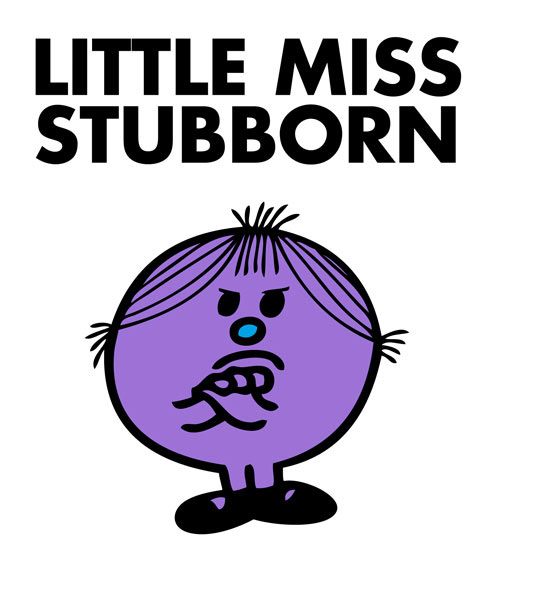
Stubborn:Teens or Adults?


Walking into a Shopping Mall, I saw a teenage girl, sitting on the stairs, almost leaning, and talking on cell phone continually…
“You’ve been lying, all the time…,” She seemed to be doing all the talking, uninterrupted. Just a passing side glance, I could notice her South Asian look.
A few steps ahead, and I could clearly hear, “I am going to kill myself, if…”
Not sure of what she said after If… I turned back. She was a girl in her mid teens, with tattoos, piercings and dressed a typical teen, with a clear Canadian accent.
I had to gather some courage to walk up to her and ask, “Can I talk to you for a minute?”
She was shocked, and gave an angry look.
I faked a brave smile, “I know you are upset. I was concerned; when I heard you say you wanted to be dead.”
She put off her phone and bothered to reply, “Yes.”
“Lets go to Tim Hortons, have coffee, and talk.” She kept walking without actually hearing me, but just complaining about various situations in which he’s cheated.
“I understand. I know it’s tough.” I was carefully watching my words, not to sound indulgent, or make it worse for her.
Her cell rang again. She replied, “F*** you, why the hell are you calling. Go to hell.”
“Do your parents know about him?”
“They know that I have a boyfriend, and they don’t really like it. They don’t care how I feel.”
“Well I care, that you don’t harm yourself and that should share with anyone you trust, will understand you.”
“Yes my girl friends know it.” I could feel she got a bit calmer.
“See, life is not easy, and such turmoil comes in the life of every teen. I may have also gone through the same in my teens. But anything that doesn’t kill us makes us wiser.”
She was listening to me for the first time.
“I know you will get over this. Everyone does.”
“Oh really?”
“Yes, just be strong, and don’t think, anyone or anything is worth ending a life.”

She was reluctant to share her friends, parents or her own number. So I offered if she would take my cell and call me whenever she felt really bad, or angry. She readily saved it in her cell.
While still queued up for coffee, she said, that she needed to go, and “Its okay, I was just a bit too angry.”
”I want you to call me, if you ever get so angry again. Or share it with a friend or a counselor in the school. Let me hug you, if you don’t mind.”

She smiled, we hugged.

She turned back, in a totally desi accent said, “Thank You Auntie.”

This happened almost 5 months ago. I never heard from her, nor do I know of her well being. Just a gut feeling that she must have moved on.

Talking to some desi colleagues, they wondered how I actually dared to intervene in a rebellious teenager’s issue, without being shouted back.

Almost a month ago, in a meeting, a friend, working for a Youth and Children’s charity, actually raised a serious issue of a trend of South Asian teens leaving home, due to extreme family pressures, and then rebelling against the culture, not willing to be identified as South Asians, out of vengeance. Adding to the gravity of the situation, it is hard to find SA families, willing to house them for rehabilitation, or even get Psychologists and Psychiatrists of SA descent who will be culturally sensitive in understanding their issues. They ultimately end up hating their ethnic identity.
With reference to the above incident, a friend recently, requested me to talk to a rebellious girl, who had made ‘various threats’ to her mother, but the family does not want the issue to go out of the house.

I offered to talk to the girl, (who was in her late teens), first. Although initially very reluctant and arrogant, she agreed to share that she was jilted by a boyfriend, and the parents instead of supporting her, taunt her for not listening to them, and “You deserved this,” attitude.
She began, “I hate my boyfriend. I hate my parents too.”
Me: “I understand, but hate is such a drain of energies. Stops you to see the logic.”
Her: “And f*** my parents tell me not to love.”
Me: “If hate blinds good things, love blinds faults too.”
Her: “WTF, shall we become a vegetable then?” And continued about her parents, “They are haters themselves. They don’t even love each other.”

I was clueless. However I realized instead of sermon, I needed to show understanding. And I repeated the same thing which I had said to the above girl, to my own kids several times, or almost to anyone in this situation, young or old:

“Such turmoil comes in the life of every teen. I may have also gone through the same in my teens. But anything that doesn’t kill us makes us wiser.”

The mother, had a list of complaints against her (one of her 3 children), of being very disobedient and “we did a great mistake bringing them here.”

Her tone was harsh, and she did not want to soften her attitude and that “if she did not listen, we will go back”.

No amount of explaining to “be understanding to your daughter in her troubled times, to win her back”, or that “they have rights too, and we can’t force them to our way of thinking” didn’t seem to work at all, so I chose to talk to the girl again.

The girl this time was much softer, and she did promise that she will not harm herself, or her mother. She agreed, “Okay” with a promise to call me back, or go to a counselor, if she felt enraged again.

However, it’s been a few days, and I haven’t heard from her either.

Looking back I was wondering we often call teenagers ‘stubborn’ but in my experience, even with my own kids, they are easier to handle, than the grown up adults. Only if we considered them as individuals and made efforts to understand their problems. They may seem trivial or impractical to us, but in a teenager’s life, such issues hold great emotional weightage.

I wonder if its the teenagers more stubborn or the adults?