Open up your mind and your potential reaches infinity…


by R.V. Smith, Published on 28 October 2019 in Outlook

Diwali was considered, even by the orthodox Muslims, a festival of natural joy of God’s creation.

Diwali or Jashan-e-Chiraghan During Mughal Reign

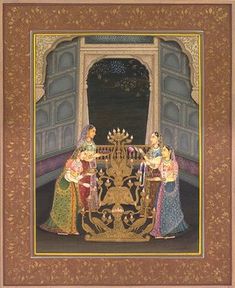
Depiction of Diwali celebrations during Mughal

Tales of the Diwali of the Pharaohs, which lighted up the pyramids and the whole Nile area, and later its adoption by the Persians, is said to have inspired the Mughals to fall in love with the festival of lights. When they saw how it was observed in Delhi, they began to hail it as Jashan-e-Chiraghan.

It was made into an occasion of court celebration, despite the orthodox ulema frowning on it as an unislamic practice of devil worshippers in which the owl, the bird of omen was sacrificed to the goddess of wealth. Owls are still sacrificed, after being bought at high prices — sometimes as much as Rs 1 lakh each — by those who believe in the superstition. But for the Mughals Diwali was just a night of illuminated fantasy.

The Rang Mahal in the Red Fort was the venue of Diwali and Basant celebrations during the time of Mohammad Shah (1720-1748). Holi, however, was celebrated in the front lawns, while the Diwali diyas lent lustre to the mahal. Mughal connection with Diwali actually began in the reign of Akbar at the Agra Fort and Fatehpur Sikri, where the palaces of Jodha Bai and Raja Birbal were also situated.

Jahangir and Shahjahan had milder Diwali celebrations and Aurangzeb was content with receiving gifts from his Rajput generals like Raja Jaswant Singh of Jodhpur and Jai Singh I of Jaipur. His grandson, Jahander Shah ruled for just about a year and celebrated his Diwali at Lahore with concubine Lal Kunwar.

All the oil in the city is said to have been bought by the dandy emperor to light up the night but, exaggeration apart, there were enough Telis there to cater to the needs of the hoi polloi-and some of them were more than mere oil sellers, for the saying in Lahore, as also in Delhi, was ‘Parhhein Farsi aur bechein tel’ (Study Persian and sell oil). Some of these men where intellectuals, who had to resort to such lowly jobs because of the difficult circumstances.

Diwali was considered, even by the orthodox Muslims, a festival of natural joy of God’s creation, though some of them had reservations about eating kheel which, incidentally, was mostly sold by Muslim bharbhujas or gram roasters. Besides Muhammad Shah Rangila (colourful), his predecessor Farrukhsuyar had ordered Diwali illuminations at the Delhi Gate he had built on the Agra-Delhi road.

The Sayyids of Barah, who had put him on the throne and some other puppets, including Muhammad Shah, belonged to 12 villages in what is now UP and where Diwali was celebrated with great enthusiasm by Hindu and Muslim peasants. So they were not surprised at the emperor’s unusual spectacle.

A special feature of the Mughal celebrations at Shabh-e-Barat and Diwali was the bursting of crackers close to the walls of the Red Fort under the supervision of the Mir Atish (Firework in-charge) during successive emperors.

According to historian R. Nath, in an age when there were no matches, the permanent source of fire was Surajkrant.

At noon of the day when the sun entered the 19th degree of Aries, and the heat was the maximum, the (royal) servants exposed the sun’s rays to a round piece of shining stone (Suranjkrant). A piece of cotton was then held near it, which caught fire from the heat of the stone. This celestial fire was preserved in a vessel called Agingir (fire-pot) and committed to the care of an officer.

The fire was used in the palace and renewed every year. Camphor candles called kufuri-shama were placed on 12 candlesticks of gold and silver to light up the palace as a daily ritual, Dr Nath asserts. This was obviously done on a grander scale at Diwali when the Akash Diya (the Light of the Sky) was lighted with greater pomp, placed atop a pole 40 yards high, supported by 18 ropes, and fed on several maunds of binaula (cotton-seed-oil) to light up the darbar.

Just imagine the huge lamp lighting up a Diwali night and casting its glow right up to Chandni Chowk where rich seths had their own lighting arrangements, with mustard oil diyas on every building. A giant-size statue of Tesu Raja and his wife Jhainji, symbolized by illuminated pots, was also taken out for immersion in the Yamuna.

Author: R.V. Smith, 28 October 2019 R.V. Smith is a historian of Delhi.

The above article was published and has been reblogged from here: https://www.outlookindia.com/website/story/opinion-diwali-or-jashan-e-chiraghan-during-mughal-reign/341245

Here are a few pictures from the miniature art on Diwali in Medieval and Mughal Era.


Not just the Mughals, celebration of religious festivals by people of other faiths goes on even to this day. I was known in my neighborhood for being very artsy. Each year, I was invited by a neighbor aunty to make Rangoli at her home entrance for Diwali. I diligently created new and more complicated design each subsequent year and each time she thought I did an amazing job. I became a ‘daughter’ to this childless couple.

The first year I moved in my apartment in Canada, I could not resist making a rangoli in my balcony on Diwali. It was a chilly cold day in November, so I wore my jacket and boots as I sat on the balcony floor painting it. I could not find the dry color, so I ended up making a permanent one with acrylics. Here is an image that still exists after almost 8 years. Years later I decided to paint a peacock on the wall too with the same acrylic paints.

Rangoli in Canadian snow.

Religious and cultural festivals are fascinating. Although associated with some aspect of faith, they are an occaision to digress from daily monotonous rut to celebrate life with decorated homes, good food, good clothes and good company.
I love all festivals from diverse faiths and cultures for these reasons.


YOURSTORYTELLER

is a social enterprise that creates digital talking comics based on true stories and raises awareness on the triumphs and struggles of common individuals.
We will be bringing digital stories based on or adapted from true stories, highlighting an important social issue in each story.

Story #8: Good Touch Bad Touch

Do you think it is right to inform children about ‘Good Touch’ and ‘Bad Touch’ at a very early age? 

We teach our children to be safe from fire, from falls, from strangers, from other hazards, but we often fail to teach them how to be safe from body harm( from sexual abuse).
What is really worrying is that the statistics of sexual abuse in children are high- 1 in 3 in girls and 1 in 6 in boys before 18 years of age. Scary fact is that 90% of the perpetrators are known to the children.
Sexual abuse is a confusing concept for little kids. They feel awkward of certain actions of adults, but do not inform their parents/loved ones about them. Long term xhildhood sexual abuse has devastating consequences as they grow up as adults.
Why do parents avoid sharing with children the idea of body safety? Most think it is too early to tell them about sexual abuse without realizing that this is the age when they are the most vulnerable. Also, not teaching them skills to protect themsleves from abuse actually makes them more vulnerable for sexual abuse. It is never too early to empower children on how to confidently stay safe from sexual abuse.
This story is a small attempt to empower children in simple and easy way on body safety.


Las Vegas was never on my wish-list to visit. But two things on my dream-list took me to Vegas- Grand Canyon and O- Cirque de Soleil. The latter two deserve separate blogs.

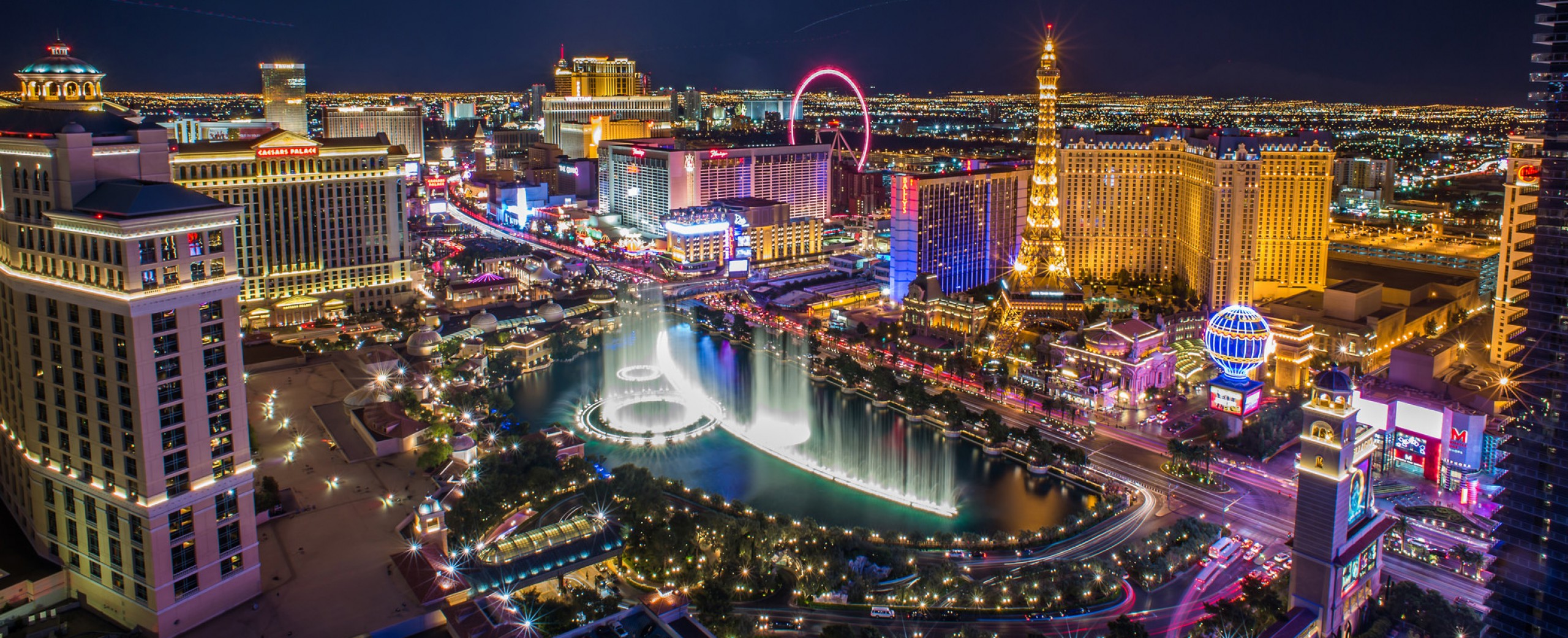
This blog, I am going to share about the things I found distasteful( disliked), things that were expected and things I absolutely loved. Vegas is 80% the Strip( the road lined with gigantic casinos) and 20% the rest which includes the downtown and other attraction.

Let me get straight to the point.

Vegas I disliked:

Before I had visited Vegas, I used to wonder why do they have the Statue of Liberty, Egytian pyramid, the Sphinx, or the Eiffel Tower and other replicas. It all made sense once we drove by the strip and learned about the casinos.

Each Casino is a huge complex of building, which has gambling-vending machines on the main floor, with shopping malls, and some other added attractions like theatre, where various shows run. Each Casino has tried to create their own ‘impact’ by creating a theme. For instance the Casino called Paris has an Eiffel Tower replica, a hot air balloon looking replica in the front( apparently first hot air balloon was flown in Paris) and a Arc de Triumph on the side.

Casino New York has a midget sized statue of Liberty standing in front of it.

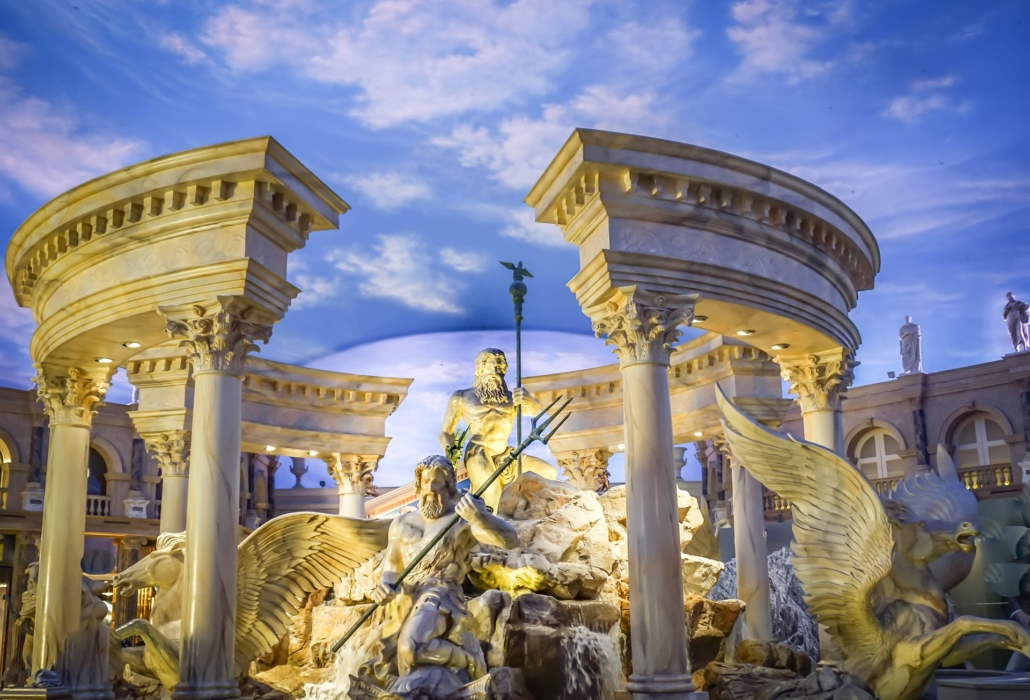
Casino Ceaser’s Palace has created a theme as if you walk into the Greece of Julius Caeser times- with statue of Julius Caeser, Venus, Cleopatra, David and others etc.

Casino Venetia copies Venice, with a narrow canal flowing, lined with high end branded stores inside a shopping mall with motor driven Gondolas giving pricey rides to the visitors in the canal.

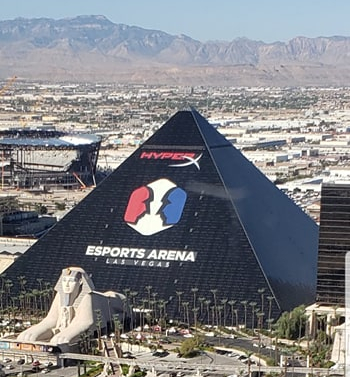
Casino Luxor has a Sphinx sitting in front of a black granite pyramid.

Here are a few pictures I took of these replicas:

Casino New York:

Venetia( Venice):

This slideshow requires JavaScript.

Casino Paris( Paris):

Luxor (Pharoah’s Egypt):

luxor6

Casino Caeser’s Palace( Greece):

This slideshow requires JavaScript.

caeser6

All these historic monuments were marvellous creations by genius minds and uber-skillful hands of their times. Their machine-made replicas no matter how perfect they may be,  in my humble opinion, are in poor taste. Placed adjacent to big commercial brands are certainly not any tribute to these historic monuments.

Yes, I definitely did view these ‘fake’ monuments in Vegas as tasteful.

Things I liked:

DOWNTOWN LAS VEGAS:

Las Vegas originated in 1901 and was incorprated in 1910. The casino culture began in 1930 when gambling was legalized.

Fremont Street is the hub of downtown Las Vegas is known ever since as Glitter Gulch. Fremont Street had Las Vegas’ first hotel (the Hotel Nevada in 1906, present day Golden Gate), first telephone (1907), first paved street (1925), first Nevada gaming license — issued to the Northern Club at 15 E. Fremont St, first traffic light, first elevator (the Apache Hotel in 1932), and the first high-rise (the Fremont Hotel in 1956). The Horseshoe was the first casino to install carpeting, while the Golden Nugget was the first structure designed from the ground up to be a casino. (Source: Wiki). 

As fascinating as it’s history is, a walk through the Pedestrian Mall ( aka Fremont Street Experience) after dusk is an incrediable experience, far more fascinating than the walk through the magnaimous Strip.  Apart from Casinos( which are omnipresent in Vegas) visitors witness free concerts, local artists performing on the sidelines, Elvis lookalikes offering pictures with them for a dollar, eateries and souvenir shops very authentic, non-branded and much more affordable.

The barrel vault canopy(1500 ft x 90 ft), the largest LED screen in the world, is mesmerizing, as all lights go off in the downtown when the show begins.

GAMBLING EVERYWHERE  😀

As soon as we landed at Las Vegas , my son laughed, “Look Casinos have begun right here at the airport.” Everywhere from the Stirp, downtown, airport, shopping malls, grocery stores, casino vending machines existed everywhere. The kiosks for gambling were perhpas more than the number of visitors to the Sin City. And despite overload of temptation, my son and I refrained from gambling in principle. My husband did try his luck and played with $10. He initially won $22 and then lost everything.

Our hosts joked to him: “You should have walked away with $22.”
I responded: “I think it was good that he lost all the money. This is good enough to deter from playing more.”

NIGHT VIEW OF THE STRIP FROM STRAT TOWER TOP:

strat0

Things I loved in Vegas

Fabulous Las Vegas Sign:

Before coming to Las Vegas, this was the only structure from the city that made sense to me. Despite being small in size, and a lot less glamorous than the humongous casinos on the Strip, this sign still holds its fascination. When we went to see the actual sign, it was far smaller than what my son and I had in our imaginations. There was a long line up to take free pictures. On the side were a few guys impersonating as unkempt Elvis( in untidy attires) standing on the sidelines offering to take a picture with them for a dollar.

My son joked how so a number of Hollywood movies have ‘virtually’ destroyed Vegas, but the ‘Fabulous Vegas’ sign still stands firm. 😀
He searched in the shops and found a fridge magnet, an exact replica, of the sign to bring back as a souvenir. “What happens in Vegas, remains in Vegas, only the souvenir goes  out with  us.” remarked my son.

( In case you are interested, here is a link about the films that destroyed Vegas: Films that destroyed Vegas: https://blog.vegas.com/more-las-vegas-news/10-movies-that-destroy-vegas-58057/

Fiori di Como (Bellagio):

Fiori di Como is a garden of hand blown glass by the renowned glass sculptor Dale Chihuly at the Bellagio Hotel. It is hard to miss as you stand underneath the masterpiece in the registration lobby. The entire structure weighs over 40,000 pounds, there are more than 2,000 flowers displayed in the glass garden.
The structure is a representation of Italian Fields in the spring. The structure is said to be worth about 3 million give or take a few million.

This slideshow requires JavaScript.

World’s Largest Choclate Fountain (Bellagio):

If you are a chocaholic, this  glass-encased multi-tier chocolate fountain is must-visit place in Las Vegas. This floor-to-ceiling masterpiece is a classic work of art that pour out  20 tons of dark, light and white chocolate at the rate of 120 pints a minute. The Bellagio chocolate fountain is certified by Guinness World Records as the largest chocolate fountain in the world.

Musical Fountain at Bellagio:

This aweinspiring show of dancing water jets, to the music of famous songs is the most viewed attraction in Vegas. In a split of a second the 80 acre quiet lake turns into a stage with some 1200 water jets come to life, gyrating, twirling, whirling, jumping, bending and at times taking turns,  perfectly coordinating into a well choreographed dance performance. The show at night adds glamour with color and light effects, but the show during the daylight is no less fascinating.

We chose to watch the show both the times. During the day, the panoramic view atop the Eiffel Tower across the road was . We returned after dark to witness the mesmerizing show with light effect with closer view and louder music.

(The video below is not my own, and taken from Youtube).

O’ Cirque de Soleil:

This theatrical show takes the cake of our visit to Vegas.  There is little words can share about this show human acrobatic genius in the air, land and water.

Few things I found unique about this Show which was I did not find mentioned anywhere:

  1. The show has a story line- at least I felt so. A guy who found a red handkerchief at the beginning of the show is seen running across the stage as if finding the owner of this handkerchief, and the show ends with him presenting the piece to a pretty ballerina.
  2. The Show represented cultural diversity – not just in the elements- water, air, earth and fire, but also in culture. Costumes ranged from  commedia dell’arte, the Baroque, India, the Arabian Nights, Venetian courtly fashions and even animal designs like Zebras.
  3. There was racial diversity to some extent: black performers from Africa ( with appropriate background in the shadows), Chinese who performed on their music, and Russian acrobats. I also saw a woman in a blue burka( Afghani style) and a girl in Hijab among the performers.
  4. There was a diverse mix of musical instruments from word over including:  Chinese violin (erhu), bagpipes, African guitar and harp (kora), Colombian guitar, cello, ancient woodwinds and a wide variety of percussion instruments.

The show is a must see, as words cannot do justice to its magnificience and finesse.
We chose to save our money from the Casinos and invested in watching this show from the very first front row in the middle. We certainly came back richer with the experience.

Below is an official trailer as videography or photography is strictly not allowed keeping the safety of the performers in view.

I donot think I will go back to Vegas for its humongous Casinos or high end shopping malls. But certainly, will love to revisit for the theatre and to see our wonderful friends who hosted us at their place.

The other reason I may go back is for the visit to Grand Canyons, which merits a separate blog, and will follow shortly.

Story #7: Broken Doll


YOURSTORYTELLER

is a social enterprise that creates digital talking comics based on true stories and raises awareness on the triumphs and struggles of common individuals.
We will be bringing digital stories based on or adapted from true stories, highlighting an important social issue in each story.

Story #7: Broken Doll ( Tooti Huyi Guriya):

Question: Do you think Sapna’s treatment of Rani was appropriate? 
Answer in Yes or No in the comments. 
:
:
:
:

Child Domestic Work:

ILO published a report “Global Estimates on Forced Labour” in 2012.

According to the report there are approximately 20.9 million forced labourers
who are children aged 17 years and below, representing 26% of all forced labour victims (or 5.5 million children). While the specific number of children in forced labour and trafficking for domestic work remains unknown, evidence points to the existence of significant numbers of children in debt bondage, victims of trafficking and in servitude situations.

Child labour in domestic work refers to situations where domestic work is performed by children below the relevant minimum age (for light work, full-time non-hazardous work), in hazardous conditions or in a slavery-like situation.

  • 67.1% of all child domestic workers are girls;
  • 65.1% of all child domestic workers are below 14 years: 7.4 million aged 5 to 11 and 3.8 million aged 12 to 14;
  • child domestic work touches all regions of the world

The ILO has identified a number of hazards to which domestic workers are particularly vulnerable and the reason it may be considered in some cases a worst form of child labour. Some of the most common risks children face in domestic service include: long and tiring working days; use of toxic chemicals; carrying heavy loads; handling dangerous items such as knives, axes and hot pans; insufficient or inadequate food and accommodation, and humiliating or degrading treatment including physical and verbal violence, and sexual abuse. The risks are compounded when a child lives in the household where he or she works as a domestic worker. These hazards need to be seen in association with the denial of fundamental rights of the child, such as, for example, access to education and health care, the right to rest, leisure, play and recreation, and the right to be cared for and to have regular contact with their parents and peers. These factors can have an irreversible physical, psychological and moral impact on the development, health and wellbeing of a child.


Amrita Pritam turns 100 yrs old on August 31, 2019.
She lives in her poetry and in her two love stories- Sahir Ludhianvi & Imroz.

These was the last words in the form of a couplet (shair) Sahir said to her as they parted:

Tum chali jaaogi, parchhaiyaan rah jaayengi,
Kuchh na kuchh Ishq ki raanaaiyaan rah jaayengi.
When you leave, your lovely silhouettes shall remain,
Memories and traces of love will refresh me time and again.

Amrita wrote an ode to her love for Imroz as her last parting poetry:

“Mayn tennu pher milangi….” Link to my blog on this poetry is here

Imroz, who’s love for Amrita Pritam remains unmatched, is alive at 91 years and still refers to her in present tense. After her passing away he started to write poetry and called his book: “Jashn Jaari Hai (The Celebration is on).

One of the verses he wrote for Amrita are:

Main jab khamosh hota hun
Aur khayal bhi khamosh hote hain
To ek halki halki sargoshi hoti hai
Uske ehsaas ki
Uske shayron ki…Whenever I am quiet,
And so are my thoughts silent,
Then happens very faint whisper(babble)
Of her being
Of her poetry

However my favourite of Amrita Pritam remains her power poetry “Aaj Akhan Waris Shah Nu” which deserves its own blog and will share one in days to come.


This was Google’s tribute to Amrita Pritam:Amrita


YOURSTORYTELLER

is a social enterprise that creates digital talking comics based on true stories and raises awareness on the triumphs and struggles of common individuals.
We will be bringing digital stories based on or adapted from true stories, highlighting an important social issue in each story.

Story #6: School Shoes (School Ka Joota)

:
:
:
:
:
:
:
:

According to a report by World Bank, in 2016, a total of 263 million children from ages 5- 16 years did not go to school.

According to the report, among the first to be left outside school are those already in a vulnerable societal position because of gender, disability, caste, or belonging to a certain ethic group. Poverty is still one of the biggest obstacles to a child going to school.
The quality of education plays a part as well. If the quality of education is seen as poor, parents may not be ready to send their children to school, says the report.

According to UNICEF, #Pakistan has the world’s second-highest number of out-of-school children (OOSC) with an estimated 22.8 million children aged 5-16 not attending school, representing 44 per cent of the total population in this age group (Link 1).
India has 17.8 million Out of School Children between in ages 5-13 years. ( Link 2)

Education offers children a ladder out of poverty and a path to a promising future. 

Education is not a privilege. It is a human right.

Every child has the right to an education regardless of who they are, where they live or how much money their family has. 


Story #5: Talaq (Divorce)


My daughter often remarks, Men of my generation are better and more supportive than men of your generation. They value their wive’s careers and are less fussy to help them out at home.” 

My response to her almost always is, “There definitely is a section of educated young men who think and behave much different from their father’s generation. Many of them are sons of educated and career women (like me), who raised their sons to respect women.”

The above conversation holds true for only a very limited section of our desi society. Vast majority of men and women are still the flag bearers of patriachy and believe in subservience of womenfolk.
In the pretext of faith or culture, patriachy would not have been so deeprooted, if there were no women allies to it.
Not just allies, women are often the most vocal advocates of ’empowerment of men folk’.

Hear here a recent example of Ms Khan, a renowned matchmaker, who went ballistic on a TV show blaming women for everything wrong in this society:


For those who dont understand Urdu, I will translate verbatim the blatantly outrageous statements she makes  in her loud and reprimanding voice scolding young girls:

  1. “DONT use your tongue. Dont wag your tongue. Keep your tongue under control. If a woman controls her tongue, these things( marital discords) will not happen. Things escalate when the woman becomes “moonh zor” (bold) and tries to dominate over husband and mother in law. In our times we were told that when husband comes home, you must take care of his shoes and clothes,  the griddle should be hot to cook fresh chapattis, and the curry should be ready. What is this? “I am not going to cook chappattis?” Why? Then why did you get married?”
  2. She continues in English: “If you are not capable of cooking chapattis, then you better dont get married. If you are not capable of taking care of your children dont get maried. You will have to bear EVERYTHING. Unless and until you are not a PROPER WOMAN…”
  3. “Women should keep their mouths shut in front of their husbands( she puts a finger on her lips). Women are wagging their tongues a lot in front of their husbands, whether they are from rich family or poor or middle class. YOU SHOULD NOT OPEN YOUR MOUTH UNNECESSARILY.” 
  4. The anchor asks, “But Mrs Khan,  it is not always women’s fault if the matter reaches upto separation?” to which Mrs Khan interjects her, “These days it is women’s fault. They watch TV serials and learn from there. I have seen how my maid talks to her husband. Poor husband quietly listens to her. Look how this woman of even LOW CLASS speaks to her husband.”

Not surprising at all, but men were not even part of this conversation on marital discord.

YOURSTORYTELLER

is a social enterprise that creates digital talking comics based on true stories and raises awareness on the triumphs and struggles of common individuals.
We will be bringing digital stories based on or adapted from true stories, highlighting an important social issue in each story.

Coming to #YourStoryTeller, I am sharing here a true story of my own cousin, who followed exactly what Mrs Khan had recommended, “Dont wag you tongue, in front of your husband.” 
She even quietly tolerated a lot of taunts and verbal abuse from her mother in law.  Whenever I asked her, “Tum jawab kyun nahin deti?” (“Why don’t you reply back?” )

Her answer would be, “Baaji, yeh manhoos tarbiyet jo hai ke susraal mein jawab nahin dou.”  (“This damned upbringing that I am not supposed to answer back to my in laws.”).
Thus she laughed off many such bitter narrations of what she went through day in and day out.

The psychological abuse went on for about 4 years….

What happened next?  Please watch the true story TALAQ (DIVORCE):

I am proud of this cousin, who is now an independent career woman.

My advice to young girls would be to:  Marry men who respect and understand gender equity and both spouses need to understand that marriage is a partnership, not a boss-subordinate relationship.  Otherwise follow as Mrs Khan said, “stay single” and focus on your life & career.


Poochhna hai ab mujhe yeh Hind-O-Pakistan sey,
Peit bhookon ka bharogey kya jang ke samaan sey?
(I now have to ask this from India and Pakistan, 
Will you feed your hungry with the weapons of war?).
~Kunwer Mahinder Singh Bedi Seher

India and Pakistan, both nuclear nations, have been embroilled in conflict over the territory of Kashmir since 1947. Several times in past 70+ years have they come very close to war.

However, their human life indices tell a very sordid story.

Global Hunger Index for past 13 years has been ranking countries based on four key indicators — undernourishment, child mortality, child wasting and child stunting. Zero is the best score and a reading above 100 is the worst.
You can see the detailed list here: https://www.globalhungerindex.org/results/.

Out of 119 countries ranked on global hunger index,  the countries ranks in South Asia region in 2019 were as:

  • Sri Lanka- 62
  • Nepal- 72
  • Bangladesh -86
  • India- 103 (was 100 in 2017 and 55 in 2014) (Score= 31.6)
  • Pakistan -106 (Score 32.6)

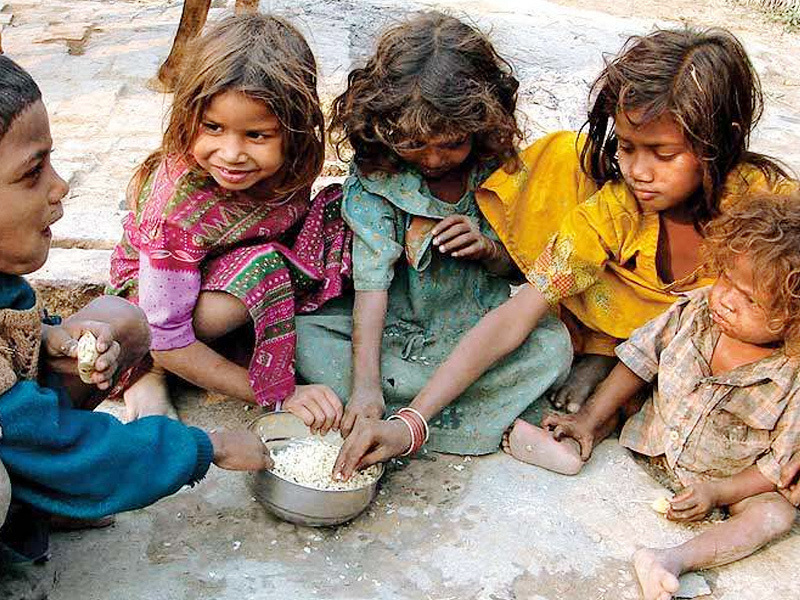
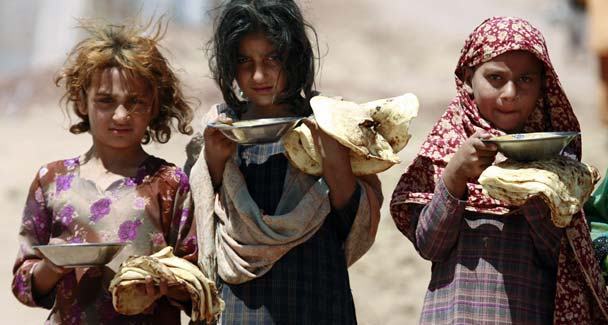
Together between these countries, there are over 1 billion children and youth whose lives are at stake because of warmongering, which is unnecessary and unwarranted.

Here are some pictures of children from India and Pakistan:

Hunger

Hunger 3

hunger 5

hunger 4

hunger 2

Story #4: Girl Refugees


YOURSTORYTELLER

is a social enterprise that creates digital talking comics based on true stories and raises awareness on the triumphs and struggles of common individuals.
We will be bringing digital stories based on or adapted from true stories, highlighting an important social issue in each story.

Story #4: Girl Refugee

:
:
:
:
:
:
:

Girl Refugees  is a fictional story  on female feticide i.e. the termination of pregnancy when it is a girl child.

There are 50 million girls missing in the world due to female feticide.
Girls who are lost in the womb have no voice of their own.

This story is an attempt to give them the voice, and to make people realize, what if they were allowed to live a life everyone deserves.
Imagine as if you are hearing their pain from the skies !


I went to watch a documentary on woman abuse at MISAAF 2019, but stayed on to watch with absolutely no expectations, the Pakistani commercial film BAAJI.
And to my utter surprise, I came back extremely impressed by three components of the film:

  1. Saqib Malik, the Producer Director
  2. Meera ji,  the actor
  3. BAAJI the film in toto.
    And exactly in that increasing order.

The film is a bold and beautiful portrayal of the ugly truth that exists in deeply conservative and patriarchal socieites.

This film does not have a single hero. This feminist film has both its leads charaters as fiercely independent women, Shameera & Neha. Both are extremely hardworking breadwinners for their families, and with dreams to make it big in their lives.
They are hounded by parasitic men, either through relationships ( Rammy, Ajji), as family ( Neha’s pious brother) or proffessionally (Chaand Kamal or Rohail Khan) who have no credentials except being manipulative and being men. None of them earn or contribute financially ( as is expected to be caregivers in patriarchy), yet consider it their preprogative to exercise control over these women.

Shameera represents a female superstar from the desi showbiz industry who is surrounded by patriarchs like her Aapi( yes she is a female patriarch), Chaand Kamal and Goshi Butt, who control her life, her finances and her decision-making.
“Yeh time hai theatre ka, theatre wich apne jalwe dikhane kaa.” 
“Market wich rolla paa deyo, ke Shameera ne theatre da tee lakh(30 lakhs) leya ayy.” 

Rammy, loves Shameera, but also wants her to be fiercely loyal to him, or else this good-for-nothing beau will put her in her place:
“Woh time chala gaya tumhara bibi.” 

Neha is a reality from the working middle class, who toils hard in a beauty parlour, to support her family financially.  Yet the person clearly in control in the house is her conservative nincompoop brother, who cannot even pay the installments of his own loaned rickshaw, but has the authority to be the moral police at home.  She also represents a middle class struggling girl who dreams bigger than her capacity, is intelligent enough to take risks and grab opportunities, yet staying sincere to help the people who trust her- both Shameera and Rohail Khan.
Pardon me, but her third class boyfriend Ajji was an eyesore to me personally, because of being the abusive husband in real life, Mohsin Abbas Naqvi. However, his character  isnt any better on screen as he backstabs the two ladies (How?- You need to see the movie) in connivance with the other two predators in the film- Rammy and Chaand Kamal.

A lot has been said about it being a comeback of the 70s & 80s Lollywood cinema. Pardon my ignorance on Lollywood, and hence will refrain to comment. However, I could relate the story to personal lives of powerful Indian actresses of 50s like Meena Kumari, Madhubala who had to endure a lot of control, betrayal and abuse from their male relationships and families.

Meera’s body language and expressions were incredibly skillful.
For example: He expression of shock & insecurity while noticing her wrinkles in the mirror in contrast to a young Neha’s flawless skin.
So did her dialogues speak in volumes of her powerful acting skills.
For example: Her desperation in her assertion: “Love me or hate me, but you can never replace me.”

This is the first ever Meera ji film that I have seen, and I came out of the film with a changed perception of hers. There is a lot more to her than the petty image of her english jokes by elitist Pakistanis. Just because of her humble background, poor english and B films offered to her, we have judged her long enough. She has delivered a masterful performance in #BAAJI now, thanks to its director who remarked in the comments after the film,  “Either it was Meera Ji or there was no film Baaji.” 

I found Rohail Khan’s character a bit suspicious from the beginning, wondering how could someone be so nice and caring, all of a sudden?

I donot want to give out any spoilers, and hence will restrain myself to talk further about the charaters or the plot.

I loved one specific song from the film, which metaphorically relates a kite to a powerful woman, with strings in the hands of her men. They want her to soar high for their matierial benefits, but remain with their control.

Badlaan:

The other good song, which perhaps relates the film to the 70s is this

Shaam Nasheeli:

All in all, I loved the plot, the way it unfloded, including the romance, the tragedy and the suspense that followed.
Probably those who find this story of the film ghatiya, are reflecting their internalized misogyny.

I give the following credits to the producer, director Saqib Malik:

  1. Taking upon him a powerfully feminist story and telling it the way it is in a patriarchal society- full of barriers and blackmails for successful women.
  2. Throwing in a queer character in a very subtle, unoffending way( I am not giving out the details).
  3. His bravado to have chosen Meera Ji for a serious and complex role like Shameera.  Meera is popularly mocked more for her english than acknowledged for her acting skills or personal struggles. Few know she began her acting career at the age of 10.
  4. Showing things that may be taboo in Pakistan, but taking away vulgarity from them. The bedroom conversation rather than ‘the sex scene’, showbiz party with local Murree beer.
  5. Remaining very cuturally appropriate to Pakistan, and with no attempts to copy the neighboring Bollywood.
  6. Not just directing his debut film, but producing it with his own 6 crores.

It is so heartening to know that the film is doing extremely well and has crossed 12 crores of earning so far.

Congratulations Team Baaji ! 

Special Thanks to MISAFF 2019 and Arshad Khan for enabling us to watch this and other beautiful films in Mississauga, Canada.

PS: I am not technical film critic, so my blog is purely based on my view of the stories and films with social justice lens.