Open up your mind and your potential reaches infinity…

Archive for the ‘Social Issues’ Category

Mbube~~Music Without Borders


This is the journey of an enchanting African doo-wop song ‘The lion sleeps tonight’ and it’s singer.
The original title of the song was “Mbube,” (pronounced EEM-boo-beh) which means “Lion”. It was sung with a haunting Zulu refrain that sounded, to English-speaking people, like “wimoweh.”
“Mbube” was written in the 1920s by Solomon Linda ( Linda was his tribe’s name), a South African singer of Zulu origin. He worked for the Gallo Record Company as a cleaner and record packer, performed with a choir, The Evening Birds.
“Mbube” was a big hit in what is now Swaziland, sold nearly 100,000 copies in the 1940s.
Linda had written the song based on a boyhood experience chasing lions that were stalking the family’s cattle.
He recorded the tune in 1939 with his choir, the Evening Birds. It was so popular that Zulu choral music became known as “Mbube Music”.
For his performance of “Mbube”, Solomon Linda was paid a fee very small fee. Gallo Records of South Africa reaped all the royalties of the record sales in South Africa and Great Britain. Unaware of the implications, Linda sold the rights to Gallo Record Company for 10 shillings (less than $US 2) soon after the recording was made.
Despite the popularity and wide use of the song, Linda died impoverished during 1962 of renal failure. It was not until 18 years later that a tombstone was constructed at his gravesite.
Then, in the mid-nineties, the song popular as ‘The lion sleeps tonight’ became a pop “supernova” (in the words of South African writer Rian Malan) when licensed to Walt Disney for use in the film The Lion King, its spin-off TV series and live musical. The song earned $15 million for its use in the movie The Lion King alone.
With the support of many activists including the writer Rian Milan a lawsuit was filed on behalf of the impoverished descendants of Solomon Linda, to get back the right s for the song . By the British laws then in effect ( in the time Linda sold the rights) , those rights should have reverted to Linda’s heirs 25 years after his death during 1962.
After an arduous battle, the ownership of “Mbube” reverted to Linda’s heirs 25 years after his death, in 2006.

The original song ‘Mbube’ by Solomon Linda sung in 1939

Current version sung by Ladysmith Black Mumbazo

Lyrics:

The lion sleeps tonight.

Lala kahle[Sleep well]
In the jungle, the mighty jungle
The lion sleeps tonight
In the jungle, the mighty jungle
The lion sleeps tonight

(Chorus)
Imbube
Fcuk
Ingonyama ilele[The lion sleeps]
Thula[Hush]

Near the village, the peaceful village
The lion sleeps tonight
Near the village, the peaceful village
The lion sleeps tonight

(Chorus)

Ingonyama ilele(The lion sleeps)
[ Lyrics from: http://www.lyricsmode.com/lyrics/l/lion_king/the_lion_sleeps_tonight.html ]
Hush my baby, don’t fear my darling
The lion sleeps tonight
Hush my baby, don’t fear my darling
The lion sleeps tonight

He, ha helelemama[He, ha helelemama]
Ohi’mbube[lion]

(Chorus)

Ixesha lifikile[Time has come]
Lala[Sleep]
Lala kahle[Sleep well]

Near the village, the peaceful village
The lion sleeps tonight
Near the village, the peaceful village
The lion sleeps tonight

(Chorus)

My little darling
Don’t fear my little darling
My little darling
Don’t fear my little darling

Ingonyama ilele[The lion sleeps]
(Repeat to fade)

SOURCE: http://www.weeklybugle.com/music/mbube.htm
http://en.wikipedia.org/wiki/Mbube_(genre)

Kabir a day keeps radicalism at bay


First published in english daily, The Islamabad Dateline on 26th June, 2011

Almost 700 years ago, when religious polarisation in the Indian subcontinent was at its helm, a preacher was born. He was named Kabir and he spent the rest of life trying to bind Hindus and Muslims together. Today, as religious hatred is bred into masses and intolerance is injected into young minds one finds it necessary to bring forth Kabir, the champion of religious tolerance and interfaith harmony.

The mystics from united India are more relevant to us than Persian or Turkish voices as they spring from the culture we own. For a relatively more radicalized society in Pakistan, these pluralistic and tolerant voices need to be disseminated vehemently. These great men seemed to be far ahead of their times and Kabir is no exception. Kabir stands tall, in the line of greatest mystics of all time with St. Augustine, Ruysbroeck, Buddha, Rumi, Emre and Hallaj

Kabir’s vision, though timeless in its essence when transformed into simple poetry addresses the basic problems humanity faces today. His message was simple and straightforward — that God is perceived in different forms by different people, but in essence they all talk of One supreme power.

Koi bole Ram Ram, koi Khudai

(Some call him Ram, some name him Khuda)

His honest message offended both Mullahs and Purohits for it challenged their stakes. He was persecuted by both to which he screamed:

Sadhu dekho jag baurana / Sanchi kaho to maran dhawe /Jhoote jag patiyana

(O gentleman, see the world has got mad / I say truth but they run to beat me and believe the fake.)

His intent was not to offend anyone and he made it clear:

Kabira khada bazaar mein mange sab ki khair / na kahoo se dosti, na kahoo se bair

(Kabira Stands in the market place( the world) / Asks for everyone’s prosperity. Neither special friendship nor enmity for anyone).

His mission, through his vision was to promote brotherhood, unity, love and forgiveness beyond regions and religions.

The Hindu says Ram is beloved, the Muslim says Rahim / They fight and kill each other, no one gets the point.

And the point that no one got was:

Maatii Aik Anaik Bhaanth Ker Saaji Sajan Haray
(The Clay Is The Same, But The Designer Has Designed It In Various Ways)

Kabir through his words challenged the authority our society has given to clerics quite audaciously:

The spiritual athlete often changes the color of his clothes
& his mind remains gray and loveless.
Or he drills holes in his ears, his beard grows enormous
People mistake him for a goat.
He shaves his skull & puts his robe in an orange vat,
Reads the Book & becomes a terrific talker.
Kabir says: the truth is, you are riding in a hearse to the country of
death, bound hand & foot.

He even warned against the mindless following of religious preachers and to use one’s own conscience to decide what is right or wrong:

Jaka guru hai andhla, chela hai ja chandh / Andhe andha theliya, dunyu koop parent
(If the preacher is blind (unrealized) and the disciple is also blind, how can they progress further? If a blind shows the path to the other blind, they both are bound to fall in some dead well at some time).

To those bigoted who would not understand this, he remarked:

Phootee aankh vivek kee, lakhe na sant asant
(People have their inner eyes of conscience blind; they don’t see who is real and who is fake)

“What can one do, if, with lamp in hand, one falls in the well”

Bura jo dekhan main chala bura na milya koi / Jab man khoja aapna mujh se bura na koi.

(I went on the search for the Bad Guy, Bad Guy I couldn’t find. / When I searched my mind, Non one is Nastier then Me)

He lived to restore the confidence in the common man against the elite clergy or the rulers, who claimed their superiority by virtue of their status. He explained:

Bada hua to kya hua jaise ped khajoor / Panthi ko chhaya nahin phal laage ati door.

(If You are Big so what? Just like a date tree / No shade for travelers, fruit is hard to reach).

He used simple vernacular language, with metaphors from common examples to engage the people around him. People were fascinated by the deep moral messages contained in his simple poetry.

Kabira Garv Na Keejiye, Uncha Dekh Aavaas / Kaal Paron Punyah Letna, Ouper Jamsi Ghaas

(Kabi , Don’t be so proud and vain, Looking at your high mansion / Tomorow you’ll lie under feet, On top will grow Grass).

Ab Tun Aaya Jagat Mein, Log Hanse Tu Roye / Aise Karni Na Kari, Pache Hanse Sab Koye

(When you came in to this world, Everyone laughed while you cried / Don’t do such work, That they laugh when you are gone)

And that it’s not one’s status but one’s deeds which pay off ultimately:

Ek daal do panchi re baitha kaun guru kaun chela / Guru ki karni guru bharela, chele ki karni chela.

(Both the preacher and the follower are together / but both will be dealt according to their deeds.).

The Purohits and Mullahs could not tolerate his audacity, and how he influenced the common man. His words had already penetrated into masses and exposed the self-righteous claims of every clergy. He got expelled from Kashi. He roamed around Benaras preaching his message and passed away in Maghar.

After his death both the Hindus and the Muslims both claimed ownership over him. There are a few legends but one wonders how was the matter resolved. As for now, there exists a Hindu shrine and a Muslim Dargah adjacent to each other at the place where he died.

Kabir’s words are very pertinent to current Pakistan, where religion is manipulated for political ends and justify acts of violence. Voice of Kabir needs to be resonated in our academia and society being the need of time. Why did not we own Kabir like India? – I leave this question to be answered by the reader.

Co written: Ilmana Fasih with Syed Ali Abbas Zaidi.

Delhi Diary: Gossip on Wheels –2


Continued from the previous post….

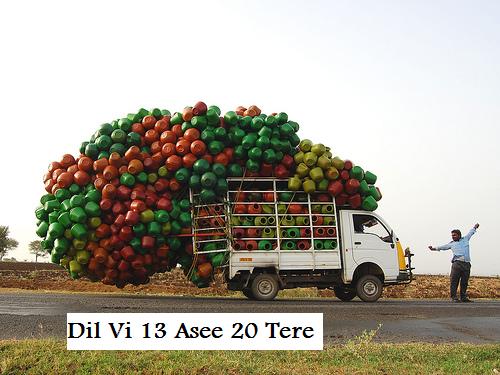
Delhi roads, or for that matter roads on any metropolitan city in the world is so very stressfull. If only these vehicles did not share their light hearted smalltalks or gossiped or flirted on the way, they would be having high rates of ‘heart attacks’ like us humans.
Only if we too knew how to wade our ways through chaotic and bumpy roads of life with humour, life would seem much less of a burden.

Again open your ears, shush your mouths and hear them gossip and flirt and romance…..
Madame Maruti: Haaaye teri baat ne dil khush kar diya.

Truck ji: Chal Rani tera Rabb Raakhaa
Mme Maruti: Rani, haan who tou main hun. Thankyou for the dua, yaar.

Auto bhai: “Papa Jaldi Ghar aa Jaana.”
Maruti behn: Bhai, ghar mein bachey wait kar rahe hain, zara safely
chalao.

Another auto bhai: “Mera Bharat Pareshan[My India is Troubled].”
Maruti : Tere jaise careless auto se pareshaan nahi hoga tou kya hoga…India.

Maruti, the advisor: Yar tou kaali ko bhool ja, kamai kar buss…

Romeo Truck: “Kaho na pyaar hai”
Laila Maruti: Kyun, ek baar bol diya na, bar baar kyun boloon, huhh.

Maruti( sharma ke): Awaein, mere kol koi hor kum ni haega..

Truck Dada: “Road King”
Maruti: Tabhi tou itna chaura ho ke chalta hai, sarak pe.

Lalchi Maruti: Hain, to kya ye sara maal vi mera. Haaye meri kismat.

Truck in denial: “Gori fir se hui jawan”
Maruti: Kya bola? Zara apne aap ko sheshey mein tou dekh.

Creepy Truck: Tou hi meri dulhan, tou hi mera dahej
Maruti: Yar mat tang ker, us bichari nai Maruti ko.

Truck ji: Bus peecha karoge, ya kabhi dil mein bhi baithogey
Maruti: Arre, peecha kaun kar raha hai, awein hero mat ban.

Truch ji: Dekho, dekho,dekho,magar pyaar se
Maruti: Yahan marne ki fursat nahin hai, tum pya se dekhne ki baat karte ho.

Maruti: Haan, haan woh to nazar aa raha hai.

JattTruck: Jatt Di Mercedez
Maruti, the sophisticated: To tum bhi koi Jutt se kam nahin ho bhai.

Truck the philospher: Hun Tu Kaun te Main Kaun
Maruti the sufi: O truckeya, tu ki jana main kaun…

Maruti: Hahaha kya baat hai…:D

Haseen Lorry: “Kashmir Ki Kali”
Maruti( jealous): Chal chal zyada ghuroor mat ker apne ooper.

Badtameez Tanker: Zarra Hatt ke Laadli
Maruti( ghussey se): Oye tameez se baat ker…

Filmi Truck: “दुल्हन वही जो पिया मन भाये,
गाड़ी वही जो नोट कमाए”
Dulhan wohi jo piya man bhaye
Gaari wohi jo note kamaye.

Maruti, the feminist: Yaar, aajkal to dulhan bhi note kamaye…

Pendu Truck: Himmat hai to pass ker, warna burdass kar.
Shehri Maruti: Lagta hai gaon se naye naye aaye ho, Dilli shehr mein. 🙂

When we part, we get emotional 😥 :
Maruti: Chal TATA. Kabhi Salam bho ker liya ker…

Jazbati Truck: Milega Mukaddar , Pher milangey
Maruti, (equally emo): Haan kismet hui tou zaroor milenge isi road pe, ek na ek din.

Devdaas Truck: Chalo ek Baar Phir se Ajnabi ban JaayeN
Paro Maruti: *sob sob, sniff sniff* Haan chalo, Khuda Hafiz.

And this is how they meet each day, with gossipping, joking, flirting on the roads and making their way through packed roads. Their spirit and zest to survive is touching.

Maruti remarked: Yess we give space on the roads to these beings too, . Do you Humans do the same with animals?

Maruti taunted: Dont you think there are Supermen amongst you only. We have them too.

Maruti( with proud): We have Superwomen too.

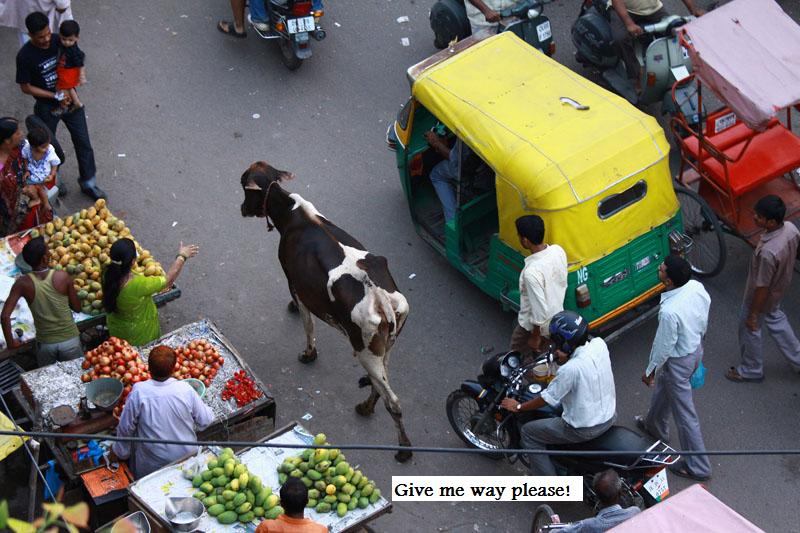
Maruti: See we are considerate for our poor too. And we give them way.

Maruti: We believe in UNITY IN DIVERSITY.

Maruti, the thinker: And we believe in PEACEFUL COEXISTENCE .

Indeed, one thing remarkable about the traffic community is their ‘unity in diversity’. How they coexist with some noisy peace and give way to each other with no vengeance, is worth commending.

We humans need to learn some real ‘good’ lessons from these vehicles.

Delhi Diary: Gossip on Wheels–Part 1


Commuting through the streets of Delhi with almost an hour and a half’s drive each side was no less than a Herculean task. The journey back home, in the evening, would result in a bursting headache.

The megacity with hundreds of newly built flyovers and underpasses, still gets choked in its veins at the peak office hours. The traffic is dense, diverse and chaotic. Perhaps when going through licence training they are made to practice to honk horns as much as possible, sworn not to use the dipper and taken pledge not to follow lanes. In fact the dividing lines whether broken white or solid yellow are to be kept exactly in the middle of one’s vehicle—be it a cycle, a cycle rickshaw, auto rickshaw , a car, truck or a tanker.

I felt the dire necessity to have the cake ( wading the traffic all the way each day) and relish it too( enjoy their antics without getting headache).

So I began to hallucinate…

….and began to see and hear all the secret conversations and the relationships the my car had with the traffic around it. I was enlightened now as to why they dive and dodge across the lines ( just like a five year old kid) when another vehicle tries to overtake or chase them. And no wonder why they honk horns so much—in disgust ( just like us humans) when they see injustice .

Oh ! they are all so much like us humans- chaotic and noisy. And like us they gossip, flirt and swear too at each other, on the way.

Only the wise could see that, and I happen to be one of those few. 
I began keeping my eyes and ears open to what was going on between my car and the other fellow vehicles…..

And from then on travelling was fun—after all I am as human as them. and I too love to eavesdrop on what Madame Maruti ( my car) would babble and flirt with fellow trucks and autos along the way.

So from here on just shhhand listen to what Madame Maruti gossips…

Mme Maruti: “Yeah , I know we’ve got to honk the horn for ‘Road Symphony’, but what’s this OK doing in the middle.”

Truck Ji :“Use horn ok please dipper”
Mme Maruti: Hold on, What did you say? Pagla gae ho ?

Mme Maruti: “Kyon? Kya landan se aae ho? Yahan koi dipper wipper nahi janta”.
( Have you come from London, no one knows dipper here).

Mme Maruti: “Yeah only if you had listened to your Mum and been to school, you would know how to say Hallo.”

Mr Truck: “Wait for side.”
Mme Maruti: I’m waiting. But kab takk? ( How long)

We have some of wicked amongst us, just like humans, who can’t wish well for others….
Idealist Maruti: Since when did you become racist, man. Ain’t humans enough?

Burger Truck: “Bad nazar wale tera thobda black.”
Desi Maruti: Lagta hai dost, angrezi filmein zyada dekhne lage ho ?

Dukhi Truck: “चलती है गाड़ी, उड़ती है धूल, जलतें हैं दुश्मन, बिखरतें हैं फूल.”
Chalti hai gari urti hai dhool, jalte hain dushman bikharte hain phool
Maruti, the reformer: Yaar, kabhi kisi ka bhala bhi soch liya karou.( Think of good also sometimes).

Foul mouthed Truck:“बुरी नज़र वाले, तेरे बच्चे जियें, बड़े होकर, देसी शराब पियें”
( Buri nazar wale tere bachey jiyein, Bade ho kar desi sharab piyein).
Maruti, the preacher: O’ bhai, uski to nazar buri hai, per tumhari to soch insaanon ki tarah gandi hai. Uske bachon ney tumhara kya bigada hai?

Mean Truck: बुरी नज़र वाले तू जिए, और तेरा बेटा बड़ा होकर तेरा खून पिए! ( Buri nazar wale tere bachey jiyen, bade ho kar tera khoon piyen).
Maruti, the Gandhian: Arre bhai, kya tum bhi insaan ban gaye jo khoon peene ki baat kar rahe ho ?

Some of us are really kind and thoughtful too:
Maruti: Wah, yeh ki na tum ne sau aane wali baat. 🙂

Saint Truck: Na koi buri nazar
Na kisi ka muh kala,
Sab ka bhala chahta hai
barah tiresath (12-63)wala!

Maruti:Kaash, hamre baqi bhai log bhi aisa hi sochein? Aur insaan bhi 😦

Maruti: Sach keh rahe ho, magar ye insaan ki samajh mein aye to baat hai.

</
Maruti: Wah bilkul theek kaha tum ne.

Our social responsibility, we understand so well. I wish all mankind could think like us too:
Maruti, the samajhdar: Agar insaan ki ye samajh mein aa jae to is duniya ki mushkil hi khatm ho jae.

Maruti, the patriot: Is mehengai ke daur mein, bilkul theek.

Mr Truck: “Ek ya do buss.”
Mme Maruti: “Kya shaadi ya bacheyy?”

Mr Truck:बीवी रहे टिपटॉप
दो के बाद फुल स्टॉप
(Biwi rahe teep taap
Do ke baad fullstap)

Mme Maruti: “Khayal umdah hai, feminist lagtey ho !”

Truck, the Anna Hazare: Sau mein nabbey beimaan, phir bhi mera desh mahaan.
Maruti, the Sonia: Han haan, buss tum hi to ek imaandar ho poore desh mein.

Mr Truck, the poet: शेर दो हों मगर सलीके के,
घर को ऐसी ग़ज़ल बनाना है
(Sher do hon magar saleeqe ke
Ghar ko aisi ghazal bana hai).

Mme Maruti: “Uff, ye ‘sher’ aur ‘ghazal’ se tou Ghalib ki
yaad taza ho gai.”

Truck, the poet: “Malik ki gadi, driver ka pasina, chalti hai road par, banke hassina”
Maruti: Haaye, kya Shayar ban gaya…

Truck Sahab, the wannabe poet: “Fool se kante ache hai jo daman tham lete hain, dost se dushman ache hain jo jal kar bhi naam lete hain”
Maruti, the judgemental: Haaye teri Urdu se tou Hazrat Ghalib pareshan ho jayeinge.

Maruti: “What should I say, you said it all?”

PS: Some less serious gossip in the next blog.

Koi to Suno…


Ek duaa, mere shehr ke liye…t

Sukoon se jaagti subhein
Qahqahon se goonjti shaamein
Bekhauf o khatr sotee raatein
Suno, ab laut aao na…

Hansee jo rooth gai lab se
Khushi jo naraz hai sab se
Raunaq jo udaas hai kab se
Dekho, ab maan jaao na…

Khauf jis se na aam ho
Zulm jis se na zabt ho
Umeed jis se na khatm ho
Koi aisi dawa batao naa…

Nafrat koi bikherne naa paaye
Khushi itni ke sameti na jaaye
Aman aye to phir lautke na ja paaye
Kabhi aisa din bhi laao naa…

Coffee


On the eighth day God created coffee.

Legend of coffee discovery :

Kaldi, a goatherd, lived in Abyssinia around AD 850. One day he observed his goats behaving in abnormally exuberant manner, skipping, rearing on their hindlegs and bleating loudly. He noticed they were eating the bright red berries that grew on the green bushes nearby.

Kaldi tried a few himself, and soon felt a novel sense of elation. He filled his pockets with the berries and ran home to announce his discovery to his wife.

“They are heaven-sent,” she declared. “You must take them to the Monks in the monastery.”

Kaldi presented the chief Monk with a handful of berries and related his discovery of their miraculous effect.
“Devil’s work!” exclaimed the monk, and hurled the berries in the fire.

Within minutes the monastery filled with the heavenly aroma of roasting beans, and the other monks gathered to investigate. The beans were raked from the fire and crushed to extinguish the embers. The Monk ordered the grains to be placed in the ewer and covered with hot water to preserve their goodness. That night the monks sat up drinking the rich and fragrant brew, and from that day vowed they would drink it daily to keep them awake during their long, nocturnal devotions.

Another account suggests that coffee was brought to Arabia from Ethiopia, by Sudanese slaves who chewed the berries en route to help them survive the journey.


“As soon as coffee is in your stomach, there is a general commotion. Ideas begin to move…similes arise, the paper is covered. Coffee is your ally and writing ceases to be a struggle.”
~Honore de Balzac (1799-1859)

Common adverse effects: Insomnia, headaches, irritability and nervousness.

Daily recommendations( by Health Canada):

The daily dose of 2.5 mg/kg body weight would not cause adverse health effects in the majority of adolescent caffeine consumers.
For women of childbearing age, the recommendation is a maximum daily caffeine intake of no more than 300 mg, or a little over two 8-oz (237 ml) cups of coffee.
For the rest of the general population of healthy adults, a daily intake of no more than 400 mg.

Source: http://www.selamta.net/Ethiopian%20Coffee.htm
http://www.hc-sc.gc.ca/hl-vs/iyh-vsv/food-aliment/caffeine-eng.php

All about Heart


Let your heart be your compass,
your mind your map,
your soul your guide…
and you will never get lost.
~Unknown.

Our heart is the voice of the soul.
Listen carefully and in its beating
you will hear the fluttering of angel wings.
~Unknown.

The head thinks,
the hands labor,
but it’s the heart
that speaks and laughs.
~Liz Curtis Higgs.

Have a heart that never hardens,
a temper that never tires,
a touch that never hurts
~Charles Dickens.

Let your heart guide you.
It whispers the truth.
so listen closely.
~(Land Before Time).

The Girl Effect


Girl Effect is a NPO founded in 2008.

The following are excerpts from an article published in Businessweek, 2009

‘Girl Effect’ Could Lift the Global Economy

There are 600 million adolescent girls in developing countries, but they are largely invisible to the world at large. Included among them are girls affected by armed conflict, domestic violence, HIV/AIDS, sex trafficking, and internal displacement, as well as girls in child-headed households or locked in early marriages. To ignore them is to miss the “girl effect,” which could be an unexpected answer to the global economic crisis.
When a girl benefits, so does everyone in society, including business. Girls as economic actors can bring about change for themselves, their families, and their countries. Conversely, ignoring the girl effect can cost societies billions in lost potential.

• When a girl in the developing world receives seven or more years of education, she marries four years later, on average, and has 2.2 fewer children.

• An extra year in primary school statistically boosts girls’ future wages by 10% to 20%, and every additional year a girl spends in secondary school lifts her income by 15% to 25%. The size of a country’s economy is in no small part determined by the educational attainment and skill sets of its girls.

• Young women have a 90% probability of investing their earned income back into their families, while the likelihood of men doing the same is only 30% to 40%.

• A girl’s school attainment is linked to her own health and well-being, as well as reduced death rates: For every additional year of schooling, a mother’s mortality is significantly reduced, and the infant mortality rate of her children declines by 5% to 10%.

• If educated, girls can get loans, start businesses, employ other women, and reinvest in their families—when they’re ready to have them. That means their children can also have an education.

Here’s why: When a girl benefits, so does everyone in society, including business. Girls as economic actors can bring about change for themselves, their families, and their countries. Conversely, ignoring the girl effect can cost societies billions in lost potential.
Girls and young women could be an important centerpiece of sustainable economic recovery—one that is worthy of innovative policy making on the part of business and governments alike. There are 600 million girls out there, after all. They just need to be seen, understood, and given a chance.

Sources:http://www.girleffect.org ( the video)
http://www.businessweek.com/globalbiz/content/apr2009/gb2009048_644459.htm (the above text)

Mom


When it was time to leave the baby asked,  “Tell me God, why are you sending me to Eartt?  How am I going to live there, so small and helpless?”

God : “I have assigned you an angel on Earth that is eagerly waiting for you to hold you and care for you.”

Baby, anxious: “It’s so Heavenly here, there are no worries. I just smile, sing and play.”

God, “Yes it isn’t Heaven down there, but the angel’s lap will be a small heaven I’ve ensured for you. The angel will always wear a smile looking at you, will sing you lullabys and will even play with you.”

Baby:  “How will I be able to live in that mad world?

God: “Your angel will blow into you the most beautiful feeling called love that will give you strength, and with much patience and care, will teach you how to live.”

Baby: “Will that angel protect me from the shrewd world?”

God said, “Your angel will never leave you in risk, will defend you even if it means risking it’s own life, even if you tell the angel, you need it no more.”

Baby: “But God, I will miss you?”

God : “Just look into the angel’s  eyes and you will find me there. Just beneath its feet, you will feel the same pleasure as that in Heaven.”

Baby: “No God, if I miss you a lot, promise you will call me back.”

God:  “Don’t ever say that. The angel  will bring you closer to me, in its care, you will thank me for having sent you there.”

God ( again): “Dear baby, delay no more, the angel is in great pain, waiting to have you”.

Baby (rushes, then turns back): “God, but please tell me, how will I know who’s my Angel?”

God: “You simply call her Mom.”

There’s nothing like the first hug,  a Mama hug.

There no word called ‘insomnia’ in the world within a Mom’s arms.


There’s nothing more warmer than a Mom’s touch, and nothing more touching than Mom’s love.

The first sense that a baby learns to identify his Mom is her smell.

The first language in which  a baby talks to his Mom is through smile.

Even the toughest of Mom’s have gentlest of hearts.

Whether from her breast or  her throat, she will do whatever it takes to feed her kids.

Kids are born with wings, Mom teaches them to fly.


A Mom teaches her babies how to swim against the rough tides.


Some more about Moms:

Mama was my greatest teacher, a teacher of compassion, love and fearlessness. If love is sweet as a flower, then my mother is that sweet flower of love.
~Stevie Wonder

The mother’s heart is the child’s schoolroom.
~Henry Ward Beecher

A good mother is worth hundreds of schoolmasters.
~George Herbert

The post is dedicated to  Moms, one and all,  of  the world who begin as the first teachers, and then never cease to be one, all their life.

Sarfaraz Shah, you are the real face of Pakistan


Sarfaraz Shah you are the real face of Pakistan.

You are the face of the youth who constitute two thirds of Pakistan. They say youth needs no spark to ignite, they just need a direction.

Yes Sarfaraz you are the very face of the youth who has all the necessary spark within but no sense of direction ahead.

You are that face of Pakistan who has the great potential lying dormant within it, but the energy that no one cares to harness.

You are that very face of Pakistan who’s steam of helplessness and lack of opportunities to make a decent life scalds it to take the path of transgression.

You are that face of Pakistan who has learnt from his seniors that the shortest path to success is through ‘might is right’.

No one is born a villain, one is made so due to the circumstances.

How could you learn otherwise when the seniors you idolised around you were all offenders in their own right? Snatching petty cash, cell phone or jewellery at gun point in some corner of a street isn’t the only offence.

Usurping the rights of those weaker than oneself, not performing one’s duty sincerely in one’s work, not being honest in paying taxes, not giving the due to the maid in one’s household are all offences . So when you grew up seeing all these misconducts being committed , day in and day out, left and right, all around you, how would you not emulate them. Yes you are this very face of this Paksitan too, the delinquent Pakistan.

Yes Sarfaraz you are the face of that son of Pakistan whose mother sends him off every dawn, at her door with a fear in her heart, whether her beloved son would return home alive, at dusk.

Yes Sarfaraz you are the face of Pakistan, the young and the old, who’s fate is to bear the intimidation of the those who wield more power and who is born to bear the bullying from the powerful at every step, from crib to grave.

You are the face of Pakistan which is seen as a mere clay pigeon by the hungry guns and despot boots simply because they have learnt that the word ‘boots’ is synonymous with ‘stamping’, and the word ‘civilian’ is synonymous with ‘feeble’. And that the boots are worn to stamp the feeble, while the trigger is pulled to shoot at these feeble clay pigeons.

You are that face of Pakistan who dies several deaths each day, while it’s cries and wails of help fall on the deaf ears of the apathetic crowd, which just loves to watch from the sidelines.

You are also that face of Pakistan, like many other faceless and nameless Pakistanis who meet their end ruthlessly on the streets each day, and who’s sacrifices are forgotten long before their spilled blood dries up.

But Sarfaraz you are also that face of that Pakistan, which has the lava bubbling into it’s chests and is waiting for a tiny crater to spill out that ferocious lava. The lava that shall turn to ashes every injustice and malfeasance that has thrived for the past 64 years.

The true face of Pakistan that no one has ever fathomed in the remotest of their dreams.

Yes Sarfraz, I wish you become that very face of Pakistan.