Open up your mind and your potential reaches infinity…

Archive for the ‘Social Issues’ Category

Preparing for the New Arrival- Prenatal Checkup


Every human being deserves to be in good health, at all ages.

For women likely or planning to embark on pregnancy need to be healthy is even more. The health of a woman has bearing not only to her own future health during and after pregnancy, but also of her unborn baby developing in her.

Unplanned pregnancies are at a greater risk not only to the mother, but to the babies with preterm and low birth babies. Some medical conditions and medications can harm the developing baby.
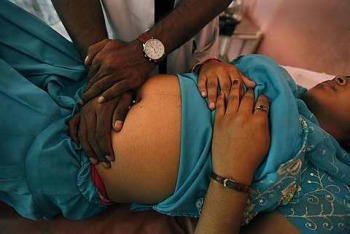
pregnant exam

Ideally the preparation for pregnancy should begin 3 months before getting pregnant. Some actions, such as quitting smoking, reaching a healthy weight, or adjusting medicines already in use, should start even earlier.

Steps to take before PLANNING a pregnancy:
1. All women need to take 400 to 800 micrograms of folic acid every day. It is proven that, folic acid lowers your risk of some birth defects of the brain and spine, including spina bifida. Talk to your doctor about your folic acid needs.
2. Stop smoking and drinking alcohol– it is better to start much earlier.
3. If you have any medical condition, be sure it is under control. Common conditions include: asthma, diabetes, oral health, obesity, or epilepsy.
4. For any over-the-counter and prescription medicines you are using, do inform your doctor about it. These include dietary or herbal supplements.
5. Be sure your vaccinations especially the Rubella vaccination is up to date.
6. Avoid contact with toxic substances or materials that could cause infection at work and at home. Stay away specially from chemicals and cat or rodent feces.
7. Avoid intake of fish that can be high in mercury, like shark, swordfish, king mackerel and tilefish.

If there has occurred an UNPLANNED PREGNANCY:
Start taking care of yourself right away.

• Take 400 to 800 micrograms (400 to 800 mcg or 0.4 to 0.8 mg) folic acid every day.
• Stop alcohol, tobacco, and drug use. Ask help for quitting smoking.
• Make a doctor’s visit to confirm your pregnancy.
• Discuss your health and issues that could affect your pregnancy. Find out what you can do to take care of yourself and your unborn baby.

What are the different periods/trimesters of pregnancy?

Pregnancy can be divided into 3 trimesters of approximately 3 months each. They are:

pregnancy trimesters.

What happens during prenatal visits?

During the first prenatal visit, you can expect your doctor to:

  •  Ask about your health history including previous pregnancies, other diseases, operations etc.
  • Calculate your due date from your last menstrual period.
  • Ask about your family’s health history
  • Do a complete physical exam, including a pelvic exam and Pap test
  • Check your blood pressure, height, and weight
  • Take your blood and urine for lab work—Blood group, Hemoglobin, check immunity to certain infectios esp Rubella, Varicella, Blood tests for infections like: hepatitis B, toxoplasmosis, syphilis, gonorrhea or chlamydia. You might also be offered a test to check for HIV, the virus that causes AIDS.
  • Will order for you an Ultrasound test: To detect the location, and double check the age of the growing foetus. The doctor may also ask for certain extra blood and US tests to check for fetal abnormalities.
  • Answer your questions—you must freely discuss all your concerns and fears with your doctor. Find out all you can about how to stay healthy.

Note: The purpose of first prenatal visit is to book with the doctor, get your date of delivery ascertained, check if there are any risks to the pregnancy & get basic tests done.

Following prenatal visits will probably be shorter.

  • Your doctor will check on your health and make sure the baby is growing as expected. Most prenatal visits will include:
  • Checking your blood pressure
  • Measuring your weight gain
  • Measuring your abdomen to check your baby’s growth (once you begin to show)
  • Checking the baby’s heart rate—Though Ultrasound can detect the heart rate almost at any early age, but for a heart beat by a Doppler is heard only after 3 months.
  • You will probably not need any internal (pelvic examination) till the later part of pregnancy.

Number and Frequency of prenatal visits:
Usually the visits are monthly till 28 weeks, then in two weeks, till 36 weeks. The purpose of the tests during the pregnancy is to ensure that the baby is growing as expected, and that the health of the mother is also normal. Regular checkups will help in finding out any deviation from normal early, and hence easy to handle.
Towards the end, after 36 weeks, the visits become weekly, just to make sure, that the growth and the position of the baby is normal enough for a normal delivery, or if not, then prepare for a surgical delivery.

Special Tests during pregnancy:
In the fifth month, the doctor shall ask you for a blood test to check Glucose tolerance. This is to rule out if you have the risk of developing high blood sugar in the pregnancy, as this can harm the growth of the baby.
Some specialist centers  may also do a ‘cardiac Ultrasound at five months ( 20 weeks) to check that baby has no heart defect.
If your Blood group is Rh negative while husband’s is positive, the doctor will ask for a Rh Antibodies test.

Ultrasound scans during pregnancy:

  • In the first 10 weeks of pregnancy the best way to scan is by inserting a small probe into the vagina. The examination is similar to an internal pelvic examination. Embryos as small as a few millimeters long will be visible on the TV monitor. The procedure my be a little uncomfortable for some, but it is not painful at all.
  • In later stages of the pregnancy, the scanning will be done via the surface of the abdomen. Ultrasound gel will be spread on the skin, then the scanner is passed over the uterus until the fetus and the placenta are found. Usually, the pregnant woman and her partner can watch the scan on the monitor.
  • In the first stage of the pregnancy, usually before 14 weeks, ultrasound scanning is used to check whether the fetus is alive and whether it is alone or one of twins or triplets.
  • By measuring the length of the fetus it is also possible to accurately determine when the baby will be due.Some major abnormalities can also be detected at this stage.
  • At 11 to 14 weeks, measurement of the thickness of the skin at the back of the neck (known as nuchal translucency measurement) can be used to calculate the risk of the fetus having a chromosome abnormality.
  • From 18 weeks onward  it is possible to examine the fetus in more detail. Most organ systems can be examined to ensure that the fetus appears to be developing normally. The spine, skull, brain, heart, lungs, kidneys, arms and legs can all be seen. If the mother is overweight, then the quality of the examination may be poor.
  • From 30 weeks onward  ultrasound is often used to estimate how well the baby appears to be growing. It is difficult to be precise about this but it is often useful if the woman has had a small baby in the past or has a condition that may affect the baby’s growth, such as preeclampsia.
  • The bloodstream in the umbilical cord is also examined to see if it is functioning well enough to transport sufficient oxygen and nutrition to the fetus.
  • It is also possible to check the position of the placenta to see whether it is lying normally or if the placenta is lying abnormally close to the inside of the cervix (a condition known as placenta praevia).
  • There is no scientific evidence to support the concern of harm caused by repeated US scan.

pregnancy_ultrasoundObsUS

Last weeks of pregnancy:

  • After 36 weeks till 40 weeks you will be asked to visit every week.
  • Apart from the usual weight and blood pressure, the doctor will lay more emphasis on the abdominal and pelvic examination to assess the position of the baby and its possibility of a normal birth through vaginal delivery.
  • If the baby is with head down, you are good to go with normal delivery.
  • If the baby is positioned otherwise i.e. rump or legs first( breech) the doctor might try to over the abdomen to turn the baby to head down. This is called as external cephalic version.
  • If it still remains so, then you might need Cesaerian section.
  • In the last visits, do ask doctor about any questions that arise in your mind, pertaining to the child birth, like sexual intercourse in the last weeks, or about the preparation of the new arrival, like Breast feeding the baby, and other concerns. This is also the right time to discuss, what are the different methods of birth control, in order to space the next child.

Role of the Dads to be:
You know it takes two to make a baby. She’s not the only one who’s expecting, you too are. Hence the responsibility does not stop there. Nor does it stay limited to driving a screaming partner to the hospital for child birth and then pacing in the corridor to hear if it’s a girl or a boy.

Research has shown, the Dads who take part in the pregnancy have less infant mortality rates. And there needs to be a relationship built with the baby while the baby is in the mothers womb.

OJO-PE0068533 - © - Chris Ryan

Some of the things fathers-to-be need to do:

  • Create a birth plan together-the doctor to be seen, the place of birth, the method of birth, even about the time baby arrives.
  • Read up together with the Mom to be about pregnancy from the net, books, hospital brochures etc.
  • Accompany her to her prenatal visits, her tests and Ultrasound scans. Also know what is being done and why?
  • Nurture the Mom to be—understand her condition, her anxieties, help her in the daily chores, make her rest, and most of all pamper her, after all she is carrying your baby.
  • Build a relationship with the baby. Studies show that babies in the womb can hear outside noises (and voices) as early as the fourteenth week. By talking to your baby he/she will be familiar with your voice even when still in the womb and this will help develop a closer bond with your tot before he/she enters the real world.
  • Lastly, enjoy your new role, don’t take it as a challenge or burden.

Dr. Bradley said (in his path-breaking book “Husband-Coached Childbirth”), “You can’t beat a husband as a companion in labour!”

pregnancy Dad

Childbirth:

From 36 weeks to 40 weeks , it is normal time for childbirth. If no onset of labor  pregnancy can be allowed to go on till 42 weeks, but there is close watch at the baby with weekly checkups.

Majority i.e. 85% or more have normal childbirth, while 15% or less may need a Caesaerian section.

There are many details, and information an expectant couple would like to learn, about child birth. The are many details you need to know, and hence I suggest you to read, and understand about Sign of labor  types of delivery  episiotomy, epidural anaesthesia etc and know terms like Labor Pains, cervical effacement, breaking water, episiotomy etc. This link answer many of your queries.

newborn

“A mother’s joy begins when new life is stirring inside… when a tiny heartbeat is heard for the very first time, and a playful kick reminds her that she is never alone“

How to avoid Cancer !


What is cancer?
Cancer is not just one disease, but many diseases. There are more than 100 different types of cancer.
Cancer is a term used for diseases in which abnormal cells divide without control and are able to invade other tissues. Cancer cells can spread to other parts of the body through the blood and lymph systems.
Cancer is a leading cause of disease worldwide (GLOBOCAN estimates that 12.7 million new cancer cases occurred worldwide in 2008).

The top 4 causes being:
• Lung (12.7%)
• Female breast (10.9%)
• Colorectal (9.7%)
• Stomach cancer (7.8%)
In all these four cancers account for 40% of deaths from cancer.

Although the incidence rate in developed countries is twice as high as the developing countries like ours, but the outcome ( in terms of death and disease) is much worse in the developing countries, owing to poor detection at early stage, and poor case management. However, the incidence of cancers related to infections like stomach, liver or cervix ( which can be prevented) are more common in developing countries.

GOOD NEWS is that about half of all cancer cases are preventable. Prevention offers the most cost-effective long-term strategy for the control of cancer.
And even Cancer diagnosis is still not a death statement. If detected early can be cured.

Many reasons within our genes, our lifestyle, and the environment around us may increase or decrease our risk of getting cancer.

There are simple measures that we as ordinary human beings can take to prevent cancers to some extent.

Here are they :

Part 1

LIFESTYLE:

TOBACCO in smoke or chewable form TOPS the list.
Tobacco use is the single greatest avoidable risk factor for cancer mortality worldwide, causing an estimated 22% of all cancer deaths per year.
Cancer that tobacco can cause are of lung, esophagus, larynx (voice box), mouth, throat, kidney, bladder, pancreas, stomach, cervix and female breast.
About 70% of the lung cancer burden can be attributed to smoking alone.
Second-hand smoke (SHS), also known as environmental tobacco smoke, has been proven to cause lung cancer in non-smoking adults.
Avoiding tobacco is best, however cessation of the use of tobacco, gradually reduces the risk, and in 15 yrs is as good as for non smokers.

ALCOHOL
Alcohol is a risk factor for many cancer types including cancer of the mouth, pharynx, larynx, oesophagus, liver, colorectum and breast. Risk of cancer increases with the amount of alcohol consumed. The risk from heavy drinking for several cancer types (e.g. oral cavity, pharynx, larynx and esophagus) substantially increases if the person is also a heavy smoker.
WEIGHT & EXERCISE
Obesity is a cause for most chronic diseases and cancers, including breast, prostate, lung, colon and kidney and endometrium.
A general goal of 30 minutes exercise every day and keeping the body weight in the normal range can avoid from a lot of cancer risks.

RISKY BEHAVIORS:
-Practice safe sex & do not share needles, sharps like nail cutters and razors. There may cause Hepatitis B, C or HIV infections which can then lead to Liver or other cancers. Cancers caused by infectious agents(viruses etc) are more common in developing nations e.g. Cervical Cancer, Liver Cancer and Stomach Cancer.

SUN EXPOSURE:
Light skinned especially should protection from sun by use sunscreen with SPF >30 between 10 AM and 4 PM. Skin cancers like Basal Cell Carcinoma(BCC) or Melanomas. BCC are less aggressive but Melanomas are very aggressive and fast growing cancers & kill 75% of those who have them.

PART-2
FOOD

What makes some foods cancerous?
Refined sugars: They act as fuels for the growing cancer cells, as ready energy. Terms suggestive of refined sugars on food labels are: high-fructose corn syrup, sugar, sucrose, enriched bleached flour, white rice, white pastas, white breads and other “white” foods. Refined flour are also lacking in fibres which cause cancer.
Hydrogenated and partially hydrogenated oils: Besides being a cancer factor, trans fats promote heart disease, interrupt metabolic processes, and cause belly fat(obesity) that in turn are again another cause of cancer.
Sodium nitrite (and nitrates): Added to give pink color to the meat. During the digestion process, however, sodium nitrite is converted to nitrosamine, and that’s where the cancer problems begin. Nitrosamine is a carcinogen. Nitrosamines are also found in food items that are pickled, fried, or smoked; in things such as beer, cheese, and fish by products, and tobacco smoke.
Saturated fats: Usually of animal origin which may cause obesity which is indirectly or directly related to certain cancers.
• Some chemical additives like coloring agents and flavouring agents have also been known to be cancerous.

Top cancerous Foods:
1. Soda pops, sweetened drinks: >2 servings per week increases Pancreatic cancer by 87%. Glucose and Fructose both feed cancer cells. Women who ate the most high-glycaemic-load foods were close to three times more likely to develop colorectal cancer.
2. Fried foods: French fries, hash browns, potato chips, samosas, pooris. – Apart from calories, they contain saturated fat and trans fat, they also contain acryl amides. They should be called “cancer fries,”
3. Processed meats and bacons: burgers, sausages, bacons. Nitrosamines are produced from fat at high temperature cooking, as in tobacco smoking. People who eat a lot of processed meat may be 50 percent more likely to develop colorectal cancer, stomach cancer or pancreatic cancer.
4. Red meats: Beef. Researches show even eating twice a week, they raise a risk by 20% of cancers of breast, colon and prostate cancers.
5. Donuts, Cookies, chips and crackers: Refined sugars, refined flour and trans fats. They scream for themselves that they are cancerous foods.
6. Charred meats, smoked meats: Many studies including one from Harvard have shown a high link between charred meats and cancer of colon, stomach. Even delicious smoked meats are high in nitrosamines due to the nature of their cooking. Trick is eat them sparingly, if cannot avoid.

How can healthy eating prevent cancer?
The main principle is eat simple:
Eat unprocessed foods and base your diet largely on plants. Consume foods that have omega-3 fats and other essential fatty acids.
Eat lots of fruits and vegetables; many common ones have known cancer-fighting properties.
Get regular vigorous exercise, since tumors cannot thrive in highly oxygenated environments.
Keep your blood sugar stable to avoid being an all-you-can-eat buffet for cancer cells.

Top cancer preventing foods:
Green leafy vegetables: These cute little green trees help to fight off stomach, liver, skin, lung, bladder, prostate, and breast cancers. Broccoli contains sulforaphane, an antioxidant that rids the body of cancer-causing toxins.
Hint: Cooked Brocolli tastes mushy, so avoid over cooking, leave it crunchy, or make stir-fry, or eat raw in salads.

Berries: The darker the berry the better still. Blackberry, blue berry, strawberry, raspberry. They contain anthocyanins, antioxidants that slow the growth of premalignant cells.

Garlic: Fights the nitrosamines in the red meat.
Clue: Add garlic to your tomato puree, sauce.

Tomatoes: contain lycopene, which has been shown to stop cancer cell growth according to research. The sure fire way to increase lycopene is by cooking tomatoes.

Walnuts; are the best among nuts for fighting both breast and prostate cancers. Adding just an ounce of walnuts a day will help to keep the cancer away. Vitamin E (gamma-tocopherol) found in nuts and plant seeds may slow the growth of cancer cells.

Beans: Navy and black beans help delay cancer growth of breast and colon cancers. Add a half a cup to your diet a week, at least!

Coffee: Research shows that coffee may contain healing antioxidants as well, preventing colon cancer, diabetes, and Parkinson’s disease. An alkaloid in coffee may even prevent cavities!
Studies also show that drinking coffee helps reduce muscle soreness and improves stamina
Harvard researchers are finding an intriguing link between coffee and the prevention of an aggressive type of prostate cancer. However, it’s too early to recommend boosting coffee drinking to men, although one cup of coffee might be helpful.

Green Tea: Antioxidants of green tea are also known to be cancer preventive.

ENVIRONMENTAL TOXINS:
Many environmental toxins are blamed to be carcinogenic.

The topic of environmental carcinogens is vast and controversial. For details on each aspect and toxins see the link: Here

Part- 3

KNOW YOUR BODY:
Keep a regular check on your body- any moles on the skin, or your breasts ( in women) or testicles (in men), especially while taking shower, or changing clothes. If you feel any change in the shape size, or feel any lump, or feel any change in your body or symptoms which appear unusual to yourself, you must take doctor’s opinion. Please do not panic. This does not mean you necessarily have cancer or a serious problem. But even if it is, it will be detected early.

BE INFORMED:
Cancer Prevention and Early Detection strategies:
Certain cancers are known to be caused by viruses, and being infectious spread easily in developing countries. They can be avoided by using their vaccines:
Hepatitis B Virus: A set three vaccines given will prevent Hepatitis B which is a common cause of Liver Cancer
Human Papilloma Virus: A sexually transmitted virus that can cause cervical cancer. A new vaccine against HPV protects 99% against Cervical Cancer.
Helicobacter pylori: For stomach cancer. Hence when detected, must be treated promptly by consulting a Gastroenterologist.

ALSO BE INFORMED THAT: There are certain cancers which can be screened and detected early and prevent complications and premature death.

Following two blogs shall explain in detail how to prevent or detect cancer early. There are specific screening tests and issues in men and women which shall be discussed in next two blogs: Early Cancer Detection in Women & Early Cancer Detection in  Men, respectively.

There’s a famous saying: An apple a day keeps the doctor away. The ( not so secret) apple for cancer prevention is:

Take home apple, oops message is: “Half of the cancers are preventable and can be avoided through healthy living and better awareness.”

Negative Stereotypes


Think Norway. What occurs to your mind?
A beautiful country up in the north, where it snows, its all peaceful, no crime. No?

Think Africa. What crops up in the same  head?
Poverty, AIDS, famine, a picture of a starved kid pops up in imagination, and for some well informed perhaps they think of it’s corrupt leaders. Yes?

BTW, don’t  you know Africa is not a country but a second largest continent?
It comprises of  57 countries, each with a distinct culture, language and of course like any other country, each of them have their distinct problems.

So will it  be  justified to summarize all these sovereign states with just  four or five issues, that too very negative.

Why did this stereotyping occur?
The answer is simple. Disinformation.

How?
Of course through the various advertisements from the social sector, that with all their good intentions wish to collect funds for development in the continent. And the media, that through its good intentions tries to highlight to the world the grave  issues they face. However, despite their good intentions, they end up creating a negative stereotype.

Ever thought what must Africans be thinking or feeling of this stereotyping of  them?
It is not that such issues do not exist,  they do, but then this is not all, about Africa.

To highlight this negative stereotyping, without  lashing out in anger, a group  has come out with an extremely creative and cheeky parody called “Africa for Norway” with the message:

“ Imagine if every person in Africa saw the “Africa for Norway” video and this was the only information they ever got about Norway. What would they think about Norway?”

Also imagine if they also used  picture of a Norwegian child shivering in cold, without permission from those concerned?

Here is the parody “Africa for Norway” :

What message do they want to convey through this initiative?
1.Fundraising should not be based on exploiting stereotypes.
2. We want better information about what is going on in the world, in schools, in TV and media.
3.Media: Show respect.
4.Aid must be based on real needs, not “good” intentions.

For more details on the brilliant project click>>  Radi-Aid .

Coming closer to home, who would know more about stereotype than Pakistanis and Muslims with a “My name is Khan and I am not a terrorist.”  being their holy passport to the outside world.

On a personal note:

Growing up as a minority Muslim in a metropolitan New Delhi, India, I came across some curious stereotypes:

  • How many wives  does your father have?
  • Why doesn’t your mother wear a burqa or why doesn’t your father have a beard?
  • Is you father a professor of Urdu in Delhi University?
  • Do you eat Biryani everyday?

Equally ridiculous questions were asked when I came two decades ago, as a newly married immigrant to the megacity Karachi in Pakistan:

  • Are you a Hindu? (On wearing a saree and bindi together, and being of Indian origin).
  • Did you have Hindu friends?
  • Did you ever eat food in Hindu households?
  • Kya India mein VCR hota hai? (Are there VCRs in India?) ( The last curious query  sounds hilarious 😀 now, but it almost got me crying as a new immigrant. Those were the days when India had only Fiat, Ambassador or Maruti cars,   no Sony TVs and yes, not even StarPlus channels 🙂 ).

Not sure if these stereotypes were also created through media !

A Life’s Journey of my Sister in the Indo-Pak Subcontinent


An open letter to Director General UN Women, on issues and recommendations for women in one’s region.

First published here: http://worldpulse.com/node/34370

Dear Michelle,

I am sure you, jolly well, must be aware, as a woman that despite being more than half of the world’s population, we the female gender, is still considered either a subordinate or a commodity in the hands of men on this earth. The issues faced by us women all over the globe are numerous and it would take many a blogs to even list those issues. Female infanticide, girl child neglect, malnutrition, sexual abuse, illiteracy, economic slavery, women trafficking, domestic abuse, bride burning, moral policing-you name and that issue still exists among a large chunk of this world’s half population.

As India is my homeland and Pakistan the land of my husband and kids, Michelle, I have chosen to love both the countries as much and hence the plight of women in both the countries is very close to my heart. Broadly speaking, the issues faced by the women (my sisters) in both the countries are similar except for some minor differences in the magnitudes or the nomenclature.
I wish to recount here a typical journey that ‘my sister’ i.e. a typical woman lives in the Indian subcontinent right from her conception till her death.

A news of a pregnancy is rejoiced in our communities and right from that moment, the prayers begin wishing for a son. Rarely does one see people who wish for a girl especially in the absence of a male child. Hence the first rejection of her dignity is registered in a very subtle manner, right at her conception.

As the pregnancy progresses many an enthusiastic parents, especially in parts of India, frantically start to investigate for the gender of the baby growing in the womb and if confirmed a female–thanks to the practice of ‘female foeticide’–some of my sisters end up being aborted just for being a girl. Hence their life ends long before it actually is destined to begin, of living in this world.

Among those who open their eyes in this world—not many are in a position to call themselves lucky.

My little sister is raised as a secondary to her male sibling. She is fed once her male siblings or other male members of the household have had their share, and hence she embarks upon the journey of life malnourished right from the outset. From the birth till death she is under the control and command of a male ‘guardian’ be it a father, a brother, a husband or a son.

While her male sibs go out to play, she is asked to stay indoors and help the mother in house chores. And even if her brother is lucky enough to go to school, she is, in many places , told to stay behind looking after the younger sibs, no matter how much she aspires to acquire education. About more than 3 out of 5 of my young sisters from toddlers to adolescence, in Pakistan fall prey to the beastly lust of men and that too known uncles or cousins (in 90% of cases) in the form of sexual abuse, molestation or rape.

As she attains an appropriate ‘age’ the elders decide that it is time for her to move on with matrimony. What is the age of her groom is purely her luck—he could be a young boy of her age or if the parents are lucky to get a good price—then the groom could be as old as her father. The age is no bar. She is by now well trained to not to express her like or dislike and could be subjected to any sort of oppression to make her obey the decision in case she dares to defy.

The marriage for my sister, Michelle, does not by any means, mean liberation from an oppressive father or an authoritarian brother, but a mere transfer of control and command of her life and existence, to her husband. In many a communities in Pakistan, if she opposes, she is subject to severe punishment in the form ‘honor killing’ or else.
And out of those who do get married, a third have to bear the taunts and torture at the hands of the in laws for not bringing enough of the dowry. Some are even doused with kerosene and burnt alive ( ‘Bride burning’) in India and sometimes in Pakistan too.

National Crime Records Bureau (NCRB), India said a total of 7,618 incidents of dowry deaths were in 2006 , in India, an increase of 12.2 percent over 2005.

On the other hand, in many parts of India, and Pakistan, 1 out of 3 of my really poor sisters stay unwillingly single simply because their parents do not have enough to pay for their ‘dowry’. Literally speaking the groom is up for sale with a price tag of dowry.

However not just the poor even the rich sisters of mine in Pakistan meet the same fate. Their Feudal Lord fathers and brothers do not want their lands to be divided by giving the daughter her share. So the daughter is loaded with jewelery , expensive clothes and ‘married to the QURAN’. Yes, Michelle, this is true and I do not exaggerate even a bit.

Once in wedlock , almost half of my married sisters have no control over their own life and body. They cannot decide how many children to bring forth.

Every hour that ticks by, in India, inflicts more brutality on women, with 2 rapes, 2 kidnappings, 4 molestations and 7 incidents of cruelty from husbands and relatives, reveal the latest national crime statistics, National Crime Records Bureau (NCRB).

Similarly, 4 out of 5 women are subject to some kind of domestic abuse—either verbal, economic, psychological or physical violence in Pakistan according to Human Rights Watch.

And the physical violence is not just beating—it could be in the form of physical or sexual violence, torture, mutilation, acid throwing on the face, burning her alive or even strangulating her to death.
And only a minority of cases come into the knowledge of the authorities or in the news, out of which only a handful are proven guilty and punished. Majority of them manipulate to get it seen as an accident and remain Scot free to repeat the same offense with another innocent sister of mine.

We, both in India and Pakistan, are religious communities but unfortunately the onus of upholding religious obligations and principles begins and ends with a woman. She is morally policed and reprimanded if she deviates from the norm, but if the same offense is committed by a man, everyone including our religious leaders turn the other way.

As she grows older, my elderly sister is seen as the embodiment of sacrifice, patience, and morality while the men gallop like stags all over doing as they please. After all it’s a man’s world out there.

She may have worked, however hard, to raise her family or run the household, and is thus called a ‘homemaker’, but she does not get any share in those assets which she assists in her husband amassing in his name. If she is divorced for any valid or invalid reason, she has to walk out of the house with bare hands as all that ‘home’ she has assisted her husband in ‘making’ is entirely his.

She grows old and the command and control shifts from the husband to her son. She is seen as an embodiment of selflessness, sacrifice and patience . The younger girls are shown the glory of her selflessness and asked to emulate her.

Finally, my elderly sister dies a quiet death, without even realizing that she deserved a far better deal in life than was given to her . And hence the relay of her life which began from the passing of a baton from being an obedient daughter to a sacrificing sister to a dutiful wife to a selfless mother, finally ends as a ‘great’ woman into her grave.

This is the typical story of a good 50 % of the women in the subcontinent if not more.

It has been going on for ages and shall go on unless we make some real dent in the situation.

The only way she can come out of this vicious circle is by providing her ‘quality’ EDUCATION.

As a woman gets educated, a whole family including her subsequent generations get educated too. She gets empowered to take the right decisions from the choices in her life—be it her selection of spouse, or her decision to bear how many children or how to raise intellectually superior children.

Education will also empower her to realize that she has her rights too, and not just her duties that are rubbed on her face all her life.

Education will enable her to treat her own daughter as an equal to her son.

Education shall empower her to earn a better livelihood, and make her come out of economic dependence from the men in her life.

Educated woman who is free to make her decisions, is a happy woman and raises a happy family. A happy family brings forth happy citizens. And happy citizens contribute positively not only towards their own homeland but also the whole planet, at large.

Hence, we do not need any rocket science to discover how to empower a woman. Simply ensure her ‘proper and quality education’ and she shall take the reins of her life in her control.

I hope it isn’t asking for a lot, Michelle.

Thank you.

Sincerely,

Dr Ilmana Fasih

9 February 2011

Female foeticide: A curse of modern times


First published as cover story in The Rationale June 2012: http://therationale.org/June_1_ver/Female.html

The first time I personally heard of female foeticide( abortion of female foetus) being practiced in India, was during my clinical posting in the Radiology department as a Medical student in Delhi, in the late 80s. The patient with third pregnancy, and two previous girls, two girls, wanted to know the gender of the baby in the Ultrasound at 6 weeks.

The annoyed registrar had shooed her away, but then shared with us in the doctors room, that : “She will in any case go to a private clinic, get the gender detected and will definitely abort it of found a girl”.

We as students expressed our dismay, a male registrar retorted in humor: “Evil should be nipped in bud.”

Female foeticide, killing the female fetus in the womb, is a modern phenomenon, as compared to the age old existence of Female Infanticide, the killing of the female new born or infant. It began in Asian societies like India and China sometime in the late seventies, coinciding with the campaigns of family planning, easing of medical termination of pregnancy (also called legal abortions) and with availability of the ultrasound machine to monitor pregnancy. Although, there were other tools available for checking the sex of the fetus  through amniocentesis, but was an invasive procedure, and could lead to complications like abortion. Moreover, unlike the Ultrasound, Amniocentesis was not a tool available to the layman, or semi-trained medical professionals to abuse it to their advantage.

As a medical professional and as a female member this very society, one kept hearing of the news of women asking for gender detection, simply to select the baby of their choice

However, it was the 2001 census which shocked the world. It brought forth the hard figures that the practice of female foeticide was not just existent, but flourishing. The overall Indian ratio of 927 girls to 1000 boys in the 0-6 year’s age group, when in the world the ratio was 1045 vs 1000. The statistics were more skewed in the Northern Indian states of Punjab, Haryana, Uttar Pradesh etc than in the Southern states.

And it went on, quietly, unabated, under the cover of legal abortions, and with Ultrasound getting cheaper and more easily available to all levels of health workers. The trend caught up, rose in numbers and spread to other states.
The census reports for the 2011 nailed the speculation that the trend was catching pace, with the stats now being 914 vs 100 for girls vs boys. In some of the states it has gone to as low as in 800s e.g. Uttar Pradesh (899 girls for 1,000 boys), Haryana (830), Punjab (846) and national capital Delhi (866).
The conditional sex ratio for second-order births when the firstborn was a girl, fell from 906 per 1000 boys (99% CI 798—1013) in 1990 to 836 (733—939) in 2005; an annual decline of 0•52% (p for trend=0•002), reported medical journal Lancet in May 2011.

What also came forth in the 2001 census was that it was more of an urban phenomenon and more so practiced by the upper middle class of educated families.

The Urban and Rural ratios being 946 and 900 respectively, to 1000 boys.

“Declines were much greater in mothers with 10 or more years of education than in mothers with no education, and in wealthier households compared with poorer households.” reported a Study published in Lancet, in May 2011.

Better economic conditions and higher education, instead of improving their thinking, enabled their misogynistic mindset to dispense away the extra income, and abuse the modern technology to their advantage. Thus defeating our age old myths of education, and economic circumstances will increase the plight of women. Perhaps our technological knowhow and economic affluence has developed faster than our brains.

The irony is that it is the same communities affluent, well educated, and even God fearing religious strata of society, who celebrates ‘Kanjak’, the day when young girls are worshipped as Goddesses, has now started to kill their own Goddesses in the womb.

Innovations in bypassing the laws:
In the mid 80s some Indian states began passing legislation like the Pre-Natal Diagnostic Techniques (Regulation and Prevention of Misuse) Act, which banned sex determination tests. In the 90s the same act was legislated in the centre too. The Act carries a three-year imprisonment and Rs10, 000 fines for offenders, prohibiting the gender disclosure of the foetus during Ultra sound. However, tens of thousands of Private clinics with cheaper version of Ultrasound machines had mushroomed till then, all over the North Indian cities, performing the gender detection and the abortion of the female foetus as a ‘package’.

There have been reports that certain clinics in small cities display openly billboards with incentives: “Do you want to spend 500 or 50 lakhs” referring to the cost of abortion against the cost of raising a girl child and marrying her off with a dowry.
The gender disclosure law which was an offence, is creatively bypassed, by using code words like: For girl vs boy as:
Jai Mata Di vs Jai Sri Krishna
Pink city Jaipur vs Blue City Jodhpur
Jalebi vs Laddoo.

It is not just the men of the family, but the senior women like the mothers in law who coerce the women to resort to sex selection. Many expectant mothers have to undergo multiple abortions, jeopardising their health before the desired boy is conceived.
Needless to repeat it the mindset of boys being ‘assets ’, kul deepaks (the lamps of heritage) , are looked up as bread winners, carers for the old age, continuation of family name, as a necessity to perform the last rites of the parents.
On the other hand the impression of girls as liabilities, ‘paraya dhan’ (someone else’s wealth), ‘bojh’ (burden) because of the expense involved in marrying them off with a fat dowry, need to protect them physically and morally, and likely to bring disrepute to the family if their morality is lost.

UNPFA report “India Towards Population and Development Goals”(1997), estimates that 48 million women were ‘missing’ from India’s population since the turn of the century. The report further states “If the sex ratio of 1036 females per 1000 males observed in some states of Kerala in 1991 had prevailed in the whole country, the number of would be 455 million instead of the 407 million (in the 1991 census). Thus, there is a case of between 32 to 48 million missing females in the Indian society as of 1991 that needs to be explained.”

According to UNICEF, India tops the list as far as illegal abortions and female foeticides are concerned. Of the 15 million illegal abortions carried out in the world in 1997, India accounted for 4 million, 90% of which were intended to eliminate the girl child.

Another study reported in the Lancet journal indicates that 8-10 million females were aborted during the past 10 years,( from 2001 to 2011) mainly to couples whose firstborn was a girl and among the more well-off families. This number is much bigger than all the men and women killed in genocides put together.
Much to the dismay, a recent report published by Toronto Star, talked of preliminary reports of such skewed ratios, in favour of a boy, in the second and third order births among the Indians settled in Canada.

However, this phenomenon is not just restricted to India; another major country facing the menace of female foeticide is China.

The preference for boys, in China too is tied to their religious belief that male heirs are necessary to carry on the family name and take care of the family spirits. A Chinese family worries that if there is no son no one will look after them and keep them company in the afterlife. Confucius said, “There are three ways of being disloyal to your ancestors. Not carrying on the family name is the worse.”

Chinese parents openly celebrate when they have boys, and some even show disappointment when they have girls. Newborn girls are given names like Pandi (“expecting a boy”), Yanan (“second to a boy”) in hopes the next child will be a boy. Six million women bear the names Lai-di (“call for a brother”) and Ziao-di (“bring a brother”).
“Daughters are like water that splashes out of the family and cannot be gotten back after marriage.”, a Chinese saying resonates with the belief we as South Asians have of girls being a ‘guest’ in their parents homes.

The statistics suggest that China did not have a skewed male: female ratio till the one child norm was enforced. After the enforcement, the rate of abortion of female fetuses increased in China, thereby accelerating a demographic decline after 1979. As most Chinese families are given incentives to have only one child, they would want it to be a son. However later the Law was eased especially for those who had a first girl child, hence giving a legal government sanction to the preference of a boy.
In 2005 figures, 118 boys were born for every 100 girls, up from 110 boys per 100 girls in 2000 and 112 in 1990.

Recently in the past few years, Vietnam has experienced an unusual rapid change in the sex ratio at birth.. The ratio was about 106 male births per 100 female births, in 2000 and has it increased to 112 in 2008.

“Currently, China reports higher sex ratio at birth than Vietnam. However, what is striking in Vietnam is the unusually rapid rise of the SRB [sex ratio at birth] recorded over the last few years.” says a UNFPA representative.

There are no studies existent from Pakistan, but as mentioned in by an investigating journalist in the TV program Lekin by Sana Bucha, there are 3,000 single room clinics existent just in Karachi, with one or two employees, performing illegal abortions, 90% of them being for the female child. This is despite of abortions being illegal in Pakistan, unlike in India or China. This could be just the tip of the iceberg.

A 2005 study estimated that over 90 million females were “missing” from the expected population in Asian countries including China, India, Pakistan, Afghanistan, Burma, South Korea and Taiwan alone, and suggested that sex-selective abortion plays a huge role in this deficit.

Research suggests that instead of economic conditions, like poverty or education, it is the cultural beliefs that play a much larger role in gender preference and sex-selective abortion. To prove this, in places like sub-Saharan Africa, Latin America, and the Caribbean such deviations in sex ratios do not exist in.

As scientific progress furthers and the technology becomes more affordable and available to the common man, the curse of Female feticide, is likely to follow the course it is following currently. There are already available on internet, home monitoring kits, to detect the sex of the new foetus from blood or even urine samples. With abortion techniques getting more medical than surgical, the situation may simply go out of hands of the health personnel even..

The affluent and the educated who perform this would realise its curse only as it will be going to bite them back when their sons will find it extremely daunting task to find brides, and will be forced to stay bachelors.
It is estimated that by 2020 there could be more than 35 million young ‘surplus’ males in China and 25 million in India.

This has actually begun to be seen in smaller scale in various states in India and China. It is already happening that single men are more involved in violence and crimes, resorting to drug addiction and alcoholism, after being frustrated to find a suitable spouse. Women once again are being punished with a rise in rapes, in prostitution demands and through other crimes against them. In some places there have been reports of women being forced to share husbands (polyandry).

In India, the legislation prohibiting gender-selective abortions has so far been evaded easily, and there have hardly been any prosecutions. One wonder what is it that will change the mindsets if education and affluence could not. Would any activism, any mass media campaigns, any icons be able to change this?

My heart shudders to imagine, where and when shall this stop, if at all.
Are we just going to learn it the real hard way?

Dr. Ilmana Fasih
19 May 2012

An act impure


Written in the context of Rimsha Masih, the 11 year old accused for blasphemy, and sent to jail for that:

In the Land of the Pure,
A minor has dared an act impure.
Her feeble mind, designed a devil,
Her tiny hands, enacted an act so evil.
Divine here are the laws that reign,
Virtuous is the blazing anger insane.
Swords of revenge are laid bare,
Dream to live, she better not dare.

Forgotten, is the kindness to minors,
That Prophet(pbuh) had preached.
Ignored, is the lesson of forgiveness.
The Holy Book has revealed.
Dismissed, is the spirit of mercy,
The Supreme Power upholds.
For in the Land of the Pure,
A minor has dared an act impure.

News reads  : http://www.bbc.co.uk/news/world-asia-19311098

Mosaic Festival 2012: Day 3: Saving Face.


Happening adjacent to Square one, is also Mosaic Film Festival, with an impressive line up of select and Award winning films being screened, from all over the globe.

I had marked in my calendar, long before the festival began, to sneak out of my volunteer arena and watch one of the two Premiered movies in the current festival, Saving Face..

The Mosaic audience is fortunate to be the only Canadian audience to have been treated to a full 54 minute director’s version of Saving Face, instead of the usually running 25 minute short film.

My interest was not just its Academy Award (Oscar Award) crown, but also the issue it highlights, of acid burns in Pakistan, or to be fair in the rest of the subcontinent too.

The ease of availability of the strongest of acids, at no price, and the super speed with which it disfigures the life of the victim, both literally and metaphorically, makes it a handy tool in the hands of its ego-bruised perpetrators. As bluntly put by Dr Jawad,

Guns need a licence, but acid throwing needs none.”

The film revolves around the real stories of two unfortunate, yet courageous women, Zakia and Rukhsana, for whom the roles they performed were scripted ruthlessly by none other than their own husbands. Almost near psychopaths that these men  were, they did not even appear to have any remorse on their actions, in retrospect. Perhaps, had they been in possession of even a streak of humanity, they would not have resorted to this premeditated act.

On the other hand were the two courageous women, who despite of all their miseries, decided not just to live with their heads held high, but to carry on with their missions.

Zakia, after being severely disfigured, came out to get justice, and to fight for legislation against the perpetrators of acid burns. The severity of her burns, had made the reconstruction of her face impossible, as Dr Jawad stated the limitations of plastic surgery,

“After all we are not Gods”.

However where there is a will, there is a way.

Not only was the legislation passed on the punishment for acid throw, and she even saw her husband get two life imprisonments. The reward in return to her was a new lease of life through a  prosthesis, which gave her a new face, at least for the outside world.

On the other hand, like majority of helpless women and mothers, Rukhsana, after all the trauma, had chosen to patch up and return to her husband. However, her generous forgiveness was returned back with a brick wall being built between her and her children. Despite the series of misfortunes that destiny had offered her, she chose to continue on with her new pregnancy, and postpone her surgery until delivery. A hope to start a new life with a new baby, rekindled a new desire in her love to live.

I could not hold back tears, when Zakia walked out on the street, for the first time after years, with face revealed and saying, “There is hope in this life again.” Or when Rukhsana holding her new baby boy remarked: “I want him grow up to be a doctor like you, and not like his father.”

I salute them both, for being a true embodiment human resilience, in the face of worst of tortures, and still bouncing back to life with hope. It is this hope that has kept this world revolving for centuries.

Hats off to Dr Jawad,  Shairmeen Obeid Chinoy, Daniel Young and the entire team, for saving their own faces too, and for inspiring a passion in others,  to come forward and help, in millions worldwide.

The appeal for donations for the cause, by the Festival organisers, saw many signing off cheques and pledges for the cause, at the end of the film.

Perhaps we all need to save our own faces, and do our own bits for this cause and for women abuse at large, whether by screening this film, writing about it, or simply teaching one’s own sons to treat their women with dignity as they grow up.

Mosaic Festival 2012~Day 1 : Fashion Show & Mushaira


Mosaic Fest 2012 opened up on 16th August 2012, in Mississauga Art Gallery, with a substantial poise.

Yes, it was the “Woman of Substance walk”, in partnership with Indiva,  a renowned Fashion House from Yorkville.

What was thrilling was the scintillating line of beautiful models, from among the  women who make a difference in our Community. With the same poise and grace, that they have walked on the ramp of their professional lives, did these stunning models display the ensembles they were wearing from the renowned South Asian designers like Malani Ramani, Rohit Bal, Satya Paul, Ashley Robello, to name a few, all brought to display courtesy Wendy Dias, of  INDIVA.

The models line up of distinguisghed women, merits them all to be acknowledged for their accomplishmnets:
1.Linda Thomas: Ex. Dir. of Mississauga Arts gallery, a grandmom .
2. Indira Naidoo Harris: A journalist, a former Liberal candidate.
3.Shehla Khan: Engineer,with Canadian Nuclear Industry, designed Union Station, TO, and Karachi Airport.
4. Zehra Abbas: Founder, Ex Dir of YGTA, A youth led NPO, mobilising youth for Social Justice through arts.
5. Viera Kononenkova: A financial consultant
6. Angelie Sood: Host on XM Radio, heads a NPO ‘Share your light’ for the underprevilleged children
7. Salima Syereh Virani: Editor-in-Chief of MyBindi, SA hub for arts entertainment and lifestyle.
8.Atiya Khan: An ex-model in Pakistan, and now in direction & production in Canada. Promotes Sufism.
9. Surbhi Guleria Joshi : Co-founder of a Marketting Consulting Firm
10.: Bonnie Crombie: An elected councillor, from Ward-5, a community leader.
11. Anu Vithal : an entrepreneur, and Mosaic festival Director.

A few of them walk down the isle here, without giving any clue to their not being professional models:


Talking later to Bonnie Crombie, the politician, I asked her, “How did Bonnie, the model feel, walking on the ramp?”
‘Well it was an extremely exciting experience, and an honour to be walking down the red carpet, along with other distinguished women from the Community, whose resumes and accomplishments in real lives are far more elaborate than the dresses they were displaying.” Said Bonnie almost instantly.

Show casing on the sidelines was the Artist of Mosaic 2012, Misbah Ahmed, displaying her stunning pieces of hand crafted jewellary. It was mostly crafted of porcelain, visibly painfully hand painted, each piece was a unique piece of craft.

“It looks a real hard work” I could guess.
“I haven’t slept for a week”
said Misbah, modestly.

It was hard to choose, which ones to pick for a photo  for the blog, and even harder still, which ones, not to buy. Though I went there as a blogger, but ended up becoming one her clients too.


Mosaic Musaira :
At the other side, the Amphitheatre had An Urdu-Hindi-Punjabi Mushaira, The Azadi Mushaira, by  Canadian South Asian poets. They shared their poetry, amids the da’ads ( applauds),  on diverse topis from love to peace to humour.

Some of the verses, form very few poets, that I could note down, while being engrossed in their narrations are here:

Sandeep Singh, shared his poem on ‘Aeena’ . I share a few verses of his  Hindi kavita poem):
Tasveer dikhayi deti hai ek, shaksh ki ghar Aaine mein
Thoda jana sa lagta hai, kuch pehle dekha aaine mein……..
Shuruaat mein to aksar us se, nazarein mil jaya karti thi
Koi baat chubh gayi hai meri, hai nazar churata aaine mein!
…………..
Socha ki badal daaloon nata, aise ranjeeda mehmanon se
Yeh soch makaan badal dale, par tha wahi wahan aaine mein!

…………..

Uzma Mahmood, who came to Canada from Lahore, in 1993,  also a Homeopathic doctor and mortagae agent, narrated:
Guzre huwe zamane ke hawale mein reh gaye
Ab who tamasha dekhne walon mein reh gaye.
Khamosh lab se baat ki tardeed main ne ki
Tab unke sab khwab sawalon mein reh gaye.
Itna taweel pehle na tha daur-e-intwezar
Wade naye visal ke sawalon mein reh gaye.
Karbne gaye the Alam-e-arwah ka safr
Who log jo asman waalon mein reh gaye.
Masroofiyat ne kerne ki taufeeq jab na di
Uzma who mere kaam khayalon mein reh gaye.

Poonam Jain Kaslimwal, who works at peel district School board recited her Hindi Kavita:
Rat thehri chandni munder pe
Poocha main ne, tu kaun desh se aai hai
Bata to zara kya koi sandesa laai hai
Muskurai, ithlai bole
Kyun kya hai koi us oppaar
Jo tujhe yaad kerta hai
Main ne kaha pata nahin
Per sochna bahut achha lagta hai.

Though I had gone there to blog about it, but seeing them recite, I too plunged to recite  my poem on India Pakistan peace, in my debut Mushaira.
A few of its verses are:

Nafrat ki gathri ko mein ney
Phenk diya hai gireh laga ker
Hasrat se ab khol rahi hoon
Yaadon bharey iss thailey ko
Pyaar ki taaza hawa lagaane
Aman ki roshan dhoop dikhane.

Tum bhi aao, kholo apni
Saari gaanthein, saare bull
Tum bhi apne jholey mein se
Bujhe huwe woh deep nikalo
Un yaadon ke, un baaton ke
Un qisson ke, jo itne zyada
Dohratey the jab Nana Dada
Chehre unke damka jaate the
Ankhein unki chamka detey the….

Film Festival : As part of the Film Festival for Mosaic, with a line up of some really wonderful films,  the visitors were  treated with Reload and Jab We met.

With a lot more to come on the remaining three days : http://www.cre8iv80studio.com/index.asp

Please do not play politics with the health of innocent kids !


Published in @ETribune : http://blogs.tribune.com.pk/story/12865/dont-play-god-with-the-lives-of-innocent-children/

As the rest of the world is sprinting forward, we in Pakistan seem to be walking backwards. One used to get this sense sometimes, but now with passage of time, it comes more often. With the fact that most of the difficult places like India having grappled with a serious health issue like Polio, and are at the turn of calling themselves polio free, we in Pakistan are not just not close to that, but even retreating fast to make sure we get further away from this dream.

The news of North Waziristan deciding to impose Polio drops ban in their area as a protest against the drones, or the boycotting of Polio campaign in Drazinda village while protesting against the load shedding, brings in not just shivers to the health conscious on this globe, but also gives yet another reason for Pakistan to be a focus in the international circles for a ridiculous reason.

They have a right to register their protests against drone’s attacks, or of Dr Afridi’s betrayal or even against load shedding. But how is this justified by turning ones guns against the innocent kids who are in no way directly or indirectly responsible for any of these unfair actions.

How is banning of Polio drops to the kids going to make a difference to the drones? Is it not akin to hitting your own foot with an axe, crippling yourself even more, making your own children, who are the youth of tomorrow, be burdened with more illhealth and handicap? How will this help them stop drone attacks, or generate more electricity or prevent more Dr Afridis being recruited?

How are risking one’s own children to a crippled life, a way of avenging the atrocities of the aggressors?

As said by a twitter friend: “Taliban want to kick US outta Afghanistan/Pakistan but they never know kicking with polio affected legs is quite impossible ‪#PolioBan‬”

No atrocity is large enough to avenge the innocent kids, be they are from any ethnic community or faith or nationality. And to our horror, the Taleban are putting to risk their very own kids.

A tweep justifying the Polio ban remarks: “But people from your profession (referring to Dr Afridi) for betraying the Polio campaign”.

Does one or a few insincere health professionals justify you to make your own children risk being crippled with Polio. Who are you hurting by this? The health professionals or your own kids?

They argue the drones kill more children than from Polio? Yes this is true, and killing of children by drones is criminal like risking the health of innocent children by Polio ban is criminal too. They harm and kill your children, but you in return risk crippling your own children. Is there any commonsense in this logic?
Those who continue and justify drones by all means, will they stop by your threat of Polio ban? Who will it hurt the drones or your own kids?

Or is it because this is the easiest way out, to kick out the unarmed sincere medical personnel, and lash out at unaware innocent children, both of whom will not be able to defend back, this extremely  unfair decision, with equal force.

As a medical professional, I can only scream loud and cry that they have no right to aggressively jeopardise the health of the innocent, at the cost of another aggression.

Which sect of Islam, or which moral value of humanity or which aspect of the hospitality of the large hearted tribals justify for avenging a wrong action with usurping the rights of the meek and the powerless , innocent kids?

Avenging an injustice, by risking the health and crippling your own children for life?
What kind of courage and valour is this?

I am aghast to see that there are educated on Twitter who are justifying‪ the polio vaccination ban, what to talk of those who give it a silent support. ‪

Polio vaccination ‬ campaign should not be used as a shield against drones. It wont help, but be counterproductive. Will it harm the aggressors or the innocent Pakistani kids?

Polio isn’t petty politics for which politicians, civil society, liberals or conservatives, or general public should not speak up. For the health of Pakistani kids, and for the sake of humanity, please speak up.

I beg you all, please speak up against the Polio Vaccination ban.

This appeal was in response to this news :

http://articles.cnn.com/2012-07-17/asia/world_asia_pakistan-taliban-polio-vaccine_1_polio-vaccines-polio-campaign-drone-strikes


Nirala Sawera


Dedicated to the events :  

Pledge for Peace Launch in UTM, Mississauga, ON.  https://www.facebook.com/events/398846800175596/

Aug 14-15, 2012 Pakistanis, Indians, celebrate Independence Day for Peace
https://www.facebook.com/events/185174041611282/

https://www.facebook.com/groups/amankiasha1/#!/events/243690589069619/

Nafrat ki gathri ko mein ney
Phenk diya hai gireh laga ker
Hasrat se ab khol rahi hoon
Yaadon bharey iss thailey ko
Pyaar ki taaza hawa lagaane
Aman ki roshan dhoop dikhane.

Tum bhi aao, kholo apni
Saari gaanthein, saare bull
Tum bhi apne jholey mein se
Bujhe huwe woh deep nikalo
Un yaadon ke, un baaton ke
Un qisson ke, jo itne zyada
Dohratey the jab Nana Dada
Chehre unke damka jaate the
Ankhein unki chamka detey the.

Usee dhamak ki roshni mein tar
Usee chamak ki lau ko lekar
Mein bhi apna deep jalaaoon
Tum bhi apna diya jalaao
Roshan phir se rahon ko ker dein

Taaron se  khwabon ko bher dein.

Apna apna diya jalaa ker
Saare apne dard bhulaker

Mil ker jab sub saath chalenge
Haath me lekar haath chalenge
Dhal jayegi ghurbat ki sham
Ho paayegi khush haali aam.

Lekin saw nahin, hazaar nahin,
Saath her ek ko chalna hogaa.
Sirf mera ya tumhara nahin,
Diya her ek ka jalna hogaa.
Karoron diye jo saath jalenge,
Dil mein nai umang bharenge.
Pher door jab andhera hogaa,

To kya nirala yeh SAWERA hoga.

Ilmana Fasih
June 6, 2012