Open up your mind and your potential reaches infinity…

Archive for the ‘Pakistan’ Category

“Interdependence” Day and beyond


First published in Aman Ki Asha on Aug 1, 2012 : http://amankiasha.com/detail_news.asp?id=854

As the dates approach, the excitement is increasing. The event is “Celebrate India, Pakistan Independence Days for Peace, Aug 14-15, 2012” — on Facebook at http://on.fb.me/LcHOeU.

As more people join the event page, those who joined earlier are getting to know each other better. They share common interests in music, culture, poetry. Some discuss pains and pleasures common to India and Pakistan. Many who met as strangers on the event page have added each other as Facebook friends and continue their exchanges elsewhere.

The idea is based on the “Pray for Peace between India and Pakistan Day” initiated by Swati Sharan in Toronto, asking Indians and Pakistanis to “Save the Date! Pray for 30 seconds in your own style for peace between India and Pakistan”, on December 18, 2011 (randomly picked). This led to some 200,000 souls around the world praying for this cause, not only via social media but at community centres and ashrams.

Inspired by the idea, a discussion began on twitter about celebrating Aug 14-15 together as “Interdependence Days”, instead of just wishing each other for Independence. “What is this celebration for if we can’t party together?” asked Shivam Vij, an IndoPak peace voice from Delhi, almost a year ago.

The Pakistan Youth Alliance, inspired by the prayers and their own Peace Parade in Lahore on August 14 last year which ended with wishing their friends in India at midnight on August 15, decided to take it further. The idea caught on and within a few days, many groups joined with more ideas and support.

Some have been going to Wagah border on Aug 14-15 for years, lighting candles to wish their neighbours for Independence Day. The Confederation of Voluntary Organisations (COVA) based in Hyderabad, Deccan has been organising events in different parts of India. This year they will celebrate Aug 14-15 with interfaith prayers and a video conference between youth across the border.

The Internet and Facebook allows those who are not physically able to join an event to participate virtually. And so, with leadership and support from Aman ki Asha, other groups and individuals have joined in this year.

Swati Sharan of Pray for Peace between India and Pakistan continues her quest through meditation and prayer. “I hope that wherever people are, they will take this power (of prayer) that they have in their hands and use it,” she says.

The Pakistan Youth Alliance (PYA), with its team leader Shumail Zaidi in Karachi plans an iftar with orphans and physically challenged children, along with a fun packed evening of imaginary India and Pakistan teams playing tug of war, Antakshari, and other games, followed by a prayer.

“We at PYA want the youth bulge on both sides of the borders to understand the importance of sustainable peace based on common ground. Enough of wars and hatred; let’s move forward to make one-fifth of humanity an epitome of progress, prosperity and equality,” says Ali Abbas Zaidi who heads PYA. Believing that his generation, youth on both sides of the border, can be ‘game-changers’ towards a better South Asia, “together we can, and together we must,” he insists.

Another youth initiative, Romancing The Border, is working to build a movement to increase positive engagement between India and Pakistan. It includes innovative tools such as e-cards with positive messages. “We don’t know if RTB will make a difference, but it brought 80 of us together from around the globe. We cared. We will continue to do so. We all came for a peaceful South Asia,” says one message.

For Independence day this year, RTB is planning a “Google Hangout” between Indians and Pakistanis aiming to set a world record for the longest running virtual meet-up between conflict boundaries.
The Journal for Pakistan Medical Students plans a teleconferenced get-together for volunteer editors on both sides, to take forward for the idea of peace and cooperation in healthcare through medical research.

“There is no other option but peace between India and Pakistan, if we are to fight mutual enemies like malaria, cholera, dengue, hepatitis, maternal mortality…,” says Dr Anis Rehman, a JPMS co-founder.

The South Asian community in Canada, including eminent professors from the University of Toronto at Mississauga (UTM) and Mc Master University are celebrating Aug 14-15 with the launch of Pledge for Peace – a website to provide an ongoing, long-term platform for Indians and Pakistanis, aiming for “lasting peace and friendship between the two peoples”. The website will invite pledges from around the world to make a chain of peace and launch an online game for youth, Cricket for Peace, to be inaugurated jointly at UTM by the Hindu Students Council and PYA.

Other joint collaborations beyond Aug 14-15 are planned. Mumbai Marathon is organising the “Every Step Counts” run between Amristar and Lahore on November 9, 2012, to commemorate the birthday of Allama Mohammad Iqbal, Pakistan’s national poet. Runners will start from Golden Temple, Amritsar and end at Iqbal’s tomb at Badshahi Mosque, Lahore, to commemorate the man “who gave us the beautiful song Sare Jahan Sey Acha,” says team leader Swaminathan Subramanyam. “Why do we do this? Because as we look for peace between our two countries, EVERY STEP COUNTS.”

Pakistan’s Pedal for Peace group are organising their Lahore to Amritsar bicycle tour to coincide with Every Step Counts’ November 9 event. “We cycle from one city to another in order to spread the message of peace, tolerance and to urge people to solve social issues hampering our growth” says Abdul Basit Khwaja of Pedal for Peace.

pedal4peace

Those who are unable to physically join an event are invited to dedicate some time to peace on Aug 14-15 this year, wherever they may be: light a candle, meditate, pray, fly a kite, cook a meal, make a piece of artwork or write a poem dedicated to peace between the two countries.

Let’s make peace more visible than conflict, this Independence Day. Happy India Pakistan Peace celebrations!

Dr Ilmana Fasih is an Indian gynaecologist and health activist married to a Pakistani. She blogs at Blind to Bounds https://thinkloud65.wordpress.com

Sometimes calamities unite us more


First published here: http://amankiasha.com/detail_news.asp?id=1018

The conscience-shaking brutal rape and subsequent
death of the anonymous student from Delhi is not India’s issue alone and the grief is not for one case alone
By Ilmana Fasih

As thousands of people on both sides of the India Pakistan border mourned the death of the Delhi gang rape victim, someone commented on Aman ki Asha Facebook group: “Well, the Delhi rape proceeds from a common mindset. The negatives unite us just as well as the positives.”
“Sometimes, calamities unite us more,” came a response.

The conscience-shaking brutal rape and subsequent death of the anonymous student from Delhi (who is referred to by different names by various sections of the media) has made us rethink how common our pains are.

Beyond this tragic incident, looking through the e-newspapers from the subcontinent, there is hardly a day without some incident of rape being reported.Be it the gruesome gang-rape of a medical student at a bus stop in a megacity, or a six-year-old girl raped by local goons in a village, or a girl raped while partying with friends in the posh area of another city, or a teenager gang-raped and then asked to patch up by accepting money or marrying one of the rapists in a town. Can you guess which side of the border each case belongs to? The scenarios differ, cities differ, but the crime remains the same. The mindset stays identical. Age is no bar. Infancy upwards, one finds women and children of all age groups being subjected to rape and sexual abuse.

Unfortunately this is one situation where the human race seems to have achieved a “no barriers of age, color, creed or class”, the world over.

Hard to digest, but rapes are on a steep rise in the subcontinent.

In 2011, 568 rape cases were reported in Delhi, and 459 in 2009 (National Crime Reports Bureau) .The figures given by Delhi Police reveal that a woman is raped every 18 hours or molested every 14 hours in the capital.

Similarly in Pakistan, Human Rights Commission of Pakistan, estimates that “every two hours a woman is raped in Pakistan and every eight hours a woman is subjected to gang-rape”.

The Additional Police Surgeon, quoted in a 2008 newspaper report, estimated that at least 100 rapes are committed in Karachi alone every 24 hours, although most are un-reported.

If these are the statistics of two megacities, one can fathom what would be the situation in the other smaller towns and villages. It is well known that the majority of the rapes in India, Pakistan and other South Asian countries are never reported, and just a handful of the perpetrators are ever punished.
The tragedy is amplified when inane solutions are offered like: “Women should not go out late at night” or “Women going out late night should be accompanied by a male.” In the ‘Delhi gang rape’ case, the solution of an accompanying man clearly failed.

Women are advised not to wear western clothes, or more ridiculous “not to eat chow mein” or “not to carry mobile phones with cameras”. Some even advise women to not report the attack “if there are not enough witnesses”.

But none of this well-meaning advice takes into account why rapes occur. It is not because the woman was dressed so, or walked alone on the street late at night, or was attending a party with her friends or ate a certain kind of food. No. Rape occurs because some men want to rape. And why do ‘some’ men want to rape and not others? Rape is the culmination of a series of systematic experiences that a man is exposed to, from infancy to manhood- in which he is told, with or without so many words, that he is stronger, and a woman is not just weaker, but a commodity at his disposal. Rape is a way to display power and superiority.

So long as this mindset persists, legislation and punishment will never be enough of a deterrent. This tends to get overlooked in all the outrage at the gruesome details of the Delhi gang rape, that has led to demands for the severest of punishments, even public hanging for the perpetrators.
Without undermining that tragedy it is important to remind ourselves of the countless cases of rape and sexual harassment that are routine on both sides of the divide. Those who survive suffer psychological trauma, often far from the media limelight, mostly in silence.

Rape survivors are often pressured by the police or local goons to hush up the matter either, to accept money, or worse still, marry the rapist. Many commit suicide, or live with permanent scars. The rapists often roam scot free, posing a threat to the survivor who does not even dare to raise her head for justice.

Insisting on the death penalty in an isolated case that has shaken people cannot be a solution. Studies have shown that the certainty of punishment, rather than its severity, is a greater deterrent to crime.

We also need to look towards at preventing this crime rather than just push for a punishment after a case gets highlighted.

Foremost, each of us, irrespective of gender, which empathises with the Delhi student who was gang-raped, or any other faceless rape victim, needs to strive to ensure every woman in our sphere of influence feels secure and gets due respect. One of the signs of evolution in human beings is the neo cortex which enables us to restrain behaviour and train our minds. We need to use it to ensure that we don’t force anything upon any woman – or indeed anyone in a more vulnerable position.

Secondly, we need to empower girls with the right information and stop making rape a taboo issue for their ‘innocent’ minds. It is more important to teach a girl to be assertive than to try and ‘protect’ her. “Look up as you walk and stand up straight; pretending as though you have two big panthers on either side of you as you walk may sound silly, but it can help boost confidence,” suggests a self help site on rape prevention. “Attackers are more likely to go for those who they think cannot defend themselves.”

Given that over 90% of the perpetrators are known to the victims, girls (and boys) must be taught that if they feel uncomfortable with anyone’s touch – even if it is an uncle, a cousin or a friend – they must trust their gut and not let it continue. Thirdly, if we cannot change the mindset of some grown men, we can at least guide our sons, right from babyhood, to respect women and not consider them a commodity that is ‘available’. Last but certainly not the least, for those who cannot change their mindsets, a real need for certainty and not the severity of punishment to the rapist, as a mode of deterrence, is mandatory.

Shocked after the demise of the Delhi paramedical student, I tweeted: “Her sacrifice must no go in vain. Let us rise to make violence against women a history.” Knowing the scale of the menace, this may be wishful thinking, but we need to keep striving to make it a reality.

The writer is an Indian gynaecologist married to a Pakistani, a proud Indian Pakistani dreaming of a peaceful, healthy and prosperous South Asia.
ilmana_fasih@hotmail.com.

She tweets @zeemana

Wednesday, January 02, 2013

A tribute to Delhi gang raped girl, inititially known as Amanat, Nirbhaya or Damini:

Goodbye Damini – A tribute to Nirbhaya

Pizza Pakistania


Pizza is Italian and everyone knows it. However, as remarked by a cousin from Italy, what Pizza Hut and other pizza brands make are delicious foods, but they are not Pizzas. A typical Italian Pizza is extremely thin crust with a crispy base.

What is interesting are the legends associated with its origins. Not sure how authentic or true are they, because one does not find them documented in books.

One is that Pizza used to be a poor man’s food in Ancient Greeks, who made a flat loaf of bread and spread it with onions, garlic and herbs.

In the 1st century BCE, the Latin poet Virgil refers to the ancient idea of bread as an edible plate from his Latin epic poem, the Aeneid (trans. A. S. Kline ):
When the poor fare drove them to set their teeth
into the thin discs, the rest being eaten, and to break
the fateful circles of bread boldly with hands and jaws,
not sparing the quartered cakes, Iulus, jokingly,
said no more than: ‘Ha! Are we eating the tables too?’

Another is that in 1800s Italian Royality commissioned a cook to make Pizza, in honor of Queen Margherita. Out of the three, the Queen picked up the one made with tomatoes, olives and mozzarella cheese, because it had the three colors of Italian flag–red green and white. And so this is how it came to be known as Pizza Margherita. Not sure if Italy had the same flag then too.

Interestingly,  when you ask some friends who make pizza at home,  they share that they add many ingredients into the base including eggs, powder milk, baking powder, baking soda, butter etc. Yet many of them fail to make the necessary sponge, or the crisp the base made from shops get.

However, the recipe that a cousin shared from Italy was surprisingly simple, yet fail-proof. Never ever has my pizza base, after following her instructions,  failed to rise.

The ingredients are simple– flour, yeast, a pinch of salt, a teaspoon sugar, some lukewarm water and Olive oil. It is the method of making the dough that makes the real difference.

Fond of homemade Pizza, as it comes steaming hot from the oven with its appetizing aroma, the grown up kids,  take active part in custom designing the toppings. Having tried almost all the renowned and strange combinations, they are now fond of green and white topping which includes– pesto sauce at the base, baby spinach leaves, fresh basil leaves, green olives, feta & mozzarella cheeses.

Nostalgic with the green and white colors of the Pakistani flag, they call this (originally a Greek recipe) Pizza Pakistania.

Following is the making of the Pizza Pakistania from the scratch:

First and the most important step: To let yeast ( I teaspoon), a fist of flour( half a cup), and  sugar ( 1 teaspoon)  froth with lukewarm water ( 2 cups) for 15-30 minutes
Camera Pics 114

The kneading of dough. Add gradually the remaining  flour ( total 3 cups) , olive oil( half a cup) and pinch of salt. Knead it well and leave it to rise for half an hour in a warm place.

Camera Pics 117

Rolling out a leavened dough. The more leavened it is, the more it gets tough to roll out as  it keeps recoiling back:

Camera Pics 126

Base spread with Pesto paste, which if homemade needs basil leaves, pine nuts, fresh garlic made into a paste with  olive oil:
{Homemade Pesto sauce: Take a cup of fresh basil leaves(tulsi leaves), half a cup of pine nuts( chilghoza), half cup extravirgin olive oil, 4 cloves of garlic and salt to taste. Grind them coarsely in a chopper or a mortar}.

Camera Pics 128

Our fresh supply of basil leaves, which adds aroma to the pizza:

Camera Pics 120

Assembling together baby spinach leaves(2 cups), basil leaves( half a cup), feta cheese( 1 cup) and mozzarella cheese(1 cup):

Camera Pics 131

Bake it in a preheated oven at 225 degrees C, for 15-20 minutes, until cheese and the crust is golden brown.

Hot and crispy pizza, just out of the oven:

Camera Pics 139

And it took just a quarter of an hour for two pizzas to vanish from the dining table:

Camera Pics 145

Moral of the story: Its simple to make ( with less cumbersome toppings), loads of green healthy stuff, and a pleasant change of taste from the usual pizzas.

Don’t miss the close look at the fine sponge and the crisp of the base bread. 😀

How I wish, these Christmas vacations are forced upon us, every few months !!!

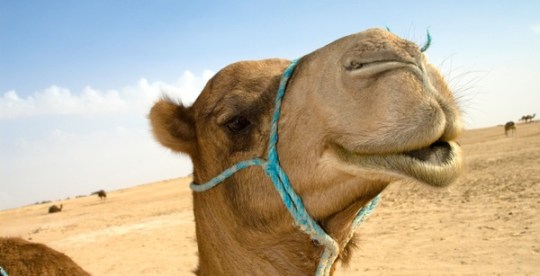
Being the ‘eighteenth camel’ for peace.


One advice by a Good Samaritan couple has come a long way for me, as an Indian Pakistani. Just a few days after being married, the couple of a similar kind advised, “Don’t quarrel over India or Pakistan; you will not be able to make any country a Heaven, but will make your own home a Hell.”

The exercise was easier said than done, but with few hard lessons, I ultimately decided that instead of acting an all patriotic for one side and holding a dagger against the other, I need to uphold objectivity, and a shield against  the emotional daggers hurled from both sides. And this is how I could actually see  how similar are both the people and their problems, and that both deserve to be seen with fairness. Hence to empathize with them of both became remained the only option. This is how I found my ‘eighteenth camel’, which to many of my friends is still an impossible option i.e. to love both India and Pakistan as much.

Just to narrate the context of ‘eighteenth camel’, the phrase is based on an Arab parable.

“There was an old Bedouin who had three sons, and all the treasure he had were17 camels. While dying he left a will to give one half of the camels to the oldest son, one third to the second and one-ninth to the third son. After his death, the sons began to quarrel, and since there was no way they could divide 17 camels into half, one third, or one ninth, none of them could have their share from the pie.
They approached a wise woman, and asked her to solve the problem. She was nonplussed too, and thought really hard. She sincerely wanted to solve the problem, even if it meant her sacrificing something from her side. So she decided to give one of her camels to them, so that it becomes `18, and now each one could easily get their share as the number was divisible by all –one half, one third and one ninth.
The sons were very excited and they began the mathematics. The one with half the share took nine camels, the one with a third took six, and the one with a ninth took his two.
To their surprise, they realized that after adding their shares, it was again 17 (9+6+2) and they were left with one camel. Since they were so content with their fair shares and at the generosity of the wise woman, that all of them with consensus decided to return the camel to her and that too with gratitude.”

So obvious from the story, even by finding my eighteenth camel, I did not lose anything.

From the India-Pakistan perspective, if we as common masses consider ourselves as the wise woman, and make an effort to find the eighteenth camel, we too would lose nothing, at all. Our love for our own country cannot in anyway be compromised. Giving a flicker of thought, that instead of harboring a venomous hate for the other side, we need think of them being as human as us– with same rogue elements, and vested interests trying to sabotage the peace process.

It would be unfair to generalize both sides as hate mongers, and I know firsthand that both aspire for peace as much.

But come a conflict, deliberate or accidental, between India and Pakistan, media takes the lead, with magniloquence of the ‘breaking news’. And the TV channels start to balderdash every few minutes, repeatedly beating sensationalism into the eardrums of the masses. And responding to its cries, the sleeping patriotic Bheemas in us suddenly wake up hungry, desperate to chew up the other side. Even before the facts come up, the mainstream media and the individuals on social media throw themselves into convulsions, frothing hatefully.

Haven’t we seen this circus both sides, all too often? Are we not yet fed up of this drama occurring day in and day out, sucking up our positive energies?

Can we as helpless masses be a solution? As above, I repeat, yes, we can be the ‘eighteenth camel’, being the unified voice of peace.

“Secret to peace is us, the humanity.” says an anthropologist Willaim Ury

We on the subcontinent are a billion and a half humanity, out of which two thirds are the youngsters who are or yet to embark on a journey of adulthood, and there lay decades of life ahead for them. Imagine if each day or each week, they simply indulge in barrage of hate waves either in sympathy for a Siachen, or Godra or Mumbai or even Zeeshan Abbasi? How will they be able to grow as productive individuals with such frequent doses of hatred?

Says poet EE Cummings “Hatred bounces.”

Aren’t we seeing it bouncing higher and higher with each incident?

Both sides have their own fair share of problems to wrestle with, and most of them are identical. Name it and we both have them– religious extremism, corruption, poverty, ill-health,  ignorance, women abuse, and the list goes on…

Should we not be aligning with each other, and be the unified voice of peace? And with numbers on our side, we can show to the vested interests that we want to live with dignity, with prosperity and with peace, and that our voice matters.

Being eighteenth camels for peace, do we lose anything?  No.

We all win, and no one loses.

happy_camel

Negative Stereotypes


Think Norway. What occurs to your mind?
A beautiful country up in the north, where it snows, its all peaceful, no crime. No?

Think Africa. What crops up in the same  head?
Poverty, AIDS, famine, a picture of a starved kid pops up in imagination, and for some well informed perhaps they think of it’s corrupt leaders. Yes?

BTW, don’t  you know Africa is not a country but a second largest continent?
It comprises of  57 countries, each with a distinct culture, language and of course like any other country, each of them have their distinct problems.

So will it  be  justified to summarize all these sovereign states with just  four or five issues, that too very negative.

Why did this stereotyping occur?
The answer is simple. Disinformation.

How?
Of course through the various advertisements from the social sector, that with all their good intentions wish to collect funds for development in the continent. And the media, that through its good intentions tries to highlight to the world the grave  issues they face. However, despite their good intentions, they end up creating a negative stereotype.

Ever thought what must Africans be thinking or feeling of this stereotyping of  them?
It is not that such issues do not exist,  they do, but then this is not all, about Africa.

To highlight this negative stereotyping, without  lashing out in anger, a group  has come out with an extremely creative and cheeky parody called “Africa for Norway” with the message:

“ Imagine if every person in Africa saw the “Africa for Norway” video and this was the only information they ever got about Norway. What would they think about Norway?”

Also imagine if they also used  picture of a Norwegian child shivering in cold, without permission from those concerned?

Here is the parody “Africa for Norway” :

What message do they want to convey through this initiative?
1.Fundraising should not be based on exploiting stereotypes.
2. We want better information about what is going on in the world, in schools, in TV and media.
3.Media: Show respect.
4.Aid must be based on real needs, not “good” intentions.

For more details on the brilliant project click>>  Radi-Aid .

Coming closer to home, who would know more about stereotype than Pakistanis and Muslims with a “My name is Khan and I am not a terrorist.”  being their holy passport to the outside world.

On a personal note:

Growing up as a minority Muslim in a metropolitan New Delhi, India, I came across some curious stereotypes:

  • How many wives  does your father have?
  • Why doesn’t your mother wear a burqa or why doesn’t your father have a beard?
  • Is you father a professor of Urdu in Delhi University?
  • Do you eat Biryani everyday?

Equally ridiculous questions were asked when I came two decades ago, as a newly married immigrant to the megacity Karachi in Pakistan:

  • Are you a Hindu? (On wearing a saree and bindi together, and being of Indian origin).
  • Did you have Hindu friends?
  • Did you ever eat food in Hindu households?
  • Kya India mein VCR hota hai? (Are there VCRs in India?) ( The last curious query  sounds hilarious 😀 now, but it almost got me crying as a new immigrant. Those were the days when India had only Fiat, Ambassador or Maruti cars,   no Sony TVs and yes, not even StarPlus channels 🙂 ).

Not sure if these stereotypes were also created through media !

A Life’s Journey of my Sister in the Indo-Pak Subcontinent


An open letter to Director General UN Women, on issues and recommendations for women in one’s region.

First published here: http://worldpulse.com/node/34370

Dear Michelle,

I am sure you, jolly well, must be aware, as a woman that despite being more than half of the world’s population, we the female gender, is still considered either a subordinate or a commodity in the hands of men on this earth. The issues faced by us women all over the globe are numerous and it would take many a blogs to even list those issues. Female infanticide, girl child neglect, malnutrition, sexual abuse, illiteracy, economic slavery, women trafficking, domestic abuse, bride burning, moral policing-you name and that issue still exists among a large chunk of this world’s half population.

As India is my homeland and Pakistan the land of my husband and kids, Michelle, I have chosen to love both the countries as much and hence the plight of women in both the countries is very close to my heart. Broadly speaking, the issues faced by the women (my sisters) in both the countries are similar except for some minor differences in the magnitudes or the nomenclature.
I wish to recount here a typical journey that ‘my sister’ i.e. a typical woman lives in the Indian subcontinent right from her conception till her death.

A news of a pregnancy is rejoiced in our communities and right from that moment, the prayers begin wishing for a son. Rarely does one see people who wish for a girl especially in the absence of a male child. Hence the first rejection of her dignity is registered in a very subtle manner, right at her conception.

As the pregnancy progresses many an enthusiastic parents, especially in parts of India, frantically start to investigate for the gender of the baby growing in the womb and if confirmed a female–thanks to the practice of ‘female foeticide’–some of my sisters end up being aborted just for being a girl. Hence their life ends long before it actually is destined to begin, of living in this world.

Among those who open their eyes in this world—not many are in a position to call themselves lucky.

My little sister is raised as a secondary to her male sibling. She is fed once her male siblings or other male members of the household have had their share, and hence she embarks upon the journey of life malnourished right from the outset. From the birth till death she is under the control and command of a male ‘guardian’ be it a father, a brother, a husband or a son.

While her male sibs go out to play, she is asked to stay indoors and help the mother in house chores. And even if her brother is lucky enough to go to school, she is, in many places , told to stay behind looking after the younger sibs, no matter how much she aspires to acquire education. About more than 3 out of 5 of my young sisters from toddlers to adolescence, in Pakistan fall prey to the beastly lust of men and that too known uncles or cousins (in 90% of cases) in the form of sexual abuse, molestation or rape.

As she attains an appropriate ‘age’ the elders decide that it is time for her to move on with matrimony. What is the age of her groom is purely her luck—he could be a young boy of her age or if the parents are lucky to get a good price—then the groom could be as old as her father. The age is no bar. She is by now well trained to not to express her like or dislike and could be subjected to any sort of oppression to make her obey the decision in case she dares to defy.

The marriage for my sister, Michelle, does not by any means, mean liberation from an oppressive father or an authoritarian brother, but a mere transfer of control and command of her life and existence, to her husband. In many a communities in Pakistan, if she opposes, she is subject to severe punishment in the form ‘honor killing’ or else.
And out of those who do get married, a third have to bear the taunts and torture at the hands of the in laws for not bringing enough of the dowry. Some are even doused with kerosene and burnt alive ( ‘Bride burning’) in India and sometimes in Pakistan too.

National Crime Records Bureau (NCRB), India said a total of 7,618 incidents of dowry deaths were in 2006 , in India, an increase of 12.2 percent over 2005.

On the other hand, in many parts of India, and Pakistan, 1 out of 3 of my really poor sisters stay unwillingly single simply because their parents do not have enough to pay for their ‘dowry’. Literally speaking the groom is up for sale with a price tag of dowry.

However not just the poor even the rich sisters of mine in Pakistan meet the same fate. Their Feudal Lord fathers and brothers do not want their lands to be divided by giving the daughter her share. So the daughter is loaded with jewelery , expensive clothes and ‘married to the QURAN’. Yes, Michelle, this is true and I do not exaggerate even a bit.

Once in wedlock , almost half of my married sisters have no control over their own life and body. They cannot decide how many children to bring forth.

Every hour that ticks by, in India, inflicts more brutality on women, with 2 rapes, 2 kidnappings, 4 molestations and 7 incidents of cruelty from husbands and relatives, reveal the latest national crime statistics, National Crime Records Bureau (NCRB).

Similarly, 4 out of 5 women are subject to some kind of domestic abuse—either verbal, economic, psychological or physical violence in Pakistan according to Human Rights Watch.

And the physical violence is not just beating—it could be in the form of physical or sexual violence, torture, mutilation, acid throwing on the face, burning her alive or even strangulating her to death.
And only a minority of cases come into the knowledge of the authorities or in the news, out of which only a handful are proven guilty and punished. Majority of them manipulate to get it seen as an accident and remain Scot free to repeat the same offense with another innocent sister of mine.

We, both in India and Pakistan, are religious communities but unfortunately the onus of upholding religious obligations and principles begins and ends with a woman. She is morally policed and reprimanded if she deviates from the norm, but if the same offense is committed by a man, everyone including our religious leaders turn the other way.

As she grows older, my elderly sister is seen as the embodiment of sacrifice, patience, and morality while the men gallop like stags all over doing as they please. After all it’s a man’s world out there.

She may have worked, however hard, to raise her family or run the household, and is thus called a ‘homemaker’, but she does not get any share in those assets which she assists in her husband amassing in his name. If she is divorced for any valid or invalid reason, she has to walk out of the house with bare hands as all that ‘home’ she has assisted her husband in ‘making’ is entirely his.

She grows old and the command and control shifts from the husband to her son. She is seen as an embodiment of selflessness, sacrifice and patience . The younger girls are shown the glory of her selflessness and asked to emulate her.

Finally, my elderly sister dies a quiet death, without even realizing that she deserved a far better deal in life than was given to her . And hence the relay of her life which began from the passing of a baton from being an obedient daughter to a sacrificing sister to a dutiful wife to a selfless mother, finally ends as a ‘great’ woman into her grave.

This is the typical story of a good 50 % of the women in the subcontinent if not more.

It has been going on for ages and shall go on unless we make some real dent in the situation.

The only way she can come out of this vicious circle is by providing her ‘quality’ EDUCATION.

As a woman gets educated, a whole family including her subsequent generations get educated too. She gets empowered to take the right decisions from the choices in her life—be it her selection of spouse, or her decision to bear how many children or how to raise intellectually superior children.

Education will also empower her to realize that she has her rights too, and not just her duties that are rubbed on her face all her life.

Education will enable her to treat her own daughter as an equal to her son.

Education shall empower her to earn a better livelihood, and make her come out of economic dependence from the men in her life.

Educated woman who is free to make her decisions, is a happy woman and raises a happy family. A happy family brings forth happy citizens. And happy citizens contribute positively not only towards their own homeland but also the whole planet, at large.

Hence, we do not need any rocket science to discover how to empower a woman. Simply ensure her ‘proper and quality education’ and she shall take the reins of her life in her control.

I hope it isn’t asking for a lot, Michelle.

Thank you.

Sincerely,

Dr Ilmana Fasih

9 February 2011

Our taunts at West Indies: Who is the most racist of them all?


Published in Express Tribunes Blogs:

http://blogs.tribune.com.pk/story/14250/our-taunts-at-west-indies-who-is-the-most-racist-of-them-all/

Less than a couple of months ago, a colleague of mine, who is of African American descent, and a Muslim convert, mentioned to me an incident:

“You know I was sitting in the mosque for the taraweeh and there was a South Asian woman sitting next to me. While talking on her cellphone, she made some reference which I’m sure was for me ─ ‘kaali’ (black). The funniest of all the things was that she herself was not a shade lighter than me.”

Beneath a hearty laugh, I was terribly embarrassed. Almost as a rebound, I explained,

“You may have been mistaken, but yes, many of us are pretty colour conscious, and you can easily guess that by the amount of business we do with fairness creams. Not just the top brands, but top film stars from India and Pakistan, too, are eager to endorse those creams.”

To make her feel comfortable, I added my personal true story.

My husband’s loving aunt used to call me kaali, when I newly married him. She did this because their nephew (my husband) was a few shades fairer than me. She proudly told,

“He looked so angreiz (English/white) when he was born, that we gave him an English name ─ ‘Bobby’.”

As her fascination for his skin colour still continues, she calls him Bobby to date.

Beyond this personal experience, it was pretty unpalatable to keep hearing repeatedly, West Indians being referred as “kaali andhi” (black storm) by a mainstream Pakistani channel for the past two days.

As the game progressed and West Indians got closer to the victory stand, some of us started to lose our control and the ‘kaaley, shadeed kaaley’ (black, very black) references spilled all over my social media timelines, the commonest one being:

“Hum kaaley hain to kya huwa, trophy waaley hain.”

(So what if we are black? We have the trophy.)

Here are some tweets from my timeline during the match:

Mariyam Ali Dhillon ‏@MariyamAli
“The Kali Andhi rises”. VEHSHI! #WIvsSL

Amidst there were occasional sane tweets, expressing their dismay at the references:

Maria Memon ‏@Maria_Memon
Kindly spare us the “Kaalay” jokes. #NotFunny

R. ‏@rahimaxarsenaL
Jesus Christ, Geo. Kaali aandhi? That’s effing racist.

Shoaib Taimur ‏@shobz
Cricket exposes the racism in our people. just check their FB statuses and Tweets.

In reply, some had ample justification for the use of these terms, with expressions such as:

FurSid ‏@fursid
#TwitterRage making a mountain out of mole hill – #kaaliAndhi#racism #twitterPhadda #idiotism

Mansoor Zia ‏@nOxym0ron
@shobz Sometimes, it’s just a joke. People take life too seriously and worse, too literally.

There definitely is a background to this “black storm” reference. It’s from back in the 70s and 80s, when the West Indians were the reigning kings and feared for their strength.

Since most people explained themselves by saying that the reference wasn’t offensive and had been used for a very long time, I decided to give them the benefit of the doubt. I Googled the history of this reference and its link with the West Indians.

I did not find a single reference on the internet of the West Indians being called the “black storm” in the 70s/80s.

None of the international media had referred to them as the “black storm”, saving only some of our Pakistani mainstream newspapers. Are we the only ones, with the sharpest long term memory then?

Even on Twitter, the hash-tag #Blackwash barely had a dozen references, but the trigger word ‘kaaley’ was all over my timeline, with or without the hash-tag.

Moreover, how does this reference being 30-40 years old justify its political in-correctness?

Haven’t things changed since then on an international stage? Shouldn’t we then change our own mindsets, too?

Mind you, all the things I’ve quoted are from social media only. One can calculate how many folds thick the usage of such racial slurs has become in the real world.

However, on a more optimistic note, there was an overwhelming number of people who rejoiced over West Indians winning the ICC World T20 cup. I wish that the number will someday tilt the balance in their favour. For that to happen, we certainly need to educate the people and most importantly, the media. It is socially responsible and should realise what a colossal role it plays as an opinion leader. It is time they know that there is no option for them but to at least be responsible enough to convey ethically correct messages, and not merely echo the insensitive crowd-pleasers.

Malala


Andhon ko unka chehra dikha diya hai Malala ney,
Jehad dar-asl kya hai, sikha diya hai Malala ney.

Jahalat sey hai jang, jata diya hai Malala ney,
Taleem  hai farz-e-momin, bata diya hai Malala ney

Soye huwe seenon ko jaga diya hai Malala ney,
 Khoye huwe iman se, mila diya hai Malala ney.

Payam-e-Amn duniya ko, suna diya hai Malala ney,
Her shakhs  ko Malala, bana diya hai Malala ney.


The blind(ignorant) have been shown their real face by Malala,
What is true struggle, has been taught to us by Malala.

The real fight is against ignorance, has been asserted by Malala.
Education is an obligatory duty of the believers, is reminded, by Malala.

Apathetic hearts have been shaken awake  by Malala.
The lost message of faith  has been rediscovered by Malala.

The message of Peace to the world  has been conveyed by Malala,
Each one of us feels Malala, has been made possible by Malala.

Humbled these verses have been included in the anthology: Malala: The poems on Malala Yusufzai, released on the first anniversary of her tragic targeting on October 9, 2013.

https://www.goodreads.com/book/show/18405178-malala

Do we really love Prophet Mohammed ( pbuh).


Dear Pakistanis,

Please know that Pope visited Lebanon at the height of the tension, last week, and Hezbollah leaders attended his sermon, refrained from protesting the AntiIslam film until he left, and called for religious tolerance.

Biggest-ever rally over the anti-Islamic film brought scores to Beirut, Lebanon, with 100,000 men, women and families taking part in a peaceful rally on September 18, 2012.

This was followed by big rallies by Muslims in Lebanon on Monday, Wednesday and Friday.
On Friday, tens of thousands of supporters of the Shiite Hezbollah movement held a raucous protest in the eastern Lebanese city of Baalbek. Soon after, a few thousand supporters of a hardline Sunni cleric held gathered in the capital, Beirut.
Shias, Sunnis, came together, in harmony, with genuine remorse against the mockery of Prophet Muhammed ( pbuh).
But note no one was injured, no one was killed and no property harmed in any of these protests.

If it is unbelievable, see this >>

watch?v=ab6M3QSjc54&feature=related

And then there were peaceful rallies in Sao Paolo, Sydney, Paris, London, Allepo, Tunisia, Jakarta( in the  most populous Muslim country), Colombo with no one  harmed.

While protesting in Pakistan, on Friday, our Christians brothers came out with us, in solidarity to support us, and empathize with us, and we burnt a church down to ashes–the Anglican Church in Mardan and a School adjacent to it. We set on fire Church and School looting everything like computers and chairs whatever were in School. We the Muslims, the lovers of Prophet( pbuh), desecrated Holy Bibles and articles used in Holy ceremony and brought them in compound of Church and set them on fire.

And when we protested on Friday itself, we killed 19  innocent men and policemen who were there to protect us, injured 500, looted  several of our own businesses, torched scores of our own vehicles and  destroyed some of our own public offices.

You think I am exaggerating, see this:


BTW, this was shown on RT, Russia Today, broadcast from Moscow & Washington DC offices.

Feel the difference between the two videos, and the two behaviors.

Also may I add, some 7000 adults who burnt Holy Books lying in this church, shall go free, unaccounted for, while a minor girl, learning disabled languished in jail for weeks, for not having burnt even a corner of a page of yet another Holy Book.

Are we pained by the pinch of  this  hypocrisy? Do we even  feel it ?

MORAL OF THE STORY: Are we really the only and  true lovers of the Prophet Mohammed ( pbuh), who upheld justice and equality? Are we really Muslims? Are we even humans? 

Keep thinking….

Mosaic Festival 2012: Day 3: Shafqat Amanat Ali ~ an electrifying concert


Towards evening, as the time for Shafqat Amanat Ali’s concert approached on the third day of Mosaic Festival 2012, there was a visible increase in the hustle bustle in the Celebration Square. Before he could even come, the lawns were full.

Dressed casually, Shafqat walked on the stage amidst cheers, after being e introduction by none other than Sohail Rana.

The first song ‘ankhon ke sagar, le doobe humein ‘, was enough to drown the crowd into a Shafqat frenzy.

Then followed the khamaj “mora sayyan mo se boley naa,” which  transformed the mood of an excited crowd into that of a sombre ecstasy.

Having talked to Shafqat in the waiting room, prior to the show, he had mentioned of his conviction for Indo Pak cross cultural exchange.
He had promised, “As such we artists contribute a great deal towards that, but I would consider myself very fortunate to support anyone who works towards making it into a reality.”

Carrying on that conviction in the crowd, he dedicated the third song, Ye Hausla, towards “India Pakistan Peace” amidst an uproar of applause for his dedication. By just this  third song, the crowd had been immensely electrified. The words were powerful and seemed to reiterate his promise even more strongly.
Ye hausla kaise jhukey, ye arzoo kaisey rukey. Manzil mushkil to kya, dhundla ye saahil to kya…”

I noticed a lady, sitting on the front most rows, reciting every song of his, verse by verse.

“You seem to be his diehard fan?” I asked.

Pat came her reply, “Yes, I love the imagination with which he brings fusion of different genres in his music. Though many of them are coming from Bollywood, but are yet not cliché’ Bollywood. It touches the strings of the heart. “ Sapna, as she introduced herself, is a new immigrant from Delhi, and takes pride, that she knows all the songs he has sung so far.

In the conversation earlier, Shafqat had told about his family’s experimentation with different kinds of music. He mentioned of how his father Ustad Amanat Ali Khan, excelled in Ghazal singing despite being earlier dissuaded as not deemed suitable to his classical background of Patiala gharana. He referenced the experimentation of his brother, Asad Amanat Ali’s with various forms, including Punjabi.
A soft spoken Shafqat Amanat Ali, to me was contrary to the image I had of him through his “Rockstar Ustad” image. I had expected I would meet a loud, talkative, rock star personality. Diametrically contrary to my image, he was extremely soft, and sombre not just in voice, but expressions and body language too.

Most of my questions, some serious, and some not so serious, were mostly answered by him with a uniform sobriety, with just a slight smile on the question, “Why did you take up a degree in Political Science?”

The smile followed with a simple answer, that “he was the first one to go to the University, from his family, and hence, without much direction being given, he followed, what his friends chose to study.”

Being a musician, to him was inevitable, as this is how kids in his gharana are trained from a very early age. “They are left with little choice to do anything else.”

If he is not doing music, what does he do? “I watch a list of movies, and sleep”, replied Shafqat.

We had been told by his manager that he loves food, especially desi food. So came my obvious question: “What’s your favourite food?”
“Biryani Saag” , was the instant reply, but with a quizzed expression on me, he preferred to explain, as “a relative unknown dish, being his favourite dish. It is cooked on occasions and in special deghs, by the cooks.”

The manager also revealed Shafqat’s love for nature. He reminisced of the time, when due to a beautiful foggy weather in Malaysia, they went for a walk, and during that stroll composed one of his most beautiful songs.
“Tell us something in this blog that you have never shared before, but would wish to.” I asked.

With an expression of hurt he shared, “ I was a rejected singer on PTV, and ….” .

However it hurt me too, to have asked that, so I switched instantly to, “What special message would you give to Mosaic Festival?”   And his instantly opened arms and a flying kiss towards all the Mosaic volunteers standing around, did all the talking.

Back to the concert, each song that followed, further mesmerised the crowd . Half way through the concert, the jam packed crowd was completely electrified. The radiation of enthusiasm could not hold back an interactive Shafqat’s energy too, and he chose to come down into more proximity to his fans, shaking hands, giving them hugs and sharing the mic with them to sing.

Before he began the folk song “Main nai jana pardes biharwa’, he paid a tribute to Tufail Niazi, the great folk singer, considering himself fortunate to have re sung the song.

After almost a dozen melodious renditions, and with time to close, the crowd was too charged to let him go that easily. Amidst almost everyone screaming “one more” and “Eid Mubarak”, a bunch of threesome fans near the stage were screaming:

“Shafqat tussi great ho”…and out of modesty with no smiles he replied “Eidi chahiye?”

They were right behind me, so I turned and asked, “Any specific reason you say so, or is it just for more songs?”

Each one of the young girls, Chhavi, Saumya and Esha had different replies, which they literally had to scream out, due to the cheers all around.
“He’s versatile and very powerful.”

“Most soulful singer.”

“Kudos to him for bringing classical back to the youth.”
To convince the crowd, that it was time to leave, he even tried to parody “Aaj gaane ki zid na karo, dekho pit jaoge, aisi baatein kiya na karo”, but the verses fell unheard on the screaming crowd.

As I tweeted and posted a picture of the crowd on the face book :

Ilmana Fasih ‏@ZEEMANA
Electrified crowd at #ShafqatAmanatAli concert #MosaicFest2012http://yfrog.com/kibnaboj

Almost instantly came a reply tweet from Pakistan:

akeelchaudhry ‏@akeelchaudhry
One of the finest singers I must say “@ZEEMANA: Electrified crowd at#ShafqatAmanatAli concert #MosaicFest2012 http://yfrog.com/kibnaboj

Just the way how an incredibly electrifying evening should come to a close, the last song, which he chose to sing, did actually help to pacify an emotionally charged crowd.

It was perhaps the most touching of his songs, I had ever heard. After hearing it live, at the close, meant, it would linger much longer in the head.

And as I walked back home after the concert, and unknowingly, I kept humming it all the way.

“Kuch ajab khel kartar key, morey Saeen Gharib Nawaz key,
Ek ko deeno mulak khajaney, ek bhikaari anaaj key. “