Open up your mind and your potential reaches infinity…

Archive for the ‘India’ Category

Let’s make 2012 a healthy year–A health blog series starting from Jan 01, 2012


I plan to start from the New Year 2012 a series of Blogs on Health issues named

Let’s make 2012 a Healthy Year.

The blog series shall be target the South Asians, primarily living in their homelands, but could be useful to others living elsewhere.

The need of the blog was felt primarily due relative less awareness amongst South Asians on Health issues.
Primarily, this is because culturally we we worry about health only when sick or unwell.
Secondly, due to relative deficiency of health activism in our countries.
Thirdly, though there is a mine of information on health issues on internet, but not much of it is specific to South Asian context, hence many times lacks relevance.

I have been working on the contents of the blogs for the past 4 months. Most of the information would be from the well researched, evidence based sources, and shall be peer reviewed by the specialists from the field.

It would be an informal format, not a lecture. I have tried my best to make it like a walk through for the readers where they will along with the information also be guided on what to do ?

The blog post shall be up loaded every 1st and 15th of each month and will consist of different health issues on which I feel there South Asians need to be aware of.

The blog in English shall be accompanied by a podcast in a Hindi-Urdu language, in case those who wish to share it with their kin who feel more comfortable in their language. A lot of medical jargons will be used in English instead of Hindi & Urdu so that both can easily understand.

The blog shall not serve as a consultation, but just a means to give direction towards increasing interest in the readers to inquire more on health issues.

The first few topics in the serial order are

1. Living a healthy lifestyle ( Jan 1, 2012)
2. Healthy eating the Desi way ( Jan 15, 2012)
3. Love Your heart to live ( Feb 1, 2012)
4. Diabetes- the bitter truth ( Feb 15 2012)
5. Smoker but you won’t quit ( March 1, 2012)
6. Smoker and you wish to quit. ( March 15, 2012)

There shall be others on Infection Control, Weight Management, Osteoporosis, Arthritis, Chronic Bronchitis, Depression, Stress Management Strategies etc.

Readers are welcome to suggest any topic, and if deemed of importance to large numbers, we would be glad to include it.

The readers are also welcome to post their questions, point out any criticism or disagreement to any content in the blog. I would try my best to answer them in Consultation with the specialists from the relevant field.
And I would request that if you feel worth, please share the blogs with others and contribute towards spreading of Health Awareness.

Thank You and see you with the first one on January 1, 2012.


CLICK FOR AUDIO IN URDU/HINDI:


Special thanks to Fatima Fasih for technical support.

Food for thought & Merry Christmas


Come December and you see that along with the Christmas festivities, the spirit of philanthropy also gets an exponential rise.

Santa Claus , the iconic person associated with Christmas and especially with ‘gifts’ for the children are seen standing at various locales collecting charity—be it money, toys, chocolates, food items.

Writing a letter to Santa is a Christmas tradition going back to some centuries. The kids not just send in their wish list for toys or presents, but also promises of being a ‘good boy’ or a ‘good girl’. The more generous ones ask Santa to give gifts to the poorer and less fortunate kids.

What is even more exciting is that in many  countries, the Post Offices make sure that the letters they receive are replied back too.

Canada Post replies to letters in almost 30 languages each year including in Braille. Canadian postal workers volunteer to write back the replies to hundreds of thousands of letters received each year. Canada has a special address and postal code for Santa :

North Pole, Canada. H0H 0H0.

The other day I was moved to hear from a Paediatrician friend of the story of a 7 year old child admitted in a Hospital with leukemia. He mentioned that the ailing boy admitted in the hospital,  wished to see a white Christmas while there isn’t snow yet. The Hospital authorities did not want to disappoint the kid by their ‘regret’. Instead they pushed in all their efforts and finances to bring in snow to the hospital and even managed the boy to make a snow man by himself.

What made me wonder was that to how much length did the Hospital go to make a tiny face glow with smile and how much effort does the Canada Post makes so that millions of kids float in seventh skies when they receive replies to their cards from Santa.

Enslaved by my mindset, I can’t help think of our kids back home ( in India or Pakistan) .

Do our governments make any effort to make our kids smile?

Leave aside the government, do we even as desi parents really take extra care to keep our kids uphold their self esteem?

There is no two thoughts that as parents we really work hard for the kids—that they get the best education, achieve the highest grades or wear the best clothes in  parties. We even go extra extra miles to buy plots and leave bank balances to make their lives easy.
But in doing so are we really making them happy? Or ourselves?

Do we let them be themselves or do we make our own dreams come true through them?

Do we really talk to them as friends, or just command them  what to do and what not to do?

Before we ask the government or others in authority to take care of our kids, we need to take ‘good’ care of them too.
And good care certainly does not mean to dictate to them what we deem correct, but to guide them and let them realise their potential to the best.

I know all this has nothing to do with Christmas.

I just thought of revisiting the idea that if our kids will have a higher self esteem, the higher will be the hope to have a better future for us, in the years to come.

Just a random food for thought…

“Merry Christmas”.

‎**_██_*。*. /★\ .˛* .˛.*.★* *★ 。*
˛. (´• ̮•)*˛°*/.♫.♫\*˛.* ˛_Π_____. * ˛*
.°( . • . ) ˛°./• ‘♫ ‘ •\.˛*./______/~\*. ˛*.。˛* ˛. *。
*(…’•’.. ) *˛╬╬╬╬╬˛°.|田田 |門|╬╬╬╬ .
¯˜”*°••°*”˜¯`´¯˜”*°••°*”˜¯` ´¯˜”*°´¯˜”*°••°*”˜¯`´¯˜”*°

Continuation of a joint heritage


Published in Aman Ki Asha , in TheNews on December 14, 2011. http://amankiasha.com/detail_news.asp?id=584

Ilmana Fasih recounts some examples of the ‘Ganga Jamuni Tehzeeb’ and centuries’ old, peaceful coexistence beyond religious divides

An otherwise sane looking person I met at a party recently started to spew venom laced with conspiracy theories about “Hindu Muslim animosity”. To top it all, he tried to use my own life to justify his views, insisting that my going

to live in Pakistan after marrying a Pakistani was proof of the natural divide. He refused to accept my views that a peaceful coexistence between people of different faiths is possible or that my going to Pakistan from India was not based on religious reasons.

His hate-filled thoughts kept me sleepless for hours that night. But talking over the phone to my mother in Delhi later, I was cheered up by her mention of Ganga Jamuni Tehzeeb. Our conversation triggered off thoughts about this beautiful, fluid culture that refuses to be boxed up and compartmentalised.

The name Ganga Jamuni Tehzeeb is as beautiful as its spirit. It refers to the centuries’ old, peaceful coexistence between Hindus and Muslims of the subcontinent. Not only did the two faiths borrow cultural practices from each other, but they also exchanged each other’s vocabularies. So much so that now one is hardly able to find any difference between spoken Urdu and spoken Hindi.

The Nawabs of Awadh in north India in the 1700s are considered the pioneers of Ganga Jamuni Tehzeeb. At least, the term was coined in their times. But on ground it existed well before that era.

The starkest example of this syncretic culture is the Purana Hanuman Mandir in Lucknow, which is crowned by an Islamic symbol, a crescent. According to legend, the temple was built by Nawab Saadat Ali Khan to honour the wish of his mother, who had dreamt of building a temple. The tradition of honouring the Nawab’s gesture still continues when the Muslims in the area put up stalls of water during the Bada Mangal festival at the temple, and Hindus manage sabeels (stalls) of sherbet and water during Muharram in reverence for Imam Hussain.

Not far from Lucknow, the rulers of the Hindu holy city of Kashi (also known as Benaras or Varanasi) observed the Azadari (the mourning) during Muharram, wearing black on Ashura. Ustad Bismillah Khan, the renowned Shehnai maestro, began his career as a shehnai player in Vishwanath temple, Kashi. In fact, many of the musicians, Hindu and Muslim, who play in the temples, fast during Ramazan and also observe Vrat during the Hindu Navratras.

Even today, Muslim artisans in Kashi/Varanasi who make Taziyas for Muharram also make effigies of Ravan for Dussehra, a friend tells me. Hindus too participate in Muharram processions and make Taziyas in many cities, notably Lucknow.

Similarly a Sindhi friend talks of the centuries-old peace and harmony between the Hindus and Muslims of Sindh. Adherents of both faiths revere and pray together at the shrine of Jhuley Lal, she says. The shrine walls are inscribed

with Arabic verses as well as Hindu names of Gods. An age-old common greeting of Sindhi Hindus and Muslims is “Jhulelal Bera-Hee-Paar”.

Karachi’s 150-year old cremation ground for Hindus has a Muslim caretaker, although there are many Hindus in the city. This caretaker is responsible for cleaning the statues and lighting the lamps in the temple, and takes care of the urns that contain the ashes of the dead after cremation, until their loved ones immerse the ashes in water.

Cultural practices in Sindh are a fusion of the two cultures. If the Hindus, fervently use Allah as the reference to God, the Muslims touch the feet of their elderly as traditions borrowed from each other’s cultures.

The contribution of Sufi poetry towards this peaceful coexistence, from Kabirdas and Amir Khusro, to Bulleh Shah on the other side, is well known.

Beyond faith, at the cultural level, the Ganga Jamuni Tehzeeb has seen some beautiful creations like the Ghazal style of singing and the classical dance form Kathak.

Kathak’s journey from ancient times to its present form merits a walk-through. The word “katha” comes from “katha” or story telling. It has its roots in ancient times, when storytellers narrated epics or mythological stories like Shakuntala, and the Mahabharata through dance forms in temples. However with the arrival of Mughals, the dance, enticed to come to the courts, developed into a more Persianised form. The Kathak dancers adopted the whirling

from the dervishes to the ‘chakkars’. The rhythm of the footsteps found harmony with the beat of the tabla recently discovered by Amir Khusro. The female Kathakaars (storytellers) abandoned the sari of ancient times for the angarkha and churidar pyjama. The language of narration also transformed from Sanskrit to Brij Bhasha and then Urdu.

There may be more examples of such coexistence and development in other regions of the subcontinent too.

Those who propagate conspiracy theories and narrate stories of hate and disharmony need to know that even with the physical separation between India and Pakistan, the spirit of Ganga Jamuni Tehzeeb lives on. The lack of communication between the two countries, particularly after the 1965 and 1971 wars, has not managed to dampen the natural instincts of sharing these cultures.

Farid Ayaz and Abu Muhammed, the renowned Qawwals from Pakistan continue to sing Bhajans which their gharana has been singing for the last 300 years. On the other side are Wadali brothers who sing Bulleh Shah Kaafis and Naats with the same devotion. Despite all odds, Sheema Kermani and her students in Pakistan have continued to keep the dance forms, not only of Kathak, but also Bharatnatyam and Odissi, alive and known in Pakistan.

The recent collaboration between Zeb and Haniya from Pakistan and Shantanu and Siwanand Kirkire of India yielded the soft melody “Kaho kya khayal hai” in a beautiful blend of Dari and Hindi. I could not help relate it to the Zehaal-e-Miskeen composition by Amir Khusro which was a beautiful fusion of Persian and Brij Bhasha.

And now another peacenik in the form of Shahvar Ali Khan makes a music video titled ‘No Saazish No Jang’ (No Conspiracy, No War). It is heartening to see the visuals, and hear the voices of Quaid-e-Azam Mohammed Ali Jinnah and Bapu Mahatama Gandhi together in the backdrop.

It is not possible to list all collaborations between the two countries and across religious divides, particularly in fields of films, music, health (the most significant being the Heart to Heart initiative by Rotary and Aman ki Asha). But all these initiatives testify to the desire for peace, not hate.

As for me, convinced that each of these efforts towards peaceful coexistence is based on foundations going back centuries, I slide into my bed, comforted by the faith that peace, not hate, will ultimately prevail.
It’s just a matter of time.

Dr Ilmana Fasih is an Indian gynaecologist and health activist married to a Pakistani. Her blog is Blind to Bounds https://thinkloud65.wordpress.com/

Call me an Indian Pakistani, please


Part of it published later in Express Tribune: http://blogs.tribune.com.pk/story/9658/call-me-an-indian-pakistani/

My way of prayer for Peace  between India and Pakistan, today-December 18, 2011.

I thank everyone who bothered to comment on my blog ‘An Indian moves to Pakistan’  in Express Tribune Blog ( December 9, 2011), and gave their input, be it positive or negative.

I would take this opportunity to broadcast loud and clear my childhood dream of a world without borders and wars.

Let me make it very clear, I do not have any ill-wish to undermine the sovereign political borders between India and Pakistan or between any other countries. My dream is to erase the psychological borders that are etched in our minds in the shape of prejudices and hatred for the other.

I would tell those friends who pity me, please pat me,instead. For I am an Indian Pakistani.

So what if I do not hold an Indian passport, I have 24 years of fascinating memories, an excellent upbringing that taught me to speak without fear, sealed in my heart as an Indian.

Pakistani, I am not by passport but by the love and respect that I have got from numerous Pakistanis, who took no time to accept me as one of them.

I own both the lands and a good 1.4 billion are my fellow compatriots.

What more could translate my feelings than this poem I wrote some time ago?,

To both the lands I belong
Yeah my heart throbs alike for the two lands
Yeah my love is equally blind for the two cultures.
Yeah my voice sings songs of love in two languages
Yeah my eyes see identical dream for the two peoples.
Yeah my lips whisper the same prayers for the two communities
Yeah my heart aches on hearing hatred screamed by bigots from two faiths
Yeah my tears roll witnessing the bloodshed by the misguided in two nations
But, I feel no difference between the two names the world calls INDIA and PAKISTAN
For the hammock of my life hangs between my two beloved lands I call my HOMELANDS.

I feel equally passionate about the happenings of Lok Pal bill as much as I was about the NRO case in Supreme Court.

When it was cricket World cup I got to support two teams, and whenever there is an India-Pakistan match, unlike the other billion and a half who dread for the result, I rejoice since if any team wins, my team is the winner.

I find divine tranquility in  reading Kaafis of  Bulleh Shah, as much as I drown in the depths of Kabir Dohas.

And I know how Kareem’s nalli nihari from Delhi tasted before it began its journey to end up a Sabri’s maghaz Nihari in Karachi.

I wear a Kanjeevaram sari and dangle a Sindhi embroidered bag together, and still boast both of them are my country’s handicrafts.

To those who ridiculed or criticised me, please shed the word ‘hate’ from your dictionaries.  Look beyond prejudices.

Believe me, I bear witnesss that there are millions and millions on both sides who want to live in peace with themselves and with their neighbours.

For you I have this poetry as a reminder:

Oh the souls of the subcontinent,
Let for amity be our energies spent.
Arent we neighbours? Shall be forever,
Let being friends be our real endeavour.

How can the love our hearts not seal,
How can the vibes our minds not feel?
How can my eyes and your deny,
Shared treasures that make us sigh.

Himalayas on our heads so stand,
Lofty mountains guarding our lands.
The twist and turns in the Indus river,
Who’s ancient stories, makes us shiver

Enchanting Thar and its golden sands,
Weave beauty in each of its strands.
And then the grand Arabian Sea,
That enthrals both you and me.

How could we now live apart,
We’ve been one from the start.
Oh! Those lines on our lands sketched,
Let they not on our hearts be etched.

We have seen firsthand how hatred leads to conflicts, conflicts to instability and then to an excuse to more defence expenditure. We have already wasted measurable revenue which could very well have been used for the alleviation of poverty, hunger, illiteracy, women issues which exist in astronomical proportions on both sides of the border.

Why should a handful of bigots sabotage the road to peace we need to take reach the goal of prosperity? We do not have any other way out, but peace.

Our histories, our geographies are common, 
Our genetics, our problems are common, 
And with them all , our destinies are woven.

A spirit of mutual cooperation would lead to prosperity for the 1. 4 billion on both sides and in turn would mean a strong and peaceful South Asia.

Please think.

Caption: If my hand can heal, why cant INDO-PAK relations.

PS: A special thanks to Kamran Rehmat, a great supportive Face Book friend, who first suggested the Indian-Pakistani term, and I couldn’t resist the temptation to  grab it and own it. 🙂

Tansen, the legend.


Tansen, the father of Hindustani Music, was a music genius since early childhood. He became a court musician and one of the nine gems of Emperor Akbar. He not only composed music, but wrote the lyrics too. Impressed by his exceptional musical talent he was given the title of Miyan Tansen by the Emperor Akbar.

Tansen is known to have polished and popularised the oldest form of Indian music called Dhrupad( which could be traced back to Vedic times). It was his times that Dhrupad reached it’s peak.

Most of the music composed by him are referred with a “ Miyan ki”prefix, eg Miyan ki Todi, Miyan ki Malhar, Miyan ki Mand and Miyan ki Sarang. He is also credited to have created certain other court ragas( traditional melody) like Darbari Kanada, Darbari Todi, and Rageshwari.

Tansen performed in the courts of Akber. He also performed for the emperor alone. At night he sang ragas that would soothe and help the emperor sleep. In the morning he would sing morning ragas to awaken the emperor fresh and cheerful.

There are various legends attached to Tansen.

It is believed that his music was so captivating that even animals and birds would stop to listen to him. There is an interesting story of a white elephant being caught for the Emperor to ride. But the animal was uncontrollable and untameable. So Tansen sang to the elephant and calmed it down, so that the Emperor could ride.

It is said that his created ragas  would cause different effects e.g. such as cool the environment and attract clouds  that it would induce rain ( Rag Megh Malhar) or heat up the environment to cause fire ( Rag Deepak).

Once Emperor Akber insisted that he sing Rag Deepak in the court to prove that his music had the said effect. Tansen begged a fortnight before he would sing the raga. In this duration he made his daughter Saraswati, learn the Rag Megh Malhar.

And then the day arrived when he began to sing Rag Deepak in the Emperor’s court.

Unlit lamps were placed in the court.

As Tansen began to sing, the air around started to get warm, then warmer. The audience started to perspire. The flowers dried; including the famous rose bud that Akber is famed to have held in his hand in court. The water fountain in the courtyard began to steam up and the flames of fire could be seen flashing in the air, while the lamps lit up.

As this happened, his disciple and daughter, was directed by him to start singing Rag Megh Malhar ( the music that induced rain).

In a few minutes the cold breeze started to blow. The clouds came and overcast the sky. The music waves caused the clouds to thunder and while the rag Deepak induced lightening. And soon the heavy showers began to pour over the place, and put off the flames.

How it is said that this down pour could not put down the internal fire that was lit within Tansen while he sang Rag Deepak. And he fell ill, with very high fever, and in a few months died of the ailment.

Grieved by his death, his son Bila Khan began to sing Bilas ki Todi, based on his raga Miyan ki Todi. He sang so well that the dead Tansen’s hand rose to signal praise for the son.

One wonders not only at the likelihood of these legends being true, but also at how did these legends , which have now become part of Tansen history, come into being.

Below is the song based on Rag Deepak, picturised in an Indian movie made on Tansen.

Son comes before the mother~Kabir


Pahilaa poot pishairee maaee.
Gur laago chele kee paaee.

Ek achanbhou sunahu tumh bhaaee.
Dekhat singh charaavat gaaee

Jal kee mashulee taravar biaaee.
Dekhath kutaraa lai gee bilaaee
Talai re baisaa oopar soolaa.
Tis kai ped lage fal foolaa
Ghorai chari bhais charaavan jaaee.
Baahar bail gon ghar aaee

Kahaat Kabeer ju is pad boojhai.
Raam ramat tis sabh kish soojhai

Translation:

First, the son was born, and then, his mother.
The guru falls at the feet of the disciple

Listen to this strange thing,
O Siblings of Destiny!

I saw the lion herding the cows.
The fish of the water gives birth upon a tree.
I saw a cat carrying away a dog
The branches are below, and the roots are above.
The trunk of that tree bears fruits and flowers
Riding a horse, the buffalo takes him out to graze.
The bull is away, while his load (cart) has come home

Says Kabeer, one who understands this hymn,
and comprehends the Divine words comes to understand everything.

This is a beautiful satirical poem by Bhagat Kabir, taken from Guru Granth Saheb ( the Holy Book of Sikhs), that takes me back instantly to the Hindi class of grade 10, when we read this. I recall with nostalgia of all the discussion that was triggered by the poetry. While the boys at the back benches were busy cracking various mostly crude and a few decent jokes about it, the girls in the front benches, ( that’s where they usually sit) were amused yet trying to squeeze their giggles desperately.

While the very serious Hindi teacher with a twinkle in her eyes, and mind fully immersed in Kabir was engrossed in explaining the spirit of the verses, compleltely oblivious to what was happening in front of her.

Unlike many other Hindi lessons, this poem unknowingly left ‘an impact’ strong enough to keep reading Kabir once the compulsory Hindi subject was over.

I would suggest the readers to first read the verses, it’s translation and then again the verses to get some sense of it’s meaning, and to check whether their brain thinks the way Kabir’s brain did.

The Interpretation:
The whole poem through various interesting examples, cites an open secret of our lives, so aptly described in a quote by Rousseau : “Man is born free but found in chains everywhere.”

What chains him, according to Kabir are not only the society( like Rousseau claims), but ones own hoggish desires and the pursuit of which makes him timid and fearful. And hence instead being fearless, strong yet empathetic, that man by virtue of his higher intellect is destined to be, turns into a timid, selfish and apathetic being .

Pahilaa poot pishairee maaee.
To begin with, the man was as pure as a newborn (poot), devoid of any ego. But with time, by the lure of his senses, he became ‘mother’ of (“Maaee”) ‘worldy desires’ ( the superfluous values existent in the world). Here Maee is being used with a dual meaning, both as the worldly attractions i.e. maya, and as mother.

Gur laago chele kee paaee.
Man who has the capability to be the master (Guru) of infinite knowledge, strength and empathy ( by the virtue if his intellect) becomes the disciple (chela) and bows at petty values like greed, selfishness and apathy.

Ek achanbhou sunahu tumh bhaaee.
This is an amusing contradiction, have you even seen? ( A satire on human aspirations to seek and pursue superficial values).

Dekhat singh charaavat gaaee
A man who should be fearless and strong ( as a lion) , becomes a timid grazing animal (cow), owing to protect his self interests.

Jal kee mashulee taravar biaaee.
Water is the life support of the fish, and it cannot survive without it. What if it starts to dream of living ‘high up’ on the trees. Will it be able to survive ?
So is the humanity who’s life supports are compassion, contentment, empathy and knowledge. What if they too start to fantasize for what they consider as higher pleasures ( a kin to trees) like greed, wealth or other egocentric dreams, will they be able to sustain the purpose of their existence ?

Dekhath kutaraa lai gee bilaaee
The cunning human heart ( the cat– in ‘some’ societies is considered as a cunning animal) , in lure of superficial values, has captured and held hostage the contentment, faith and bravado ( the dog) within him. ( Incidentally, in the times of Egyptian Pharoahs, dog was considered as a symbol of contentment, reliability and bravery.

Talai re baisaa oopar soolaa.
Tis kai ped lage fal foolaa
When we see the image of the tree in a lake, it appears beautiful but upside down. So is the truth of our worldly gratifications, they may appear wonderful, but they are exactly opposite of what the purpose of our existence in the world is.

Ghorai chari bhais charaavan jaaee.
Man’s desires ( as bulky as a buffalo) ride and gallop rapidly on greed ( the horse) to make the mind wander and graze the grass of one’s ego.

Baahar bail gon ghar aaee
Owing to man’s enslavement to lust and instant gratification, his patience and perseverance (bull, which is an embodiment of perseverance) has left him, instead, a cart load full of material cravings have found home in him (“gon ghar aaee”).

Kahaat Kabeer ju is pad boojhai.
Raam ramat tis sabh kish soojhai
Kabir says that whosoever comprehends the verses of this hymn, and remembers the Divine purpose of his existence frees himself from bondage.

William Wordsworth’s famous verse: “Child is the father of man.” may hold the same literal meaning, but here Wordsworth tries to explain how the childhood experiences shape the person he is when he becomes a man. In yet another interpretation,,,some say that here child is referred to as Jesus since both Child and Father are capitalised.

Perhaps in the same way, there may be more than one interpretations of the above poem. I have narrated, what my small mind, which isn’t very spiritually bent, interpreted it as.

I leave it to the readers to let their imaginations soar, and generate their own wonderful interpretations of the Kabir’s verses above.

The above salok (verses) of Sant Kabir are taken from Guru Granth Saheb ( the Holy Book of Sikhs.
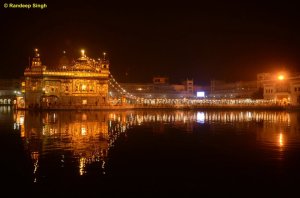

Picture of Golden Temple, Amritsar  by night From the album Gateway to Heaven, by Randeep Singh.

Thanks to Naren  @froZENwell for reminding this poem and inciting me to write this blog.

The Real Ambassadors: Making of an ‘Indian Pakistani’


Published in AmanKiAsha The News, October, 19, 2011
http://www.amankiasha.com/news_cat.asp?id=547&catId=2

“Relationships change minds and not knowledge”. Aun, an undergraduate student at the University of Toronto, began his story with this quote from the well-known writer Reza Aslan.
Aun had come over to my place to share his experiences as a Pakistani living in India. He’s among the miniscule percent of Pakistani elite fortunate enough to have received the best education and grown up with adequate exposure and a wide horizon. Until age 16 he lived all over Pakistan as his civil servant father was transferred from on place to another.

Despite his elite education and exposure, he said that he always thought of India as an “enemy” country. The mention of India brought to his mind war, the conflicts between India and Pakistan over the past six decades. For this, he largely blamed his schooling as well as the media that always portrayed India as Pakistan’s adversary.

His views drastically changed when he had the opportunity to actually live in India for some years, after his father was posted to the Pakistani High Commission in New Delhi as Minister (Trade). But Aun’s initial response to India was not very positive. He remembers the shabby New Delhi airport and “lots of slums and poverty” on the way to his hotel. He also initially hesitated to interact with locals during his first few days.

At the admission test at the British school in New Delhi, Aun met another prospective student, an Indian boy named Saurabh. In the few moments they interacted before the test, they discovered they had the same mother tongue (Punjabi), loved cricket, and craved biryani. From that day onwards, Aun embarked on a wonderful and fascinating journey of harmony and everlasting friendship with people from his neighbouring country. His best friend at school was Saurabh.
Sitting at my place, Aun recalled his economics teacher telling him of her own change of heart when she visited Lahore for the first time. The fear she felt, as an Indian and a woman, while boarding a taxi driven by a bearded driver melted as the driver, gauging her apprehension, reassured her and took her around the city. And at the end of it all, he refused to charge any money from his Indian ‘guest’. No longer could she stereotype every bearded Pakistani as an extremist.

There are countless such stories of such small but enriching experiences of love and hospitality that counter the hatred and bigotry. I know many instances of shopkeepers at Lahore’s Gawal Mandi, and New Delhi’s Pallika Bazar refusing to take any money from the ‘mehmaan’ (guest) from the neighbouring country.

Aun told me that, despite his apprehensions, he quickly and easily made a fleet of friends among his Indian schoolmates, none of whom had any qualms in accepting him as one of them. His eyes twinkled as he recalled his friends in New Delhi coming over to his home to eat Pakistani biryani.
Two touching incidents he narrated demonstrate the compassion that exists among the people from both sides.

The first case involved an uncle of his, who came to Delhi for a liver transplant, needed about 25 units of blood. A shiver ran though me when I heard that it took barely a few hours for Aun and his Indian friends to collect the required amount of blood: the donors willingly gave their blood despite knowing that the recipient was Pakistani.

The other case was that of a Pakistani baby brought to India to be operated on for a congenital heart disease. Again, Aun’s Indian friends got the required units of blood reserved in no time.
“When I visited the baby and his parents back in their village in Pakistan some years later, all the neighbours and extended family came to see me,” remembers Aun. “They all were overwhelmed with immense gratitude for the Indians who donated blood and helped the baby to live.”

Sitting in that small village in Pakistan, their hearts had changed forever; they were no more gullible to the propaganda of hate spread by the vested interests on both sides.

After finishing high school, as he left for further studies in Toronto, Aun knew that he and his Indian friends were good ambassadors for their respective countries, creating a positive impression on the other side. They had no hidden agendas or points to score against each other. They had no real differences. All that separated them was a barbed wire. Aun intends on going back to Pakistan and becoming a civil servant like his father. His dream posting? New Delhi.

He wants to do whatever he can to remove misunderstandings between the two nations. “The only way I think that is possible is to allow people from both countries to interact with each other,” he says.

Aun told me that his Pakistani and Indian friends in Toronto jokingly call him a “Pakistani-Indian”. It’s an identity he feels pride in.

As Aun left for Pakistan recently, I tweeted the last two verses from a poem I had written for my blog some time ago:

“Oh! the lines between our lands sketched,
Let they not on our hearts be ever etched.”
#IndoPak

A few minutes later I received an equally emotional reply from Namita, a twitter friend in India:
“am waiting on this side of the barbed fence, looking longingly on the other side, waiting for the gates to open.. #India #Pakistan”

I did not reply to her tweet. I had no words but only tears of anguish and helplessness, in response to her affection.

Dr Ilmana Fasih is an
Indian gynaecologist and health activist married to a Pakistani. She blogs at
//thinkloud65.wordpress.com/

Let the baby survive and grow


Published in AmanKiAsha The News on Oct 5, 2011.

Nirupama Rao, now Indian ambassador to Washington, reportedly said of the Agra Summit at which Vajpayee and Musharraf met: “Though there were midwives, a still-born child was born in Agra”. A healthy baby was born that night, but was replaced by a “still-born”, reportedly retorted a Pakistani delegate.

Whatever the rhetoric or interpretation, the fact remains that the baby could not breathe in the air it needed – of peace and confidence from the two sides. Hence it died. How many such babies have died over so many years after such meetings?

The love-hate relationship between India and Pakistan does not allow the two neighbours to be indifferent to each other. They keep the relationship going by conceiving ideas and dialogues, but the babies somehow never survive. They can’t. The trust deficit kills them.

The parents need two things to nourish the baby and ensure its survival. The first is ‘love’ and the second, ‘trust’.

I know first-hand, that there is no dearth of love amongst the masses on both sides. It is so evident from their interest towards each others arts and cultural affairs. If Pakistanis’ love for Bollywood films and Indian soaps is immense, then Indian craving for Pakistani singers and music groups is no less intense.

Then there’s the curiosity with which we follow each others sport teams. If there are girls in Pakistan swooning over Dhoni, there are lasses in India putting up posters of Afridi in their rooms.
The pairing of Aisam ul Haq and Rohan Bhopana in professional tennis, or Shoaib Malik and Sania Mirza tying the knot, are also living examples of that love. Despite the practical difficulties, non-celebrity cross-border marriages continue to take place. They don’t hit the limelight, but it is the love and bonds between us that makes them possible even after 64 years of separation.

Even when mishaps occur across the border and when some people do indulge in mudslinging, I bear witness to the fact that on both sides, there is a sizable majority who feel a heartache for the sufferings of their brothers and sisters across the border.

Just take the bonds that exist between the media personnel of both sides. If Beena Sarwar from Pakistan speaks through her soul to break the touching story of a Pakistani pilot’s letter to the daughter of an Indian pilot, Barkha Dutt on the other side follows up with a live TV programme that echoes these emotions from the bottom of her heart.

Another pair of journalist friends post the following facebook comments around August 14th and 15th, the Independence Days of the two countries: Shivam Vjj, Delhi: “All the world’s countries are mine. – borders. And Jeevay Pakistan!

Shiraz Hasan, Lahore: “There is a little bit of Indian in every Pakistani and a little bit of Pakistani in every Indian.” – Benazir Bhutto | Happy Independence Day to all Indian friends!

Many of us can cite numerous other such examples of friendship amongst the common folk. With this magnitude of love, there is no reason that the baby should not only survive, but be healthy and develop into the pride of its parents – the entire region of our Subcontinent.

But what do we do about the ‘trust deficit’ at the top, which smothers the baby? What more testimony of reconciliation do the powerful on both sides want, after the heart piercing letter of the Pakistani pilot to the daughter of the Indian pilot he shot down? What could be a greater example of forgiveness than the equally touching reply of the daughter, with the reassurance that she forgave and moved on long ago?

Together we make up 1.4 billion, about a fifth of humanity who aspire to live in peace and harmony in the region. Why does the trust deficit of just a handful keep jeopardising peace and harmony here?

The spirit at the Pakistan-India Parliamentarians Dialogue between the lawmakers of both sides in August was indeed yet another ray of hope. There was much needed discussion on political bones of contentions like Kashmir, Siachen and Sir Creek and the challenge of terrorism, all in a cordial environment.

It was even more encouraging that the issues which really matter to the people on both sides were given the due emphasis – economic ties (related to trade and investment), energy (via Iran-Pakistan-India gas pipeline), agreements to open new transit routes (across the Line of Control in Kashmir and at Khokhrapar-Monabao) or easing travel restrictions.

The idea of the “trusted visitors programme” was indeed a significant step forward for the hundreds of families divided across the border.

The categories laid down for such trusted individuals included senior citizens, businessmen, elected representatives etc. However, an important category was missing which by no means may be considered less trusted – that of couples who are married across the border.

I understand there will be more such meetings of the group. I beg the authorities on both sides to please look into these families, of cross-border couples, as also trustworthy. I belong to one such family, and I promise we will never let you down for having done so.

As for the elected representatives on either side, I beg them to please push in the high corridors of power to reduce the trust deficit, so that next time when an Indo-Pak Treaty starts to be born, it does not die a premature death.

Wednesday, October 05, 2011

Dr Ilmana Fasih is a gynaecologist and health activist of Indian origin,  married to a Pakistani citizen. She blogs at https://thinkloud65.wordpress.com/

When hatred reigns.


It was with helplessness that I read an article in one of the newspapers about how school kids in certain areas of Karachi were not able to attend their school safely because of prevailing tensions between two ethnic groups- both Pakistanis, both Muslims of the same sect. A kid claimed he was friends with his schoolmates from the other ethnic community and they even played together after school, but now the same friends say they could not play with him anymore.

Another article read of how Hindus in Baluchistan who have been living there for centuries were fearful of sending their kids to schools due to escalated kidnappings for ransom and killings of the community. Although they have no animosity with the Muslims in neighborhood,  they all scared to mingle.

In brief, the hatred of a handful prevailed over the helplessness of the lot.

Before I could finish, the news broke of Karachi blast in the DHA where along with others, an innocent passerby mom and her 5 year old son got killed.
What prevailed here too was nothing but hatred.

I know first hand, exactly how it feels to be helpless in the face of hatred.

I was a first year medical student in  Lady Hardinge Medical College, situated in the heart of New Delhi, when Indira Gandhi was assassinated on 31 October 1984. The mayhem spread as faster than the spread of the news. As if a riot button was switched on. Delhi’s panorama was puking smoke of hatred from every direction.

Parents were coming to pick up their daughters, from the college hostel, and narrating the harrowing tales of watching limbs and other body parts splattered across the killing fileds that Delhi roads had turned into. I remember how a Sikh girl from my class sat cautiously frozen in the crowd of girls in the hostel’s TV room.  She broke down when she learnt that her brother had left home an hour ago to pick her up. No one reassured her not to cry or to worry for her brothers safety.  Not a single parent even offered to drop her home. Why would I blame others, when I felt the same helplessness, and feared what will happen when my parents come, will they be reluctant to take her too.

Ultimately, along with her and a few other girls, I ended up staying back to spend the terrible night in the hostel. The city had turned into an open house of looting and rampage. Next day on my way back home,  all I saw was roads stained with fresh blood, a charred and empty shop after every few well preserved shops and selectively  burn’t buildings along the way to home. Though I did not have the courage to give a second look, but I did see a glimpse of most likely a charred body lying inside a burnt shop.

At home everyone shared their eye witness accounts. Our house boy Jung Bahadur described how the shacks(jhuggis) in the slums of Mangolpuri and Sultanpuri were stocked with stacks of VCRs, TVs and other electronics. He even shared how some dead bodies were piled together, doused with kerosene and burnt to ashes. Papa had witnessed a headless body being carried in an autorickshaw.

I do not remember how and when did the Sikh girl go home, but we learnt days later that her brother could neither arrive at the college, nor ever return back home. His body was  identified some days later in the morgue.

Again, amidst the helplessness of us all, hatred prevailed like a king.

The same story was repeated with my parents, as they were left in the cold, during the riots in December 1992, that followed Babri Masjid demolition. Many Muslim houses were chalked in Delhi, including those of IAS officers, doctors, cricketers, poets etc.

In fact some like Bashir Badr’s house in Meerut was actually attacked. It was after this incident that Bashir Badr wrote this shair:
Log toot jaatey hain, ek ghar banane mein
Tum taras nahin khaatey bastiyaan jalane mein.

Being  staunch beleivers of Indian secularism, my parents had proudly built a house in 1977 in a University housing cooperative compound where his colleagues and other University professors resided. We were only 2 Muslim houses in a colony of 238 lots, but that was besides the point. However, that cold and lonely December night none of our neighbors, his University colleagues or friends came forward to even reassure them of support in case of any danger. There was a criminal silence from friends and neighbors.

As my mother narrated later, that was the first time she saw my father cry with tears, not for his life, but at the ‘sudden’ transformation in hearts of trusted and indeological friends for several decades. My parents had packed their car with valuables, in case they had to leave. Once the crisis was over, a few friends did come up, begging their helplessness.

Once again, amidst the intelligentsia of the society, hatred took an upper hand .

My grandfather often narrated of an incident when during the 1947 riots a Sikh boy had come to drop a pregnant Muslim woman to Matia Mahal,  Jama Masjid area, but was not let to go back alive, despite the helpless cries from the woman’s family to spare her saviour.

The helpless family members could do nothing as the hatred reigned.

I know I can never be able to guess from where this business of hatred all began, but can we really dare dream a day when the hatred propagated by a handful of vested interests will not prevail over the helpless masses ?

This reminded me of a discourse I had read about the controversy between Tagore and Gandhi during the non-cooperation movement against the British in 1930s.

Tagore had warned Gandhi by saying: “….besides, hatred of the foreigner could later turn into a hatred of Indians different from oneself.”

Gandhi on the other hand believed that this non-cooperation would dissolve  Hindu-Muslims differences.

Ultimately Tagore was proved right, and Gandhi had to shift his  non cooperation  against the British into a non violent movement.

The same corollary of Tagore’s could easily be applied to the situation in Pakistan, too.

What began as a hatred for the foreign faiths has turned into hatred among Pakistanis different from each other.

And ironically a handful of vested interest first made the helpless common Pakistanis hate the foreign faiths and now have turned the Pakistanis of different sects and ethnicities hate each other.

This business of hate has to stop somewhere. Whether it is for a fellow Indian/ Pakistani of different ethnicity, of a different faith or of a foreigner of different color, we have to shout in the face of hatred: “Enough is enough”.

Or else, as poet E E Cummings lamented: Hatred bounces.

Erasing psychological borders


Published in The News @AmanKiAsha on September 2, 2011

Panchee nadiya aur pawan ke jhonke, koi sarhad inhen na roke;
Sarhad to insanon ke liye hai, socho tumne aur meine kya paya insaan ho ke

Birds, rivers & gusts of wind, no borders inhibit,
Borders are for us, think what have we gained being Humans ?

This couplet by Javed Akhtar from a Bollywood blockbuster entered my ears and shook my soul.
“Wow! Javed Sahib  knows how I feel each time I go to the Indian consulate in Pakistan to apply for visas for my family to visit my parents in New Delhi.”

“In January 1990, a girl in her mid-twenties in New Delhi ties the knot with a Pakistani man in his late twenties. Happy, but quite unsure how the things in her life would unfold after that. She wasn’t a poor small-town girl getting married to a well-off cousin in Karachi in compliance with her parents’ decision. She was a typical city girl, who made it to a premier medical school in Delhi and was full of patriotic fervour for her homeland. Her parents did not become a hurdle, but advised that she decide it with full insight, and not regret later. It took her four painful and paranoid years to come to this decision. The young man across the border, putting aside his ego in the face of repeated refusals for years, convinced her that they could make it.”

Twenty years on, I can confidently say that we have made it. Our life together hasn’t been all tulips and roses of course. We’ve had our share of ups and downs, in addition to the usual hurdles any usual couple faces. Both of us being passionately patriotic about our respective homelands, it hasn’t been easy. What helped us was the erasing of psychological borders, knowing that humanity on both sides of the border has the same needs and aspirations. We promised to uphold sanity in our heads and not spew patriotic venom against each other. Not that outsiders spared us. Any bitter comment against the other side by a “patriotic acquaintance” from either side affected me more than my husband.
At times I would be reduced to tears after such taunts, to be comforted by my husband with a “mitti pao” attitude. It is not easy when someone passes a snide remark about your homeland. Any news of a bomb blast or riots in my city, would have me sitting paranoid, glued to the TV, wondering about the safety of my parents and siblings.

In kindergarten our children faced questions from curious friends – like,
“Do your have fights at home during a cricket match between India and Pakistan?”

My son would come home crying that his friends teased him about having an Indian mother, saying,
“Your mom is a traitor!”
It took him some years to feel confident that his mom wasn’t a traitor.

But the only time I really, if ever, regretted my decision was when I had to queue up outside the visa window at the consulate of a country I called my homeland. Miserable is an understatement of how I felt when the man behind the counter looked at my children, asking for details, as if I was taking little terrorist recruits with me to my beloved city.

And then on our return to Pakistan, my husband would be pulled aside by the airport security, questioning him about the frequency of his visits across the border. One has to live it to feel it.

My siblings and I grew up with our eyes open to the world issues, with parents who taught international politics at a university.
We were trained to look beyond our boundaries and feel for the suffering of others be it in Palestine, apartheid in South Africa, or Gen Zia’s martial Law in Pakistan. I salute my parents for raising us as “human” beings with a wide horizon.
Some attribute my “Indian roots” to my comments on news blogs or Face book regarding political matters in Pakistan. Yes, I am proud of my roots. But I also have a husband and two kids who are passionately patriotic Pakistanis. They love both places. And so do I. I claim that I own both countries, and love both too. Karachi is mine as much as Delhi is.

We know there is good and bad on both sides. We don’t indulge in mutual blame games. We have erased the psychological borders at home and we respect our political borders. And we love this feeling.
What if the one and half billion across both the borders could also erase the psychological borders? After all, people on both sides of the border are made of the same flesh and bones, we share the same genetic pool. I wonder if I will live to see that day.

Dr Ilmana Fasih is a gynaecologist and health activist of Indian origin, married to a Pakistani. Contact her via amankiasha@janggroup.com.pk
Friday, September 02, 2011