Kabir has hardly spared any animate and inanimate examples to ridicule the bigots who have great illusions about their self image and through their beliefs repeatedly, make a fool of themselves.
In the same spirit, I came across yet another simple yet interest verses.
Poem 1:
Apanpo aap hi bisaro. Says Kabir, they fall prey to their own illusions and forget the essence of our existence.
Jaise sonha kaanch mandir me, bharamat bhunki paro. Just as dog who enters the house of mirrors, goes crazy barking at the images, considering them different. This is a very curious satire on those bigots who bark at other bigots, thinking they are different, but in essence are reflections of each other.
Jyo kehari bapu nirakhi koop jal, pratima dekhi paro. A lion looks deep into the well, and mistakes his own reflection as another lion, and jumps into it. This also satires on the ‘lions’ of different faiths, who are such egoists, that they destroy themselves, in challenging other ‘lions’ in the business. The current sectarian bigots could be appropriate here.
Aisehi madgaj phaTik sila par, dasanani aani aro. An elephant, so proud of its strength, bangs his head against the rock, and hits it with his teeth. Here rocks could be interpreted as hard, rock like beliefs which they bang their heads against.
MarakaT muThi swad na bisare, ghar-ghar naTat phiro. A greedy monkey for whom the food in the pot is not enough, and goes from home to home asking for more. This is perhaps reference to looking outwards, though we could easily content with what is with us.
Kah Kabir lalani ke suwana, tohi kaune pakaro. Says Kabir, their logic is as impossible to catch as the parrot of a village girl. Here he gives a satire of those who keep repeating mindlessly like a parrot, with no logic what so ever.
And then in contrast to the satire, many verses of Kabir bring home the message through simple, day to day examples, of how should we be viewing our beliefs, and the essence of our existence.
Poem 2:
Man tu maanat kyu na mana re. O’ the wandering mind, why don’t you understand?
Kaun kahan ko, kaun sunan ko, dooja kaun jana re. Who is worth to speak or to listen, when there is ONE truth. Here he refers to perhaps the various claimants of ONE, and give it different names and forms.
( The next verse makes it clearer)
Darapan me pratibimb jo bhase, aape chahu disi soi. He is all round in every atom, the way there is a reflection in every mirror. ( This could be compared to the idea of sheesh mahal—made of tiny mirrors all around one image is seen in each and every tiny mirror)
Dubidha mite, ek jab howe, tau lakh paawe koi. If you get ONE truth, you will get contentment worth a million, and the confusion of mind will go away.
Jaise jal se hem banat hai, hem ghoom jal hoi. The way ice is first made of water, then returns back to the same water.
Taise yah tat wahu tat so, phir yah aru wah soi. In the same way, we are all come from that truth, and unto the same truth we have to return to.
Jo samajhe so khari kahat hai, na samajhe to khoTi. Those who get this, call this a stark truth. Those ignorant who don’t get this, consider it falsehood.
Kah Kabir khara pakh tyaage, waaki mati hai moTi. Says Kabir, one who gives up the essence of truth, his brain is thick ( stubborn).
It is remarkable how Kabir talks of evils of bigotry, unity of mankind and the true spirit of secular spirits, rising above the superfluous divisions in the dark ages.
Or perhaps, we are living in darker ages.
Indeed, it is a long road, before Kabir’s examples and teachings become irrelevant to the current times.
The Kabir bhajan below, again, gives some more examples through which he challenges the bigots. Note the translation subtitles. This is my favourite tranquillising Kabir song.
This is a unique and simple story that changed the course of Indian Independenc movement. No destruction, no chaos, just a peaceful protest for a cause.
Though it is impossible to summarize it in a few words…
‘On March 12, 1930, Gandhi along with the protesters set out, on foot, for the coastal village of Dandi some 240 miles from their starting point in Sabarmati, to protest against salt-tax.
He issued a warning before he began: “Those who fear the government can leave, only those who are prepared for jail going and receiving bullets should follow me tomorrow morning.”
The procession was at least two miles in length.
On April 6th he picked up a lump of mud and salt (some say just a pinch, some say just a grain) and boiled it in seawater to make the commodity which no Indian could legally produce–SALT.
He implored his thousands of followers to begin to make salt wherever, along the seashore, “was most convenient and comfortable” to them.
There was also simultaneous boycotts of imported cloth and asked to wear khaddar.
The effects of the salt march were felt across India. Thousands of people made salt, or bought illegal salt.
Gandhi was later arrested.
This incident is considered to be the apex of Gandhi’s political appeal, as the march mobilized many new follwers from all of Indian society and the march came to the world’s attention.’
Today is the 82nd Anniversary of the Dandi Salt March.
The original footage of the March ( Courtesy Geetali Taare)
A couple of days ago I met a neighbour outside the house, walking her two cute cocker spaniels. We exchanged New Year Greetings and as a ritual I asked: “So how did you spend your new years eve?”
“Oh I spent my evening feasting with my girls.” she replied
“Lovely, so they all came over to be with you.”
Her face changed color, “Oh no, these girls Sasha and Mori pointing at the two cocker spaniels, picking up the little ones in her arms.
Embarrassed I replied: “Yeah couldn’t be a better new years eve than with one’s pets. I did it too, when the rest of my family went to see the fireworks at midnight, I sat with my cats on the sofa watching TV.”
This triggered off the talk on how we undermine animals and use terms like ‘animal’ or ‘beast’ with a derogatory hint while using words like ‘humane’ as a symbol of compassion.
“I see those TV anchors calling suicide bombs that go off in Pakistan as ‘inhumane’ acts, when in reality they’ve been done by humans themselves, especially those who aspire to be superhuman so that they get a special place in Paradise.”
I could just nod in agreement.
She went on, “Isn’t this all very ‘human’ to kill, for no rhyme or reason?”
Her words echoed for hours. Don’t we use the same terms ‘insaniyat’ for compassion while ‘janwar’ or ‘haiwaaniyat’ for cruelty in Urdu too.
Although, it is common knowledge that even the most dangerous of animals do not harm unless they are hungry or provoked.
Perhaps our ‘hunger’ has gone beyond filling our stomachs. We ‘attack’ others to fill our egos, the egos which never get filled, because there is no bottom. Yes no bottom, because, we do not have any limit to how low we can stoop to gratify our egos.
Often we see and hear of stories where two pets that could have naturally been predator-prey, coexist as friends and in fact the predator acts as a protector of its erstwhile prey.
I saw this live for years in my own home between our cat Nelson and the grey parrot Shakespeare. Shakespeare learnt to mimic the mewing and growl of Nelson. And Nelson would come running to him. They would simply mew, looking into each other’s eyes. No t even once did the cat attempt to attack or touch the grey parrot. The day Nelson passed away and went missing from home, Shakespeare mewed for hours, as if calling out for him, adding to the gloom and shedding tears like a bereaved kid.
It is a bigoted myth that empathy is a higher cognitive function that only apes and humans are blessed with. Perhaps we are more loaded with narcissism than with empathy. Studies on whales show they are extremely emotional. Whale brains have specialised spindle cells which are important for empathy, and rapid gut reactions. Previously, only humans and apes were considered to possess them. An interesting practical example of this is when a 50-foot, 50-ton humpback whale was caught in a net off California’s coast. After rescuers untangled it, the whale swam up to each one of the rescuers, and winked before swimming off. The researchers confirmed this was a gesture of gratitude from the whale.
To study empathy, neuroscientists in McGill University injected acetic acid in the paws of mice causing them pain. The mice who watched their friend writhing in pain became more sensitive and reacted more violently to pain, when injected with the same chemical.
Studies on animals called ‘humans’ show that children who are cruel to animals, are likely to turn to violence later in life. 75% of prison inmates are known to have past history of animal cruelty, says a study.
We need to revisit or swap the meanings of ‘humane’ and ‘beastial’, or ‘insaniyat’ and ‘haiwaniyat’.
It is a saving grace that we do not understand animal language, otherwise it would be very embarrassing to know that every time a suicide bomb, target killing or even animal poaching occurs we would have heard animals scream “What a painfully humane act!”
Published in Aman Ki Asha, The News on January 24, 2012.
Ilmana Fasih shares some stories of building cross-border bridges through the social media
A world without borders was my childhood dream. The desperation and the need for this dream to realise, came out in the open when I embarked on my ‘pyar border paar’ journey, after deciding to tie the knot across the border. I’ve been on two decades of a topsy-turvy ride riddled with visa travails, with the hope-hopelessness cycle going round in vicious circles. Not had I ever dreamt in my wildest of dreams that my hope for a borderless world could be realised in my lifetime. By a ‘borderless’ world, I mean erasing psychological rather than physical borders.
Perhaps on ground it still remains a dream, but on the virtual terrain it has turned into a reality, with the booming world of social media, especially twitter. It is a visa free, passport free utopia where no one is asked their colour, creed or credentials.
It does not take long for one to get addicted to this borderless terrain. The most fascinating thing for me is to see Indo-Pak friendships burgeoning through social media. Thanks to this factor, we can all be a family beyond borders and beliefs, tied with passions common on both sides of the Indo-Pak border.
Indians and Pakistanis wish each other on Eid and Diwali via Twitter and Facebook, and send virtual firecrackers, mithai and biryani across the border.
The #shair hashtag which ‘trended’ on twitter some time back merits a mention. Every day, it attracts Urdu poetry loving twitterati in India and Pakistan. As Rana Safvi , who started this trend, begins to tweet the topic or the poet of the day, other #shair fans start to contribute their tweets with unmatched enthusiasm. So common is the passion for #shair on both sides, that it is almost impossible to identify which side of the border the tweep belongs to.
Rana tweets: “Twitter ne nikamma ker dia, warna aadmi hum bhi aadmi the kaam ke.” #shair
Comes the reply: “140 characters mein baat ker lete hain, DP to DP borderpaar, mulaqat samajh lete hain.
Political differences and arguments also emerge on twitter, but more than anger, what trumps are the vibes of friendship and harmony. The same thrill is felt on facebook too, with some limitations.
Some time back I was approached by two sets of people keen to tell their story of cross-border friendship developed through social media.
One was Ram, a boy in his mid twenties, from West Bengal, India who became friends with Maria, a girl in Punjab, Pakistan through facebook. As their friendship led to a better understanding and respect for each other’s cultures and beliefs, the vibes spilled over to thaw any cold feelings that their families had for the other side. When Ram’s father fell ill and was admitted to hospital, Maria’s mother and sister prayed for his recovery. He recovered, and Ram’s family attributed the recovery to Maria’s family’s prayers (duas).
Now, as Maria is about to be married, Ram’s family is sending her a present as a token of their friendship and gratitude for her family’s prayers. Ram explained that their families had no links to anyone the other side, and hence had no other reason to be warm, but for their friendship.
Maria and Ram have vowed to keep up their friendship even getting married to their respective spouses, and one day, when they can obtain visas, they hope to meet and ensure that any children they have are able to meet each other.
The second story is that of a love-struck couple who prefers to keep their identity and respective nationalities confidential. They contacted me with a request that I should intervene, (having gone through a similar ordeal), and convince the girl’s parents that tying a knot across the border can work out.
Like many others, they ‘met’ through an incidental chat on twitter some six months ago. They then added each other as friends on facebook. The exchange of pictures and other information led them to develop a better understanding of each other, until they reached a point when they decided they needed to share their lives. Both are in their early or mid twenties, and feel they are mature enough to embark on this journey.
The hope and enthusiasm that they had attached to my help made it hard for me to explain that I would prefer to stay away, and that they needed to deal with the situation themselves. Life is as such a struggle, and with a cross-border union, it gets tougher. Hence, let this be the first hurdle they need to cross together, before embarking on the real lifelong journey.
The couple cited the Shoaib Akhtar-Sania Mirza marriage as an example, but the girl’s parents pointed out that they were ordinary people, not stars. Hence they chose me, an ordinary Indian woman married to an ordinary Pakistani man to plead their case.
With this borderless world of twitter and face book, it is easy to predict that in future, there will be more virtual friendships which people will want to turn into real relationships.
As I explained to them, I would want everyone to appreciate that such decisions are never taken either in a haste or without realising the pros and cons of this life changing decision. Life is tough in any case, it gets tougher, and more so, after an Indo-Pak adventure. Since there are decisions which when taken can effectively be non-reversible. The decision of one of the spouses to forego his or her passport for the other side cannot be reversed, whether the marriage works or not. Secondly, when the couple has children, their nationality is one or the other. So if the marriage fails, the woman may have to suffer a lot in terms of losing her children, if the children happen to have the father’s nationality (or vice versa).
I have personally seen a couple of cases in which things did not work out and the mother and children were left stranded across the border, unable to meet again at all. I also know a woman, who is bearing all her husband’s abuses including his second marriage, only because she does not want to lose the children who have the father’s nationality. Moreover, her children are very young, and she can’t think of separation, as she has no family support or financial standing in her husband’s country, for which she left her own.
All this is certainly not intended to dissuade anyone from daring to cross the love border. But those who think of it should be fully informed of all the issues involved before embarking on this toughest exam of one’s real life.
The young twitter couple I mentioned is adamant that they want to tie the knot and transition their relationship from the virtual to the real world. I wish them good luck in their future journey.
The writer is an Indian gynaecologist and health activist married to a Pakistani. She blogs at
//thinkloud 65.wordpress.com/
On 27th January, 2012 India celebrates Basant panchami.
In Pakistan, it is celebrated towards the end of February.
Towards the end of January till early March, the golden harvest of wheat stand tall ready to be harvested sometime in early April. And wheat is our staple crop.
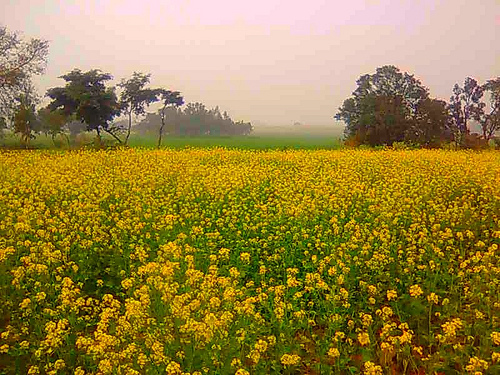
At the same time in Januray February the yellow blooms of mustard ( better known as sarson) sway in the fields, as far as eyes can see. And mustard is a cash crop whose seeds are pressed to extract mustard oil.
To celebrate these awesome blooms as a reward for the fields ploughed and the seeds sown in October, the farmers rejoice, sing, dance and make merry.
Some of them wear yellow turbans, and their women folk adorning yellow ‘odhnis’ come out to join in the celebrations. It is not hard to imagine that they must be celebrating the blooms, ever since they learnt to farm these crops dating back to centuries.
This is the basic root and the spirit of the tradition of Basant in parts of Indian subcontinent where these crops are grown.
Are wheat, or mustard crops Hindu, Muslim or Sikh?
Vasant in Sanskrit or Basant in Urdu mean ‘spring’, which heralds the departure of winter and arrival of spring. It symbolizes the time of rejuvenation and arrival of happiness as flowers start to smile through their blossoms.
Yellow, the color of Basant, inspired by mustard blossoms, which matches the shade of sun rays, signifies life and radiance.
Do rays of sun or radiance of happiness differentiate between Hindus, Muslims or Sikhs ?
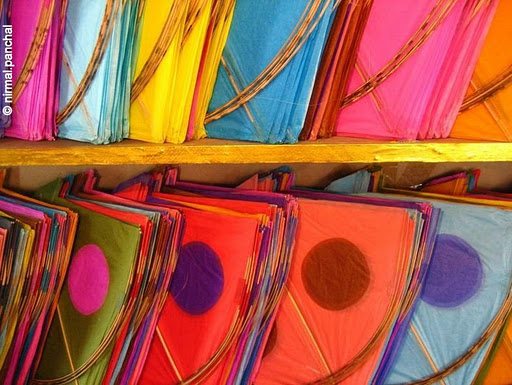
Kite flying , another component of basant, has it’s own interesting tale to tell.
“Kite flying also reveals how the tradition evolved over centuries and in a Ganga Jamuni way. Kite flying was introduced to the Indian subcontinent by the Chinese traveller Heun Tsang in the 4th Century. Evolving for centuries, it s modification into its current form and popularisation as a sport was made possible by the Nawabs of Avadh. The kite flying during basant celebrations is believed to have been introduced by Maharaja Ranjit Singh in the 18th century.”
Yet another evidence of centuries old and secular celebration of Basant come from poets, Kalidas and Amir Khusro, who have written about the celebrations of Basant in their own unique styles.
Kalidas in a poem Spring writes:
द्रुमाः सपुष्पाः सलिलं सपद्मं
स्त्रियः सकामाः पवनः सुगन्धिः ।
सुखाः प्रदोषा दिवसाश्च रम्याः
सर्वं प्रिये ! चारुतरं वसन्ते “Oh, dear, in Vasanta, Spring, trees are with flowers and waters are with lotuses, hence the breezes are agreeably fragrant with the fragrance of those flowers, thereby the eventides are comfortable and even the daytimes are pleasant with those fragrant breezes, thereby the women are with concupiscence, thus everything is highly pleasing…
AmirKhusro pens down:
Aaj basant manaalay suhaagun, Aaj basant manaalay; Anjan manjan kar piya mori, Lambay neher lagaaye; Tu kya sovay neend ki maasi, So jaagay teray bhaag, suhaagun, Aaj basant manalay…..; Rejoice, my love, rejoice, Its spring here, rejoice. Bring out your lotions and toiletries, And decorate your long hair. Oh, you’re still enjoying your sleep, wake-up. Even your destiny has woken up, Its spring here, rejoice.
There is an Indian classical music tune called Raag Basant Bahaar.
Not to forget, basant in the subcontinent is also associated with a special sweet prepared specially for the occaision –the kesar halwa, It is a suji ( semolina) halwa with a soft aroma and yellow shade from saffron and garnished with cashew nuts.
Neither the dessert, nor the poetry above nor the music below suggest if Basant is Hindu or Muslim or Sikh.
The same spirit is also replicated by this beautiful ghazal by Malika Pukhraj and Tahira Syed
Lo phir basant aayee…
P.S. Special thanks to Sandeep@stwta a twitter pal for the devnagiri text of Kalidas poetry.
Kabir leaves no examples to teach and stress to human beings, in his own simple ways, the lessons of humility, tolerance and open mindedness.
In other verses, as in previous post, he gives examples from the living world, like animals, or even from trees, rivers and oceans.
In the verses mentioned below, he picks the most modest of examples, to highlight their good traits. But realisng that they too have downsides, moves on to gentler ones among them. And ultimately makes us realise, it is only ‘the ONE’ truly devoid of flaws.
In a way, there is a subtle message here, that in one’s pursuit to be better, there is always room for further betterment, and despite all our efforts in the direction, it is only the ONE who is perfect.
Rorha hoi rahu baat ka, taji paakhand abhimaan. Aisa je jana hoi rahe, taahi mile bhagwaan.
O dear, be as humble as the pebble on the path. Giving up all snobbery and ego. Only if you are humble can you realise Him.
Rorha bhaya to kya bhaya, panthi ko dukh deh. Harijan aisa chahiye, jyoon dharani ki kheh.
Kabir rethinks. What if you are a pebble, as it too can get unkind and hurt the feet of the fellow travellers on the path. So be like the soil on Earth, soft and gentle.
Kheh bhayi to kya bhaya, urhi-urhi laage ang. Harijan aiasa chahiye, jyu paanee sabrang.
Again Kabir rethinks. What if you become soil? It flies with slight breeze and spoils others ( a little adversity may cause our evil nature to surface and cause harm to others). So just be like water – it is without color (without prejudice), but it can take whatever color easily ( be open minded).
Panee bhaya to kya bhaya, taataa-seeraa hoy. Harijan aisa chahiye, Hari jaiasa hi hoy.
Once again Kabir rethinks. What if you are water? The water gets furious with heat and even becomes too cold with indifference.
So just strive to be as Tolerant, Kind and and Merciful, always as your Lord.
Today is auspicious, for India. Yes it is despite being Friday the 13th.
Today India completed one full year of being Polio free.
It was on January 13, 2011 that the last child with Polio was diagnosed. After that all weekly tests from sewer samples, where polio is generally found, have been coming clear. No cases or samples have been reported positive since then.
WHO states “If the data comes clear over the next few weeks, then India, for the first time will show unshaded in the WHO polio maps.”
It is certainly a moment to rejoice for India, while keeping it’s fingers crossed for some more weeks and a lot extra vigilant for the next few years.
And knowing that it is a country with huge population of 1.2 billion with population as culturally diverse as any diversity, this is indeed a matter of great pride. It is a moment that one does not get to witness in history very often. Last when India along with the whole world witnessed something similar was in 1975 when Earth was declared Small Pox free.
“It’s not a miracle — it’s good science and an awful lot of elbow grease.” says Dr Bruce Aylward, the assistant director general of Polio, WHO.
Certainly being a huge bunch of a multi cultural, multilingual diaspora that India is, along with poverty, ignorance and myths against Polio vaccines it certain must have been a mammoth task to even dream and then realise that dream of a Polio-free India.
Poliomyelitis is a viral disease which attacks the nerve cells in the spinal cord which leads to the paralysis usually of a lower limb or leg. It cripples the children at a very young age. It is mostly spread by direct person to person contact, through the feco-oral route i.e. through phlegm, through the infected mucus or phlegm from nose, mouth or through infected feces. Once affected, however there is no treatment of the disease. Polio immunization through vaccine either as oral drops or injections is the only way to prevent it.
Why do I write all this? Is it to show off my Indian connection?
No certainly not, but to let us Pakistanis know that after today, or maybe in a few weeks more, after India officially says quits, only three countries shall remain ‘Polio endemic’ -Afghanistan, Nigeria and our own Pakistan.
Yes it really hurts that what India has achieved for it’s 1.2 billion, Pakistan could not achieve for it’s 180 million. It hurts that Sudan could do it, Myanmar could do it, but Pakistan could not.
It hurts even more to know that 194 cases were reported in Pakistan in 2011. Two of them were just confirmed today one from KhyberPakhtunkhwa and another from Sindh, sadly.
Most of the areas affected are the conflict zones where there is rampant poverty, ignorance and ill health.
The executive summary of the document said and I quote:“Poliovirus is continuing to cripple children in Pakistan because of the failure to reach all children with sufficient doses of vaccine. The reasons for this include inadequate Government oversight and ownership, access problems due to security particularly in the Federally Administered Tribal Areas (FATA), operational and planning challenges, and the failure to identify and i nclude all high risk underserved population groups.”
Next it states: “the President of Pakistan has directed the immediate development of an emergency action plan for polio eradication in Pakistan.”
And that the Armed Forces have also been pretty active in some of the unreachable areas, by helping the government in making the vaccination of children with polio drops possible.
I hope all these efforts, both by the government and the armed forces, are able to trickle down till the last beneficiary and that a genuine change on ground is visible.
One can only wait to see if the claims that 2012 will show a decrease in the Polio cases in Pakistan.
The same report also mentions that along with India even Nigeria too has the potential to eradicate Polio in near future.
Further reading from the report shudders my soul: “This would leave Pakistan as the single largest threat to global polio eradication, and isolate the country in a world that wants to protect its citizens from the last remaining reservoir of wild poliovirus.”
After reading this, with a depressed mind within a dizzy head, I appeal to all the powerful and mighty in Pakistan to please rise above wrangling and infighting and please pay attention to the poor masses of Pakistan, who have been long ignored in this battle of egos.
Let all forces work with harmony so that not just Polio be eradicated, but power shortages and poverty be controlled, and let the people prevail.
Dr Ilmana Fasih
13 Jan 2012
The Confederation of Indian Industry (CII) some time back recommended promoting economic cooperation between India and Pakistan by focusing on information technology (IT), entertainment and healthcare.
Yes, “Healthcare”, I shout.
After all the other two are thriving and will take care of themselves. I remember in the mid-nineties, when my father-in-law, a doctor himself, was diagnosed with a serious medical problem. Frantic tests at various local institutions recommended that he undergo a procedure that wasn’t very commonly performed in Pakistan. He was all set to go to the west which required large expenses.
It was then that my awareness about a particular institution in India, where I had grown up and attended medical college, came in handy. I persuaded him to get examined there. We went to New Delhi, and he returned to Pakistan treated at one tenth of the cost it would have required in the west. I became an instant ‘doted’ upon daughter-in-law in his eyes. All his initial reservations about his son marrying an Indian disappeared overnight.
The true potential of medical cooperation between the two countries was dramatically highlighted when Noor Fatima, a two-and-a-half year old baby girl, went to Bangalore by the Lahore-Delhi bus in 2003. In fact, the bus service was resumed in part to allow her to make the journey. She was literally given a red carpet at the hospital as well as by the media.
Just a few days ago there was news of a 10 month old baby being taken from as far away as Qila Abdullah near Chaman in Balochistan to Bangalore, India for a heart surgery, a free treatment thanks to the joint efforts of Rotary India Humanity Foundation (RIHF) and Rotary Pakistan with Aman ki Asha, the peace initiative of the Jang Group of Pakistan and the Times of India Group. It is heartening to know that thanks to this rightly named ‘Heart to Heart’ initiative, now over 60 Indian and Pakistani children from poor families have been able to undergo life-saving heart surgeries in India.
As this people-to-people interaction in health, as in other fields, goes on, it is clear that no animosity or cold temperatures at the top level can freeze the warm relations between the ordinary Pakistanis and Indians. Our common heritage, common interests and above all a concern for each other will never dampen this warmth.
However, there is a dire need to extend this at a wider and higher level. The recent statements from the Indian and Pakistani business communities could well be the trigger. The top levels of the corridors of power need to formulate policy along these lines to bring a real impact at community level.
With reports about a case of Polio being found recently at Wagah, Pakistan, it becomes essential for strong policy decisions to be made at the top level, trickling down to the masses, to combat the spread of such crippling diseases.
India and Pakistan are among the four countries of the world where Polio is endemic. Our proximity will not enable either to achieve the ambitious plan of making Polio extinct, without mutual cooperation.
Looking at both countries from the UN lens, India and Pakistan are both termed ‘out of track’ when it comes to achieving the 2015 target for the Millennium Development Goal (MDG) 4 – the reduction of infant mortality. With a 1.4 billion population in the region, this means millions of children and babies are at risk. Failing to achieve an optimal Infant Mortality Rate will mean that a gigantic number of children being deprived of the opportunity to survive. Does that not warrant a joint concerted effort for both countries to come ‘on track’?
Similarly, in the MDG 5, the reduction of the Maternal Mortality Rate, again, both the countries are unlikely to meet the target in 2015. India has done better, but in both countries, far too many women die during childbirth. We certainly have great room for cooperation in this field too, as overpopulation, women’s illiteracy, and violence against women are among the common problems that both countries face. Isn’t it common sense to share information and experiences and work together to eradicate these problems?
MDG 6 deals with the Infectious diseases, like Tuberculosis, Malaria and HIV. India has done a good job in stabilising HIV, bringing down the prevalence rate from 0.36% in 2006 to 0.31% in 2009 (UNAIDS Global report on HIV/AIDS, 2010). In Pakistan the HIV/AIDS prevalence is low among the general population (<0.05%), but according to UN reports, it is increasing rapidly in high risk groups. The UN categorises Pakistan as a high risk country for the spread of HIV/AIDS. (http://bit.ly/UNmdg-mm).
Doesn’t it make sense for Pakistanis dealing with HIV/AIDS control to learn from India’s experience? Isn’t prevention better than cure?
Malaria is still a problem that both countries have not been able to tackle. According to a recent World Health Organisation (WHO) report, a third of the world’s countries will manage to eliminate Malaria, but adds that “the future in the South Asia region isn’t bright.”
India battles with a heavy burden of Malaria. Pakistan too has almost half a million cases of Malaria each year. A common problem with a common purpose of defeating it could help the region also realise the dream of being Malaria free. After all, countries closer to home like the Maldives have managed to do that, and Sri Lanka is considered close to eliminating the menace.
The mid-2000s saw Dengue epidemics in the Indian cities of Delhi and others in northern India. Today, Lahore and others in Pakistan are battling with it. It was a proud moment for the region when expertise from Sri Lanka and medicines from India helped Pakistan to combat the illness.
We have no choice but to combat such problems through joint efforts. The border security guards can check humans for visa, but mosquitoes are above such restrictions.
But besides the recent Dengue cooperation, there has hardly been any cooperation in the field of health at the top policy-making level. The only other cooperation worth a mention is the Polio drops being given to under-fives at Wagah border, and the fumigation of the Samjhota Express against the H1N1 flu virus.
Such small examples of cooperation are nothing compared to the gigantic cooperation that takes place in the field of entertainment. It is much more critical to come together on the immensely more serious issue of health. The stalwarts in this field must emulate the entertainment sector towards substantial cooperation.
We have a common geography, ecology, genetics, cultural practices and health problems. I am sure we can find common solutions too, that will save both countries much valuable time and money. United in health we shall stand, divided we shall fall with illnesses.
Dr Ilmana Fasih is an Indian gynaecologist and health activist married to a Pakistani. Blog: Blind to Bounds https://thinkloud65.wordpress.com/
Other children who have also been given a second chance through AKA-Rotary’s Heart to Heart initiative
This is the first of the series of Health Blog posts I begin from January 1, 2012 to raise awareness amongst South Asians on different Health issues of importance to them.
PART ONE
What comes to your mind by hearing of Healthy lifestyle ?
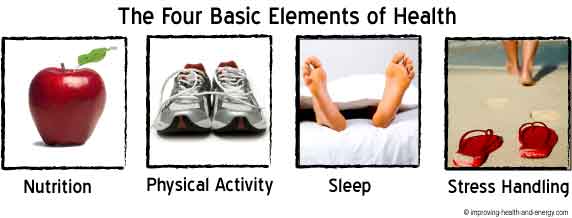
Exactly, it is these four essentials along with some other things which together make up the components of a Healthy Lifestyle.
There is nothing in it which any ordinary person cannot achieve. Healthy Lifestyle is no rocket science , and it needs no huge investments.
Just tiny conscious steps which will build up with time into habits and reap as a reward a Healthy YOU .
Why need a Healthy Lifestyle? I ask why not?
A healthy lifestyle :
• Shall reduce chances of illness and injuries, and hence improve quality of life.
• Will reduce visits to doctors, save time and misery.
• Will reduce cost of health care, less medical bills.
• Enable us to pursue our passions and work better and uninterrupted.
• Keep us employed, and with less of sick leaves or leave without pays.
• A sound mind in a sound body will enable better relationships at home, at work and in society at large.
• A healthy individual will be a healthy citizen of a healthy nation.
What constitutes a Healthy Lifestyle?
They are all simple steps, and as you go through them check which all you already follow, which ones you need to follow more. It just requires a constant conscious effort.
STEP ONE: Make Healthy eating habits:
I know our foods are delicious, but some are pretty unhealthy too. However, there is still a way we can manage to strike a balance between satisfying our taste buds and eating healthy.
A healthy balanced diet which has all the nutrients and vitamins we need is essential to make us stay healthy and avoid diseases.
The next very blog shall be in detail on healthy eating while we enjoy our desi food at the same time.
STEP TWO: Have an Optimal Weight:
Do you know what is your weight and height?
Do you know what is BMI (Body Mass Index), its significance is and how to calculate it?
Please check your BMI by plotting the weight and height on the chart below.
See where does your BMI lie.
If it is in the green zone, congratulations, your BMI is normal, but you need to maintain it in the same color.
If it is in the red or yellow zone, you need to check it and think of bringing it down to green.
Benefits of weight control: Maintaining an optimal weight saves us from a number of serious diseases like Heart disease, Stroke, Diabetes, Blood Pressure, Joint problems like arthritis, and Cancers like breast cancer, colon cancer, and sudden death.
(A blog shall be dedicated to weight management too.)
Do you know how much is the minimal exercise you need to do to stay healthy?
For adults it is a minimum of 30 min per day for 5 days or 150 minutes per week of moderate exercise (which is enough to increase your heart rate upto safe limits) is needed to keep an optimal heart health. It could be a brisk walk or jogging.
What exactly is moderate exercise?
A study suggests that a moderate-intensity walk should have 100 steps per minute, or 3,000 steps in 30 minutes.
And some studies have suggested that moderate-intensity exercise –like walking — may be just as beneficial as more vigorous exercise.
It does not need to be continuous…you can split it into three session of 10 min each through the day.
It could be swimming, walking, skipping rope, or playing sports like tennis.
– Benefit of Exercise:A daily routine of exercise will help control weight, increase the body metabolism, gives sound sleep, reduces stress and makes you feel good.
Caution:And if you have any health problems or have never exercise, I suggest you to first get a check up from your doctor before you begin.
For children the minimum exercise should be 90 min each day of active play, every day.
Do you also know that it is unhealthy for the children to be watching TV more that 2-3 hours a day?
It leads to obesity, hyperactivity and low attention span in the children-hence not only poor school grades but also many problems in later life.
Instead of watching TV or sitting on Computers all day, encourage them to play physical games . If space is a concern, after the minimal play, even indoor board games like ludo, chess, scrabble are great which encourage interaction, active thinking, learning frustration tolerance and competition.
Encourage them to read books. Studies prove if you expose children to books from early age, they do not get aggression later.
And for children below 2 years, no TV viewing at all, is the recommendation.
• Excess of caffeine, tea, fizzy drinks and alcohol.
• Avoid smoking as well as second-hand smoke. (A couple of blogs on smoking shall follow too).
• Avoiding drugs of abuse… it all begins with poor parent child relationship and smoking. If the parents-kids have a positive relationship and the parents counsel their child against the harmful effects of drugs and smoking since early, the kids can most likely not tread that path.
Our South Asia is a region where infections of all sorts are so common.
Personal Hygiene: Some common practices can help us minimise these infections like:
1. Wash hands frequently and properly–It is the single most act that prevents major infections
2. Do not share razors, combs, nail cutters, tooth brushes, towels and needles.
3. Practice safe sex habits.
4. Get the required vaccines on time.
It is very important to know that in our countries Hepatitis C and HIV infections have high prevalence. Many of the people are not even aware that they are infected.
It is very important to not share your razors, combs, scissors, nail cutters and needles, to avoid infection.
Also know that handshakes, hugging, kissing, sharing utensils or eating together will not cause spread of Hepatitis C or HIV infections.
It also very important that if you happen to get injections or blood transfusion in a Hospital, make sure the seal of the disposable needles, syringes or the equipment are opened in front of you.
And you also have the right to inquire from the health personnel about adequate sterilization of instruments and blood products.
(A separate blog shall be dedicated to Hepatitis C and HIV infections and their prevention).
Do not forget the cleanliness of your surroundings.
The following steps are more to do with mental health and we all know ‘a sound body needs a sound mind’.
STEP SEVEN: Healthy personal relationships:
• Along with taking care of ourselves, ne need to give the due attention to the people around us. Sharing and caring with the loved ones makes one feel good.
• Take time off to just sit with your loved ones. Have a family time, with no laptops, smart phones, television coming in the way.
• Talk to the kids at an eye level as friends, not as their commanders.
• Eating together as a family at least one meal a day. Talking on dinner table is a proven way to strengthen closed family ties.
• Hug your ageing parents for no rhyme or reason, no matter how old you or they are.
• Add humour to your life. “Good humour is one of the preservative of peace and tranquility.”Jefferson.
• Take time to say ‘How’re you’ to people who work for you like your driver, maid, your gardener. Then see a smile on their face and a twinkle in their eyes.
STEP EIGHT: Healthy connection with the surroundings;
It is so important to look beyond one’s personal and family life and see what s going on in the outside world-both living and non living.
Make sure to watch the news on TV or read Newspapers to know what is going on in your country or in the world at large. The news may be depressing, but it makes us conscious of the various problems in the world.
Understand your sociopolitical responsibility: Form healthy opinions on the events occurring in your society.
When its election time, make sure you vote (with your conscience).Remember that each vote counts.
Give charity. Charity is not just through money, we can give our time and a few words of empathy to those who are in need. Research proves that charity or public service helps the individual develop self-esteem and mental well-being.
STEP NINE: Stress management
Yes stress is a reality. But we need to manage the stress of our lives. Half that work is done if we eat well, exercise, sleep well, and have less illness.
However there are many scientific tools available on the net to manage stress. A blog shall be dedicated to stress management.
I know this blog was long and loaded with lots of information. I would suggest go slow, read the three different parts over different times, and if needed come back again. It’s going to stay here
You may begin the New Year with great resolutions, with great enthusiasm, but will forget in the middle. That’s all so normal. I do the same. So long as you keep getting back on track and not give up, it’s all very human. Keep trying! I am trying too
He who has health has hope; and he who has hope has everything. (Arabian Proverb)
With a hope that 2012 shall be a healthy year for all of you…
AUDIO IN URDU/HINDI FOR PART-3:
A VERY HAPPY & HEALTHY NEW YEAR!!!
P.S. 1: This and the other forthcoming Health Blogs do not substitute a Doctor and they are only aimed at increasing Health awareness and to develop interest in the readers to read further about health issues. For any serious health problems, do not delay a doctor’s advice.
P.S. 2 This is the first of the series of Health Blogsposts that shall be posted every fortnight with a new Health topic relevant to the South Asians. Please share and do play the Audio to those family members who do not ‘indulge’ in the social media.
P.S.3: Many thanks to DrBabarKhan and FarhanMasood for their generous ReTweets. 🙂
What a beautiful song with lyrics by Nida Fazili, music by Jagjit Singh, and singers from India ( Jagjeet Singh, Sonu Nigam etc.), Pakistan ( Ghulam Ali, Mehdi Hasan, Iqbal Bano) and Bangladesh( Runa Laila), and rest of the World singing together for the New Year.
Naya saal ho aisaa ab ke Rang bhare jeewan mein sab ke Sooraj ghar ghar dhoop bikhere Chand sajaye sab ke andhere
Kheton mein faslein lehraayein Nadiya sab ki pyaas bujhayein Jurey rahein sabke rishtey Juda na ho bhai se bhai Naya saal ho sabko Mubarak Naye saal ki sabko badhaii..
Urein kabooter khuli hawa mein Naache chham chham more ghata mein Seemaon mein bante na dhartee Faujon mein kam kam ho bhartee Sona jhoomer ban ker damke Chandi payal ban ker barse Naye saal ki sabko badhai
Chhape kitaabein, khulein dukanein Chire kahin na aur laraiii Naye saal ho sabko Mubarak Naye saal ki sabko badhai
Celebrate, make it a special one Let’s speak -one promise, Let’s celebrate, for our future For our children’s sake , let’s celebrate.
WISHING YOU ALL A VERY HAPPY NEW 2012 FOR THE PEACE IN SOUTHASIA, IN THE WHOLE WORLD









 Blind to Bounds
You must be logged in to post a comment.