Open up your mind and your potential reaches infinity…

Archive for the ‘Food’ Category

Bread pakorey ki kasam


If seeing this ^^^ picture, your eyes twinkled, lips curved into a wide grin, your mouth began to water and it flashed back the awesome memories of your alma mater, please stand up !

And to those who find the above sentence a gross exaggeration, and cynical, I don’t blame you. For you are an alien to this experience.

To the first group, know you are a Delhiite and more specifically went to DU as a student. And you don’t even need to be explained what DU stands for. But for the latter, btw, it stands for Delhi University .

What fish n chips is to London, or hamburger is to Mc Donalds, this luscious snack is to Delhi. This is the  finger food we all relished ( I wonder if they still do) in cramped Delhi University cafetarias, without realising its awesomeness.

Being away from Delhi now for over two decades, the gold test for me to check whoever claims “I am from Delhi.” is the mention of the clue word “Bread Pakora”. If instead of a wide eyed expression screaming ‘wierdo’, the return expression is an instant wholesome grin, you know the claim is authentic. You don’t even need to double check them.

To give you another evidence of my cynical attachment to a bread pakora, it was only for the ‘Bread pakore ki kasam’ tag line, that got me watch, Band Baja Baraat twice.

In the good old simple days of limited pocket money, and even more limited options in the DU cafes, this large sized, yummy snack with a hot cup of chai came in handy and filling in the lunch hour, for an affordable Rs 5/-

Just as in some other part of the world, mustard compliments hotdogs, our austere bread pakora came proudly partnered to even more austere yet yummy Kaddu Ketchup (Pumpkin ketchup).  And the two stayed married to each other, no matter how much the arrogant branded ketchups belittled it , on TV ads of our days:
“Thora ketcup try karo?”
“Ketchup hota kaddoo bhara”
“Is mein kaddoo nahin zara,
Raseele tamataron se tayyar,
Volfarm .”
( If I still remember it correctly) .

Whenever I get into my “Ayy mere pyaare watan, tujh pe dil qurban” mode, all I do is take two slices of bread, spread one with hot chilli sauce, other with green mint coriander chutney, sandwich them with mashed potatoes, or even cottage cheese, cut them in two triangles,  coat each of them in a chick pea batter, and fry them. And with a steaming cup of tea, I transport myself back to the DU student days.

Find it weird? No worries, most of my family too, quietly radiates that subtle expression of Whats so great about bread pakora?”.

But I have learnt to not take notice of them, and not even take any offense.
They  know not what they are missing !

Believe it or not, I find it the awesomest finger food, for it carries with it a flavour of my past memories too.

Bread pakorey ki kasam !

King of fruits~ a twist with the taste !


Hindu Gods claimed it to be the Food of Gods, the emperors and nawabs called it the King of fruits, poets like Ghalib called it pots with honeyed juice , scientist call it Magnifera indica, with all the special names given by special beings.

To the ordinary, however,  it remains a simple ‘Aam’ ( which itself means ‘ordinary’).

What generous qualities is this wonder fruit not bestowed with—soft silky texture, gorgeously golden color, a mesmeric aroma for the olfaction, and a heavenly sweet delight to the taste buds. And not just the quality, in the peak of its season, it comes in abundance, making Aam ( mango), yet another symbol of generosity. And as if these qualities weren’t enough, it comes in hundreds of varieties.

I love the way, when in abundance, mango sells at a reasonable price making it affordable to many if not all the poor.
“Till last week, in Delhi, some variety of mangoes were being sold at as low as Rs 30 per kg,”, tells my Mom. Still in this world of commerce and trade, India though  the greatest producer and remains the largest consumer of mangoes too, with 99% being consumed locally and only 1% is exported.

Thinking of mangoes, mind goes instantly to a few cues—of mango orchards in Rataul,  where one went to eat just mangoes, or of childhood visits to grandparents where buckets of mangoes soaked in cool water waited for our arrival, and of mangoes being brought home by parents in pettis( wooden boxes) and tokras (baskets) not polybags.  Abundance was common to all.

Beyond eating them as it is, mango shake or mango lassi are universal favorites too.

Right from unripe green to a pulpous ripe fruit, mangoes are worthy of being used in a variety of recipes. The strong mango flavour that obstinately stays even after cooking or mixing with other ingredients, makes it stand out and still remain the main ‘hero’ of any recipe.

The itch to break the monotony and use them in different recipes had always been quite intriguing. Having experimented with various recipes, there are some which have hit really well with my folks at home. And now each mango season, their demand is refreshed.

I share here those  household favorites

Aam Panna:  An age-old traditional drink, that elderly claim beats the heat stroke or LOO (in the desi jargon. Made from unripe or semi ripe mangoes, boiled and pulp sieved, which can be used as either sweet (with sugar) or sour ( without sugar). Adding a dash of chunky chaat masala( desi spices), and a twig of mint leaves makes it a great delight. The resultant sweet n sour drink is a great thirst quencher.

Mango-Avocado-Crab Salad: Layered as avocado cubes with crushed garlic at the bottom, mango cubes with ginger juice in the middle, and crab meat sitting on top. The outcome is pretty cool, with much economy of labor and time.

Mango Salsa &  mango chutney with barbecued chicken:
Mango salsa includes tomato and mango cubes, red onion and jalepino pepper with lemon juice and mint or cilantro garnished. The resultant is a colorful, crunchy mix that is hot, sweet and sour.
Mango chutney is made from green mango pulped, and cooked with sugar and achar masala (pickle spices). Vinegar is added as preservative, after it cools.

Mango Crepes &  Waffles: Hot Crepes or waffles with mango cubes and whipped cream or custard.  Kids love it for a weekend breakfast.

Mango Rose: This is almost a decade long favorite dessert  in the house, a must inclusion in the parties arranged in  mango season. The recipe is an in-house creation and hence kept secret :). Got to eat before ask for the recipe.

Happy mango season !

Mango tree, a symbol of love


“A beautiful, golden radiant princess, the daughter of Sun God landed on Earth. The King of the land instantly fell in love with her, and desired to marry her. However, a sorceress fell jealous of how King was enamoured by her, and turned her into ashes. From these ashes a huge tree with dark green leaves grew, which bore golden fruits taking to the radiance of the princess. As one of the fruits ripened and fell on Earth, it instantly turned back into the same Princess Surya Bai. The King recognised her, and they got married.”

This is how the legend of the origin of a mango tree, symbolizing  eternal love, is mentioned in ancient Sanskrit literature.

The tree is known to date back to 4000BC in India and the fruit it bore, has been known as the ‘fruit of Gods’.

There is another legend which says that :

Lord Shiva and his wife Parvati were gifted with a golden fruit by Narada, the son of Lord Brahma and with an instruction to be eaten by only one person. So they chose to give to one of their two sons, with a condition that whoever will take 3 rounds of the universe first will be rewarded with this fruit. Ganesh being a smart child took three rounds around his parents and reached back earlier than the other brother, Karthik, saying,  “My parents are my universe”.

Hence Ganesha got the fruit, owing to his unequivocal love for his parents.

Not just the fruit, the whole mango tree is revered in Hindu mythology.

Considered auspicious, its dark, big leaves are  used to adorn the house in festivals like Diwali and Pongal.

In the weddings too, as a symbol of love and fertility, the leaves are held in a row by a string and hung at the door to welcome the new bride into the house.


A
uspicious mango leaves adorning the door.

As an evergreen mango tree starts to blossom with buds, it heralds the onset of spring, and hence called madhu duta( the messenger of spring) that invites love.

A sanksrit couplet says:
aṅkurite pallavite korakite vikasite ca sahakāre |
aṅkuritaḥ pallavitaḥ korakito vikasitaś ca madano ‘sau ||

As the mango flowers begin to swell, to put forth sprouts, to bud and finally to blossom,
Love too swelled, sprouted, budded and blossomed.

The dark green leaves, with fragrant buds and blossoms attract the swarms of humming bees and singing cuckoo birds. The relationship of Mango tree laden with blossoms and Cuckoo bird is that of a lover and the beloved.

The secret of Cuckoo’s melodious voice is associated with the sweet fragrance of mango blossoms and honey laden mango fruits. Perhaps owing to this, mango buds were known to be eaten by singers in old days to make their voice melodious.


Cuckoo on a  mango tree.

Kalidas in his poetry Seasons( Ritusamharam) describes the Spring (Vasanta) as:

” Intoxicated by the nectar of mango blossoms ,
The cuckoo kisses his mate happily in love,….”
“The lovely mango shoot is his choicest arrow,
the swarm of bees is his bow string,
……….
May the world-conquering Manmatha,
Accompanied by vasanta,
Grant you more and more joy.”

Amir Khusrau relates them as:

sakal ban phool rahi sarson
ambva phootey, tesu phule,
koel boley dar dar,
gori karat shingar

The mustard blooms in every field,
Mango buds snap open, the flower blooms,
The cuckoo sings from every branch,
The damsel adorns make-up.

Apart from Gods, even the Rajas, Maharajas, Mughal Emperors and Nawabs could not contain their love for Mangoes, and it is no secret. They were known to keep mango orchards, and took pride in showing off their orchards to the royal guests and spending time with their queens in the orchards when they trees were laden with fragrant blossoms.

Sending a baskets of select mangoes to friends and kins was considered a coveted gesture. Along with the sweetness and aroma, it carried the affection from its sender.

There are folk songs, passed on from generations, relating to Cuckoo bird as the beloved of mango tree:

A Hindi song from India:

Amuva ki dali bole: “Kaali koyaliya, aajaa balmuva hamaar, aja balamuva hamaar.
~The mango branch calls out: “Oh the black cuckoo, come my beloved, come my beloved.” 

Yet another one a Punjabi folk song from Pakistan:

Ambewaan de booteyan pe lag gaya bore nee, rut we milaapan waalin, chann mera door nee.
~There are blossoms on  mango tree, and the season of being together is there, but my friend is away. 


A  dussehri mango shaped like a heart, a gift of nature, grown on the mango tree in  Reena Satin`s garden.


P.S. A few more blogs to follow on mango and a some  interesting recipes using mango 🙂

Osteoporosis ~ a silent thief


Before reading the information on Osteoporosis below, please take this Pre-Test : https://thinkloud65.wordpress.com/2012/04/15/osteoporosis-the-silent-thief-pre-test/

Osteoporosis literally means porous bones, or thinning of bones.

Calcium is laid down in the bones for strength. However, for various reasons, calcium deposition may becomes less, leading to thinning of bones.

Why a silent theif?

Bones are weight bearing organs.
The thinning of bones can go on for years quietly, without any apparent symptoms, and hence will not be known by the person.  However, the thin bone may suddenly create problem as it breaks. This beginning of  the complications will occur years or decades later. Therefore, it is important to know the thinning of bones well ahead of time, so that the risk of fracture can be prevented.

Gender difference? 

There is  a sudden decrease in bone density in women after menopause, while in men it is gradual with age and with slow fall in male hormone testosterone. Prevalence of Osteoporosis is 1 in 4 in women while 1 in 8 in men.
Especially men who have had certain medical conditions, on medications, chronic smokers and chronic drinkers may be specially vulnerable to Osteoporosis.

MYTH: It is just a myth  that osteoporosis  is a problem only in women. 

Which are the most common sites of fracture?

The three most common sites to fracture from tinning of bones are: are neck of femur( thigh bone), wrist and vertebrae ( back bone).

THE WRIST : Fracture of wrist is the commonest, but not life threatening, but can serve as a warning sign for those who are not aware of their bone density.

THE BACKBONE : The fracture of the vertebrae may give unsightly hump, may reduce the height or have back ache to begin with. And if progressive can make one unable to lead active life.

THE THIGH BONE : As obvious from the picture below, the neck of femur acts like the steel bridge, bearing weiight of the body. If it gets weak, it can fracture easily. This is the most serious of all the three fractures. These fracture immediately make a person bedridden, and about 30% of then die in first year and another 25% remain bed ridden for rest of the life.

How do you assess your Osteoporosis risk ?

Check  if it applies:

• Am I 65 or older?
• Have I broken a bone from a simple fall or bump since age 40?
• Has either my mother or father had a hip fracture?
• Do I smoke?
• Do I regularly drink three or more alcoholic drinks per day?
• Do I have a condition that requires me to use a steroid medication for over 3 months duration?
• Did I have an early menopause, i.e. before age 45?
• Have my periods ever stopped for several months or more (other than for pregnancy or menopause)?
• Have I ever suffered from impotence, lack of sexual desire or other symptoms related to low levels of testosterone (male sex hormone)?
• Do I currently weigh less than 60 kg or 132 lbs?
• Have I lost more than 10% of my body weight since age 25?
• Have I recently had an X-ray that showed a spinal fracture?
• Have I had an X-ray that showed low bone mineral density?
• Do I take any medication that can cause osteoporosis such as an aromatase inhibitor for breast cancer or hormonal treatment (androgen deprivation therapy) for prostate cancer?
• Do I have a medical condition that can cause bone loss or fractures? Eg rheumatoid arthritis, celiac disease, gastric bypass surgery, COPD (chronic obstructive pulmonary disease) or chronic liver disease.

IMPORTANT ADVICE: If you are over 50 and have checked ONE or MORE of the above, most Osteoporosis guidelines recommend that you talk to your DOCTOR  to see if you need a bone mineral density test and about doing a comprehensive fracture risk assessment (with FRAX or CAROC).

REASSURANCE: And in case you are told to have osteoporosis ( significantly low bone density) or osteopenia ( slightly low bone density), it is not a matter to panic but to thank your stars that you have come to know this before any serious fractures or disabilities occurred.  Know that  the problem can  be controlled by advice and medications from a specialist Endocrinologist or Gynecologist.


How can you avoid Osteoporosis ?

• Adequate amounts of calcium
• Adequate amounts of vitamin D
• Regular exercise

Calcium Requirement:

Foods high in Calcium

Milk, cheese and other dairy products are good sources of calcium.

Other foods high in calcium include vegetables like broccoli, kale, chickpeas, French beans, baked beans and red kidney beans as well as dried fruits and nuts like almonds, walnuts, Brazil nuts, hazelnuts and sesame seeds. Fruits like oranges, grapefruits, figs and apricots are also rich in calcium.

Fish like sardines in oil, fried whitebait and tinned salmons contain high amounts of calcium. You will get plenty of calcium from desserts like fruit cheesecake, ice cream, milk custard and canned rice pudding as well as breads and grains like pasta, wholemeal bread, white bread and white rice. Some other sources of calcium are eggs, soybean tofu, cheese macaroni, cheese omelet and lasagna.

If not completed through foods, Calcium requirement should be met with Calcium supplements like Calcium Carbonate or Calcium Phosphate.
You may use the chart below to calculate your calcium intake, roughly.

Vitamin D

 Vitamin D is necessary for your body to absorb calcium. Many people get adequate amounts of vitamin D from sunlight, but this may not be a good source if you live in high latitudes, if you’re housebound, or if you regularly use sunscreen or you avoid the sun entirely because of the risk of skin cancer. Scientists don’t yet know the optimal daily dose of vitamin D. A good starting point for adults is 600 to 800 international units (IU) a day.

Exercise

Exercise can help you build strong bones and slow bone loss. Combine strength training exercises with weight-bearing exercises.

Strength training helps strengthen muscles and bones in your arms and upper spine, and weight-bearing exercises — such as walking, jogging, running, stair climbing, skipping rope, skiing and impact-producing sports — mainly affect the bones in your legs, hips and lower spine.

Swimming, cycling and exercising on machines such as elliptical trainers can provide a good cardiovascular workout, but because such exercises are low impact, they’re not as helpful for improving bone health as weight-bearing exercises are.

Traditional Chinese Wedding vs Desi


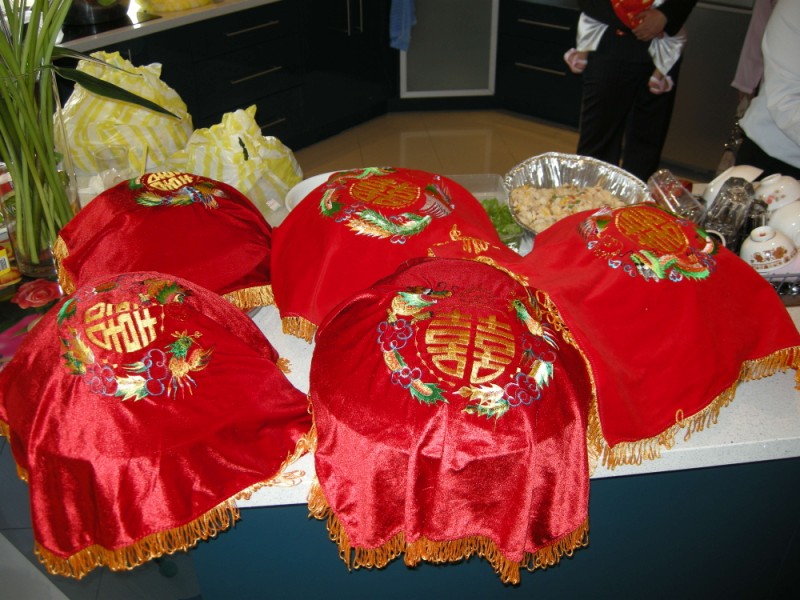
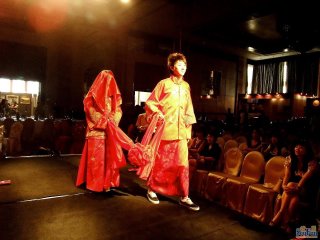
Befriending a Chinese colleague closely has busted a lot of myths with which I grew, primarily them being reserved or unfriendly. Going though her wedding pictures ( which took place 27 years ago in Shanghai), I could not with hold my surprise, of the similarity between their wedding and our desi one , in terms of similarity of rituals, elaborate celebrations and expenditure.

“Our weddings are extremely elaborate and interesting.”  remarked my friend.

Exactly like us desis, Chinese believe that marriages are arranged in Heaven, and merely completed on Earth. They believe the predestined couple is tied with red string in the Heaven, long before the marriage occurs on Earth.

For them too, it is a union between two families, not just two individuals.

The traditional Chinese too have elaborate rituals of sending marriage proposals to the girls family. Once decided, it is a must for the two families to consult the fortune teller ( as a Jyotishi in Hindu wedding) about the auspicious date for the wedding.

The invitation cards are as elaborate and showy as ours.


Red color is overwhelmingly predominant in every Chinese wedding, as it represents luck and happiness.

The celebrations begin days before the actual ceremony.

Days before the wedding, the bride is expected to stay away from the eyes of the general public, in isolation.

The groom’s family brings gifts to the bride’s home days before the wedding,  while the bride’s family returns the gifts along with clothes and gifts to the groom, his parents and unmarried siblings.


Like us desis, the bride’s side is also expected to deliver dowry and money to the grooms home, the amount of which  states the dignity and position of the bride’s family.

On the day of the wedding day, as  she gets ready, the bride goes through a hair combing ceremony where a ‘lucky’ woman, mostly a married woman ( = our suhagan) combs her hair 4 times. Each stroke carries a special meaning. The first combing blessed the marriage to last a lifetime; the second, a harmonious marriage; the third, many children and grandchildren ; and the fourth, good health and fortune.


The bride adorns a red gown, red shoes and covers her face with a red veil.

However, the groom, unlike our groom, wears red robe, red sash. A capping ceremony like our ‘sehra bandi’ takes place where his head is covered with cypress leaves by the father.


Amidst the banging of gongs, drums and firecrackers, ( like an Indian baraat),  the groom leaves for the bride’s house in a procession.


As the groom steps in the brides house, the brides sisters & friends stop his way and bargain for entry towards the bride.

The bride leaves her home for the wedding arena under a red umbrella to ward off evil.

However the basic difference between the desi and Chinese wedding is the main ceremony.

They do not have any written contract or chanting of verses.
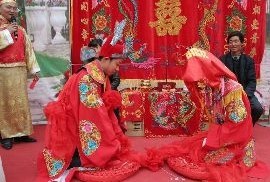
The couple goes on its knees and bows thrice- for the Heavens, the ancestors and their parents. They even bow to each other in a gesture of promising faithfulness to each other. There are no spoken vows.


Like us desis, the banquet is extremely elaborate, with 9 or 10 course meals.

However unlike us, each meals signifies something. First course is pig which signifies virginity, followed by others eg   fish & seafood for wealth and abundance,  pigeon for peaceful marriage, and whole chicken head for togetherness.

For details in the 10 courses: http://www.boneats.ca/2010/08/food-culture-chinese-wedding-banquets.html


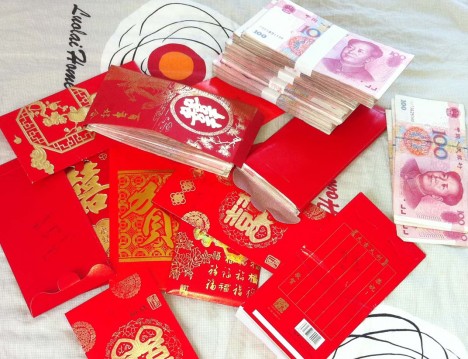
The preferred presents like us desis are generally in  cash, which has to be placed  in red envelopes called Hongbao. The amount of money given varies upon the closeness of the giver to the bride-groom.


After the ceremony and the feast, the bride serves her  in laws  tea, holding with both hands, showing a gesture of her service and faithfulness to her new family.


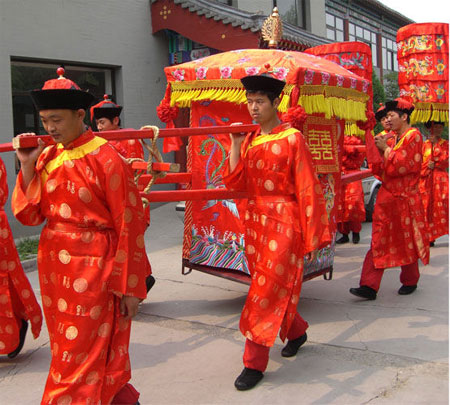
What excited me most was to know that like our old tradition, the Chinese bride also leaves for her husbands home in a hand held  carriage quite like our doli.


Although now only a few girls like this tradition, and now this has largely been been replaced by more posh mode of transport i.e. a car which is mostly extensively decorated with fresh red roses.


Some of the rich who can afford prefer a red car itself.


The ‘bridal bed’ as it is called is arranged quite a few days in advance in an elaborate ceremony, taking care the direction of the bed. The details here too depend upon the affordability of the groom. However all have traditional red bedding and are spread with fruits on it, which signify fertility— red dates, litchis and longans.

In the next morning, the bride gets up early to prepare meals for the new family.

Three days later she visits her parents along with her husband, as a special guest.

The picture that inspired me to write this blog ( Courtesy Tahir Hashmi) was this, which reminded me of the Hindu wedding’s pheras:


“Many of the Chinese youngsters are now  getting more fond of  traditional wedding, after two decades of having had more modern weddings.” added my friend.

(Special thanks to my friend Jenny for the details & helping dish out pictures)

Nihari, here and there


The story goes back to two decades ago, when as newlywed and I had just arrived in Karachi.
An aunt ( Phuphi) of my husband invited us for a dinner on some ‘special’ delicacy (in her own words). There were a few other dishes, but all the focus was on the ‘special’ dish.

In the first glance, it looked like a thick curry with some extra large pieces of boneless meatloaves lying in it. Garnished with greens and some baghar, the aroma was appetising, I must admit.

While eating my Phuphi-in-law asked; “Do you know what this is?”
I said, “Some salan (curry) I guess.”

That must have really hurt her. She twisted her mouth with a wicked smile. My husband, too, looked wide eyed at me. So did everyone else present there. They all had that ‘poor her’ expression on their face, which generally Pakistanis had in 1970s, when their austere Indian cousins visited them.

“You don’t know this?” someone asked.
I was regretting to have guessed. It wasn’t the regret of having annoyed the aunt, but of those piercing eyes that were focussed on my ignorance of the dish.

My husband came to my rescue, “Phupho Amma, she isn’t very fond of non vegetarian food. So perhaps she doesn’t have any idea.”

My younger brother in law and a friend teased: “Yeah, bechare Indians don’t get to eat gosht so often, and beef is absolutely a taboo for them. ”

PhuphoAmma charged on me in a mother-in-law tone, “Tum kaisi Dilliwali ho, tum Nihari nahin janteen” (What sort of Delhiite are you, you are not aware of Nihari?)

I screamed before I could check my volume, “Nihari? This is not Nihari.”

Before I could blurt something else, I saw my husband giving me a look to shut up. And like an obedient new wife, I did, but with a huge turmoil within.

Back to our room, my husband assured me that perhaps this was homemade and hence not as delicious as the Khan ki Nihari famous in Karachi. Over a period of few months, we tried Niharis at several places, but I could not find what we in Delhi called  Nihari.

I admit I wasn’t very fond of Nihari till then, nor was I really conscious of Nihari being associated with Delhi. In Delhi, I had heard from my father that Nihari is a Avadhi delicacy, from Lucknow.

Anyways I wasn’t a foodie especially for non vegetarian delicacies, nor a culinary expert, nor did I have any ambitions to be one. It was an open secret at home that I had chosen to be a medical professional, so that it would save me from domestic responsibilities, especially cooking. (It turned out to be an illusion, though. But, that’s another story to tell, anyways)

Knowing very well that I was marrying a goshtkhor( meat-eater) Pakistani who was fond of good food, and who’s mother was a culinary expert, I had made it pretty clear to him that I don’t like to cook.
He had in all sincerity reassured, Anda to fry karna ata hai na? Kaafi hai.”

But as we hunted for the real Nihari, my craving for Dilli ki Nihari became stronger.

After an year and a half when I first visited my parents in Delhi, apart from the million other things on list, one on the top was to go to Jama Masjid and relish ‘the’ Nihari, which is sold right at the corner of Matia Mahal, just a furlong from Dadi Amma’s house.

As the tradition goes, Nihari is cooked  from the special shank meat of the beef, with trots in over two dozen spices, the most dominant being the saunf (anise seeds) which gives it the aroma. on slow heat and takes  several hours to get tender.  Hence usually over night as shab degh. The degh( a giant round bottomed pot)  is opened at certain times only –mostly at dawn around 7am or now, even at dusk (at Maghrib). And one has to be there at the right period of time to be able to grab it, otherwise degh lut chuki hoti hai.(It gets sold out fast).

 True to its name ‘nihari’ means pertaining to daytime, it is usually eaten at breakfast, at dawn.
Many a times I had seen Dadi Amma or any of the phuphis in the household send one of the shagirds ( disciples who come to her for learning Quran), a night earlier, to keep the pan with the shopkeeper. And as the cook would  the degh early next morning, the he would kept aside some in  her reserved pot.

The mere mention on phone of my desire to eat Nihari was enough, Dadi Amma promised to keep it reserved for me. I remember her doing the same for us with Shaadi ka Qorma and sheermal whenever any left overs arrived from a kin’s wedding, knowing that we craved for it. (Aah Dilli ka Qorma is another delicacy, not seen anywhere, which deserves another blog).

At first opportunity, we went to see Dadi Amma and others at our ancestral home in Purani Dilli.

Dadi Amma’s place, is a  house, typical  in the walled city. There is a sehan ( courtyard) at the entrance which leads to a room inside another , both of which used to have spic white chandnis spread wall to wall, and no sign of any furniture.

In addition to sleeping over, eating at Dadi Amma’s place had always been a fascinating experience. With a dastarkhwan( sheet to lay the food)  laid on chandni( the spotless white spread on the floor to sit) covered floor across the length of the room. I wonder why, but as kid, I remember vying for a place at the corner of the spread. Some of the senior family members, referred to the plates, in salees-shusta Urdu, as rakabis. And although it had since long become a routine to use glasses for water, there would always be a couple of silver plated copper katoras sitting on dastarkhwan. (Drinking water in katoras (wide bowl) was an old tradition of purani dilli).

That day too, we sat at the dastarkhwan all set to enjoy Nihari. My agenda was personal, while others were eager to see my husband’s response to Nihari. (Thanks to my negative publicity of Karachi Nihari)

With red glazing, aromatic nihari in sight, we waited till the boy brought in hot crispy nans wrapped in newspaper straight from the tan door in the gali, just a few steps away.

The first bite was like a dream come true to the nerve endings of my olfactory and taste buds. But in just a couple of seconds to my tongue, it was a reign of terror unleashed. The poor tastebuds caught fire and laid their arms in the next few bites. As if in a bid to dampen the fire, the eyes started to pour water. But I had to put a brave front, and no matter how hot the tongue burned, the ego stood firm to confirm, this is the  true “Nihari”.

All ears, including my red hot ones, were dying to hear my ‘Pakistani’ husband’s reaction on the ‘Indian’ dish. Being courteous, he remarked, It is delicious, but a bit hot for my liking.”

However, later when we went home, he revealed lightly, that he still preferred his Karachi ki maghaz Nihari. I was devastated, absolutely.  But soon rationalised that, perhaps his tastebuds, and his brain cells were conditioned to call that thick curry as Nihari. His loss not mine, I consoled myself.

My ego wanted to have this Nihari more often, though a bit less spicy, so I got keen to get its exact recipe. My mother could not believe her ears that a cooking rebel like me was asking for a recipe. She and a phuphi had their recipes to offer, but they all admitted not being experts in the dish.

It is generally a tradition in purani Dilli that women do not cook Nihari at home and when needed, they just get it ready made from outside. Probably apart from convenience, it is because of the non availability of beef and also that it needs to be cooked overnight. In Delhi we have gas cylinders, not gas through a pipeline like in Pakistan. (In the days I lived there, cylinders too were rationed).

My Dadi Amma’s wisdom guided me to go to Rehmatullah (the cook and owner of the restaurant) and get the recipe from him.

Being in a flourishing business, Rehmatullah, was unwilling to part with his secret recipe. However, knowing that I wasn’t living there, he was kind enough to offer some from the readymade mixture of spice powder, that he prepared for his recipe. He was generous, and his masala lasted almost an year, till my mom found a place which sold indigenous masala.

Repeated cooking over the years for friends and family has given enough expertise and repute of being able to cook what most taste buds recognise as good Nihari.

Now I can claim to have mastered the details of the difference between the maghaz nihari they make in Karachi and the nalli nihari that we Dilliwalas have in Delhi. (However, I wonder, if there was any difference in them, earlier).

And now that the froth of my ego has flattened quite a bit, I am able to accept the Karachi one as a different version of Nihari, which acquired its own distinct character after crossing the border.

Unfortunately, now in Delhi, even the Muslims residing outside purani Dilli do not seem to yearn for Nihari during the breakfast, while in Karachi, Nihari seems to have taken the place of a national dish which is available at any hour of the day and at every corner of the city. But it still manages to retain the tag of being a Delhi dish.

Interestingly, instead of suspecting some secret readymade masala, most of my kin and friends from Pakistan attribute ‘my’ Nihari flavour to my Dilliwala origins.

Even more interesting is the secret, that it was in Pakistan that I was made to realise for the first time that I was a Dilliwali. And thanks to the Dilliwala tag that was thrust upon me , I now love it and quite often brag about it.

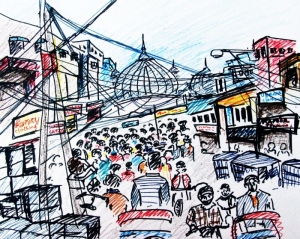
PuraniDilli- sketch by Shilpa Wadhwa

“O God, to those who have hunger, give bread, and to us who have bread, give the hunger for justice.” ~ Prayer from Latin America


A PLEDGE:
Let us make this Ramadan,
special,
by making our Iftars,
simple,
So that we may,
share
with the hungry and the poor
some food
and loads of love.


FOOD FOR THOUGHT:

“Eating alone is a disappointment.
But not eating matter more,
is hollow and green,
has thorns like a chain of fish hooks,
trailing from the heart,
clawing at your insides.
Hunger feels like pincers,
like the bite of crabs;
it burns, burns,
and has no fur.
Let us sit down soon to eat
with all those who haven’t eaten;
let us spread great tablecloths,
put salt in lakes of the world,
set up planetary bakeries,
tables with strawberries in snow,
and a plate like the moon itself
from which we can all eat.
For now I ask no more than the justice of eating.”

~ Pablo Neruda, Chilean Poet

“A hundred years from now
it will not matter
what your bank account was,
the sort of house you lived in,
or the kind of clothes you wore,
but the world may be much different
because you were important
in the life of a hungr
y child.”
~ Author Unknown

“To a man with an empty stomach food is God” — Gandhi

Coffee


On the eighth day God created coffee.

Legend of coffee discovery :

Kaldi, a goatherd, lived in Abyssinia around AD 850. One day he observed his goats behaving in abnormally exuberant manner, skipping, rearing on their hindlegs and bleating loudly. He noticed they were eating the bright red berries that grew on the green bushes nearby.

Kaldi tried a few himself, and soon felt a novel sense of elation. He filled his pockets with the berries and ran home to announce his discovery to his wife.

“They are heaven-sent,” she declared. “You must take them to the Monks in the monastery.”

Kaldi presented the chief Monk with a handful of berries and related his discovery of their miraculous effect.
“Devil’s work!” exclaimed the monk, and hurled the berries in the fire.

Within minutes the monastery filled with the heavenly aroma of roasting beans, and the other monks gathered to investigate. The beans were raked from the fire and crushed to extinguish the embers. The Monk ordered the grains to be placed in the ewer and covered with hot water to preserve their goodness. That night the monks sat up drinking the rich and fragrant brew, and from that day vowed they would drink it daily to keep them awake during their long, nocturnal devotions.

Another account suggests that coffee was brought to Arabia from Ethiopia, by Sudanese slaves who chewed the berries en route to help them survive the journey.


“As soon as coffee is in your stomach, there is a general commotion. Ideas begin to move…similes arise, the paper is covered. Coffee is your ally and writing ceases to be a struggle.”
~Honore de Balzac (1799-1859)

Common adverse effects: Insomnia, headaches, irritability and nervousness.

Daily recommendations( by Health Canada):

The daily dose of 2.5 mg/kg body weight would not cause adverse health effects in the majority of adolescent caffeine consumers.
For women of childbearing age, the recommendation is a maximum daily caffeine intake of no more than 300 mg, or a little over two 8-oz (237 ml) cups of coffee.
For the rest of the general population of healthy adults, a daily intake of no more than 400 mg.

Source: http://www.selamta.net/Ethiopian%20Coffee.htm
http://www.hc-sc.gc.ca/hl-vs/iyh-vsv/food-aliment/caffeine-eng.php

Pornography vs. Picasso


If this Junk Food was Pornography

Then this Healthy Food is Picasso.

Some crackers for the 12 year old within us:

#Most vegetables are something God invented to let women get even with their children. A fruit is a vegetable with looks and money. Plus, if you let fruit rot, it turns into wine, something brussels sprouts never do.

#Apple and pear, aren’t just fruits. They are body types too. Hey, I’ve got some advice. If you look like an apple or a pear, eat an apple or a pear! Dr Phil

#My Hubby says: I’m not saying my wife’s a bad cook, but she uses a smoke alarm as a timer.
I say: Heyy, am such a great cook that even the smoke alarm cheers for it !

Some real food for thought:

The only way to keep your health is to eat what you don’t want, drink what you don’t like, and do what you’d rather not.
~ Mark Twain

Blog Inspiration Quote:
We think fast food is equivalent to pornography, nutritionally speaking.
~Steve Elbert

OH GETTING THE MEN IN MY LIFE TO RELISH VEGGIES!


I have yet to find a yet more daunting task than to get the two men in my life and my home  to enjoy the vegetables that sit on my dining table.

Right from the creases on their foreheads when the news spreads outside the kitchen that veggies are on the menu card that day, to the whole process of cooking and then laying it on the table is what I call a ‘domestic Jihad’.

Suddenly a much cooperative and mild husband turns into an embodiment of a mean ‘zaalim shohar’ and a son into a ‘chauvinist ruffian at their mere sight , what to talk of the tasting act.

The 20 year old DRAMA gets enacted each time with the ditto dialogues—

ACT One

““I don’t mind aloos and bhindis. But this stuff—no, no doctor ne mana kiya hai sabzi khaane se.”” That says a man who is himself playing doctor, doctor since past 25 years.
And then my typical jala bhuna dialogue—“ Haan haan, when the coronary arteries will get 60% blocked, doctors will reverse the veggies restriction”.

ACT One ends.

For years I took this as a welcome opportunity to flaunt my hubby of his Pakistaniat and the love for Niharis, Haleem or infact anything that had the ‘animal protein’ in it. I even got mean at times like a typical nagging wife to accuse that only if his mom had insisted on him to eat veggies, I wouldn’t be suffering today. And he left no chance to retort at us ‘miskeen Indians’ for having been raised on sabzis like ‘bakris’.

Who knew that God was watching us too.  And HE decided to send me a son who is a replica of his dad when preference of veggies are concerned. More scornful and even more frowning is his face at the sight of them than was of his father in his prime years.

And adding fuel to the fire—anytime he scorns at the veggies my husband gives me a nasty smile which speaks volumes of his “A Musa for the firaun in me”  disdain. But am too smart to even take notice of his smile and cleverly act dumb to his expressions.

And then continues the ACT Two of the age old drama—

“If you wont eat veggies your wife will accuse your mom of not having taught her son to eat healthy”, remarks my husband

Now both my son and I act dumb.

In fact my son gives his Dad a look which speaks of –“Look who’s talking.”

Thankfully as the husband enters the fold of middle age—he seems to have softened down over his anti veggie stance and now eats some more veg- things quietly, and I too act as if I haven’t noticed , just thanking my God and my perseverance for it.

However, the son is at his peak of the anti veggie stance. But the difference is that he does not openly accept his hatred for the veggies like the dad used to and claims he eats salads—‘which are fresher and healthier than cooked veggies’. And that, ‘they preserve their vitamins more and in the cooked ones the vits are destroyed’.

Fair enough—he isn’t absolutely inaccurate but then time and again I keep introspecting why is it that men naturally don’t prefer veggies than women. My husband claims that it is the muscle mass in men which compels then to take “high quality protein” which only animal protein can supply. How far is this scientifically correct—only research can prove.

Every quarrel at the table with my son on veggies makes me keep brooding for hours as to how can mums get their sons to relish the sabzis.

What is the secret formula?

Or who are those men who enjoy veggies over non veg.

At least in my surroundings and upto third-cousins—I have yet to find one.

Even my supposedly ‘miskeen Indian” kins are all carnivores leave aside being omnivores.

Hard brainstorming has made me reach a wild guess that it is the taste that needs to be correct.

And the taste in any food lies in how it is prepared. Our problem amongst muslim households (whether Pakistani or Indians ) is we cook vegetables like gosht—with lots of spices and making it mushy.

Why is it that the same anti-veggie son of mine takes away all the veggies while eating, but when he gets to eat Chinese food—he chews down every bit, be what—lettuce, carrots, pepper, brocolli etc.

The secret perhaps is that —it is just cooked—and maintains the crunchy feel of the veggies. And then the original flavour of each veggie is not killed by the loads of spicy curry powder that goes with it in our usual meal.

Cabbage, carrots, peppers, onions in their visible form over a pizza or a pasta go almost unnoticed by my men. But if comes a desi sabzi—they don’t even bear to look at it.
Innovative cooking and a few tricks, can do wonders in getting the men in your family swallow veggies.

When cooking any of the above mentioned stuff I try to add as many veggies as possible so that they will end up being consumed. I even try to piece the veggies in Pasta so tiny that taking out becomes a harder exercise than to swallow it down the throat.

As for the logic that kids should be trained from the early age to eat veggies, has failed miserably in my household. Except for French fries there were no veggies that my son would look at even instinctively. I wonder if this is due to some fault in my weaning of my baby or is it the general norm in most house holds—I have yet to explore.

Yes, one thing worked wonders for my son and that was the example of the cartoon Popeye, the sailor man, who made my son happily eat spinach till he was naive—the day he became cunning—he started questioning the taste of the same erstwhile delicious spinach. And despite millions of viewings of the Popeye cartoons during the feeding time of my son—here I am back to ‘square one’ with absolutely no liking for the ‘green mess’ which my son calls the spinach.

A son who I proudly call an ‘exceptional’ one because of his strong views against drugs, smoking and even fizzy drinks at the age of 17.

But alas, can’t convince him to love veggies.

Any new ideas? Please, I am in dire need of ‘em…

ILMANA FASIH

21 July 2009