Open up your mind and your potential reaches infinity…

Archive for the ‘CULTURE’ Category

The Right to Dream by Eduardo Galeano


The Right to Dream: Poem written in Spanish by Eduardo Galeano. Uruguayan writer on political and economic issues and the author of Upside Down.

In 1948 and again in 1976, the United Nations proclaimed long lists of human rights, but the immense majority of humanity enjoys only the rights to see, hear and remain silent. Suppose we start by exercising the never-proclaimed right to dream? Suppose we rave a bit? Let’s set our sights beyond the abominations of today to divine another possible world:

[image, unknown] the air shall be cleansed of all poisons except those born of human fears and human passions;

in the streets, cars shall be run over by dogs;

people shall not be driven by cars, or programmed by computers, or bought by supermarkets, or watched by televisions;

the TV set shall no longer be the most important member of the family and shall be treated like an iron or a washing machine;

people shall work for a living instead of living for work;

written into law shall be the crime of stupidity, committed by those who live to have or to win, instead of living just to live like the bird that sings without knowing it and the child who plays unaware that he or she is playing;

in no country shall young men who refuse to go to war go to jail, rather only those who want to make war;

[image, unknown] economists shall not measure living standards by consumption levels or the quality of life by the quantity of things;

cooks shall not believe that lobsters love to be boiled alive;

historians shall not believe that countries love to be invaded;

politicians shall not believe that the poor love to eat promises;

earnestness shall no longer be a virtue, and no-one shall be taken seriously who can’t make fun of himself;

death and money shall lose their magical powers, and neither demise nor fortune shall make a virtuous gentleman of a rat;

no-one shall be considered a hero or a fool for doing what he believes is right instead of what serves him best;

the world shall wage war not on the poor but rather on poverty, and the arms industry shall have no alternative but to declare bankruptcy;

[image, unknown]

food shall not be a commodity nor shall communications be a business, because food and communication are human rights;

no-one shall die of hunger, because no-one shall die of overeating;

street children shall not be treated like garbage, because there shall be no street children;

[image, unknown] rich kids shall not be treated like gold, because there shall be no rich kids;

education shall not be the privilege of those who can pay;

the police shall not be the curse of those who cannot pay;

justice and liberty, Siamese twins condemned to live apart, shall meet again and be reunited, back to back;

a woman, a black woman, shall be president of Brazil, and another black woman shall be president of the United States; an Indian woman shall govern Guatemala and another Peru;

in Argentina, the crazy women of the Plaza de Mayo shall be held up as examples of mental health because they refused to forget in a time of obligatory amnesia;

the Church, holy mother, shall correct the typos on the tablet of Moses and the Sixth Commandment shall dictate the celebration of the body;

[image, unknown] the Church shall also proclaim another commandment, the one God forgot: You shall love nature, to which you belong;

clothed with forests shall be the deserts of the world and of the soul;

the despairing shall be paired and the lost shall be found, for they are the ones who despaired and lost their way from so much lonely seeking;

we shall be compatriots and contemporaries for all who have a yearning for justice and beauty, no matter where they were born or where they lived, because the borders of geography and time shall cease to exist;

perfection shall remain the boring privilege of the gods, while in our bungling, messy world every night shall be lived as if it were the last and every day as if it were the first.

 First published: http://www.newint.org/features/2002/01/05/rave/


Bole tou Mitho Laage –Rajasthani Folk Song


Rajasthani is my mother’s mother tongue. Although I love music from all cultures, Rajasthani music occupies a special chamber in my heart.
As Papa who was a hardcore urban Delhiite, was totally in awe with the richness of Rajasthani culture. He often repeated, “The Rajasthani desert terrain and harsh weather conditions is made bearable by its inhabitants with use of vivid colors, arresting music and affable people.

Most Rajasthani songs so easily convey passion through minimal pageantry. Here is a beautiful folk song from Rajasthan with simple lyrics that exude so much affection:

Bole to meetho laage,
[Bolti hai tou meethi lagti hai]
[When she speaks, she sounds sweet]
Hasey to pyaaro laage,
[Jab muskurati hai tou pyari lagti hai]
[When she smiles, she looks adorable]
Bethodo sove mhaare aanganey,
[Mere Aangan me baithey hue tum suhaati(achhi lagti) hai]
[She looks pleasant, sitting in my courtyard]
Saanwri surat jero jaanida mhaaro,
[Saawli surat jaisa mera yaar hai]
[Wheatish complexioned-such is my beloved]
Bethodo sove mhaara aanganey,
[Mere Aangan me baithey hue woh suhaati(achhe lagte) hai]
[She looks pleasant, sitting in my courtyard]
Allah aabaad raakhey, Maula abaad raakhey,
[Allah/Maula tum humesha khush(aabaad) rakhey]
[May Allah/God/Almighty keep her prosperous(happy) always]
Bethodo sove mhaara aanganey,
[Mere Aangan me baithey hue wo suhaati(achhi lagti) hai]
[She looks pleasant, sitting in my courtyard]

However my favourite version of this song is this one by Barmer Boys:

Preet se preet lagi, piya door dishaa mutt jana,
Baso hamari nagri mein, hum mange tum khao
Duniya bari baawli, pather poojan jaaye,
Ghar ki chakiya koi ni puje, jiska peesa khaaye !


I AM HALF YOUR WORLD


WAITING TO REALIZE HER POTENTIAL

I am half your world

I am a Goddess
A bearer of your continuity
An embodiment of sacrifice
A symbol of love and compassion

I am a mother
A mirror of your emotions
An answer to your worries
An umbilical cord of your needs

I am a wife
A torchbearer of your love
A pinch of spice in your life
A house keeper of your heart

I am a friend
A keeper of your secrets
A shoulder for your cries
A cool breeze in your life

I am a sister
A receiving end of your pranks
A quarrelsome and doting pal
A buddy who annoys yet cares.

I am a daughter
A bundle of your joy
A twinkle of your eyes
A reason for your smiles

I am a daughter, a sister and a friend

Yet you,
Strangulate me in the womb
Mourn me on my birth
Feed me  on leftovers
Raise me up as a burden
Exclude me from  inheritance

I am a wife, a mother and a Goddess:

Yet you ,
Objectify my body and my spirits
Clip my wings and my freedom
Burn my face and my dreams
Rape me and my ambitions
Kill me and my aspirations.

And yet, so I remain
Half  your world.

No, not the better half,
I am the ailing half,
The crying half
The other half.

IlmanaFasih

March 8, 2011

PS:  Special thanks to Fatima for teaching me the nuances of drawing a face.

AN EVENING WITH NASEERUDDIN SHAH AND ISMAT APA


Very rarely does one feel  so overwhelmed and short of words to express one’s feelings.

Today since the past 20 hours or so, I know exactly how it feels to be on ‘Meth’ or Speed’ or whatever you choose to call that amphetamine the psycho stimulant.

Just out of the blue and at a very short notice a darling friend and an old neighbour of mine from Delhi, called to tell me that she has an extra ticket for a show running in Brampton named ISMAT APA KE NAAM by Motley Theatre of Naseeruddin Shah & co.

I had no choice but a “Yes” despite being down with common cold, a -20 degrees outside at 8 pm in the evening, in a city next to mine. I knew it would be a worth the effort experience by the virtue of the name Naseeruddin Shah, but never imagined that it would be to this extent.

Gosh.
Naseeruddin Shah, neither because he is a Bollywood actor nor because of his theatre, but Naseeruddin Shah has been a ‘special’ person in my life since almost two decades and a half.

Being brought up in Delhi, with studying in the elitist of schools, I had missed studying and enjoying the pleasures of Urdu. This is one grudge I held towards my parents, though not anymore.

So miserable was the Urdu of us siblings, despite parents being champions in the language, that once when one our neighbour asked my 20 year old brother if his ‘hamsheera’ was studying medicine, he sheepishly replied,

“ Sorry Uncle I am not married yet.”

Still a butt of joke at home, but we sibs have come a long way from that . Thanks to only one guy—Naseeruddin Shah. His serial Mirza Ghalib which ran on Doordarshan in the mid 80s got me into feeling that I hardly understood a quarter of what Jagjeet Singh was siniging. And hence the journey and the never ending love affair with Urdu poetry began. Rest is all history.

Coincidentally, hearing him speak once,  he had the same thing to say—he was a masters in English and learnt Urdu and passion for it after his obsession with performing as Mirza Ghalib.

So the evening began with a mesmerising Naseeruddin introducing the concept of story narration and that it would be in the words exactly as Ismat Apa wrote.

Before he introduced Ismat Khanum Chughtai, my image of this lady was of a white haired, grandmother looking,  who wrote plays and screenplays for movies.

What was news to me was the facts that she was a rebel and a feminist  of her times and always remained in controversy in life and even after her death in 1991. A multifaceted personality of an educationist, a reformer, a writer, a mother and a grandmother.

SHE LIVED HER WAY AND WROTE  HER MIND.

Her writings, he said, were bold enough that people thought she wasn’t a woman—just a man writing with a pseudonym of a woman. “Tauba tauba how can a woman write such things.”

Wikipedia introduces her as:
“She was considered the grand dame of Urdu fiction, as one of the four pillars of modern Urdu short story, the other three being Saadat Hasan Manto, Krishan Chander, and Rajinder Singh Bedi.  Her outspoken and controversial style of writing made her the passionate voice for the unheard, and she has become an inspiration for the younger generation of writers, readers and intellectuals.”

Naseeruddin made a passing mention of her most controversial story LEHAAF, which even the British in 1940s had banned. Later I read, it talked about lesbianism. Oops, to talk of it in 1940, she must be gutsy. I can’t write a story on it today.

Later I came to know through net surfing that some of her books are still banned in some Islamic countries for being ‘Fohosh’( lewd) including ours.

Wow,  Harold Robins can sell, but Ismat Chughtai is banned.

Three stories were narrated and enacted with excellent sound and music effects. Unfortunately photography was not allowed.

The first, ‘Chhui Mui’, enacted by Heeba Shah, is a story told through the eyes of a young girl observing events in her Bhabhi’s life. It contrasts the difficulty,  her rich, spoilt Bhabhi has in giving birth to a child against  the calm and dignified manner in which an unknown poor woman gives birth to her baby in a train compartment. The graphic details of a childbirth and its enactment were in no way embarrassing.

It basically, was a satire on the pampered life of the elite where in everything is treated with a fuss while the have-nots go through the same experience in a matter of fact manner. And the latter turn out to be winners in this strife of life.

The second story, ‘Mughal Bachha’, enacted by Ratna Pathak Shah, tells the story of beautiful young flawless lass  Gori Bi, who is married to a proud and headstrong youth  Kaale Miyan. The story gently pokes fun at the successors of the Mughals at the time when the glorious days Mughal Empire were over– their lifestyle, their extravagant habits and their descent into penury. It also describes the unusual relationship  between Gori Bi and Kaale Miyan who, because of the ‘war of egos’, never consummated their marriage.

Being teased by the girls of the contrast between their complexions , he had decided that he will not bow down to her.

Kaale Mian being a Mughal Bacha was determined that he would have her obey his orders  of  ‘ghoongat uthao’ and will make her lift  the veil herself.  While Gori Bi firmly believed that  it was  the prerogative of her dulha to do that.  And in this battle of egos, of  ‘pehle aap, pehle aap’   they missed their ‘train of a married life’.

Oh boy, the comical acts of Ratna Pathak  enacting  both as Gori Bi and then Kaale Miyan, gave  stomach cramps with  hysterical laughter.

The muhawrah: ‘Rassi jal gai magar bal nahin gaya’ befits Kaale Miyaan so well.
And such people are a plenty in our society even to date.

The enactment couldn’t have been done by anyone better than by Ratna Pathak. Her clear shusta Urdu, her flawlessly durust  ‘sheen’ ‘qaff’ must have left  a lot in the audience, guilty of theirs.

Her gharara and  chunna dupatta attire was so reminiscent of the dadi amma  times in Jama Masjid in Purani Dilli.

Unfortunately both the stories met  with tragic ends.

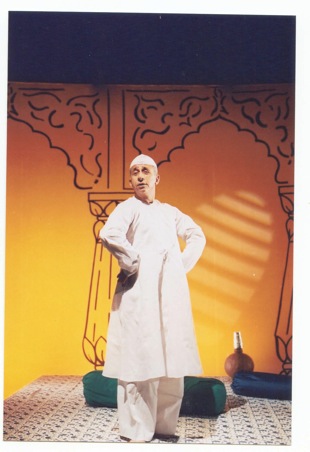
The third story, ‘Gharwali’, was the best and the longest of the three. It had to be so,  after all it was narrated and enacted by none other than Naseeruddin Shah.

The story explores the nature of the man-woman relationship, marriage, the status of women, the commodity that a woman is considered in our society.  And best of all,  the touching truth of how even a ‘bazaroo’ woman aspires to have her own home and a loved one who is possessive of her.

With sufficient doses of social satire, drama and earthy humor – definitely this story too must have raised very many eyebrows and created a  furor in the 40s. Although touching on the issues of –  ‘love’,  ‘lust’ and  ‘lived in’ relationships , this story was in no way vulgar or filthy.

It had the audience engrossed throughout. Naseeruddin Shah’s antics and the expressions created a fit of laughter and looked like a stand up comedy at times. Mirza ji’s  continual ‘tug of war’ between ‘to have’  Lajjo  or not in his life as his beloved, was something  words cannot describe.

Never could one afford a moment off focus,  to miss the expressions on his face. Naseeruddin sailed so beautifully and comfortably in the multiple roles from  a carefree, youthfully  spirited, playful, seductive  yet innocent maidservant Lajjo to  a  nervous, old, ever confused, shy yet desirous chronic  bachelor Mirza,  to various other minor characters. His performance  was nothing short of  being brilliant and  captivating.

I did not want the story to come to an end.

Thankfully, this story despite the turbulent events in the middle, had a happy ending.

All the way back , instead of calling home to check if kids were okay, I was lost in the stories and just kept smiling at Naseeruddin Shah’s antics.

I came home and googled on the net about details of Ismat Chughtai till late night.

Downloaded the story LIHAAF but sadly could get only in English translation. Went to the library today morning to get the Urdu collection of her stories.

I did not even check what was happening to Gaddhafi or Raymond Davis. I am perhaps over them and moved on with Ismat Apa.
Saw a status on Maheen ‘s wall talking about enjoying the short life to the fullest.

Hence, I  decide to temporarily bid the much needed  Bye Bye to the focus on politics,  till I finish Ismats Apa’s stories. No time to waste here.

Naseeruddin Shah has once again made me change my direction of life, with a new found love for Urdu literature and prose—to be specific Ismat Chughtai.

It is not the enactment or the feminist story lines, but  the bold, daring and yet so juicy, catchy, common man’s Urdu  in which the  stories are written by Ismat Apa that has made me fall for her writings.

How could she write such beautiful stories in the mohalle-wali  Urdu,  loaded with muhawaras,  which we so often heard from our own Dadi Ammas ?

And also, I have started to have a secret desire to be able to write in Urdu too.

Will I ever be able to do it?

Not sure.

THE EGYPT OF MY LIFE


Yet another progressive Arab country bounces back to restore back it’s lost glory.

Indeed, none other than Egypt and the way it is adjacent to Tunisia, it looks like a domino effect has started not just in the metaphorical but the literal sense.
But to say that Egypt bounces back because of a common border with the Tunisia would a shameful underestimation of Egypt’s potential.

Along with Tunisia, it is one of the few Arab countires with a strong, ancient history and a history of cultural and liberal values far detached from the religious tag . Yes,  Egypt probabaly would stand even ahead of Tunisia  in that respect.
The situatuion gives me jitters and also butterflies in the stomach.  Not because I have this appetite for international politics but because I have a special attachment to Egypt.

After India, Egypt has been living in my life, even more than Pakistan. Strangely though I have never lived in Egypt except for two visits for a fortnight each.

I woke up to this world with a name given to me by my Dad after being inspired by Egyptian names. His special love for Egypt was still fresh and alive in him when I was born. Just a couple of years ago had he returned from Egypt, after earning a PhD in Egyptian Liberal Nationalism and with Jamal Abdul Nasser his hero.

I grew up hearing his stories about Jamal Abdul Nasser, Egypt ‘s rich culture, their progressive intelligentsia,  their sense of humour,  the plays and most of all their music which was represented by none other than Umm Kulthum.

My dad who went to Egypt in the early sixties for a Phd, had gone there as a son of a maulvi (though he had been a rebellious communist too, in his early student life), but returned back some years later as a very progressive man with a wide horizon. He was in love with this place till the last moment of his life.

However when he returned to Egypt once again, in late eighties two things disappointed him terribly. He did get connected with all his old friends some of whom had gone ‘BIG’ in Egypt by then, one of them being the ex Secretay General of UN Boutros Boutros Ghali and Amr Moussa,  the foreign Minister then. They all gathered together bringing back the youthful memories.  Despite the 60’s era, he used  to tell us that, he had a couple of girls too in his group of friends who hung around  in the university together.

One of the two things that had disappointed him was the rise of Radicalism and that there were so many women now sporting Hijab and Niqab in the Cairo University. Though in the early sixties they could hardly see any.

And the second , which was no less disappointing to him, was that one of his extremely petite and pretty girl friends from the old group at that time, who was now the Head of the Political Science Department in the University, had gone at least four times as fat. They all joked about her and she too joined the hearty laugh without getting offended.

He was a very hurt man.

Egyptians have a terrific sense of humour, and if they don’t have any joke on politics, they laugh on themselves. But they make it a point to crack one joke a day –calling it a NUKTA. If anything it was their sense of humour my Dad carried back along with him on his return.

Anyhow coming to the point I wish to tell here that women have alwasy been very liberated and strong in Egypt since long. Not just in the few centuries but in the ancient Egypt 3000 years ago, too.       The woman, in the pharoanic times some 2000-3000 years ago, was far more liberated than many women in the current world in 2011.

While most women, in the ancient Egypt, played traditional roles of wife and homemaker, they had many liberties and freedoms that were denied to women of other cultures in the ancient world. Married women were the complete governors of their household, husband seldom interfered in the domestic matters. Though they did all the domestic chores themselves.
Legally too they were equal to men in terms of rights and could take a loan of her own, ask for divorce, buy property in her name and even free slaves at her will. She was given third of her husband’s property on his demise. And could even remarry without any stigma. Divorce was not seen as stigma either.

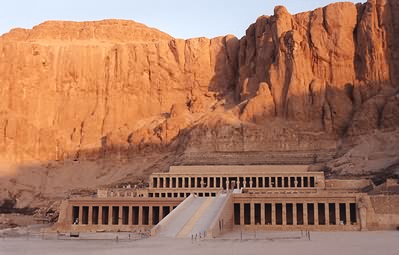
There are records of women holding positions of  Ministers to Pharoahs.  Out of many, one most important name is Queen Hatshepsut :18th dynasty1473-1458 BC . She ruled in the early part of the ‘golden age of Egypt’ which includes other Pharoahs like Tutankhamoun, Nefertiti , Akhenton.

Needless to mention Queen Cleopatra and her stories of power not only on her Kingdom but also her control on her sweetheart–Mark Antonius was also an Egyptian Queen. Narrating about their story would need several blogs.

Women in ancient Egypt, rightly or wrongly, took great pains to ensure their physical attractiveness and even women among the poorer classes relied heavily on cosmetics and lotions to retain their youth and beauty.

After all this glory of women did spill over in the contemporary world too. Although the impact of religion did lead to segregation in schools. veiling etc.  And with rise of Radicalism in the eighties it has gone worse.

I am not an expert on religion but have been told by my Egyptian friends that The MALKI SCHOOL which the Egyptian Muslims follow is pretty liberal. And they are far more progressive towards giving rights to women.The 1956 Constitution of Egypt was one of the most liberal on women’s right among the Arab and the Muslim World.

To be continued in next blog…..

Pardon me–got to leave.

Ilmana Fasih.

VEENA BEHN YOU ARE NOT ‘ME’


VEENA MALIK VEENA MALIK VEENA MALIK

Everywhere you turn, is the name of Veena Malik.

I close my eyes and your image flashes..
I slept last night and I dreamt of you.
Oh Veena you have captured my heart and mind like no one ever did before.

Yes you are a smart and a talented girl. I was a fan of your acting and mimicry in the HUM SUB UMEED SE HAIN when you hosted the show.You carried the roles of almost anyone from Benazir, to Kashmala Tariq to Fridous Awan to a two plait juniour school girl with such awesome accuracy.
When you left the show I missed you. I did not enjoy the show for weeks after that with the new anchor.

When you had your the affair with Asif, the alleged marriage and then the breakup–I didnt gossip about it . For it was your personal life . None of my business. Exactly the way it is none of anybody’s business to know about my personal life.
I really felt sorry for you when you split with Asif and you narrated your tragedy of abuse and your finanacial help to a broke Asif, even when you were ridiculed. And you know all those cricket loving guys turned against you and called you millions of names. Yes they were such immature  to take Asif’s side. None of them knew what was the inside truth in it. Your story was right or wrong, was none of my business.  For I looked at you only as an actress and Asif as a cricketer who got wickets for the team.  Nothing more nothing less.

And yes when the news came that you and Ali Saleem were selected for the BigBoss, I just heard it one minute and forgot it the next.  Not because I was jealous but because I have different priorities. I dont watch such shows. Yes you do such shows or millions watch them. It’s their choice.  None of my business to judge you or anyone.

What ever you did on the show–I just heard off and on, and sometimes stalked the link to check–people frowned at you and raised their eyebrows on your morality. Yes these people have small minds.  But to me it didnt matter. You are a showbiz girl. Showbiz is your bread and butter. I know, you have a huge family if unmarried sisters and a brother to feed.
Kudos, to you for being a ‘man’ of your family.
You seek publicity. People call it cheap publicity. Sometimes I also blurt out such unethical words. I’m sorry for that. I need not judge you. You only know how hard it is to survive in a competitive world,  that too of showbiz.  You only face the hardships that any woman has to face in an industry where a  woman is taken as a selling commodity.

You survived long in the show. Whatever method you used was your business. You had to do it and you had every right to choose how you survuved. If you flirted with whoever that tall guy was, you did it with yourself. You did not push me to sit in his lap. Those who called this haram –they are bigots and idiots. You will be answerable for   your deeds in the grave. They may not be sitting in some ones lap doing haram but they take bribes, tell lies and most of all bitch about you–it lis like they are eating the meat of their dead brother. They too will be questioned in their grave.

They gave you fatwas and fb pages erupted asking to not allow you to come to Pakistan–but you came.
Bravo. You are not a coward. You are a brave girl. You are a son to your mom. I commend her.

You came on the Kamran Shahid’s show . The clean shaven ‘God fearing’ anchor and the unkemptly bearded Mullah  both  interrogated you about your ordeal. You answered to the best of your aptitiude. Some blogger said you looked sexy–well he is an ass, you did not come there for glamour. You came to clarify yourself.

The mullah and KS asked you all kinds of stuppidd questions and emotionally blackmailed you for Pakistan or Islam. But MashAllah, you are so honest, you shut up those arguments by saying you represented you not  Pakistan not  Islam. You said in so many words that  you went there with your own agenda. Yes Allah  rewards honest and punishes the hypocrats. You definitely are not a hypocrat.

Yes it is first you and your family to be fed. If you are well fed then only can you love your country or your faith. Singing Qaumi Tarana  or  reciting Surah Rehman will not give you and your family the basic needs of food, shelter and clothing. If you have no money,  no Mullah or no Pakistani  patriot will bring food for you for free.  So it is no one’s business to judge you from the Islamic or Pakistani angle. You never took refuge with  anyone to save you. You never begged anyone to give you money. Instead you gave sooo much money to Asif that he couldnt even digest  it and hence puked it on your relationship.

When you could not bear no more you cried and screamed.  As a woman I did not like it.  A strong woman neither cries nor screams to put her views across. A strong woman makes others cry, instead.  Yes next time they make you cry, you make them cry in return.  But then it was you not me. I shouldnt have judged you again.

Yes I pity you for what hue and cry is going on about you. And the mullah with or without beards,  are crying fowl for you. But these bigots and Mullah, they are a pain for everyone, not just for you.   And these Fatwas are a peice of crap.  Allah doesn’t get pleased by such Fatwas.  This is their thriving business you see. So please dont give a hoot to these Fatwas.

These religious bigots  killed Taseer recently, they are after Sherry Rehman, they call Asma Jehangir all kinds of names. They hate Beena Sarwar for her values.Yeah, they even killed Benazir. They were the ones who hanged Bhutto too. They even killed Gandhi in India, yaar.  We are fighting them since years. We have to go on fighting them. Good you are taking them head on . I like it. Keep it up.

But then Veena you are so lucky, so many people have fallen in love with you. Girls dream of at least one person falling in love with them, and you have so many. Maa, you’re a lucky girl. I know you are getting so many SMSs with their love notes. Save them for life in the hard disk. They come pretty handy when you feel low for some other reason in you later life.

But Veena I have one issue with you.  No no, not with  you but with  all those enlightened chocolate hearts in which you have made a permanent home. They are so overwhelmed by you and your bravery that they see Veena Malik in every woman. Yes they see Veena Malik in me too.

But ‘m sorry. You are you and me is me.  And every woman in Pakistan is ‘SHE’ herself.  Everyone has her own story. Everyone has her own modus operandi to survive.

Please tell all your beloveds– I know you have many among the cleanshaven guys and hijabless gals– to please spare me and my other Pakistani sisters.

You have been fortunate to get fame, name, money, Asif, even sympathy.

Many many million of my sisters here dont get even a proper two full meals because their brothers are fed first.

You enjoyed such wonderful Indian cuisines in  the Bigboss.

They dont go to school because they have to look after their sibs. They cant even step out of the house.

You went all the way to Bombay, India to do Big boss.

No one asks them when they are married off to older men, whether they love the groom or  not.

You got married to your love  Asif by your choice and then you split,  then you will marry again by your choice ( Oh! now you have a huge choice).

No one comes to their rescue when they are beaten by their husbands, brothers, or fathers.

You got such overwhelming love and hearts melted  when the Mullah or Kamran just talked to you so rudely.

If my poor sisters oppose their parents or dont obey them they get killed in the name of  honour.

If you will get such threats you will fly back to India fast and be safe.

Nobody loves them, not even their fathers, brothers or husbands.

And you have sooo maaannnyyy beloveds.

So, Veena did you see now, there is no comparison between you and them.
You are you. They are they. Me is me.
We all have different stories . We all have different journeys.

Please tell these beloveds of yours, in whose chocolate hearts you reside, not to tag you to those poor women.
I know you are not doing this yourself.  But these silly infatuated souls, their love for you is blind. So they tag you with every woman of Pakistan. They are immature you  see. They arent grown up yet. But you are pretty grown up I know.

I understand their sentiments, but you see Veena, my poor sisters feel depressed that their plight is underestimated by comparison to you. Their issues are far more serious and deeper than yours. They have a tough day to day struggle of their survival.

Thank your stars for that. You are born luckier than them.

But then they have to live their fate and fight for their existence  far more hard. Their road of life is far far more rocky and their journey far too long.

Please I tell you to make a humble request to your  admirers,  from my behalf to untag my poor sisters of you.

If your status is sky their status is the bottom of a deep pit on this earth. You are far more fortunate.

You are you. They are they. Me is me.
So please tell your beloveds to untag you from my really oppressed sisters  for good.

Let us not mix the two struggles and entangle or  complicate the situation.

I love you too , Veena.
But behn you are not ‘me’.

Ilmana Fasih

P.S. This is written in light of the various articles and blogs that came up with valid sympathies for Veena`s moral policing. But am afraid they all went over board in linking her individual struggle to the struggle of millions of oppressed women of Pakistan. And that just because she screamed at the Mullahs on the TV she came to be the Champion of the Oppressed women en masse when she made it aptly clear that she is fighting for herself not as a Pakistani or as a Muslim.Yes she has every right to fight her battle the way she likes. To link her to the oppressed women of Pakistan in general is as deplorable as our Mullahs link each or our action to Islam or Pakistaniat.

We do not need Veena`s crutches  to fight for our liberal values–aptly said by Ali Naushad.

Bottom line: Some people are born oppressed, some get oppressed later, some have Oppression thrust upon themselves.

TINY COUNTRY, HUGE HISTORY


As the situation in Tunisia stays uncertain and their youth refuse to accept anyone at all from among the old faces and demand for ‘real democracy’, we the international community wonder where is Tunisia heading. Honestly speaking I am quite apprehensive that yet another progressive Muslim Arab country is moving towards chaos and anarchy. I hope my apprehensions bite the dust ultimately.

In the meantime I get in touch with my friend Ali Boubakri’s brother residing in Montreal to inquire about my friend and his family, especially about their septuagenarian mom who lives alone in a village and had always sent me my favourite homemade Tunisian cookies made out of millet flour and olive oil. Before I could express my concern over the phone he remarks’
‘”This world may see us as a tiny insignificant country somewhere in Africa, but we have always created history by coming out big ever since the recorded history 3000 years ago.”

For the next 5 minutes or so all he could get from my side was “ Yes”, “True”, “ I know”.
But to tell you the truth I did not know a nit about this place except that it is a pretty destination to go, place from where my ex colleague and friend Ali came from and that Tunisians form a bunch of decent intellectual Arabs. Yes I did know that Carthage, the famous ancient city , was in Tunisia.

As soon as I say to him “Ma’asslaam” and put the phone down my fingers reach to the laptop to Google Tunisian History.

And to my utter disbelief, surprise after surprise unfold of its ‘great glorious ‘ past and the great people this tiny land has produced.


Yes , the first and the most widely known historical fact remains that ancient city of Carthage which was built 3000 years ago and was known then as the ‘Shining city’ is located in Tunisia. It was a state that had given tough time to the Roman Empire then ( Roman Empire then being equivalent to what Uncle Sam is now) through three Punic wars. This was the only bit of information of Tunisian history that I knew from before.


The next on my search comes the name HANNIBAL—yes I knew who he was , when I read ‘Glimpses of the World History’ 25 years ago- but he was a Tunisian too like my friend Ali, I didn’t know.

He was a Carthagian military commander who led the Punic Wars against Rome. During the Second Punic War he had marched with elephants (somewhere in 800 BC) all the way from Carthage through the Iberian Peninsula( Spain & Portugal), climbing the Pyrenees and the Alps( as tough as Himalayas) to reach Rome. He had managed to occupy areas of Roman Empire for almost 15 years until he lost in the third war.
Hannibal is included in history in the ranks of Alexander the great and Julius Ceaser. He has been recognised as the greatest military tactician and strategist. Napoleon Bonaparte is said to have called him a ‘gifted strategist’.

His wars with Rome had created a terror in Rome. And it is said that for generations, Roman moms would tell their children brutal tales of Hannibal when they misbehaved. In fact, Hannibal became such a figure of terror that whenever disaster struck, Roman Senators would exclaim “Hannibal arte portas” ( Hannibal before the gates) as an expression of fear.

Next piece of information came as a total surprise to me. The city of KAIROUAN, established in 9th Century is the fourth most important city of Islam after Makkah, Madina and Jerusalem.It has been known in the past as the Citadel of Islam. A city which built the first mosque in Africa, the Great Mosque of Sidi-Uqba also known as the Great Mosque of Kairouan or the Masjid Al Kabir. Many locals affectionately say that seven pilgrimages to this mosque is considered the equivalent of one pilgrimage to Mecca.
The Great Mosque of Kairouan is considered as one of the most important monuments of Islamic civilization as well as a worldwide architectural masterpiece.
The city is small but has 85 mosques and 101 tombs of Holy men.


Last but certainly not the least aspect of Tunisian history dropped my jaw.
Lo and behold ! Ibn Khaldun, the forerunner of many social science disciplines too was a Tunisian.
( Why the heck didn’t I know this a few years ago when my Tunisian friend Ali nicknamed me ‘Indira Gandhi’ whenever I had a head on argument with my Saudi colleagues on Polygamy, and other issues related to women. Ali was the only male colleague who whole heartedly supported my take on these sensitive issues. I could have nicknamed him Ibn Khaldun in return).
Well, IBn Khaldun (1332AD/732AH-1406AD/808AH) was a Muslim and an Arab polymath.
(A polymath or , “having learned much”, is a person whose expertise spans a significant number of different subject areas).
Apart from being an Islamic theologian, Islamic jurist, Islamic scholar, a Hafiz Al Quran, he was also an astronomer, a historian, an economist, a mathematician, a nutritionist, a philosopher, a military strategist, and a social scientist. He is considered the pioneer of modern economics sharing the honour with Chanakya ( the ancient Indian genius of Economics).
Ibn Khaldun is considered the father of many Social Science disciplines, like the Philosophy of History, the Demography, Historiography and Sociology.
He is best known for his MUQADDIMAH (known in English as PROLIGOMENON) which was the Volume 1 of the KITAB AL IBAR, his book on universal history.


Unfortunately, like many other great thinkers, Ibn Khaldun’s ideas were far ahead of its time and hence they failed to be understood by his society.
Muslims slipped into dark ages and ignored and lost him for centuries altogether.

Thanks to the Renaissance and after it that the West rediscovered him in the 19th Century as one of the Great philosophers of Islam.

British historian Arnold J. Toynbee called the Muqaddimah “a philosophy of history which is undoubtedly the greatest work of its kind that has ever yet been created by any mind in any time or place. Much of his own work on world history was inspired by Ibn Khaldun.

The British philosopher Robert Flint wrote the following on Ibn Khaldun: ” As a theorist on history , he had no equal in any age… Plato, Aristotle and Augustine were not his peers.

I still can’t digest the fact that this great person, Ibn Khaldun, was a Tunisian.

No wonder why Tunisians are fighting for real democracy with Hannibal and Ibn Khaldun sitting in their genes.

Things would have been a lot different if we too had such genes.

Ilmana Fasih
21 Jan 2011

ADINKRA SYMBOLS


Adinkra are visual symbols, originally created by the Akan of Ghana and the Gyaman of Cote d’Ivoire in West Africa, that represent concepts or aphorisms. Adinkra are used on fabric, walls, in pottery, woodcarvings and logos. Fabric adinkra are often made by woodcut sign writing as well as screen printing. They also can be used to communicate evocative messages that represent parts of their life or those around them. There are many differeny symbols all have unique looks and meanings.

The secret of happiness ( from ALCHEMIST))


The secret of happiness ( from ALCHEMIST))
A merchant sent his son to learn the Secret of Happiness from the wisest of men. The young man wandered through the desert for forty days until he reached a beautiful castle at the top of a mountain. There lived the sage that the young man was looking for.
However, instead of finding a holy man, our hero entered a room and saw a great deal of activity; merchants coming and going, people chatting in the corners, a small orchestra playing sweet melodies, and there was a table laden with the most delectable dishes of that part of the world.
The wise man talked to everybody, and the young man had to wait for two hours until it was time for his audience.
With considerable patience, the Sage listened attentively to the reason for the boy’s visit, but told him that at that moment he did not have the time to explain to him the Secret of Happiness.
He suggested that the young man take a stroll around his palace and come back in two hours’ time.
“However, I want to ask you a favor,” he added, handling the boy a teaspoon, in which he poured two drops of oil. “While you walk, carry this spoon and don’t let the oil spill.”
The young man began to climb up and down the palace staircases, always keeping his eyes fixed on the spoon. At the end of two hours he returned to the presence of the wise man.
“So,” asked the sage, “did you see the Persian tapestries hanging in my dining room? Did you see the garden that the Master of Gardeners took ten years to create? Did you notice the beautiful parchments in my library?”
Embarrassed, the young man confessed that he had seen nothing. His only concern was not to spill the drops of oil that the wise man had entrusted to him.
“So, go back and see the wonders of my world,” said the wise man. “You can’t trust a man if you don’t know his house.”
Now more at ease, the young man took the spoon and strolled again through the palace, this time paying attention to all the works of art that hung from the ceiling and walls. He saw the gardens, the mountains all around the palace, the delicacy of the flowers, the taste with which each work of art was placed in its niche. Returning to the sage, he reported in detail all that he had seen.
“But where are the two drops of oil that I entrusted to you?” asked the sage.
Looking down at the spoon, the young man realized that he had spilled the oil.
“Well, that is the only advice I have to give you,” said the sage of sages. “The Secret of Happiness lies in looking at all the wonders of the world and never forgetting the two drops of oil in the spoon.”
from the book “The Alchemist”
PAULO COELHO:
The story above is taken from my book “The Alchemist”, currently 150 weeks in the New York Times Bestselling list + one of the Top 20 Bestselling Books from all timesTHANK YOU FOR YOUR CONTINUOUS SUPPORT!

Habba Khatoon – The nightingale of Kashmir


Habba Khatoon, was a legendary Muslim poetess that lived in Kashmir in the 16th Century. She was born, in the small village Chandrahar,known for its  saffron fields. It is known that she was extremely beautiful and hence named Zoon  (the Moon).

Unlike typical peasant girls, she learnt to  read and write from the village moulvi. She was married to a fellow peasant boy at an early age. Her new family  could not understand the relevance of her poetic being, which led to deeper differences with them with  each new day.  Feuds with the husband and mother in law turned abusive, and ultimately she was divorced.

She narrates in her own verse :

“The mother-in law grabbed me by my hair, which stung me more than the pangs of death. I fell asleep on the supporting plank of the spinning wheel, and in this way, the circular wheel got damaged. I cannot reconcile myself with the atrocities of the in laws, O! my parents, please come to my rescue.”

However, she bore all the torture with great patience,  until one day, her mother in law could not tolerate her tolerance, anymore.   She was separated from her husband  and sent to her parents home. To which she complained in anther verse,

“I have been waiting for long with extreme patience for you – O! my love (or Aziz) do not be cross with your moon (zoon)! I have adorned myself lusciously from top to toe; so enjoy my youth as lively and inviting as a pomegranate flower.”

Laden with pain and sorrow, she  resorted to writing more pensive  poetry and singing songs of separation,  in Kashmiri.

Zoon sang, roaming in the saffron fields and sitting under the shade of chinar trees.

One version of  her further life is :

One day,  in a fairy tale manner,  a prince Yusuf Shah Chak, was out hunting that way on horseback. He  passed by  the place where Zoon was singing under the tree.

He heard her melancholic melodies, and went to look at her and was stunned by her beauty. As soon as their eyes met, they fell in love. And soon,  Zoon and Yusuf Shah Chak were married. She was given the title of  Habba Khatoon.

The couple lived a ‘happily ever after’ life, and Yusuf Shah became the ruler of Kashmir, until Yususk Cahk was decieved and imprisoned by Mughal Emperor Akber.

The other version narrated by Birbal Kachroo and Hassan Khohyami :

” ‘Habba’ at such a tender and impressionably age could not recover from the rebuff she received at the very threshold of her conjugal life. Her despondency flowed out in the form of poetry pulsating with unartificial fusion of sound and sense. Her fame reached the amorous ears of Yusuf Shah, who admitted her to his harem as a ‘Keep’, and did not allow her the status of a queen.”

“So, when her paramour Yusuf  fell on bad stars, ( arrested by Akber) , Habba must have eaten her heart away in disgust and dismay. This was the second rebuff she received at the bands of the destiny, and this impulsive Lady unresponsive in love, unaccepted by the society still did not own defeat. She created an exuberant world of her own, punctuated it with her emotions resonant with the dirge of what she had got and what she lost. She lived in her thoughts, so to say.” 

It is said, Habba Khatoon languished in separation from her beloved husband, and composed several heart wrenching lyrics which she sang while wandering from village to village in the Kashmir valley.

One such original verse is:

مَنز سرایے لوسُم دوٕه

یارَ میانے یاون رایے
مَنز سرایے لوسُم دوٕه
کیازِ زایے کونہ موٍیایے
‎پوو کٓتھ کیُتھ سوِندر ناو
‎کاُلی وسُن چھُ میژِه شایے
‎مَنز سرایے لوسُم دوٕه
‎دور دنیا بوز طوفانیے
‎تورٕ روستُے لدَنَے آو
‎کور مے ساُلا یِرٕوُنہ نایے
‎مَنز سرایے لوسُم دوٕه
‎باغ بوستان بُلبُل آیے
‎مَنز چَمنَن ماُرِکھ ژھوِ
‎گُل گیہ بَرٕ بُلبُل ضایے
‎مَنز سرایے لوسُم دوٕه
‎تَتہ کٕریزیم پنُن سایے
‎ییتہ آسم محشرُن تاو
‎حبہ خوتون نادا لایے
‎مَنز سرایے لوسُم دوٕه

English Translation:

My friend‪,‬ this youth is loss
‏I lost all day on the way

‏Why were we born‪?‬
‏Why did we not die‪?‬
‏Why such beautiful name‪s?‬
‏We must wait for the Judgment Day
‏And I lost all day on the way

‏The way of the world is a meaningless storm
‏I invited a difficult fate
‏And I lost all day on the way

‏Many nightingales entered the garden
‏And they had their play
‏The flowers left the garden
‏To make way for the nightingales
‏And I lost all day on the way

‏Please protect me on the Day
‏Where there will be fire of Hell
‏Habba Khatoon will give you a call
‏And I lost all day on the way

Habba Khatoon introduced “lol”  ( please don’t read it ‘laugh out loud’ 🙂  ) to Kashmiri poetry.

 “lol” is more or less equivalent to the English ‘lyric’.

It conveys one brief thought and is full of melody and love.

Habba’s forte is love-in-separation. She has not sung even a single verse eulogizing the munificence of Yusuf Shah when she was in her company.  Habba like a born-poet selected ‘separation’ for her treatment of love. Her verses throughout waft an air of restlessness and not contentment. Calm, composure and resignation to be in turmoil to fate are absent in her poetry.” says  Prof KN Dhar.

An example of her Lol:

Lol of the Lonely Pine

The one who dazzles – have you seen that one ?

Upon him look !

A sleepless stream in search of him I run,

A restless brook.

In far off woods, a lonely pine I stood

Till he appeared,

My woodcutter, and came to cut the wood.

His fire I feared,

Yet though he burn my logs, behold I shine,

My ashes wine !

Here is a Habba Khatoon lol:


Ilmana Fasih
31 October 2010

Source: http://www.koausa.org/Poets/HabbaKhatoon/article2.html