Open up your mind and your potential reaches infinity…

Archive for the ‘Women’ Category

The real fight we need to fight


First published in Aman Ki Asha, The News, 29 June 2011
http://www.amankiasha.com/detail_news.asp?id=483


The news didn’t cause much of a stir. After all, it wasn’t a buzz about Bollywood beauties — say Katrina, Kareena or even Veena — or about an Afia Siddiqui, or even a Baba Ramdev or some other ‘hot’ icon that triggers off all-day media coverage. This news report was all about the faceless, nameless women, not one, not two, but millions. But who cares, when there is no nametag, or brand associated with them? Perhaps not many will guess what I am referring to.

Perhaps ignorance is bliss.

I noticed a few tweets, even fewer facebook statuses, a handful blogs that made a passing mention of this ‘news’ which perhaps for many was not much newsworthy in Pakistan, although on the Indian side it was mentioned in quite a few articles and caused relatively more concern.

The news item in question was the recent Thomson Reuters Foundation report according to which Pakistan and India were ranked third and fourth respectively as the world’s most unsafe places for women. If it wasn’t for war-torn Afghanistan and Congo, we would have topped the list. The fifth country in the club was Somalia.

Is it not ironic that India and Pakistan, which also belong to the elite club of the world’s ‘nuclear powers’, also find membership in a club of countries like Afghanistan, Congo, Somalia, and that too on the issue of mistreating women?

The Thomson Reuters Foundation surveyed 213 experts from around the globe, on the five continents, to decide the ranking of the most dangerous nations based on six parameters — health threats, sexual violence, non-sexual violence, cultural or religious factors, lack of access to resources and trafficking.

According to the report some 90 percent of Pakistani women are subjected to domestic violence, a further tragedy being that not even a quarter of them are aware that what they go through is a crime and that there are laws to protect them. They are taught from childhood to bear the marital violence and pressures as culturally appropriate or in the name of religion. Talking in terms of numbers in a populated country like Pakistan, this means a huge figure, to the tune of 80 million or so.

The situation is not much different in India where, despite all the development and booming economy, 100 million poor women are subjected to sex trafficking. The myth is that most of them go into the sex trade voluntarily; the dark truth is that most are lured or kidnapped, and forced into it. The target girl is from the low castes, from the poorest of the poor families — families that can ‘dispense’ with a missing daughter (not a son) and do not make much effort to track her down after she goes missing. What the report did not mention is that 40 percent women trafficked are minor girls.

In both India and Pakistan, rape, dowry deaths, acid attacks, kidnapping, and domestic violence continue unabated and gender inequality persists, although the degrees may vary. And in both, only a handful of such crimes get reported and even fewer are punished.

Both countries can boast of having elected women prime ministers to office decades ago, but in both tens of millions of women today, lead lives worse than cattle. The health and education statistics from India and Pakistan speak volumes for the plight of their women. Their female literacy rates are 54 percent and 35 percent respectively (compare Iran: 73 percent and Sri Lanka: 90 percent) while maternal mortality rates are 230 and 260 per 100,000 respectively (Iran: 37 and Sri Lanka: 60) (Source: http://www.mrdowling.com/800literacyfemale.html).

These statistics follow reports of a 12 percent rise in the defence budgets in both countries. India and Pakistan already spend about 18.6 percent and 23.1 percent, respectively, of their allocated annual budget on military expenditures. Compare this to their budgets on health — 3.5 percent and 13 percent — and on education, 12.7 percent and 7.8 percent respectively (Source: http://www.visualeconomics.com/how-countries-spend-their-money/).

What is the point of harbouring illusions about being secure from the ‘enemy’ neighbour, when one’s own house remains unsafe for millions of one’s own women?

For its part, Pakistan is embroiled in a war situation rife with extremism and violence — but India has a booming economy, and is considered part of the BRIC club (Brazil, Russia, India and China, all deemed to be at a similar stage of newly advanced economic development). What will it take to understand that the key to a real development lies in three words: ‘INVEST IN GIRLS’.

Investing in nuclear warheads for “deterrence” is a poor investment. They shall never be used.

But investing in girls’ education and health will bring phenomenal returns, going a long way towards improving the social and health indicators of the region. The link of women education and empowerment to population control and reduction in poverty is well documented.

According to the WHO website: “There are several compelling benefits associated with girls’ education, which include the reduction of child and maternal mortality, improvement of child nutrition and health, lower fertility rates, enhancement of women’s domestic role and their political participation, improvement of the economic productivity and growth, and protection of girls from HIV/AIDS, abuse and exploitation. Girls’ education yields some of the highest returns of all development investments, yielding both private and social benefits that accrue to individuals, families, and society at large. Girls’ education and the promotion of gender equality in education are vital to development, and policies and actions that do not address gender disparities miss critical development opportunities.”

Perhaps the key to the peace and prosperity of the region lies in prioritising in the empowerment of the women through education and better health, rather than through piling up arms. That might also save us from the international embarrassments like this.

The real fight that the two neighbours, India and Pakistan, desperately need to fight is not with each other, but together — for peace, prosperity, and women’s development.

Dr Ilmana Fasih is gynecologist and health activist of Indian origin, married to a Pakistani

Wednesday, June 29, 2011
Link: http://www.amankiasha.com/detail_news.asp?id=483
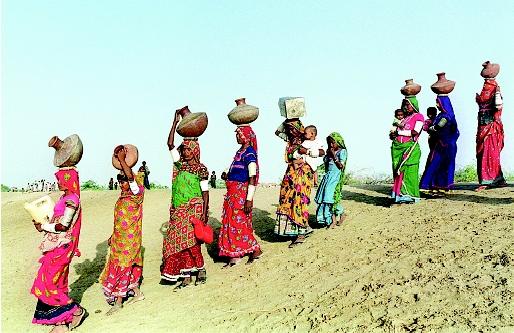
Arduous Journey for Tender Feet


In the poorest communities around the world, women and girls walk to collect water, firewood or other basic necessities of life. They walk on average 6 kilometres a day – 8,000 steps while carrying the equivalent of a suitcase. This leaves little time to attend school, access health services or earn money to support their family.

Women are largely responsible for collecting and managing water resources in developing countries, especially in rural areas, reports from the United Nations Development Fund for Women (UNIFEM) show. Without a ready source of freshwater they may have to walk for several hours every day to find it. The U.N. estimates that 1.2 billion people lack access to safe water and about 2.5 billion are without access to proper sanitation.It is common for girls in rural areas of the world to drop out of school, so as to help carry out the burden of moving water. Girls as young as ten contribute to household tasks. Eventually, they miss classes and lag behind enough in school to abandon their education.
Collecting wood from forests for fuel is a difficult task that falls largely on the shoulders of the world’s women. A survey found that collecting firewood was one of the greatest burdens for many women and that it had a significant impact on their quality of life (Green & Erskine, 1998; 1999). .Pic credits: Basankusu collecting firewood by Francis Hannaway

Collecting firewood is extremely tiring as the women often have to walk long distances in search of wood which then has to be carried back to the homestead. Rural Tanzanian women, for example, walk 5-10 km a day collecting firewood, carrying loads between 20kg – 38kg. In rural India, the average is over three hours each day. The time-consuming nature of this task often causes young girls to be kept out of school. Girls going for firewood collection have been known to be subjected to sexual abuse too (UNDP).
AND THINK.

Would their life be the same if they had the opportunity to be educated like YOU and me?

Educated girls grow into women who tend to have healthier and better nourished babies, who most likely will do everything to have their own children attending school as well, thus breaking the vicious cycle of poverty. Educated girls can better protect themselves against HIV, trafficking and abuse.

Educating a girl also means that as a woman, she is empowered and more likely to participate in development efforts and in political and economic decision-making. Women who went to school usually manage to increase the household income. The advantages of girls’ education thus do not stop at the boundaries of a single child, but ripple through families, communities, and nations.

Sanity, hold on.


The serpent of anguish slithers,
As peace within withers.
Turmoil, into the soul, seeps
As composure weeps.
Insomnias creep,
Night after night, deep.
Drifting from reality to delusion,
In a surreal confusion.
Psyche jolted in a quake,
Oh! prudence do not forsake
And keep me awake,
For sanity’s at stake.

Delhi Diary: Gossip on Wheels –2


Continued from the previous post….

Delhi roads, or for that matter roads on any metropolitan city in the world is so very stressfull. If only these vehicles did not share their light hearted smalltalks or gossiped or flirted on the way, they would be having high rates of ‘heart attacks’ like us humans.
Only if we too knew how to wade our ways through chaotic and bumpy roads of life with humour, life would seem much less of a burden.

Again open your ears, shush your mouths and hear them gossip and flirt and romance…..
Madame Maruti: Haaaye teri baat ne dil khush kar diya.

Truck ji: Chal Rani tera Rabb Raakhaa
Mme Maruti: Rani, haan who tou main hun. Thankyou for the dua, yaar.

Auto bhai: “Papa Jaldi Ghar aa Jaana.”
Maruti behn: Bhai, ghar mein bachey wait kar rahe hain, zara safely
chalao.

Another auto bhai: “Mera Bharat Pareshan[My India is Troubled].”
Maruti : Tere jaise careless auto se pareshaan nahi hoga tou kya hoga…India.

Maruti, the advisor: Yar tou kaali ko bhool ja, kamai kar buss…

Romeo Truck: “Kaho na pyaar hai”
Laila Maruti: Kyun, ek baar bol diya na, bar baar kyun boloon, huhh.

Maruti( sharma ke): Awaein, mere kol koi hor kum ni haega..

Truck Dada: “Road King”
Maruti: Tabhi tou itna chaura ho ke chalta hai, sarak pe.

Lalchi Maruti: Hain, to kya ye sara maal vi mera. Haaye meri kismat.

Truck in denial: “Gori fir se hui jawan”
Maruti: Kya bola? Zara apne aap ko sheshey mein tou dekh.

Creepy Truck: Tou hi meri dulhan, tou hi mera dahej
Maruti: Yar mat tang ker, us bichari nai Maruti ko.

Truck ji: Bus peecha karoge, ya kabhi dil mein bhi baithogey
Maruti: Arre, peecha kaun kar raha hai, awein hero mat ban.

Truch ji: Dekho, dekho,dekho,magar pyaar se
Maruti: Yahan marne ki fursat nahin hai, tum pya se dekhne ki baat karte ho.

Maruti: Haan, haan woh to nazar aa raha hai.

JattTruck: Jatt Di Mercedez
Maruti, the sophisticated: To tum bhi koi Jutt se kam nahin ho bhai.

Truck the philospher: Hun Tu Kaun te Main Kaun
Maruti the sufi: O truckeya, tu ki jana main kaun…

Maruti: Hahaha kya baat hai…:D

Haseen Lorry: “Kashmir Ki Kali”
Maruti( jealous): Chal chal zyada ghuroor mat ker apne ooper.

Badtameez Tanker: Zarra Hatt ke Laadli
Maruti( ghussey se): Oye tameez se baat ker…

Filmi Truck: “दुल्हन वही जो पिया मन भाये,
गाड़ी वही जो नोट कमाए”
Dulhan wohi jo piya man bhaye
Gaari wohi jo note kamaye.

Maruti, the feminist: Yaar, aajkal to dulhan bhi note kamaye…

Pendu Truck: Himmat hai to pass ker, warna burdass kar.
Shehri Maruti: Lagta hai gaon se naye naye aaye ho, Dilli shehr mein. 🙂

When we part, we get emotional 😥 :
Maruti: Chal TATA. Kabhi Salam bho ker liya ker…

Jazbati Truck: Milega Mukaddar , Pher milangey
Maruti, (equally emo): Haan kismet hui tou zaroor milenge isi road pe, ek na ek din.

Devdaas Truck: Chalo ek Baar Phir se Ajnabi ban JaayeN
Paro Maruti: *sob sob, sniff sniff* Haan chalo, Khuda Hafiz.

And this is how they meet each day, with gossipping, joking, flirting on the roads and making their way through packed roads. Their spirit and zest to survive is touching.

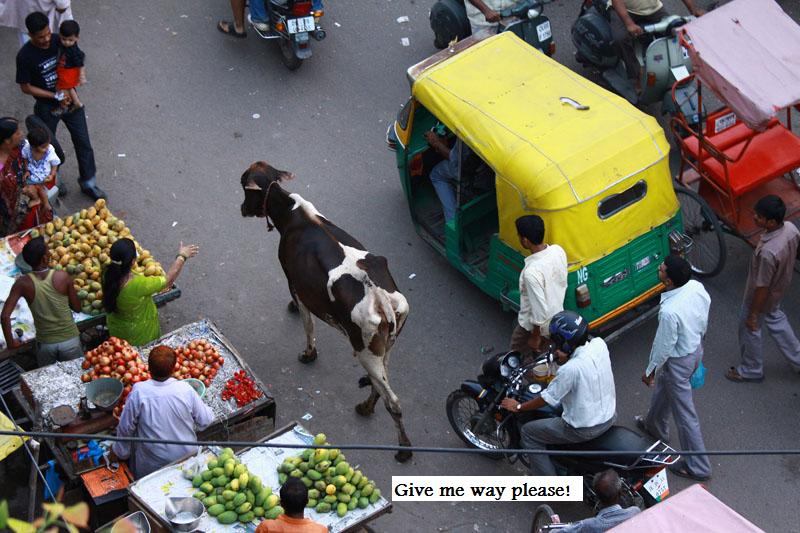
Maruti remarked: Yess we give space on the roads to these beings too, . Do you Humans do the same with animals?

Maruti taunted: Dont you think there are Supermen amongst you only. We have them too.

Maruti( with proud): We have Superwomen too.

Maruti: See we are considerate for our poor too. And we give them way.

Maruti: We believe in UNITY IN DIVERSITY.

Maruti, the thinker: And we believe in PEACEFUL COEXISTENCE .

Indeed, one thing remarkable about the traffic community is their ‘unity in diversity’. How they coexist with some noisy peace and give way to each other with no vengeance, is worth commending.

We humans need to learn some real ‘good’ lessons from these vehicles.

Delhi Diary: Gossip on Wheels–Part 1


Commuting through the streets of Delhi with almost an hour and a half’s drive each side was no less than a Herculean task. The journey back home, in the evening, would result in a bursting headache.

The megacity with hundreds of newly built flyovers and underpasses, still gets choked in its veins at the peak office hours. The traffic is dense, diverse and chaotic. Perhaps when going through licence training they are made to practice to honk horns as much as possible, sworn not to use the dipper and taken pledge not to follow lanes. In fact the dividing lines whether broken white or solid yellow are to be kept exactly in the middle of one’s vehicle—be it a cycle, a cycle rickshaw, auto rickshaw , a car, truck or a tanker.

I felt the dire necessity to have the cake ( wading the traffic all the way each day) and relish it too( enjoy their antics without getting headache).

So I began to hallucinate…

….and began to see and hear all the secret conversations and the relationships the my car had with the traffic around it. I was enlightened now as to why they dive and dodge across the lines ( just like a five year old kid) when another vehicle tries to overtake or chase them. And no wonder why they honk horns so much—in disgust ( just like us humans) when they see injustice .

Oh ! they are all so much like us humans- chaotic and noisy. And like us they gossip, flirt and swear too at each other, on the way.

Only the wise could see that, and I happen to be one of those few. 
I began keeping my eyes and ears open to what was going on between my car and the other fellow vehicles…..

And from then on travelling was fun—after all I am as human as them. and I too love to eavesdrop on what Madame Maruti ( my car) would babble and flirt with fellow trucks and autos along the way.

So from here on just shhhand listen to what Madame Maruti gossips…

Mme Maruti: “Yeah , I know we’ve got to honk the horn for ‘Road Symphony’, but what’s this OK doing in the middle.”

Truck Ji :“Use horn ok please dipper”
Mme Maruti: Hold on, What did you say? Pagla gae ho ?

Mme Maruti: “Kyon? Kya landan se aae ho? Yahan koi dipper wipper nahi janta”.
( Have you come from London, no one knows dipper here).

Mme Maruti: “Yeah only if you had listened to your Mum and been to school, you would know how to say Hallo.”

Mr Truck: “Wait for side.”
Mme Maruti: I’m waiting. But kab takk? ( How long)

We have some of wicked amongst us, just like humans, who can’t wish well for others….
Idealist Maruti: Since when did you become racist, man. Ain’t humans enough?

Burger Truck: “Bad nazar wale tera thobda black.”
Desi Maruti: Lagta hai dost, angrezi filmein zyada dekhne lage ho ?

Dukhi Truck: “चलती है गाड़ी, उड़ती है धूल, जलतें हैं दुश्मन, बिखरतें हैं फूल.”
Chalti hai gari urti hai dhool, jalte hain dushman bikharte hain phool
Maruti, the reformer: Yaar, kabhi kisi ka bhala bhi soch liya karou.( Think of good also sometimes).

Foul mouthed Truck:“बुरी नज़र वाले, तेरे बच्चे जियें, बड़े होकर, देसी शराब पियें”
( Buri nazar wale tere bachey jiyein, Bade ho kar desi sharab piyein).
Maruti, the preacher: O’ bhai, uski to nazar buri hai, per tumhari to soch insaanon ki tarah gandi hai. Uske bachon ney tumhara kya bigada hai?

Mean Truck: बुरी नज़र वाले तू जिए, और तेरा बेटा बड़ा होकर तेरा खून पिए! ( Buri nazar wale tere bachey jiyen, bade ho kar tera khoon piyen).
Maruti, the Gandhian: Arre bhai, kya tum bhi insaan ban gaye jo khoon peene ki baat kar rahe ho ?

Some of us are really kind and thoughtful too:
Maruti: Wah, yeh ki na tum ne sau aane wali baat. 🙂

Saint Truck: Na koi buri nazar
Na kisi ka muh kala,
Sab ka bhala chahta hai
barah tiresath (12-63)wala!

Maruti:Kaash, hamre baqi bhai log bhi aisa hi sochein? Aur insaan bhi 😦

Maruti: Sach keh rahe ho, magar ye insaan ki samajh mein aye to baat hai.

</
Maruti: Wah bilkul theek kaha tum ne.

Our social responsibility, we understand so well. I wish all mankind could think like us too:
Maruti, the samajhdar: Agar insaan ki ye samajh mein aa jae to is duniya ki mushkil hi khatm ho jae.

Maruti, the patriot: Is mehengai ke daur mein, bilkul theek.

Mr Truck: “Ek ya do buss.”
Mme Maruti: “Kya shaadi ya bacheyy?”

Mr Truck:बीवी रहे टिपटॉप
दो के बाद फुल स्टॉप
(Biwi rahe teep taap
Do ke baad fullstap)

Mme Maruti: “Khayal umdah hai, feminist lagtey ho !”

Truck, the Anna Hazare: Sau mein nabbey beimaan, phir bhi mera desh mahaan.
Maruti, the Sonia: Han haan, buss tum hi to ek imaandar ho poore desh mein.

Mr Truck, the poet: शेर दो हों मगर सलीके के,
घर को ऐसी ग़ज़ल बनाना है
(Sher do hon magar saleeqe ke
Ghar ko aisi ghazal bana hai).

Mme Maruti: “Uff, ye ‘sher’ aur ‘ghazal’ se tou Ghalib ki
yaad taza ho gai.”

Truck, the poet: “Malik ki gadi, driver ka pasina, chalti hai road par, banke hassina”
Maruti: Haaye, kya Shayar ban gaya…

Truck Sahab, the wannabe poet: “Fool se kante ache hai jo daman tham lete hain, dost se dushman ache hain jo jal kar bhi naam lete hain”
Maruti, the judgemental: Haaye teri Urdu se tou Hazrat Ghalib pareshan ho jayeinge.

Maruti: “What should I say, you said it all?”

PS: Some less serious gossip in the next blog.

A Trek


Ever since
Borne off the rib,
Road’s been uphill.
Laden with boulders,
Of hardships, hurdles,
And umpteen struggles

Track slippery and steep,
From cradle to grave.
Crawling narrow lanes,
Of Adam’s psyche.
Jostling upon her,
The backpack of duties.

Taking twists and turns,
Thro’ dark dogmatic alleys,
Braving blizzards of biases’
Dodging dissecting stares
With resolve steady as rock
And mind tough as steel.

A heart warm as fleece,
Entwined in agony and love,
Walks the tight rope,
Miles after miles.
How far more ?
Endless?

Passing the baton of destiny
From Mom to daughter to…
Will it go on?
Forever?

Behind fog of prejudice,
The summit remains unsighted.
Can she make it?
Before sunset?
Ever?

The Girl Effect


Girl Effect is a NPO founded in 2008.

The following are excerpts from an article published in Businessweek, 2009

‘Girl Effect’ Could Lift the Global Economy

There are 600 million adolescent girls in developing countries, but they are largely invisible to the world at large. Included among them are girls affected by armed conflict, domestic violence, HIV/AIDS, sex trafficking, and internal displacement, as well as girls in child-headed households or locked in early marriages. To ignore them is to miss the “girl effect,” which could be an unexpected answer to the global economic crisis.
When a girl benefits, so does everyone in society, including business. Girls as economic actors can bring about change for themselves, their families, and their countries. Conversely, ignoring the girl effect can cost societies billions in lost potential.

• When a girl in the developing world receives seven or more years of education, she marries four years later, on average, and has 2.2 fewer children.

• An extra year in primary school statistically boosts girls’ future wages by 10% to 20%, and every additional year a girl spends in secondary school lifts her income by 15% to 25%. The size of a country’s economy is in no small part determined by the educational attainment and skill sets of its girls.

• Young women have a 90% probability of investing their earned income back into their families, while the likelihood of men doing the same is only 30% to 40%.

• A girl’s school attainment is linked to her own health and well-being, as well as reduced death rates: For every additional year of schooling, a mother’s mortality is significantly reduced, and the infant mortality rate of her children declines by 5% to 10%.

• If educated, girls can get loans, start businesses, employ other women, and reinvest in their families—when they’re ready to have them. That means their children can also have an education.

Here’s why: When a girl benefits, so does everyone in society, including business. Girls as economic actors can bring about change for themselves, their families, and their countries. Conversely, ignoring the girl effect can cost societies billions in lost potential.
Girls and young women could be an important centerpiece of sustainable economic recovery—one that is worthy of innovative policy making on the part of business and governments alike. There are 600 million girls out there, after all. They just need to be seen, understood, and given a chance.

Sources:http://www.girleffect.org ( the video)
http://www.businessweek.com/globalbiz/content/apr2009/gb2009048_644459.htm (the above text)

Mom


When it was time to leave the baby asked,  “Tell me God, why are you sending me to Eartt?  How am I going to live there, so small and helpless?”

God : “I have assigned you an angel on Earth that is eagerly waiting for you to hold you and care for you.”

Baby, anxious: “It’s so Heavenly here, there are no worries. I just smile, sing and play.”

God, “Yes it isn’t Heaven down there, but the angel’s lap will be a small heaven I’ve ensured for you. The angel will always wear a smile looking at you, will sing you lullabys and will even play with you.”

Baby:  “How will I be able to live in that mad world?

God: “Your angel will blow into you the most beautiful feeling called love that will give you strength, and with much patience and care, will teach you how to live.”

Baby: “Will that angel protect me from the shrewd world?”

God said, “Your angel will never leave you in risk, will defend you even if it means risking it’s own life, even if you tell the angel, you need it no more.”

Baby: “But God, I will miss you?”

God : “Just look into the angel’s  eyes and you will find me there. Just beneath its feet, you will feel the same pleasure as that in Heaven.”

Baby: “No God, if I miss you a lot, promise you will call me back.”

God:  “Don’t ever say that. The angel  will bring you closer to me, in its care, you will thank me for having sent you there.”

God ( again): “Dear baby, delay no more, the angel is in great pain, waiting to have you”.

Baby (rushes, then turns back): “God, but please tell me, how will I know who’s my Angel?”

God: “You simply call her Mom.”

There’s nothing like the first hug,  a Mama hug.

There no word called ‘insomnia’ in the world within a Mom’s arms.


There’s nothing more warmer than a Mom’s touch, and nothing more touching than Mom’s love.

The first sense that a baby learns to identify his Mom is her smell.

The first language in which  a baby talks to his Mom is through smile.

Even the toughest of Mom’s have gentlest of hearts.

Whether from her breast or  her throat, she will do whatever it takes to feed her kids.

Kids are born with wings, Mom teaches them to fly.


A Mom teaches her babies how to swim against the rough tides.


Some more about Moms:

Mama was my greatest teacher, a teacher of compassion, love and fearlessness. If love is sweet as a flower, then my mother is that sweet flower of love.
~Stevie Wonder

The mother’s heart is the child’s schoolroom.
~Henry Ward Beecher

A good mother is worth hundreds of schoolmasters.
~George Herbert

The post is dedicated to  Moms, one and all,  of  the world who begin as the first teachers, and then never cease to be one, all their life.

Delhi Diary: Everything is For Sale


People look the same, but they think different, act different. Values have transformed. Yes, the place is booming with progress, but booming to the extent it makes an old fashioned me feel nauseated. Returning to my home town after only a few years, I find the world there has fast forwarded many many years.

Commercialism is at its helm sweeping everything and everyone with its flow. Huge malls have burgeoned with top international brands to cater to the new middle class with excellent pay packs and plenty of dispensable cash. The rush in high end brands is as if the stuff is for ‘free’ give away.

My favorite hideouts for ethnic stuff sulk with few visitors— mostly being tourists or old fashioned junkees like me. To my utter shock my favorite state craft emporium which was known for it’s exclusive handmade stuff, is now stacked with second rate , far more expensive machine made ugly embroidery—and they call it ‘handicraft’. And the stuff which I wouldn’t cherish even for free, is exorbitantly price tagged. The lone hand embroidered trinket I dug out from the old stack, turned out to be way cheaper than the new commercial stuff.

“Why? “ I ask.

“It old fashioned”, the lady remarks.

I walk out disheartened for it ceases to remain a den I will ever again aspire to explore.

Delhi Haat, the hub of art and craft, is deserted with over half the shops either closed or unoccupied. Few love-stricken couples, roam around on a look out for solitude in the empty shops. The shop with state of the art hand embroidery from a remote state sells it dirt cheap—

I again ask. “ Why?”

She is dumbfounded. How could anyone call it cheap, as people still haggle with her to bargain on that price.

The official passing by over hears, and explains— “Yes if she won’t sell that cheap, no one will buy. And she will have to pay the freight and carry it back to her home town 2000 km away.”

My heart aches. I buy without a bargain. I hug the woman. Call her my sister to overcome the guilt of buying such laborious art so cheap.

My brother buys an IPL Calcutta Night Rider’s T-shirt for my son at an exorbitant price tag. My heart sinks. The high-end store selling original T-shirts has teenaged boys falling one over the other for their favourite team’s Tshirts. Then I see, not one or two, but many boys buying several Tshirts from different teams.

I again ask a mom , “Why?’

“He collects them all”, is her matter of fact reply.

Maybe I am somewhat old fashioned to make sense of that.

I walk into another shop in the fancy Mall, for a friend’s demand of a bridal dress. They serve you lassi, thandai, fizzy drink, mineral water—whatever soft drink you name. The cost of what I was told to buy is 4 times the price my friend had asked for. I tell him my range—and the ‘seth’ in the shop gives a jerky smile, turns to attend to the next customer, never to look back at me again.

I call him and he says, without looking at me, “With your range you will not get it anywhere, you may try elsewhere if you like”.

I walk out dejected—knowing that my friend would never believe my story. She wouldn’t buy my explanation that India isn’t simple and inexpensive, anymore.

Not just the usual stuff, many more interesting things are for sale too. Male or female sexuality is on display too, in TV Ads, selling trivial stuff like deodorants. A deodorant Ad shows a woman fanaticizing about sex after getting a whiff of the man’s deodorant. In another, a woman finds a man’s deodorant so attractive that she starts unbuttoning her blouse, and yet in a third one, a woman is drawn to her sweet-smelling brother-in-law.

When the government objects to their being inappropriate on TV, watched by families at home — the fashionables cry for freedom of expression. That the woman or men should be free to express their sexuality in public. Yeah sell the deo ‘using’ a woman’s sexuality. This is called commercial freedom. Perhaps I am too old fashioned to get that.

Then one hears the news and the rescuing of under aged girls, as old as 12 or 13, from brothels in some cities. They are lured into business with a ploy to better jobs and are sold in brothels. There are two business models to make them comply in the trade- first, physical torture, and secondly, drugs. The two methods are applied enough to kill their self esteem, and they obey their seniors like robots. These little girls physiologies’ are on sale too.

Another commodity on sale is the woman’s womb. Many agencies have sprung up taking pride in making India a hub of reproductive tourism. Now if you have a vacant womb, you can rent your womb and bear another couples child. It was a scientific feat, especially for those who could not bear their own child for some medical reason. But now the reasons have extended to economic and social convenience. Many couples who have enough money, but not enough time can rent a womb and let it carry their baby. And once born they are legally the parents and the surrogate mother has no right either emotional or legal over the baby she nourished with her blood and tissues.

Busy rich ‘desi’ couples in the west are the clients mostly. Who shall tell these money struck parents that to go through the whole sequel of ‘Pregnancy test Positive’, to each stage of pregnancy, week by week , month by month, cuddling an unborn baby, feeling its kicks is a journey It’s the real honeymoon in a couples life, that no money can replace.

Bring home a baby ready made, not able to breast feed, no knowing what pangs of birth are or what morning sickness is- is hard for me to comprehend.

Yes really hard to comprehend.

For sure because I am old fashioned.

Very old fashioned.

My friend at Delhi Haat

Treetops vs Grass roots


While reading through the wonderful, insightful Pullitzer Prize winner book Half The Sky, which highlights countless issues related to women all over the globe, one is enlightened of the dynamics of factors which can bring a real change in the lives of women in the world.

Whether it is reduction in maternal mortality, girl trafficking, change in social customs like female genital mutilation or women abuse the change can come only from within. And the secret to that change is ‘girl child education’.

Girl education is the key to women empowerment. Women empowerment in turn is the key to eradicate poverty.

Educating girls is the most effective way to fight poverty. Until women are numerate and literate it is difficult to bring meaningful change and contribute in the country’s economy”, say the authors.

Despite multiple factors playing their roles, studies have shown that, the solution to reduction in population growth, trafficking of women, gender based violence or female genital mutilation is SINGLE and it is girl education.

The local customs, culture, and family dynamics and the various factors which hinder the change need to be well understood . Bringing about a difference entails persistence and perseverance to bring slow and steady change and creating receptive audience at the grassroots level. Innovative ways may be needed to cause that change in thinking before one expects a change in practice.

The roadblocks may not necessarily be just the ‘big’ factors –but even trivial issues which we do not even give a second thought.

And motivation of girls is never an issue. They are always willing. It is the circumstances and the people around them who need to be convinced.

The authors recount, based on research, four cost effective ways to increase school attendance in either genders—
• ‘deworming’ the children( as worm infestation affects physical and intellectual growth),
managing menstruation related issues( providing san napkins and toilets—as many girls don’t attend school during mens due to inconvenience),
• providing Iodised salt( as many communities suffer from Iodine deficiency which leads to brain damage) and
• ‘bribing’ ( providing financial incentives to the girl students for attending school.

The donors often assume that providing the infrastructure, like building schools, or giving books is the ‘way to increase’ educaton. But one may have to go extra mile(s) to ensure that the real purpose behind the building of schools is realised.

The World Bank ,too, points that excessive spending on education bureaucracy and school infrastructure, rather than on teaching staff and supplies, undermines the quality and quantity of schooling.

How to boost up the woman empowerment through education ?

For many of us first thing that occurs is ‘funding’–specifically foreign funding.

It remains a myth that in places with poor resources and conditions the foreign assistance or Aid through big agencies like UN, USAID, US govt.etc.(Treetop solution) is the key to any kind of development.

Rightly did the authors point out that Foreign Aid follows ‘Murphy’s Law’ ( the law states that anything that can go wrong shall go wrong).

The foreign aid may be well intentioned but it does not always work the way it is intended. Some prove to do the exact opposite of what is intended.

Many skeptics like, Peter Bauer and Milton Friedman argued point blank in the 1960s that aid is ineffective.
William Easterly with experience in WB says, aid is often wasted and sometimes does more harm than good.
Rajan and Raghuram published a study in The Review of Eco and Stats that : there is no positive or negative correlation between aid inflows and economic development of a country.

The literature on foreign aid and development strongly suggests that the usefulness of development assistance varies with the quality of a country’s governance and the economic policies it pursues. In countries whose policy environment is highly unfavorable to growth, aid is less likely to be productive and contribute to long-term development.

According to one group of scholars, “in terms of growth prospects and performance, no amount of foreign assistance can substitute for a developing country’s internal policies and incentives for increasing output and improving the efficiency of resource allocation.”

A wonderful example that the book gives of a failed purpose of the Aid is as follows:

A UN Project in Nigeria meant to empower women.
Fact: the women in Nigeria cultivate cassava ( a root like potato) and use it for the household. If in excess they sell it off and save the money and spend it on home and their children.
The Project: It introduced a variety of Cassava which would give three tons per hectare yield instead of the usual 800 kilos per hectare. They had a terrific harvest. But they had problems;
They could not harvest that bulk of the yeild and could not even have the capacity to process them.
The agency introduced processing equipment. But the fruit was bitter and did not taste as well. But with processing of the fruit the problem was dealt.
As a result the project looked a ‘great success’. The women started to earn good money.
But then the men came in and kicked women out of Cassava farming. Why?
Because as per the tradition the women raised staple crops and the men grew cash crops. And when men had extra earnings, they used it for beer. As a result, women had even less income that when they started.

Moral of the story:
The above case proves the futility of a well intentioned Aid, if it is not linked to the local cultural practices. And another point it highlights is that any sort of empowerment of woman can boomrang unless it is accompanied by women education.

Sometimes good intentioned ‘treetop’ efforts can be counterproductive if the ‘grass root’ realities and resources are not taken into consideration.