Open up your mind and your potential reaches infinity…

Archive for the ‘Women’ Category

Indo-Pak Cross Border Weddings- an Advice to the Bride


Many girls from all over India and Pakistan write to me about their love stories across the border and their wish to marry & live happily ever after. Just two days ago we celebrated our 29th Wedding Anniversary. So I think it makes me quite qualified to give some pearls of wisdom to the new daredevils. 🙂

Since in a vast majority of cases it is the girls who move to the other side, here is an open advice to these girls :

My first pearl of wisdom to you:
“If you think there is a genuine love between you two, go ahead and take the plunge and embrace the pain that comes as a baggage. But  before you decide, first meet him in person and ensure he is the same person who you have known on social media.”

Secondly, I want you to know there are realities beyond honeymoon:
“If you will live in India or Pakistan, you live in an alien land where you will always be under moral pressure, simply by default of being a woman, because our societies, on both sides, are swamped with misogyny, just as our cultures and faiths are deeply immersed in patriarchy. In our cultures, we marry in a family, one husband cannot be the only one you will deal with, even if you are his Laila and he is your all too supportive Majnu.”

Thirdly but most importantly be well informed of what you are stepping into: 
“Read and inquire as much as you can about the other side- both pros and cons. Know that the practical challenges that you will have with the bureaucratic red-tape are inevitable even if everything else in your personal life is going like the Bollywood style Veer-Zara. Sania Mirza-Shoaib Malik star couple are a wonderful example, but they are not to take inspiration from. Ask ordinary couples in such marriages of how things are like. But none of their story will be exactly like yours, post marriage. Like any ordinary couple, it will be a constant struggle. Be open to unexpected pleasant and not so pleasant situations.”

However, once you have decided to go ahead, here are a  few tips for your safety: 

1. Try to see his country as your home too. Love and befriend its inhabitants too. Do not live like an alien. Belong there.
2. At the same time do not lose any love and respect for your country of birth. Many will say, “You are still so “Indian/Pakistani”. Tell them “So what? I belong to both the places.”
3. Try not to be cynical about his country. Learn to be objective and honest about flaws and positives of both sides. Trust me, both places are no better or worse than the other. Blind patriotism will not bring peace within your four walls or lay breakfast on your table.
4. Best bet is to make it a taboo in your household to discuss Indian Pakistani political rhetoric in a partisan manner. Don’t expect a man who so loves you today, will not taunt your nationality sometime years down the road and will still not understand why are you so ‘touchy’ about it. So better shut these doors before they even open.
5. Keep yourself financially independent. Do not submit every penny in the name of love and family. Because that will disempower you. Try to keep some money/assets aside( openly or quietly) in your own name.
6. Do not stop visiting your family back home. Visas will be difficult, but you have to be very very persistent and persevering to not give in. Try your best. Ask for help from anyone who can help.
7. When you have kids preach them to be objective and not be partisan with either parents or their families.
8. Keeping a passport of your country is very challenging in India-Pakistan relationships, but in current times, its easier than 30 years ago.
9. Create your own circle of like minded friends in your adopted homeland. Don’t just depend on your husbands friends wives as friends. At some point of time you may feel that your personality, intellect and values are not similar to  your spouse’s, and hence making your own group of like-minded friends will give you a space of your own.
10. Pursue your profession or work and hobbies in your adopted country as you would in your own country. There is no reason to give up work. It will help you build confidence and be financially independent.
11. Keep in touch with groups like Aman ki Asha  on social media and fellow Indian-Pakistanis locally, who will understand your situation far more than the local locals. These friends work as a peer-support group and as a deterrent for abuse and exploitation at home.
12. If possible, and if going gets tough, try to move as a family to a third country, or at least have an additional passport of the third country. It is not the easiest thing to do, I realize, but will give your kids a choice.

Wish you all the best,

Dr. Ilmana Fasih,
A proud Indian-Pakistani.

indopakcake

Educate a woman and you educate an entire generation…


Recently a photo of a 25 year old Afghan girl Jahan Taab from  a remote poor village Oshto in Daikundi,  went viral when she was taking the college entrance exam called Kankor Exam while breast feeding her child. Later it was confirmed that she has passed the exams and wants to go to college to study Sociology. Photo credits are given to an invigilating lecturer Yahya Erfan. He was so moved by her determination that he posted the pictures on his facebook. Link here

“She got up from her desk when her baby started to get fussy. She sat down on the floor, breastfeeding the infant, and kept filling out the answers to the test.” (Buzzfeed).

She reportedly told the lecturer Mr. Erfan that she is worried about the cost of education and that the University is 8 hours from her residence. It is the power of social media that a Go-Fund was created to support the cost of here higher education.

More about JahanTaab


This slideshow requires JavaScript.

Needless to say, girls’ determination to study is never an issue. The key barrier is the systemic patriarchy in the garb of cultural mores or religious edicts.

Patriarchy is such an omnipresent barrier that hinders women in all communities and all economic strata one way or the other. And here is where the role of men becomes extremely important in bringing about women empowerment by dismantling the walls of patriarchy.

Here I must share my own story too.

(Bear in mind I am an urban educated woman with a strong will power. But even then, had it also not been the supportive men in my life, I may not have sailed through various systemic hurdles that patriarchal infrastructures create at every nook and corner of a woman’s life). 

In the early 1990s, as an Indian medical graduate I had to go through a written and a clinical exam by Pakistan Medical and Dental Council to be certified to practice in Pakistan. I opted Karachi centre. When I received notification for the exam it said the exam will not be held in Karachi as there are no other candidates. The exam will be in Peshawer.

Since I lived in the Middle East, I was supposed to travel with my kids to Karachi where my in laws lived. But before I could even know and panic about how I will travel with kids to Peshawer, my husband first took an emergency leave from his hospital, and then informed me that we are all travelling to Peshawer. 

My husband Fasih and I, with our two kids- a toddler and a 6 month old breast feeding infant landed in Peshawar. It was a 3 day long exam- with a written paper and clinical exam.  From day 1, my husband sat in the lawn of the examination centre, with two babies, as he dropped me for the exam. I would come out to feed the baby every few hours in the breaks.

Funniest incident in the whole saga was when my daughter cried, “Papa potty.”
He ran with the baby in one hand and the toddler in another to the washroom.
As he entered the male washroom the guard said, “Take the girl to female washroom with her mother.”
“BUT mother is busy in exam.”
“Then wait.”
“But this baby cannot wait. She has to go urgently.”
So the guard let him take her to the washroom. And while holding the infant in arms he helped the toddler finish the job and clean her. 
Finally they came back to play and sit in the lawn again. 
And then he smelt the baby has soiled his diaper. He ran again to the same wash room.
The chowkidar got annoyed, “Ap pher se as gaye?” (You have come again?).
Fasih: “Smell this diaper.”
The guard laughed and commented, “Aur parhao biwi ko.”(Let your wife study more).

After day1 the entire examination team knew about my family and when I went from each viva and clinical exam, from Internal Medicine to General Surgery to ENT to ObGyn to Ophthalmology, first thing the professors asked was how are the husband and babies doing? 
Second question they asked was, “Where have you graduated from?”. 
On reply “Lady Hardinge Medical College in New Delhi” every single one of them began the viva with the comment, “So do we really need to test your knowledge?”
No bragging but I passed with the top position. 

The head examiner was Prof Zakaullah Beg who was my husband’s professor in his postgraduate life. He himself called Fasih on phone 2 weeks later in Karachi to break the news.

Moral of the story: Empower a woman and she will make her husband, family and entire community proud.

“A woman cannot use contraception without the husband’s permission.”


“A woman cannot use contraception without the husband’s permission.”

I wish men ever got pregnant and had to raise children the way mothers do to realize what a travesty of injustice this clause by Council of Islamic Ideology, Pakistan is. It should be the other way round….men must have the permission from women for not using contraception.

There is little consolation that contraception is not an ‘as big an issue here like in Catholicism'(as often compared by the apologists), but if Allah (SWT) allows it, I am sure the Almighty has granted this right to  women knowing they are the ones who bear the children in their wombs and raise them.  Making husbands be the police over contraception is injustice and no where in any holy texts can this be found. Why is it a rocket science that this is simply a patriarchal attempt by  opportunistic men to control women?

Having worked in a conservative community in Makkah, Saudi Arabia in the field of ObGyn/Family Medicine for 14 years, I know exactly what this means.

Here is a true story, which I remember even the details of.

A 40/41 year old woman with 5 children, eldest in his late teens came to me asking for contraception. After discussion on pros & cons, she decided to choose a pill that was appropriate for her age.
Half an hour later, her husband, in early 60s banged the clinic door open and showed me the medication in his hand asking: “What is this?”
I told him “This is a medication for women.”
Him: “Is this contraceptive?”
Me: “Yes.”
He threw it in my dustbin and warned me that if I prescribed a contraceptive again, he will complain against me.
He closed my door back and I was later told that he dragged his wife to the car pulling her by her head scarf.

An year and a half later, the woman had a new baby.

Three years after the child was born this man suddenly died of brain hemorrhage at 67.
The lady was left with 6 children, 2 of them not even in their teens. And she was the second of the three wives he had left behind.
I saw her all the years, until I left the job, and I know in how much misery this woman in her mid to late forties was going through raising children as a widow on 1500 Saudi Riyals stipend as a widow.
(BTW this is one of several stories I personally encountered).

It is easy for men to dictate not to use contraception but it is extremely hard for women to raise children when men take decisions but do not follow through with responsibilities arising out of it.

Decision to bear children and their number must ideally be a joint responsibility. The woman must have a voice in that decision making instead of being forced upon her.


Going Home~ Creating safe space is not a rocket science.


It is dark, and quiet,
She is alone,
She is young and beautiful,
Yet she is spontaneous and warm
Because she feels safe.
Doesn’t that feel good?
Whether you are a man or a woman,
to see a fellow human feel secure in your company?
Age, place, dress, time do not matter,
Secure and safe space is everyone’s right.
Can you give that space menfolk?
Yes, you can, and you must.
I know womenfolk will have that space one day,
And I know that day is not too far.

Creating safe space for women
Is not a rocket science.
Its not just possible,
but is very simple
Watch this:
A lovely short film by Vikas Bahl #GoingHome

http://https://www.youtube.com/watch?v=0EDJxs1yJrQ

The Flawless Purse: Dilemma of Consumerism


In style she clutched a glossy purse,
Tight between her hand and her chest,
Protecting it from falling or
From being scratched,
From the pointed necklace
Around her own neck.
She had saved for years,
And dreamed of even longer
To own this branded gem.
She holds on to it firm,
Yet all tender, all protective,
Like a beautiful relationship,
Between two souls,
Knowing how hurt,
The purse can get,
When there are bruises
And that the purse
shall never be the same,
if held back after it falls.
So precious, and so priceless,
She finally owns a flawless dream.
But oh for the flawed souls,
They come and go in our lives.

ClutchBag

Kesariya Baalam by Reshma


Reshma who originally hailed from Bikaner Rajasthan here sings a ‘maand’ or a welcome song in Rajasthani language for the arrival of the beloved.
(Have attempted to translate the verses from my basic knowledge of the language).

Kesariya baalam o’saa,
padhaaro mhaare des rey
Oh my saffron beloved,
Come to my abode.

Thaare aayo dujaan
Barishme mere
Your arrival
shall bring life in me

Saajan aaye o’ sakhi,
Main kayeen manwa vikraan,
Thaari paryo gaj motiyaan,
Aur ooper nayn dharaan.
My beloved shall come my friend
How can I keep my mind sane,
I shall spread pearls on the tray,
And keep my eyes on them.

Kesariya baalam o’saa,
padhaaro mhaare des rey
Oh my saffron beloved,
Come to my abode.

Sajan sajan main karaan
Sajan jeev jari
Choorley per moondshaan
Aur vachaan ghari ghari.
I utter “Beloved, Beloved.”
“Beloved” is embedded on my tongue,
Shall weave his name on my bracelet,
And watch it over and over.

Kesariya baalam o’saa,
padhaaro mhaare des rey
Oh my saffron beloved,
Come to my abode.

Awan saavan keh gayo dhola
Ker gaya khol anek
Bin taagan taa gash gayee
Mhaari anganiya ree rey.
Shall come in the rains, he promised,
Played many cruel jokes on me,
Without the rope of his swing,
My courtyard is deserted.

Kesariya baalam o’saa,
padhaaro mhaare des rey
Oh my saffron beloved,
Come to my abode.

Samra’s story: When marital abuse did not break her


First published in Express Tribune, Pakistan on June 10, 2013 : http://blogs.tribune.com.pk/story/17620/samras-story-when-marital-abuse-did-not-break-her/


Attending the graduation ceremony of students at the prestigious University of Toronto, my daughter pointed out Samra Zafar, saying

“She topped in Economics and she is a Pakistani!”

Samra was flanked not by parents, but two daughters, aged 12 and seven. I wanted to know more about her, and hence invited her over to our house next evening.

At home, while sipping tea, Samra shared her 14 year journey with me and I was absolutely floored by her story.

In 1999, in Abu Dhabi, Samra was a brilliant 16-years-old student of grade 11, dreaming to go to a foreign university to pursue higher studies. Her only fault was that she was tall and extremely good looking – she was a dream bride. Hence when the proposal from a ‘well settled boy in Canada’ arrived, it was difficult for her working class parents to refuse. Eldest of four daughters, the parents thought this would give her a great opportunity to go aboard and pursue her dream, under the safety of her husband and in-laws.

The in-laws reassured their support too.

However, once married and in Canada, things changed. She was told,

“The atmosphere in high schools is not good, and hence it is better to not be thankless and stay happy at home.”

Samra refused to give up though and completed her high school courses through distance learning.

Despite being a mom at the age of 18, she excelled in her high school exams and got accepted to the University of Toronto. Her husband, however, refused to support her and his good financial status left her ineligible for university loans. She tried to convince her in laws for three years but to no avail.

It was not just her education; she was under strict vigil all the time. She was not allowed to leave the house, had no cell phone and was not allowed to learn how to drive. She never had a penny on herself and was constantly abused and neglected.

Samra had not visited her parents for five years. The first time she went back was when her father sent tickets for Samra and her daughter. When she was leaving, she asked her husband fora meagre $10 so that she could have some coffee and buy some chocolate for her daughter during their transit stop at Heathrow Airport. He just snarled at here and said,

“Ask your father for that too.”

She had left and did not intend to come back, but her husband begged her to return with a promise that he would change and that she will be allowed to study this time; he said that he realized he could not live without her. Reassured, Samra returned, only to know that once she got pregnant the second time, the physical abuse was to became worse.

Samra stated that,

“A bruise on my upper arm was a permanent fixture, as in every bout of anger, he would grab my arm really hard and squeeze. Often he pushed me, pulled my hair and spit in my face, even in front of my daughters.”

Again disheartened, she went back to her father’s home, pregnant with her second daughter. Within a couple of months her father suddenly fell ill and passed away. Samra recalls the day before his death and the advice her father gave her when he said,

“My life is uncertain, I may not live to look after you. You have to be strong and pull yourself out of this. I have always envisioned seeing you at the top of a world ranking University.”

Things had changed. Her mother was alone now and had two other unmarried daughters to support.

Samra, accepting it as fate, returned to her husband. To earn her own money, she began baby sitting in her house. As consolation to continue her work, she would give her husband some pocket money from which he would buy his cigarettes and a share to her mother in law, too, to earn their approval.

In 2008, she applied again and got accepted to the University of Toronto. This time she did not have to look to her husband for financial assistance, as her child care business could enable her to pay her own fees. However, this led to escalation of physical abuse. She was instructed by her husband on a daily basis,

“Don’t talk to your male professors, don’t talk to anyone on campus and don’t go to the library.”

The abuse was so severe, that she had to take a break after the first year. Several times she had suicidal thoughts and her self-confidence had completely shattered. That led her to a meeting with the Psychological Counselor at the university campus. She attended the sessions in secrecy and there she was informed that what she was going through was a typical cycle of domestic abuse. And that it was not her fault, or her destiny to bear it.

She reveals;

“It was my daily routine to beg my husband and ask him, ‘Why do you do this? Why don’t you love me?’”

And all he replied with each time was,

“Because you deserve this.”

The psychological counselling at the university, gave her the strength to get back to university. By the second year, the abuse had become worse but she had been told that she could call 911 if need be.

“I will call the cops, if you hit me again.” She uttered once, while her husband raised his hand. That is what triggered him to say,

“Talaq, talaq, talaq.”

(I divorce you, I divorce you, I divorce you.)

Samra says,

“I was shattered, and I did not know what to do next. If I left the house, I would not have childcare income. How would I continue to study? I had two young girls to support.”

Samra’s husband and in-laws ran from pillar to post to get Fatwas to invalidate the divorce. Samra laughs,

“Once my mother-in-law even brought a person for the necessary Halala to rectify the Talaq.”

However, by now Samra had, despite many weak moments, gathered enough strength to move out of this cyclical abuse and face what came her way.

She shifted to a residence at the university campus. Her husband and in-laws then tried threatening her; they said either return or they would malign her in the local Pakistani community of her ‘living’ with men at the university. Her husband often told their daughter,

Do you think your mother goes to university to study only?”

Samra revealed that,

“After a decade of physical, financial, psychological and emotional, abuse it was only in the summer of 2011, that I finally had the courage to go to the cops and give a detailed, date by date account of the abuse I faced, along with the evidence.”

As a result, her husband was arrested on four counts of assault. Despite two court cases, three jobs and two children, she continued to excel in her studies and became head teaching assistant.

Today, Monday June 10, 2013, at the official convocation of the prestigious University of Toronto, Samra will not only be awarded a Bachelors degree in Economics, but she will also be awarded the prestigious Top Student Award in Economics. She also has to her credit a dozen more awards given to her for her academic excellence in the past four years, including the prestigious John H Moss Scholarship, which is awarded annually to a single student in the entire university (all three campuses). She has also been admitted to the PhD program in Economics at the University of Toronto, with a full scholarship.

When not studying or working, Samra loves cooking for her girls and gives them all the free time she gets.

“We are now the happiest we have ever been.”

I asked her how she would advise other girls who are trapped in the same scenario and to that she said,

“Do not let anyone disrespect you. Believe in yourself. You are the only one who can change your situation. It is not easy, but it isn’t impossible either. I had all the disadvantages any girl could have.”

She refers to the myth of needing a man as a support,

I have no father, brother, son, or husband to support me. But I have done it, all by myself. If I can do it, anyone can.”

Read more by Ilmana here or follow her on Twitter @Zeemana

Sometimes calamities unite us more


First published here: http://amankiasha.com/detail_news.asp?id=1018

The conscience-shaking brutal rape and subsequent
death of the anonymous student from Delhi is not India’s issue alone and the grief is not for one case alone
By Ilmana Fasih

As thousands of people on both sides of the India Pakistan border mourned the death of the Delhi gang rape victim, someone commented on Aman ki Asha Facebook group: “Well, the Delhi rape proceeds from a common mindset. The negatives unite us just as well as the positives.”
“Sometimes, calamities unite us more,” came a response.

The conscience-shaking brutal rape and subsequent death of the anonymous student from Delhi (who is referred to by different names by various sections of the media) has made us rethink how common our pains are.

Beyond this tragic incident, looking through the e-newspapers from the subcontinent, there is hardly a day without some incident of rape being reported.Be it the gruesome gang-rape of a medical student at a bus stop in a megacity, or a six-year-old girl raped by local goons in a village, or a girl raped while partying with friends in the posh area of another city, or a teenager gang-raped and then asked to patch up by accepting money or marrying one of the rapists in a town. Can you guess which side of the border each case belongs to? The scenarios differ, cities differ, but the crime remains the same. The mindset stays identical. Age is no bar. Infancy upwards, one finds women and children of all age groups being subjected to rape and sexual abuse.

Unfortunately this is one situation where the human race seems to have achieved a “no barriers of age, color, creed or class”, the world over.

Hard to digest, but rapes are on a steep rise in the subcontinent.

In 2011, 568 rape cases were reported in Delhi, and 459 in 2009 (National Crime Reports Bureau) .The figures given by Delhi Police reveal that a woman is raped every 18 hours or molested every 14 hours in the capital.

Similarly in Pakistan, Human Rights Commission of Pakistan, estimates that “every two hours a woman is raped in Pakistan and every eight hours a woman is subjected to gang-rape”.

The Additional Police Surgeon, quoted in a 2008 newspaper report, estimated that at least 100 rapes are committed in Karachi alone every 24 hours, although most are un-reported.

If these are the statistics of two megacities, one can fathom what would be the situation in the other smaller towns and villages. It is well known that the majority of the rapes in India, Pakistan and other South Asian countries are never reported, and just a handful of the perpetrators are ever punished.
The tragedy is amplified when inane solutions are offered like: “Women should not go out late at night” or “Women going out late night should be accompanied by a male.” In the ‘Delhi gang rape’ case, the solution of an accompanying man clearly failed.

Women are advised not to wear western clothes, or more ridiculous “not to eat chow mein” or “not to carry mobile phones with cameras”. Some even advise women to not report the attack “if there are not enough witnesses”.

But none of this well-meaning advice takes into account why rapes occur. It is not because the woman was dressed so, or walked alone on the street late at night, or was attending a party with her friends or ate a certain kind of food. No. Rape occurs because some men want to rape. And why do ‘some’ men want to rape and not others? Rape is the culmination of a series of systematic experiences that a man is exposed to, from infancy to manhood- in which he is told, with or without so many words, that he is stronger, and a woman is not just weaker, but a commodity at his disposal. Rape is a way to display power and superiority.

So long as this mindset persists, legislation and punishment will never be enough of a deterrent. This tends to get overlooked in all the outrage at the gruesome details of the Delhi gang rape, that has led to demands for the severest of punishments, even public hanging for the perpetrators.
Without undermining that tragedy it is important to remind ourselves of the countless cases of rape and sexual harassment that are routine on both sides of the divide. Those who survive suffer psychological trauma, often far from the media limelight, mostly in silence.

Rape survivors are often pressured by the police or local goons to hush up the matter either, to accept money, or worse still, marry the rapist. Many commit suicide, or live with permanent scars. The rapists often roam scot free, posing a threat to the survivor who does not even dare to raise her head for justice.

Insisting on the death penalty in an isolated case that has shaken people cannot be a solution. Studies have shown that the certainty of punishment, rather than its severity, is a greater deterrent to crime.

We also need to look towards at preventing this crime rather than just push for a punishment after a case gets highlighted.

Foremost, each of us, irrespective of gender, which empathises with the Delhi student who was gang-raped, or any other faceless rape victim, needs to strive to ensure every woman in our sphere of influence feels secure and gets due respect. One of the signs of evolution in human beings is the neo cortex which enables us to restrain behaviour and train our minds. We need to use it to ensure that we don’t force anything upon any woman – or indeed anyone in a more vulnerable position.

Secondly, we need to empower girls with the right information and stop making rape a taboo issue for their ‘innocent’ minds. It is more important to teach a girl to be assertive than to try and ‘protect’ her. “Look up as you walk and stand up straight; pretending as though you have two big panthers on either side of you as you walk may sound silly, but it can help boost confidence,” suggests a self help site on rape prevention. “Attackers are more likely to go for those who they think cannot defend themselves.”

Given that over 90% of the perpetrators are known to the victims, girls (and boys) must be taught that if they feel uncomfortable with anyone’s touch – even if it is an uncle, a cousin or a friend – they must trust their gut and not let it continue. Thirdly, if we cannot change the mindset of some grown men, we can at least guide our sons, right from babyhood, to respect women and not consider them a commodity that is ‘available’. Last but certainly not the least, for those who cannot change their mindsets, a real need for certainty and not the severity of punishment to the rapist, as a mode of deterrence, is mandatory.

Shocked after the demise of the Delhi paramedical student, I tweeted: “Her sacrifice must no go in vain. Let us rise to make violence against women a history.” Knowing the scale of the menace, this may be wishful thinking, but we need to keep striving to make it a reality.

The writer is an Indian gynaecologist married to a Pakistani, a proud Indian Pakistani dreaming of a peaceful, healthy and prosperous South Asia.
ilmana_fasih@hotmail.com.

She tweets @zeemana

Wednesday, January 02, 2013

A tribute to Delhi gang raped girl, inititially known as Amanat, Nirbhaya or Damini:

Goodbye Damini – A tribute to Nirbhaya

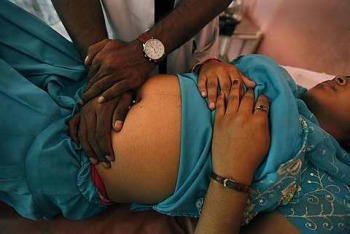
Preparing for the New Arrival- Prenatal Checkup


Every human being deserves to be in good health, at all ages.

For women likely or planning to embark on pregnancy need to be healthy is even more. The health of a woman has bearing not only to her own future health during and after pregnancy, but also of her unborn baby developing in her.

Unplanned pregnancies are at a greater risk not only to the mother, but to the babies with preterm and low birth babies. Some medical conditions and medications can harm the developing baby.

pregnant exam

Ideally the preparation for pregnancy should begin 3 months before getting pregnant. Some actions, such as quitting smoking, reaching a healthy weight, or adjusting medicines already in use, should start even earlier.

Steps to take before PLANNING a pregnancy:
1. All women need to take 400 to 800 micrograms of folic acid every day. It is proven that, folic acid lowers your risk of some birth defects of the brain and spine, including spina bifida. Talk to your doctor about your folic acid needs.
2. Stop smoking and drinking alcohol– it is better to start much earlier.
3. If you have any medical condition, be sure it is under control. Common conditions include: asthma, diabetes, oral health, obesity, or epilepsy.
4. For any over-the-counter and prescription medicines you are using, do inform your doctor about it. These include dietary or herbal supplements.
5. Be sure your vaccinations especially the Rubella vaccination is up to date.
6. Avoid contact with toxic substances or materials that could cause infection at work and at home. Stay away specially from chemicals and cat or rodent feces.
7. Avoid intake of fish that can be high in mercury, like shark, swordfish, king mackerel and tilefish.

If there has occurred an UNPLANNED PREGNANCY:
Start taking care of yourself right away.

• Take 400 to 800 micrograms (400 to 800 mcg or 0.4 to 0.8 mg) folic acid every day.
• Stop alcohol, tobacco, and drug use. Ask help for quitting smoking.
• Make a doctor’s visit to confirm your pregnancy.
• Discuss your health and issues that could affect your pregnancy. Find out what you can do to take care of yourself and your unborn baby.

What are the different periods/trimesters of pregnancy?

Pregnancy can be divided into 3 trimesters of approximately 3 months each. They are:

pregnancy trimesters.

What happens during prenatal visits?

During the first prenatal visit, you can expect your doctor to:

  •  Ask about your health history including previous pregnancies, other diseases, operations etc.
  • Calculate your due date from your last menstrual period.
  • Ask about your family’s health history
  • Do a complete physical exam, including a pelvic exam and Pap test
  • Check your blood pressure, height, and weight
  • Take your blood and urine for lab work—Blood group, Hemoglobin, check immunity to certain infectios esp Rubella, Varicella, Blood tests for infections like: hepatitis B, toxoplasmosis, syphilis, gonorrhea or chlamydia. You might also be offered a test to check for HIV, the virus that causes AIDS.
  • Will order for you an Ultrasound test: To detect the location, and double check the age of the growing foetus. The doctor may also ask for certain extra blood and US tests to check for fetal abnormalities.
  • Answer your questions—you must freely discuss all your concerns and fears with your doctor. Find out all you can about how to stay healthy.

Note: The purpose of first prenatal visit is to book with the doctor, get your date of delivery ascertained, check if there are any risks to the pregnancy & get basic tests done.

Following prenatal visits will probably be shorter.

  • Your doctor will check on your health and make sure the baby is growing as expected. Most prenatal visits will include:
  • Checking your blood pressure
  • Measuring your weight gain
  • Measuring your abdomen to check your baby’s growth (once you begin to show)
  • Checking the baby’s heart rate—Though Ultrasound can detect the heart rate almost at any early age, but for a heart beat by a Doppler is heard only after 3 months.
  • You will probably not need any internal (pelvic examination) till the later part of pregnancy.

Number and Frequency of prenatal visits:
Usually the visits are monthly till 28 weeks, then in two weeks, till 36 weeks. The purpose of the tests during the pregnancy is to ensure that the baby is growing as expected, and that the health of the mother is also normal. Regular checkups will help in finding out any deviation from normal early, and hence easy to handle.
Towards the end, after 36 weeks, the visits become weekly, just to make sure, that the growth and the position of the baby is normal enough for a normal delivery, or if not, then prepare for a surgical delivery.

Special Tests during pregnancy:
In the fifth month, the doctor shall ask you for a blood test to check Glucose tolerance. This is to rule out if you have the risk of developing high blood sugar in the pregnancy, as this can harm the growth of the baby.
Some specialist centers  may also do a ‘cardiac Ultrasound at five months ( 20 weeks) to check that baby has no heart defect.
If your Blood group is Rh negative while husband’s is positive, the doctor will ask for a Rh Antibodies test.

Ultrasound scans during pregnancy:

  • In the first 10 weeks of pregnancy the best way to scan is by inserting a small probe into the vagina. The examination is similar to an internal pelvic examination. Embryos as small as a few millimeters long will be visible on the TV monitor. The procedure my be a little uncomfortable for some, but it is not painful at all.
  • In later stages of the pregnancy, the scanning will be done via the surface of the abdomen. Ultrasound gel will be spread on the skin, then the scanner is passed over the uterus until the fetus and the placenta are found. Usually, the pregnant woman and her partner can watch the scan on the monitor.
  • In the first stage of the pregnancy, usually before 14 weeks, ultrasound scanning is used to check whether the fetus is alive and whether it is alone or one of twins or triplets.
  • By measuring the length of the fetus it is also possible to accurately determine when the baby will be due.Some major abnormalities can also be detected at this stage.
  • At 11 to 14 weeks, measurement of the thickness of the skin at the back of the neck (known as nuchal translucency measurement) can be used to calculate the risk of the fetus having a chromosome abnormality.
  • From 18 weeks onward  it is possible to examine the fetus in more detail. Most organ systems can be examined to ensure that the fetus appears to be developing normally. The spine, skull, brain, heart, lungs, kidneys, arms and legs can all be seen. If the mother is overweight, then the quality of the examination may be poor.
  • From 30 weeks onward  ultrasound is often used to estimate how well the baby appears to be growing. It is difficult to be precise about this but it is often useful if the woman has had a small baby in the past or has a condition that may affect the baby’s growth, such as preeclampsia.
  • The bloodstream in the umbilical cord is also examined to see if it is functioning well enough to transport sufficient oxygen and nutrition to the fetus.
  • It is also possible to check the position of the placenta to see whether it is lying normally or if the placenta is lying abnormally close to the inside of the cervix (a condition known as placenta praevia).
  • There is no scientific evidence to support the concern of harm caused by repeated US scan.

pregnancy_ultrasoundObsUS

Last weeks of pregnancy:

  • After 36 weeks till 40 weeks you will be asked to visit every week.
  • Apart from the usual weight and blood pressure, the doctor will lay more emphasis on the abdominal and pelvic examination to assess the position of the baby and its possibility of a normal birth through vaginal delivery.
  • If the baby is with head down, you are good to go with normal delivery.
  • If the baby is positioned otherwise i.e. rump or legs first( breech) the doctor might try to over the abdomen to turn the baby to head down. This is called as external cephalic version.
  • If it still remains so, then you might need Cesaerian section.
  • In the last visits, do ask doctor about any questions that arise in your mind, pertaining to the child birth, like sexual intercourse in the last weeks, or about the preparation of the new arrival, like Breast feeding the baby, and other concerns. This is also the right time to discuss, what are the different methods of birth control, in order to space the next child.

Role of the Dads to be:
You know it takes two to make a baby. She’s not the only one who’s expecting, you too are. Hence the responsibility does not stop there. Nor does it stay limited to driving a screaming partner to the hospital for child birth and then pacing in the corridor to hear if it’s a girl or a boy.

Research has shown, the Dads who take part in the pregnancy have less infant mortality rates. And there needs to be a relationship built with the baby while the baby is in the mothers womb.

OJO-PE0068533 - © - Chris Ryan

Some of the things fathers-to-be need to do:

  • Create a birth plan together-the doctor to be seen, the place of birth, the method of birth, even about the time baby arrives.
  • Read up together with the Mom to be about pregnancy from the net, books, hospital brochures etc.
  • Accompany her to her prenatal visits, her tests and Ultrasound scans. Also know what is being done and why?
  • Nurture the Mom to be—understand her condition, her anxieties, help her in the daily chores, make her rest, and most of all pamper her, after all she is carrying your baby.
  • Build a relationship with the baby. Studies show that babies in the womb can hear outside noises (and voices) as early as the fourteenth week. By talking to your baby he/she will be familiar with your voice even when still in the womb and this will help develop a closer bond with your tot before he/she enters the real world.
  • Lastly, enjoy your new role, don’t take it as a challenge or burden.

Dr. Bradley said (in his path-breaking book “Husband-Coached Childbirth”), “You can’t beat a husband as a companion in labour!”

pregnancy Dad

Childbirth:

From 36 weeks to 40 weeks , it is normal time for childbirth. If no onset of labor  pregnancy can be allowed to go on till 42 weeks, but there is close watch at the baby with weekly checkups.

Majority i.e. 85% or more have normal childbirth, while 15% or less may need a Caesaerian section.

There are many details, and information an expectant couple would like to learn, about child birth. The are many details you need to know, and hence I suggest you to read, and understand about Sign of labor  types of delivery  episiotomy, epidural anaesthesia etc and know terms like Labor Pains, cervical effacement, breaking water, episiotomy etc. This link answer many of your queries.

newborn

“A mother’s joy begins when new life is stirring inside… when a tiny heartbeat is heard for the very first time, and a playful kick reminds her that she is never alone“

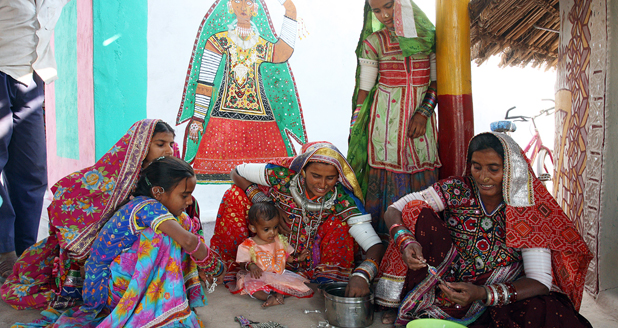
A Life’s Journey of my Sister in the Indo-Pak Subcontinent


An open letter to Director General UN Women, on issues and recommendations for women in one’s region.

First published here: http://worldpulse.com/node/34370

Dear Michelle,

I am sure you, jolly well, must be aware, as a woman that despite being more than half of the world’s population, we the female gender, is still considered either a subordinate or a commodity in the hands of men on this earth. The issues faced by us women all over the globe are numerous and it would take many a blogs to even list those issues. Female infanticide, girl child neglect, malnutrition, sexual abuse, illiteracy, economic slavery, women trafficking, domestic abuse, bride burning, moral policing-you name and that issue still exists among a large chunk of this world’s half population.

As India is my homeland and Pakistan the land of my husband and kids, Michelle, I have chosen to love both the countries as much and hence the plight of women in both the countries is very close to my heart. Broadly speaking, the issues faced by the women (my sisters) in both the countries are similar except for some minor differences in the magnitudes or the nomenclature.
I wish to recount here a typical journey that ‘my sister’ i.e. a typical woman lives in the Indian subcontinent right from her conception till her death.

A news of a pregnancy is rejoiced in our communities and right from that moment, the prayers begin wishing for a son. Rarely does one see people who wish for a girl especially in the absence of a male child. Hence the first rejection of her dignity is registered in a very subtle manner, right at her conception.

As the pregnancy progresses many an enthusiastic parents, especially in parts of India, frantically start to investigate for the gender of the baby growing in the womb and if confirmed a female–thanks to the practice of ‘female foeticide’–some of my sisters end up being aborted just for being a girl. Hence their life ends long before it actually is destined to begin, of living in this world.

Among those who open their eyes in this world—not many are in a position to call themselves lucky.

My little sister is raised as a secondary to her male sibling. She is fed once her male siblings or other male members of the household have had their share, and hence she embarks upon the journey of life malnourished right from the outset. From the birth till death she is under the control and command of a male ‘guardian’ be it a father, a brother, a husband or a son.

While her male sibs go out to play, she is asked to stay indoors and help the mother in house chores. And even if her brother is lucky enough to go to school, she is, in many places , told to stay behind looking after the younger sibs, no matter how much she aspires to acquire education. About more than 3 out of 5 of my young sisters from toddlers to adolescence, in Pakistan fall prey to the beastly lust of men and that too known uncles or cousins (in 90% of cases) in the form of sexual abuse, molestation or rape.

As she attains an appropriate ‘age’ the elders decide that it is time for her to move on with matrimony. What is the age of her groom is purely her luck—he could be a young boy of her age or if the parents are lucky to get a good price—then the groom could be as old as her father. The age is no bar. She is by now well trained to not to express her like or dislike and could be subjected to any sort of oppression to make her obey the decision in case she dares to defy.

The marriage for my sister, Michelle, does not by any means, mean liberation from an oppressive father or an authoritarian brother, but a mere transfer of control and command of her life and existence, to her husband. In many a communities in Pakistan, if she opposes, she is subject to severe punishment in the form ‘honor killing’ or else.
And out of those who do get married, a third have to bear the taunts and torture at the hands of the in laws for not bringing enough of the dowry. Some are even doused with kerosene and burnt alive ( ‘Bride burning’) in India and sometimes in Pakistan too.

National Crime Records Bureau (NCRB), India said a total of 7,618 incidents of dowry deaths were in 2006 , in India, an increase of 12.2 percent over 2005.

On the other hand, in many parts of India, and Pakistan, 1 out of 3 of my really poor sisters stay unwillingly single simply because their parents do not have enough to pay for their ‘dowry’. Literally speaking the groom is up for sale with a price tag of dowry.

However not just the poor even the rich sisters of mine in Pakistan meet the same fate. Their Feudal Lord fathers and brothers do not want their lands to be divided by giving the daughter her share. So the daughter is loaded with jewelery , expensive clothes and ‘married to the QURAN’. Yes, Michelle, this is true and I do not exaggerate even a bit.

Once in wedlock , almost half of my married sisters have no control over their own life and body. They cannot decide how many children to bring forth.

Every hour that ticks by, in India, inflicts more brutality on women, with 2 rapes, 2 kidnappings, 4 molestations and 7 incidents of cruelty from husbands and relatives, reveal the latest national crime statistics, National Crime Records Bureau (NCRB).

Similarly, 4 out of 5 women are subject to some kind of domestic abuse—either verbal, economic, psychological or physical violence in Pakistan according to Human Rights Watch.

And the physical violence is not just beating—it could be in the form of physical or sexual violence, torture, mutilation, acid throwing on the face, burning her alive or even strangulating her to death.
And only a minority of cases come into the knowledge of the authorities or in the news, out of which only a handful are proven guilty and punished. Majority of them manipulate to get it seen as an accident and remain Scot free to repeat the same offense with another innocent sister of mine.

We, both in India and Pakistan, are religious communities but unfortunately the onus of upholding religious obligations and principles begins and ends with a woman. She is morally policed and reprimanded if she deviates from the norm, but if the same offense is committed by a man, everyone including our religious leaders turn the other way.

As she grows older, my elderly sister is seen as the embodiment of sacrifice, patience, and morality while the men gallop like stags all over doing as they please. After all it’s a man’s world out there.

She may have worked, however hard, to raise her family or run the household, and is thus called a ‘homemaker’, but she does not get any share in those assets which she assists in her husband amassing in his name. If she is divorced for any valid or invalid reason, she has to walk out of the house with bare hands as all that ‘home’ she has assisted her husband in ‘making’ is entirely his.

She grows old and the command and control shifts from the husband to her son. She is seen as an embodiment of selflessness, sacrifice and patience . The younger girls are shown the glory of her selflessness and asked to emulate her.

Finally, my elderly sister dies a quiet death, without even realizing that she deserved a far better deal in life than was given to her . And hence the relay of her life which began from the passing of a baton from being an obedient daughter to a sacrificing sister to a dutiful wife to a selfless mother, finally ends as a ‘great’ woman into her grave.

This is the typical story of a good 50 % of the women in the subcontinent if not more.

It has been going on for ages and shall go on unless we make some real dent in the situation.

The only way she can come out of this vicious circle is by providing her ‘quality’ EDUCATION.

As a woman gets educated, a whole family including her subsequent generations get educated too. She gets empowered to take the right decisions from the choices in her life—be it her selection of spouse, or her decision to bear how many children or how to raise intellectually superior children.

Education will also empower her to realize that she has her rights too, and not just her duties that are rubbed on her face all her life.

Education will enable her to treat her own daughter as an equal to her son.

Education shall empower her to earn a better livelihood, and make her come out of economic dependence from the men in her life.

Educated woman who is free to make her decisions, is a happy woman and raises a happy family. A happy family brings forth happy citizens. And happy citizens contribute positively not only towards their own homeland but also the whole planet, at large.

Hence, we do not need any rocket science to discover how to empower a woman. Simply ensure her ‘proper and quality education’ and she shall take the reins of her life in her control.

I hope it isn’t asking for a lot, Michelle.

Thank you.

Sincerely,

Dr Ilmana Fasih

9 February 2011