Open up your mind and your potential reaches infinity…

Archive for the ‘Uncategorized’ Category

I am because we are !


An FB friend Jeffrey had posted a status which talked of an interesting story:

“Today i read a story about an anthropologist who proposed a game to the kids in an African tribe. He put a basket full of fruit near a tree and told the kids that who ever got there first won the sweet fruits. When he told them to run they all took each others hands and ran together, then sat together enjoying their treats. When he asked them why they had run like that as one could have had all the fruits for himself they said:
“UBUNTU, how can one of us be happy if all the other ones are sad? “

UBUNTU is ancient African word which means ‘humanity to others.’ In Africa it is also expressed as ” I am because of who we all are.”

Henri Frederic Amiel ( 1821-1881) was absolutely correct when he said:
“Blessed be childhood, which brings down something of heaven  into the midst of our rough earthliness.”

Indeed, the above gesture reflected the angels that children are, oblivious to the evil world of  grown ups.

“Play is the highest expression of human development in childhood, for it alone is the free expression of what is in a child’s soul” ,  had remarked Friedrich Froebel, founder of Kindergarten.

Yet another example of play which truly reflects the quote: “Necessity may be the mother of invention, but play is certainly the father”,  by Roger von Ooech is evident in the picture below

They see  no walls,  just  gaps as openings large  enough to hold hands.


Smiles from children are packaged sunshine and rainbows…

For sure, money does not buy happiness.   They share with each other, whatever their riches are- their smiles, their companionship and their playfulness.

( This pic  is courtesy another FB friend, Kamran, and was  published in his ‘Dateline Islamabad’  ).

Lessons to learn from these children?

Loads of them, perhaps.

It’s just a Menopause !


Menopause simply means:
*A woman will not be having periods anymore. Hence she will not be able to get pregnant. It certainly does not mean that she has lost her womanhood or feminity.

Menopause is that point in time when periods stop forever. You can know that you had a menopause, only after a year has passed, and the period has not resumed.
Usual age for menopause is 51 years. (But it can be upto 55 years. Those who have before 40 have early menopause.)
Before the period actually stops, a woman undergoes some change in life symptoms. This period of transition is called PERIMENOPAUSE

Why is it important for you to know about menopause?

The change in menopause can be divided into Short term and Long term.

In the short term:

It is important to know in advance that while approaching menopause a woman undergoes certain physical and psychological symptoms, whose awareness helps her and her family (especially the spouse) to understand her situation and tackle it better.
• Periods start to get more and more irregular about 4-5 years prior to menopause. Some get it scanty, while in some they become heavy due to hormonal imbalance.
• Woman may feel sudden feeling of a heat wave and then sweating, called Hot Flashes. They can come anytime in the day, at night f during sleep, and can be very annoying to the woman. It is mainly because of the fluctuating hormone levels in the body.
• Mood swings may occur, with crying spells and even depression in some.
• Dryness and thinning in the vaginal walls, difficulty in holding capacity of urine,
• Stress, trouble sleeping, forgetfulness and feeling of laziness- if you are not prepared for the menopause mentally and physically.

MYTH 1: That menopause will make a woman less interested in her sexual life. It may happen with some, but for some others, they feel more relaxed as there is no fear of getting pregnant.

MYTH 2: In the late forties when the periods get irregular, many women think they will not get pregnant anymore and get relaxed on using birth control. This often causes them to get pregnant unexpectedly. Hence, do not stop contraception unless periods have completely stopped.

In the long term:


It is very important to  realise that with the present life span of 70+ years now the woman spends at least ( if not more) a third or 40% of their life after menopause. Hence it is important to know how to stay healthy in this period of life.

• A woman becomes as vulnerable to heart disease as any man, as high oestrogens previously protected her from heart attacks or stroke.

• With menopause the bone density goes down rapidly and a woman after some years may develop thinning of bones called Osteoporosis
(Osteoporosis is a serious problem. If not taken care this can have serious after effects. Check for it in the next blog).

What should you do?


Know that menopause is a normal change in a woman’s life and it has to come when you are around 50. Hence better be mentally and physically prepared for it.

What preparations do you need to do?


EASY: If not earlier, when you enter into forties, MAKE A CHANGE IN YOUR LIFESTYLE.

STEP 1: Exercise, exercise, exercise:

Benefits of exercise are too many:
• This make menopausal symptoms less severe
• It will keep heart healthy after menopause
• Prevent bone loss or osteoporosis after the menopause
• Will prevent weight gain after menopause.

STEP 2: Stop smoking, reduce on tea and coffee- as they all increase bone loss, smoking increases risk of heart disease.

STEP 3: Take Vitamin supplements, especially Calcium and Vitamin D. The daily dose required for women around 50 is Calcium 1200 mgs and Vitamin D 800 micrograms.

STEP 4: Keep reminding yourself, menopause hasn’t taken your womanhood away or that you are old. Keep a good sense of humour and consider it a good change.

TIP: It is likely the time when children are older, or may even leave home …so empty nest syndrome can make you feel more depressed. Develop hobbies which will keep you stimulated and stress free. If the children have grown up and you have fewer responsibilities, do think of dedicating some time to public service and giving back to the society.
Hint: teach a poor child, join a social work, etc.

Is there any treatment of menopausal problems?

If tolerable, the symptoms may need no treatment and just reassurance. But if unbearable, you need to SEE A DOCTOR  for advice or medications.
The most immediate problem during the menopause to most women is HOT FLASHES. To minimize them:

• Try to avoid things that may trigger hot flashes, like spicy foods, alcohol, caffeine, stress, being in a hot place.
• Dress in layers, and remove some when you feel a flash starting.
• Use a fan in your home or workplace.
• Try taking slow, deep breaths when a hot flash starts
• There are medications too to help in hot flashes, but for that you need to see a doctor.

For vaginal dryness or discomfort there are water based gels or oestrogen creams, which help, and can v be asked from a doctor’s advice.

The main problem is however the long term bones loss. But this can be prevented too.

  • To keep your bones strong, you need weight-bearing exercise, suchas walking, climbing stairs, or using weights.
  • You can also protect bone health by eating foods rich in calcium and vitamin D, or by taking calcium and vitamin D supplements.
  • Not smoking also helps protect your bones.

Are there Alternative Therapies?  

There are certain herbal and natural remedies too. eg Soy which contain natural phyto oestrogens in foods like Tofu, soya milk, soya beans. There are other names too like black cohosh, Oil of evening primrose etc, but they have not n been well researched. Do talk to your doctor before taking them, in case they clash with your medications.

CAUTION: After you have had a menopause, if ever the period returns, it is not a normal period. It could be something serious causing the bleeding. Hence do not ignore and show to your doctor as soon as possible.

Last of all: Maintain high spirits, and good sense of humor. Do not think this as a negative change in life. Return to your childhood, playfulness is possible. 

Smoker, and want to kick off the habit? Come on.


Have you tried to quit smoking before ?

Whether or not, take comfort that most smokers try and fail many times, before they finally quit. Past failures do not suggest you cannot.

It’s a normal journey for most smokers.

TIP: Begin with the fact that it is harder than you think. You will probably get frustrated several times, on the way.

But…DON’T GIVE UP TRYING!.


First of all: You need to change the way you think about smoking.

It may help if you think on any of those lines:

“Smoking is bad for me. Period.”

“Quitting is tough, but I am tougher.”

“I want freedom from Cigarettes.”

“I am in control, not my cigarettes.”

“My second hand smoke hurts my family and friends.”

REMEMBER:  You are the only one who has to make the decision. Your loved ones may want you to quit, but the real commitment must come from you.

Still strong on your resolve…go to the next step. 🙂

Second: Decide a quit day and make a plan.

Pick a day within the next one month. It could be an important date ( a birthday, any anniversary etc or any number you like). Circle that date FIRMLY on your calendar. And make a strong, personal commitment to quit on that day.

• Tell your friends and family about the QUIT DAY

• Get rid of all ashtrays, cigarettes in home, car, workplace etc.

• Get ready with a stock of chewing gum, hard candy, cinnamon sticks, toothpicks, straws, coffee stirrers, even pencils/pens ( No am not kidding  ).

Third: Decide on the right course: .

There is no one way—you can chose your own:

Stop all at once
or
Reduce gradually the no of cigarettes each day, then stop on the QUIT DAY
or
If you want to take the help of medications, or Nicotine Replacement like gums, lozenges, patches : You need to consult a doctor in advance who will prescribe medication and tell you if it is safe for you to take the nicotine replacement.
The medication will have to begin a week before the quit day. The Nicotine Replacement, however, will be used as and when needed.

TIP: Practice often repeating to yourself: “No thank you, I don’t smoke.”

Fourth: On the quit day: Make it a DIFFERENT DAY:

• Don’t smoke AT ALL….not even a puff.

• Make a routine that is busy, and keeps you on feet, be active. Change a routine…take breakfast, lunch at different location and different menu from the routine.

• Drink loads of water and juices.

• Tell friends and family to avoid smoking around you, and that they support your day without cigarette with louder support, pat, hug etc.

TIP: Know that withdrawal symptoms and craving are due to physical and mental nicotine dependence and NOT CIGARETTE.

Fifth: If and when you get a craving :

Do something that keeps your hands busy, like holding a pencil in the hand like a cigarette, which can help distract you from the urge to smoke.

Replace the pack of cigarettes in the pocket with a talisman(e.g., a photo of a loved one or a souvenir) that reminds you of what you want to accomplish.

Breathe deeply: When you smoked, you breathed deeply as you inhaled the smoke. So, when the urge strikes now, breathe deeply and picture your lungs filling with fresh, clean air.

Delay the lighting up: If you feel that you are about to light up, hold off. Tell yourself you must wait at least 10 minutes. Often this simple trick will allow you to move beyond the strong urge to smoke.

TIP: Remind yourself of your reasons for quitting and the benefits you’ll gain as an ex-smoker.

Sixth: Staying quit

Remember the Mark Twain quote?

You too may have to quit several times.

If so, you know that staying quit is the final, longest and most important stage of the process.

Use the same methods (as above) to stay quit as you did to help you through withdrawal.

Think ahead to those times when you may be tempted to smoke, and plan on how you will use other ways to cope with these situations.

IMPORTANT: Repeat in your heart “I am a non smoker”

Sounds silly? No, it isnt. Many smokers see themselves as one– a self image which wants them to still have a cigarette.

BEWARE: More dangerous, perhaps, are the unexpected strong desires to smoke that can sometimes happen months or even years after you’ve quit. Rationalizations can show up then, too. To get through these without relapse, try these:
• Remember your reasons for quitting and think of all the benefits to your health, your finances, and your family.

• Remind yourself that there is no such thing as just one cigarette — or even one puff. As you will often suddenly have the urge `just one cigarette.

• Ride out the desire to smoke. It will go away, but do not fool yourself into thinking you can have just one.
• If you are worried about weight gain, put some energy into planning a healthy diet and finding ways to exercise and stay active.

Seventh: What if you slipped and did smoke?

Don’t feel guilty. YOU DID NOT FAIL. You can look at it to realise what went wrong and renew your commitment.

REMEMBER: Even if you do relapse, very few people are able to quit for good on the first try. In fact, it takes most people several tries before they quit for good.

IMPORTANT: Figure out what helped to you during the Quit period, and what made you relapse.

MAKE A STRONGER COMMITMENT THIS TIME.
FINALLY: If you`ve succeeded:


Don’t pretend smoking wasn’t enjoyable. IT WAS.

After you have smoked your last cigarette, throw out all your tobacco products in the trash or burn them in a bonfire.

Do not give them to another smoker, and least of all to a friend.

Discarding your tobacco like a funeral that says goodbye to an old love and starts you onto a new life.

GRIEVE the loss of your love. It’s okay.

FEEL and you HEAL !
 .


Credits: Smoking Cessation Program in Credit Valley Hospital, Mississauga, Ontario, Canada.

Abida Parveen, the therapeutic


If music is a mountain range, its Mt Everest is Abida Parveen. A summit of Sufi music, which no soul can surmount.

The Queen not only drowns herself in the music she sings, but she sweeps along her listeners too, in the tides of the overpowering words that flow out her throat. After the plunge, to rise up to the surface banal  isn’t easy.

She is mesmerising, she is addicting, she is tranquillising.

A true flag bearer of Ganga Jamuni Tehzeeb, she immortalizes the words of  Bulleh Shah, Kabir and Amir Khusrau with just the same devotion.

Beyond music, pearls of abundant wisdom  she spilled, in this interview (which was taken before she enthralled the Delhi audience by the performance on March 5, 2012) reflected nothing but her rock solid conviction on which her life and music stand – of peace and love. Though thoroughly therapeutic, her words shook me.

In an interview esewhere she said:  “In Sufism there are no barriers, mine or yours, old and new. It belongs to all and connects hearts and souls. It’s power unites the singer and listener in a divine communion with the creator.”

From its very inception till this year’s Jahan e Khusrau Festival, she has been present in each of the ten held so far. “The festival is unique because it has no nationality or religion and is sacred to all of us.”

Overwhelmed, and still shaken by the genuine grief that Ali Zafar expressed over the hatred sweeping across the globe, but more so in our subcontinent, I could not hold back my own tears listening to her firm belief  that there are indeed “no internal barriers”.

The interview itself is a journey to the sublime, I would wish to take again and again. Hence, I have captured it in my blog, to preserve it as a shrine to which I shall keep returning to, in times of deep internal turmoil.

In these times of despair when we keep embracing hopelessness off and on, she lives with her heart, mind and soul steadfast on every word and verse of truth and love  she sings. 

Kudos to Barkha Dutt for immortalising these priceless pearls of wisdom.

(Click to the number below for the must watch interview)

225251 or http://www.ndtv.com/video/player/the-buck-stops-here/singer-abida-parveen-talks-about-the-power-of-sufi-music/225251

Smoke and don’t want to say QUITS ?


Do you smoke and are in no mood to quit?  Fine, this blog is for you.

The intention here is to give you some information without any strings attached. There won’t be any lecture, any pressure or any judgmental statements

The blog also means to support the person in you, and to give you some tips on how to relieve stress from your life which arises as a result of others reactions to your smoking. The blog shall not trick you to make you quit, I promise.

You are the only one in your life to decide whether you wish to smoke or to quit.

Although as a health activist, I would wish no one smoked, but we have to recognise that each person has a right to make his own choice. Anyone forcing it upon you will make it give a sense of deprivation and is bound to fail.

The blog will mainly discuss
1. How to deal with people who nag you to quit
2. Understand your own smoking habit
3. Get some new facts about smoking
4. Why would you not want to quit?

Before we begin with these points know that the fact that you smoke and don’t even want to quit smoking does not make you a devil.

POINT 1: How to deal with people who nag you to quit

“How many cigarettes do you smoke each day? Can’t you just stop this nuisance.”

“Listen, I know it is harmful. Don’t preach me, okay. I’ll quit when I want.”

I am sure these are the usual dialogues that you may be exchanging day in and day out.

The people around you must have told politely or at times harshly or even without words through their body language that they don’t approve of your smoking.

If they are your loved ones—relatives, friends or well wishers, they say because they care.
Remember that their intentions aren’t evil. But the problem is that they do not know how to convey it, or perhaps don’t know that their reminders or nagging won’t be of any benefit.

They know not that it puts you at a defensive and  can’t make you quit, for sure.

So what’s the way out?

Understand that they are well meaning. Appreciate their concern in words. Then, explain to them politely that their constant reminders would make you more annoyed and that their nagging will make your chances to quit harder.

And tell them that if they eased off, perhaps you will be less defensive, and it might make you think to quit one day.

As for those unknown who judge you in public places:


I know you may be feeling bad when people who don’t matter judge with words or make faces on smokers. You may be aware that those who do not smoke do not hold a great image of smoking.

It’s the smoke they disapprove, not you.

Also, most public places have gone smoke free. The truth is that not only are they to stay, but shall spread wider.

This is not to stigmatise smokers. Just as you have the right to smoke in your own private domain, others who do not smoke have the right to worry about their health and of the community at large.

So it isn’t to shun smokers, but to ensure a safe environment for non smokers.

POINT 2: Understand your own smoking habit:

Think of the reason why do you smoke? Probable answers would be:

  • “It helps me relax from the stress.”

Yes, many smokers believe so. But the truth is that smoking makes your heart beat fast, your breathing gets quicker and raises your blood pressure.

It is not the smoking that calms you.

You relax because
1. the cigarette stops the craving caused by nicotine addiction
2. The mere habit to reach and light a cigarette when tense make one feel better. ( a learned response)
3. Having a cigarette diverts the mind from worries.

It may calm you down for a while but the level of stress builds up over time and reduces the energy levels.

  • “It is my choice; I am hurting myself, not anyone.”

Well , your argument is valid only and only if you smoke in a bubble, where no one else exists and where it is not spilled over to the air shared by others.

POINT 3: Get some new facts about smoking:

We won’t  share the information here which all doctors say: “Smoking has 4000 harmful chemicals, and they cause lung cancer blah blah blah…. .”
I know we all know this by now.

The only thing that I would like you to know is when you smoke out, you dump these chemicals in the air which is shared by others too:
Acetone (paint stripper)/ Arsenic (poison element)/ Hydrogen Cyanide (poison of gas chambers)/ Naphthalene (in moth balls)/ Pesticides (insect killers)/ Carbon monoxide (car exhaust) etc. See more in the picture below.


And all these chemicals get inhaled by kids, women and men around you who do not smoke.

I am sure you know how dangerous second hand smoke is?

It causes some serious health issues in children like allergies, chest infections, poor attention span, hyperactivity and even increased chances of sudden death in the first year of life called SIDS.

In men and women who take in second hand smoke are 5 times more likely to die of lung cancer for no fault of theirs.

This is just not to make you feel guilty, get stressed and smoke more.  Please, don’t misunderstand.

This is just to let you know that you may not choose to quit smoking, you may at least make a choice not to smoke in your home or car where others especially children are present.

The smokers get certain other health problems too, which Respirologists don’t talk about.

Women smokers develop hormonal problems, find it 3 times more difficult to conceive and have an early menopause.

During pregnancy, whether it is a Mom smoker or a Dad smoker, the baby born is likely to be low birth weight, cranky and has very high chances to develop a serious lung disease. His chances of SIDS are 5 times high.

Men smokers have both poor quality and quantity of sperms . Smokers develop sexual dysfunction after 10-15 years of smoking,( e.g those who start to smoke in teenage, may face such problems in their thirties and forties). The chances of such problems increase with the number of cigarettes smoked per day.

Link: http://www.acsh.org/healthissues/newsID.646/healthissue_detail.asp

POINT 4: Why is it that you don’t want to quit?

  • “I don’t feel like quitting.”

Well valid enough, your life, your choice. But please, just one tiny bit of suggestion:

‘Keep your mind open, it might just click to you one day that you want to quit.  After all if you’re not an angel that people expect you to become, you’re not a devil either.’

  • “I am too addicted?”

Correct. Smoking is very addictive and very hard to quit even to those who intend to quit. It is the nicotine not the cigarette that makes you hold on to it.

And for nicotine addiction there are several options in Nicotine Replacement Therapy: patch, gum, inhalers, and lozenges.

Just keep these options in mind, in case you ever decide to change your mind at a later date.

  • “I’ve been smoking for years.”


Fine it’s your choice. You want to do it probably because you know the benefits smoking gives to you-to relax and feel good.

How about having a look, just a look at what benefits would it gives you if you stopped smoking:
Day1: Your lungs work better, and you don’t feel out of breath
Day2: Your sense of taste and smell starts to return. You may cough up more mucus, but only to clear the lungs
A week after: Blood flow to your hand and feet will increase, and you won’t feel as cold
Within 6 months: Less of coughing, less of sinus congestion, less of shortness of breath will occur.
After an year: Your risk of dying from a heart attack will be reduced to half.
There are many many more benefits …

Well, I know after this you must be wondering: “The blog didn’t work. It did not trick you to change your mind.”

Well friends, this wasn’t at all meant to change your mind, though the blog would be very happy if you did.

But then know it’s not easy and the decision is entirely yours.

Remember one thing…all those who care for you, wished you would change your mind ONE DAY, and SOON.

Just keep your mind OPEN. You might just one fine day decide to say QUITS. Imagine !  🙂

But take your time.

Just relax, and feel there’s one place in this world which does not judge you even as a smoker.

And if you ever wish to quit….refer to the next blog >>>

“Smoker and want to kick off the habit?.”
https://thinkloud65.wordpress.com/2012/03/15/smoker-and-want-to-kick-off-the-habit-come-on/


*Warning: Smoking is injurious to health. *

Content courtesy: Canadian Cancer Society & Credit Valley Hospital Anti Smoking Unit.

Know the bitter truth of Diabetes


PART-I

The tsunami wave of diabetes mellitus and its health and economic consequences is threatening much of the world. The need to prevent and control this debilitating chronic disease is urgent, before desperation sets in.” Journal of Royal Society of medicine.


How does this  matter to us South Asians?
Indian Subcontinent (which includes India, Pakistan, Nepal, Bangladesh and Sri Lanka) is the epicentre of this Diabetic pandemic. By 2025, over 2/3rds of the diabetics would be living in our subcontinent.
Link:  http://171.66.127.115/content/100/3/115.full

How are we more vulnerable as compared to other ethnicities?
We South Asians get Diabetes:
• 10 years earlier
• At lower levels of obesity
• Suffer longer with more complications
• Have 3-8 times higher risk of dying from Diabetes than Europeans..

Why are we more vulnerable than other ethnicities?
Again the same answer as for the Heart Disease—Our genetic makeup coupled with our unhealthy lifestyle i.e. faulty diet, obesity, sedentary habits and lack of health awareness.

Can we really do anything?
Yes, research proves that we can avert or at least postpone Diabetes and improve our quality of life through various lifestyle modifications.


What should we know?
First, know that Diabetes is no more the disease of the affluent; even the poor have it.

Second, it is no more a disease of the middle aged. Diabetes Type 2 which was earlier called the Maturity onset diabetes has now been seen to occur amongst the South Asians in early 20s and many get in their 30s.

Thirdly, in order to live a life without Diabetes we need to start early and change our life style. However, it is better late than never.

PART-II

What should we do?

If you are not a Diabetic

Step 1 : Know whether you are at high risk of Diabetes Mellitus or not.

Check your risk from the risk-factors chart:

Or better see YOUR RISK OF DIABETES  from  the  Diabetic Risk Calculator at the link below.
Link:  http://www.diabetes.org/diabetes-basics/prevention/diabetes-risk-test/

(ADV*** : Dont skip this ^^ step!!)

Important: In case you are a high risk group, please consult your doctor and ask him to screen for Diabetes. He will do some blood test on you while fasting and after meals to check your blood sugar levels.

Step 2: Get more physically active :

Benefits of exercise:
• You will lose weight
• It will lower your blood sugar
• Boost your sensitivity to insulin –which will keep your blood sugar in the normal range.

More, refer to Blog 1 : https://thinkloud65.wordpress.com/2011/12/31/living-a-healthy-lifestyle/)

Step 3: Lose the extra weight.

Obesity is one of the main culprits in causing Insulin resistance and hence Diabetes- Abdominal fat is the real culprit.


Tip: If you are obese or over weight, loss of every kilo will reduce the risk by 16%. And if you lose 10% of your body weight, you will cut the risk of developing diabetes by 60%.

Step 4: Make long term dietary changes.

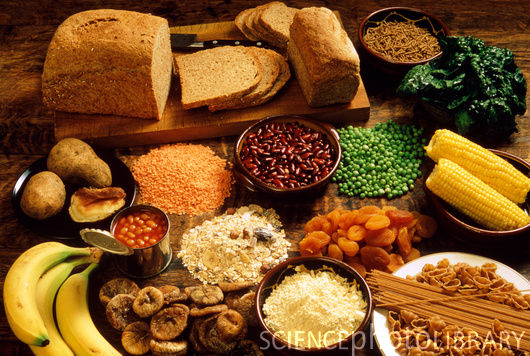
Add fibre to your diet. This simply means eat more of fruits, vegetables, beans, whole grains, nuts and seeds as they are rich source of fibre. 

Benefits: Fibre reduces the risk of Diabetes, of Heart disease and risk of colon cancers. They also promote weight loss.

Check Glycemic Index of the foods you eat. Choose foods with low Glycemic Index as this maintains more constant blood sugar levels.

Tip: Print out a chart of foods by Glycaemic Index and put it over the fridge, so that it is easy to refer to them while selecting food.

For more on Glycaemic Index : http://www.diabetes.ca/for-professionals/resources/nutrition/glycemic-index/

Step 5 ; Try to manage your stress:  Stress increases hormones in the body which predispose to Diabetes.

IMPORTANT NEWS: The research has shown that if one follows the above measure, at least 50 % postponement of DM is possible.

PART-III

For those who are already Diabetic

Remember:

Diabetes is a lifelong responsibility.

You may not feel unwell in the initial years but persistently raise blood sugar levels can gradually harm each and every organ of the body, more seriously the organs essential for life-heart and kidneys.

To the Diabetic, I would just give a few outline tips here, as  it is important for you to be under a regular care of a QUALIFIED DIABETOLOGIST   to manage your health:

Step 1: Make a promise to yourself that you will take care of your diabetes by being FULLY INFORMED  of the disease. (Just google ‘Diabetes Mellitus’ and there you are).

Step 2: Try to keep the blood sugar in normal range through diet,  exercise, weight control, medications and regular smedical consultations.  A normal sugar levels maintained are as good as being non diabetic.

Step 3: DIET: Diabetics should be very watchful of their calorie intake, and must take meals LOW  in SUGAR, FAT and SALT content. You must consult a DIETICIAN to make meal plan, ideally.

See  links for dietary guidance: http://www.diabetes.ca/files/JTB17x_11_CPGO3_1103.pdf

Try  this SOUTH ASIAN DIABETIC MEAL PLAN BOOK :http://www.diabetes.ca/documents/about-diabetes/Recipe_Booklet_high_res.pdf

Other SA recipes: http://www.pamf.org/southasian/healthy/recipes/

Step 4: Get blood sugars checked at regular intervals…at home and by the doctor.
Through your doctor: Make sure you have HbA1c tested every 3-6 months. The test that shows the average amount of sugar in your blood over 3 months. It tells how well you are controlling your diabetes.

An HbA1c of 6% or less is normal. See the other levels:

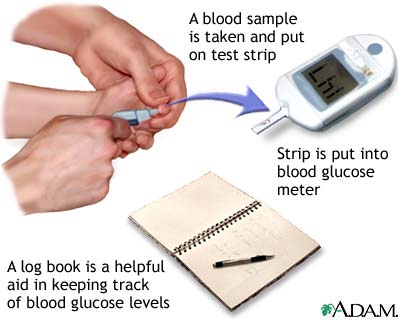
Home Glucose Monitoring : Home sugar testing is also important. You must have a glucometer for this.  Ask your doctor how frequently and when should you check your  blood sugar yourself at home.

Step 5: Keep your Blood Pressure and Cholesterol under control.


Step 6: Regular health checkups to assess complications of diabetes—Have your KIDNEYS, HEART, NERVES and EYE check ups EVERY YEAR .

Ask your doctor by name —> to check for COMPLICATIONS of Diabetes.

Warning*: Long periods of uncontrolled Diabetes can cause painless Heart Attack,  Kidneys to fail,  Nerves to get numb and Eyes with loss of Vision. (This is intended not to scare you, but inform you of the seriousness of the problem).

Step 7: Take care of your FEET: Diabetes causes nerve damage which can cause injuries to feet without being noticed due to loss of pain sensation.


IMPORTANT: 

  • Check your feet everyday for cuts, blisters, redness or swelling. Consult the doctor is any such thing is seen.
  • Keep the feet clean, dry and moisturized everyday to prevent any infections.

Step8: Brush your teeth and floss them everyday. Have dental checkups every year and mention to the doctor that you are a diabetic.

Step 9: Ask your doctor if you need to take a Aspirin tablet everyday to prevent heart attack and stroke.

See the benefit of aspirin in Diabetes in this link: http://www.diabeticlive.com/diabetes-101/diabetes-news/new-study-on-aspirin-and-diabetes/#.TzwKiE4gf1k

Step 10: DO NOT SMOKE as it accelerates all the diabetic complications. If you drink, do it in moderation.

Step 11: Manage  STRESS: Stress increases Blood Sugar levels , increases food indiscretions and one tends to neglect the health. Hence manage your stress smartly.

Last but not the least, maintain a sense of humor. You may not ‘delete’ Diabetes from your life but you can ‘minimize’  it by knowing and following the right steps.

🙂 

Dilemma of duty vs compassion


Having a background from the medical profession, it is not difficult to understand the dilemmas that erupt between professional ethics  and compassion, when they, at times, seem  to clash. Doctors are often accused of ‘compassion fatigue’ which I find is a completely misplaced myth.  However, at times, one’s hands are tied through requisites of an  ‘ethical’ behaviour.

This painful story also deals with the same conflict albeit in the life of a journalist.

This is a  Pulitzer Prize 1994,  winning photo taken by  Kevin Carter a South African photo journalist. The picture was clicked, in March 1993,  during a visit to the famine struck Sudan.

The picture depicts a famine stricken child being stalked by a vulture. The child is crawling towards a United Nations food camp, located a kilometer away.

He is said to have taken the picture because  it was his ‘job title’.

Soon after the picture was published in New York Times on March 26, 1993, hundreds of people from all over the globe started to inquire about the fate of the girl.

The newspaper reported: No one knows what happened to the child, including the photographer who left the scene as soon as the photo was taken.

The photographer came under  fire for being insensitive and a publication wrote:

“The man adjusting his lens to take just the right frame of her suffering, might just as well be a predator, another vulture on the scene.”

Kevin  later confided to friends that he wished he had intervened.

Journalists at the time were warned never to touch famine victims for fear of disease.

According to another photographer, Joao Silva, accompanying Kevin, they had only 30 minutes to take pictures before flying out of the area.  And according to him, Kevin was shocked to see the children of  famine for the first time and started taking pictures of the kids, as their parents were busy collecting food from the nearby food camp.

“He carefully came close to the child to take a picture of the baby with the vulture and then after taking a few shots chased away the vulture.”

Months later, and only weeks after being awarded with the Pulitzer Prize, Kevin Carter, 33, drove up to the place where he used to play as a kid, and  committed suicide.

Portions of Carter’s suicide note read:
“I am depressed … without phone … money for rent … money for child support … money for debts … money!!! … I am haunted by the vivid memories of killings and corpses and anger and pain … of starving or wounded children, of trigger-happy madmen, often police, of killer executioners…I have gone to join Ken [recently deceased colleague Ken Oosterbroek] if I am that lucky.

His story was made into a documentary ” The Death of Kevin Carter: Casualty of the Bang Bang Club ” which was nominated for the Academy Award in 1996.

A tribute to Kevin Carter : 

Painfully Humane


Published in TheNewsBlog on January 31, 2012. http://blogs.thenews.com.pk/blogs/2012/01/31/painfully-humane/

A couple of days ago I met a neighbour outside the house, walking her two cute cocker spaniels. We exchanged New Year Greetings and as a ritual I asked: “So how did you spend your new years eve?”

“Oh I spent my evening feasting with my girls.” she replied

“Lovely, so they all came over to be with you.”

Her face changed color, “Oh no, these girls Sasha and Mori pointing at the two cocker spaniels, picking up the little ones in her arms.

Embarrassed I replied: “Yeah couldn’t be a better new years eve than with one’s pets. I did it too, when the rest of my family went to see the fireworks at midnight, I sat with my cats on the sofa watching TV.”

This triggered off the talk on how we undermine animals and use terms like ‘animal’ or ‘beast’ with a derogatory hint while using words like ‘humane’ as a symbol of compassion.

“I see those TV anchors calling suicide bombs that go off in Pakistan as ‘inhumane’ acts, when in reality they’ve been done by humans themselves, especially those who aspire to be superhuman so that they get a special place in Paradise.”

I could just nod in agreement.

She went on, “Isn’t this all very ‘human’ to kill, for no rhyme or reason?”

Her words echoed for hours. Don’t we use the same terms ‘insaniyat’ for compassion while ‘janwar’ or ‘haiwaaniyat’ for cruelty in Urdu too.

Although, it is common knowledge that even the most dangerous of animals do not harm unless they are hungry or provoked.

Perhaps our ‘hunger’ has gone beyond filling our stomachs. We ‘attack’ others to fill our egos, the egos which never get filled, because there is no bottom. Yes no bottom, because, we do not have any limit to how low we can stoop to gratify our egos.

Often we see and hear of stories where two pets that could have naturally been predator-prey, coexist as friends and in fact the predator acts as a protector of its erstwhile prey.

I saw this live for years in my own home between our cat Nelson and the grey parrot Shakespeare. Shakespeare learnt to mimic the mewing and growl of Nelson. And Nelson would come running to him. They would simply mew, looking into each other’s eyes. No t even once did the cat attempt to attack or touch the grey parrot. The day Nelson passed away and went missing from home, Shakespeare mewed for hours, as if calling out for him, adding to the gloom and shedding tears like a bereaved kid.

It is a bigoted myth that empathy is a higher cognitive function that only apes and humans are blessed with. Perhaps we are more loaded with narcissism than with empathy. Studies on whales show they are extremely emotional. Whale brains have specialised spindle cells which are important for empathy, and rapid gut reactions. Previously, only humans and apes were considered to possess them. An interesting practical example of this is when a 50-foot, 50-ton humpback whale was caught in a net off California’s coast. After rescuers untangled it, the whale swam up to each one of the rescuers, and winked before swimming off. The researchers confirmed this was a gesture of gratitude from the whale.

To study empathy, neuroscientists in McGill University injected acetic acid in the paws of mice causing them pain. The mice who watched their friend writhing in pain became more sensitive and reacted more violently to pain, when injected with the same chemical.

Studies on animals called ‘humans’ show that children who are cruel to animals, are likely to turn to violence later in life. 75% of prison inmates are known to have past history of animal cruelty, says a study.

We need to revisit or swap the meanings of ‘humane’ and ‘beastial’, or ‘insaniyat’ and ‘haiwaniyat’.

It is a saving grace that we do not understand animal language, otherwise it would be very embarrassing to know that every time a suicide bomb, target killing or even animal poaching occurs we would have heard animals scream “What a painfully humane act!”

Daring to cross the love border


Published in Aman Ki Asha, The News on January 24, 2012.

Ilmana Fasih shares some stories of building cross-border bridges through the social media

A world without borders was my childhood dream. The desperation and the need for this dream to realise, came out in the open when I embarked on my ‘pyar border paar’ journey, after deciding to tie the knot across the border. I’ve been on two decades of a topsy-turvy ride riddled with visa travails, with the hope-hopelessness cycle going round in vicious circles. Not had I ever dreamt in my wildest of dreams that my hope for a borderless world could be realised in my lifetime. By a ‘borderless’ world, I mean erasing psychological rather than physical borders.

Perhaps on ground it still remains a dream, but on the virtual terrain it has turned into a reality, with the booming world of social media, especially twitter. It is a visa free, passport free utopia where no one is asked their colour, creed or credentials.
It does not take long for one to get addicted to this borderless terrain. The most fascinating thing for me is to see Indo-Pak friendships burgeoning through social media. Thanks to this factor, we can all be a family beyond borders and beliefs, tied with passions common on both sides of the Indo-Pak border.


Indians and Pakistanis wish each other on Eid and Diwali via Twitter and Facebook, and send virtual firecrackers, mithai and biryani across the border.
The #shair hashtag which ‘trended’ on twitter some time back merits a mention. Every day, it attracts Urdu poetry loving twitterati in India and Pakistan. As Rana Safvi , who started this trend, begins to tweet the topic or the poet of the day, other #shair fans start to contribute their tweets with unmatched enthusiasm. So common is the passion for #shair on both sides, that it is almost impossible to identify which side of the border the tweep belongs to.
Rana tweets: “Twitter ne nikamma ker dia, warna aadmi hum bhi aadmi the kaam ke.” #shair
Comes the reply: “140 characters mein baat ker lete hain, DP to DP borderpaar, mulaqat samajh lete hain.
Political differences and arguments also emerge on twitter, but more than anger, what trumps are the vibes of friendship and harmony. The same thrill is felt on facebook too, with some limitations.
Some time back I was approached by two sets of people keen to tell their story of cross-border friendship developed through social media.
One was Ram, a boy in his mid twenties, from West Bengal, India who became friends with Maria, a girl in Punjab, Pakistan through facebook. As their friendship led to a better understanding and respect for each other’s cultures and beliefs, the vibes spilled over to thaw any cold feelings that their families had for the other side. When Ram’s father fell ill and was admitted to hospital, Maria’s mother and sister prayed for his recovery. He recovered, and Ram’s family attributed the recovery to Maria’s family’s prayers (duas).
Now, as Maria is about to be married, Ram’s family is sending her a present as a token of their friendship and gratitude for her family’s prayers. Ram explained that their families had no links to anyone the other side, and hence had no other reason to be warm, but for their friendship.
Maria and Ram have vowed to keep up their friendship even getting married to their respective spouses, and one day, when they can obtain visas, they hope to meet and ensure that any children they have are able to meet each other.


The second story is that of a love-struck couple who prefers to keep their identity and respective nationalities confidential. They contacted me with a request that I should intervene, (having gone through a similar ordeal), and convince the girl’s parents that tying a knot across the border can work out.
Like many others, they ‘met’ through an incidental chat on twitter some six months ago. They then added each other as friends on facebook. The exchange of pictures and other information led them to develop a better understanding of each other, until they reached a point when they decided they needed to share their lives. Both are in their early or mid twenties, and feel they are mature enough to embark on this journey.
The hope and enthusiasm that they had attached to my help made it hard for me to explain that I would prefer to stay away, and that they needed to deal with the situation themselves. Life is as such a struggle, and with a cross-border union, it gets tougher. Hence, let this be the first hurdle they need to cross together, before embarking on the real lifelong journey.
The couple cited the Shoaib Akhtar-Sania Mirza marriage as an example, but the girl’s parents pointed out that they were ordinary people, not stars. Hence they chose me, an ordinary Indian woman married to an ordinary Pakistani man to plead their case.
With this borderless world of twitter and face book, it is easy to predict that in future, there will be more virtual friendships which people will want to turn into real relationships.
As I explained to them, I would want everyone to appreciate that such decisions are never taken either in a haste or without realising the pros and cons of this life changing decision. Life is tough in any case, it gets tougher, and more so, after an Indo-Pak adventure. Since there are decisions which when taken can effectively be non-reversible. The decision of one of the spouses to forego his or her passport for the other side cannot be reversed, whether the marriage works or not. Secondly, when the couple has children, their nationality is one or the other. So if the marriage fails, the woman may have to suffer a lot in terms of losing her children, if the children happen to have the father’s nationality (or vice versa).
I have personally seen a couple of cases in which things did not work out and the mother and children were left stranded across the border, unable to meet again at all. I also know a woman, who is bearing all her husband’s abuses including his second marriage, only because she does not want to lose the children who have the father’s nationality. Moreover, her children are very young, and she can’t think of separation, as she has no family support or financial standing in her husband’s country, for which she left her own.
All this is certainly not intended to dissuade anyone from daring to cross the love border. But those who think of it should be fully informed of all the issues involved before embarking on this toughest exam of one’s real life.
The young twitter couple I mentioned is adamant that they want to tie the knot and transition their relationship from the virtual to the real world. I wish them good luck in their future journey.

The writer is an Indian gynaecologist and health activist married to a Pakistani. She blogs at
//thinkloud 65.wordpress.com/

Love your Heart to Live


Please read this very carefully.

A large study from McMaster University Canada, and some researches in India and Pakistan have come to a know that:
• We the South Asians have 5-6 times higher risk of Coronary Heart Disease than Europeans, Africans or other ethnic populations
• The Heart disease in South Asians occurs at a premature age ( below 40 years of age) and are at a younger age group at the time of Hospitalisation.
• We the South Asians by the virtue of our genes are predisposed to Heart disease which then gets compounded by our un healthy lifestyle.
• The South Asians also have a higher incidence of Diabetes, High Blood Pressure and High Cholesterol levels as compared to other communities.

What exactly happens in a coronary heart disease?

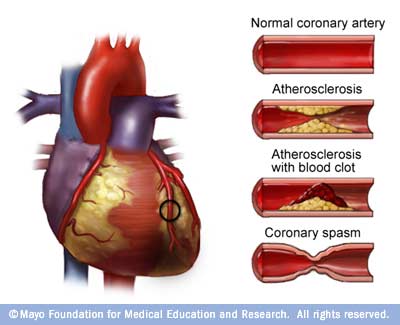
The heart muscle which works every second of our life, is supplied oxygen by coronary arteries. As the ageing occurs or due to excess fat or smoking or other reasons the fat starts to deposit causing the arteries to narrow down. As a result the blood supply to the heart decreases.
In situations like stress or heavy work, when heart muscles need more oxygen, the inadequate supply cause chest pain. This pain is called angina. If a person rests, this can be reversed.
If this lack of oxygen is prolonged it leads to permanent damage to the heart muscle which we call Heart attack ( medical name  is   Myocardial Infarction).

We often hear others talking of percent block in the heart arteries. It simply describes to what extent the heart coronaries are blocked, as shown in the picture.

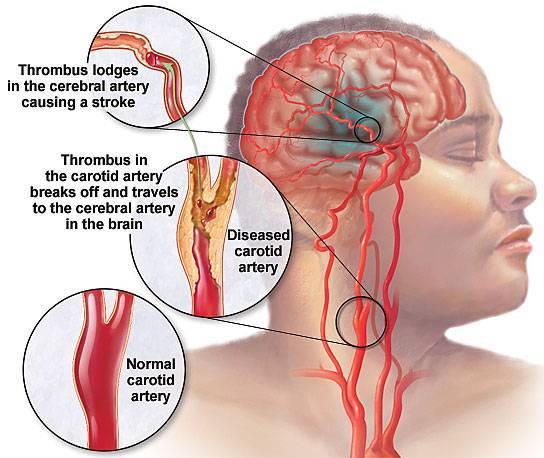
The same mechanism occurs in the brain, when the brain arteries get narrowed down by the same reasons. This damage to the brain leads to stroke.

How do we know if it is a heart attack?

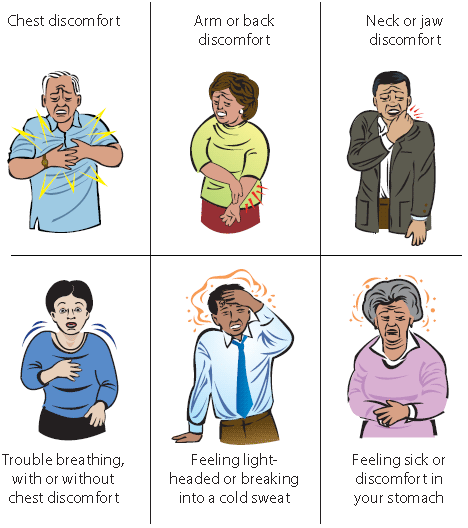
The symptoms of heart attack can vary. The typical symptoms are given as in the picture below:

And…

However there could be unusual signs too.

Anxiety, denial or even the thought that ‘it could be a heart attack’ can be a symptom.

Hence anytime you feel unwell, and your inner voice calls for a fear, don’t delay and consult a doctor immediately.

Why do we need to worry about the heart disease?

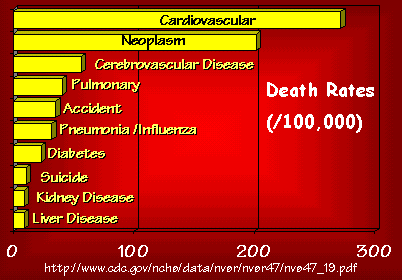
Heart disease medically known as Ischaemic Heart Disease is the top killer for the people in South Asia.

Audio in Urdu/Hindi Part 1: 

What should we do to prevent Heart disease?

We cannot change our ethnicity, age, gender, Family history.
But then the good news is that there are certain factors which we can modify, so that we can minimise the chances of developing this problem, early in our life. The studies have proven that if we follow a healthy life style, we may be able to delay these problems by as much as 10 to 15 years.

The preventive steps to be taken are in fact a repeat of the steps in Health Living blog.

Step 1:  Be physically active—We need minimum of 30 min of exercise each day or 150 min of moderate exercise at least 5 days a week to keep the heart fit.

You should know what should be your target heart rate while doing different types of activities. You gain the most benefits and lessen the risks when you exercise in your target heart rate zone.
(For more details about your target heart rate related to the type of exercise can be seen in this link: http://getfitwithval.com/target-heart-rate-chart/)

Step 2: Maintain a healthy weight and waist circumference.


We discussed Weight and importance of BMI in previous blog >> Living a healthy lifestyle. 

Two recent studies have found that to asses one’s risk of Heart Disease the best measure is the ‘ waist circumference’.
(One of the reasons for using waist circumference is that it directly measures increased fat mass around your organs, fat known as visceral fat.)

Please note below the normal limits waist circumference in our South Asian men and women.  And also not that we need to have them less than the other ethnicities to keep healthy.
Waist circumference               Men                                                     Women

South Asian heritage             90cms                                                  80cms
Caucasians, Africans              104cms                                               90cms

See the video to learn how to measure the waist circumference accurately:
(For details of weight BMI refer to the previous blog on healthy living)

Step 3: Eat a healthy low fat diet: Our second blog was all about healthy eating. Please refer to the blog >> Eating your way to good health.

Step 4: Know and control your Blood Pressure

Do you know what your BP, last measured is?

Do you know what the normal range of Blood Pressure is?

It is important to check BP regularly and ask the doctor how much was the reading, and preferably note it down on a card. So that when it is repeated, you can compare from the previous reading.

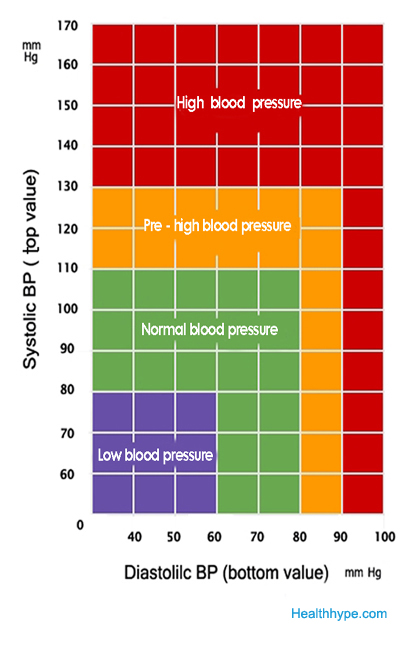
An ideal BP must be below 140/90 mmHg.

Above this will cause more effort for the heart muscles to pump the blood through the arteries.

The picture below shows the BP measuring instrument and some basics on Bloos pressure measurement.

Caution: Thanks to another doctor friend, Kavita Desai’s reminder, it is very important to understand that if you measure it at home, the correct method to record accurate Blood Pressure should be learnt.You can learn it from your doctor, hands on or check on the net. (Please refer to the link in the comment box for it).

In case the blood pressure is  different, you must know what are the range of abnormal readings and the terms used for them.

In case your Blood Pressure is high you must consult  a specialist to get it in control either by Lifestyle change, or by medication. Do not be apprehensive of BP medication if you are advised.

Myth: It is a myth that BP medications are harmful.
Fact: In fact blood pressure if not controlled is more harmful and can cause damage to kidneys, eyes and even lead to brain haemorrhage.

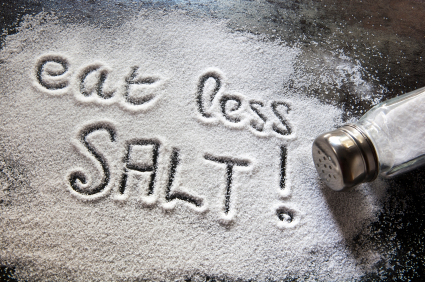
T o keep the BP in control, limit the intake of salt too.( The daily allowance of salt is 2300mg=1tsp salt).

Step 5: Know and control your Cholesterol

Do you know what your total cholesterol level is?

Do you know it is important to know the LDL ( bad cholesterol) and HDL( good cholesterol) levels too?

There are two kinds of fat:
Saturated fats are not heart healthy, since they are most known for raising your LDL cholesterol (“bad” cholesterol).
Unsaturated fats are heart-healthy fats – they have the ability to lower LDL cholesterol and raise HDL cholesterol (“good” cholesterol).

Cholesterol levels are generally related to our diet intake.  But South Asians have cholesterol problems which run in families called as familial Hyperlipidemias.

Hence get your cholesterol check regularly from an early age and keep it under control through life style change or through medication under Doctor’s supervision.

Exercise help reduce bad cholesterol and raises good cholesterol.

Do you know that the oils you use can contain different proportions of saturated and unsaturated fats?

The more the unsaturated fat,  the healthier is the oil.

Please decide for yourself which oils are the best for heart health:

Step 6: If you are a Diabetic manage and keep in control your Blood Sugar levels.

Diabetes causes hardening of the arteries (atherosclerosis). And hence can damage the arteries of the heart too. The nerves also get damaged, so when a diabetic gets heart attack, may be without any pain symptoms known as silent heart attack.

It is very important that if you are diabetic, to keep the blood sugar under control and know that poor control can lead to heart, kidney and other problems

( A detail on DM will follow next ).

Step 7: Cut down on unhealthy habits:

  • Reduce your Alcohol intake
  • Stop smoking as smoking causes heart vessels to get brittle and hence early heart attacks
  • Stress also raises blood pressure and heart disease.

A rigorous effort to maintain these steps can help reduce the chances of heart disease and delay by 10-15 years.

Don’t delay:  Please be sure of the symptoms of heart disease, and even if you are lean and thin, or have no previous symptoms.  If chest pain or any other symptoms occur, or even if you just fear it could be heart attack,  do not delay medical advice.

It may not be serious, but if it is timely check up, it can save life.

So please stay fit, active , eat healthy and be stress free to minimize your risk of a heart attack.

If you love quality life, love and take care of your HEART ❤