Open up your mind and your potential reaches infinity…

Archive for the ‘RELIGION’ Category

When hate or peace become a business


In my last trip to India, I was strolling for window shopping, in one of my favourite spots in New Delhi, when I heard some loud speaker announcements nearby.

I saw a Yogi on a big screen, speaking with utmost tranquility. Some of the words I could recall are:
“Want is always hanging on to the I. When the I itself is dissolving, want also dissolves, disappears.”
And
“How far to heaven? Just open your eyes and look. You are in heaven.”

There were a few other things he spoke. At the first instance all I could think was, ‘Had Kabir been alive, he would have said the same thing.’


As I attempted to take a picture from my mobile phone, a boy intercepted. Wondering if photography was not allowed, I told him “Okay I won’t.”

But he said, “No Didi, there are so many people in the way, I’ll have you take it from a better angle.”

I was quite surprised at his generosity.

While returning, I collected some leaflets from the Art of Living ( Sri Sri’Ravi Shanker’s Organisation) stall, one of which said:

To love someone whom you like is insignificant.
To love someone because they love you is of no consequence.
To love someone whom you do not like means you have learned a lesson in life.
To love someone who blames you for no reason shows that you have learned the Art of Living.

Back home, talking to an old college friend who still lives in Delhi, I mentioned the incident.

She said, “Yes it’s nice, but this is business. Pay fees and attend the classes. What you saw was their marketing section.”

When I heard of his trip to Pakistan and the news about his offer to teach peace to Taleban, I was intrigued, wondering:

‘How would it be taken as an offer by the ilk of Zaid Hamid, Gen Hamid Gul, or the Taleban themselves? Would they again rant of the Hindu agenda or the greater Zionist agenda.’

Instead of the Hindu agenda rant, I saw a couple of positive FB statuses and some tweets on the issue. A tweet worth the mention is:

“Sri Sri has already had a Positive Effect on Taliban! Mullah Omar is now calling himself Mullah Mullah Omar.”
Thankfully, instead of an offence,  it was taken in lighter vain 🙂

Incidentally I happened to chat with the same friend on Facebook , and told her of his trip to Pakistan, and the Taliban offer story.

She said: “Oh come on, he is there to promote his AOL centres, one of which I know is located in the capital city. And again this is the marketing department at work.”

I again muttered to myself, ‘Well nothing wrong with it. One could consider this a social enterprise. We do have an epidemic of hatred in the world and he has provided a therapy for it, but at a price, which will work if it is cost effective.’

He did tour the AOL offices and camps in Karachi, Islamabad and Lahore. But to my utter dismay, before I could start to keep track of his Pakistan trip, and his talks with Taleban, I heard that he was back in India.

Wonder is he wasn’t allowed to approach Taleban, or was it not on the agenda?
I have no clue.

Anyways he did repeat his offer after coming back “There is a lot of violence in Pakistan and people are fed up, they want to live peacefully. If I could be of any help in bringing an end to the vicious cycle of violence, I am ready to talk to the Taliban,”

And that “We are all sufferers of stress, tension, violence and hatred – and small ways of easing out are all that you need,”

There is no doubt that the techniques which he uses for de-stressing are scientifically based.

The primary exercise, which they call Sudarshan Kriya is basically a deep breathing exercise which any psychologist you visit asks you to begin with, on de-stressing. There is a proper technique for it.

I can’t help being amused by the mere visual imagination of Mullah Mullah Omar sitting in a Padma Asana (lotus pose), with hands stretched over the knees, and breathing-in through nose and breathing-out through mouth. 🙂

How I wish that my friend is still proven wrong and some miracle asana (yoga position) comes up which exhales all hatred out of the heads of these radicals.

If that so happens, then I would also secretly whisper in Sri Sri’s ears to develop some Yoga position (asana) in which our politicians extend their arms  in service of  the masses, who vote them in, instead of flexing them, with hands reaching their own pockets.

And so will I also pray to Sri Sri to apply some tilak ( teeka) on the foreheads of our uniformed (on both the sides), so that they start seeing each other as friends and not enemies, and start piling books and medicines for the masses on both sides, instead of arsenals.

I would also beg Sri Sri with folded hands to ‘please please’ make some vibhuti ( spiritual ash) for our diplomats ( on both sides) which when touches their tongues gets them addicted to the taste of peace and makes them feel nauseated just at the sight of visa, passports, police verification etc etc.

Be it a profitable business or social enterprise, there’s no offence, if it is all intended to bring real peace, beyond just a marketing tool.

After all,  all the  chaos and divisions on ground, are also a result of the seeds of intolerance sown by those who consider hatred as their business.

O’ the wandering mind ~Kabir


Kabir has hardly spared any animate and inanimate examples to ridicule the bigots who have great illusions about their self image and through their beliefs repeatedly,  make a fool of themselves.
In the same spirit, I came across yet another simple yet interest verses.

Poem 1: 

Apanpo aap hi bisaro.
Says Kabir, they  fall prey to their  own illusions and forget the essence of our existence.

Jaise sonha kaanch mandir me, bharamat bhunki paro.
Just as dog who enters the house of mirrors, goes crazy barking at the images, considering them different. This is a very curious satire on those bigots who bark at other bigots, thinking they are different, but in essence are reflections of each other.

Jyo kehari bapu nirakhi koop jal, pratima dekhi paro.
A lion looks deep into the well, and mistakes his own reflection as another lion, and jumps into it. This also satires on the ‘lions’ of different faiths, who are such egoists, that they destroy themselves, in challenging other ‘lions’ in the business. The current sectarian bigots could be appropriate here.

Aisehi madgaj phaTik sila par, dasanani aani aro.
An elephant, so proud of its strength, bangs his head against the rock, and hits it with his teeth. Here rocks could be interpreted as hard, rock like beliefs which they bang their heads against.

MarakaT muThi swad na bisare, ghar-ghar naTat phiro.
A greedy monkey for whom the food in the pot is not enough, and goes from home to home asking for more. This is perhaps reference to looking outwards, though we could easily content with what is with us.

Kah Kabir lalani ke suwana, tohi kaune pakaro.
Says Kabir, their logic is as impossible to catch as the parrot of a village girl. Here he gives a satire of those who keep repeating mindlessly like a parrot, with no logic what so ever.

And then in contrast to the satire, many verses of Kabir bring home the message through simple, day to day examples, of how should we be viewing our beliefs, and the essence of our existence.

Poem 2: 

Man tu maanat kyu na mana re.
O’ the wandering mind, why don’t you understand?

Kaun kahan ko, kaun sunan ko, dooja kaun jana re.
Who is worth to speak or to listen, when there is ONE truth.
Here he refers to perhaps the various claimants of ONE, and give it different names and forms.
( The next verse makes it clearer)

Darapan me pratibimb jo bhase, aape chahu disi soi.
He is all round in every atom, the way there is a reflection in every mirror.
( This could be compared to the idea of sheesh mahal—made of tiny mirrors all around one image is seen in each and every tiny mirror)

Dubidha mite, ek jab howe, tau lakh paawe koi.
If you get ONE truth, you will get contentment worth a million, and the confusion of mind will go away.

Jaise jal se hem banat hai, hem ghoom jal hoi.
The way ice is first made of water, then returns back to the same water.

Taise yah tat wahu tat so, phir yah aru wah soi.
In the same way, we are all come from that truth, and unto the same truth we have to return to.

Jo samajhe so khari kahat hai, na samajhe to khoTi.
Those who get this, call this a stark truth. Those ignorant who don’t get this, consider it falsehood.

Kah Kabir khara pakh tyaage, waaki mati hai moTi.
Says Kabir, one who gives up the essence of truth, his brain is thick ( stubborn).

It is remarkable how Kabir talks of evils of bigotry, unity of mankind and the true spirit of secular spirits, rising above the superfluous divisions in the dark ages.

Or perhaps, we are living in darker ages.

Indeed, it is a long road, before Kabir’s examples and teachings become irrelevant to the current times.

The Kabir bhajan below, again, gives some more examples through which he challenges the bigots. Note the translation subtitles. This is my favourite tranquillising Kabir song. 

Abida Parveen, the therapeutic


If music is a mountain range, its Mt Everest is Abida Parveen. A summit of Sufi music, which no soul can surmount.

The Queen not only drowns herself in the music she sings, but she sweeps along her listeners too, in the tides of the overpowering words that flow out her throat. After the plunge, to rise up to the surface banal  isn’t easy.

She is mesmerising, she is addicting, she is tranquillising.

A true flag bearer of Ganga Jamuni Tehzeeb, she immortalizes the words of  Bulleh Shah, Kabir and Amir Khusrau with just the same devotion.

Beyond music, pearls of abundant wisdom  she spilled, in this interview (which was taken before she enthralled the Delhi audience by the performance on March 5, 2012) reflected nothing but her rock solid conviction on which her life and music stand – of peace and love. Though thoroughly therapeutic, her words shook me.

In an interview esewhere she said:  “In Sufism there are no barriers, mine or yours, old and new. It belongs to all and connects hearts and souls. It’s power unites the singer and listener in a divine communion with the creator.”

From its very inception till this year’s Jahan e Khusrau Festival, she has been present in each of the ten held so far. “The festival is unique because it has no nationality or religion and is sacred to all of us.”

Overwhelmed, and still shaken by the genuine grief that Ali Zafar expressed over the hatred sweeping across the globe, but more so in our subcontinent, I could not hold back my own tears listening to her firm belief  that there are indeed “no internal barriers”.

The interview itself is a journey to the sublime, I would wish to take again and again. Hence, I have captured it in my blog, to preserve it as a shrine to which I shall keep returning to, in times of deep internal turmoil.

In these times of despair when we keep embracing hopelessness off and on, she lives with her heart, mind and soul steadfast on every word and verse of truth and love  she sings. 

Kudos to Barkha Dutt for immortalising these priceless pearls of wisdom.

(Click to the number below for the must watch interview)

225251 or http://www.ndtv.com/video/player/the-buck-stops-here/singer-abida-parveen-talks-about-the-power-of-sufi-music/225251

Amir Khusrau, the disciple


Listening to the stories and anectodes of Mehboob-e-Ilahi( Beloved of God) was a norm as kids. A Mamoo, an ardent follower of Sufism, who lived in Jaipur was the source. If he ever happened to pass by Delhi, visit to the ‘Dargah’ was a mandatory.  And when in Delhi, he had to visit his sister too i.e. my mother.

He brought meethi kheels (sugar coated puffballs) every time he came from Dargah, and was ever willing to  narrate to us the stories of love  between  Mehbub-e-Ilahi and his favourite disciple.

On the other hand I saw my not so religious father’s( who also hailed from a Maulvi family) love for Amir Khusrau’s Persian poetry, and a tall tower of audio cassettes he had piled up next to his music system.

Honestly for years until early teens I did not know who Mehboob-e-Ilahi  or that disciple were and where the Dargah was. We never visited. All I knew, Ammi went with Mamoojan a few times.

Once , when during a story time, Mamoojan was corrected by my father, about a Persian verse by Amir Khusro, did I realise that there was a correlation.

“Such a great poet had a Pir?” was my instant jerky reaction. Pirs in my mental dictionary had a negative meaning and image.

Equally instant was my father’s reaction: “ Hazrat Nizamuddin was a great scholar, it’s the people later who made him a Pir, and now have opened a whole business in his name.”

Mamoojan just gave a slight smile, and as always drowned again in his love for Mehboob-e-Ilahi, continued the story.

It was then to reinforce the great bond that existed between Hazrat Nizamuddin and Amir Khusrau, did he tell of these incidents, which now I can quote with the Persian verses he might have mentioned.

Just to make it clear, most of the stories have been passed on as word of mouth, and hence I call them anectodes.

Anectode 1:
When Hazrat Nizamuddin passed away Amir Khusrau was away, in some other city, attending to the orders of a King. As he learnt of the sad news he rushed back and went straight to the  fresh grave of his master.There  he rolled in the mud and tore off his clothes in agony. Then came these words:

Gori sove sej par
mukh per dale kes
Chal Khusro ghar aapne,
rain (not saanjh) bhaee chahu des.
The lovely maiden lies  finally on a wreath of flowers,
her tresses covering her face, 
O Khusro, turn back home now,
dusk has set in all over.”

Amir Khusrau was never the same after his Pir’s death. And it was only in six months that Amir Khusrau also passed away.

He was, as per the desire of the disciple and  Pir both, buried close by. This is now known as a “chabootra-e-yaar’ ( the pedestal of friend).

One can see this as a raised platform with red sandstone carved fence, around the grave.

The Pir also reciprocated his disciple’s love and affection, and is believed to have remarked: “If shariyat would allow me, I would want Khusrau and I to be buried in the same grave.”

His followers believe that Hz Nizamuddin instructed that “Those who visit my grave should  first pay respect at Khusrau’s .”

Anectode 2:
Amir Khusrau was away for a royal trip.  A disciple of Hz Nizamuddin came to him asking for some  souvenir from his Pir. Since the Pir had nothing to offer, he asked the disciple to take away his slippers.
Incidentally, on the way the disciple and Amir Khusrau’s paths crossed each other. And Khusrau remarked:

Shaikh mi aayad, Bu-e Shaikh mi aayad”.
(I smell my master, I smell my master).

On knowing that the man had in possession the slippers of his Pir, Khusrau gave away all his wealth that he had on him and bought back those slippers.

Anectode 3:
The two were sitting at the bank of river Yamuna in Delhi when Hz Nizamuddin (wearing a cap crooked way), saw some men taking a dip in the river with a reverence as a worship. He remarked:
Har qaum raast raahay, deenay wa qibla gaahay
(Every sect has a faith, a qibla which they turn to.)

Pat came the reply from Khusrau:
Men qibla raast kardam, ber terf-e kajkulaahay.
(I have straightened my qibla in the direction of this crooked cap)

Anectode 4:
It is the most interesting of all anectodes, and if true (I do not doubt, but these stories have been passed through word of mouth), then it is remarkable to have this quality of Persian and Brij Bhasha poetry from an eight year old.

It is said that Khusrau’s mother brought her eight year old son to the place where Hazrat Nizamuddin ( a renowned scholar and respectable man) resided.

Instead of entering the premises Khusrau sat outside and narrated:
Tu aan shahi ke ber aiwan-e qasrat
Kabutar gar nasheenad, baaz gardad
Ghareeb-e mustamand-e ber der aamed
Be-yaayad andaroon, ya baaz gardad
You are a king at the gate of whose palace,
even a pigeon becomes a hawk. 
A poor traveller has come to your gate, 
should he enter, or should he return?

And that Hazrat Nizamuddin who himself was 23 then, came out (some say he sent out  servants) and replied:
Be-yaayad andaroon mard-e haqeeqat
Ke ba ma yek nafas hamraaz gardad
Agar abla buvad aan mard-e naadan
Azaan raah-e ke aamad baaz gardad
Oh you the man of reality, come inside,
so you become for a while my confidant,
but if the one who enters is foolish ,
then he should return the way he came.

Hearing this Khusrau knew that he has come to the right place and hence entered into his guidance.

Having reread Khusrau, several times over since then, I have came across some of the records, which go further to say that- telling his mother of his excitement to have found the Pir, Khusrau composed these beautiful verses:
Aaj rung hai hey maa rung hai ri
Moray mehboob kay ghar rang hai ri
Sajan milaavra, sajan milaavra,
Sajan milaavra moray aangan ko
Aaj rung hai……..
Mohay pir paayo Nijamudin aulia
Nijamudin aulia mohay pir payoo
Des bades mein dhoondh phiree hoon
Toraa rung man bhayo ri……,
Jag ujiyaaro, jagat ujiyaaro,
Main to aiso rang aur nahin dekhi ray
Main to jab dekhun moray sung hai,
Aaj rung hai hey maan rung hai ri.
What a glow everywhere I see, Oh mother, what a glow;
I’ve found the beloved, yes I found him,
In my courtyard;
I have found my pir Nizamuddin Aulia.
I roamed around the entire world,
looking for an ideal beloved;
And finally this face has enchanted my heart.
The whole world has been opened for me,
Never seen a glow like this before.
Whenever I see now, he is with me,
Oh beloved, please dye me in yourself;
Dye me in the colour of the spring, beloved;
What a glow, Oh, what a glow.

In my ignorance, I bluntly asked Mamoojan,”What was so great in Hazrat Nizamuddin that even an accomplished man like Amir Khurau revered him so much?”

I remember Mamoojan reply, “He was a great pious man, a Wali. That is why he was called Mehboob-e-Ilahi ( the beloved of Allah)”.

To tell you the truth, I wasn’t entirely convinced then, but then years later, while getting into the colors of Amir Khusrau’s poetry, I did my own research.

I found that Hazrat Nizamuddin was a great scholar of Quran. He was truly  a very pious man, who prayed a lot and fasted each day of the week.

There were free meals ( langar) at his residence, each day, in which  Amir Khusrau actively took part.

He led a very simple, austere life, wore at times  torn clothes, and ate extremely simple food.

But what really convinced me of why Amir Khusrau revered him so much was this incident of  Hazrat Nizamuddin , which so speaks volumes of the greatness of this Pir of Amir Khusrau:

Once some of the staunchest of enemies of Hazrat Nizamuddin, threw thorn on the way he was to pass. He walked over them, bare feet, without any complaint. And with his sole bleeding, he prayed that every thorn that had pierced him become a red rose( like the color of his oozing blood) in the grave of the thrower.

Mehboob-e-Ilahi that he was, he is said to have remarked: “If a man places a thorn in your way, and you place a thorn in his way, soon there will be thorns everywhere.”

With all this in the background, now this poetry by Amir Khusrau sounds even more melodious…

Continuation of a joint heritage


Published in Aman Ki Asha , in TheNews on December 14, 2011. http://amankiasha.com/detail_news.asp?id=584

Ilmana Fasih recounts some examples of the ‘Ganga Jamuni Tehzeeb’ and centuries’ old, peaceful coexistence beyond religious divides

An otherwise sane looking person I met at a party recently started to spew venom laced with conspiracy theories about “Hindu Muslim animosity”. To top it all, he tried to use my own life to justify his views, insisting that my going

to live in Pakistan after marrying a Pakistani was proof of the natural divide. He refused to accept my views that a peaceful coexistence between people of different faiths is possible or that my going to Pakistan from India was not based on religious reasons.

His hate-filled thoughts kept me sleepless for hours that night. But talking over the phone to my mother in Delhi later, I was cheered up by her mention of Ganga Jamuni Tehzeeb. Our conversation triggered off thoughts about this beautiful, fluid culture that refuses to be boxed up and compartmentalised.

The name Ganga Jamuni Tehzeeb is as beautiful as its spirit. It refers to the centuries’ old, peaceful coexistence between Hindus and Muslims of the subcontinent. Not only did the two faiths borrow cultural practices from each other, but they also exchanged each other’s vocabularies. So much so that now one is hardly able to find any difference between spoken Urdu and spoken Hindi.

The Nawabs of Awadh in north India in the 1700s are considered the pioneers of Ganga Jamuni Tehzeeb. At least, the term was coined in their times. But on ground it existed well before that era.

The starkest example of this syncretic culture is the Purana Hanuman Mandir in Lucknow, which is crowned by an Islamic symbol, a crescent. According to legend, the temple was built by Nawab Saadat Ali Khan to honour the wish of his mother, who had dreamt of building a temple. The tradition of honouring the Nawab’s gesture still continues when the Muslims in the area put up stalls of water during the Bada Mangal festival at the temple, and Hindus manage sabeels (stalls) of sherbet and water during Muharram in reverence for Imam Hussain.

Not far from Lucknow, the rulers of the Hindu holy city of Kashi (also known as Benaras or Varanasi) observed the Azadari (the mourning) during Muharram, wearing black on Ashura. Ustad Bismillah Khan, the renowned Shehnai maestro, began his career as a shehnai player in Vishwanath temple, Kashi. In fact, many of the musicians, Hindu and Muslim, who play in the temples, fast during Ramazan and also observe Vrat during the Hindu Navratras.

Even today, Muslim artisans in Kashi/Varanasi who make Taziyas for Muharram also make effigies of Ravan for Dussehra, a friend tells me. Hindus too participate in Muharram processions and make Taziyas in many cities, notably Lucknow.

Similarly a Sindhi friend talks of the centuries-old peace and harmony between the Hindus and Muslims of Sindh. Adherents of both faiths revere and pray together at the shrine of Jhuley Lal, she says. The shrine walls are inscribed

with Arabic verses as well as Hindu names of Gods. An age-old common greeting of Sindhi Hindus and Muslims is “Jhulelal Bera-Hee-Paar”.

Karachi’s 150-year old cremation ground for Hindus has a Muslim caretaker, although there are many Hindus in the city. This caretaker is responsible for cleaning the statues and lighting the lamps in the temple, and takes care of the urns that contain the ashes of the dead after cremation, until their loved ones immerse the ashes in water.

Cultural practices in Sindh are a fusion of the two cultures. If the Hindus, fervently use Allah as the reference to God, the Muslims touch the feet of their elderly as traditions borrowed from each other’s cultures.

The contribution of Sufi poetry towards this peaceful coexistence, from Kabirdas and Amir Khusro, to Bulleh Shah on the other side, is well known.

Beyond faith, at the cultural level, the Ganga Jamuni Tehzeeb has seen some beautiful creations like the Ghazal style of singing and the classical dance form Kathak.

Kathak’s journey from ancient times to its present form merits a walk-through. The word “katha” comes from “katha” or story telling. It has its roots in ancient times, when storytellers narrated epics or mythological stories like Shakuntala, and the Mahabharata through dance forms in temples. However with the arrival of Mughals, the dance, enticed to come to the courts, developed into a more Persianised form. The Kathak dancers adopted the whirling

from the dervishes to the ‘chakkars’. The rhythm of the footsteps found harmony with the beat of the tabla recently discovered by Amir Khusro. The female Kathakaars (storytellers) abandoned the sari of ancient times for the angarkha and churidar pyjama. The language of narration also transformed from Sanskrit to Brij Bhasha and then Urdu.

There may be more examples of such coexistence and development in other regions of the subcontinent too.

Those who propagate conspiracy theories and narrate stories of hate and disharmony need to know that even with the physical separation between India and Pakistan, the spirit of Ganga Jamuni Tehzeeb lives on. The lack of communication between the two countries, particularly after the 1965 and 1971 wars, has not managed to dampen the natural instincts of sharing these cultures.

Farid Ayaz and Abu Muhammed, the renowned Qawwals from Pakistan continue to sing Bhajans which their gharana has been singing for the last 300 years. On the other side are Wadali brothers who sing Bulleh Shah Kaafis and Naats with the same devotion. Despite all odds, Sheema Kermani and her students in Pakistan have continued to keep the dance forms, not only of Kathak, but also Bharatnatyam and Odissi, alive and known in Pakistan.

The recent collaboration between Zeb and Haniya from Pakistan and Shantanu and Siwanand Kirkire of India yielded the soft melody “Kaho kya khayal hai” in a beautiful blend of Dari and Hindi. I could not help relate it to the Zehaal-e-Miskeen composition by Amir Khusro which was a beautiful fusion of Persian and Brij Bhasha.

And now another peacenik in the form of Shahvar Ali Khan makes a music video titled ‘No Saazish No Jang’ (No Conspiracy, No War). It is heartening to see the visuals, and hear the voices of Quaid-e-Azam Mohammed Ali Jinnah and Bapu Mahatama Gandhi together in the backdrop.

It is not possible to list all collaborations between the two countries and across religious divides, particularly in fields of films, music, health (the most significant being the Heart to Heart initiative by Rotary and Aman ki Asha). But all these initiatives testify to the desire for peace, not hate.

As for me, convinced that each of these efforts towards peaceful coexistence is based on foundations going back centuries, I slide into my bed, comforted by the faith that peace, not hate, will ultimately prevail.
It’s just a matter of time.

Dr Ilmana Fasih is an Indian gynaecologist and health activist married to a Pakistani. Her blog is Blind to Bounds https://thinkloud65.wordpress.com/

Are we lollipops?


It is a matter of pride that I was born a girl, despite knowing very well how tough life continues to be for women from birth till their death, and from east end of the globe to the west.

From parental upbringing  to interaction outside, from  house chores to professional job, from  status at home to  dignity at work, women are given second class treatment in most places. We form more than 50 % of the whole world’s seven billion, but still struggle to make ourselves being perceived as more than an object.

Whether in the name of faith, culture, or physical vulnerability, women are shown their worth  merely as an Adam’s rib.

A few days ago , I came across a picture which got me nauseated.

It had an  added  caption ” Would you like to be a covered lollipop or an exposed one?”

And to add more to my horror, many women and girls seemed to be nodding in agreement with their comments.

Do we really have to compare ourselves to lollipops ?

Does a lollipop have a mind of it’s own ?

Does a lollipop become a scientist like Marie Curie or a Prime Minister like Benazir Bhutto or an astronaut like Kalpana Chawla ?

Do lollipops even become strong caring mothers, supporting wives or sincere friends ?

But we women folk do. So we better stop this idiocy about covered or uncovered lollipops, please.

Everyone has a right to choose what should one wear, or not to wear, and so does a woman, whether she chooses to wear a hijab or not. Many women willingly  choose to wear it as a part of their religious duty. But there are many who go for  it because they consider themselves safer wearing one. Sadly, that is a myth.

If it was just exposure, or physical attraction, which made girls vulnerable, why would girls as young a ten years, two years or even six months  be abused, molested or raped ?

It may make one feel less exposed physically, but the real safety comes from a strong mind. A strong mind comes from awareness.  And awareness comes from quality education.

It is naïve to expect that things will change, only when men will change. They need to change too, but if women get empowered, men will change themselves.

If women really wish to make women abuse a history, they need to empower themselves with right education and independent thinking.  And then they need to pass on that information to other women folk .

Challenging oppression does not mean to be a rebel. It does not mean to hate men folk, nor does it mean to detest womanhood. It simply means to have your own mind and stand on your own two feet, with hijab or without.

P.S. In this  16Days of campaign of Violence  against Women, try to teach at least one weak woman to become strong  through Education, for herself and for her family. 

A just Mullah


A Mullah ji  is fed up of his wife who either forgets or puts more namak(salt) in the khaana( food).

One day in a rage he spells: “Talaaq talaaq talaaq.”

So that he doesn’t change his mind, he immediately goes to the Qazi to announce and make it final.

Qazi: “Okay, are you sure?”

Mullah: “Yes, very much. Enough is enough, I hate the food she cooks and the little attention she pays to me.”

Qazi: “Fine. How many children do u have ?”

Mullah : “Alhamdulillah seven.  Four are big enough to look after themselves, three are too young to stay without their mother.”

Qazi: “So how will you divide them. Will Allah not be angry that you will take 4 and give only 3 to your wife. Allah wants you to be an ‘aadil’ (just).”

Mullah( thinks a minute) : “Okay, InshaAllah then I’ll come back to you next year.”


A complaining Mullah

When a Mullah died and went to Heaven he saw that a Karachi bus driver was given a higher place than him.

He complained to the angel on duty: “I gave long khutbas in the mosque on every Friday, all my life till the last day.” 

The Angel asked: “While you gave long sermons, did people all pay attention to you? Speak the truth today!”

Mullah: “Well to be honest, many played with their cellphones, some yawned, and few even dozed off.”

Angel: “See when this man drove the bus on Karachi streets, not only did his passengers all stayed alert, they even prayed to God  for Mercy. Even the other drivers of cars and rickshaws prayed and remembered me, when he was plying the bus on road.”


When hatred reigns.


It was with helplessness that I read an article in one of the newspapers about how school kids in certain areas of Karachi were not able to attend their school safely because of prevailing tensions between two ethnic groups- both Pakistanis, both Muslims of the same sect. A kid claimed he was friends with his schoolmates from the other ethnic community and they even played together after school, but now the same friends say they could not play with him anymore.

Another article read of how Hindus in Baluchistan who have been living there for centuries were fearful of sending their kids to schools due to escalated kidnappings for ransom and killings of the community. Although they have no animosity with the Muslims in neighborhood,  they all scared to mingle.

In brief, the hatred of a handful prevailed over the helplessness of the lot.

Before I could finish, the news broke of Karachi blast in the DHA where along with others, an innocent passerby mom and her 5 year old son got killed.
What prevailed here too was nothing but hatred.

I know first hand, exactly how it feels to be helpless in the face of hatred.

I was a first year medical student in  Lady Hardinge Medical College, situated in the heart of New Delhi, when Indira Gandhi was assassinated on 31 October 1984. The mayhem spread as faster than the spread of the news. As if a riot button was switched on. Delhi’s panorama was puking smoke of hatred from every direction.

Parents were coming to pick up their daughters, from the college hostel, and narrating the harrowing tales of watching limbs and other body parts splattered across the killing fileds that Delhi roads had turned into. I remember how a Sikh girl from my class sat cautiously frozen in the crowd of girls in the hostel’s TV room.  She broke down when she learnt that her brother had left home an hour ago to pick her up. No one reassured her not to cry or to worry for her brothers safety.  Not a single parent even offered to drop her home. Why would I blame others, when I felt the same helplessness, and feared what will happen when my parents come, will they be reluctant to take her too.

Ultimately, along with her and a few other girls, I ended up staying back to spend the terrible night in the hostel. The city had turned into an open house of looting and rampage. Next day on my way back home,  all I saw was roads stained with fresh blood, a charred and empty shop after every few well preserved shops and selectively  burn’t buildings along the way to home. Though I did not have the courage to give a second look, but I did see a glimpse of most likely a charred body lying inside a burnt shop.

At home everyone shared their eye witness accounts. Our house boy Jung Bahadur described how the shacks(jhuggis) in the slums of Mangolpuri and Sultanpuri were stocked with stacks of VCRs, TVs and other electronics. He even shared how some dead bodies were piled together, doused with kerosene and burnt to ashes. Papa had witnessed a headless body being carried in an autorickshaw.

I do not remember how and when did the Sikh girl go home, but we learnt days later that her brother could neither arrive at the college, nor ever return back home. His body was  identified some days later in the morgue.

Again, amidst the helplessness of us all, hatred prevailed like a king.

The same story was repeated with my parents, as they were left in the cold, during the riots in December 1992, that followed Babri Masjid demolition. Many Muslim houses were chalked in Delhi, including those of IAS officers, doctors, cricketers, poets etc.

In fact some like Bashir Badr’s house in Meerut was actually attacked. It was after this incident that Bashir Badr wrote this shair:
Log toot jaatey hain, ek ghar banane mein
Tum taras nahin khaatey bastiyaan jalane mein.

Being  staunch beleivers of Indian secularism, my parents had proudly built a house in 1977 in a University housing cooperative compound where his colleagues and other University professors resided. We were only 2 Muslim houses in a colony of 238 lots, but that was besides the point. However, that cold and lonely December night none of our neighbors, his University colleagues or friends came forward to even reassure them of support in case of any danger. There was a criminal silence from friends and neighbors.

As my mother narrated later, that was the first time she saw my father cry with tears, not for his life, but at the ‘sudden’ transformation in hearts of trusted and indeological friends for several decades. My parents had packed their car with valuables, in case they had to leave. Once the crisis was over, a few friends did come up, begging their helplessness.

Once again, amidst the intelligentsia of the society, hatred took an upper hand .

My grandfather often narrated of an incident when during the 1947 riots a Sikh boy had come to drop a pregnant Muslim woman to Matia Mahal,  Jama Masjid area, but was not let to go back alive, despite the helpless cries from the woman’s family to spare her saviour.

The helpless family members could do nothing as the hatred reigned.

I know I can never be able to guess from where this business of hatred all began, but can we really dare dream a day when the hatred propagated by a handful of vested interests will not prevail over the helpless masses ?

This reminded me of a discourse I had read about the controversy between Tagore and Gandhi during the non-cooperation movement against the British in 1930s.

Tagore had warned Gandhi by saying: “….besides, hatred of the foreigner could later turn into a hatred of Indians different from oneself.”

Gandhi on the other hand believed that this non-cooperation would dissolve  Hindu-Muslims differences.

Ultimately Tagore was proved right, and Gandhi had to shift his  non cooperation  against the British into a non violent movement.

The same corollary of Tagore’s could easily be applied to the situation in Pakistan, too.

What began as a hatred for the foreign faiths has turned into hatred among Pakistanis different from each other.

And ironically a handful of vested interest first made the helpless common Pakistanis hate the foreign faiths and now have turned the Pakistanis of different sects and ethnicities hate each other.

This business of hate has to stop somewhere. Whether it is for a fellow Indian/ Pakistani of different ethnicity, of a different faith or of a foreigner of different color, we have to shout in the face of hatred: “Enough is enough”.

Or else, as poet E E Cummings lamented: Hatred bounces.

Bulleh Shah, the daring secularist!


In the times when  the whole world is going through an era of hatred, intolerance and extremism and Pakistan seems to be synonymous to all these words, what could be a better tribute to Bulleh Shah but to show to the world that there existed a daring secularist on this land almost 250 years ago.

Here I make a feeble attempt to write about Bulleh Shah, from  what little I know of him as a secularist : 


Bulleh Shah (1680-1757), was a sufi, who  lived in the heart of  Punjab, in Kasur,  as a  contemporary of Guru Gobind Singh, a reformer and mystic in his own right. Both of them had to face the wrath of a radical Muslim Mughal Emperor Aurangzeb in their life.

Not very different from the state of our current world, ridden with extremism and hatred towards other faiths , even 250 years ago, the subcontinent  was plunged in deep turmoil.  But Bulleh Shah, who thought far ahead of his times, dared to challenge the prevailing hatred and religious bigotry.  

He lamented:

“Ulte hor zamane aaye,
Hun asaan bhed sajjan de paaye.
kaa(n) laggad nun maaran lagge, 
chiriyan jurre khaaye 
iraqiyan nun chabuk paunde, 
gade khood khavaye
aapneyan vich ulfat naahee,
ke-he chaachche taaye 
piyo putran ittfaak naa kaahee, 
dheeyan naal naa maaye 
sachcheyan nun hun milde dhakke, 
jhoothe kol bahaaye 
agle jaaye bankaale baithe, 
pichliyan farash vichaye 
Bullah jina hukam hazooron andaa, 
tina nun kaun hataaye.” 

“Perverse times have come,
I know the mystery of the beloved
crows have begun to hunt hawks, 
and sparrows feed on falcons
horses bear the whipping, 
while donkeys graze on lush green
no love is lost between relatives, 
be they younger or elder uncles
There is no accord between fathers and sons,
Nor any between mothers and daughters
The truthful ones are being pushed about,
the tricksters are seated close by
The front liners have become wretched,
the back benchers sit on carpets
Those in tatters have turned into kings,
the kings have taken to begging
O Bulleh, that which is His command
who can alter His decree.” 

Despite being a terror that Aurangzeb was, Bulleh Shah audaciously defied him not once but several times :

When Aurangzeb banned the music and dance, declaring it  as haram in Islam–Bulleh Shah, following instructions from his teacher, defiantly  went from village to  village in Punjab, singing and dancing to his Kafis.

As Aurangzeb beheaded Guru Tegh Bahadur, Bulleh Shah dared to call the slain Sikh leader as Ghazi, a religious warrior.

” Kitay Tegh Bahadur Ghazi hay ” 

Bulleh Shah hailed the revolutionary spirit of Guru Gobind Singh, calling him  a ‘protector’ of those who believed in right to follow their religious belief. He said in a subtle satire:

Nah Karoon Ab Kee,
Nah Karoon Baat Tab Kee.
Gar Na Hotey Guru Gobind Singh,
Sunat Hoti Sab Kee.

I talk about neither yesterday nor tomorrow;
I talk about today.
Had Gobind Singh not been there,
They would all be under Islamic sway.

Hence, mentioning that had the tenth Guru not been there, Auranzeb would’ve forced all to convert to Islam( implying Sunnat as circumcision).

Not only did he oppose the persecution of Sikhs in his times, he also advised Banda Bahadur not to avenge Auranzeb’s cruelty by killing innocent muslims.

Referring to the plight of his times in Punjab, and referring to the apathy of the onlookers, he wrote:

The Mughals quaff the cup of poison.
Those with coarse blankets are up.
The genteel watch it all in quiet,
They have a humble pie to sup.
The tide of the times is in spate.
The Punjab is in a fearsome state.
We have to share the hell of a fate.

(According to KS Duggal here ‘coarse blankets’ is referred to Sikhs) .

Bulleh Shah, in solidarity with Sikhs,  is said to have visited a Sikh temple at  Makhowal  at the time of Guru Tegh Bahahdur. He saw people engrossed in ‘ Kar Seva’ (service to the temple,  construction etc), ‘Kirtan’ (the morning singing of prayer) and ‘Langar’ ( the free distribution of meals ) by the devotees. Impressed by their devotion through service,  he remarked:

Ett khrikka ( sound of bricks during construction work)
Duppar vajje ( sound of dholaki during kirtan)
Nale balle chulla (langar).
Enhi galin Rabb raji rehanda
Nale rehanda Bulleh.

Aurangzeb  was  arrogant  not just to non Muslims, he even did not attempt to hide his hatred towards his own  brother Dara Shikoh for following the Shia sect of Islam. And he had heartlessly got  GuruTeghBahadur killed in public, in Delhi and also eliminated his brother DaraShikoh for his beliefs.

Bulleh Shah , on the contrary,  being a true and fearless secularist, rejected  the discrimination between faiths- be Hindu-Muslim -Sikhs or sects- Shia-Sunnis ,and wrote:

Neither Hindu nor Muslim,
Sacrificing pride, let us sit together.
Neither Sunni nor Shia,
Let us walk the road of peace.
We are neither hungry nor replete,
Neither naked nor covered up.
Neither weeping nor laughing,
Neither ruined nor settled,
We are not sinners or pure and virtuous,
What is sin and what is virtue, this I do not know.
Says Bulhe Shah, one who attaches his self with the lord.
Gives up both hindu and muslim. 

While he did not spare those who monopolised their faith:

“Lumpens live in the Hindu temples
And sharks in the Sikh shrines.
Musclemen live in the Muslim mosques
And lovers live in their clime.”

And even dared to compare their clergy to ‘barking dogs’ and ‘crowing roosters’.

Not very different from the current times, wherein ‘secularism’ is still perceived as  Ladeeniyat ( atheism)), he too was labelled as an apostate for his secualr stance. To which he taunted:

Bulleh-a aashiq hoyiyon Rabb da,
Hoai Malamat Lakh Tenon Kafir Kafir aakhdey,
toon aaho aaho aakh
A lover of God?
They’ll make much fuss;
They’ll call you a Kafir 
You should say -yes, yes.

Learning from Bulleh Shah and  Kabirdas, and knowing the history of subcontinent,  today I too gather courage to defy Iqbal’s  verses :

Juda ho deen siyasat se tou reh jati hai Changezi .
When religion is separated from politics, it is reduced to brutality.

I say: Jurey jo  deen siyasat se tou ho jata hai Changezi…
When religion enjoins politics, it becomes brutal.

If after this you call me a traitor: I should say yes, yes.


 P.S. My two penny: 

Recently talking to a friend from Bhopal, about extremism in Pakistan,  I felt disheartened to know that all she knew Bulleh Shah was that  Abida Parveen sang him and that too in the context of his love poetry. And was oblivious to his humanist and secularist stance.

It is so unfortunate that even today, many in India ( besides Punjab) and elsewhere in the world, people who know Kabirdas and Amir Khusrow backwards,  have barely heard of Bulleh Shah except in context of  his love poetry.

Even my  first exposure to Bulleh Shah’s poetry was through the verses…Bulleh ki jana main kaun...that too as a song sung by Rabbi Sher Gill. And I wondered and found the words wierd…not aware of the context. However, after having read some ‘bit’ of his history and his Kafis, it all makes sense now.

What wonders me most is that though in India, we read Kabirdas from grade Six, I never ever heard of  Bulleh Shah’s mention in any Indian history text books. What is more unfortunate that even in Pakistan, school text books never taught Bulleh Shah whether in history or in literature.

I still  consider Rabbi Sher Gill as the one who let me be familiar with Bulleh Shah’s name, to begin with. Besides many other sources…my special thanks to KSDuggal’s Mystic Muse,  Saeen Zahoor for telling stories of Bulleh Shah, the blogs Sufi Poetry, of Raza Rumi ‘s and Syed Ali Abbas Zaidi’s, who I stalked to learn about Bulleh Shah’s poetry and history.

Na maen momin vich maseet aan
Na maen vich kufar diyan reet aan
Na maen paakaan vich paleet aan
Na maen moosa na pharaun.

Bulleh! ki jaana maen kaun

Na maen andar ved kitaab aan,
Na vich bhangaan na sharaab aan
Na vich rindaan masat kharaab aan
Na vich jaagan na vich saun.

Bulleh! ki jaana maen kaun.

Na vich shaadi na ghamnaaki
Na maen vich paleeti paaki
Na maen aabi na maen khaki
Na maen aatish na maen paun

Bulleh!, ki jaana maen kaun

Na maen arabi na lahori
Na maen hindi shehar nagauri
Na hindu na turak peshawri
Na maen rehnda vich nadaun

Bulla, ki jaana maen kaun

Na maen bheth mazhab da paaya
Ne maen aadam havva jaaya
Na maen apna naam dharaaya
Na vich baitthan na vich bhaun

Bulleh , ki jaana maen kaun

Avval aakhir aap nu jaana
Na koi dooja hor pehchaana
Maethon hor na koi siyaana
Bulla! ooh khadda hai kaun

Bulla, ki jaana maen kaun

Not a believer inside the mosque, am I
Nor a pagan disciple of false rites
Not the pure amongst the impure
Neither Moses, nor the Pharoh

Bulleh! to me, I am not known

Not in the holy Vedas, am I
Nor in opium, neither in wine
Not in the drunkard`s craze
Niether awake, nor in a sleeping daze

Bulleh! to me, I am not known

In happiness nor in sorrow, am I
Neither clean, nor a filthy mire
Not from water, nor from earth
Neither fire, nor from air, is my birth

Bulleh! to me, I am not known

Not an Arab, nor Lahori
Neither Hindi, nor Nagauri
Hindu, Turk (Muslim), nor Peshawari
Nor do I live in Nadaun

Bulleh! to me, I am not known

Secrets of religion, I have not known
From Adam and Eve, I am not born
I am not the name I assume
Not in stillness, nor on the move

Bulleh! to me, I am not known

I am the first, I am the last
None other, have I ever known
I am the wisest of them all
Bulleh! do I stand alone?

Bulleh! to me, I am not known

Avval Allah, Nur upaya, qudrat de sab bandey…


This blog post is a tribute to the bravado of my#Sikh brothers, who stood up in respect for humanity beyond faith during the #UKriots.

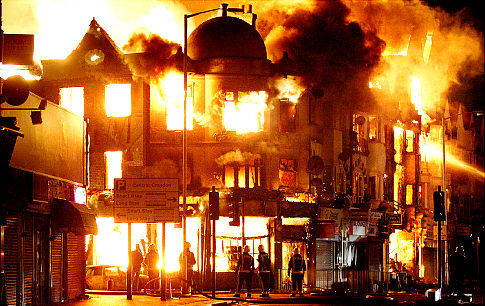
It was devastating to see the peoples power gone berserk in UK riots, as the  arson and looting carried on unabated into the fourth night . Unfortunately against the sheer numbers, the police seemed helpless to control the unruly mob.
While following the  #UKriots on Twitter and BBC News, hashtag #Sikhs started to trend—first World wide and then in UK, London.

A tweet was seen:

Remroum Remi Kanazi
Was afraid #Sikhs trending was going to be some bigoted stream. Thankfully it was this: Sikhs protecting people while they prayed #UKRiots

They came pouring, tweets one after the other with speed getting faster:

Prandha_Swag Harpreeeeezyf.baby
#Sikhs is trending.

Nagra18 Jasraj Nagra
#Sikhs is trending, never thought i’d see the day #proud.

KavelKaur Kavel Kaur
#Sikhs are a world wide trend!!!!

GDS1ngh GD singh
#sikhs trending, fantastic. doing what we do best.

moneyspinner MONEYSPINNER
#sikhs nanak naam chardi kala, tere baane sarbat dha bhala

I googled to check the details and saw Mail Online quote:

Some armed with swords, some carrying hockey sticks, defiant Sikhs stood guard outside their temples last night.
More then 700 men, some in their 80s, took to the streets to protect the homes, businesses and places of worship in Southall, West London.

The tweets went on:

Goggi_Rana Goggi Rana
Sikhs of Britain have displayed the same traits of fearlessness, as their ancestors of yesteryear #Sikhs #SangatTV

UncleWail Wail Al Aun
Thumbs Up for the #Sikhs protecting their #Temple in Toxteth #Liverpool #UKRiots

MissssChrissy Chrissy
Singh Is King… Yep I think so! #sikhs doing it real big today. #LondonRiots #ukriots

Then we heard that they had not only protected their temples but also stood at the mosque guarding while the Muslims prayed ther Taraweeh prayers of Ramadan in South Hall mosque:

A google message read :

Muslims prayed their Tarawee prayers while Sikhs protected he Masjid
Got this from a friend in London.
In a Masjid in Southall London, Muslims were praying their Taravee prayer as the riots were going on, a bunch of Sikhs stood outside the Masjid and protected the Masjid.
The similar thing happened when Sikhs were inside their Gurduwara and some Muslim youngster guarded it on the gate
Great experience, a cousin and a friend of mine reported the same incident.
May ALLAH bless people like them, humanity still remains here, despite the problems

Tweets loaded with emotions, from Muslims and people from other faiths,  too poured in with ovelwhelming enthusiasm:

PMGenerals PMG Anj
Today was an historic day for #hindus #sikhs and #muslims. #unitedwestand all religions teach us to have morals and respect dis proved it! X

dj_aNomAli ∀ℓι . ᄊ乇尺cんለռէ
Sikhs protect Southall mosque while Muslims pray Taraweeh in peace. Much respect to our brothers!! #LondonRiots #Southall #Sikhs #MashAllah

DNSDj Davinder Singh
Actually brings a tear to my eye seeing the #unity between #Sikhsand #Muslims in the fight against this madness. #proudtobesikh

akchishti akchishti
Great sight in my #Birmingham where #Pakistani lads are protecting temples while Sikh lads protecting the mosques

Muslimerican Peter
Imagine a group of rioters turning down a street and suddenly seeing 400 #Sikhs standing in the distance. #wrongturn #ohshit #londonriots

AdamPatel2 Adam Patel
I hear the #sikhs are even protecting the #mosques in Southall so #muslims can read our Tarawih in peace.”>>> BIG LOVE –

And dishearted tweeps begain to take a sigh of relief

xcrimsonstarx Vicki Langfield
The #Sikhs are giving me faith in humanity

Indeed, everyone who followed this trend must have rekindled their faith in humanity. Thanks you my Sikh brothers.

MumzyStranger Mumzy Stranger
Love out to the #Sikh brothers who protected the mosque during prayer time. If we all unite we can and WILL put a STOP to this chaos! M x

And  with these tweets millions or billions of eyes gleamed with hope.

We hope and pray this display of unity and humanity extends to all faiths and communities beyond borders and beliefs…

My mind recalled the verses of Sant Kabirdas which  along with 500 other verses which are included in to the Guru granth Sahib,  are  often heard from  Gurudwaras as Shabad Kirtan :

Avval Allah Noor upaya Qudrat ke sab bandey
(God created light of which all the things were born)
Aik nor ke sab jag upajaya kaun bhale ko mandhe
(From the light, the universe. So who is good and who is bad).

Indeed, I hail my Sikh brothers for living up to the spirits of their faith, their Gurus and their Book.

In return many Muslims also stood up with the Sikhs and helped them form groups which defended their communities and boroughs. Hail Sikh Muslim Solidarity. 

Let this be the beginning of Sikh-Hindu-Muslim-Christian-Jew –other faiths unity for  all faiths believe in one Supreme Power and all faiths belong to  one Humanity’

I dedicate  this tribute to my Sikh brothers with the greeting, which in Punjabi means exactly what Allah u Akbar stands for :

Vaheguru ji ka khalsa, vaheguru ji ki fateh.
(God’s pure and God’s victory )

My brothers,  Rabb Raakhaa

Ilmana Fasih, Aug 10, 2011

P.S.: Please scroll down in the comment box to see the reaction of the Muslim community after 3 Pakistani boys were killed in Birmingham.