Open up your mind and your potential reaches infinity…

Archive for the ‘Indo-Pak’ Category

The Real Ambassadors: Making of an ‘Indian Pakistani’


Published in AmanKiAsha The News, October, 19, 2011
http://www.amankiasha.com/news_cat.asp?id=547&catId=2

“Relationships change minds and not knowledge”. Aun, an undergraduate student at the University of Toronto, began his story with this quote from the well-known writer Reza Aslan.
Aun had come over to my place to share his experiences as a Pakistani living in India. He’s among the miniscule percent of Pakistani elite fortunate enough to have received the best education and grown up with adequate exposure and a wide horizon. Until age 16 he lived all over Pakistan as his civil servant father was transferred from on place to another.

Despite his elite education and exposure, he said that he always thought of India as an “enemy” country. The mention of India brought to his mind war, the conflicts between India and Pakistan over the past six decades. For this, he largely blamed his schooling as well as the media that always portrayed India as Pakistan’s adversary.

His views drastically changed when he had the opportunity to actually live in India for some years, after his father was posted to the Pakistani High Commission in New Delhi as Minister (Trade). But Aun’s initial response to India was not very positive. He remembers the shabby New Delhi airport and “lots of slums and poverty” on the way to his hotel. He also initially hesitated to interact with locals during his first few days.

At the admission test at the British school in New Delhi, Aun met another prospective student, an Indian boy named Saurabh. In the few moments they interacted before the test, they discovered they had the same mother tongue (Punjabi), loved cricket, and craved biryani. From that day onwards, Aun embarked on a wonderful and fascinating journey of harmony and everlasting friendship with people from his neighbouring country. His best friend at school was Saurabh.
Sitting at my place, Aun recalled his economics teacher telling him of her own change of heart when she visited Lahore for the first time. The fear she felt, as an Indian and a woman, while boarding a taxi driven by a bearded driver melted as the driver, gauging her apprehension, reassured her and took her around the city. And at the end of it all, he refused to charge any money from his Indian ‘guest’. No longer could she stereotype every bearded Pakistani as an extremist.

There are countless such stories of such small but enriching experiences of love and hospitality that counter the hatred and bigotry. I know many instances of shopkeepers at Lahore’s Gawal Mandi, and New Delhi’s Pallika Bazar refusing to take any money from the ‘mehmaan’ (guest) from the neighbouring country.

Aun told me that, despite his apprehensions, he quickly and easily made a fleet of friends among his Indian schoolmates, none of whom had any qualms in accepting him as one of them. His eyes twinkled as he recalled his friends in New Delhi coming over to his home to eat Pakistani biryani.
Two touching incidents he narrated demonstrate the compassion that exists among the people from both sides.

The first case involved an uncle of his, who came to Delhi for a liver transplant, needed about 25 units of blood. A shiver ran though me when I heard that it took barely a few hours for Aun and his Indian friends to collect the required amount of blood: the donors willingly gave their blood despite knowing that the recipient was Pakistani.

The other case was that of a Pakistani baby brought to India to be operated on for a congenital heart disease. Again, Aun’s Indian friends got the required units of blood reserved in no time.
“When I visited the baby and his parents back in their village in Pakistan some years later, all the neighbours and extended family came to see me,” remembers Aun. “They all were overwhelmed with immense gratitude for the Indians who donated blood and helped the baby to live.”

Sitting in that small village in Pakistan, their hearts had changed forever; they were no more gullible to the propaganda of hate spread by the vested interests on both sides.

After finishing high school, as he left for further studies in Toronto, Aun knew that he and his Indian friends were good ambassadors for their respective countries, creating a positive impression on the other side. They had no hidden agendas or points to score against each other. They had no real differences. All that separated them was a barbed wire. Aun intends on going back to Pakistan and becoming a civil servant like his father. His dream posting? New Delhi.

He wants to do whatever he can to remove misunderstandings between the two nations. “The only way I think that is possible is to allow people from both countries to interact with each other,” he says.

Aun told me that his Pakistani and Indian friends in Toronto jokingly call him a “Pakistani-Indian”. It’s an identity he feels pride in.

As Aun left for Pakistan recently, I tweeted the last two verses from a poem I had written for my blog some time ago:

“Oh! the lines between our lands sketched,
Let they not on our hearts be ever etched.”
#IndoPak

A few minutes later I received an equally emotional reply from Namita, a twitter friend in India:
“am waiting on this side of the barbed fence, looking longingly on the other side, waiting for the gates to open.. #India #Pakistan”

I did not reply to her tweet. I had no words but only tears of anguish and helplessness, in response to her affection.

Dr Ilmana Fasih is an
Indian gynaecologist and health activist married to a Pakistani. She blogs at
//thinkloud65.wordpress.com/

Let the baby survive and grow


Published in AmanKiAsha The News on Oct 5, 2011.

Nirupama Rao, now Indian ambassador to Washington, reportedly said of the Agra Summit at which Vajpayee and Musharraf met: “Though there were midwives, a still-born child was born in Agra”. A healthy baby was born that night, but was replaced by a “still-born”, reportedly retorted a Pakistani delegate.

Whatever the rhetoric or interpretation, the fact remains that the baby could not breathe in the air it needed – of peace and confidence from the two sides. Hence it died. How many such babies have died over so many years after such meetings?

The love-hate relationship between India and Pakistan does not allow the two neighbours to be indifferent to each other. They keep the relationship going by conceiving ideas and dialogues, but the babies somehow never survive. They can’t. The trust deficit kills them.

The parents need two things to nourish the baby and ensure its survival. The first is ‘love’ and the second, ‘trust’.

I know first-hand, that there is no dearth of love amongst the masses on both sides. It is so evident from their interest towards each others arts and cultural affairs. If Pakistanis’ love for Bollywood films and Indian soaps is immense, then Indian craving for Pakistani singers and music groups is no less intense.

Then there’s the curiosity with which we follow each others sport teams. If there are girls in Pakistan swooning over Dhoni, there are lasses in India putting up posters of Afridi in their rooms.
The pairing of Aisam ul Haq and Rohan Bhopana in professional tennis, or Shoaib Malik and Sania Mirza tying the knot, are also living examples of that love. Despite the practical difficulties, non-celebrity cross-border marriages continue to take place. They don’t hit the limelight, but it is the love and bonds between us that makes them possible even after 64 years of separation.

Even when mishaps occur across the border and when some people do indulge in mudslinging, I bear witness to the fact that on both sides, there is a sizable majority who feel a heartache for the sufferings of their brothers and sisters across the border.

Just take the bonds that exist between the media personnel of both sides. If Beena Sarwar from Pakistan speaks through her soul to break the touching story of a Pakistani pilot’s letter to the daughter of an Indian pilot, Barkha Dutt on the other side follows up with a live TV programme that echoes these emotions from the bottom of her heart.

Another pair of journalist friends post the following facebook comments around August 14th and 15th, the Independence Days of the two countries: Shivam Vjj, Delhi: “All the world’s countries are mine. – borders. And Jeevay Pakistan!

Shiraz Hasan, Lahore: “There is a little bit of Indian in every Pakistani and a little bit of Pakistani in every Indian.” – Benazir Bhutto | Happy Independence Day to all Indian friends!

Many of us can cite numerous other such examples of friendship amongst the common folk. With this magnitude of love, there is no reason that the baby should not only survive, but be healthy and develop into the pride of its parents – the entire region of our Subcontinent.

But what do we do about the ‘trust deficit’ at the top, which smothers the baby? What more testimony of reconciliation do the powerful on both sides want, after the heart piercing letter of the Pakistani pilot to the daughter of the Indian pilot he shot down? What could be a greater example of forgiveness than the equally touching reply of the daughter, with the reassurance that she forgave and moved on long ago?

Together we make up 1.4 billion, about a fifth of humanity who aspire to live in peace and harmony in the region. Why does the trust deficit of just a handful keep jeopardising peace and harmony here?

The spirit at the Pakistan-India Parliamentarians Dialogue between the lawmakers of both sides in August was indeed yet another ray of hope. There was much needed discussion on political bones of contentions like Kashmir, Siachen and Sir Creek and the challenge of terrorism, all in a cordial environment.

It was even more encouraging that the issues which really matter to the people on both sides were given the due emphasis – economic ties (related to trade and investment), energy (via Iran-Pakistan-India gas pipeline), agreements to open new transit routes (across the Line of Control in Kashmir and at Khokhrapar-Monabao) or easing travel restrictions.

The idea of the “trusted visitors programme” was indeed a significant step forward for the hundreds of families divided across the border.

The categories laid down for such trusted individuals included senior citizens, businessmen, elected representatives etc. However, an important category was missing which by no means may be considered less trusted – that of couples who are married across the border.

I understand there will be more such meetings of the group. I beg the authorities on both sides to please look into these families, of cross-border couples, as also trustworthy. I belong to one such family, and I promise we will never let you down for having done so.

As for the elected representatives on either side, I beg them to please push in the high corridors of power to reduce the trust deficit, so that next time when an Indo-Pak Treaty starts to be born, it does not die a premature death.

Wednesday, October 05, 2011

Dr Ilmana Fasih is a gynaecologist and health activist of Indian origin,  married to a Pakistani citizen. She blogs at https://thinkloud65.wordpress.com/

Jhini jhini bini chadariya…~Kabir


Jhini jhini bini chadariya.

kah ke tana, kah ke bharni, kaun taar se bini chadariya
ingla pingla taana bharni, sushumna tar se bini chadariya.

ashta kamal dal charkha doley, panch tatva, gun tini chadariya
saiin ko siyat mas dus lagey, thonk-thonk ke bini chadariya.

so chaadar sur nar muni odhi, odhi ke maili kini chadariya
das Kabir jatan kari odhi, jyon ki tyon dhar deeni chadariya.

The Lord Supreme has woven a very fine and delicate tapestry,free of impurities of any kind!
What refined and subtle yarn, what complex interlacing, He has used to weave it!

Using veins and breath His threads Twenty four hours on end,His spinning wheel turns,
Weaving the tapestry from all five essential elements.

Ten months does it take the Lord to weave his tapestry,
Using the greatest of craftsmanship, care and skill.

That exquisite tapestry is worn by the celestials,by Saints, and by human beings alike.
But they all invariably have defiled it !

Your humble devotee Kabir has worn it scrupulously and meticulously,
And is returning it to You, O’Lord, unblemished and pure !

When hatred reigns.


It was with helplessness that I read an article in one of the newspapers about how school kids in certain areas of Karachi were not able to attend their school safely because of prevailing tensions between two ethnic groups- both Pakistanis, both Muslims of the same sect. A kid claimed he was friends with his schoolmates from the other ethnic community and they even played together after school, but now the same friends say they could not play with him anymore.

Another article read of how Hindus in Baluchistan who have been living there for centuries were fearful of sending their kids to schools due to escalated kidnappings for ransom and killings of the community. Although they have no animosity with the Muslims in neighborhood,  they all scared to mingle.

In brief, the hatred of a handful prevailed over the helplessness of the lot.

Before I could finish, the news broke of Karachi blast in the DHA where along with others, an innocent passerby mom and her 5 year old son got killed.
What prevailed here too was nothing but hatred.

I know first hand, exactly how it feels to be helpless in the face of hatred.

I was a first year medical student in  Lady Hardinge Medical College, situated in the heart of New Delhi, when Indira Gandhi was assassinated on 31 October 1984. The mayhem spread as faster than the spread of the news. As if a riot button was switched on. Delhi’s panorama was puking smoke of hatred from every direction.

Parents were coming to pick up their daughters, from the college hostel, and narrating the harrowing tales of watching limbs and other body parts splattered across the killing fileds that Delhi roads had turned into. I remember how a Sikh girl from my class sat cautiously frozen in the crowd of girls in the hostel’s TV room.  She broke down when she learnt that her brother had left home an hour ago to pick her up. No one reassured her not to cry or to worry for her brothers safety.  Not a single parent even offered to drop her home. Why would I blame others, when I felt the same helplessness, and feared what will happen when my parents come, will they be reluctant to take her too.

Ultimately, along with her and a few other girls, I ended up staying back to spend the terrible night in the hostel. The city had turned into an open house of looting and rampage. Next day on my way back home,  all I saw was roads stained with fresh blood, a charred and empty shop after every few well preserved shops and selectively  burn’t buildings along the way to home. Though I did not have the courage to give a second look, but I did see a glimpse of most likely a charred body lying inside a burnt shop.

At home everyone shared their eye witness accounts. Our house boy Jung Bahadur described how the shacks(jhuggis) in the slums of Mangolpuri and Sultanpuri were stocked with stacks of VCRs, TVs and other electronics. He even shared how some dead bodies were piled together, doused with kerosene and burnt to ashes. Papa had witnessed a headless body being carried in an autorickshaw.

I do not remember how and when did the Sikh girl go home, but we learnt days later that her brother could neither arrive at the college, nor ever return back home. His body was  identified some days later in the morgue.

Again, amidst the helplessness of us all, hatred prevailed like a king.

The same story was repeated with my parents, as they were left in the cold, during the riots in December 1992, that followed Babri Masjid demolition. Many Muslim houses were chalked in Delhi, including those of IAS officers, doctors, cricketers, poets etc.

In fact some like Bashir Badr’s house in Meerut was actually attacked. It was after this incident that Bashir Badr wrote this shair:
Log toot jaatey hain, ek ghar banane mein
Tum taras nahin khaatey bastiyaan jalane mein.

Being  staunch beleivers of Indian secularism, my parents had proudly built a house in 1977 in a University housing cooperative compound where his colleagues and other University professors resided. We were only 2 Muslim houses in a colony of 238 lots, but that was besides the point. However, that cold and lonely December night none of our neighbors, his University colleagues or friends came forward to even reassure them of support in case of any danger. There was a criminal silence from friends and neighbors.

As my mother narrated later, that was the first time she saw my father cry with tears, not for his life, but at the ‘sudden’ transformation in hearts of trusted and indeological friends for several decades. My parents had packed their car with valuables, in case they had to leave. Once the crisis was over, a few friends did come up, begging their helplessness.

Once again, amidst the intelligentsia of the society, hatred took an upper hand .

My grandfather often narrated of an incident when during the 1947 riots a Sikh boy had come to drop a pregnant Muslim woman to Matia Mahal,  Jama Masjid area, but was not let to go back alive, despite the helpless cries from the woman’s family to spare her saviour.

The helpless family members could do nothing as the hatred reigned.

I know I can never be able to guess from where this business of hatred all began, but can we really dare dream a day when the hatred propagated by a handful of vested interests will not prevail over the helpless masses ?

This reminded me of a discourse I had read about the controversy between Tagore and Gandhi during the non-cooperation movement against the British in 1930s.

Tagore had warned Gandhi by saying: “….besides, hatred of the foreigner could later turn into a hatred of Indians different from oneself.”

Gandhi on the other hand believed that this non-cooperation would dissolve  Hindu-Muslims differences.

Ultimately Tagore was proved right, and Gandhi had to shift his  non cooperation  against the British into a non violent movement.

The same corollary of Tagore’s could easily be applied to the situation in Pakistan, too.

What began as a hatred for the foreign faiths has turned into hatred among Pakistanis different from each other.

And ironically a handful of vested interest first made the helpless common Pakistanis hate the foreign faiths and now have turned the Pakistanis of different sects and ethnicities hate each other.

This business of hate has to stop somewhere. Whether it is for a fellow Indian/ Pakistani of different ethnicity, of a different faith or of a foreigner of different color, we have to shout in the face of hatred: “Enough is enough”.

Or else, as poet E E Cummings lamented: Hatred bounces.

Bulleh Shah, the daring secularist!


In the times when  the whole world is going through an era of hatred, intolerance and extremism and Pakistan seems to be synonymous to all these words, what could be a better tribute to Bulleh Shah but to show to the world that there existed a daring secularist on this land almost 250 years ago.

Here I make a feeble attempt to write about Bulleh Shah, from  what little I know of him as a secularist : 


Bulleh Shah (1680-1757), was a sufi, who  lived in the heart of  Punjab, in Kasur,  as a  contemporary of Guru Gobind Singh, a reformer and mystic in his own right. Both of them had to face the wrath of a radical Muslim Mughal Emperor Aurangzeb in their life.

Not very different from the state of our current world, ridden with extremism and hatred towards other faiths , even 250 years ago, the subcontinent  was plunged in deep turmoil.  But Bulleh Shah, who thought far ahead of his times, dared to challenge the prevailing hatred and religious bigotry.  

He lamented:

“Ulte hor zamane aaye,
Hun asaan bhed sajjan de paaye.
kaa(n) laggad nun maaran lagge, 
chiriyan jurre khaaye 
iraqiyan nun chabuk paunde, 
gade khood khavaye
aapneyan vich ulfat naahee,
ke-he chaachche taaye 
piyo putran ittfaak naa kaahee, 
dheeyan naal naa maaye 
sachcheyan nun hun milde dhakke, 
jhoothe kol bahaaye 
agle jaaye bankaale baithe, 
pichliyan farash vichaye 
Bullah jina hukam hazooron andaa, 
tina nun kaun hataaye.” 

“Perverse times have come,
I know the mystery of the beloved
crows have begun to hunt hawks, 
and sparrows feed on falcons
horses bear the whipping, 
while donkeys graze on lush green
no love is lost between relatives, 
be they younger or elder uncles
There is no accord between fathers and sons,
Nor any between mothers and daughters
The truthful ones are being pushed about,
the tricksters are seated close by
The front liners have become wretched,
the back benchers sit on carpets
Those in tatters have turned into kings,
the kings have taken to begging
O Bulleh, that which is His command
who can alter His decree.” 

Despite being a terror that Aurangzeb was, Bulleh Shah audaciously defied him not once but several times :

When Aurangzeb banned the music and dance, declaring it  as haram in Islam–Bulleh Shah, following instructions from his teacher, defiantly  went from village to  village in Punjab, singing and dancing to his Kafis.

As Aurangzeb beheaded Guru Tegh Bahadur, Bulleh Shah dared to call the slain Sikh leader as Ghazi, a religious warrior.

” Kitay Tegh Bahadur Ghazi hay ” 

Bulleh Shah hailed the revolutionary spirit of Guru Gobind Singh, calling him  a ‘protector’ of those who believed in right to follow their religious belief. He said in a subtle satire:

Nah Karoon Ab Kee,
Nah Karoon Baat Tab Kee.
Gar Na Hotey Guru Gobind Singh,
Sunat Hoti Sab Kee.

I talk about neither yesterday nor tomorrow;
I talk about today.
Had Gobind Singh not been there,
They would all be under Islamic sway.

Hence, mentioning that had the tenth Guru not been there, Auranzeb would’ve forced all to convert to Islam( implying Sunnat as circumcision).

Not only did he oppose the persecution of Sikhs in his times, he also advised Banda Bahadur not to avenge Auranzeb’s cruelty by killing innocent muslims.

Referring to the plight of his times in Punjab, and referring to the apathy of the onlookers, he wrote:

The Mughals quaff the cup of poison.
Those with coarse blankets are up.
The genteel watch it all in quiet,
They have a humble pie to sup.
The tide of the times is in spate.
The Punjab is in a fearsome state.
We have to share the hell of a fate.

(According to KS Duggal here ‘coarse blankets’ is referred to Sikhs) .

Bulleh Shah, in solidarity with Sikhs,  is said to have visited a Sikh temple at  Makhowal  at the time of Guru Tegh Bahahdur. He saw people engrossed in ‘ Kar Seva’ (service to the temple,  construction etc), ‘Kirtan’ (the morning singing of prayer) and ‘Langar’ ( the free distribution of meals ) by the devotees. Impressed by their devotion through service,  he remarked:

Ett khrikka ( sound of bricks during construction work)
Duppar vajje ( sound of dholaki during kirtan)
Nale balle chulla (langar).
Enhi galin Rabb raji rehanda
Nale rehanda Bulleh.

Aurangzeb  was  arrogant  not just to non Muslims, he even did not attempt to hide his hatred towards his own  brother Dara Shikoh for following the Shia sect of Islam. And he had heartlessly got  GuruTeghBahadur killed in public, in Delhi and also eliminated his brother DaraShikoh for his beliefs.

Bulleh Shah , on the contrary,  being a true and fearless secularist, rejected  the discrimination between faiths- be Hindu-Muslim -Sikhs or sects- Shia-Sunnis ,and wrote:

Neither Hindu nor Muslim,
Sacrificing pride, let us sit together.
Neither Sunni nor Shia,
Let us walk the road of peace.
We are neither hungry nor replete,
Neither naked nor covered up.
Neither weeping nor laughing,
Neither ruined nor settled,
We are not sinners or pure and virtuous,
What is sin and what is virtue, this I do not know.
Says Bulhe Shah, one who attaches his self with the lord.
Gives up both hindu and muslim. 

While he did not spare those who monopolised their faith:

“Lumpens live in the Hindu temples
And sharks in the Sikh shrines.
Musclemen live in the Muslim mosques
And lovers live in their clime.”

And even dared to compare their clergy to ‘barking dogs’ and ‘crowing roosters’.

Not very different from the current times, wherein ‘secularism’ is still perceived as  Ladeeniyat ( atheism)), he too was labelled as an apostate for his secualr stance. To which he taunted:

Bulleh-a aashiq hoyiyon Rabb da,
Hoai Malamat Lakh Tenon Kafir Kafir aakhdey,
toon aaho aaho aakh
A lover of God?
They’ll make much fuss;
They’ll call you a Kafir 
You should say -yes, yes.

Learning from Bulleh Shah and  Kabirdas, and knowing the history of subcontinent,  today I too gather courage to defy Iqbal’s  verses :

Juda ho deen siyasat se tou reh jati hai Changezi .
When religion is separated from politics, it is reduced to brutality.

I say: Jurey jo  deen siyasat se tou ho jata hai Changezi…
When religion enjoins politics, it becomes brutal.

If after this you call me a traitor: I should say yes, yes.


 P.S. My two penny: 

Recently talking to a friend from Bhopal, about extremism in Pakistan,  I felt disheartened to know that all she knew Bulleh Shah was that  Abida Parveen sang him and that too in the context of his love poetry. And was oblivious to his humanist and secularist stance.

It is so unfortunate that even today, many in India ( besides Punjab) and elsewhere in the world, people who know Kabirdas and Amir Khusrow backwards,  have barely heard of Bulleh Shah except in context of  his love poetry.

Even my  first exposure to Bulleh Shah’s poetry was through the verses…Bulleh ki jana main kaun...that too as a song sung by Rabbi Sher Gill. And I wondered and found the words wierd…not aware of the context. However, after having read some ‘bit’ of his history and his Kafis, it all makes sense now.

What wonders me most is that though in India, we read Kabirdas from grade Six, I never ever heard of  Bulleh Shah’s mention in any Indian history text books. What is more unfortunate that even in Pakistan, school text books never taught Bulleh Shah whether in history or in literature.

I still  consider Rabbi Sher Gill as the one who let me be familiar with Bulleh Shah’s name, to begin with. Besides many other sources…my special thanks to KSDuggal’s Mystic Muse,  Saeen Zahoor for telling stories of Bulleh Shah, the blogs Sufi Poetry, of Raza Rumi ‘s and Syed Ali Abbas Zaidi’s, who I stalked to learn about Bulleh Shah’s poetry and history.

Na maen momin vich maseet aan
Na maen vich kufar diyan reet aan
Na maen paakaan vich paleet aan
Na maen moosa na pharaun.

Bulleh! ki jaana maen kaun

Na maen andar ved kitaab aan,
Na vich bhangaan na sharaab aan
Na vich rindaan masat kharaab aan
Na vich jaagan na vich saun.

Bulleh! ki jaana maen kaun.

Na vich shaadi na ghamnaaki
Na maen vich paleeti paaki
Na maen aabi na maen khaki
Na maen aatish na maen paun

Bulleh!, ki jaana maen kaun

Na maen arabi na lahori
Na maen hindi shehar nagauri
Na hindu na turak peshawri
Na maen rehnda vich nadaun

Bulla, ki jaana maen kaun

Na maen bheth mazhab da paaya
Ne maen aadam havva jaaya
Na maen apna naam dharaaya
Na vich baitthan na vich bhaun

Bulleh , ki jaana maen kaun

Avval aakhir aap nu jaana
Na koi dooja hor pehchaana
Maethon hor na koi siyaana
Bulla! ooh khadda hai kaun

Bulla, ki jaana maen kaun

Not a believer inside the mosque, am I
Nor a pagan disciple of false rites
Not the pure amongst the impure
Neither Moses, nor the Pharoh

Bulleh! to me, I am not known

Not in the holy Vedas, am I
Nor in opium, neither in wine
Not in the drunkard`s craze
Niether awake, nor in a sleeping daze

Bulleh! to me, I am not known

In happiness nor in sorrow, am I
Neither clean, nor a filthy mire
Not from water, nor from earth
Neither fire, nor from air, is my birth

Bulleh! to me, I am not known

Not an Arab, nor Lahori
Neither Hindi, nor Nagauri
Hindu, Turk (Muslim), nor Peshawari
Nor do I live in Nadaun

Bulleh! to me, I am not known

Secrets of religion, I have not known
From Adam and Eve, I am not born
I am not the name I assume
Not in stillness, nor on the move

Bulleh! to me, I am not known

I am the first, I am the last
None other, have I ever known
I am the wisest of them all
Bulleh! do I stand alone?

Bulleh! to me, I am not known

Dengue Fever Awareness


Dengue Fever aka ‘Break bone fever’

Dengue fever is a flu kind of illness spread by bites of female Aedes mosquito. This mosquito bites the infected person and then bites someone else who is not affected thus transmitting the infection. These mosquitoes are active during the day time and at night when the lights are on. These mosquitoes live among human beings and breed in discarded tyres, flower pots, water stores etc.

The mosquito can be easily recognised by it’s black and white ‘zebra’ stripes.

The symptoms are as follows:

Treatment for Dengue and Dengue Hemorrhagic fever

• As far as the treatment is concerned there is no specific medication or vaccine,
• The affected person is treated with Paracetamol to bring down the fever. But one must avoid self prescription and consult the doctor, to prevent complications.
• The person is usually adviced to drink lots of fluids.
• The infected person should be isolated until recovery from the rest of the family to prevent further infections. The infected person as such cannot spread the infection but can be a source to spread it.

Although there is no vaccine to prevent this epidemic certain preventive measures as specified below can be taken to control the epidemic.

Preventive Measures to control Dengue Fever

• Use mosquito repellents.
• Discard all unwanted items  getting gathered around the living area to avoid stagnant water that assists in breeding of mosquitoes. Eliminate the places where the mosquito lays her eggs, like artificial containers that hold water in and around the home.
• Keep the water stores clean and closed.
• keep yourself well covered when outside-with full sleeves and long trousers.
• Take prompt medical advice once fever starts.

P.S. There are emails speculating the goodness of papaya leaf juice for raising platelet count in Dengue Fever. It suggest to take 2 tablespoon papaya leaf juice per serving once a day, prepared from using 4 pieces papaya leaf (without stem or sap) after cleaning, pound and squeeze with filter cloth. There is no scientific proof of this recommendation, but papaya leaf is known to contain very high amounts of vitamins A, C, E, K, B Complex.

However, one must not stop following the medical advice for Dengue Fever prevention or treatment.

IMPORTANT WARNING:

The health researchers claim that if you have suffered from dengue in the past be more careful as theSECOND ATTACK OF DENGUE CAN BE MORE DANGEROUS than the first attack.
The body develops antibodies the moment a person is sick with dengue. However, when that person gets well and is afflicted with dengue again, the antibodies that were developed the first time the person got dengue will mix with the new virus strain, causing abnormalities in the blood vessels and in the body’s immune system, causing Haemorrhagic Dengue.
Haemorrhagic dengue might lead to bleeding from the eyes, nose and through urine or stool.

Watch out for repeat infections!

And the only way is to prevent mosquito bite from the methods mentioned above or told by your doctor.

Take a couple of minutes to see this important information on Dengue causing mosquito:

Sources: WHO, CDC.

Heart Health presentation at Aurat Health Services for South Asian Community


A Heart Health presentation done on behalf of  Aurat Health Services ffor the South Asian Community at CPR and AED Event, Mississauga, Ontario.

Avval Allah, Nur upaya, qudrat de sab bandey…


This blog post is a tribute to the bravado of my#Sikh brothers, who stood up in respect for humanity beyond faith during the #UKriots.

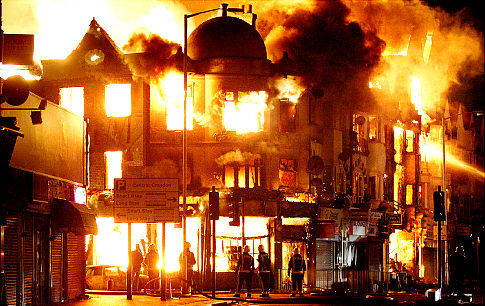
It was devastating to see the peoples power gone berserk in UK riots, as the  arson and looting carried on unabated into the fourth night . Unfortunately against the sheer numbers, the police seemed helpless to control the unruly mob.
While following the  #UKriots on Twitter and BBC News, hashtag #Sikhs started to trend—first World wide and then in UK, London.

A tweet was seen:

Remroum Remi Kanazi
Was afraid #Sikhs trending was going to be some bigoted stream. Thankfully it was this: Sikhs protecting people while they prayed #UKRiots

They came pouring, tweets one after the other with speed getting faster:

Prandha_Swag Harpreeeeezyf.baby
#Sikhs is trending.

Nagra18 Jasraj Nagra
#Sikhs is trending, never thought i’d see the day #proud.

KavelKaur Kavel Kaur
#Sikhs are a world wide trend!!!!

GDS1ngh GD singh
#sikhs trending, fantastic. doing what we do best.

moneyspinner MONEYSPINNER
#sikhs nanak naam chardi kala, tere baane sarbat dha bhala

I googled to check the details and saw Mail Online quote:

Some armed with swords, some carrying hockey sticks, defiant Sikhs stood guard outside their temples last night.
More then 700 men, some in their 80s, took to the streets to protect the homes, businesses and places of worship in Southall, West London.

The tweets went on:

Goggi_Rana Goggi Rana
Sikhs of Britain have displayed the same traits of fearlessness, as their ancestors of yesteryear #Sikhs #SangatTV

UncleWail Wail Al Aun
Thumbs Up for the #Sikhs protecting their #Temple in Toxteth #Liverpool #UKRiots

MissssChrissy Chrissy
Singh Is King… Yep I think so! #sikhs doing it real big today. #LondonRiots #ukriots

Then we heard that they had not only protected their temples but also stood at the mosque guarding while the Muslims prayed ther Taraweeh prayers of Ramadan in South Hall mosque:

A google message read :

Muslims prayed their Tarawee prayers while Sikhs protected he Masjid
Got this from a friend in London.
In a Masjid in Southall London, Muslims were praying their Taravee prayer as the riots were going on, a bunch of Sikhs stood outside the Masjid and protected the Masjid.
The similar thing happened when Sikhs were inside their Gurduwara and some Muslim youngster guarded it on the gate
Great experience, a cousin and a friend of mine reported the same incident.
May ALLAH bless people like them, humanity still remains here, despite the problems

Tweets loaded with emotions, from Muslims and people from other faiths,  too poured in with ovelwhelming enthusiasm:

PMGenerals PMG Anj
Today was an historic day for #hindus #sikhs and #muslims. #unitedwestand all religions teach us to have morals and respect dis proved it! X

dj_aNomAli ∀ℓι . ᄊ乇尺cんለռէ
Sikhs protect Southall mosque while Muslims pray Taraweeh in peace. Much respect to our brothers!! #LondonRiots #Southall #Sikhs #MashAllah

DNSDj Davinder Singh
Actually brings a tear to my eye seeing the #unity between #Sikhsand #Muslims in the fight against this madness. #proudtobesikh

akchishti akchishti
Great sight in my #Birmingham where #Pakistani lads are protecting temples while Sikh lads protecting the mosques

Muslimerican Peter
Imagine a group of rioters turning down a street and suddenly seeing 400 #Sikhs standing in the distance. #wrongturn #ohshit #londonriots

AdamPatel2 Adam Patel
I hear the #sikhs are even protecting the #mosques in Southall so #muslims can read our Tarawih in peace.”>>> BIG LOVE –

And dishearted tweeps begain to take a sigh of relief

xcrimsonstarx Vicki Langfield
The #Sikhs are giving me faith in humanity

Indeed, everyone who followed this trend must have rekindled their faith in humanity. Thanks you my Sikh brothers.

MumzyStranger Mumzy Stranger
Love out to the #Sikh brothers who protected the mosque during prayer time. If we all unite we can and WILL put a STOP to this chaos! M x

And  with these tweets millions or billions of eyes gleamed with hope.

We hope and pray this display of unity and humanity extends to all faiths and communities beyond borders and beliefs…

My mind recalled the verses of Sant Kabirdas which  along with 500 other verses which are included in to the Guru granth Sahib,  are  often heard from  Gurudwaras as Shabad Kirtan :

Avval Allah Noor upaya Qudrat ke sab bandey
(God created light of which all the things were born)
Aik nor ke sab jag upajaya kaun bhale ko mandhe
(From the light, the universe. So who is good and who is bad).

Indeed, I hail my Sikh brothers for living up to the spirits of their faith, their Gurus and their Book.

In return many Muslims also stood up with the Sikhs and helped them form groups which defended their communities and boroughs. Hail Sikh Muslim Solidarity. 

Let this be the beginning of Sikh-Hindu-Muslim-Christian-Jew –other faiths unity for  all faiths believe in one Supreme Power and all faiths belong to  one Humanity’

I dedicate  this tribute to my Sikh brothers with the greeting, which in Punjabi means exactly what Allah u Akbar stands for :

Vaheguru ji ka khalsa, vaheguru ji ki fateh.
(God’s pure and God’s victory )

My brothers,  Rabb Raakhaa

Ilmana Fasih, Aug 10, 2011

P.S.: Please scroll down in the comment box to see the reaction of the Muslim community after 3 Pakistani boys were killed in Birmingham.

Buss ker ji hun buss ker ji~Bulleh Shah


This post is dedicated to the inseparable cultures of India and Pakistan. A great example of how India’s Sufi singers (of one faith) sing with devotion the Kafi of a Sufi saint ( of another faith) who’s origins were in what is now Pakistan.

Bulleh Shah is considered as the greatest mystic poet of the Punjab, his compositions have been regarded as “the pinnacle of Sufi literature.” Scholars and dervishes have called him “The Sheikh of Both the Worlds,” “The man of God,” “The Knower of Spiritual Grace” and by other equally edifying titles.

Kartar Singh Duggal, a renowned writer and author of The Mystic Muse: Sain Bulleh Shah writes:
“Bulleh Shah was an evolved soul, a perfect faqir and a true lover. Through the love for his Master he realized the Lord. In his love one finds poignancy, ardor and longing besides sincerity, sacrifice and renunciation. Under the canopy of love he made his offerings of caste and learning. His love for his Master never wavered for a moment despite the fire of separation and longing through which he passed. His writings, as also his life, manifest transcendence of physical love ( of the Master) to divine love ( of the Lord).”

It is said that once Bulleh Shah annoyed his Master due to some indiscretion and he was thrown out of the his Master’s circle( called Daira).

Several months passed; Bulleh begged forgiveness, repented, had other devotees speak to the master,  who would not relent. Suffering the pangs of separation, Bulleh sang soulful Kafis. There are many of them, and the pain in each of them increased, with the passage of time.

One such kafi which is my favourite is :
Bas kar ji hun bas kar ji,
Ik baat asaan naal has kar ji.

Tuseen dil mere vich vasde ho,
Aeven saathon door kyon nhasde ho.
Naale ghat jaadu dil khasde ho,
Hun kit val jaaso nhas kar ji.
Bas kar ji hun bas kar ji.

Tuseen moiyaan nu maar na mukde si,
Khido vaang khoondi nit kutde si.
Gahl kardiyaan da gal ghutde si,
Hun teer lagaaiyo kahs kar ji.
Bas kar ji hun bas kar ji.

Tuseen chapde ho asaan pakare ho,
Asaan naal zulf de jakre ho.
Tusi aje chapan nu takre ho,
Hun jaan na milda nas kar ji.
Bas kar ji hun bas kar ji.

Bulha shauh maen teri bardi haan,
Tera muhk vekhan nu mardi haan.
Nit sau sau mintaaN kardi haan,
Hun baeth pinjar vich ghass kar ji.
Bas kar ji hun bas kar ji.

Enough! Now enough!
Smile! Speak to me!
You inhabit my heart.
Enough! Now enough!

You do not tire of killing the already-slain.
You play with me, a ball thrown over and over again at a stump.
If I speak, you gag me,
You might as well just pierce the arrow right into me!
Enough! Now enough!

If you hide, I will catch you.
I will tie you in my tresses.
You are able to stay hidden for now,
But you will not be able to escape from me.
Enough! Now enough!

Says Bulha, I am your slave.
I die to see your face.
I plead with you a thousand times,
O enter this cage. Occupy it.
Enough! Now enough!
~Translation BY Suman Kashyap

The same Bulleh Shah Kafi sung by Wadali brothers:

Little Terrorist~a short Film


Little Terrorist tells the moving story of a Pakistani Muslim boy who accidentally crosses the Pakistani-Indian border which is riddled with landmines. He ends up in a strange country that regards him as a terrorist. The old orthodox Hindu Bhola takes him in and hides him from the Indian soldiers. However, traditions and prejudices about Muslims remain an obstacle in the relationship between Bhola and the boy. Ultimately, humanity triumphs over prejudice when Bhola risks his own life to help Jamal cross the border again. This symbolic story of hope is a tale of human solidarity conquering all artificial boundaries.
Ashvin Kumar, the director, was nominated for an Oscar in the Best Live Action Short Film category.
Ashvin Kumar’s Little Terrorist also won first prize for best short film at the Montreal Film Festival.

And was nominated and selected for various other prizes.