Open up your mind and your potential reaches infinity…

Archive for the ‘India’ Category

Amir Khusrau, the maestro of Tarana.


This blog is just an attempt to familiarise the lovers of Amir Khurau to a form of singing, called Tarana, the fascinating  fast paced rendition often intended  to attain trance ( haal),   is attributed to be invented by him. Needless to say his other inventions being Qawwali, seventeen taals, tabla and sitar.

All I get is that Tarana  uses sargams and vocables like na, ta, re, da, ni, odani, tanom, yalali, yalalom shuffled in a fast pace coordinated  by rhythmic percussion from Dhol or Tabla.

A legend says that Amir Khusrau discovered this genre of music by default when   Khusrau at a performance of raga Kadambak by Gopal Naik,  allegedly,  remembered the music but not text. So he created the tarana through a merging of bols from the tabla, the sitar or the mridang.

Since I am absolutely bankrupt in classical music so I would just quote what Ustad Amir Khan Sahib,  a master of Tarana says:

“It is generally believed that Tarana is a composition of meaningless syllables followed sometimes by the bols (words coined to denote the various sounds of instruments) of the tabla and sometimes by Persian poetry. This view is not true. As a matter of fact at the time of the Amir, the texts of the songs used to be in the languages of South India, which were not easily understood by the people of the North. The court language was Persian, which was evidently the language of the contemporary intelligentsia. The Amir naturally thought of composing the texts of songs in the language understood by the intelligentsia. Thus the Tarana was born. The various words used are Dartanaa, Dar Tan Aa, Yala an abbreviation for Ya Allah. Yali for Ya Ali, Dar Aa etc., which when translated would mean:

Yala – Ya Allah

Yali – Ya Ali

O Dani : He knows

Tu Dani : You know.

Tom : I am yours, I belong to you
or   
Main Tum Hun (I am you).

Na Dir Dani : You are the complete wisdom.

Dar – Bheetar, Aandar (inside)

Dara – Andar Aa (get in or come inside)

Dartan – Tanke Aandar (inside the body)

Tanan Dar Aa : Enter my body.

Tanandara – Tanke Aandar Aa (Come inside the body)

Nadirdani – Tu Sabse Adhik Janata Hai (You know more than anyone else)

Tandardani – Tanke Aandarka Jannewala (One who knows what is inside the body)

Another feature of Tarana as sung by many in India is the repetition of certain words at a great speed. The justification for this type is also not to be sought., It is not merely an exhibition of speed or virtuosity at pronouncing words, but the idea is that while in prayer a person goes into a trance, and that in that state of mind he just continues to repeat one word or one set of words.”

( source: http://caferisko.ca/ak/tarana.html)
Yar-e-man bia bia Tarana sung by Konkana Bannerjee.

Main melody:
Yar-e-man bia bia.
Dar Tan tadim,
Ta-nan Ta na dim, Tom Ta Na Na Na
Antara:
Ba labam raseeda jaanum
Fu bia ke zinda maanum
Pas azari ki man na maanum,
Ba cheh kar khahi amud.

which means:

O love, come soon, come at once.
Come and enter my body,
for I am yours, come
Antara:
My life hangs on my lips,
Come thou that I may live again
for if thou shall come when I am no more,
to what avail shall it be.

Also see:http://en.wikipedia.org/wiki/Tarana
http://www.indiaheritage.org/perform/music/h-v-t.htm

“O God, to those who have hunger, give bread, and to us who have bread, give the hunger for justice.” ~ Prayer from Latin America


A PLEDGE:
Let us make this Ramadan,
special,
by making our Iftars,
simple,
So that we may,
share
with the hungry and the poor
some food
and loads of love.


FOOD FOR THOUGHT:

“Eating alone is a disappointment.
But not eating matter more,
is hollow and green,
has thorns like a chain of fish hooks,
trailing from the heart,
clawing at your insides.
Hunger feels like pincers,
like the bite of crabs;
it burns, burns,
and has no fur.
Let us sit down soon to eat
with all those who haven’t eaten;
let us spread great tablecloths,
put salt in lakes of the world,
set up planetary bakeries,
tables with strawberries in snow,
and a plate like the moon itself
from which we can all eat.
For now I ask no more than the justice of eating.”

~ Pablo Neruda, Chilean Poet

“A hundred years from now
it will not matter
what your bank account was,
the sort of house you lived in,
or the kind of clothes you wore,
but the world may be much different
because you were important
in the life of a hungr
y child.”
~ Author Unknown

“To a man with an empty stomach food is God” — Gandhi

Voices of Ganga Jamuni Tehzeeb


Ganga-Jamni tehzeeb ( गंगा जमुनी तहज़ीब, گنگا جمنی تهزیب,    Ganges-Yamuna Culture) is a  euphemism for the mutually participatory co-existence of  Hindu and Muslim  culture of through the fusion of Hindi and Urdu. (Wikepedia) .


First example  is a Bhajan sung by Farid Ayaz  & group  (I wonder if it’s MeeraBai’s) sung in a Qawwali form is an excellent example of that Ganga Jamni Tehzeeb.

It was the first time a Muslim Pakistani singer sang a Hindi Bhajan inside a temple in Montreal, during  Kabir Festival in 2008.

Farid Ayaz and  entourage never fail to amaze listeners. Farid Ayaz is  a magician  more than a musician and this passionate rendition is no less than a magic spell…


Not behind in this tradition of cross culture reverence, Shanker Shambhu brothers sang  in praise of Allah, Prophet Muhammed and Imam Ali.

They were known to be singing with their souls pouring out in their voices and was hard to miss their reverence to the kalaam, said those who saw them sing live.

One of their master piece is the Mun Kunto Maula, sung by many others but this one has it’s own charm, and best of all, I have been listening to this since I can remember….


These  are but two true examples of music beyond beliefs and borders.

ABC of Qawwali


A small irritant from a dear friend, a westernised desi, who kept calling Qawwali as ‘Qawwali song’ got me to make a polite request to her call it only Qawwali. She probably thought I was an expert in the field and with innocent curiosity started to fire questions at me about Qawwali.

I really felt cornered and actually regretted for having made the silly request to her. And I realised that beyond the ABC of Qawwali I had no idea of what qawwali really was made of.

Her basic questions made me wonder that I was equally ignorant of the indepth details. Probably except for calling it Qawwali instead of qawwali ‘song’ there wasnt much difference between me and her. So I began to dig deeper.
It was indeed a wonderful journey to flip through the e-searches learning about Qawwali details.

All I knew earlier was this bit:

The word Qawwali was derived from the arabic word Qaul which means the utterance ( of Prophet).

Qawwali, a Sufi devotional music is unique to north India. It arrived in the subcontinent in the 14th Century. Amir Khusau, known as the ‘Father of Qawwali’ developed this form by incorporating Farsi and Arabic in the Indian music centered on the classical structure of taal and raag.

The word Sama is used in Central Asia and Turkey to refer to forms very similar to Qawwali, and in the subcontinent, the formal name used for a session of Qawwali is Mehfil-e-Sama.
I had known that the singers are called: Qawwal and those group of singers who sing a qawwali chorus in unison are called Humnawan.
I had heard, long ago in Delhi that Qawwals are also called Qawwal bacche.

I began to hunt for what was the reason why they were called so. What I learned was this:

“There is a renowned tale frequently told by qawwals- that of the ‘Qawwal Bachche’. Hazrat Amir Khusro wished to do something extraordinary for his ‘sheikh’ (spiritual mentor) Nizamuddin. So he discovered twelve gifted young men and educated them to render the ragas he had created. The sheikh was thrilled with their performance and these twelve lads went on to be recognized as the ‘Qawwal Bachche’.This ancestry of qawwali singers, the sons of the initial qawwal or Qawwal Bacche, was begun by a man who, as fable goes, was hearing impaired and mute. Inexplicably healed by a Sufi saint, he converted to become one of the earliest disciples of Amir Khusro. Qawwali has been handed down from father to son over generations, with weight on the children memorizing the poetry and precise elocution of the words because several of the songs are in Persian.”
(Source: http://www.planetradiocity.com/musicopedia/music_decade.php?conid=2362).

During Googling I came across a list of qawwwali vocabulary, on ‘bohotkhoob’ blog, which I thought was a must share:

Alap = Introductory phrases of a raga sung without rhythm to create a background for the raga used in the composition.
Anga = Aspects of singing which bring out the main style followed by the singer.
Baja = Instrument, chiefly harmonium. Strangely though Harmonium was introduced into qawwali only in mid 19th Century. Earlier instruments used were: double-headed drum (dholak) and a bowed lute (sarangi, dilruba) and an earthenware pot(ghara).
Band = A verse of more than two lines — inserted from a longer poem.
Band sama = A closed or an exclusive performance in which a special song-repertoire is rendered without any instrumental accompaniment.
Badhana = To extend, or elaborate the melodic theme.
Bari ka gana = To sing by turns in an assembly of Qawwal-singers.
Bol = Utterance, the repeatable part of the song-text sung by the chorus.
Bol samjhana = To convey the meaning of the text through musical variations, etc.
Chachar = Metric pattern of 14 beats frequently employed in the genre.
Chal = Gait, the specific melodic contour of the song.
Chalat phirat = Melodic improvisation mostly in a faster tempo and intricate in design.
Cheez = A complete, original song without additions etc.
Chaoki = A performing group of qawwal named after the leader or his ancestor.
Dhun = A tune which is satisfyingly complete and yet may not be in a codified raga.
Doha = A couplet making a complete, rhyming poetic statement in common metre employed by the singers at the beginning or as insertions.
Dohrana = To repeat.
Girah = A knot, i.e. inserted verse in a qawwali.
Hamd = Poem in Urdu/Farsi in praise of God.
Hawa = Archaic Sufi song in Farsi said to be composed by Amir Khusro.
Khas tarz = Special tune.
Makhsus tarz = Special tune.
Manqabat = Poem in praise of a great religious personage, especially Sufi saints.
Munajat= means secret conversation, whispering, prayer, longing or yearning. Sung in Farsi and was invented by Rumi.
Masnavi = Extended Farsi poem with rhyming couplets
Matra = Durational unit in music making.
Misra = Verse line.
Misra kholna = ‘to open the verse line’.
Misra ula = First verse line, especially the opening line of a couplet.
Mukhra = The opening refrain line of the song.
Murki = Melodic ‘turn’ — a specific musical embellishment.
Mushtar ka gana = Mixed i.e. communal singing.
Naghma = Melody, tune, played as a prelude to the qawwali, usually based on a tune derived from the Zikr Allahu.
Panchayati gana = communal singing.
Padhna = Recite, read or chant without instrumental accompaniment.
Phailav = Melodic spreading, expansion.
Qata = Four line aphoristic poetic form in Urdu/Farsi used in introductory section of the qawwali.
Qaul = The basic ritual, obligatory song either as opening or closing hymn with the text based on sayings of the Prophet.
Rang = The second principal ritual, obligatory song after Qaul celebrating the saints (Nizamuddin) spiritual guidance (colouring) of his disciple Amir Khusro.
Rubai = Aphoristic four-line poetic form in Farsi/Urdu in qawwali. It refers to the recitative preceding the qawwali often based on a Rubai.
Sany bolan = Saying it as second, singing a verse line to the tune section of the second concluding line of a couplet.
Sargam = Sol-fa passage.
Sher = Couplet, literally the strophic unit of the ghazal poem.
Takrar = Multiple repetition.
Tali = clapping.Clapping by the performers in the second row complements the instruments.
Tarana = A genre of songs with meaningless auspicious words, often derived from Sufi invocations.
Tazmin = A poem incorporating famous verses around Sufi classics in Farsi.
Thap = An accented drum beat.
Tiyya = A triad of a rhythmic/melodic cadence.
wajd = Ecstacy, invoked by any particular shair or couplet of poetical composition, which is common scene in such mahfils,that particular couplet is repeated continuously by the Qawwal until the thirst of the ecstatic ‘subject’ is fully satisfied and he returns to his normal condition
Zatnin = Poetic metre of the song-text.
Zarb = Accent, rhythmic stress.

It has now somewhat made me understand the rendition beyond just the words sung. The ups and downs, the repeats, the style of singing, punctuated by narration, the claps etc in the middle of the rendition, now seem to make a lot more fascination.

I am sure many of the Qawwali lovers would be far above my baseline of knowledge, but anyhow Happy listening!

(Source: Music contexts: A Concise dictionary of Hindustani Music. By Ashok Damodar Ranade
http://meheralisherali.com/history.html).

The real fight we need to fight


First published in Aman Ki Asha, The News, 29 June 2011
http://www.amankiasha.com/detail_news.asp?id=483


The news didn’t cause much of a stir. After all, it wasn’t a buzz about Bollywood beauties — say Katrina, Kareena or even Veena — or about an Afia Siddiqui, or even a Baba Ramdev or some other ‘hot’ icon that triggers off all-day media coverage. This news report was all about the faceless, nameless women, not one, not two, but millions. But who cares, when there is no nametag, or brand associated with them? Perhaps not many will guess what I am referring to.

Perhaps ignorance is bliss.

I noticed a few tweets, even fewer facebook statuses, a handful blogs that made a passing mention of this ‘news’ which perhaps for many was not much newsworthy in Pakistan, although on the Indian side it was mentioned in quite a few articles and caused relatively more concern.

The news item in question was the recent Thomson Reuters Foundation report according to which Pakistan and India were ranked third and fourth respectively as the world’s most unsafe places for women. If it wasn’t for war-torn Afghanistan and Congo, we would have topped the list. The fifth country in the club was Somalia.

Is it not ironic that India and Pakistan, which also belong to the elite club of the world’s ‘nuclear powers’, also find membership in a club of countries like Afghanistan, Congo, Somalia, and that too on the issue of mistreating women?

The Thomson Reuters Foundation surveyed 213 experts from around the globe, on the five continents, to decide the ranking of the most dangerous nations based on six parameters — health threats, sexual violence, non-sexual violence, cultural or religious factors, lack of access to resources and trafficking.

According to the report some 90 percent of Pakistani women are subjected to domestic violence, a further tragedy being that not even a quarter of them are aware that what they go through is a crime and that there are laws to protect them. They are taught from childhood to bear the marital violence and pressures as culturally appropriate or in the name of religion. Talking in terms of numbers in a populated country like Pakistan, this means a huge figure, to the tune of 80 million or so.

The situation is not much different in India where, despite all the development and booming economy, 100 million poor women are subjected to sex trafficking. The myth is that most of them go into the sex trade voluntarily; the dark truth is that most are lured or kidnapped, and forced into it. The target girl is from the low castes, from the poorest of the poor families — families that can ‘dispense’ with a missing daughter (not a son) and do not make much effort to track her down after she goes missing. What the report did not mention is that 40 percent women trafficked are minor girls.

In both India and Pakistan, rape, dowry deaths, acid attacks, kidnapping, and domestic violence continue unabated and gender inequality persists, although the degrees may vary. And in both, only a handful of such crimes get reported and even fewer are punished.

Both countries can boast of having elected women prime ministers to office decades ago, but in both tens of millions of women today, lead lives worse than cattle. The health and education statistics from India and Pakistan speak volumes for the plight of their women. Their female literacy rates are 54 percent and 35 percent respectively (compare Iran: 73 percent and Sri Lanka: 90 percent) while maternal mortality rates are 230 and 260 per 100,000 respectively (Iran: 37 and Sri Lanka: 60) (Source: http://www.mrdowling.com/800literacyfemale.html).

These statistics follow reports of a 12 percent rise in the defence budgets in both countries. India and Pakistan already spend about 18.6 percent and 23.1 percent, respectively, of their allocated annual budget on military expenditures. Compare this to their budgets on health — 3.5 percent and 13 percent — and on education, 12.7 percent and 7.8 percent respectively (Source: http://www.visualeconomics.com/how-countries-spend-their-money/).

What is the point of harbouring illusions about being secure from the ‘enemy’ neighbour, when one’s own house remains unsafe for millions of one’s own women?

For its part, Pakistan is embroiled in a war situation rife with extremism and violence — but India has a booming economy, and is considered part of the BRIC club (Brazil, Russia, India and China, all deemed to be at a similar stage of newly advanced economic development). What will it take to understand that the key to a real development lies in three words: ‘INVEST IN GIRLS’.

Investing in nuclear warheads for “deterrence” is a poor investment. They shall never be used.

But investing in girls’ education and health will bring phenomenal returns, going a long way towards improving the social and health indicators of the region. The link of women education and empowerment to population control and reduction in poverty is well documented.

According to the WHO website: “There are several compelling benefits associated with girls’ education, which include the reduction of child and maternal mortality, improvement of child nutrition and health, lower fertility rates, enhancement of women’s domestic role and their political participation, improvement of the economic productivity and growth, and protection of girls from HIV/AIDS, abuse and exploitation. Girls’ education yields some of the highest returns of all development investments, yielding both private and social benefits that accrue to individuals, families, and society at large. Girls’ education and the promotion of gender equality in education are vital to development, and policies and actions that do not address gender disparities miss critical development opportunities.”

Perhaps the key to the peace and prosperity of the region lies in prioritising in the empowerment of the women through education and better health, rather than through piling up arms. That might also save us from the international embarrassments like this.

The real fight that the two neighbours, India and Pakistan, desperately need to fight is not with each other, but together — for peace, prosperity, and women’s development.

Dr Ilmana Fasih is gynecologist and health activist of Indian origin, married to a Pakistani

Wednesday, June 29, 2011
Link: http://www.amankiasha.com/detail_news.asp?id=483

Kabir a day keeps radicalism at bay


First published in english daily, The Islamabad Dateline on 26th June, 2011

Almost 700 years ago, when religious polarisation in the Indian subcontinent was at its helm, a preacher was born. He was named Kabir and he spent the rest of life trying to bind Hindus and Muslims together. Today, as religious hatred is bred into masses and intolerance is injected into young minds one finds it necessary to bring forth Kabir, the champion of religious tolerance and interfaith harmony.

The mystics from united India are more relevant to us than Persian or Turkish voices as they spring from the culture we own. For a relatively more radicalized society in Pakistan, these pluralistic and tolerant voices need to be disseminated vehemently. These great men seemed to be far ahead of their times and Kabir is no exception. Kabir stands tall, in the line of greatest mystics of all time with St. Augustine, Ruysbroeck, Buddha, Rumi, Emre and Hallaj

Kabir’s vision, though timeless in its essence when transformed into simple poetry addresses the basic problems humanity faces today. His message was simple and straightforward — that God is perceived in different forms by different people, but in essence they all talk of One supreme power.

Koi bole Ram Ram, koi Khudai

(Some call him Ram, some name him Khuda)

His honest message offended both Mullahs and Purohits for it challenged their stakes. He was persecuted by both to which he screamed:

Sadhu dekho jag baurana / Sanchi kaho to maran dhawe /Jhoote jag patiyana

(O gentleman, see the world has got mad / I say truth but they run to beat me and believe the fake.)

His intent was not to offend anyone and he made it clear:

Kabira khada bazaar mein mange sab ki khair / na kahoo se dosti, na kahoo se bair

(Kabira Stands in the market place( the world) / Asks for everyone’s prosperity. Neither special friendship nor enmity for anyone).

His mission, through his vision was to promote brotherhood, unity, love and forgiveness beyond regions and religions.

The Hindu says Ram is beloved, the Muslim says Rahim / They fight and kill each other, no one gets the point.

And the point that no one got was:

Maatii Aik Anaik Bhaanth Ker Saaji Sajan Haray
(The Clay Is The Same, But The Designer Has Designed It In Various Ways)

Kabir through his words challenged the authority our society has given to clerics quite audaciously:

The spiritual athlete often changes the color of his clothes
& his mind remains gray and loveless.
Or he drills holes in his ears, his beard grows enormous
People mistake him for a goat.
He shaves his skull & puts his robe in an orange vat,
Reads the Book & becomes a terrific talker.
Kabir says: the truth is, you are riding in a hearse to the country of
death, bound hand & foot.

He even warned against the mindless following of religious preachers and to use one’s own conscience to decide what is right or wrong:

Jaka guru hai andhla, chela hai ja chandh / Andhe andha theliya, dunyu koop parent
(If the preacher is blind (unrealized) and the disciple is also blind, how can they progress further? If a blind shows the path to the other blind, they both are bound to fall in some dead well at some time).

To those bigoted who would not understand this, he remarked:

Phootee aankh vivek kee, lakhe na sant asant
(People have their inner eyes of conscience blind; they don’t see who is real and who is fake)

“What can one do, if, with lamp in hand, one falls in the well”

Bura jo dekhan main chala bura na milya koi / Jab man khoja aapna mujh se bura na koi.

(I went on the search for the Bad Guy, Bad Guy I couldn’t find. / When I searched my mind, Non one is Nastier then Me)

He lived to restore the confidence in the common man against the elite clergy or the rulers, who claimed their superiority by virtue of their status. He explained:

Bada hua to kya hua jaise ped khajoor / Panthi ko chhaya nahin phal laage ati door.

(If You are Big so what? Just like a date tree / No shade for travelers, fruit is hard to reach).

He used simple vernacular language, with metaphors from common examples to engage the people around him. People were fascinated by the deep moral messages contained in his simple poetry.

Kabira Garv Na Keejiye, Uncha Dekh Aavaas / Kaal Paron Punyah Letna, Ouper Jamsi Ghaas

(Kabi , Don’t be so proud and vain, Looking at your high mansion / Tomorow you’ll lie under feet, On top will grow Grass).

Ab Tun Aaya Jagat Mein, Log Hanse Tu Roye / Aise Karni Na Kari, Pache Hanse Sab Koye

(When you came in to this world, Everyone laughed while you cried / Don’t do such work, That they laugh when you are gone)

And that it’s not one’s status but one’s deeds which pay off ultimately:

Ek daal do panchi re baitha kaun guru kaun chela / Guru ki karni guru bharela, chele ki karni chela.

(Both the preacher and the follower are together / but both will be dealt according to their deeds.).

The Purohits and Mullahs could not tolerate his audacity, and how he influenced the common man. His words had already penetrated into masses and exposed the self-righteous claims of every clergy. He got expelled from Kashi. He roamed around Benaras preaching his message and passed away in Maghar.

After his death both the Hindus and the Muslims both claimed ownership over him. There are a few legends but one wonders how was the matter resolved. As for now, there exists a Hindu shrine and a Muslim Dargah adjacent to each other at the place where he died.

Kabir’s words are very pertinent to current Pakistan, where religion is manipulated for political ends and justify acts of violence. Voice of Kabir needs to be resonated in our academia and society being the need of time. Why did not we own Kabir like India? – I leave this question to be answered by the reader.

Co written: Ilmana Fasih with Syed Ali Abbas Zaidi.

Arduous Journey for Tender Feet


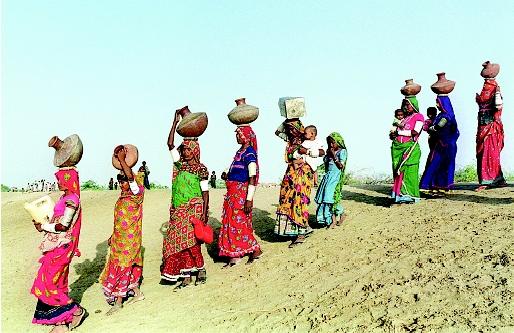
In the poorest communities around the world, women and girls walk to collect water, firewood or other basic necessities of life. They walk on average 6 kilometres a day – 8,000 steps while carrying the equivalent of a suitcase. This leaves little time to attend school, access health services or earn money to support their family.

Women are largely responsible for collecting and managing water resources in developing countries, especially in rural areas, reports from the United Nations Development Fund for Women (UNIFEM) show. Without a ready source of freshwater they may have to walk for several hours every day to find it. The U.N. estimates that 1.2 billion people lack access to safe water and about 2.5 billion are without access to proper sanitation.It is common for girls in rural areas of the world to drop out of school, so as to help carry out the burden of moving water. Girls as young as ten contribute to household tasks. Eventually, they miss classes and lag behind enough in school to abandon their education.
Collecting wood from forests for fuel is a difficult task that falls largely on the shoulders of the world’s women. A survey found that collecting firewood was one of the greatest burdens for many women and that it had a significant impact on their quality of life (Green & Erskine, 1998; 1999). .Pic credits: Basankusu collecting firewood by Francis Hannaway

Collecting firewood is extremely tiring as the women often have to walk long distances in search of wood which then has to be carried back to the homestead. Rural Tanzanian women, for example, walk 5-10 km a day collecting firewood, carrying loads between 20kg – 38kg. In rural India, the average is over three hours each day. The time-consuming nature of this task often causes young girls to be kept out of school. Girls going for firewood collection have been known to be subjected to sexual abuse too (UNDP).
AND THINK.

Would their life be the same if they had the opportunity to be educated like YOU and me?

Educated girls grow into women who tend to have healthier and better nourished babies, who most likely will do everything to have their own children attending school as well, thus breaking the vicious cycle of poverty. Educated girls can better protect themselves against HIV, trafficking and abuse.

Educating a girl also means that as a woman, she is empowered and more likely to participate in development efforts and in political and economic decision-making. Women who went to school usually manage to increase the household income. The advantages of girls’ education thus do not stop at the boundaries of a single child, but ripple through families, communities, and nations.

Delhi Diary: Gossip on Wheels –2


Continued from the previous post….

Delhi roads, or for that matter roads on any metropolitan city in the world is so very stressfull. If only these vehicles did not share their light hearted smalltalks or gossiped or flirted on the way, they would be having high rates of ‘heart attacks’ like us humans.
Only if we too knew how to wade our ways through chaotic and bumpy roads of life with humour, life would seem much less of a burden.

Again open your ears, shush your mouths and hear them gossip and flirt and romance…..
Madame Maruti: Haaaye teri baat ne dil khush kar diya.

Truck ji: Chal Rani tera Rabb Raakhaa
Mme Maruti: Rani, haan who tou main hun. Thankyou for the dua, yaar.

Auto bhai: “Papa Jaldi Ghar aa Jaana.”
Maruti behn: Bhai, ghar mein bachey wait kar rahe hain, zara safely
chalao.

Another auto bhai: “Mera Bharat Pareshan[My India is Troubled].”
Maruti : Tere jaise careless auto se pareshaan nahi hoga tou kya hoga…India.

Maruti, the advisor: Yar tou kaali ko bhool ja, kamai kar buss…

Romeo Truck: “Kaho na pyaar hai”
Laila Maruti: Kyun, ek baar bol diya na, bar baar kyun boloon, huhh.

Maruti( sharma ke): Awaein, mere kol koi hor kum ni haega..

Truck Dada: “Road King”
Maruti: Tabhi tou itna chaura ho ke chalta hai, sarak pe.

Lalchi Maruti: Hain, to kya ye sara maal vi mera. Haaye meri kismat.

Truck in denial: “Gori fir se hui jawan”
Maruti: Kya bola? Zara apne aap ko sheshey mein tou dekh.

Creepy Truck: Tou hi meri dulhan, tou hi mera dahej
Maruti: Yar mat tang ker, us bichari nai Maruti ko.

Truck ji: Bus peecha karoge, ya kabhi dil mein bhi baithogey
Maruti: Arre, peecha kaun kar raha hai, awein hero mat ban.

Truch ji: Dekho, dekho,dekho,magar pyaar se
Maruti: Yahan marne ki fursat nahin hai, tum pya se dekhne ki baat karte ho.

Maruti: Haan, haan woh to nazar aa raha hai.

JattTruck: Jatt Di Mercedez
Maruti, the sophisticated: To tum bhi koi Jutt se kam nahin ho bhai.

Truck the philospher: Hun Tu Kaun te Main Kaun
Maruti the sufi: O truckeya, tu ki jana main kaun…

Maruti: Hahaha kya baat hai…:D

Haseen Lorry: “Kashmir Ki Kali”
Maruti( jealous): Chal chal zyada ghuroor mat ker apne ooper.

Badtameez Tanker: Zarra Hatt ke Laadli
Maruti( ghussey se): Oye tameez se baat ker…

Filmi Truck: “दुल्हन वही जो पिया मन भाये,
गाड़ी वही जो नोट कमाए”
Dulhan wohi jo piya man bhaye
Gaari wohi jo note kamaye.

Maruti, the feminist: Yaar, aajkal to dulhan bhi note kamaye…

Pendu Truck: Himmat hai to pass ker, warna burdass kar.
Shehri Maruti: Lagta hai gaon se naye naye aaye ho, Dilli shehr mein. 🙂

When we part, we get emotional 😥 :
Maruti: Chal TATA. Kabhi Salam bho ker liya ker…

Jazbati Truck: Milega Mukaddar , Pher milangey
Maruti, (equally emo): Haan kismet hui tou zaroor milenge isi road pe, ek na ek din.

Devdaas Truck: Chalo ek Baar Phir se Ajnabi ban JaayeN
Paro Maruti: *sob sob, sniff sniff* Haan chalo, Khuda Hafiz.

And this is how they meet each day, with gossipping, joking, flirting on the roads and making their way through packed roads. Their spirit and zest to survive is touching.

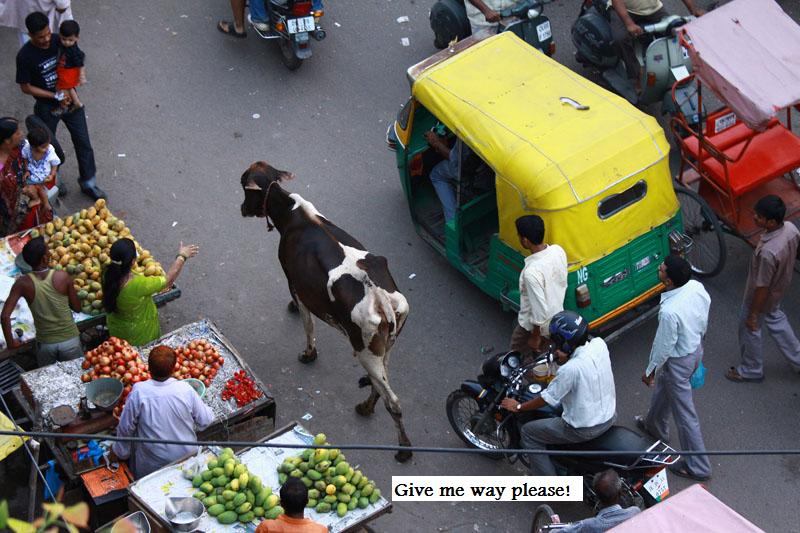
Maruti remarked: Yess we give space on the roads to these beings too, . Do you Humans do the same with animals?

Maruti taunted: Dont you think there are Supermen amongst you only. We have them too.

Maruti( with proud): We have Superwomen too.

Maruti: See we are considerate for our poor too. And we give them way.

Maruti: We believe in UNITY IN DIVERSITY.

Maruti, the thinker: And we believe in PEACEFUL COEXISTENCE .

Indeed, one thing remarkable about the traffic community is their ‘unity in diversity’. How they coexist with some noisy peace and give way to each other with no vengeance, is worth commending.

We humans need to learn some real ‘good’ lessons from these vehicles.

Delhi Diary: Gossip on Wheels–Part 1


Commuting through the streets of Delhi with almost an hour and a half’s drive each side was no less than a Herculean task. The journey back home, in the evening, would result in a bursting headache.

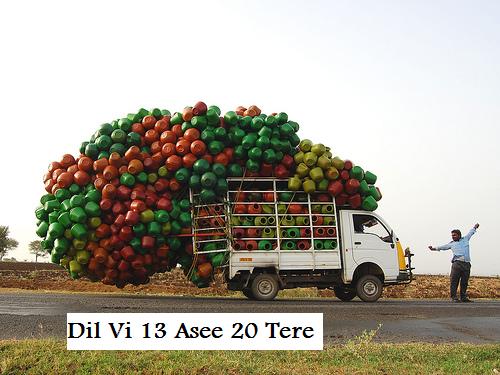
The megacity with hundreds of newly built flyovers and underpasses, still gets choked in its veins at the peak office hours. The traffic is dense, diverse and chaotic. Perhaps when going through licence training they are made to practice to honk horns as much as possible, sworn not to use the dipper and taken pledge not to follow lanes. In fact the dividing lines whether broken white or solid yellow are to be kept exactly in the middle of one’s vehicle—be it a cycle, a cycle rickshaw, auto rickshaw , a car, truck or a tanker.

I felt the dire necessity to have the cake ( wading the traffic all the way each day) and relish it too( enjoy their antics without getting headache).

So I began to hallucinate…

….and began to see and hear all the secret conversations and the relationships the my car had with the traffic around it. I was enlightened now as to why they dive and dodge across the lines ( just like a five year old kid) when another vehicle tries to overtake or chase them. And no wonder why they honk horns so much—in disgust ( just like us humans) when they see injustice .

Oh ! they are all so much like us humans- chaotic and noisy. And like us they gossip, flirt and swear too at each other, on the way.

Only the wise could see that, and I happen to be one of those few. 
I began keeping my eyes and ears open to what was going on between my car and the other fellow vehicles…..

And from then on travelling was fun—after all I am as human as them. and I too love to eavesdrop on what Madame Maruti ( my car) would babble and flirt with fellow trucks and autos along the way.

So from here on just shhhand listen to what Madame Maruti gossips…

Mme Maruti: “Yeah , I know we’ve got to honk the horn for ‘Road Symphony’, but what’s this OK doing in the middle.”

Truck Ji :“Use horn ok please dipper”
Mme Maruti: Hold on, What did you say? Pagla gae ho ?

Mme Maruti: “Kyon? Kya landan se aae ho? Yahan koi dipper wipper nahi janta”.
( Have you come from London, no one knows dipper here).

Mme Maruti: “Yeah only if you had listened to your Mum and been to school, you would know how to say Hallo.”

Mr Truck: “Wait for side.”
Mme Maruti: I’m waiting. But kab takk? ( How long)

We have some of wicked amongst us, just like humans, who can’t wish well for others….
Idealist Maruti: Since when did you become racist, man. Ain’t humans enough?

Burger Truck: “Bad nazar wale tera thobda black.”
Desi Maruti: Lagta hai dost, angrezi filmein zyada dekhne lage ho ?

Dukhi Truck: “चलती है गाड़ी, उड़ती है धूल, जलतें हैं दुश्मन, बिखरतें हैं फूल.”
Chalti hai gari urti hai dhool, jalte hain dushman bikharte hain phool
Maruti, the reformer: Yaar, kabhi kisi ka bhala bhi soch liya karou.( Think of good also sometimes).

Foul mouthed Truck:“बुरी नज़र वाले, तेरे बच्चे जियें, बड़े होकर, देसी शराब पियें”
( Buri nazar wale tere bachey jiyein, Bade ho kar desi sharab piyein).
Maruti, the preacher: O’ bhai, uski to nazar buri hai, per tumhari to soch insaanon ki tarah gandi hai. Uske bachon ney tumhara kya bigada hai?

Mean Truck: बुरी नज़र वाले तू जिए, और तेरा बेटा बड़ा होकर तेरा खून पिए! ( Buri nazar wale tere bachey jiyen, bade ho kar tera khoon piyen).
Maruti, the Gandhian: Arre bhai, kya tum bhi insaan ban gaye jo khoon peene ki baat kar rahe ho ?

Some of us are really kind and thoughtful too:
Maruti: Wah, yeh ki na tum ne sau aane wali baat. 🙂

Saint Truck: Na koi buri nazar
Na kisi ka muh kala,
Sab ka bhala chahta hai
barah tiresath (12-63)wala!

Maruti:Kaash, hamre baqi bhai log bhi aisa hi sochein? Aur insaan bhi 😦

Maruti: Sach keh rahe ho, magar ye insaan ki samajh mein aye to baat hai.

</
Maruti: Wah bilkul theek kaha tum ne.

Our social responsibility, we understand so well. I wish all mankind could think like us too:
Maruti, the samajhdar: Agar insaan ki ye samajh mein aa jae to is duniya ki mushkil hi khatm ho jae.

Maruti, the patriot: Is mehengai ke daur mein, bilkul theek.

Mr Truck: “Ek ya do buss.”
Mme Maruti: “Kya shaadi ya bacheyy?”

Mr Truck:बीवी रहे टिपटॉप
दो के बाद फुल स्टॉप
(Biwi rahe teep taap
Do ke baad fullstap)

Mme Maruti: “Khayal umdah hai, feminist lagtey ho !”

Truck, the Anna Hazare: Sau mein nabbey beimaan, phir bhi mera desh mahaan.
Maruti, the Sonia: Han haan, buss tum hi to ek imaandar ho poore desh mein.

Mr Truck, the poet: शेर दो हों मगर सलीके के,
घर को ऐसी ग़ज़ल बनाना है
(Sher do hon magar saleeqe ke
Ghar ko aisi ghazal bana hai).

Mme Maruti: “Uff, ye ‘sher’ aur ‘ghazal’ se tou Ghalib ki
yaad taza ho gai.”

Truck, the poet: “Malik ki gadi, driver ka pasina, chalti hai road par, banke hassina”
Maruti: Haaye, kya Shayar ban gaya…

Truck Sahab, the wannabe poet: “Fool se kante ache hai jo daman tham lete hain, dost se dushman ache hain jo jal kar bhi naam lete hain”
Maruti, the judgemental: Haaye teri Urdu se tou Hazrat Ghalib pareshan ho jayeinge.

Maruti: “What should I say, you said it all?”

PS: Some less serious gossip in the next blog.

Indo-Pak Express on a high


http://www.jang.com.pk/thenews/jun2011-weekly/nos-19-06-2011/spo.htm#6
( Published in The News, Sunday Page on 19 June 2011).

The victory of Indo-Pak Express, Aisam-ul-Haq Qureshi and Rohan Bhopanna, at the Gerry Weber Open Tournament in Halle (Germany) brings a cool breeze amidst the summer heat, to all of us from India and Pakistan. After winning the match they reach to their seats adjacent to each other where their white jackets hang, embellished with the four magical words: ‘Stop War Start Tennis’.

The message is simple and brief, yet has far-reaching implications. The message holds the key to the prosperity of one fifth of the Earth’s population.

They are best friends, both on and off the court, and say that they complement each other’s style of play. Ever since they paired up in 2007, their careers have been marching uphill.

It is not just their game but their spirit to rise above religious and political differences that makes usall proud. They may have yet to fulfill their dream of Wimbledon doubles title, but they have already lifted the biggest trophy of Peace and Sanity.

After one of the tournaments, Aisam had remarked: “There were a lot of Pakistanis and Indians in the crowd cheering for us. And you couldn’t tell the difference, who was Pakistani and who was Indian, they were all mixed together and supporting the same team.”

And indeed this is the truth, no matter what skeptics may say. We have more in common than in differences, whether it be our appearances, our histories or our geographical location.

These talented young men are a living example to the 1.4 billion Indians and Pakistanis that ‘United, we shall stand’.

The duo echo the feelings of millions of hearts that throb in the chests of the people, who aspire for peace and prosperity for themselves, as well as for their neighbours. Like Aisam and Rohan, these millions too could become the real ambassadors of peace in their own right. Together they could reckon to be a Peace Force large enough to defeat any force of hateful extremists or other vested interests that leave no stone unturned to sow hatred and differences between the two neighbours.

History, with three wars and years of tensions, cannot be changed and borders cannot be erased. But these young men have shown us that by ‘being friends’, we can avoid the waste of energies in hatred and blame games, and instead, harness the same energy towards progress and prosperity for the entire region. Let the borders be just on the land, not in our hearts is what the pair teaches.

It does not need rocket science, but just a flicker of change in one’s thinking to turn this hatred into love. It does not even need too many bureaucratic visits, MOUs or anti-war treaties if one and a half billion people of this subcontinent decide to make Aman ki Asha into a real everlasting peace.

Indians and Pakistanis are 1.4 billion people together, sitting beneath the noose of nuclear weapons in the region. True, that the possibility of these being used is negligible, but then why such a hefty expenditure in developing, maintaining and improving their ‘killing’ capabilities in the name of big meaningless words like ‘nuclear deterrence’?

We do not deny that there aren’t serious differences and contentious issues, but three wars and numerous tensions have failed to solve them. Nor will the missiles and nuclear weapons resolve them in future. There is no issue which cannot be settled through peaceful negotiations. So for the sake of the well being of the huge numbers of people at stake, it is time we give lasting peace a real chance. Tensions and wars benefit few, but peace shall benefit each one of us across the subcontinent.

The political tensions provide an excuse to the vested interests (outside the region) to continue getting both sides to buying arms and building arsenal for ‘safety’, amidst poverty, hunger, ignorance, illiteracy for millions on both sides. What if this money was used for development and not arms build up?

Let us ask for our ‘safety’ not through arms and ammunition, but through regional cooperation in education, health, alleviation of poverty and economic activity. This is only possible if both sides are at peace with each other.

Is this asking for ‘lasting peace not tensions’ that farfetched a dream? Maybe the idea looks a dream, but then dreams do come true too.

And Aisam and Rohan have shown us just that. Congratulations Indo-Pak Express. You make us proud.

ilmana_fasih@hotmail.com