ART THROUGH DOLLS
“A girl is Innocence playing in the mud, Beauty standing on its head, and Motherhood dragging a doll by the foot”
“A girl is Innocence playing in the mud, Beauty standing on its head, and Motherhood dragging a doll by the foot”
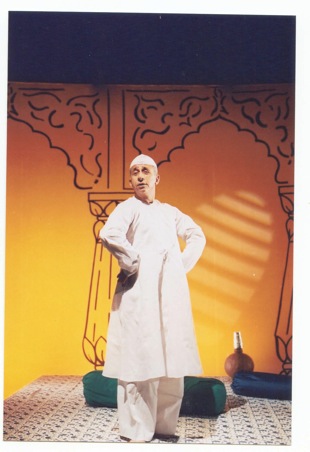
Very rarely does one feel so overwhelmed and short of words to express one’s feelings.
Today since the past 20 hours or so, I know exactly how it feels to be on ‘Meth’ or Speed’ or whatever you choose to call that amphetamine the psycho stimulant.
Just out of the blue and at a very short notice a darling friend and an old neighbour of mine from Delhi, called to tell me that she has an extra ticket for a show running in Brampton named ISMAT APA KE NAAM by Motley Theatre of Naseeruddin Shah & co.
I had no choice but a “Yes” despite being down with common cold, a -20 degrees outside at 8 pm in the evening, in a city next to mine. I knew it would be a worth the effort experience by the virtue of the name Naseeruddin Shah, but never imagined that it would be to this extent.
Gosh.
Naseeruddin Shah, neither because he is a Bollywood actor nor because of his theatre, but Naseeruddin Shah has been a ‘special’ person in my life since almost two decades and a half.
Being brought up in Delhi, with studying in the elitist of schools, I had missed studying and enjoying the pleasures of Urdu. This is one grudge I held towards my parents, though not anymore.
So miserable was the Urdu of us siblings, despite parents being champions in the language, that once when one our neighbour asked my 20 year old brother if his ‘hamsheera’ was studying medicine, he sheepishly replied,
“ Sorry Uncle I am not married yet.”
Still a butt of joke at home, but we sibs have come a long way from that . Thanks to only one guy—Naseeruddin Shah. His serial Mirza Ghalib which ran on Doordarshan in the mid 80s got me into feeling that I hardly understood a quarter of what Jagjeet Singh was siniging. And hence the journey and the never ending love affair with Urdu poetry began. Rest is all history.
Coincidentally, hearing him speak once, he had the same thing to say—he was a masters in English and learnt Urdu and passion for it after his obsession with performing as Mirza Ghalib.
So the evening began with a mesmerising Naseeruddin introducing the concept of story narration and that it would be in the words exactly as Ismat Apa wrote.
Before he introduced Ismat Khanum Chughtai, my image of this lady was of a white haired, grandmother looking, who wrote plays and screenplays for movies.
What was news to me was the facts that she was a rebel and a feminist of her times and always remained in controversy in life and even after her death in 1991. A multifaceted personality of an educationist, a reformer, a writer, a mother and a grandmother.
SHE LIVED HER WAY AND WROTE HER MIND.
Her writings, he said, were bold enough that people thought she wasn’t a woman—just a man writing with a pseudonym of a woman. “Tauba tauba how can a woman write such things.”
Wikipedia introduces her as:
“She was considered the grand dame of Urdu fiction, as one of the four pillars of modern Urdu short story, the other three being Saadat Hasan Manto, Krishan Chander, and Rajinder Singh Bedi. Her outspoken and controversial style of writing made her the passionate voice for the unheard, and she has become an inspiration for the younger generation of writers, readers and intellectuals.”
Naseeruddin made a passing mention of her most controversial story LEHAAF, which even the British in 1940s had banned. Later I read, it talked about lesbianism. Oops, to talk of it in 1940, she must be gutsy. I can’t write a story on it today.
Later I came to know through net surfing that some of her books are still banned in some Islamic countries for being ‘Fohosh’( lewd) including ours.
Wow, Harold Robins can sell, but Ismat Chughtai is banned.
Three stories were narrated and enacted with excellent sound and music effects. Unfortunately photography was not allowed.
The first, ‘Chhui Mui’, enacted by Heeba Shah, is a story told through the eyes of a young girl observing events in her Bhabhi’s life. It contrasts the difficulty, her rich, spoilt Bhabhi has in giving birth to a child against the calm and dignified manner in which an unknown poor woman gives birth to her baby in a train compartment. The graphic details of a childbirth and its enactment were in no way embarrassing.
It basically, was a satire on the pampered life of the elite where in everything is treated with a fuss while the have-nots go through the same experience in a matter of fact manner. And the latter turn out to be winners in this strife of life.
The second story, ‘Mughal Bachha’, enacted by Ratna Pathak Shah, tells the story of beautiful young flawless lass Gori Bi, who is married to a proud and headstrong youth Kaale Miyan. The story gently pokes fun at the successors of the Mughals at the time when the glorious days Mughal Empire were over– their lifestyle, their extravagant habits and their descent into penury. It also describes the unusual relationship between Gori Bi and Kaale Miyan who, because of the ‘war of egos’, never consummated their marriage.
Being teased by the girls of the contrast between their complexions , he had decided that he will not bow down to her.
Kaale Mian being a Mughal Bacha was determined that he would have her obey his orders of ‘ghoongat uthao’ and will make her lift the veil herself. While Gori Bi firmly believed that it was the prerogative of her dulha to do that. And in this battle of egos, of ‘pehle aap, pehle aap’ they missed their ‘train of a married life’.
Oh boy, the comical acts of Ratna Pathak enacting both as Gori Bi and then Kaale Miyan, gave stomach cramps with hysterical laughter.
The muhawrah: ‘Rassi jal gai magar bal nahin gaya’ befits Kaale Miyaan so well.
And such people are a plenty in our society even to date.
The enactment couldn’t have been done by anyone better than by Ratna Pathak. Her clear shusta Urdu, her flawlessly durust ‘sheen’ ‘qaff’ must have left a lot in the audience, guilty of theirs.
Her gharara and chunna dupatta attire was so reminiscent of the dadi amma times in Jama Masjid in Purani Dilli.
Unfortunately both the stories met with tragic ends.
The third story, ‘Gharwali’, was the best and the longest of the three. It had to be so, after all it was narrated and enacted by none other than Naseeruddin Shah.
The story explores the nature of the man-woman relationship, marriage, the status of women, the commodity that a woman is considered in our society. And best of all, the touching truth of how even a ‘bazaroo’ woman aspires to have her own home and a loved one who is possessive of her.
With sufficient doses of social satire, drama and earthy humor – definitely this story too must have raised very many eyebrows and created a furor in the 40s. Although touching on the issues of – ‘love’, ‘lust’ and ‘lived in’ relationships , this story was in no way vulgar or filthy.
It had the audience engrossed throughout. Naseeruddin Shah’s antics and the expressions created a fit of laughter and looked like a stand up comedy at times. Mirza ji’s continual ‘tug of war’ between ‘to have’ Lajjo or not in his life as his beloved, was something words cannot describe.
Never could one afford a moment off focus, to miss the expressions on his face. Naseeruddin sailed so beautifully and comfortably in the multiple roles from a carefree, youthfully spirited, playful, seductive yet innocent maidservant Lajjo to a nervous, old, ever confused, shy yet desirous chronic bachelor Mirza, to various other minor characters. His performance was nothing short of being brilliant and captivating.
I did not want the story to come to an end.
Thankfully, this story despite the turbulent events in the middle, had a happy ending.
All the way back , instead of calling home to check if kids were okay, I was lost in the stories and just kept smiling at Naseeruddin Shah’s antics.
I came home and googled on the net about details of Ismat Chughtai till late night.
Downloaded the story LIHAAF but sadly could get only in English translation. Went to the library today morning to get the Urdu collection of her stories.
I did not even check what was happening to Gaddhafi or Raymond Davis. I am perhaps over them and moved on with Ismat Apa.
Saw a status on Maheen ‘s wall talking about enjoying the short life to the fullest.
Hence, I decide to temporarily bid the much needed Bye Bye to the focus on politics, till I finish Ismats Apa’s stories. No time to waste here.
Naseeruddin Shah has once again made me change my direction of life, with a new found love for Urdu literature and prose—to be specific Ismat Chughtai.
It is not the enactment or the feminist story lines, but the bold, daring and yet so juicy, catchy, common man’s Urdu in which the stories are written by Ismat Apa that has made me fall for her writings.
How could she write such beautiful stories in the mohalle-wali Urdu, loaded with muhawaras, which we so often heard from our own Dadi Ammas ?
And also, I have started to have a secret desire to be able to write in Urdu too.
Will I ever be able to do it?
Not sure.

Read this *Chinese Wisdom* years ago, and was reminded again today by a Filipino friend’s email.
Once upon a time there was a very old woman who lived in a remote village in China. She use to go to a far off stream to fetch water in her two earthen pots. One of her pots was perfect while the other had a crack in it.
Everyday when she brought water from the stream it would leak from the crack in the second pot and by the time she reached home there were only one and a half pots full of water in them.
She went on with the same routine for years without any change.
The perfect pot felt proud of itself for being flawless.
However the cracked one was ashamed of its imperfection as it could only accomplish half of what it was meant to.
After years of feeling guilty, the cracked pot one day gathered courage and while the old lady was filling it up with water, it begged sorry to the lady mentioning about its flaw and how it betrayed the old woman.
The old lady smiled and said, “I have been aware of your flaw all along, and did you not notice that I had sown the seeds of flowering plants on your side of the path, all through. And when you leaked water on the way, those seeds got irrigated, the plants grew and now there are flowers blooming in them. Thanks to you, my leaky pot.”
And she told the cracked pot how much of ‘fragrance’ and ‘color’ have those beautiful flowers brought in her life.
“If it wasnt for you, there wouldnt be these ‘flowers’ in my life.”
The cracked pot continued to leak , and drenched her as she hugged the sad cracked pot, affectionately.
The cracked pot smiled back, with a deep sigh of relief.
Morals of the Story:
Each of us has our own crack and flaw or even cracks and flaws.
These cracks or flaws make us unique, interesting and rewarding in one way or the other.
We need to accept not only our cracks, but the cracks in others as they are, and find good in them.
And yes…. we must also remember to see and smell the flowers on ‘our’ side of the path.
Always…
“I see more and more that my work goes infinitely better when I am properly fed, and the paints are there, and the studio and all that. But have I set my heart on my work being a success? A thousand times no. I wish I could manage to make you really understand that when you give money to artists, you are yourself doing an artist’s work, and that I only want my pictures to be of such a quality that you will not be too dissatisfied with your work.”
Vincent van Gogh
 “I love those who can smile in trouble, who can gather strength from distress, and grow brave by reflection. ‘Tis the business of little minds to shrink, but they whose heart is firm, and whose conscience approves their conduct, will pursue their principles unto death.”
~Leonardo Da Vinci
Who was Leonardo Da Vinci?
Da Vinci was born on April 15, 1452 in the small town of Vinci, in Tuscany (Toscana), near Florence (Italy). He was Italian.
He was an illegitimate progeny of Messer Piero Fruosino di Antonio da Vinci, a Florentine notary, and Caterina, a peasant.
Leonardo was raised by his single father. He never married or had children.
Leonardo would wear pink to make his complexion look fresh.
Leonardo had, by the standards of those days, a reputation of being a man of high character.
As a dinner guest, would monopolize all conversation, enjoy the soup, linger long enough that all would beg him to stay and leave to a loud chorus of “Come back soon!”, whilst misappropriating a wine glass and forgetting his hat.
Leonardo is considered by many as the Father of Modern Science. Sternly, he believed only in that which he could observe. He began his career as an apprentice to Florentine artist Andrea del Verrochio.
Leonardo was an architect, a musician, an engineer, a scientist and an inventor.
He was also a a great painter, a sculptor, a designer of costumes, a scientist, a mathematician, a botanist, a futurist and a thinker.
Leonardo, the dyslexic:
He had the gift of dyslexia.
Most of the time, he wrote his notes backwards, ‘ in mirror writing’ i.e. they can be easily readas normal , as a reflection in the mirror. (Some ‘suspected’ that this was to keep his ideas secret).
Leonardo’s spellings are also erratic and strange.
 His handwriting
Why did he write from right-to-left, in mirror image?
Although rare, this is a trait shared by many left-handed dyslexics.
Most of the time, dyslexic writers are not consciously aware that they are writing this way.
Was he an ADD?
He started many more projects then he ever finished – a characteristic which is now often considered to be a symptom of ‘A.D.D.’( Attention Deficit Disorder).
Da Vinci’s love for ‘flight’ and locomotion :
Leonardo was intrigued with the concept of human flight, and spent many years toying with various ideas for flying machines. He produced many studies of the flight of birds and plans for several flying machines When he drew his flying machine, he wrote (backwards, of course):
“A small model can be made of paper with a spring like metal shaft that after having been released, after having been twisted, causes the screw to spin up into the air.”
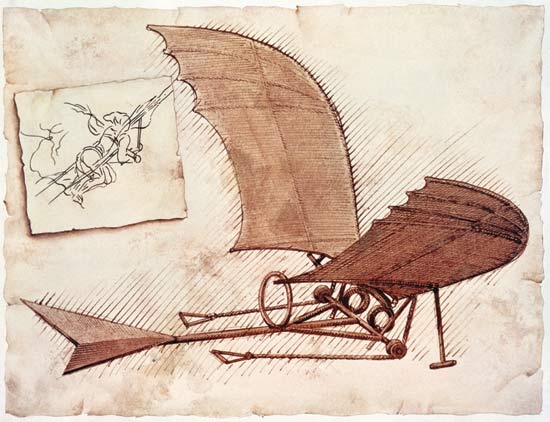 His drawings of the aeroplane.
Leonardo sketched not only the first aeroplane but also the first parachute, first helicopter, first tank, first repeating rifle, swinging bridge, paddleboat and the first motorcar. . .
He invented the bicycle 300 years before it appeared on the road.
Leonardo the painter:
He had a passion to paint beautiful women, most of whom enjoyed being painted secretly.
Leonardo’s first solo painting, completed in 1478, was ‘Madonna and Child’.
In 1481 he left Florence for Milan to offer his service to the local Duke.
In 1481 he began painting ‘Adoration of the Magi’, an unfinished work that reveals his technique of beginning with a dark painting surface and adding elements of light, unlike most painters of his time who started with outlined figures on a white surface.
In 1483 he started to paint the first version of the ‘Virgin’. He completed it in 1485.
Leonardo was famous for the way he used light in his portraits. He drew a self-portrait in 1515.
Mona Lisa:
‘The Mona Lisa’ is perhaps his most famous work. The subject of this portrait is still debated to this day, the most popular current view being that it is of Lisa Gherardini del Giocondo.
Another of the most unusual hypotheses is that it is a self-portrait of Leonardo as a woman.
It took him about ten years to paint Mona Lisa’s lips.
 Monalisa
The Last Supper:
He painted ‘The Last Supper’ at Santa Maria delle Grazie in Milan, a dramatic depiction of the moment Jesus announced that he would be betrayed.
By 1500 AD, the painting’s deterioration had begun. Since 1726, many attempts have been made to restore it.
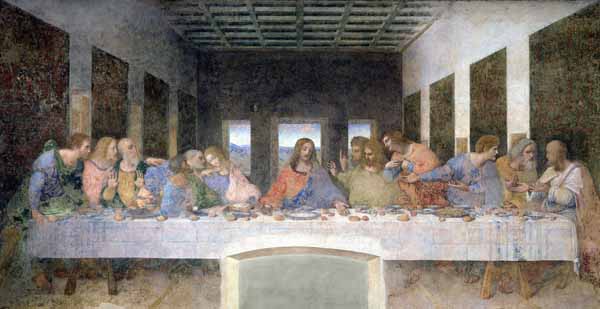 The Last Supper
Leonardo the sculptor:
In 1495 Leonardo made a clay model for the statue of Francesco Forza, and put it on display.
Leonardo changed the way people painted and made sculptures.
He was one of the most acclaimed artists of the Renaissance (a period when the arts and sciences flourished). .
Da Vinci, the science illustrator:
Leonardo was constantly sketching out his ideas for inventions.
When it came to drawing illustrations, Leonardo’s work is detailed and precise.
He established modern techniques of scientific illustration with highly accurate renderings such as ‘Embryo in the Womb’.
He made maps of Europe.
He took part as an engineer in the war against Pisa.
He designed a movable bridge for the Duke of Milan.
He drew the plans of the first armored car in 1485.
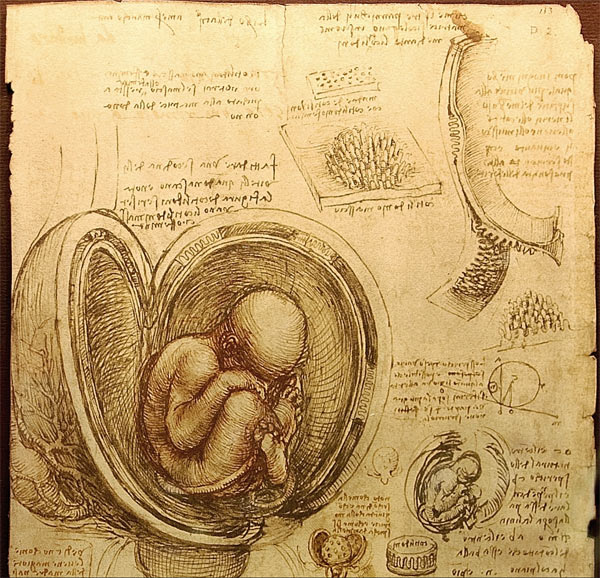 His drawing of a baby in the womb.
He was undeniably one of the greatest thinkers and well ahead of his time by hundreds of years.
Leonardo died on May 2, 1519 and was buried in San Florentine in Ambrose.

Acknowledgements: Source -Prabhakar Pillai.
The finest thing in the world is knowing how to belong to oneself. ~Michel de Montaigne, Of Solitude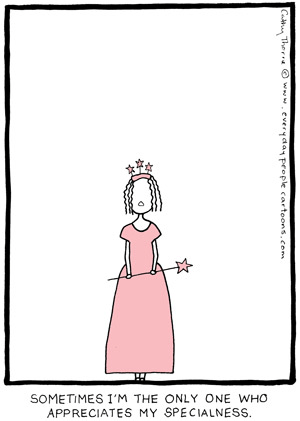
FACTS, FIGURES & TRIVIA: Year of Construction: 1631
Completed In: 1653
Time Taken: 22 years
Built By: Shah Jahan
Dedicated to: Mumtaz Mahal (Arjumand Bano Begum), the wife of Shah Jahan
Location: Agra (Uttar Pradesh)
Building Type: Islamic tomb
Architecture: Islamic
Cost of Construction: 32 crore rupees
Number of workers: 20,000
Highlights: One of the Seven Wonders of the World
A UNESCO World Heritage site
Some more Taj Mahal trivia:
Before his accession to the throne, Shah Jahan was popularly known as Prince Khurram.
Shah Jahan fell in love with the beautiful Arjumand Bano Begum and married her, making her his third wife.
Arjumand Bano Begum christened by Shah Jahan as Mumtaz Mahal, meaning the “chosen one”.
Shah Jahan lost Mumtaz Mahal when she got giving birth to their 14h child.
It is believed that in her last breath Mumtaz secured a promise from Shah Jahan that he would construct the most beautiful monument in the her memory.
For the transportation of the construction materials, more than 1,000 elephants were made use of.
As many as 28 different varieties of semi-precious and precious stones were used to adorn the Taj with exquisite inlay work.


 Blind to Bounds
You must be logged in to post a comment.