Open up your mind and your potential reaches infinity…

Archive for February 13, 2012

Dilemma of duty vs compassion


Having a background from the medical profession, it is not difficult to understand the dilemmas that erupt between professional ethics  and compassion, when they, at times, seem  to clash. Doctors are often accused of ‘compassion fatigue’ which I find is a completely misplaced myth.  However, at times, one’s hands are tied through requisites of an  ‘ethical’ behaviour.

This painful story also deals with the same conflict albeit in the life of a journalist.

This is a  Pulitzer Prize 1994,  winning photo taken by  Kevin Carter a South African photo journalist. The picture was clicked, in March 1993,  during a visit to the famine struck Sudan.

The picture depicts a famine stricken child being stalked by a vulture. The child is crawling towards a United Nations food camp, located a kilometer away.

He is said to have taken the picture because  it was his ‘job title’.

Soon after the picture was published in New York Times on March 26, 1993, hundreds of people from all over the globe started to inquire about the fate of the girl.

The newspaper reported: No one knows what happened to the child, including the photographer who left the scene as soon as the photo was taken.

The photographer came under  fire for being insensitive and a publication wrote:

“The man adjusting his lens to take just the right frame of her suffering, might just as well be a predator, another vulture on the scene.”

Kevin  later confided to friends that he wished he had intervened.

Journalists at the time were warned never to touch famine victims for fear of disease.

According to another photographer, Joao Silva, accompanying Kevin, they had only 30 minutes to take pictures before flying out of the area.  And according to him, Kevin was shocked to see the children of  famine for the first time and started taking pictures of the kids, as their parents were busy collecting food from the nearby food camp.

“He carefully came close to the child to take a picture of the baby with the vulture and then after taking a few shots chased away the vulture.”

Months later, and only weeks after being awarded with the Pulitzer Prize, Kevin Carter, 33, drove up to the place where he used to play as a kid, and  committed suicide.

Portions of Carter’s suicide note read:
“I am depressed … without phone … money for rent … money for child support … money for debts … money!!! … I am haunted by the vivid memories of killings and corpses and anger and pain … of starving or wounded children, of trigger-happy madmen, often police, of killer executioners…I have gone to join Ken [recently deceased colleague Ken Oosterbroek] if I am that lucky.

His story was made into a documentary ” The Death of Kevin Carter: Casualty of the Bang Bang Club ” which was nominated for the Academy Award in 1996.

A tribute to Kevin Carter : 
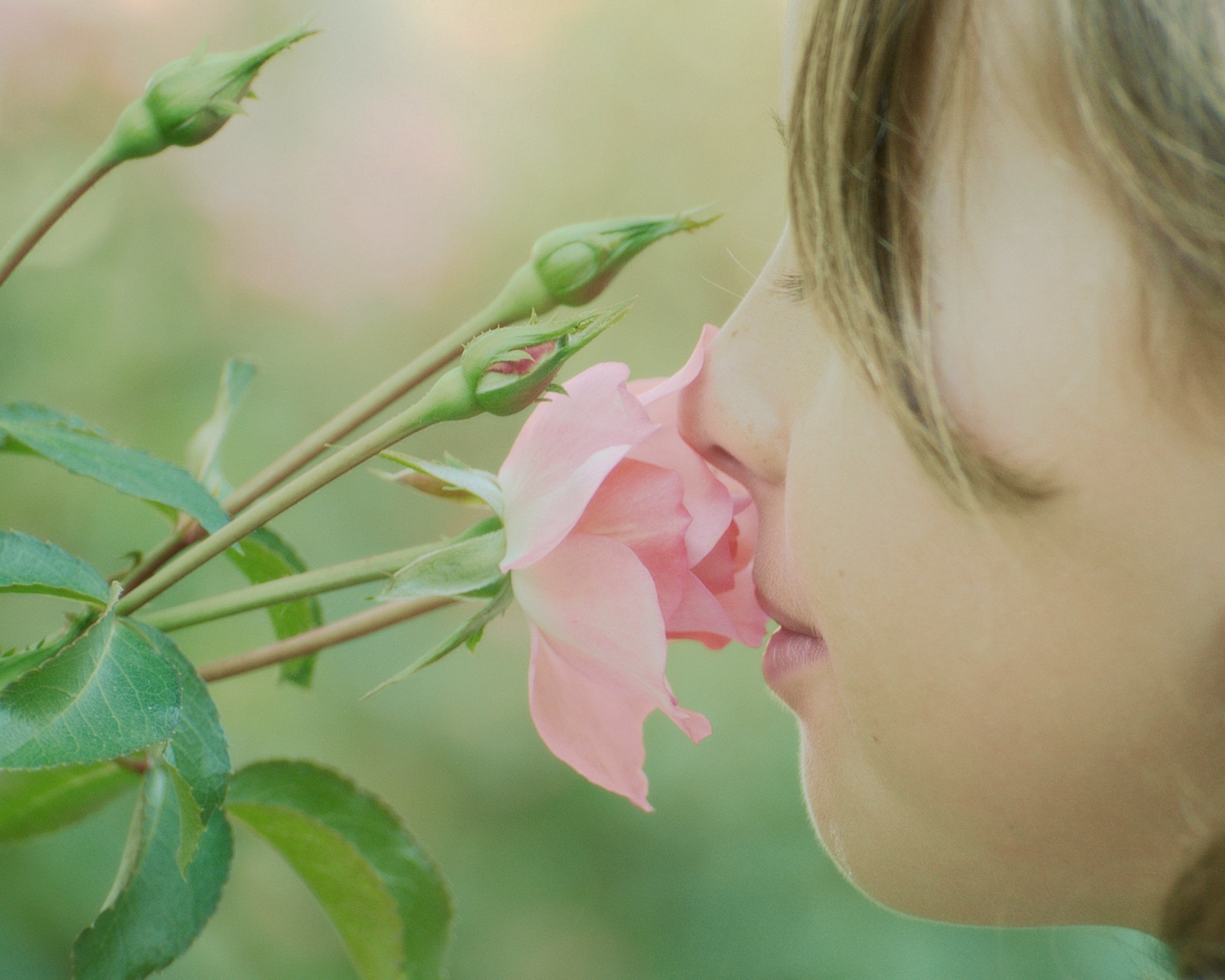
Sights and Sounds May Disappear, but Smell Shall Linger.


Published in TheNewsBlog February 7, 2012. http://blogs.thenews.com.pk/blogs/2012/02/07/sights-and-sounds-may-disappear-but-smell-shall-linger/


“When I miss her, I go to her closet to sense my daughter’s fragrance.” Arfa Karim‘s Mom said on her 17th birthday.

The words from the teary eyed mother gave me goose bumps.

She was certainly not talking about the perfumes that Arfa adorned, but the odour that she inherently possessed by virtue of her HLA (genetic) type. This was the smell Arfa’s mom associated her with ever since she held her in her arms soon after her birth (even though the mother may not be aware of it, consciously.)

This reminded me of a research paper I read years ago which said the first bond that a mother and child have after birth is through the sense of smell. Babies from the time of birth learn to identify their mother through a strong sense of smell. It is said that within 24 hours, a mother is able to identify her baby’s odour too. A research claims that within 50 hours, infants were able to differentiate between the smell of their mother’s nipple from that of another lactating woman. Studies have shown that when a mother’s nipple from one breast was washed off, 22 out of 30 babies chose to suckle the unwashed side, because of the familiar odour.

Little toddlers, unaware of relationships, differentiate their siblings from friends subconsciously through odours.

It is common knowledge that animals identify and claim their territory through the sense of smell. Dogs smell their masters, and cannot be deceived even by a look alike.

Each one us is endowed with a unique fragrance or scientifically an ‘odour’ type. Our smells are coded by the genes of a group of molecules called the HLA Complex. Our odour type determines the various social cues we receive in the society in the form of attractiveness, favourable or unfavourable social reactions, and even sexual arousal. Furthermore the role of pheromones, the odour producing hormones in animals and humans as a medium for sexual attraction is also well known.

In an interesting study a group of women were asked to smell men’s T-shirts and choose the odour they liked. Majority of them chose the odour type which was different from theirs, hence from a different genetic pool. Perhaps this is nature’s way to create more variation.

In another similar study, women were asked to smell men’s T-shirts and were asked to rate them according to pleasantness. The men who had infectious diseases, (most probably sexually transmitted disease’) were in more than half of the cases labelled ‘putrid’. That’s another one of nature’s ways to minimise the transmission of infections.

My kids often mention:

‘Oh this smell reminds me of Karachi’, or of Delhi or even of ‘that’ person. Though never a subject of research perhaps every place along with its unique sights and sounds, has its own distinct set of smells too. The smells could be related to its fauna or even the food habits there. My mother often remarks; ‘The soil at every place smells different while the water in every place tastes different.’

A Vietnamese friend who recently visited her native place remarked, Hanoi has its unique smell, and it’s even funny how their embassy here smelt the same. Perhaps it’s the fish sauce!

We do spend a handsome amount on buying scents. And many rich and famous spend a fortune in creating a ‘signature’ smell of their own.

Ironically the sense of smell – though a subtle and powerful sense of perception – is subconsciously the least significant in our lives. We may feel empathy for those who are deprived of a sense of sight or sound, but often either ignore or even mock those with loss of smell. Not many of us even know that some people are born with their sense of smell missing. This condition is known as Anosmia. How incomplete their lives must be. We all have experienced small periods of Anosmia or Hyposmia when our noses get blocked during the common cold. We all know how tasteless even the most delicious of foods seem, with a blocked nose. This simply reinforces the hidden fact that before actually tasting, it is the smell which judges the true taste of food.

Hence, our sense of smell and the odours of others, animate or inanimate creates a great bond and sense of belonging.

One can very well imagine how much Arfa’s Mom must be feeling the presence of Arfa in everything that is associated with her. Though Arfa’s sight and sound may have left, her smell shall linger in the place and possessions she has left behind.

Painfully Humane


Published in TheNewsBlog on January 31, 2012. http://blogs.thenews.com.pk/blogs/2012/01/31/painfully-humane/

A couple of days ago I met a neighbour outside the house, walking her two cute cocker spaniels. We exchanged New Year Greetings and as a ritual I asked: “So how did you spend your new years eve?”

“Oh I spent my evening feasting with my girls.” she replied

“Lovely, so they all came over to be with you.”

Her face changed color, “Oh no, these girls Sasha and Mori pointing at the two cocker spaniels, picking up the little ones in her arms.

Embarrassed I replied: “Yeah couldn’t be a better new years eve than with one’s pets. I did it too, when the rest of my family went to see the fireworks at midnight, I sat with my cats on the sofa watching TV.”

This triggered off the talk on how we undermine animals and use terms like ‘animal’ or ‘beast’ with a derogatory hint while using words like ‘humane’ as a symbol of compassion.

“I see those TV anchors calling suicide bombs that go off in Pakistan as ‘inhumane’ acts, when in reality they’ve been done by humans themselves, especially those who aspire to be superhuman so that they get a special place in Paradise.”

I could just nod in agreement.

She went on, “Isn’t this all very ‘human’ to kill, for no rhyme or reason?”

Her words echoed for hours. Don’t we use the same terms ‘insaniyat’ for compassion while ‘janwar’ or ‘haiwaaniyat’ for cruelty in Urdu too.

Although, it is common knowledge that even the most dangerous of animals do not harm unless they are hungry or provoked.

Perhaps our ‘hunger’ has gone beyond filling our stomachs. We ‘attack’ others to fill our egos, the egos which never get filled, because there is no bottom. Yes no bottom, because, we do not have any limit to how low we can stoop to gratify our egos.

Often we see and hear of stories where two pets that could have naturally been predator-prey, coexist as friends and in fact the predator acts as a protector of its erstwhile prey.

I saw this live for years in my own home between our cat Nelson and the grey parrot Shakespeare. Shakespeare learnt to mimic the mewing and growl of Nelson. And Nelson would come running to him. They would simply mew, looking into each other’s eyes. No t even once did the cat attempt to attack or touch the grey parrot. The day Nelson passed away and went missing from home, Shakespeare mewed for hours, as if calling out for him, adding to the gloom and shedding tears like a bereaved kid.

It is a bigoted myth that empathy is a higher cognitive function that only apes and humans are blessed with. Perhaps we are more loaded with narcissism than with empathy. Studies on whales show they are extremely emotional. Whale brains have specialised spindle cells which are important for empathy, and rapid gut reactions. Previously, only humans and apes were considered to possess them. An interesting practical example of this is when a 50-foot, 50-ton humpback whale was caught in a net off California’s coast. After rescuers untangled it, the whale swam up to each one of the rescuers, and winked before swimming off. The researchers confirmed this was a gesture of gratitude from the whale.

To study empathy, neuroscientists in McGill University injected acetic acid in the paws of mice causing them pain. The mice who watched their friend writhing in pain became more sensitive and reacted more violently to pain, when injected with the same chemical.

Studies on animals called ‘humans’ show that children who are cruel to animals, are likely to turn to violence later in life. 75% of prison inmates are known to have past history of animal cruelty, says a study.

We need to revisit or swap the meanings of ‘humane’ and ‘beastial’, or ‘insaniyat’ and ‘haiwaniyat’.

It is a saving grace that we do not understand animal language, otherwise it would be very embarrassing to know that every time a suicide bomb, target killing or even animal poaching occurs we would have heard animals scream “What a painfully humane act!”

Daring to cross the love border


Published in Aman Ki Asha, The News on January 24, 2012.

Ilmana Fasih shares some stories of building cross-border bridges through the social media

A world without borders was my childhood dream. The desperation and the need for this dream to realise, came out in the open when I embarked on my ‘pyar border paar’ journey, after deciding to tie the knot across the border. I’ve been on two decades of a topsy-turvy ride riddled with visa travails, with the hope-hopelessness cycle going round in vicious circles. Not had I ever dreamt in my wildest of dreams that my hope for a borderless world could be realised in my lifetime. By a ‘borderless’ world, I mean erasing psychological rather than physical borders.

Perhaps on ground it still remains a dream, but on the virtual terrain it has turned into a reality, with the booming world of social media, especially twitter. It is a visa free, passport free utopia where no one is asked their colour, creed or credentials.
It does not take long for one to get addicted to this borderless terrain. The most fascinating thing for me is to see Indo-Pak friendships burgeoning through social media. Thanks to this factor, we can all be a family beyond borders and beliefs, tied with passions common on both sides of the Indo-Pak border.


Indians and Pakistanis wish each other on Eid and Diwali via Twitter and Facebook, and send virtual firecrackers, mithai and biryani across the border.
The #shair hashtag which ‘trended’ on twitter some time back merits a mention. Every day, it attracts Urdu poetry loving twitterati in India and Pakistan. As Rana Safvi , who started this trend, begins to tweet the topic or the poet of the day, other #shair fans start to contribute their tweets with unmatched enthusiasm. So common is the passion for #shair on both sides, that it is almost impossible to identify which side of the border the tweep belongs to.
Rana tweets: “Twitter ne nikamma ker dia, warna aadmi hum bhi aadmi the kaam ke.” #shair
Comes the reply: “140 characters mein baat ker lete hain, DP to DP borderpaar, mulaqat samajh lete hain.
Political differences and arguments also emerge on twitter, but more than anger, what trumps are the vibes of friendship and harmony. The same thrill is felt on facebook too, with some limitations.
Some time back I was approached by two sets of people keen to tell their story of cross-border friendship developed through social media.
One was Ram, a boy in his mid twenties, from West Bengal, India who became friends with Maria, a girl in Punjab, Pakistan through facebook. As their friendship led to a better understanding and respect for each other’s cultures and beliefs, the vibes spilled over to thaw any cold feelings that their families had for the other side. When Ram’s father fell ill and was admitted to hospital, Maria’s mother and sister prayed for his recovery. He recovered, and Ram’s family attributed the recovery to Maria’s family’s prayers (duas).
Now, as Maria is about to be married, Ram’s family is sending her a present as a token of their friendship and gratitude for her family’s prayers. Ram explained that their families had no links to anyone the other side, and hence had no other reason to be warm, but for their friendship.
Maria and Ram have vowed to keep up their friendship even getting married to their respective spouses, and one day, when they can obtain visas, they hope to meet and ensure that any children they have are able to meet each other.


The second story is that of a love-struck couple who prefers to keep their identity and respective nationalities confidential. They contacted me with a request that I should intervene, (having gone through a similar ordeal), and convince the girl’s parents that tying a knot across the border can work out.
Like many others, they ‘met’ through an incidental chat on twitter some six months ago. They then added each other as friends on facebook. The exchange of pictures and other information led them to develop a better understanding of each other, until they reached a point when they decided they needed to share their lives. Both are in their early or mid twenties, and feel they are mature enough to embark on this journey.
The hope and enthusiasm that they had attached to my help made it hard for me to explain that I would prefer to stay away, and that they needed to deal with the situation themselves. Life is as such a struggle, and with a cross-border union, it gets tougher. Hence, let this be the first hurdle they need to cross together, before embarking on the real lifelong journey.
The couple cited the Shoaib Akhtar-Sania Mirza marriage as an example, but the girl’s parents pointed out that they were ordinary people, not stars. Hence they chose me, an ordinary Indian woman married to an ordinary Pakistani man to plead their case.
With this borderless world of twitter and face book, it is easy to predict that in future, there will be more virtual friendships which people will want to turn into real relationships.
As I explained to them, I would want everyone to appreciate that such decisions are never taken either in a haste or without realising the pros and cons of this life changing decision. Life is tough in any case, it gets tougher, and more so, after an Indo-Pak adventure. Since there are decisions which when taken can effectively be non-reversible. The decision of one of the spouses to forego his or her passport for the other side cannot be reversed, whether the marriage works or not. Secondly, when the couple has children, their nationality is one or the other. So if the marriage fails, the woman may have to suffer a lot in terms of losing her children, if the children happen to have the father’s nationality (or vice versa).
I have personally seen a couple of cases in which things did not work out and the mother and children were left stranded across the border, unable to meet again at all. I also know a woman, who is bearing all her husband’s abuses including his second marriage, only because she does not want to lose the children who have the father’s nationality. Moreover, her children are very young, and she can’t think of separation, as she has no family support or financial standing in her husband’s country, for which she left her own.
All this is certainly not intended to dissuade anyone from daring to cross the love border. But those who think of it should be fully informed of all the issues involved before embarking on this toughest exam of one’s real life.
The young twitter couple I mentioned is adamant that they want to tie the knot and transition their relationship from the virtual to the real world. I wish them good luck in their future journey.

The writer is an Indian gynaecologist and health activist married to a Pakistani. She blogs at
//thinkloud 65.wordpress.com/