Open up your mind and your potential reaches infinity…

Archive for 2011

A just Mullah


A Mullah ji  is fed up of his wife who either forgets or puts more namak(salt) in the khaana( food).

One day in a rage he spells: “Talaaq talaaq talaaq.”

So that he doesn’t change his mind, he immediately goes to the Qazi to announce and make it final.

Qazi: “Okay, are you sure?”

Mullah: “Yes, very much. Enough is enough, I hate the food she cooks and the little attention she pays to me.”

Qazi: “Fine. How many children do u have ?”

Mullah : “Alhamdulillah seven.  Four are big enough to look after themselves, three are too young to stay without their mother.”

Qazi: “So how will you divide them. Will Allah not be angry that you will take 4 and give only 3 to your wife. Allah wants you to be an ‘aadil’ (just).”

Mullah( thinks a minute) : “Okay, InshaAllah then I’ll come back to you next year.”


A complaining Mullah

When a Mullah died and went to Heaven he saw that a Karachi bus driver was given a higher place than him.

He complained to the angel on duty: “I gave long khutbas in the mosque on every Friday, all my life till the last day.” 

The Angel asked: “While you gave long sermons, did people all pay attention to you? Speak the truth today!”

Mullah: “Well to be honest, many played with their cellphones, some yawned, and few even dozed off.”

Angel: “See when this man drove the bus on Karachi streets, not only did his passengers all stayed alert, they even prayed to God  for Mercy. Even the other drivers of cars and rickshaws prayed and remembered me, when he was plying the bus on road.”


The Real Ambassadors: Making of an ‘Indian Pakistani’


Published in AmanKiAsha The News, October, 19, 2011
http://www.amankiasha.com/news_cat.asp?id=547&catId=2

“Relationships change minds and not knowledge”. Aun, an undergraduate student at the University of Toronto, began his story with this quote from the well-known writer Reza Aslan.
Aun had come over to my place to share his experiences as a Pakistani living in India. He’s among the miniscule percent of Pakistani elite fortunate enough to have received the best education and grown up with adequate exposure and a wide horizon. Until age 16 he lived all over Pakistan as his civil servant father was transferred from on place to another.

Despite his elite education and exposure, he said that he always thought of India as an “enemy” country. The mention of India brought to his mind war, the conflicts between India and Pakistan over the past six decades. For this, he largely blamed his schooling as well as the media that always portrayed India as Pakistan’s adversary.

His views drastically changed when he had the opportunity to actually live in India for some years, after his father was posted to the Pakistani High Commission in New Delhi as Minister (Trade). But Aun’s initial response to India was not very positive. He remembers the shabby New Delhi airport and “lots of slums and poverty” on the way to his hotel. He also initially hesitated to interact with locals during his first few days.

At the admission test at the British school in New Delhi, Aun met another prospective student, an Indian boy named Saurabh. In the few moments they interacted before the test, they discovered they had the same mother tongue (Punjabi), loved cricket, and craved biryani. From that day onwards, Aun embarked on a wonderful and fascinating journey of harmony and everlasting friendship with people from his neighbouring country. His best friend at school was Saurabh.
Sitting at my place, Aun recalled his economics teacher telling him of her own change of heart when she visited Lahore for the first time. The fear she felt, as an Indian and a woman, while boarding a taxi driven by a bearded driver melted as the driver, gauging her apprehension, reassured her and took her around the city. And at the end of it all, he refused to charge any money from his Indian ‘guest’. No longer could she stereotype every bearded Pakistani as an extremist.

There are countless such stories of such small but enriching experiences of love and hospitality that counter the hatred and bigotry. I know many instances of shopkeepers at Lahore’s Gawal Mandi, and New Delhi’s Pallika Bazar refusing to take any money from the ‘mehmaan’ (guest) from the neighbouring country.

Aun told me that, despite his apprehensions, he quickly and easily made a fleet of friends among his Indian schoolmates, none of whom had any qualms in accepting him as one of them. His eyes twinkled as he recalled his friends in New Delhi coming over to his home to eat Pakistani biryani.
Two touching incidents he narrated demonstrate the compassion that exists among the people from both sides.

The first case involved an uncle of his, who came to Delhi for a liver transplant, needed about 25 units of blood. A shiver ran though me when I heard that it took barely a few hours for Aun and his Indian friends to collect the required amount of blood: the donors willingly gave their blood despite knowing that the recipient was Pakistani.

The other case was that of a Pakistani baby brought to India to be operated on for a congenital heart disease. Again, Aun’s Indian friends got the required units of blood reserved in no time.
“When I visited the baby and his parents back in their village in Pakistan some years later, all the neighbours and extended family came to see me,” remembers Aun. “They all were overwhelmed with immense gratitude for the Indians who donated blood and helped the baby to live.”

Sitting in that small village in Pakistan, their hearts had changed forever; they were no more gullible to the propaganda of hate spread by the vested interests on both sides.

After finishing high school, as he left for further studies in Toronto, Aun knew that he and his Indian friends were good ambassadors for their respective countries, creating a positive impression on the other side. They had no hidden agendas or points to score against each other. They had no real differences. All that separated them was a barbed wire. Aun intends on going back to Pakistan and becoming a civil servant like his father. His dream posting? New Delhi.

He wants to do whatever he can to remove misunderstandings between the two nations. “The only way I think that is possible is to allow people from both countries to interact with each other,” he says.

Aun told me that his Pakistani and Indian friends in Toronto jokingly call him a “Pakistani-Indian”. It’s an identity he feels pride in.

As Aun left for Pakistan recently, I tweeted the last two verses from a poem I had written for my blog some time ago:

“Oh! the lines between our lands sketched,
Let they not on our hearts be ever etched.”
#IndoPak

A few minutes later I received an equally emotional reply from Namita, a twitter friend in India:
“am waiting on this side of the barbed fence, looking longingly on the other side, waiting for the gates to open.. #India #Pakistan”

I did not reply to her tweet. I had no words but only tears of anguish and helplessness, in response to her affection.

Dr Ilmana Fasih is an
Indian gynaecologist and health activist married to a Pakistani. She blogs at
//thinkloud65.wordpress.com/

Aalu Anday etc.


If you churn the ingredients-adversity, endurance, sense of humour,  imagination and hope into a machine at one end, you will receive Pakistani youth at the other end. Hammered with adverse circumstances one after the other, the hardy rocks of youngsters are  carving themselves into idols of the future.

Endurance is not just the ability to bear an adversity, but to turn it into glory. And laced with sense of humour, their creativity becomes their crowning glory.

Remarks a friend Kamran, “ I’m both amazed and proud of this younger generation of Pakistanis who refused to cow down, who continue to eke out a good time against all odds and do their thing. It’s almost as if nothing’s happening around them when everything is.”

There could not be a more artsy way to show their disdain for the prevailing politicosocial circumstances than through this master piece by the Beygairat Brigade .

There a lot more to this song, than just funny lyrics or catchy music …and is pleasing to know how these ‘kids’ get them conveyed through the briefest of  audios and  visuals. In fact, the name of the band says it all.

It was extremely imaginative of them to depict aalu andey (potatoes & eggs,  the current offering ) what  these youngsters are getting from their Mom( Pakistan), while they wish  Chicken ( their desire for a better deal).

As an  FB friend Rashid aptly describes  the song ( in fewest possible words) , “Song worth thousand articles by sages.”

I salute thee, the Brigade.


Sometime ago, yet another hilarious piece of creation pertaining to the burning issue of load shedding brought a cool breeze to the sufferers through the composition by Load Shedding Studio. They did a superb job in sketching the biography of a load shedding victim aka Pakistan.

Bijli ji !  Great  ji .


“There is no defense against adverse fortune which is so effectual as an habitual sense of humor”,  quotes Thomas Higginson.

And,  when the adverse fortunes become as habitual as they have in Pakistan, then humor becomes  a compulsion. Had there not been the knack in Pakistanis, in general, to laugh at themselves,  who would have been their saviour ? I wonder.

Youngsters, keep scoffing  off  your miseries  through melodious satire, till the true happiness sprouts from the seeds of your efforts.

“Satire, indeed,  like a polished razor keen,
Wounds with a touch that’s scarcely felt or seen.
Thine is an oyster knife, that hacks and hews
With  talent and not  rage, to shun abuse.”

Bravo, keep it up !

Alf Leila O’Leila ~Um Kulthoom


The opening lines of this 45 minute song are:

Ya Habeebi,
My sweetheart.
Illeil wi samah, wi ingomo iw amaro, amaro wi saharo.
The night and its sky, its stars, its moon, moon and keeping awake all night.
Winta wana, ya habeebi ana, ya hayati ana.
You and me my sweetheart, my life.

-And the closing lines:

Ya habeebi yalla in3eish fi 3yoon illeil, . Winool lilshams ta3ali, ta3ali ba3di sana, mosh abli sana.
My sweetheart let us live in the eyes of the night and tell the sun come over, come after one year not before.
Fi leilate hob hilwa, bi alfi leila iw Leila, 
In a sweet night of love, in one thousand and one nights.
Bikolli il3omr, howa il3omri eih ghair Leila zayyi illeila.
They say it is the life. What is life, but a night like tonight, like tonight.

Fortunatley I grew up listening to Umm Kulthoom  and the tales of her live performances from my Professor father. I saw my father 90% times surrounded by books, but whenever he played Umm Kulsoom’s audios on the deck, in his leisure time, it was hard to envision he was the same man. I feel the poverty of expression to describe my feelings…

He would often exclaim that he got three things from his stay in Cairo in the early sixties—his PhD, a knowledge of Arabic, in the flawless Egyptian accent and love for Umm Kulsoom.

In the  1950s and 60s her concerts were broadcast once a week  on Radio.

“On Thursday nights, the streets of Cairo would empty as people gathered around radio sets to hear the great singer.”  I heard my father repeat this a countless times said with a twinkle in his eyes.

And infact, in honour of those broadcasts, Radio Egypt still broadcasts her songs every first Thursday at 10 pm.

It is hard in words to describe her charisma.  But listening to her enchanting Enta Omri,  Alf Leila o Leila and other songs over and over,  it wasn’t hard to imagine the euphoria that was created in her concerts.

Umm Kulthum was, indeed, a master at casting a spell over her audiences.

Maker of a documentary on her, ‘A Voice Like Egypt ’ Virginia Danielson says “Umm Kulthum’s concerts were famous for the spontaneous cheers that would break out whenever her performance seemed to close the gap between poetry and emotion. Poetry is a deeply revered art form in the Middle East.”

She gives an example. “When you hear Umm Kulthum sing, “I’m afraid your heart belongs to somebody else,” in the song “Ana Fe Entezarak,” she nails that anguish.  And the way she treats the word ‘somebody else,’ which is ‘inse’en,’ is just heartrending. You can hear the feeling of the poem come through in the way that she sings it.”

Her music had a unique quality called ‘tarab’ ( best translated as enchantment).

“Tarab is a concept of enchantment,” Danielson says. “It’s usually associated with vocal music, although instrumental music can produce the same effect, in which the listener is completely enveloped in the sound and the meaning in a broad experiential sense, and is just completely carried away by the performance.”

Part of tarab is the idea that listeners are as important as singers; that there’s a powerful, spiritual exchange between them that is crucial to the performance.

“But what it refers to is the experience of really being carried away by the music. People would tell preposterous stories about getting up and leaving the house and not knowing where they were going, and just all kinds of experiences of completely forgetting your troubles, completely being outside yourself, having been transported by the experience.”

Bob Dylan remarked; “She’s great. She really is. Really great.”

She was referred to as the Lady by  Charles de Gaulle and  Salvadore Dali, Jean Paul Satre, Bono were among  her fans.

Lastly, do envy me for having been nourished on this music since very young :).

Let the baby survive and grow


Published in AmanKiAsha The News on Oct 5, 2011.

Nirupama Rao, now Indian ambassador to Washington, reportedly said of the Agra Summit at which Vajpayee and Musharraf met: “Though there were midwives, a still-born child was born in Agra”. A healthy baby was born that night, but was replaced by a “still-born”, reportedly retorted a Pakistani delegate.

Whatever the rhetoric or interpretation, the fact remains that the baby could not breathe in the air it needed – of peace and confidence from the two sides. Hence it died. How many such babies have died over so many years after such meetings?

The love-hate relationship between India and Pakistan does not allow the two neighbours to be indifferent to each other. They keep the relationship going by conceiving ideas and dialogues, but the babies somehow never survive. They can’t. The trust deficit kills them.

The parents need two things to nourish the baby and ensure its survival. The first is ‘love’ and the second, ‘trust’.

I know first-hand, that there is no dearth of love amongst the masses on both sides. It is so evident from their interest towards each others arts and cultural affairs. If Pakistanis’ love for Bollywood films and Indian soaps is immense, then Indian craving for Pakistani singers and music groups is no less intense.

Then there’s the curiosity with which we follow each others sport teams. If there are girls in Pakistan swooning over Dhoni, there are lasses in India putting up posters of Afridi in their rooms.
The pairing of Aisam ul Haq and Rohan Bhopana in professional tennis, or Shoaib Malik and Sania Mirza tying the knot, are also living examples of that love. Despite the practical difficulties, non-celebrity cross-border marriages continue to take place. They don’t hit the limelight, but it is the love and bonds between us that makes them possible even after 64 years of separation.

Even when mishaps occur across the border and when some people do indulge in mudslinging, I bear witness to the fact that on both sides, there is a sizable majority who feel a heartache for the sufferings of their brothers and sisters across the border.

Just take the bonds that exist between the media personnel of both sides. If Beena Sarwar from Pakistan speaks through her soul to break the touching story of a Pakistani pilot’s letter to the daughter of an Indian pilot, Barkha Dutt on the other side follows up with a live TV programme that echoes these emotions from the bottom of her heart.

Another pair of journalist friends post the following facebook comments around August 14th and 15th, the Independence Days of the two countries: Shivam Vjj, Delhi: “All the world’s countries are mine. – borders. And Jeevay Pakistan!

Shiraz Hasan, Lahore: “There is a little bit of Indian in every Pakistani and a little bit of Pakistani in every Indian.” – Benazir Bhutto | Happy Independence Day to all Indian friends!

Many of us can cite numerous other such examples of friendship amongst the common folk. With this magnitude of love, there is no reason that the baby should not only survive, but be healthy and develop into the pride of its parents – the entire region of our Subcontinent.

But what do we do about the ‘trust deficit’ at the top, which smothers the baby? What more testimony of reconciliation do the powerful on both sides want, after the heart piercing letter of the Pakistani pilot to the daughter of the Indian pilot he shot down? What could be a greater example of forgiveness than the equally touching reply of the daughter, with the reassurance that she forgave and moved on long ago?

Together we make up 1.4 billion, about a fifth of humanity who aspire to live in peace and harmony in the region. Why does the trust deficit of just a handful keep jeopardising peace and harmony here?

The spirit at the Pakistan-India Parliamentarians Dialogue between the lawmakers of both sides in August was indeed yet another ray of hope. There was much needed discussion on political bones of contentions like Kashmir, Siachen and Sir Creek and the challenge of terrorism, all in a cordial environment.

It was even more encouraging that the issues which really matter to the people on both sides were given the due emphasis – economic ties (related to trade and investment), energy (via Iran-Pakistan-India gas pipeline), agreements to open new transit routes (across the Line of Control in Kashmir and at Khokhrapar-Monabao) or easing travel restrictions.

The idea of the “trusted visitors programme” was indeed a significant step forward for the hundreds of families divided across the border.

The categories laid down for such trusted individuals included senior citizens, businessmen, elected representatives etc. However, an important category was missing which by no means may be considered less trusted – that of couples who are married across the border.

I understand there will be more such meetings of the group. I beg the authorities on both sides to please look into these families, of cross-border couples, as also trustworthy. I belong to one such family, and I promise we will never let you down for having done so.

As for the elected representatives on either side, I beg them to please push in the high corridors of power to reduce the trust deficit, so that next time when an Indo-Pak Treaty starts to be born, it does not die a premature death.

Wednesday, October 05, 2011

Dr Ilmana Fasih is a gynaecologist and health activist of Indian origin,  married to a Pakistani citizen. She blogs at https://thinkloud65.wordpress.com/

Alive, the son of Awake


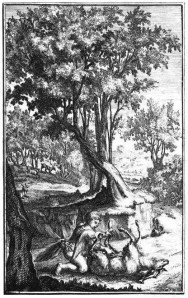
It was yet another time that I attempted to read this novel cover to cover. The first time I had tried to read it was as a teenager when I overheard my father mention that the classic Robinson Crusoe was inspired by this very book.

This time the intentions were different as I remembered reading the book earlier, had mentioned in the beginning that there existed a great difference in perception of religion by a common man and by the intelligentsia.

The book in mention is the philosophical novel called ‘Hayy bin Yaqzan’ ( meaning Alive the son of Awake), written in 12th C by Ibn Tufail. This is the third most translated book from Arabic to other languages the first two being Quran and Arabian Nights.

The story in summary is that somehow (these details need another blog in itself) a newborn infant named Hayy,  seems to land on the shores of an uninhabited island. His cries are heard by, a doe (a she-deer), who had recently lost her  newborn kid. Her maternal instincts still afresh, she grabs the baby, suckles him and raises him under her protection, until she dies some seven years later.

The little boy being  exceptionally brilliant, not just acquires survival skills, he begins  to question and investigate things around him. He covers his exposed  private parts with leaves, seeing other animals had them hidden behind fur.

Death of his mother doe perplexes him and he dissects her to realise the all that organs that his Mom was made of, are intact, except for some invisible ‘thing’ that is missing. And hence he gets a hint of the concept of soul.

He learns to light fire that enables him to cook, keep warms and protect  from predatory animals. The  fire also symbolises the ‘fire within him’ for the quest of knowing how things happen.

He notices  animals and plants though being different,  have a common factor, that they were living and need nourishment to survive . He compares the difference between the living and the non living objects around him like rocks, but then they were alike that they all decayed with time.

He was amazed at the interdependence of living and non living objects  on each other, and that all had their  their needs  being fulfilled in  harmony.

It hints to him that he too had a role in helping others around him. He takes care of  the sick and injured animals, saves plants entangled by the parasitic vines and unblocks the streams by removing boulders from their path. He experiences an unprecedented  tranquility in doing so, and realises this attainment of happiness is far beyond his worldly pleasures.

Through various observations he sees  ‘one common reality’ of all existence ( of the living or non living) and that all of them are ultimately passed on to nothingness.

He gradually gets convinced that all the disciplined occurrences governed by  Laws of Nature are controlled by ‘some power’ which perhaps is a Divine Power.

The experiences make him undergo a spiritual awakening which, according to author, is beyond the description in words. The book describes him whirling like the ‘sufi dervishes’ in  spiritual ecstasy.

As he was living and experiencing spirituality in isolation, on a neighbouring island, the inhabitants were practicing religion with all it’s worldly rituals. They had associated material values with their faith and they refrained  to delve deeper into the essence of faith.

However, one man amongst them, not satisfied with this  practice of faith gives up the social life and comes to inhabit the island where Hayy was living. Their encounter enables Hayy to learn the man’s language. The man identifies that Hayy has understood the religion better than those who were socially taught through scriptures. Hayy gets enthusiastic to change them  and  the superfluous practises. He decides to go to the island and convince people.

In the society, Hayy is well received by the people, as long as he agrees with their literal interpretation of their scriptures. But when Hayy attempts to encourage  them to dig deeper to understand —of  ‘one reality’ and  of a ‘peaceful coexistence’  they get aggressive and reject him. Hence after sometime, convinced that their capacity to think beyond what they think, is not possible, he begs sorry to them, gives up on them. He tells them to follow what they think is right and comes back to his solitary world to continues his ‘practice’ of faith.

Reading through the novel, I could not help but think and relate it to the current scenario. The common man has resorted to a certain worldly guidelines and have refused to shake their brains to think ‘indepth’  of the true purpose of faith, which is more to support and help each other, rather than shun or kill anyone who differs.

One lesson that this 12th Century novel conveys is of human mind’s innate capacity to discover Laws of Nature and even the capability of some to discover  abstract mystical secrets unaided by  scriptures or social pressures..

Second lesson that  Ibn Tufail mentions in the beginning but is more clearly put by a commentator of the book Israel Drazin is “…that wise people, philosophers, and religious leaders, must refrain from telling what they understanding to the general population. This is especially true, he states, about religion. Organized religion, as understood by the masses, is necessary for the masses, but wrong for people with understanding because it is not true.”

And I for once is still unsure of the second lesson…

If true then… .. it even sends into me shivers, that will there be the same end to our saga as that of this novel, that those who attempt to think out of the box, shall have to beg them sorry and let them carry on with their business.  And the masses shall remain as ignorant as ever.

At least, knowing Kabir, Bulleh Shah and other mystics’ in history, the same had been their fate so far.
Ek duaa…


Tujhe woh khuloos milay ke jo
Teri zindagi pe muheet ho

Jo mayar tujhe pasand ho
Aur   dil ki jo  umang ho

Tere dil ko jo hara bhara kare
Tere hamsafar ka woh rang ho

Tujhe wo jahan milay jidhar
Ghamon ka koi guzar na ho

Jidhar roshni ho chaah  ki
Aur nafratoon ko khabar na ho

Tera roshan itna naam ho
Jis ki kabhi na shaam ho.

Salute you, Dr Ralph Steinman…


Ralph M. Steinmann MD, a senior physician is the first Nobel Laureatte to get the Nobel Award in Medicineposthumously’.

He was a physiciain who co- discovered ( with Zanvil A Cohn)  Dendritic Cells, in 1973, which are a new class of immune cells, being  important and unique accessories in the onset of several immune responses, including graft rejection, resistance to tumors, autoimmune disease and infections.

Dr. Steinman’s research focused on the mechanisms employed by dendritic cells to regulate lymphocyte function in tolerance and immunity, as well as the use of dendritic cells to understand the development of immune-based diseases and the design of new therapies and vaccines. They can be used to treat a range of diseases from infections, autoimmune diseases and cancers.

A undergrad from McGill University and medical graduate from Harvard Medical School, Dr Steinman was discovered to be suffering from Pancreatic Cancer 4 years ago. Using himself as his own subject, he used his own theory of dendritic cells to prolong his life from this deadly cancer.

However, the cancer overtook and he passed away on September 30, 2011.

On October 3, 2011 he was announced along with two others as the Nobel Prize in Medicine winner for his research on Dendritic Cells.

Since Nobel Committee does not give awards posthumously, they had to take a special meeting and announcement that his award stays valid posthumously.

These findings ( of Dendritic Cells by Dr Steinman & co ) are the intellectual foundation of how to design a good vaccine,” said a senior Scientist .

Dr Steinman missed the reward for his decades long research, however, the world shall benefit from his discovery for all times to come.

I salute you doc. for your service to science and humanity.

Jhini jhini bini chadariya…~Kabir


Jhini jhini bini chadariya.

kah ke tana, kah ke bharni, kaun taar se bini chadariya
ingla pingla taana bharni, sushumna tar se bini chadariya.

ashta kamal dal charkha doley, panch tatva, gun tini chadariya
saiin ko siyat mas dus lagey, thonk-thonk ke bini chadariya.

so chaadar sur nar muni odhi, odhi ke maili kini chadariya
das Kabir jatan kari odhi, jyon ki tyon dhar deeni chadariya.

The Lord Supreme has woven a very fine and delicate tapestry,free of impurities of any kind!
What refined and subtle yarn, what complex interlacing, He has used to weave it!

Using veins and breath His threads Twenty four hours on end,His spinning wheel turns,
Weaving the tapestry from all five essential elements.

Ten months does it take the Lord to weave his tapestry,
Using the greatest of craftsmanship, care and skill.

That exquisite tapestry is worn by the celestials,by Saints, and by human beings alike.
But they all invariably have defiled it !

Your humble devotee Kabir has worn it scrupulously and meticulously,
And is returning it to You, O’Lord, unblemished and pure !

What is politics ?


A little boy goes to his dad and asks, “What is politics?”

Dad says, “Well son, let me try to explain it this way: I’m the breadwinner of the family, so let’s call me capitalism. Your Mom, she’s the administrator of the money, so we’ll call her the Government. We’re here to take care of your needs, so we’ll call you the people. The nanny, we’ll consider her the Working Class. And your baby brother, we’ll call him the Future. Now, think about that and see if that makes sense.”

So the little boy goes off to bed thinking about what dad had said.

Later that night, he hears his baby brother crying, so he gets up to check on him. He finds that the baby has severely soiled his diaper. So the little boy goes to his parents’ room and finds his mother sound asleep. Not wanting to wake her, he goes to the nanny’s room. Finding the door locked, he peeks in the keyhole and sees his father in bed with the nanny. He gives up and goes back to bed.

The next morning, the little boy says to his father, “Dad, I think I understand the concept of politics now.”

The father says, “Good son, tell me in your own words what you think politics is all about.”

The little boy replies, “Well, while Capitalism is screwing the Working Class, the Government is sound asleep, the People are being ignored and the Future is in deep shit.”

Courtesy: As e-mailed by a friend.